

Luis Buñuel
 |
Description
Book Introduction
Self-portrait of a surrealist master
The most provocative cineaste of the 20th century
Luis Buñuel's Films, Art, Life, and Friendship
The 'Masters of Modern Art' series consists of biographies of domestic and international master artists who had a significant influence on the cultural and artistic world around the 20th century.
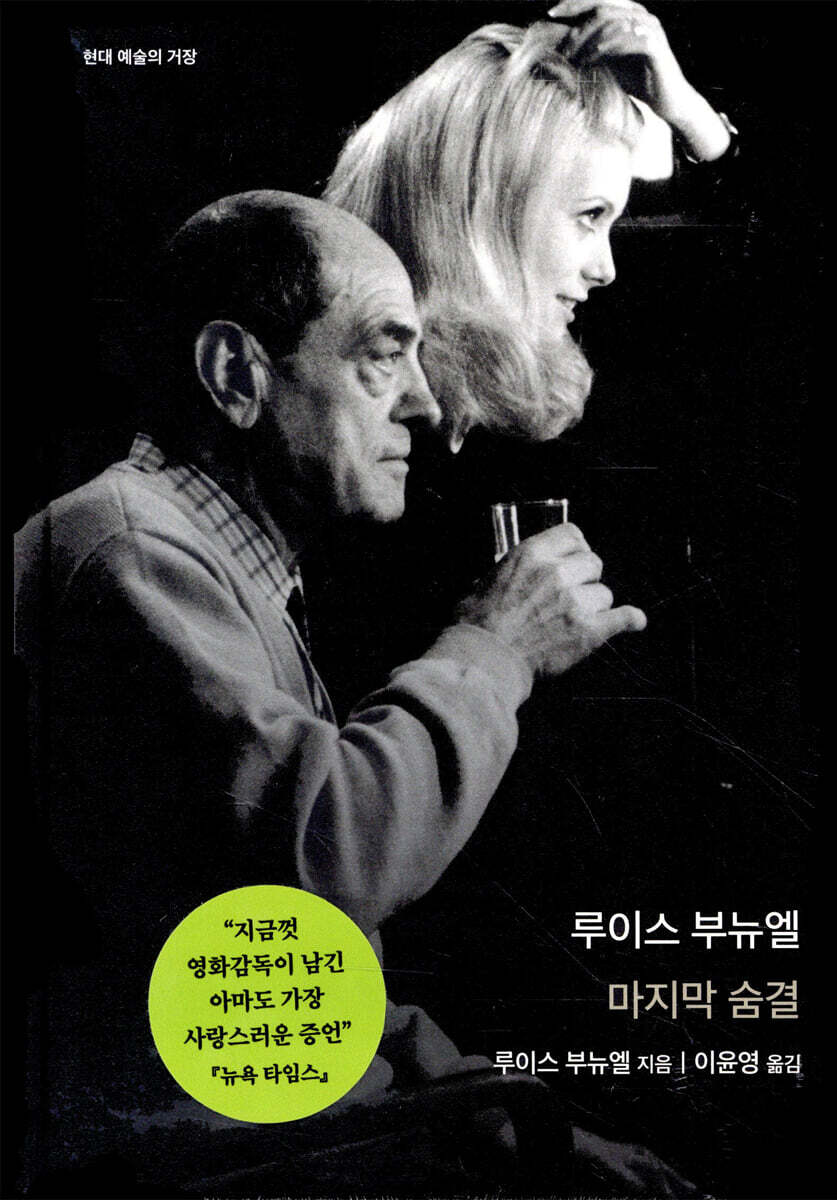
The fifteenth protagonist in this series, which will be republished starting in 2018, is Spanish film director Luis Buñuel, who shocked and enthralled the world of cinema with his provocative visual language.
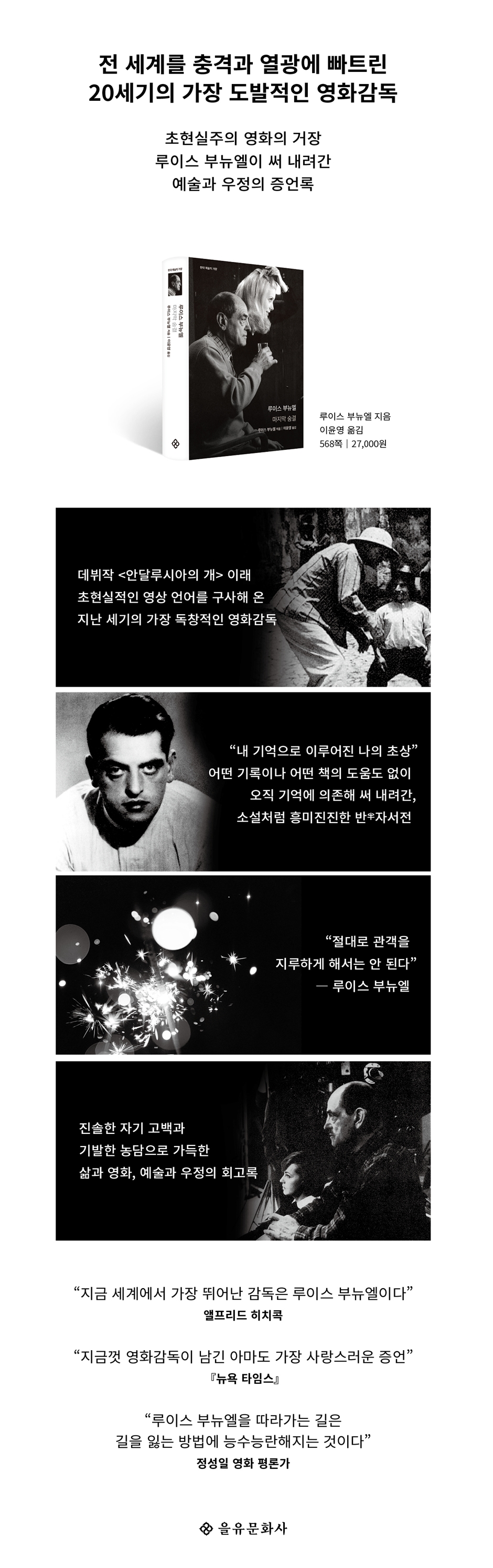
This book is a semi-autobiography written by Luis Buñuel solely from memory, “without the help of any records or books,” and, like his films, is full of honest self-confessions and refreshing humor.
In this book, Buñuel reminisces about his childhood in a Catholic school, his youth hanging out with Surrealist artists in Paris, and his cinematic adventures from Hollywood to Mexico, while also revealing his intimate thoughts and tastes about movies, books, alcohol, cigarettes, dreams, and daydreams.
The most provocative cineaste of the 20th century
Luis Buñuel's Films, Art, Life, and Friendship
The 'Masters of Modern Art' series consists of biographies of domestic and international master artists who had a significant influence on the cultural and artistic world around the 20th century.
The fifteenth protagonist in this series, which will be republished starting in 2018, is Spanish film director Luis Buñuel, who shocked and enthralled the world of cinema with his provocative visual language.
This book is a semi-autobiography written by Luis Buñuel solely from memory, “without the help of any records or books,” and, like his films, is full of honest self-confessions and refreshing humor.
In this book, Buñuel reminisces about his childhood in a Catholic school, his youth hanging out with Surrealist artists in Paris, and his cinematic adventures from Hollywood to Mexico, while also revealing his intimate thoughts and tastes about movies, books, alcohol, cigarettes, dreams, and daydreams.
- You can preview some of the book's contents.
Preview
index
1.
memory
2.
Memories of the Middle Ages
3.
Kalanda's North
4.
Zaragoza
5.
Conchita's Memories
6.
The pleasures of this world
7.
Madrid University Dormitory 1917–1925
8.
Paris 1925–1929
9.
Dreams and visions
10.
Surrealism 1929–1933
11.
USA
12.
Spain and France 1931–1936
13.
Love, loves
14.
Spanish Civil War 1936–1939
15.
Thanks to God, I am an atheist
16.
Back to America
17.
Hollywood, After and After
18.
Mexico 1946–1961
19.
Likes and Dislikes
20.
Spain-Mexico-France 1960-1977
21.
Swan Song
Recommendations - Film Critic Jeong Seong-il | Filmography | Search
memory
2.
Memories of the Middle Ages
3.
Kalanda's North
4.
Zaragoza
5.
Conchita's Memories
6.
The pleasures of this world
7.
Madrid University Dormitory 1917–1925
8.
Paris 1925–1929
9.
Dreams and visions
10.
Surrealism 1929–1933
11.
USA
12.
Spain and France 1931–1936
13.
Love, loves
14.
Spanish Civil War 1936–1939
15.
Thanks to God, I am an atheist
16.
Back to America
17.
Hollywood, After and After
18.
Mexico 1946–1961
19.
Likes and Dislikes
20.
Spain-Mexico-France 1960-1977
21.
Swan Song
Recommendations - Film Critic Jeong Seong-il | Filmography | Search
Detailed image
Into the book
To realize that memories shape our entire lives, we must begin to lose them, even if only in fragments.
Just as an intellect that cannot express itself cannot be called intellect, a life without memory is not life.
Our memory is our consistency, our reason, our actions, and our emotions.
Without memory we are nothing.
--- p.15
I met Breton and went with him to Eugene Ionesco's house.
We had a drink before entering Ionesco's house.
I asked him how Max Ernst was expelled from the Surrealist group for winning the Grand Prix at the Venice Biennale.
He answered me.
“My dear friend, we have parted ways with Salvador Dali, who became a miserable merchant, and now Max Ernst is in the same situation,” he said, after a pause.
At this point I saw a truly deep anguish on his face.
“Dear Louis, I am sad to say this, but the scandal is no more.”
--- p.214
Every Saturday, Chaplin invited our Spanish friends to his restaurant.
I often went to his house on the hill, and we played tennis, swam, and went to the sauna together.
I even slept at his house once.
On the other hand, I've already opened up about my meager sex life, mentioning my failed orgy with the girls from Pasadena.
I met Sergei Eisenstein quite often at Chaplin's house.
He was preparing to go to Mexico to film "Que viva Mexico!"
--- p.248
Of all the useless questions I've been asked about my films, one of the most frequent and persistent is about the small box that one of the Asian customers in Séverine brings into the brothel.
He opens the box and shows the prostitutes what is inside.
The other prostitutes, except Severine, refuse, screaming in fear, but Severine shows interest.
I can't tell you how many times people, especially women, have asked us, "What's in this little box?"
Since I don't know what's in it, the only answer I can give is this.
“What you want.”
--- p.469~470
“Mr. Lewis, do you think you’ll win an Oscar?” I said seriously.
“Yes, I am sure.
I have already paid the $25,000 you requested from me.
“Americans have many flaws, but they are a people who keep their promises.” Mexican reporters did not think this was a mischievous joke.
Four days later, a Mexican newspaper announced that I had bought the Oscar for $25,000.
A scandal erupted in Los Angeles, and the phone calls continued.
Silverman from Paris asked, with a very bored tone, what was going on.
I told him it was just an innocent joke.
After that, things calmed down.
Three weeks later, the film won an Oscar.
Because of this, I was able to repeat these words to those around me.
“Americans have many flaws, but they are a people who keep their promises.”
Just as an intellect that cannot express itself cannot be called intellect, a life without memory is not life.
Our memory is our consistency, our reason, our actions, and our emotions.
Without memory we are nothing.
--- p.15
I met Breton and went with him to Eugene Ionesco's house.
We had a drink before entering Ionesco's house.
I asked him how Max Ernst was expelled from the Surrealist group for winning the Grand Prix at the Venice Biennale.
He answered me.
“My dear friend, we have parted ways with Salvador Dali, who became a miserable merchant, and now Max Ernst is in the same situation,” he said, after a pause.
At this point I saw a truly deep anguish on his face.
“Dear Louis, I am sad to say this, but the scandal is no more.”
--- p.214
Every Saturday, Chaplin invited our Spanish friends to his restaurant.
I often went to his house on the hill, and we played tennis, swam, and went to the sauna together.
I even slept at his house once.
On the other hand, I've already opened up about my meager sex life, mentioning my failed orgy with the girls from Pasadena.
I met Sergei Eisenstein quite often at Chaplin's house.
He was preparing to go to Mexico to film "Que viva Mexico!"
--- p.248
Of all the useless questions I've been asked about my films, one of the most frequent and persistent is about the small box that one of the Asian customers in Séverine brings into the brothel.
He opens the box and shows the prostitutes what is inside.
The other prostitutes, except Severine, refuse, screaming in fear, but Severine shows interest.
I can't tell you how many times people, especially women, have asked us, "What's in this little box?"
Since I don't know what's in it, the only answer I can give is this.
“What you want.”
--- p.469~470
“Mr. Lewis, do you think you’ll win an Oscar?” I said seriously.
“Yes, I am sure.
I have already paid the $25,000 you requested from me.
“Americans have many flaws, but they are a people who keep their promises.” Mexican reporters did not think this was a mischievous joke.
Four days later, a Mexican newspaper announced that I had bought the Oscar for $25,000.
A scandal erupted in Los Angeles, and the phone calls continued.
Silverman from Paris asked, with a very bored tone, what was going on.
I told him it was just an innocent joke.
After that, things calmed down.
Three weeks later, the film won an Oscar.
Because of this, I was able to repeat these words to those around me.
“Americans have many flaws, but they are a people who keep their promises.”
--- p.481
Publisher's Review
A portrait of a representative film director of the 20th century,
A memoir of the artists who influenced an era and their friendships.
Clouds drift across the full moon, and the pupils are slit with razor blades.
Since Un an Andalusian Dog, which is remembered as one of the most shocking scenes in world cinema history, Luis Buñuel has always been a cineaste at the center of controversy and enthusiasm.
Using acerbic humor and surreal visual language, he gained international fame with works such as “The Forgotten Ones,” “Viridiana,” “Séverine,” and “The Discreet Charm of the Bourgeoisie,” and continued to mock unjust authority until his last work, “The Obscure Object of Desire.”
In this book, Buñuel looks back on his life as if he were breathing his last breath.
He painstakingly names hundreds of artists who once appeared in his life, including Salvador Dali, Federico García Lorca, André Breton, Max Ernst, and Charlie Chaplin, and ponders the meaning of their friendships and interactions.
As a friend of artists and poets, a surrealist, an atheist, and a hedonist, the portrait of the master who lived a faithful life is thus reborn as a testimony to an era.
“Never bore the audience.”
Luis Buñuel's artistic journey, more cinematic than cinema
Luis Buñuel's life is intertwined with the 20th century.
Born on February 22, 1900, as the eldest son of a wealthy farming family in Aragon, Spain, he was a boy with an extraordinary memory and a sensitive temperament.
In a time when cinema was little more than a street spectacle, young Buñuel was captivated by Georges Méliès's A Trip to the Moon, Italian melodramas, Greta Garbo in her prime, and all sorts of unfamiliar film techniques.
He became seriously immersed in film while staying in Paris in 1925.
Buñuel, who went to the cinema three times a day and wrote reviews, was fascinated by the works of Eisenstein, Fritz Lang, and Murnau, and developed a passion for filmmaking.
Four years later, in 1929, he presented his debut work, “An Andalusian Dog,” together with his friend Salvador Dali.
This film, which caused a great stir in the Parisian art world, made him a member of the Surrealist movement.
However, surrealism, which pursued excessive ideals, did not last long.
Buñuel, caught up in the Spanish Civil War and the turbulent international situation, is busy working as a producer, editor, and director, moving between major Hollywood studios and the Museum of Modern Art in New York.
At that time, movies were a means of livelihood for Buñuel.
After settling in Mexico, he had to make several films under extremely poor conditions, but he had nothing to be ashamed of or embarrassed about.
I was just doing what I could.
After the war ended and Buñuel returned to Spain, he presented Viridiana on the international stage.
The film sparked controversy with its anti-Christian scenes reminiscent of Da Vinci's The Last Supper, but it won the Palme d'Or at the 1961 Cannes Film Festival with enthusiastic critical acclaim.
He didn't stop there.
He won the Golden Lion, the highest award at the Venice Film Festival, for "Séverine," which depicts the sexual desires and daydreams of bourgeois women, and the Academy Award for Best International Feature Film (now Best Foreign Language Film) for "The Discreet Charm of the Bourgeoisie," which surrealistically portrays the characteristics of a closed and vulgar bourgeois society.
Until his last breath in Mexico City in 1983, Buñuel lived a life as free and intense as any artist.
“My portrait made from my memories”
A self-portrait of a dreamer so lovely and humorous
This book is a semi-autobiography written by screenwriter Jean-Claude Carrière, based on the life story of Luis Buñuel.
In this book, which is full of biting jokes and exciting ideas, like Buñuel's films, he makes a particularly strong list of his likes and dislikes.
He rambles on about his favorite bars in Madrid and New York, his sources of inspiration: dry martinis and wines, and his eponymous cocktail, the Buñueloni (Buñuel-style Negroni). He also confesses his deep interest and affection for names and works that cross fields and genres, including entomologist Jean-Henri Fabre and the Marquis de Sade, the films of Andrzej Wajda and Fritz Lang, picaresque novels, and Russian literature.
“Following Luis Buñuel means becoming adept at getting lost.” This is the loving tribute of film critic Jeong Seong-il.
This book freely unfolds memories and romances that only Buñuel himself can reveal, secret dreams and fantasies, long-cherished movies and books, and stories of love and friendship.
Amidst the chaos of forks and detours, we encounter an artist's most honest self-portrait.
“One of the best books ever written by a film director.
When Europe meets America, when the plans of religion, property, and progress turn out to be nothing more than a dream, Buñuel will for a time stand as a model of the right kind of man.”
― The New Republic
“Perhaps the most endearing testimony ever left by a film director.”
― The New York Times
“A memoir, full of charm and firm opinions, without any pretense.
“Self-portrait of a Beautiful Dreamer”
― Newsweek
A memoir of the artists who influenced an era and their friendships.
Clouds drift across the full moon, and the pupils are slit with razor blades.
Since Un an Andalusian Dog, which is remembered as one of the most shocking scenes in world cinema history, Luis Buñuel has always been a cineaste at the center of controversy and enthusiasm.
Using acerbic humor and surreal visual language, he gained international fame with works such as “The Forgotten Ones,” “Viridiana,” “Séverine,” and “The Discreet Charm of the Bourgeoisie,” and continued to mock unjust authority until his last work, “The Obscure Object of Desire.”
In this book, Buñuel looks back on his life as if he were breathing his last breath.
He painstakingly names hundreds of artists who once appeared in his life, including Salvador Dali, Federico García Lorca, André Breton, Max Ernst, and Charlie Chaplin, and ponders the meaning of their friendships and interactions.
As a friend of artists and poets, a surrealist, an atheist, and a hedonist, the portrait of the master who lived a faithful life is thus reborn as a testimony to an era.
“Never bore the audience.”
Luis Buñuel's artistic journey, more cinematic than cinema
Luis Buñuel's life is intertwined with the 20th century.
Born on February 22, 1900, as the eldest son of a wealthy farming family in Aragon, Spain, he was a boy with an extraordinary memory and a sensitive temperament.
In a time when cinema was little more than a street spectacle, young Buñuel was captivated by Georges Méliès's A Trip to the Moon, Italian melodramas, Greta Garbo in her prime, and all sorts of unfamiliar film techniques.
He became seriously immersed in film while staying in Paris in 1925.
Buñuel, who went to the cinema three times a day and wrote reviews, was fascinated by the works of Eisenstein, Fritz Lang, and Murnau, and developed a passion for filmmaking.
Four years later, in 1929, he presented his debut work, “An Andalusian Dog,” together with his friend Salvador Dali.
This film, which caused a great stir in the Parisian art world, made him a member of the Surrealist movement.
However, surrealism, which pursued excessive ideals, did not last long.
Buñuel, caught up in the Spanish Civil War and the turbulent international situation, is busy working as a producer, editor, and director, moving between major Hollywood studios and the Museum of Modern Art in New York.
At that time, movies were a means of livelihood for Buñuel.
After settling in Mexico, he had to make several films under extremely poor conditions, but he had nothing to be ashamed of or embarrassed about.
I was just doing what I could.
After the war ended and Buñuel returned to Spain, he presented Viridiana on the international stage.
The film sparked controversy with its anti-Christian scenes reminiscent of Da Vinci's The Last Supper, but it won the Palme d'Or at the 1961 Cannes Film Festival with enthusiastic critical acclaim.
He didn't stop there.
He won the Golden Lion, the highest award at the Venice Film Festival, for "Séverine," which depicts the sexual desires and daydreams of bourgeois women, and the Academy Award for Best International Feature Film (now Best Foreign Language Film) for "The Discreet Charm of the Bourgeoisie," which surrealistically portrays the characteristics of a closed and vulgar bourgeois society.
Until his last breath in Mexico City in 1983, Buñuel lived a life as free and intense as any artist.
“My portrait made from my memories”
A self-portrait of a dreamer so lovely and humorous
This book is a semi-autobiography written by screenwriter Jean-Claude Carrière, based on the life story of Luis Buñuel.
In this book, which is full of biting jokes and exciting ideas, like Buñuel's films, he makes a particularly strong list of his likes and dislikes.
He rambles on about his favorite bars in Madrid and New York, his sources of inspiration: dry martinis and wines, and his eponymous cocktail, the Buñueloni (Buñuel-style Negroni). He also confesses his deep interest and affection for names and works that cross fields and genres, including entomologist Jean-Henri Fabre and the Marquis de Sade, the films of Andrzej Wajda and Fritz Lang, picaresque novels, and Russian literature.
“Following Luis Buñuel means becoming adept at getting lost.” This is the loving tribute of film critic Jeong Seong-il.
This book freely unfolds memories and romances that only Buñuel himself can reveal, secret dreams and fantasies, long-cherished movies and books, and stories of love and friendship.
Amidst the chaos of forks and detours, we encounter an artist's most honest self-portrait.
“One of the best books ever written by a film director.
When Europe meets America, when the plans of religion, property, and progress turn out to be nothing more than a dream, Buñuel will for a time stand as a model of the right kind of man.”
― The New Republic
“Perhaps the most endearing testimony ever left by a film director.”
― The New York Times
“A memoir, full of charm and firm opinions, without any pretense.
“Self-portrait of a Beautiful Dreamer”
― Newsweek
GOODS SPECIFICS
- Publication date: November 5, 2021
- Format: Hardcover book binding method guide
- Page count, weight, size: 568 pages | 556g | 136*194*28mm
- ISBN13: 9788932431505
- ISBN10: 8932431507
You may also like
카테고리
korean


korean

![GQ KOREA Mark (Monthly): December [2025]](http://librairie.coreenne.fr/cdn/shop/files/8ef265dbbfbf186523ed75ba7319009d.jpg?v=1765340328&width=3840)


