

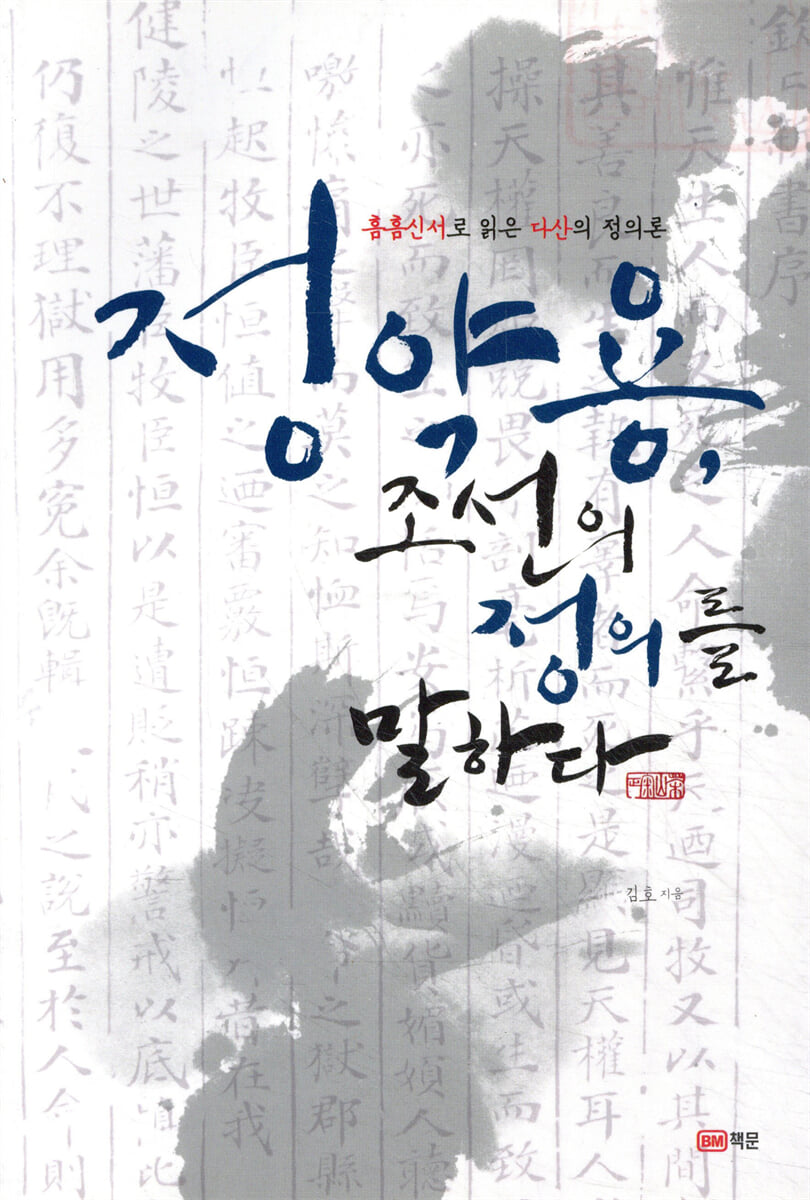
Jeong Yak-yong, Speaking of Justice in Joseon
 |
Description
Book Introduction
About 200 years ago, Dasan Jeong Yak-yong said that people who cannot express their grievances are like sick children who cannot properly express where they are hurting.
That is why the officials believed that they should listen to the people's appeals with the same heart that parents treat their children.
Here we can see that Dasan's mind overlaps with that of King Sejong.
The great king solved the suffering of the people who ‘had something to say but could not properly convey their intentions’ by creating Hunminjeongeum.
And about 400 years later, Dasan left behind a book of criminal law for the people who could not properly resolve their grievances through lawsuits, and that was “Heumheumsinseo.”
This book examines the great visionary Dasan's "Heumheumsinseo" and attempts to organize various episodes about the model of a just country and justice that Dasan dreamed of.
In these times when justice is blurred and money reigns supreme, we can reflect on the wisdom needed to create a fair society.
That is why the officials believed that they should listen to the people's appeals with the same heart that parents treat their children.
Here we can see that Dasan's mind overlaps with that of King Sejong.
The great king solved the suffering of the people who ‘had something to say but could not properly convey their intentions’ by creating Hunminjeongeum.
And about 400 years later, Dasan left behind a book of criminal law for the people who could not properly resolve their grievances through lawsuits, and that was “Heumheumsinseo.”
This book examines the great visionary Dasan's "Heumheumsinseo" and attempts to organize various episodes about the model of a just country and justice that Dasan dreamed of.
In these times when justice is blurred and money reigns supreme, we can reflect on the wisdom needed to create a fair society.
- You can preview some of the book's contents.
Preview
index
As we enter: We must be careful and cautious in everything we do.
Part 1: Dreaming of a Society Without Litigation
Chapter 1: The duties and attitude of the shepherd
Chapter 2: Everything a Magistrate Must Prepare
Chapter 3: Familiarize yourself with the law
Chapter 4: The Importance of Forensic Knowledge
Chapter 5: Dig up a grave and investigate.
Chapter 6: Accurate Incident Investigation is Essential
Chapter 7: Don't Do a Haphazard Research Just Because It's Hard to Believe
The second law is to punish the mind.
Chapter 8: Criticizing China's Misconduct in Enforcement
Chapter 9: Keeping the Law and Legislative Purposes Alive
Chapter 10: There Must Be No Intention to Kill
Chapter 11 Distinction between principal and accessory offenders
Chapter 12: Joseon's Worst Case of Immorality
Chapter 13: The law must be precise and accurate.
Chapter 14: Those who try to frame others for crimes should be severely punished.
Chapter 15: How Far Should Responsibility Be Held?
Chapter 16: Dasan's Regrets
Part 3: Concerns about Abundant Violence and Fertility
Chapter 17 Conditions for Revenge
Chapter 18: Dasan Jeong Yak-yong's Theory of Revenge
Chapter 19: Insult and Revenge
Chapter 20: Narrow-minded Resentment
Chapter 21: Consider Humanity and Morality
Chapter 22: Distinguishing between the real and the fake
Chapter 23: The Phenomenon of 'Moralization of Law'
Chapter 24: Even Your Own Brother Cannot Be Killed at Will
Chapter 25: Recognition, Morality, and Law
Chapter 26: Not Everyone Can Become a Yangban
Part 4: Dasan and the World
Chapter 27: The Cursed Prison
Chapter 28: The Real Thief
Chapter 29: An Apology for the Stepmother
Chapter 30: Punishment of the Mad
Chapter 31: Mencius Was Wrong
Chapter 32: Between Privilege and Courtesy
Chapter 33: Tyranny of the Yangban or Just Punishment?
Chapter 34: Women Who Lost Their Chastity
Conclusion: Dasan's Theory of Justice Read Through "Heumheumsinseo"
References
Part 1: Dreaming of a Society Without Litigation
Chapter 1: The duties and attitude of the shepherd
Chapter 2: Everything a Magistrate Must Prepare
Chapter 3: Familiarize yourself with the law
Chapter 4: The Importance of Forensic Knowledge
Chapter 5: Dig up a grave and investigate.
Chapter 6: Accurate Incident Investigation is Essential
Chapter 7: Don't Do a Haphazard Research Just Because It's Hard to Believe
The second law is to punish the mind.
Chapter 8: Criticizing China's Misconduct in Enforcement
Chapter 9: Keeping the Law and Legislative Purposes Alive
Chapter 10: There Must Be No Intention to Kill
Chapter 11 Distinction between principal and accessory offenders
Chapter 12: Joseon's Worst Case of Immorality
Chapter 13: The law must be precise and accurate.
Chapter 14: Those who try to frame others for crimes should be severely punished.
Chapter 15: How Far Should Responsibility Be Held?
Chapter 16: Dasan's Regrets
Part 3: Concerns about Abundant Violence and Fertility
Chapter 17 Conditions for Revenge
Chapter 18: Dasan Jeong Yak-yong's Theory of Revenge
Chapter 19: Insult and Revenge
Chapter 20: Narrow-minded Resentment
Chapter 21: Consider Humanity and Morality
Chapter 22: Distinguishing between the real and the fake
Chapter 23: The Phenomenon of 'Moralization of Law'
Chapter 24: Even Your Own Brother Cannot Be Killed at Will
Chapter 25: Recognition, Morality, and Law
Chapter 26: Not Everyone Can Become a Yangban
Part 4: Dasan and the World
Chapter 27: The Cursed Prison
Chapter 28: The Real Thief
Chapter 29: An Apology for the Stepmother
Chapter 30: Punishment of the Mad
Chapter 31: Mencius Was Wrong
Chapter 32: Between Privilege and Courtesy
Chapter 33: Tyranny of the Yangban or Just Punishment?
Chapter 34: Women Who Lost Their Chastity
Conclusion: Dasan's Theory of Justice Read Through "Heumheumsinseo"
References
Into the book
In Dasan's eyes, the people who could not express their grievances were like sick children who could not properly express what was wrong.
He listed three reasons why people could not resolve their grievances through litigation. The first reason was that fists were closer than the law.
“Even when villagers want to appeal their grievances, they are often afraid to raise the issue publicly for fear of incurring the wrath of powerful officials or wicked local officials.
Because of this, the people speak vaguely and their words always sound incoherent, which is the first reason why people keep silent even when they are wronged.”
Dasan, who likened the people who dare not speak out about their suffering and grievances because of those in power to children who cannot speak, believed that the people's appeals should be listened to with the same heart a parent would give to their children.
---Chapter 1: The Duties and Attitude of the Shepherd
Dasan criticized Joseon's law enforcement for failing to realize justice by prioritizing forgiveness and tolerance or failing to accurately investigate cases, thereby not punishing those who deserved punishment.
Of course, this does not mean that Dasan was obsessed with severe punishment or trying to hold people responsible for their suicide.
He emphasized that truly just politics is only possible when a case is first investigated accurately and objectively, and then strict punishments and leniency are appropriately administered.
---Chapter 6: Accurate Investigation of the Case is Essential
“Since the case involves human life, we must do our best to make a judgment.
Recently, people have been deluded by the idea that they should do good deeds, and have become caught up in vulgar customs such as releasing the guilty.
These people do not consider the fact that their wrong judgments have caused resentment among good people, and this is the worst thing that can happen, and we cannot help but be wary of it.
Of course, there are cases where we should just let it go out of pity for a person, but if a person has committed an unforgivable crime, we must judge them with justice.” ---「Chapter 13 The law must be accurate and precise」
The person who was most concerned about the spread of private revenge in the late Joseon Dynasty was Dasan Jeong Yak-yong.
He repeatedly emphasized public punishment by the state instead of private revenge.
However, we should not misunderstand that Dasan only recognized public punishment by the state and prohibited all private revenge.
Dasan emphasized that if multiple conditions are met, this should be allowed so as not to damage the ethics and moral foundations of Confucian society.
He believed that excessive private violence endangers society, but just violence can make society healthy.
It is not right to kill others without permission, but if it is a just act of violence, such as avenging one's father, then there is no problem.
This is the core of Dasan's theory of revenge.
---Chapter 17 Conditions for Revenge
What judgment did King Yeongjo make about his son, Crown Prince Sado's madness? In truth, finding a father who would kill his son is as difficult as picking a star from the sky.
What this means is that virtually no father would respond in the same way even if his son tried to kill him.
The same was true for King Yeongjo, who seems to have hoped that the exiled prisoner would reflect on his actions after he sentenced Crown Prince Sado to exile.
Anyway, the Crown Prince died while locked in a chest.
Despite King Yeongjo's regret, this incident complicated subsequent political history.
King Jeongjo believed that although Crown Prince Sado had shown signs of madness and caused many problems, he was not worthy of death.
In other words, he thought that some of the Noron faction had incited King Yeongjo to kill Crown Prince Sado.
Because of this, King Jeongjo, who ascended to the throne, was forced to hold some people from the Noron Byeokpa faction responsible for the death of Crown Prince Sado.
---Chapter 30: Punishment of the Mad
In the late Joseon Dynasty, many people claimed that they were eligible for reduced sentences.
They were the ones who claimed it was negligence even though they killed someone intentionally, those who claimed it was madness even though they were not crazy and escaped punishment, and those who claimed it was justice even though they killed someone.
But the ones who caused the most serious problems were the local nobles and the royal relatives.
In Dasan's view, the tyranny of the local aristocrats during the Joseon Dynasty was excessive.
(Omitted) If it is difficult to completely exclude privileges, the ‘privileged class’ to which exceptions can be applied must be very narrowly defined.
Dasan believed that it was important to prevent anyone from claiming or demanding privileges, which is why he argued for 'exceptions to the application of the law'.
He listed three reasons why people could not resolve their grievances through litigation. The first reason was that fists were closer than the law.
“Even when villagers want to appeal their grievances, they are often afraid to raise the issue publicly for fear of incurring the wrath of powerful officials or wicked local officials.
Because of this, the people speak vaguely and their words always sound incoherent, which is the first reason why people keep silent even when they are wronged.”
Dasan, who likened the people who dare not speak out about their suffering and grievances because of those in power to children who cannot speak, believed that the people's appeals should be listened to with the same heart a parent would give to their children.
---Chapter 1: The Duties and Attitude of the Shepherd
Dasan criticized Joseon's law enforcement for failing to realize justice by prioritizing forgiveness and tolerance or failing to accurately investigate cases, thereby not punishing those who deserved punishment.
Of course, this does not mean that Dasan was obsessed with severe punishment or trying to hold people responsible for their suicide.
He emphasized that truly just politics is only possible when a case is first investigated accurately and objectively, and then strict punishments and leniency are appropriately administered.
---Chapter 6: Accurate Investigation of the Case is Essential
“Since the case involves human life, we must do our best to make a judgment.
Recently, people have been deluded by the idea that they should do good deeds, and have become caught up in vulgar customs such as releasing the guilty.
These people do not consider the fact that their wrong judgments have caused resentment among good people, and this is the worst thing that can happen, and we cannot help but be wary of it.
Of course, there are cases where we should just let it go out of pity for a person, but if a person has committed an unforgivable crime, we must judge them with justice.” ---「Chapter 13 The law must be accurate and precise」
The person who was most concerned about the spread of private revenge in the late Joseon Dynasty was Dasan Jeong Yak-yong.
He repeatedly emphasized public punishment by the state instead of private revenge.
However, we should not misunderstand that Dasan only recognized public punishment by the state and prohibited all private revenge.
Dasan emphasized that if multiple conditions are met, this should be allowed so as not to damage the ethics and moral foundations of Confucian society.
He believed that excessive private violence endangers society, but just violence can make society healthy.
It is not right to kill others without permission, but if it is a just act of violence, such as avenging one's father, then there is no problem.
This is the core of Dasan's theory of revenge.
---Chapter 17 Conditions for Revenge
What judgment did King Yeongjo make about his son, Crown Prince Sado's madness? In truth, finding a father who would kill his son is as difficult as picking a star from the sky.
What this means is that virtually no father would respond in the same way even if his son tried to kill him.
The same was true for King Yeongjo, who seems to have hoped that the exiled prisoner would reflect on his actions after he sentenced Crown Prince Sado to exile.
Anyway, the Crown Prince died while locked in a chest.
Despite King Yeongjo's regret, this incident complicated subsequent political history.
King Jeongjo believed that although Crown Prince Sado had shown signs of madness and caused many problems, he was not worthy of death.
In other words, he thought that some of the Noron faction had incited King Yeongjo to kill Crown Prince Sado.
Because of this, King Jeongjo, who ascended to the throne, was forced to hold some people from the Noron Byeokpa faction responsible for the death of Crown Prince Sado.
---Chapter 30: Punishment of the Mad
In the late Joseon Dynasty, many people claimed that they were eligible for reduced sentences.
They were the ones who claimed it was negligence even though they killed someone intentionally, those who claimed it was madness even though they were not crazy and escaped punishment, and those who claimed it was justice even though they killed someone.
But the ones who caused the most serious problems were the local nobles and the royal relatives.
In Dasan's view, the tyranny of the local aristocrats during the Joseon Dynasty was excessive.
(Omitted) If it is difficult to completely exclude privileges, the ‘privileged class’ to which exceptions can be applied must be very narrowly defined.
Dasan believed that it was important to prevent anyone from claiming or demanding privileges, which is why he argued for 'exceptions to the application of the law'.
---Chapter 31: Mencius Was Wrong
Publisher's Review
The just nation dreamed of by Dasan Jeong Yak-yong
“Even when villagers want to appeal their grievances, they are often afraid to raise the issue publicly for fear of incurring the wrath of powerful officials or wicked local officials.
Because of this, the people speak vaguely and their words always sound incoherent, which is the first reason why people keep silent even when they are wronged.”
About 200 years ago, Dasan Jeong Yak-yong, a visionary of the time, explained why people could not resolve their grievances through litigation.
To Dasan, the people who could not express their grievances were like sick children who could not properly express what was wrong.
That is why the officials believed that they should listen to the people's appeals with the same heart that parents treat their children.
Here we see the mind of Dasan overlap with that of King Sejong.
The great king solved the suffering of the people who ‘had something to say but could not properly convey their intentions’ by creating Hunminjeongeum.
And about 400 years later, Dasan left behind a book of criminal law for the people who could not properly resolve their grievances through lawsuits, and that was “Heumheumsinseo.”
This book, which was named 'Heumheumsinseo' with the meaning of handling matters concerning human life with great care, is a kind of criminal law reference book that Dasan compiled and organized for local officials Chinese and Joseon law codes and records used in trials, and added his own opinions.
Chaekmun's new book, "Jeong Yak-yong, Speaks of Justice in Joseon," looks into the "Heumheumsinseo" by Dasan, a great visionary ahead of his time, and organizes various episodes about the model of a just country that Dasan dreamed of and the justice he dreamed of.
In the late Joseon Dynasty, political turmoil caused the people to suffer and conflict between classes reached its peak.
Dasan argued that in order to overcome this crisis and build a just society, not only central government officials but also those in charge of local public affairs must take the lead and fulfill their moral responsibility.
A just society does not come about by itself.
This is possible only when there are more people with righteous hearts, and when there are more actions that put their minds to action.
The reason Dasan's earnest heart still resonates today is because we all want a fair society.
But seeing that so many people still suffer from violence and injustice, it seems that the situation has not changed much since Dasan was struggling with the question of justice.
Dasan hoped that the officials who were supposed to look after the people would bring true justice to this land.
Looking at today's world where justice is blurred and money reigns supreme, the model of justice and a just nation he dreamed of still seems valid.
“Even when villagers want to appeal their grievances, they are often afraid to raise the issue publicly for fear of incurring the wrath of powerful officials or wicked local officials.
Because of this, the people speak vaguely and their words always sound incoherent, which is the first reason why people keep silent even when they are wronged.”
About 200 years ago, Dasan Jeong Yak-yong, a visionary of the time, explained why people could not resolve their grievances through litigation.
To Dasan, the people who could not express their grievances were like sick children who could not properly express what was wrong.
That is why the officials believed that they should listen to the people's appeals with the same heart that parents treat their children.
Here we see the mind of Dasan overlap with that of King Sejong.
The great king solved the suffering of the people who ‘had something to say but could not properly convey their intentions’ by creating Hunminjeongeum.
And about 400 years later, Dasan left behind a book of criminal law for the people who could not properly resolve their grievances through lawsuits, and that was “Heumheumsinseo.”
This book, which was named 'Heumheumsinseo' with the meaning of handling matters concerning human life with great care, is a kind of criminal law reference book that Dasan compiled and organized for local officials Chinese and Joseon law codes and records used in trials, and added his own opinions.
Chaekmun's new book, "Jeong Yak-yong, Speaks of Justice in Joseon," looks into the "Heumheumsinseo" by Dasan, a great visionary ahead of his time, and organizes various episodes about the model of a just country that Dasan dreamed of and the justice he dreamed of.
In the late Joseon Dynasty, political turmoil caused the people to suffer and conflict between classes reached its peak.
Dasan argued that in order to overcome this crisis and build a just society, not only central government officials but also those in charge of local public affairs must take the lead and fulfill their moral responsibility.
A just society does not come about by itself.
This is possible only when there are more people with righteous hearts, and when there are more actions that put their minds to action.
The reason Dasan's earnest heart still resonates today is because we all want a fair society.
But seeing that so many people still suffer from violence and injustice, it seems that the situation has not changed much since Dasan was struggling with the question of justice.
Dasan hoped that the officials who were supposed to look after the people would bring true justice to this land.
Looking at today's world where justice is blurred and money reigns supreme, the model of justice and a just nation he dreamed of still seems valid.
GOODS SPECIFICS
- Date of issue: May 10, 2013
- Page count, weight, size: 360 pages | 538g | 152*225*30mm
- ISBN13: 9788931576542
- ISBN10: 8931576544
You may also like
카테고리
korean


korean

![GQ KOREA Mark (Monthly): December [2025]](http://librairie.coreenne.fr/cdn/shop/files/8ef265dbbfbf186523ed75ba7319009d.jpg?v=1765340328&width=3840)


