

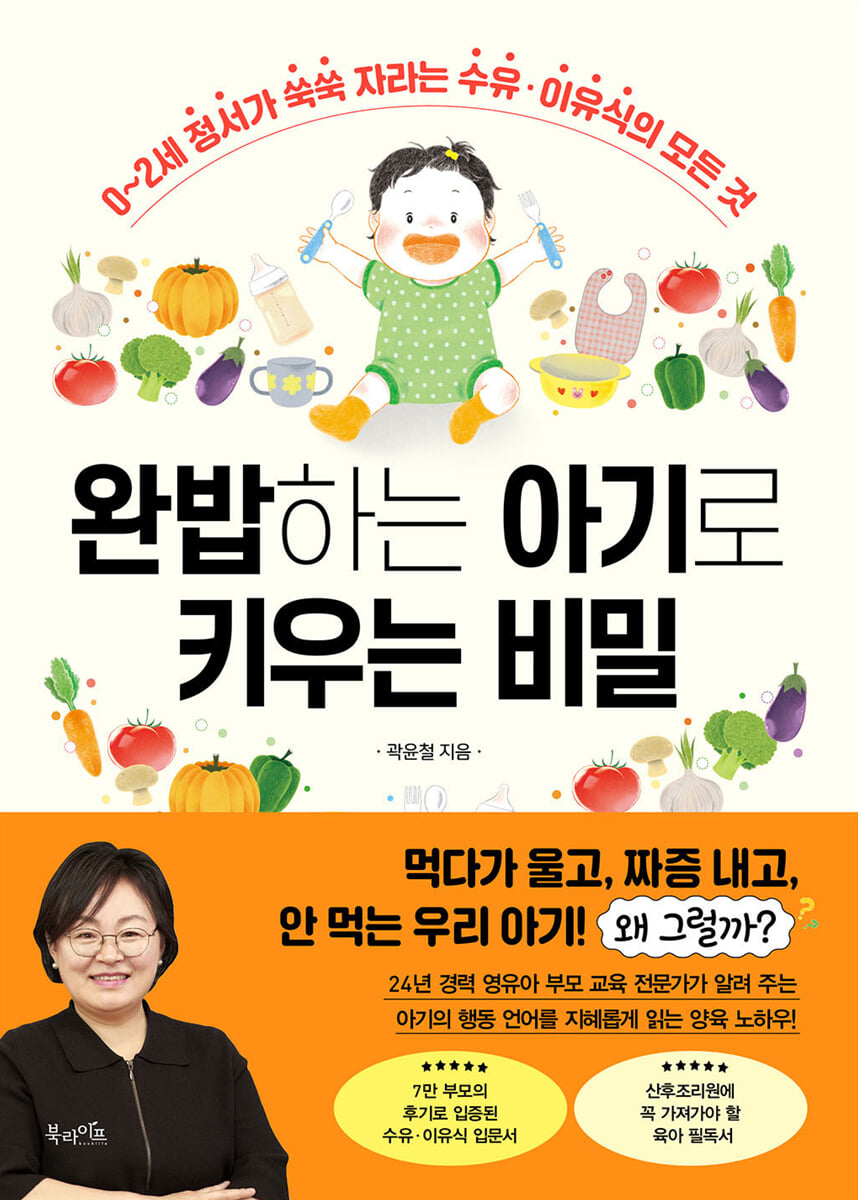
The Secret to Raising a Baby Who Eats Full Meals
 |
Description
Book Introduction
“I cry while eating, I get irritated,
"My baby won't eat! Why is that?"
A parent education expert with 26 years of experience in early childhood education
Parenting tips for wisely reading your baby's behavioral language!
A proven guide to breastfeeding and weaning, backed by 70,000 parents.
Must-read parenting books to take to the postpartum care center
"A baby who eats well grows up to be a child with a healthy mind!"
Developing a habit of feeding children during infancy and early childhood that influences their emotional development throughout their lives.
Many parents want to feed their babies well.
However, we often focus solely on the information that abounds on YouTube, parenting communities, expert advice, and the experiences of parents next door, and fail to make an effort to read and interpret the emotions and behavior of the baby, the actual eater.
This book introduces what "personal breastfeeding and weaning" is, which respects the baby as the subject of breastfeeding and weaning, and how to apply it to parenting to raise a baby who can eat a full meal.
Ages 0-2 are a critical period for the formation of a baby's emotions.
During this period, 'eating' is as important as getting a good night's sleep as it is the first gateway for the baby to learn self-expression.
“Babies have the ability to feed, stop, and refuse on their own,” says the author, an infant and toddler parent education mentor and international breastfeeding expert.
During the eating process, babies express their feelings of wanting to eat or not wanting to eat through crying, turning their heads away, and closing their mouths tightly.
A parenting method that respects the baby's emotions and teaches them that the experience of eating is comfortable and enjoyable is called personalized feeding and weaning.
Rather than forcing or controlling, help your baby feel the desire to eat on his own, recognize when he is full, and stop eating, so he grows up to be a ‘baby who eats well on his own.’
"The Secret to Raising a Baby Who Feeds Well" provides parents-to-be and first-time parents with specific guidance on how to observe their baby's biological rhythms, understand their reactions and needs, and interact with them on a personal level.
If you've ever felt embarrassed by your baby's crying, irritability, or rejection while eating, this book will teach you how to deal with it wisely.
"My baby won't eat! Why is that?"
A parent education expert with 26 years of experience in early childhood education
Parenting tips for wisely reading your baby's behavioral language!
A proven guide to breastfeeding and weaning, backed by 70,000 parents.
Must-read parenting books to take to the postpartum care center
"A baby who eats well grows up to be a child with a healthy mind!"
Developing a habit of feeding children during infancy and early childhood that influences their emotional development throughout their lives.
Many parents want to feed their babies well.
However, we often focus solely on the information that abounds on YouTube, parenting communities, expert advice, and the experiences of parents next door, and fail to make an effort to read and interpret the emotions and behavior of the baby, the actual eater.
This book introduces what "personal breastfeeding and weaning" is, which respects the baby as the subject of breastfeeding and weaning, and how to apply it to parenting to raise a baby who can eat a full meal.
Ages 0-2 are a critical period for the formation of a baby's emotions.
During this period, 'eating' is as important as getting a good night's sleep as it is the first gateway for the baby to learn self-expression.
“Babies have the ability to feed, stop, and refuse on their own,” says the author, an infant and toddler parent education mentor and international breastfeeding expert.
During the eating process, babies express their feelings of wanting to eat or not wanting to eat through crying, turning their heads away, and closing their mouths tightly.
A parenting method that respects the baby's emotions and teaches them that the experience of eating is comfortable and enjoyable is called personalized feeding and weaning.
Rather than forcing or controlling, help your baby feel the desire to eat on his own, recognize when he is full, and stop eating, so he grows up to be a ‘baby who eats well on his own.’
"The Secret to Raising a Baby Who Feeds Well" provides parents-to-be and first-time parents with specific guidance on how to observe their baby's biological rhythms, understand their reactions and needs, and interact with them on a personal level.
If you've ever felt embarrassed by your baby's crying, irritability, or rejection while eating, this book will teach you how to deal with it wisely.
- You can preview some of the book's contents.
Preview
index
Prologue: Parenting Wisdom: Overcoming Parenting Illiteracy
Stories from parents who made parenting special
Chapter 1: The Beginning of Parenting: Understanding Your Relationship with Your Baby
- What is parenting that respects babies?
- Things parents should do immediately after giving birth
- What it means for parents to trust their babies
- Sleep, feeding, and play according to the baby's biological rhythm
- Respect your baby's temperament and self-expression.
- A parenting routine that starts at the same time every morning
Parent-Centered Parenting vs. Baby-Centered Parenting
[SOS! Help, Director] Self-Care Tips for Parents to Survive Chaos
- The effect of parents' voices on babies
- Can I be a good parent?
[SOS! Help, Mom!] How to Deal with Your Baby's Negative Signals
- Parenting styles that deal with a baby's emotions
Chapter 2: Emotional Intelligence Development Begins with Eating Experiences
- What is breastfeeding and weaning that respects the baby?
- Babies learn to express their emotions while eating.
- How can I give my baby the opportunity to eat?
- Behavioral language of a baby who wants to eat and a baby who doesn't want to eat
- Is a baby who eats a lot a good eater?
[SOS! Help, Manager] What if my baby doesn't seem interested in eating?
Chapter 3: Mother's Personal Breastfeeding, Baby's Full Breastfeeding
- Understanding breastfeeding correctly
- Mother's personal breastfeeding
- Full feeding of the baby
- Breastfeeding and communicating with your baby
[SOS! Help, Mom!] How to Communicate While Preparing for Breastfeeding
- 4-step communication method to awaken your baby's emotional intelligence after breastfeeding
Things to consider when you want to give up breastfeeding
- Separate feeding and sleeping for babies who fall asleep while eating
- Night feedings: when and how should I stop?
- The relationship between cessation of night feedings and emotional intelligence development
[SOS! Help, Director] Why Babies Cry at Night
- If the baby refuses to breastfeed due to injection
- Nipple confusion, how to deal with it?
- Weaning wisely
[SOS! Help, Manager] Are you having trouble weaning?
Chapter 4: Creating a Habit of Feeding Completely
- Parents' attitude determines the direction of weaning food.
- Things to do before feeding baby food
[SOS! Help, Director] How to Protect Your Baby's Exploratory Instinct
- Developing self-directed eating skills
- Early: Exploration through touching, tasting, and smelling
- Early: What Parents Should Do
[SOS! Please help, manager] Which is better, a straw or a cup?
- Middle stage: The stage where you put your hand in your mouth, chew it thoroughly, and swallow it.
[SOS! Please help me, sir] If you feel nauseous while eating baby food
- Review: A time to control how much you eat and build confidence.
- If you are hurt by your baby's 'refusal' of baby food
- Interacting with a baby who refuses baby food
[SOS! Help, Manager] How to Deal with a Baby Who Refuses Baby Food
Epilogue: Eating Together Means Living Together
Stories from parents who made parenting special
Chapter 1: The Beginning of Parenting: Understanding Your Relationship with Your Baby
- What is parenting that respects babies?
- Things parents should do immediately after giving birth
- What it means for parents to trust their babies
- Sleep, feeding, and play according to the baby's biological rhythm
- Respect your baby's temperament and self-expression.
- A parenting routine that starts at the same time every morning
Parent-Centered Parenting vs. Baby-Centered Parenting
[SOS! Help, Director] Self-Care Tips for Parents to Survive Chaos
- The effect of parents' voices on babies
- Can I be a good parent?
[SOS! Help, Mom!] How to Deal with Your Baby's Negative Signals
- Parenting styles that deal with a baby's emotions
Chapter 2: Emotional Intelligence Development Begins with Eating Experiences
- What is breastfeeding and weaning that respects the baby?
- Babies learn to express their emotions while eating.
- How can I give my baby the opportunity to eat?
- Behavioral language of a baby who wants to eat and a baby who doesn't want to eat
- Is a baby who eats a lot a good eater?
[SOS! Help, Manager] What if my baby doesn't seem interested in eating?
Chapter 3: Mother's Personal Breastfeeding, Baby's Full Breastfeeding
- Understanding breastfeeding correctly
- Mother's personal breastfeeding
- Full feeding of the baby
- Breastfeeding and communicating with your baby
[SOS! Help, Mom!] How to Communicate While Preparing for Breastfeeding
- 4-step communication method to awaken your baby's emotional intelligence after breastfeeding
Things to consider when you want to give up breastfeeding
- Separate feeding and sleeping for babies who fall asleep while eating
- Night feedings: when and how should I stop?
- The relationship between cessation of night feedings and emotional intelligence development
[SOS! Help, Director] Why Babies Cry at Night
- If the baby refuses to breastfeed due to injection
- Nipple confusion, how to deal with it?
- Weaning wisely
[SOS! Help, Manager] Are you having trouble weaning?
Chapter 4: Creating a Habit of Feeding Completely
- Parents' attitude determines the direction of weaning food.
- Things to do before feeding baby food
[SOS! Help, Director] How to Protect Your Baby's Exploratory Instinct
- Developing self-directed eating skills
- Early: Exploration through touching, tasting, and smelling
- Early: What Parents Should Do
[SOS! Please help, manager] Which is better, a straw or a cup?
- Middle stage: The stage where you put your hand in your mouth, chew it thoroughly, and swallow it.
[SOS! Please help me, sir] If you feel nauseous while eating baby food
- Review: A time to control how much you eat and build confidence.
- If you are hurt by your baby's 'refusal' of baby food
- Interacting with a baby who refuses baby food
[SOS! Help, Manager] How to Deal with a Baby Who Refuses Baby Food
Epilogue: Eating Together Means Living Together
Detailed image

Into the book
Have you ever noticed what your baby's actions tell you? When I ask parents, some express their curiosity, saying, "My baby speaks?" But others interpret the movements they observe and share them with me.
“Even babies can talk! When I listen to you, I can read your actions.
“Raising your hands now sounds like a way of saying thank you!” I experience hope every time I meet parents who want to know what’s going on in their babies’ minds, so they observe their sounds and movements and interpret their baby’s behavior in positive terms.
My heart feels warm and I feel loved.
---p.28
Just as a sprout needs water and sunlight to grow into a tree, a parent's voice serves as a conduit of emotions for a baby and as water and sunlight for brain development.
When parents use negative language, babies will also imitate negative language.
If you grow up hearing critical words from your parents, it will be difficult to have respect for others.
Babies also learn from their parents' loss of control and anger.
It's like teaching a baby that it's okay to lose control.
---p.80
A baby who is breastfed in a human's arms experiences the world as warm, comfortable, and safe through that person.
Once your baby feels safe, he or she will begin to see eating as an interesting and enjoyable activity and will happily accept sharing a meal with people.
From the baby's perspective, feeding time is the time when the baby can eat and have fun talking with the person he likes (his mother).
---p.122
It's easy for mothers to think that their baby's 'not eating' is a problem and say, "Just one more bite!"
Then, no matter how hungry the baby is, he or she first feels the emotion of 'I don't want to eat'.
At this time, breastfeeding remains an experience for the baby that is associated with uncomfortable sensations and anxious emotions.
If feeding becomes scary and unpleasant, the next feeding becomes difficult as well, and a vicious cycle repeats itself.
Personalized feeding is a feeding method that focuses on the baby's mind and emotions in these situations and adapts to the baby's pace.
How can mothers make feeding a comfortable and happy experience for their babies? They should stop trying to force-feed and start by understanding their emotions.
---p.153
How does a full baby express it? They may pout, stick out their tongue, or lick their lips, as if to say, "Mommy, I'm full!" while not biting the nipple or pushing away the nipple from the bottle.
At this time, the mother should stop breastfeeding and observe the baby, responding with a smile by asking, “Did you feel good breastfeeding with Mommy?”
When a baby expresses to his mother that he is full in his stomach and the mother recognizes the signal and stops feeding, he will experience the feeling that 'my feeling was right.'
---p.159~160
I describe baby food as a "blind date between baby and food."
A blind date is a process in which two people who have never met each other before meet and get to know each other little by little.
It can be awkward for both of us, and sometimes it can feel different from what we expected.
Just as we develop interest and affection for each other through slow conversation, weaning should also be a time for babies to slowly learn about food.
“Even babies can talk! When I listen to you, I can read your actions.
“Raising your hands now sounds like a way of saying thank you!” I experience hope every time I meet parents who want to know what’s going on in their babies’ minds, so they observe their sounds and movements and interpret their baby’s behavior in positive terms.
My heart feels warm and I feel loved.
---p.28
Just as a sprout needs water and sunlight to grow into a tree, a parent's voice serves as a conduit of emotions for a baby and as water and sunlight for brain development.
When parents use negative language, babies will also imitate negative language.
If you grow up hearing critical words from your parents, it will be difficult to have respect for others.
Babies also learn from their parents' loss of control and anger.
It's like teaching a baby that it's okay to lose control.
---p.80
A baby who is breastfed in a human's arms experiences the world as warm, comfortable, and safe through that person.
Once your baby feels safe, he or she will begin to see eating as an interesting and enjoyable activity and will happily accept sharing a meal with people.
From the baby's perspective, feeding time is the time when the baby can eat and have fun talking with the person he likes (his mother).
---p.122
It's easy for mothers to think that their baby's 'not eating' is a problem and say, "Just one more bite!"
Then, no matter how hungry the baby is, he or she first feels the emotion of 'I don't want to eat'.
At this time, breastfeeding remains an experience for the baby that is associated with uncomfortable sensations and anxious emotions.
If feeding becomes scary and unpleasant, the next feeding becomes difficult as well, and a vicious cycle repeats itself.
Personalized feeding is a feeding method that focuses on the baby's mind and emotions in these situations and adapts to the baby's pace.
How can mothers make feeding a comfortable and happy experience for their babies? They should stop trying to force-feed and start by understanding their emotions.
---p.153
How does a full baby express it? They may pout, stick out their tongue, or lick their lips, as if to say, "Mommy, I'm full!" while not biting the nipple or pushing away the nipple from the bottle.
At this time, the mother should stop breastfeeding and observe the baby, responding with a smile by asking, “Did you feel good breastfeeding with Mommy?”
When a baby expresses to his mother that he is full in his stomach and the mother recognizes the signal and stops feeding, he will experience the feeling that 'my feeling was right.'
---p.159~160
I describe baby food as a "blind date between baby and food."
A blind date is a process in which two people who have never met each other before meet and get to know each other little by little.
It can be awkward for both of us, and sometimes it can feel different from what we expected.
Just as we develop interest and affection for each other through slow conversation, weaning should also be a time for babies to slowly learn about food.
---p.238
Publisher's Review
“Even newborn babies have the ability to feed themselves.”
Everything you need to know about parenting from parenting mentor Director Kwak Yun-cheol!
How wonderful would it be if babies ate and slept the same amount at the same time every day? In reality, babies sometimes rest or fall asleep while eating, and even if they eat less today, they might eat more tomorrow.
Having met countless new parents and babies in the childcare field for 26 years, the author emphasizes that “babies have the ability to eat on their own,” and has practiced breastfeeding and weaning education that respects babies.
Many parents think, 'Eat a lot to be healthy.'
However, ‘eating a lot’ does not necessarily mean ‘eating well.’
'Wanbap' also means that the baby does not simply empty a bowl of rice, but takes the initiative in eating by choosing the food he or she wants to eat and stopping when full.
Developing these abilities requires parenting that respects the baby's ability to eat.
《The Secret to Raising a Baby Who Eats Full Meals》 is a four-chapter book that contains realistic solutions to the biggest concerns of new parents: how to start raising a baby immediately after birth and how to feed the baby.
It also includes various case studies of parents whose parenting has become special thanks to the author's coaching.
Reading the stories of parents who have experienced personalized breastfeeding and solid food for the first time can provide deep empathy and confidence.
“A baby's emotional intelligence develops when their eating experience is respected.”
The power of parenting that raises happy babies!
Respecting your baby means giving your baby time to figure things out on his or her own and trusting that you can handle that time.
Through the experience of eating, babies experience feelings of respect and confidence in their ability to do things on their own, and learn how to express their emotions.
Therefore, the first 24 months of life, during which breastfeeding and solid food are introduced, can be said to be a critical period for the development of a baby's emotional intelligence.
Emotional intelligence refers to the ability to manage emotions well.
It includes the ability to recognize one's own emotions, understand the emotions of others, and express and regulate emotions appropriately in social relationships.
In fact, if you look at babies who are breastfeeding or being fed solid food, they move their mouths vigorously when they want to eat, close their mouths tightly or turn their heads away when they are full, and cry when they do not want to eat, clearly showing their refusal.
In this way, babies learn to express who they are and what they want and don't want to do through the process of eating.
Therefore, simply feeding a lot and at the right time, ignoring the baby's reactions and signals, is an action that takes away the baby's learning opportunity.
Chapters 1 and 2 build on this point by specifically explaining what respecting the baby's abilities and needs during breastfeeding and weaning means for the development of emotional intelligence.
In addition, it carefully presents situation-specific conversation methods and behavioral tips on how to read and interact with your baby's emotions.
“When parents trust their babies, they learn to trust themselves.”
Personalized feeding that teaches babies the joy of eating
Chapter 3 covers common challenges parents face, from how to connect with their baby while breastfeeding to breastfeeding refusal, night feedings, and weaning.
In all these situations, we suggest ways to personally resolve them so that the feelings of both parents and babies are not hurt.
Many parents struggle with the choice between breastfeeding and formula feeding.
The author says, “What kind of experiences you share with your baby through breastfeeding is more important than how you breastfeed.”
Breastfeeding is more than just filling your baby's belly; it's a process of forming emotions and relationships.
In this sense, personalized feeding allows parents to trust their baby's ability to eat and allows the baby to become the subject of feeding, listening to the 'hunger' and 'fullness' signals sent by his or her body.
Just as we feel good and comfortable when we eat a lot of food, so does our baby.
Fullness is associated with the emotion of 'satisfaction'.
Parents provide satisfaction to their babies through breastfeeding, and babies perceive the feeding experience as comfortable and enjoyable.
Conversely, if you don't trust your baby and ignore their signals, force them to eat, or stop feeding them, they won't learn the positive emotion of being full, and will have the wrong experience of thinking that 'eating is difficult and uncomfortable.'
The trust and enjoyable experience of breastfeeding will later develop into good eating habits, helping your baby develop self-regulation skills such as eating healthy foods, eating regularly, and satisfying hunger.
"A parent's true role is to wait for their baby."
Developing a habit of eating a full meal through baby food blind dates
Chapter 4 introduces the role of parents and conversation methods in creating a habit of feeding babies in the early, middle, and late stages of weaning.
The author likens baby food to a "blind date between a baby and food."
Just as two people who meet for the first time on a blind date develop interest through conversation, weaning should also be a time for the baby to learn about food.
Therefore, it is important to give your baby enough time to explore the food by looking at it, smelling it, and touching it with his or her hands.
Babies who have been eating on their own since the beginning of weaning will continue to eat well and steadily even in the middle and later stages when the amount of weaning food increases, without the stimulation of YouTube videos or toys.
The experience of choosing and controlling oneself had a positive impact on later eating habits and developing a sense of internal control.
This book explains, through several examples, what parents should say and wait for their babies as they experience the world, and how to communicate in a way that awakens their babies' exploratory instincts without rushing them.
This book will serve as a solid guide for parents who want to communicate affectionately with babies who cannot yet speak.
Everything you need to know about parenting from parenting mentor Director Kwak Yun-cheol!
How wonderful would it be if babies ate and slept the same amount at the same time every day? In reality, babies sometimes rest or fall asleep while eating, and even if they eat less today, they might eat more tomorrow.
Having met countless new parents and babies in the childcare field for 26 years, the author emphasizes that “babies have the ability to eat on their own,” and has practiced breastfeeding and weaning education that respects babies.
Many parents think, 'Eat a lot to be healthy.'
However, ‘eating a lot’ does not necessarily mean ‘eating well.’
'Wanbap' also means that the baby does not simply empty a bowl of rice, but takes the initiative in eating by choosing the food he or she wants to eat and stopping when full.
Developing these abilities requires parenting that respects the baby's ability to eat.
《The Secret to Raising a Baby Who Eats Full Meals》 is a four-chapter book that contains realistic solutions to the biggest concerns of new parents: how to start raising a baby immediately after birth and how to feed the baby.
It also includes various case studies of parents whose parenting has become special thanks to the author's coaching.
Reading the stories of parents who have experienced personalized breastfeeding and solid food for the first time can provide deep empathy and confidence.
“A baby's emotional intelligence develops when their eating experience is respected.”
The power of parenting that raises happy babies!
Respecting your baby means giving your baby time to figure things out on his or her own and trusting that you can handle that time.
Through the experience of eating, babies experience feelings of respect and confidence in their ability to do things on their own, and learn how to express their emotions.
Therefore, the first 24 months of life, during which breastfeeding and solid food are introduced, can be said to be a critical period for the development of a baby's emotional intelligence.
Emotional intelligence refers to the ability to manage emotions well.
It includes the ability to recognize one's own emotions, understand the emotions of others, and express and regulate emotions appropriately in social relationships.
In fact, if you look at babies who are breastfeeding or being fed solid food, they move their mouths vigorously when they want to eat, close their mouths tightly or turn their heads away when they are full, and cry when they do not want to eat, clearly showing their refusal.
In this way, babies learn to express who they are and what they want and don't want to do through the process of eating.
Therefore, simply feeding a lot and at the right time, ignoring the baby's reactions and signals, is an action that takes away the baby's learning opportunity.
Chapters 1 and 2 build on this point by specifically explaining what respecting the baby's abilities and needs during breastfeeding and weaning means for the development of emotional intelligence.
In addition, it carefully presents situation-specific conversation methods and behavioral tips on how to read and interact with your baby's emotions.
“When parents trust their babies, they learn to trust themselves.”
Personalized feeding that teaches babies the joy of eating
Chapter 3 covers common challenges parents face, from how to connect with their baby while breastfeeding to breastfeeding refusal, night feedings, and weaning.
In all these situations, we suggest ways to personally resolve them so that the feelings of both parents and babies are not hurt.
Many parents struggle with the choice between breastfeeding and formula feeding.
The author says, “What kind of experiences you share with your baby through breastfeeding is more important than how you breastfeed.”
Breastfeeding is more than just filling your baby's belly; it's a process of forming emotions and relationships.
In this sense, personalized feeding allows parents to trust their baby's ability to eat and allows the baby to become the subject of feeding, listening to the 'hunger' and 'fullness' signals sent by his or her body.
Just as we feel good and comfortable when we eat a lot of food, so does our baby.
Fullness is associated with the emotion of 'satisfaction'.
Parents provide satisfaction to their babies through breastfeeding, and babies perceive the feeding experience as comfortable and enjoyable.
Conversely, if you don't trust your baby and ignore their signals, force them to eat, or stop feeding them, they won't learn the positive emotion of being full, and will have the wrong experience of thinking that 'eating is difficult and uncomfortable.'
The trust and enjoyable experience of breastfeeding will later develop into good eating habits, helping your baby develop self-regulation skills such as eating healthy foods, eating regularly, and satisfying hunger.
"A parent's true role is to wait for their baby."
Developing a habit of eating a full meal through baby food blind dates
Chapter 4 introduces the role of parents and conversation methods in creating a habit of feeding babies in the early, middle, and late stages of weaning.
The author likens baby food to a "blind date between a baby and food."
Just as two people who meet for the first time on a blind date develop interest through conversation, weaning should also be a time for the baby to learn about food.
Therefore, it is important to give your baby enough time to explore the food by looking at it, smelling it, and touching it with his or her hands.
Babies who have been eating on their own since the beginning of weaning will continue to eat well and steadily even in the middle and later stages when the amount of weaning food increases, without the stimulation of YouTube videos or toys.
The experience of choosing and controlling oneself had a positive impact on later eating habits and developing a sense of internal control.
This book explains, through several examples, what parents should say and wait for their babies as they experience the world, and how to communicate in a way that awakens their babies' exploratory instincts without rushing them.
This book will serve as a solid guide for parents who want to communicate affectionately with babies who cannot yet speak.
GOODS SPECIFICS
- Date of issue: August 25, 2025
- Page count, weight, size: 304 pages | 514g | 150*210*30mm
- ISBN13: 9791191013979
- ISBN10: 1191013979
You may also like
카테고리
korean


korean

![ELLE 엘르 스페셜 에디션 A형 : 12월 [2025]](http://librairie.coreenne.fr/cdn/shop/files/b8e27a3de6c9538896439686c6b0e8fb.jpg?v=1766436872&width=3840)


