

Garden of the Senses
 |
Description
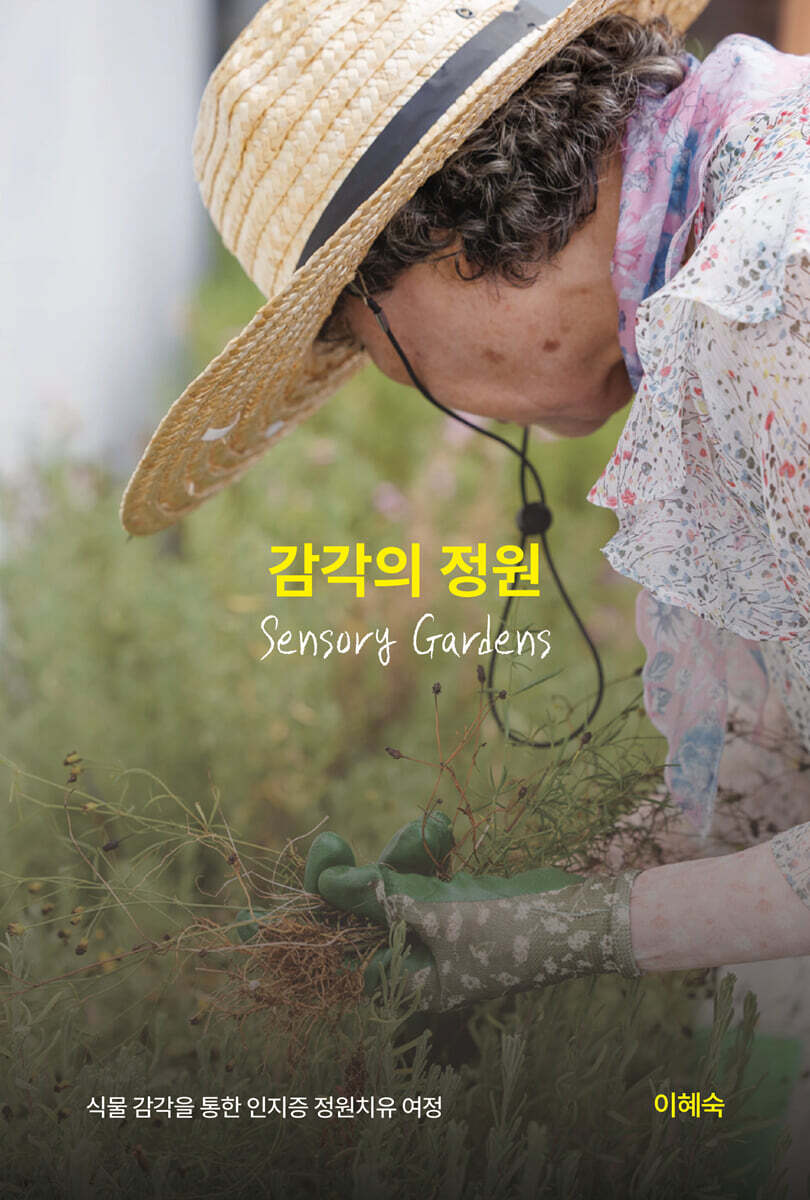
Book Introduction
- A network of caring relationships reconnected through garden therapy
- An 8-week garden healing journey with elderly people with dementia.
- Records of laughter and tears in a garden where care and healing breathe!
The power of gardens and plants as healing spaces for vulnerable populations and local communities is being demonstrated around the world.
So, we hypothesized that we could also restore sensory memory and create a network of caring relationships that connects us through a garden therapy program centered around the garden.
And this book you have just opened is a record of a project to prove that hypothesis.
- An 8-week garden healing journey with elderly people with dementia.
- Records of laughter and tears in a garden where care and healing breathe!
The power of gardens and plants as healing spaces for vulnerable populations and local communities is being demonstrated around the world.
So, we hypothesized that we could also restore sensory memory and create a network of caring relationships that connects us through a garden therapy program centered around the garden.
And this book you have just opened is a record of a project to prove that hypothesis.
- You can preview some of the book's contents.
Preview
index
After the holidays, we reunited with the seniors!
Elder Hwaja: “The happiest day!” Elder Chunhee: “I’m proud!”
Miss Korea and Mr. Korea wearing crowns
The garden is purple today
The magic hands of seniors are even more beautiful when viewed through a magnifying glass.
A guest has come to the garden
A garden filled with autumn colors and fragrances
The sixteenth meeting and a new beginning
Elder Hwaja: “The happiest day!” Elder Chunhee: “I’m proud!”
Miss Korea and Mr. Korea wearing crowns
The garden is purple today
The magic hands of seniors are even more beautiful when viewed through a magnifying glass.
A guest has come to the garden
A garden filled with autumn colors and fragrances
The sixteenth meeting and a new beginning
Into the book
Once in May 2024, from spring to early summer, June.
Then, we carried out the garden healing project twice in total from September to October, when autumn was in full swing.
We remodeled the terrace garden of the Dementia Care Center at Gijang-gun Public Health Center in Busan Metropolitan City and engaged in garden healing activities with 10 elderly people with dementia through 16 meetings. All of these stories are recorded in their entirety on the blog of the prospective social enterprise 'Yiyijang' (www.yiyijang.com/blog).
Among them, the stories from the second half of the year were compiled into this book.
--- p.5
I decided to create some artwork for seniors to exhibit at the 'Overcoming Dementia Day' event that will be held soon.
It is the process of cutting the flowers and leaves of a plant, dipping them in ink, and then printing them on paper.
Could this be called a kind of "plant ink painting"? It's also fun to compare the ink painting to the planted plants and match their names, or even try hand-drawing based on the ink painting.
--- p.16
Today, Chunhee and Hwaja looked especially happy.
He must have really liked the ink detailing, because he said, “What university did you go to? You did a really nice job.” They both smiled as they gave each other the ink drawing.
In particular, the elderly speaker seemed to like the purple Russian sage piece so much that he quickly wrote his name on it, saying, “I can’t lose it.”
--- p.43
It was a day filled with laughter and conversation among the elderly as they attached chrysanthemums with floral tape.
She enjoyed making the crown more than I thought. She probably imagined herself wearing the finished crown, and she seemed to enjoy looking at her reflection in the palm-sized mirror she had, feeling unfamiliar yet new.
They had a great time looking at each other wearing flower crowns, giggling and saying, “You’re pretty.”
--- p.61
Autumn is the season of fruit and harvest.
The fruits of various colors that form after the flowers have withered provide another visual delight in the fall.
The Garden Therapy Program focuses on the five senses as important mediators and pathways for recalling memories, helping to improve the cognitive health of older adults whose senses are becoming dull.
(Omitted) So, the garden is more than just a space; it becomes a place of healing that preserves the memories of life.
The garden therapy program uses visual stimulation to observe how the colors of flowers, leaves, fruits, bark, and stems change with the seasons, allowing you to recognize and remember these changes, leading to recollection.
--- p.71
Continuing from last week, today we will decorate this healing garden with autumn plants.
The garden therapy program is a project in which seniors take the lead.
Rather than being a one-sided recipient of care, we become creators who create a garden together for all of us.
The original goal was to have five flower beds managed by two people in groups, but before we knew it, the boundaries naturally disappeared.
Now we are looking after each other's flower beds and tending them together.
--- p.85
Today, the elderly are holding a magnifying glass in one hand.
Large fruits and flowers with bright, vivid colors are a great help for older people to identify them.
Because cognitive impairment often accompanies vision loss, design thinking that considers the perspective of the primary users—the elderly—is essential when creating cognitively friendly gardens or selecting plants.
--- p.91
In this garden, which initially felt unfamiliar, after sixteen encounters and partings, planting, cultivating, and observing the plants, did the elders finally discover their own sense of "place"? The touches, laughter, sweat, and shared stories of the elders left throughout the garden seem to speak to that question.
In addition, among the comments written directly by the elderly, many said, “I enjoyed spending time with my friends.”
Then, we carried out the garden healing project twice in total from September to October, when autumn was in full swing.
We remodeled the terrace garden of the Dementia Care Center at Gijang-gun Public Health Center in Busan Metropolitan City and engaged in garden healing activities with 10 elderly people with dementia through 16 meetings. All of these stories are recorded in their entirety on the blog of the prospective social enterprise 'Yiyijang' (www.yiyijang.com/blog).
Among them, the stories from the second half of the year were compiled into this book.
--- p.5
I decided to create some artwork for seniors to exhibit at the 'Overcoming Dementia Day' event that will be held soon.
It is the process of cutting the flowers and leaves of a plant, dipping them in ink, and then printing them on paper.
Could this be called a kind of "plant ink painting"? It's also fun to compare the ink painting to the planted plants and match their names, or even try hand-drawing based on the ink painting.
--- p.16
Today, Chunhee and Hwaja looked especially happy.
He must have really liked the ink detailing, because he said, “What university did you go to? You did a really nice job.” They both smiled as they gave each other the ink drawing.
In particular, the elderly speaker seemed to like the purple Russian sage piece so much that he quickly wrote his name on it, saying, “I can’t lose it.”
--- p.43
It was a day filled with laughter and conversation among the elderly as they attached chrysanthemums with floral tape.
She enjoyed making the crown more than I thought. She probably imagined herself wearing the finished crown, and she seemed to enjoy looking at her reflection in the palm-sized mirror she had, feeling unfamiliar yet new.
They had a great time looking at each other wearing flower crowns, giggling and saying, “You’re pretty.”
--- p.61
Autumn is the season of fruit and harvest.
The fruits of various colors that form after the flowers have withered provide another visual delight in the fall.
The Garden Therapy Program focuses on the five senses as important mediators and pathways for recalling memories, helping to improve the cognitive health of older adults whose senses are becoming dull.
(Omitted) So, the garden is more than just a space; it becomes a place of healing that preserves the memories of life.
The garden therapy program uses visual stimulation to observe how the colors of flowers, leaves, fruits, bark, and stems change with the seasons, allowing you to recognize and remember these changes, leading to recollection.
--- p.71
Continuing from last week, today we will decorate this healing garden with autumn plants.
The garden therapy program is a project in which seniors take the lead.
Rather than being a one-sided recipient of care, we become creators who create a garden together for all of us.
The original goal was to have five flower beds managed by two people in groups, but before we knew it, the boundaries naturally disappeared.
Now we are looking after each other's flower beds and tending them together.
--- p.85
Today, the elderly are holding a magnifying glass in one hand.
Large fruits and flowers with bright, vivid colors are a great help for older people to identify them.
Because cognitive impairment often accompanies vision loss, design thinking that considers the perspective of the primary users—the elderly—is essential when creating cognitively friendly gardens or selecting plants.
--- p.91
In this garden, which initially felt unfamiliar, after sixteen encounters and partings, planting, cultivating, and observing the plants, did the elders finally discover their own sense of "place"? The touches, laughter, sweat, and shared stories of the elders left throughout the garden seem to speak to that question.
In addition, among the comments written directly by the elderly, many said, “I enjoyed spending time with my friends.”
--- p.141
GOODS SPECIFICS
- Date of issue: November 24, 2025
- Page count, weight, size: 150 pages | 152*225*20mm
- ISBN13: 9791192159225
- ISBN10: 1192159225
You may also like
카테고리
korean


korean

![GQ KOREA Mark (Monthly): December [2025]](http://librairie.coreenne.fr/cdn/shop/files/8ef265dbbfbf186523ed75ba7319009d.jpg?v=1765340328&width=3840)


