

What do you eat and live on?
 |
Description
Book Introduction
Temple food again!
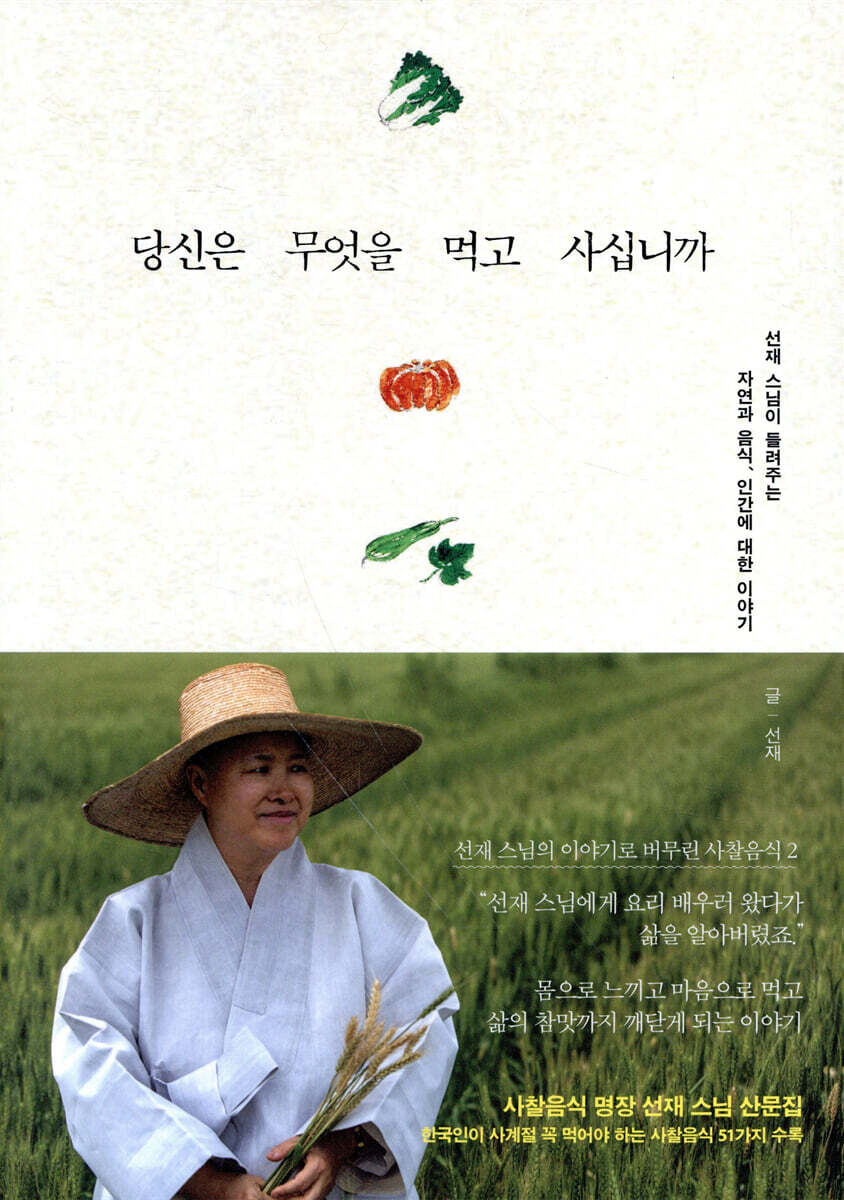
Delicious food is overflowing and the number of chefs is increasing. Why are there more and more people suffering from physical and mental illness? There is a lot of interest in food and food products. Mukbang, cooking competitions, restaurant tours, etc. Food-themed programs are by far the most popular. Riding that wave, the number of chefs among occupations is increasing. Also, the term 'eating alone' has emerged and the variety of instant foods has become surprisingly diverse. In that sense, 'food' is focused solely on consumption, and the standards of 'tasty' and 'not tasty' seem to have become food's greatest virtue. As the number of chefs increases and delicious food becomes abundant, the number of people suffering from physical and mental illness is also increasing. Why is that? Monk Seonjae, a master of temple cuisine, suggests that we look for the answer in temple cuisine again. It has been about 30 years since temple food came out of the mountain gate and came down to the public. How has temple food been understood and practiced among us over the years? I wonder if we are just looking at temple food with the stereotype that it is just one type of food, like Chinese, Japanese, or Korean food. This book is a compilation of stories that Monk Seonjae has wanted to tell while living as a 'food practitioner' for over 30 years. It contains practical recipes that can be eaten right away in everyday life, such as 'What is food as the basis of life?', 'What is the relationship between body, mind, and food?', 'Why is the food of monks so essential for modern people?', and '51 kinds of temple food that Koreans must eat in all four seasons.' What the monk wants to convey through this is a story about the value of nature and humans, food and life, and in other words, the happiness of all living beings. Because food is life, eating is the same as living. |
- You can preview some of the book's contents.
Preview
index
Introduction 4
Prologue_ My Life and Practice Journey 16
Chapter 1: Living and Eating
Cooking is the greatest blessing in the world.
Cooking with my own hands makes me understand life.
The food I miss smells like my mother's scent.
Courage, a life that can be turned around in an instant
Ah, the smell of radish! The best perfume in the world.
From flower to seed, from grandmother to grandson
Live with a heart that sees flowers
People should be beautifully colored with each other.
Food and life are made complete through waiting.
Thinking about life through food
Live as if you always have something to be ashamed of
Habits are hard to form and hard to break.
I don't have any natural taste.
Let me look after myself when I am sick
A dish that is always present on even the simplest and most extravagant tables.
I am a happy enough person.
Monk, I guess the world doesn't give you everything.
Study your body and you can manage your life.
Knowing correctly and working hard is truly the best.
Taste connects hearts and minds
The taste of childhood gives strength to life
Tip: What and how to eat in the flood of food
Chapter 2: Temple Food, Awakening and Caring for Life
All life is one, not two.
Food is the medicine we take every day.
Throw away food through food
We are made of the food we eat.
Thoughts on meat, meat and meat-eating
Thoughts on vegetarianism, vegetarianism and Zen
3 Things a Food Cook Must Have
Taste and taste, deepened by harmony
News, don't save greed
Balwoo, the will to accept what is contained
Tip: A recipe that maximizes the natural flavor
Chapter 3 What do you eat and live on?
When it is quiet, it becomes clear, when it becomes clear, it becomes bright, and when it becomes bright, it becomes visible.
The story of water told by Buddha
Fermentation, the ancient wisdom that connects life to life
A seasoning that is taken as medicine every day
Tip: Developing healthy eating habits for a healthy child and a healthy future.
〔Four Seasonal Temple Foods Koreans Must Eat〕
Spring (March to May) Breathe fresh energy with a bitter taste
Mugwort: Drives away bad energy accumulated in winter _Mugwort pickles
Coriander: Calming a Frustrated Heart - Grilled Acorn Jelly with Coriander Seasoning
Naengi: Wild ginseng eaten in spring _ Naengi and sweet pumpkin dumplings
Mowhee: Endure well anywhere _Mowhee tofu salad
Coneflower: Escape from Depression and Anxiety _ Assorted Spring Vegetable Rice
Summer (June-August) Control the heat and be cautious about new things.
Lettuce: To make one's energy surge _ Lettuce Palace
Potatoes: If potatoes are scarce, the number of patients increases. _Gamjaongsimiguk
Beans: The 'Feel-Good Beans' That Make Everyone Smile - Black Bean Stew
Zucchini: Prevents dementia and cell damage _Zucchini dumplings
Barley: A Grain You Can Eat Without Worrying About Pesticides - Barley Doenjang Bibimbap
Fall (September to November) Ripening, harvesting, and preparing again
Burdock: Stop being impatient and cultivate patience _ Burdock Japchae
Old Pumpkin: Eating a lot of it before the winter solstice prevents stroke. _Old Pumpkin Soup
Ginkgo: Autumn's Best Tonic for Winter - Ginkgo Porridge and Grilled Ginkgo
Yeon: Lighten the body and prevent aging _Yeon Geun Jeon
Cabbage: A precious and appreciated vegetable for Koreans - Cabbage stew with soybean paste
Sancho and Zephyr: Sancho is better than ginseng, and Sancho is better than ginseng. _Sancho Pickles
Winter (March to May) The territory of the mind expands and deepens.
Shiitake Mushrooms: A Benevolent Vegetable That Preserves the Flavor of Other Ingredients - Shiitake Mushroom Tangsuyuk
Tofu and Bean Sprouts: Foods That Benefit the World _ Bean Sprout Soup
Radish: Winter radish is not worth exchanging for ginseng _ Radish pickled with chili leaves
Wakame and Kelp: Anti-Cancer Foods from the Sea _Seaweed Rice
Red Bean: Eat red bean porridge for a smart brain and good study habits.
Prologue_ My Life and Practice Journey 16
Chapter 1: Living and Eating
Cooking is the greatest blessing in the world.
Cooking with my own hands makes me understand life.
The food I miss smells like my mother's scent.
Courage, a life that can be turned around in an instant
Ah, the smell of radish! The best perfume in the world.
From flower to seed, from grandmother to grandson
Live with a heart that sees flowers
People should be beautifully colored with each other.
Food and life are made complete through waiting.
Thinking about life through food
Live as if you always have something to be ashamed of
Habits are hard to form and hard to break.
I don't have any natural taste.
Let me look after myself when I am sick
A dish that is always present on even the simplest and most extravagant tables.
I am a happy enough person.
Monk, I guess the world doesn't give you everything.
Study your body and you can manage your life.
Knowing correctly and working hard is truly the best.
Taste connects hearts and minds
The taste of childhood gives strength to life
Tip: What and how to eat in the flood of food
Chapter 2: Temple Food, Awakening and Caring for Life
All life is one, not two.
Food is the medicine we take every day.
Throw away food through food
We are made of the food we eat.
Thoughts on meat, meat and meat-eating
Thoughts on vegetarianism, vegetarianism and Zen
3 Things a Food Cook Must Have
Taste and taste, deepened by harmony
News, don't save greed
Balwoo, the will to accept what is contained
Tip: A recipe that maximizes the natural flavor
Chapter 3 What do you eat and live on?
When it is quiet, it becomes clear, when it becomes clear, it becomes bright, and when it becomes bright, it becomes visible.
The story of water told by Buddha
Fermentation, the ancient wisdom that connects life to life
A seasoning that is taken as medicine every day
Tip: Developing healthy eating habits for a healthy child and a healthy future.
〔Four Seasonal Temple Foods Koreans Must Eat〕
Spring (March to May) Breathe fresh energy with a bitter taste
Mugwort: Drives away bad energy accumulated in winter _Mugwort pickles
Coriander: Calming a Frustrated Heart - Grilled Acorn Jelly with Coriander Seasoning
Naengi: Wild ginseng eaten in spring _ Naengi and sweet pumpkin dumplings
Mowhee: Endure well anywhere _Mowhee tofu salad
Coneflower: Escape from Depression and Anxiety _ Assorted Spring Vegetable Rice
Summer (June-August) Control the heat and be cautious about new things.
Lettuce: To make one's energy surge _ Lettuce Palace
Potatoes: If potatoes are scarce, the number of patients increases. _Gamjaongsimiguk
Beans: The 'Feel-Good Beans' That Make Everyone Smile - Black Bean Stew
Zucchini: Prevents dementia and cell damage _Zucchini dumplings
Barley: A Grain You Can Eat Without Worrying About Pesticides - Barley Doenjang Bibimbap
Fall (September to November) Ripening, harvesting, and preparing again
Burdock: Stop being impatient and cultivate patience _ Burdock Japchae
Old Pumpkin: Eating a lot of it before the winter solstice prevents stroke. _Old Pumpkin Soup
Ginkgo: Autumn's Best Tonic for Winter - Ginkgo Porridge and Grilled Ginkgo
Yeon: Lighten the body and prevent aging _Yeon Geun Jeon
Cabbage: A precious and appreciated vegetable for Koreans - Cabbage stew with soybean paste
Sancho and Zephyr: Sancho is better than ginseng, and Sancho is better than ginseng. _Sancho Pickles
Winter (March to May) The territory of the mind expands and deepens.
Shiitake Mushrooms: A Benevolent Vegetable That Preserves the Flavor of Other Ingredients - Shiitake Mushroom Tangsuyuk
Tofu and Bean Sprouts: Foods That Benefit the World _ Bean Sprout Soup
Radish: Winter radish is not worth exchanging for ginseng _ Radish pickled with chili leaves
Wakame and Kelp: Anti-Cancer Foods from the Sea _Seaweed Rice
Red Bean: Eat red bean porridge for a smart brain and good study habits.
Into the book
I was sick a long time ago and recovered my health by eating junk food.
Buddha said, 'Self-control of food is self-control of the law.'
It means that you can establish the law (truth) only when you govern your own food.
This means that food is important in practice.
Life is the same.
It sustains life and has a decisive impact on quality of life.
We should live a better life than we do now, harmonizing our body and mind through food, rather than a life that follows the taste of our tongue.
--- p.6
The food of the temple is an alternative that can solve the numerous problems that plague modern people, and it is a philosophy that leads to a positive life.
Food is just something to eat, don't worry too much about what you eat, life is short, let's just eat delicious things, these are the thoughts.
This is laziness and ignorance about food.
If you take food lightly and think, "I'll just eat it deliciously, but what else is there to eat?" and don't try to understand the philosophy of temple food, it's like a thirsty person not drinking from a river.
--- p.6)
Temple food may not be able to make a huge difference in people's lives overnight.
But if you have the opportunity to ask yourself even just once, "What did I eat today?" and look back on your day, it will become a small seed that will change your attitude toward life.
I pray with all my heart today, with a bowl of rice, that you may instill such a ‘small but precious realization.’
--- p.9)
If you know, there is no fear.
Fear grows when it is not seen.
If you try to accurately understand the condition and changes in your body before you have vague fears about your sick body, you will also develop the will to actively seek out ways to deal with them.
It's about becoming bold.
Knowing your body is very important in life.
How many people have ever thought seriously about their bodies?
Healthy, unhealthy.
It's pretty and it's ugly.
Tall, short, fat, thin… If the thoughts about the body come to mind as just a few adjectives or words that describe conditions, it means that we have not seriously thought about our own bodies, or even about the ‘body’.
What is the body, after all?
--- p.130
“Monk, I thought that children just needed to eat well and sleep well.
So I think I mostly made fried or sweet and salty side dishes so that the kids wouldn't have any leftovers.
When the plate was completely empty, I felt proud that I was doing well.
But now I know that it's more important to make sure my children eat good food rather than just giving them food they like.
One day, I met a kid who graduated from my elementary school and he had gained so much weight that it was damaging his health.
Now that I think about it, I feel sorry because I think the food I made might have had an impact.
I just did my best… … .” --- p.137
After hearing this story, most people's eyes waver.
'Ah! Monk, you have to eat food for its flavor.
It's an expression that says, 'Isn't that too much?'
However, if you are not clear about your thoughts about food, you will end up chasing only the taste when eating.
If you only pursue taste, you will end up eating too much and lose your health, and if you lose your health, your work and relationships will also become unsatisfactory.
But if you have a clear idea of what you want to eat, you can live a life of moderation, moderation, and emptiness.
If we stop thinking of food as just a taste on our tongue, we will be able to experience the true taste of life, the taste of wisdom.
--- p.174
The foundation of temple food is Zen food, which aims for enlightenment of the mind.
It is not simply a teaching of caution and prohibition to never eat meat.
It is a teaching that helps us to live a full and healthy life while letting go of our obsession and greed for food.
If the Buddha were to come here today, he would first tell us about balanced messages through stories about life.
If ordinary people must eat meat, they should reduce the amount they eat twice to one, and even if they do eat once, they should eat food that is considerate of life and the environment.
That kind of thinking is more important to us now.
--- p.190
Our body is made up of earth, water, fire, and wind.
People are also a part of nature.
Therefore, all the food and nutrition that humans need is found in nature.
We must eat natural food created by earth, water, fire, and wind.
Grains grown from the soil of the earth, roots underground, fruits grown in the winds of the east, west, south, and north, grass underwater, seaweed in the deeper sea… Only when our bodies accept the vast life of the earth, sky, and sea can we maintain a healthy life.
--- p.193
Buddha said, 'The beginning must be good, the middle must be good, and the end must be good.'
This means that you should carefully prepare the ingredients and watch the entire process of making food.
When I tell stories about these three virtues, some people ask if I'm going a bit too far.
But Buddha said, 'Food is medicine.'
Medicine is something to be taken with caution and care.
If you use the wrong medicine, your health may deteriorate.
We have seen many instances where neglecting the little things can cause everything to fall apart.
--- p.194
Well, if it's a holiday or a day when you get off work early, try boiling some soybean paste stew instead of thinking, "I should just boil some ramen and go to sleep."
Cooking for myself, thinking about making something myself.
Cooking is never a waste of time.
Foods we eat thoughtlessly are taking away many things from us: our health, the joy of life, and the small pleasures.
--- p.224
Monk Seongcheol said:
“When you are calm, you become clear, when you become clear, you become bright, and when you become bright, you see.” This is the principle that when you look at phenomena with a calm mind, you can see everything correctly with wise eyes.
The Buddha tried to achieve enlightenment through fasting and asceticism, but failed. He recovered his strength by eating porridge, and finally, with a peaceful mind, he reached the highest wisdom.
It is the origin of temple food.
Temple food is food that leads ordinary people to wisdom in life, just like the porridge eaten by Buddha.
--- p.237
In spring, when the respiratory system is weak and the mind becomes depressed, it is good to eat bitter and astringent foods.
Foods made with bitter ingredients in particular help to remove toxins from the body that have accumulated during the winter.
There are as many varieties as the spring sunshine in the market, including mugwort, aralia, burdock, mugwort, dandelion, burdock, angelica, bamboo shoots, shepherd's purse, daylily, bamboo shoots, water parsley, water parsley, mugwort, hop leaf greens, gondre greens, coriander, mugwort roots, and three-leafed greens. They are best eaten as side dishes or soups.
--- p.242
People who try coriander for the first time have two reactions.
It tastes so bad, I'll never eat it again.
So there are those who never eat it again, and those who try it once more and discover its true taste.
I realize anew that taste is a matter of training and habit.
At first, I was a person who would even feel nauseous, but once I got to know the taste of coriander, I found it to be delicious.
That's why coriander is also called 'gosoo'.
--- p.245
People usually eat things like samgyetang or eel to beat the heat.
It is about gaining strength by eating the energy contained in the food itself.
However, the basic principle of temple food is that it is food that helps our body produce its own energy.
It is the principle that the body functions on its own and generates strength by facilitating the flow of blood and energy and clearing any blockages.
--- p.268
Are processed foods labeled "sterilized" truly clean? Ham and sausages, while germ-free, aren't necessarily clean.
Seasonal grains harvested using life-saving farming methods are clean food.
There is growing awareness of food additives.
First, I need to set a standard that I won't eat anything if there are words on the packaging that I don't understand.
Mothers nag their children, telling them not to eat this or that.
Before that, we need to build up the children's self-esteem.
We need to teach children how to choose their own food.
Buddha said, 'Self-control of food is self-control of the law.'
It means that you can establish the law (truth) only when you govern your own food.
This means that food is important in practice.
Life is the same.
It sustains life and has a decisive impact on quality of life.
We should live a better life than we do now, harmonizing our body and mind through food, rather than a life that follows the taste of our tongue.
--- p.6
The food of the temple is an alternative that can solve the numerous problems that plague modern people, and it is a philosophy that leads to a positive life.
Food is just something to eat, don't worry too much about what you eat, life is short, let's just eat delicious things, these are the thoughts.
This is laziness and ignorance about food.
If you take food lightly and think, "I'll just eat it deliciously, but what else is there to eat?" and don't try to understand the philosophy of temple food, it's like a thirsty person not drinking from a river.
--- p.6)
Temple food may not be able to make a huge difference in people's lives overnight.
But if you have the opportunity to ask yourself even just once, "What did I eat today?" and look back on your day, it will become a small seed that will change your attitude toward life.
I pray with all my heart today, with a bowl of rice, that you may instill such a ‘small but precious realization.’
--- p.9)
If you know, there is no fear.
Fear grows when it is not seen.
If you try to accurately understand the condition and changes in your body before you have vague fears about your sick body, you will also develop the will to actively seek out ways to deal with them.
It's about becoming bold.
Knowing your body is very important in life.
How many people have ever thought seriously about their bodies?
Healthy, unhealthy.
It's pretty and it's ugly.
Tall, short, fat, thin… If the thoughts about the body come to mind as just a few adjectives or words that describe conditions, it means that we have not seriously thought about our own bodies, or even about the ‘body’.
What is the body, after all?
--- p.130
“Monk, I thought that children just needed to eat well and sleep well.
So I think I mostly made fried or sweet and salty side dishes so that the kids wouldn't have any leftovers.
When the plate was completely empty, I felt proud that I was doing well.
But now I know that it's more important to make sure my children eat good food rather than just giving them food they like.
One day, I met a kid who graduated from my elementary school and he had gained so much weight that it was damaging his health.
Now that I think about it, I feel sorry because I think the food I made might have had an impact.
I just did my best… … .” --- p.137
After hearing this story, most people's eyes waver.
'Ah! Monk, you have to eat food for its flavor.
It's an expression that says, 'Isn't that too much?'
However, if you are not clear about your thoughts about food, you will end up chasing only the taste when eating.
If you only pursue taste, you will end up eating too much and lose your health, and if you lose your health, your work and relationships will also become unsatisfactory.
But if you have a clear idea of what you want to eat, you can live a life of moderation, moderation, and emptiness.
If we stop thinking of food as just a taste on our tongue, we will be able to experience the true taste of life, the taste of wisdom.
--- p.174
The foundation of temple food is Zen food, which aims for enlightenment of the mind.
It is not simply a teaching of caution and prohibition to never eat meat.
It is a teaching that helps us to live a full and healthy life while letting go of our obsession and greed for food.
If the Buddha were to come here today, he would first tell us about balanced messages through stories about life.
If ordinary people must eat meat, they should reduce the amount they eat twice to one, and even if they do eat once, they should eat food that is considerate of life and the environment.
That kind of thinking is more important to us now.
--- p.190
Our body is made up of earth, water, fire, and wind.
People are also a part of nature.
Therefore, all the food and nutrition that humans need is found in nature.
We must eat natural food created by earth, water, fire, and wind.
Grains grown from the soil of the earth, roots underground, fruits grown in the winds of the east, west, south, and north, grass underwater, seaweed in the deeper sea… Only when our bodies accept the vast life of the earth, sky, and sea can we maintain a healthy life.
--- p.193
Buddha said, 'The beginning must be good, the middle must be good, and the end must be good.'
This means that you should carefully prepare the ingredients and watch the entire process of making food.
When I tell stories about these three virtues, some people ask if I'm going a bit too far.
But Buddha said, 'Food is medicine.'
Medicine is something to be taken with caution and care.
If you use the wrong medicine, your health may deteriorate.
We have seen many instances where neglecting the little things can cause everything to fall apart.
--- p.194
Well, if it's a holiday or a day when you get off work early, try boiling some soybean paste stew instead of thinking, "I should just boil some ramen and go to sleep."
Cooking for myself, thinking about making something myself.
Cooking is never a waste of time.
Foods we eat thoughtlessly are taking away many things from us: our health, the joy of life, and the small pleasures.
--- p.224
Monk Seongcheol said:
“When you are calm, you become clear, when you become clear, you become bright, and when you become bright, you see.” This is the principle that when you look at phenomena with a calm mind, you can see everything correctly with wise eyes.
The Buddha tried to achieve enlightenment through fasting and asceticism, but failed. He recovered his strength by eating porridge, and finally, with a peaceful mind, he reached the highest wisdom.
It is the origin of temple food.
Temple food is food that leads ordinary people to wisdom in life, just like the porridge eaten by Buddha.
--- p.237
In spring, when the respiratory system is weak and the mind becomes depressed, it is good to eat bitter and astringent foods.
Foods made with bitter ingredients in particular help to remove toxins from the body that have accumulated during the winter.
There are as many varieties as the spring sunshine in the market, including mugwort, aralia, burdock, mugwort, dandelion, burdock, angelica, bamboo shoots, shepherd's purse, daylily, bamboo shoots, water parsley, water parsley, mugwort, hop leaf greens, gondre greens, coriander, mugwort roots, and three-leafed greens. They are best eaten as side dishes or soups.
--- p.242
People who try coriander for the first time have two reactions.
It tastes so bad, I'll never eat it again.
So there are those who never eat it again, and those who try it once more and discover its true taste.
I realize anew that taste is a matter of training and habit.
At first, I was a person who would even feel nauseous, but once I got to know the taste of coriander, I found it to be delicious.
That's why coriander is also called 'gosoo'.
--- p.245
People usually eat things like samgyetang or eel to beat the heat.
It is about gaining strength by eating the energy contained in the food itself.
However, the basic principle of temple food is that it is food that helps our body produce its own energy.
It is the principle that the body functions on its own and generates strength by facilitating the flow of blood and energy and clearing any blockages.
--- p.268
Are processed foods labeled "sterilized" truly clean? Ham and sausages, while germ-free, aren't necessarily clean.
Seasonal grains harvested using life-saving farming methods are clean food.
There is growing awareness of food additives.
First, I need to set a standard that I won't eat anything if there are words on the packaging that I don't understand.
Mothers nag their children, telling them not to eat this or that.
Before that, we need to build up the children's self-esteem.
We need to teach children how to choose their own food.
--- p.363
Publisher's Review
We are made of what we eat
Temple food that transforms our body, mind, and thoughts
The monk says that before talking about food, let's think about the 'body'.
What is the body to us?
Before Buddha attained enlightenment, practitioners of the time viewed the body as the cause of all afflictions.
In order to cut off the afflictions, he pushed his body to extreme asceticism and sought mental comfort there.
At first, Buddha also followed ascetic practices such as fasting.
But the end was miserable, leaving only a worn-out body.
The Buddha knew that torturing the body was not the right way to attain enlightenment, so he gave up.
And after eating warm porridge and regaining my energy, I finally entered deep meditation and reached enlightenment in a comfortable state.
The porridge eaten by Buddha is the origin of temple food.
Buddha viewed the body not as an object to be shed, but as a subject of enlightenment.
When Buddha first asked those who came to him for advice because they were having difficulties at home, were sick, or had trouble at work, “What do you eat to live?”, he meant to ask them whether they were taking good care of their bodies.
In other words, I thought that I could live wisely only if I looked at what I was eating and living, ate the right foods, and lived with the right thoughts.
Body and mind are connected.
Thoughts and feelings are contained within the vessel called the body.
Body and mind are one organic unity.
Eating food is one of the most important daily creative acts that affects and transforms our body, mind, and spirit.
This is why Buddha left many instructions regarding food.
Chapter 2 of this book, ‘Temple Food: Caring for and Awakening Life’, explains in detail the philosophy and wisdom of temple food based on the sutras (『Yamchakyung』, 『Sabbath Vinaya』, 『Mahasenggi Vinaya』, 『Miscellaneous Arhat Sutra』, 『Suneng-eomgyeong』, 『Nikenjagyeong』, etc.).
How many different types of food do we need?
Throw away food through food
The world is full of so many delicious foods.
In this book, the monk says, “Let us abandon food through food.”
The fact that the monk usually teaches many recipes does not mean that you should eat the food greedily.
Rather, it is a teaching to empty oneself.
It guides you to choose which foods to eat, how to prepare them, and how to eat them, so that you can choose and eat the foods you really need to eat.
Before learning about temple food, people think there is so much to eat in the world.
Then, after learning a little about temple food, they say there is nothing in the world to eat.
Then, after you have a deep understanding of temple food, you will say that there is so much to eat in the world.
Usually, food tends to follow taste.
But can we really say that the taste we think is 'delicious' is really delicious?
Temple food, which aims for natural and seasonal food, makes us reflect on our taste buds.
If you know the true taste and are clear about not chasing only the taste of your tongue, you can choose healthy foods and eat the right amount of food.
There are three flavors you can get from temple food.
It is the taste of the energy of food, the taste of joy, the taste of energy.
The taste of food is the taste of the food itself, and the taste of joy is the taste of the heart being happy because of food.
The taste of energy is a taste that is obtained through practice.
The joy of gaining wisdom through eating food that purifies the body and mind is the taste of practice.
For ordinary people, it is the taste of living a fulfilling life, or in short, the taste of a healthy body and mind.
If everyone learned temple food
The world will become that much safer and more peaceful.
People of all ages and occupations attend Monk Seonjae's temple food lectures.
Newlyweds, doctors, nutritionists, mothers, restaurant owners, doctors, etc., each have their own stories, but most are learning voluntarily for others, such as sick family members, children, or patient care.
Temple food is a place where the altruistic heart that lies at the heart of the human mind is expanded a little further.
A philosophy professor introduced in the text, at the age of middle age (and a man at that!), after taking all of Seonjae’s cooking classes for a year, expressed his final thoughts as follows:
“I teach philosophy at a university.
Philosophy is the study of how to live together.
After thinking about what the best way to live together would be, I concluded that it would be 'food'.
In that sense, food is the end of philosophy.
So what kind of food should we eat? It's temple food.
This is because temple food embodies the philosophy of allowing nature and humans, and humans and humans, to live together.
Love and consideration for life other than our own are the most important conditions for creating a harmonious and united world.
“Temple food is harmony food, food that benefits all beings in the world.” (p. 201)
Temple food is food from nature, a cuisine that preserves life and coexists with all life in nature.
Cooking is a skill and philosophy that everyone must learn in life.
Mothers who have daughters getting married say, “My daughter only studies so much that she doesn’t know how to cook.”
The author always replies that it is not something to brag about and asks that he learn cooking from now on.
Everyone should be able to cook.
Especially, children should try to cook easy dishes one by one from a young age.
It is a very important ability to survive in life.
If you don't cook, you are losing important skills, wisdom, joy, and happiness that go into living.
If everyone, regardless of age or gender, learns and practices temple food, the world will become safer and more peaceful.
In 2016, he was the first person from the Jogye Order of Korean Buddhism to receive the title of Master of Temple Cuisine.
The journey of monk Seonjae's practice and life
When we think of temple food, we usually think of Monk Seonjae.
Recently, the Jogye Order of Korean Buddhism awarded the title of Master of Temple Cuisine to Monk Seonjae for the first time.
For nearly 40 years since becoming a monk, he has firmly rejected and been wary of anything done for fame and fortune, and has been recognized for his efforts in promoting and creating temple food as a bodhisattva practice that brings about change in people's lives.
However, the title of master is not important to a monk.
The monk said.
“I am not a chef, a doctor, a scientist, or a philosopher.
Just being a monk is enough.
There is nothing of higher value to me than this.
Not long ago, I received the title of ‘Temple Food Master’ from the Jogye Order of Korean Buddhism.
However, the true masters of temple food are the monks who practice the spirit of temple food in mountain temples and eat and practice that food.
“The title of Master Chef was given to me to ensure that the spirit and meaning contained in the temple food eaten by the monks in the mountains are not distorted in the world, and to contribute to creating a world of peace for all living beings.” (From the ‘Preface’)
The introduction, 'My Life and Practice Journey', contains the monk's life from before and after becoming a monk to his 60th birthday this year.
The story of his childhood, where he grew up eating the rich food of his mother and grandmother, his journey to become a monk to show filial piety to his parents, his time with troubled youth, and his recovery through temple food after being given a terminal diagnosis, and his subsequent work as a food practitioner to prevent others from experiencing the same pain as he did, are all movingly depicted.
Through the figure of a food practitioner and a human being who lives altruistically before becoming a monk, we can reflect on what a 'complete life' is.
Must-eat foods for Koreans
Includes 51 types of temple food for each season
The most important standard for temple food is ‘seasonal food harvested from nature without harming other living things.’
Seasonal foods, in particular, are foods that are appropriate for the time.
Knowing the time, eating appropriately, and following the times means living in accordance with the rhythm of nature.
The common saying, “Eat according to the season,” is connected to the Buddha’s teaching, “Live in the moment.”
Just as the energy from the food we eat accumulates in our bodies, each moment accumulates to form our life.
Only when you realize at every moment, 'This is how I am living now,' can you feel true joy and happiness.
Buddha said to eat food at the right time.
It is said that the food you eat for breakfast, lunch, and dinner varies depending on your physical condition, but eating food at the right time is also known as 'seasonal food'.
What is seasonal food?
The first is food cooked with seasonal ingredients that follow the rhythm of nature in spring, summer, fall, and winter.
The second is food made with fresh ingredients gathered from nearby areas.
The grains that breathe the same air, drink the same water, and bask in the same sunlight as I was born and raised in the land are the ones that best suit my body.
Third, it is food made from natural, unprocessed ingredients.
Lastly, it is wise to eat a variety of foods in harmony.
The final chapter, “What Do You Eat to Live?” introduces “temple foods that Koreans must eat in all four seasons,” selected by the monk.
This recipe is simple and easy to make, while maximizing the flavor, along with a rich story about each ingredient.
It's a food we've always eaten, but if you understand its meaning and cook it yourself, your physical and mental health will double.
Temple food that transforms our body, mind, and thoughts
The monk says that before talking about food, let's think about the 'body'.
What is the body to us?
Before Buddha attained enlightenment, practitioners of the time viewed the body as the cause of all afflictions.
In order to cut off the afflictions, he pushed his body to extreme asceticism and sought mental comfort there.
At first, Buddha also followed ascetic practices such as fasting.
But the end was miserable, leaving only a worn-out body.
The Buddha knew that torturing the body was not the right way to attain enlightenment, so he gave up.
And after eating warm porridge and regaining my energy, I finally entered deep meditation and reached enlightenment in a comfortable state.
The porridge eaten by Buddha is the origin of temple food.
Buddha viewed the body not as an object to be shed, but as a subject of enlightenment.
When Buddha first asked those who came to him for advice because they were having difficulties at home, were sick, or had trouble at work, “What do you eat to live?”, he meant to ask them whether they were taking good care of their bodies.
In other words, I thought that I could live wisely only if I looked at what I was eating and living, ate the right foods, and lived with the right thoughts.
Body and mind are connected.
Thoughts and feelings are contained within the vessel called the body.
Body and mind are one organic unity.
Eating food is one of the most important daily creative acts that affects and transforms our body, mind, and spirit.
This is why Buddha left many instructions regarding food.
Chapter 2 of this book, ‘Temple Food: Caring for and Awakening Life’, explains in detail the philosophy and wisdom of temple food based on the sutras (『Yamchakyung』, 『Sabbath Vinaya』, 『Mahasenggi Vinaya』, 『Miscellaneous Arhat Sutra』, 『Suneng-eomgyeong』, 『Nikenjagyeong』, etc.).
How many different types of food do we need?
Throw away food through food
The world is full of so many delicious foods.
In this book, the monk says, “Let us abandon food through food.”
The fact that the monk usually teaches many recipes does not mean that you should eat the food greedily.
Rather, it is a teaching to empty oneself.
It guides you to choose which foods to eat, how to prepare them, and how to eat them, so that you can choose and eat the foods you really need to eat.
Before learning about temple food, people think there is so much to eat in the world.
Then, after learning a little about temple food, they say there is nothing in the world to eat.
Then, after you have a deep understanding of temple food, you will say that there is so much to eat in the world.
Usually, food tends to follow taste.
But can we really say that the taste we think is 'delicious' is really delicious?
Temple food, which aims for natural and seasonal food, makes us reflect on our taste buds.
If you know the true taste and are clear about not chasing only the taste of your tongue, you can choose healthy foods and eat the right amount of food.
There are three flavors you can get from temple food.
It is the taste of the energy of food, the taste of joy, the taste of energy.
The taste of food is the taste of the food itself, and the taste of joy is the taste of the heart being happy because of food.
The taste of energy is a taste that is obtained through practice.
The joy of gaining wisdom through eating food that purifies the body and mind is the taste of practice.
For ordinary people, it is the taste of living a fulfilling life, or in short, the taste of a healthy body and mind.
If everyone learned temple food
The world will become that much safer and more peaceful.
People of all ages and occupations attend Monk Seonjae's temple food lectures.
Newlyweds, doctors, nutritionists, mothers, restaurant owners, doctors, etc., each have their own stories, but most are learning voluntarily for others, such as sick family members, children, or patient care.
Temple food is a place where the altruistic heart that lies at the heart of the human mind is expanded a little further.
A philosophy professor introduced in the text, at the age of middle age (and a man at that!), after taking all of Seonjae’s cooking classes for a year, expressed his final thoughts as follows:
“I teach philosophy at a university.
Philosophy is the study of how to live together.
After thinking about what the best way to live together would be, I concluded that it would be 'food'.
In that sense, food is the end of philosophy.
So what kind of food should we eat? It's temple food.
This is because temple food embodies the philosophy of allowing nature and humans, and humans and humans, to live together.
Love and consideration for life other than our own are the most important conditions for creating a harmonious and united world.
“Temple food is harmony food, food that benefits all beings in the world.” (p. 201)
Temple food is food from nature, a cuisine that preserves life and coexists with all life in nature.
Cooking is a skill and philosophy that everyone must learn in life.
Mothers who have daughters getting married say, “My daughter only studies so much that she doesn’t know how to cook.”
The author always replies that it is not something to brag about and asks that he learn cooking from now on.
Everyone should be able to cook.
Especially, children should try to cook easy dishes one by one from a young age.
It is a very important ability to survive in life.
If you don't cook, you are losing important skills, wisdom, joy, and happiness that go into living.
If everyone, regardless of age or gender, learns and practices temple food, the world will become safer and more peaceful.
In 2016, he was the first person from the Jogye Order of Korean Buddhism to receive the title of Master of Temple Cuisine.
The journey of monk Seonjae's practice and life
When we think of temple food, we usually think of Monk Seonjae.
Recently, the Jogye Order of Korean Buddhism awarded the title of Master of Temple Cuisine to Monk Seonjae for the first time.
For nearly 40 years since becoming a monk, he has firmly rejected and been wary of anything done for fame and fortune, and has been recognized for his efforts in promoting and creating temple food as a bodhisattva practice that brings about change in people's lives.
However, the title of master is not important to a monk.
The monk said.
“I am not a chef, a doctor, a scientist, or a philosopher.
Just being a monk is enough.
There is nothing of higher value to me than this.
Not long ago, I received the title of ‘Temple Food Master’ from the Jogye Order of Korean Buddhism.
However, the true masters of temple food are the monks who practice the spirit of temple food in mountain temples and eat and practice that food.
“The title of Master Chef was given to me to ensure that the spirit and meaning contained in the temple food eaten by the monks in the mountains are not distorted in the world, and to contribute to creating a world of peace for all living beings.” (From the ‘Preface’)
The introduction, 'My Life and Practice Journey', contains the monk's life from before and after becoming a monk to his 60th birthday this year.
The story of his childhood, where he grew up eating the rich food of his mother and grandmother, his journey to become a monk to show filial piety to his parents, his time with troubled youth, and his recovery through temple food after being given a terminal diagnosis, and his subsequent work as a food practitioner to prevent others from experiencing the same pain as he did, are all movingly depicted.
Through the figure of a food practitioner and a human being who lives altruistically before becoming a monk, we can reflect on what a 'complete life' is.
Must-eat foods for Koreans
Includes 51 types of temple food for each season
The most important standard for temple food is ‘seasonal food harvested from nature without harming other living things.’
Seasonal foods, in particular, are foods that are appropriate for the time.
Knowing the time, eating appropriately, and following the times means living in accordance with the rhythm of nature.
The common saying, “Eat according to the season,” is connected to the Buddha’s teaching, “Live in the moment.”
Just as the energy from the food we eat accumulates in our bodies, each moment accumulates to form our life.
Only when you realize at every moment, 'This is how I am living now,' can you feel true joy and happiness.
Buddha said to eat food at the right time.
It is said that the food you eat for breakfast, lunch, and dinner varies depending on your physical condition, but eating food at the right time is also known as 'seasonal food'.
What is seasonal food?
The first is food cooked with seasonal ingredients that follow the rhythm of nature in spring, summer, fall, and winter.
The second is food made with fresh ingredients gathered from nearby areas.
The grains that breathe the same air, drink the same water, and bask in the same sunlight as I was born and raised in the land are the ones that best suit my body.
Third, it is food made from natural, unprocessed ingredients.
Lastly, it is wise to eat a variety of foods in harmony.
The final chapter, “What Do You Eat to Live?” introduces “temple foods that Koreans must eat in all four seasons,” selected by the monk.
This recipe is simple and easy to make, while maximizing the flavor, along with a rich story about each ingredient.
It's a food we've always eaten, but if you understand its meaning and cook it yourself, your physical and mental health will double.
GOODS SPECIFICS
- Date of publication: December 16, 2016
- Page count, weight, size: 368 pages | 545g | 150*215*22mm
- ISBN13: 9788974793357
- ISBN10: 8974793350
You may also like
카테고리
korean


korean

![GQ KOREA Mark (Monthly): December [2025]](http://librairie.coreenne.fr/cdn/shop/files/8ef265dbbfbf186523ed75ba7319009d.jpg?v=1765340328&width=3840)


