

From leaf to cup
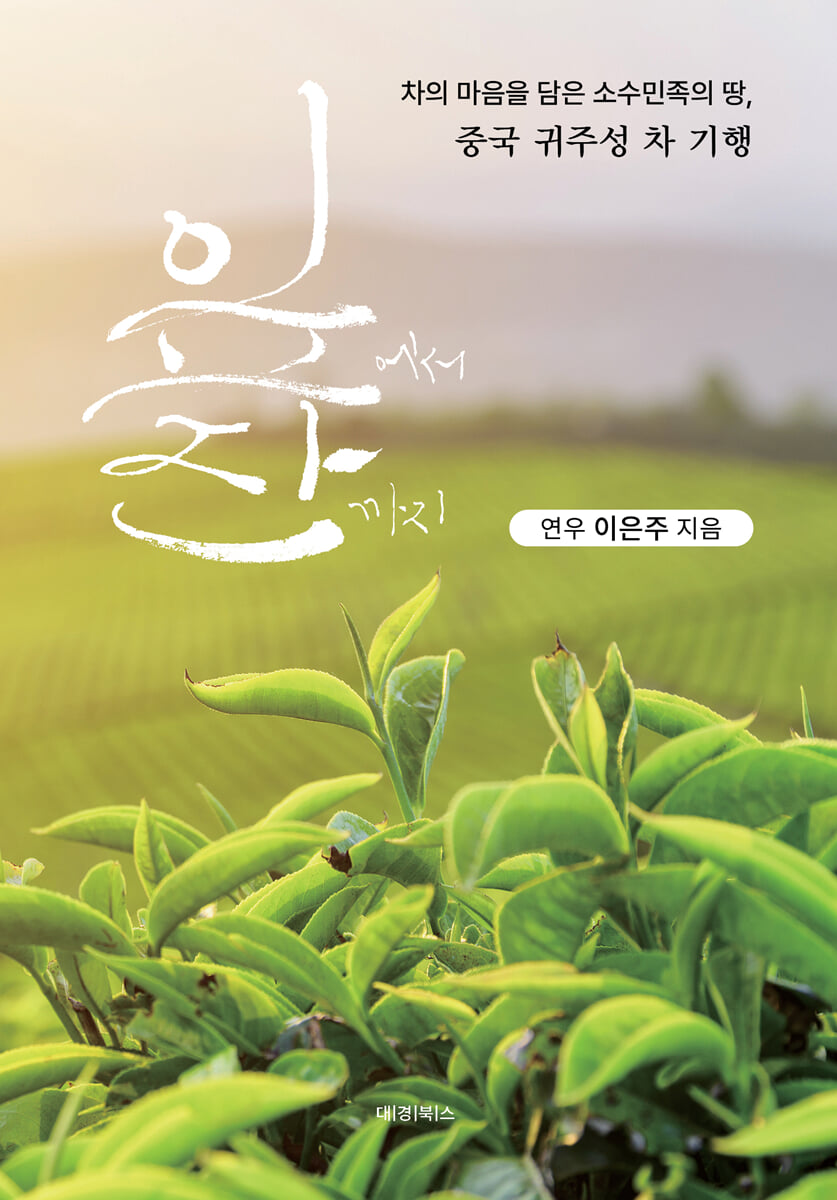 |
Description
Book Introduction
A Tea Travelogue of Guizhou Province, China, a Land of Ethnic Minorities Embracing the Heart of Tea
Guizhou, China, a land of karst plateaus, frequent fog, and limestone soil.
A tea travelogue that experiences firsthand the process by which the temperature difference between day and night, humidity in the air, and minerals in the soil are linked to the aroma, taste, and aftertaste within a cup.
While feeling the wind of the Nasagak Mountains, I learned the stories of the plateau, got used to picking tea leaves in the tea fields of Dogyun Pyongyang Village, and before the fire of Salcheong and Yuyeom, I took to heart the saying, “Good tea cannot overcome fire.”
I recorded the moment when I leisurely walked along the stone pavement of Seokpan Street and absorbed the life of the Miao people with a cup of tea.
Guizhou, China, a land of karst plateaus, frequent fog, and limestone soil.
A tea travelogue that experiences firsthand the process by which the temperature difference between day and night, humidity in the air, and minerals in the soil are linked to the aroma, taste, and aftertaste within a cup.
While feeling the wind of the Nasagak Mountains, I learned the stories of the plateau, got used to picking tea leaves in the tea fields of Dogyun Pyongyang Village, and before the fire of Salcheong and Yuyeom, I took to heart the saying, “Good tea cannot overcome fire.”
I recorded the moment when I leisurely walked along the stone pavement of Seokpan Street and absorbed the life of the Miao people with a cup of tea.
- You can preview some of the book's contents.
Preview
index
Prologue _3
Part 1: The Land of Tea Encountered on the Road _11
Between Welcome and Tribulation _13
Green Land Guizhou _16
Part 2: Do-gyun and Mo-cheom's Green Tea Leaves _25
A place where all the winds of the world meet _27
Learning from the Wind of the Screw _35
White fur, wavy - A day spent in the Dokyunmocheom tea fields _37
Conception and Bamboo Field _49
Part 3: Bonggang, the Wind of the Heavenly Spirit _59
Shin In-ryeong's Tea Factory Tour _61
Life Experiences from Dawon _69
Part 4: Memories of Exile, Do-gyun's Light _79
Gapsuru and Baekjagyo _81
Cheonbokmyeongcha found in Guizhou Province _91
Stone Plate - Walking and Listening to the Miao Time _96
Part 5: Qingtang Village High-level Tea Ceremony - Tea Scent on the Ridge _105
People of Qingtang Village _107
Chingtang Village Duyunhong _116
Part 6: A Tale, Tea Master Da-ye's Black Tea _125
A Tale - In the Yard of Dayesa Hyangok _127
Hyangok Seonsaeng's Tea Ceremony: Tea Ceremony Memorized by the Body _133
Yuchatang - A Morning Where Tea Becomes Soup _138
Part 7: The Endless Sea of Tea _143
Where Do the Tea Leaves of Manmuchahae Go? _145
Guizhou Tea Industry Museum - Factory Time, National Memory _153
Part 8: Learning and Reflection _159
Guizhou Provincial Academy of Agricultural Sciences - A Cradle of Tea Research _161
Hwasigu Juan Hyundai High-Efficiency Vehicle Demonstration Complex - Gochasudawon _170
An Afternoon Drink at Gwiyang Forest Park and Heewon Seowon _174
Part 9: Life Wisdom Learned in Guizhou _185
Same Mountain, Different Car _187
Tea resembles mountains and people _191
Appendix: From Tradition to Industry
- Tea, Following the Steps of a Civilization _195
Epilogue _203
Part 1: The Land of Tea Encountered on the Road _11
Between Welcome and Tribulation _13
Green Land Guizhou _16
Part 2: Do-gyun and Mo-cheom's Green Tea Leaves _25
A place where all the winds of the world meet _27
Learning from the Wind of the Screw _35
White fur, wavy - A day spent in the Dokyunmocheom tea fields _37
Conception and Bamboo Field _49
Part 3: Bonggang, the Wind of the Heavenly Spirit _59
Shin In-ryeong's Tea Factory Tour _61
Life Experiences from Dawon _69
Part 4: Memories of Exile, Do-gyun's Light _79
Gapsuru and Baekjagyo _81
Cheonbokmyeongcha found in Guizhou Province _91
Stone Plate - Walking and Listening to the Miao Time _96
Part 5: Qingtang Village High-level Tea Ceremony - Tea Scent on the Ridge _105
People of Qingtang Village _107
Chingtang Village Duyunhong _116
Part 6: A Tale, Tea Master Da-ye's Black Tea _125
A Tale - In the Yard of Dayesa Hyangok _127
Hyangok Seonsaeng's Tea Ceremony: Tea Ceremony Memorized by the Body _133
Yuchatang - A Morning Where Tea Becomes Soup _138
Part 7: The Endless Sea of Tea _143
Where Do the Tea Leaves of Manmuchahae Go? _145
Guizhou Tea Industry Museum - Factory Time, National Memory _153
Part 8: Learning and Reflection _159
Guizhou Provincial Academy of Agricultural Sciences - A Cradle of Tea Research _161
Hwasigu Juan Hyundai High-Efficiency Vehicle Demonstration Complex - Gochasudawon _170
An Afternoon Drink at Gwiyang Forest Park and Heewon Seowon _174
Part 9: Life Wisdom Learned in Guizhou _185
Same Mountain, Different Car _187
Tea resembles mountains and people _191
Appendix: From Tradition to Industry
- Tea, Following the Steps of a Civilization _195
Epilogue _203
Detailed image

Into the book
The thirteenth Chinese tea tour.
The plane departed from Incheon and landed in Shanghai, and before transferring to a domestic flight to Guizhou, I was once again called out to immigration.
At first I was confused, but now I'm used to it because it happens so often every time I come to China.
When I ask, “What’s going on?” the person in charge always replies, “It’s nothing.”
However, the time spent going through secondary screening at some corner of the airport, raising your forehead and opening your ears to confirm your identity, is not pleasant.
Crossing the threshold of travel sometimes involves such small but tense procedures.
--- p.14
The green land has already prepared a lot.
The clarity of the layers of sea level, the minerals of limestone, the lingering fog, the communication of people who do not speak the same language.
The temperature difference between day and night is a process of becoming a difference.
My job is to listen to that journey, trace it with my fingertips, and translate it into words.
From the airport to the city, from the city to the mountain, and from the mountain to people again.
The flow of the journey keeps changing, but my feelings about the car remain the same.
A leaf of tea.
So the first chapter begins at the airport.
I stand between my reflection in the glass wall of Longdongbao, the low wind blowing across the runway, and us, strangers gathered together, making a pledge.
As the mountain permitted, in the order the leaves taught.
I will see clearly and write it down well.
On the next page, we head to Do-gyun's (Du-win) tea field.
I feel the white hairs of the 65,000 sprouts that have gathered to form one root with my fingertips, remember the warmth of the warm spring sunlight, and learn the teachings of fire.
--- p.23
The scenery here doesn't flow in just one direction.
Clearness and fog, light and wind, silence and pushing, all alternately block my vision.
Maybe that's why.
The mind is not easily able to come to a conclusion, and everyone in the group wants to walk a little further.
I put aside the pressure of time passing by for a moment and felt my body and mind standing here now.
The wind rustled, the leaves touched, the temperature dropped, my breath caught, and in between, I walked along the distant road that stretched out without a plan, and the pace of the trip changed.
The group decided to walk a little further and walk some more.
I'm just grateful for that endless road.
--- p.32
That evening, the dinner table was set with tea leaves.
The food on the table showed today's journey again.
Ten dishes were placed on a round table, and we ate them while going around the table. In the center was a clear soup made by boiling the bones of the chicken we ate during the day, followed by stir-fried meat with bracken, eggs with tea leaves, pickled meat with lots of spices, a salad with cucumbers and tomatoes, braised freshwater fish with lots of peppers, stir-fried pumpkin, braised meat that is difficult to describe in words, and a plate of mango.
It's a table that makes you feel like you're on a culinary journey.
Sometimes, when I chewed on something like 'Hwajao', which is similar to the Sichuan pepper we eat in Korea, I would shed tears because of the terrifyingly strong taste.
However, the Maotai that was served as a special treat was enough to liven up the mood, and the strangers gradually opened up and started talking.
It was their culture to treat their guests with utmost respect, ensuring they ate and drank well, and their loving hearts filled them with precious drinks and alcohol late into the night, finally completing their day.
--- p.46
Here, a question that I have been wondering about for a long time has been answered.
It was a reminder.
It wasn't the circular rotation I knew.
In the 170 degree heat, the drum shuttles back and forth, shaking the leaves countless times.
The leaves rub against each other, hiding the lines and creating surfaces, which gradually roll up into smaller, harder beads.
If you put it on your hand, it feels smooth and taut.
It has a slightly glossy appearance when exposed to light.
The shape called the pearl accurately describes the rhythm of the machine.
There, green tea made this way was called pearl tea.
It was small and black and shiny like a pearl.
--- p.66
If you saw the Japsu Bridge on the Nanming River on the first morning, the last morning of your trip was decorated with the Baekja Bridge on the Dojun Jianhe River.
This bridge, the oldest in Dogyun, is said to have been built by a man named Tang Wensheng during the Tang Dynasty, following his family line.
He was over 50 years old and had no children, so he devoted his heart to building a bridge, and decided to build the first of 171 bridges across the Geomha River.
Construction took five years, and the child was born before the bridge was completed.
When the legs were formed, the combined ages of the wife and Tang Munsaeng were exactly 100 years old.
So, the story goes that the bridge was named Baekjagyo (百子橋), meaning ‘a son was born at the age of 100.’
--- p.86
The history of the Miao people was by no means smooth.
A people who were forced to flee from the center of China, suffer constant war and oppression, and are forced to hide deep in the mountains of the south.
During the Qing Dynasty, the 'Myomin Uprising', in which people refused to pay taxes and rose up to defend their freedom, left hundreds of thousands of victims.
Eventually, many people left their homeland and scattered to Vietnam, Laos, and Thailand.
This stone path is not just a simple road, but may be a trace of wandering and tears that have continued for hundreds of years.
But their lives were not just a tragedy.
The clothes I was wearing now and the silverwork that adorned my body were proof of that.
Silver was not just a decoration for the Miao people, but also a symbol of wealth, blessings, and the power to ward off evil spirits.
On her wedding day, the bride wore silver jewelry all over her body, shining like silver armor.
The weight of the ornaments, which weighed several kilograms, was probably the weight of pride passed down through generations.
--- p.101
Good cars are ultimately made by good people.
'Sincerity over numbers, daily life over explanations.' I do 'incense megim' three times every three days, and I willingly wait for the time when I finally find my taste after half a year.
Even though all the pre-orders are sold out, the fact that they generously offer freshly made tea shows not confidence in selling, but confidence in the process.
The belief that just as a car makes a turn every year, trust also builds up every year.
So he concludes, “Tea reincarnates.”
--- p.122)
Teacher Hyangok's hand movements are without any unnecessary details.
Pour hot water into a teapot to preheat it, then turn the cup over the water to warm it.
He describes this process as 'cleaning'.
The tips of her fingers, emptying the glass with tongs and putting it down, are as light as a butterfly.
The black tea shown before us had gold flowers blooming densely.
This is what black tea looks like, well-made and well-preserved for a long time.
After the first rain, the fragrance is deep and the aftertaste is long.
--- p.127
As I walked around the factory, I felt like an invisible hand was following me.
Hot breath brushes against my cheek, and the scent of tea, like orchids, rising from somewhere, fills the factory, creating an illusion.
As I passed by the stopped machine, the rattling sound of the machine came back to life in my ears even in the silence.
At that moment, I felt like I was a worker, not a visitor.
I imagined testing the temperature of the iron with my palm, lighting a fire, shaking the tea leaves, and restarting a stopped wheel.
The heat and scent of the old air, the memories of countless hands, remained layered, so that even though nothing was moving, everything seemed to still be moving.
The detailed story of Chinese tea presented at the Guizhou Tea Industry Museum is summarized at the end of this book by translating the materials displayed inside the museum.
--- p.157
There are about 54,000 tea trees in Juanhyang, and among them, about 2,100 are high-quality tea plants.
The tea tree we visited is the oldest of the 54,000 trees here, a specimen that is over 2,000 years old.
I spread my arms wide in front of the stem that was over 60cm in diameter at breast height and hugged it, and I even picked and tasted the leaves that were just starting to grow.
The professor says, turning over the leaf.
“It is a shrub-like cultivar with nine pairs of veins, oval leaves and shallowly serrated leaves, and is considered one of the ‘oldest and largest’ colonies in China.
“The higher order is not just an old tree, but a gene that proves the history of taste.”
--- p.172
What green tea taught me was 'the clarity of this moment, now', and what black tea taught me was 'the depth that time gives'.
One is the fingertips that open the first page of spring, the other is the mountain that covers the back cover of the season. The two are the same, but the glasses are different.
And that difference is what makes travel interesting.
Next time someone asks, I'll answer like this.
“When choosing green tea, look for a delicate fragrance like the first spring water, and when choosing black tea, look for a aftertaste and richness.”
If clarity comes first, choose green tea. If depth lingers, choose black tea.
Some days it could be both.
We learned different teas on the same mountain.
--- p.189
As I close this book, I rewrite the summary of my trip in one gulp.
The first glass reflects the past, the next glass illuminates the present, and the last glass foreshadows the future.
The door is already open.
Crossing the threshold of the modern automobile industry involves moving massive equipment and brewing each leaf properly, at the right time, at the right temperature.
I hope that readers will feel the same wind at that door someday.
What we drink is ultimately nature, labor, and time.
And when it all comes together in one cup of incense, the old world and the new world quietly join hands at the same table.
The air of Guizhou is filled with the refreshing coolness that comes from the high altitude, low latitude, and fog of this land.
The fingertips of workers in old photographs, the lab notes of researchers, the blueprints of engineers, and the lives of harvesters are revealed in a single sip of shame.
History may ultimately be like a cup of tea, something to be sipped hot, steeped slowly, and then filtered and drunk.
The plane departed from Incheon and landed in Shanghai, and before transferring to a domestic flight to Guizhou, I was once again called out to immigration.
At first I was confused, but now I'm used to it because it happens so often every time I come to China.
When I ask, “What’s going on?” the person in charge always replies, “It’s nothing.”
However, the time spent going through secondary screening at some corner of the airport, raising your forehead and opening your ears to confirm your identity, is not pleasant.
Crossing the threshold of travel sometimes involves such small but tense procedures.
--- p.14
The green land has already prepared a lot.
The clarity of the layers of sea level, the minerals of limestone, the lingering fog, the communication of people who do not speak the same language.
The temperature difference between day and night is a process of becoming a difference.
My job is to listen to that journey, trace it with my fingertips, and translate it into words.
From the airport to the city, from the city to the mountain, and from the mountain to people again.
The flow of the journey keeps changing, but my feelings about the car remain the same.
A leaf of tea.
So the first chapter begins at the airport.
I stand between my reflection in the glass wall of Longdongbao, the low wind blowing across the runway, and us, strangers gathered together, making a pledge.
As the mountain permitted, in the order the leaves taught.
I will see clearly and write it down well.
On the next page, we head to Do-gyun's (Du-win) tea field.
I feel the white hairs of the 65,000 sprouts that have gathered to form one root with my fingertips, remember the warmth of the warm spring sunlight, and learn the teachings of fire.
--- p.23
The scenery here doesn't flow in just one direction.
Clearness and fog, light and wind, silence and pushing, all alternately block my vision.
Maybe that's why.
The mind is not easily able to come to a conclusion, and everyone in the group wants to walk a little further.
I put aside the pressure of time passing by for a moment and felt my body and mind standing here now.
The wind rustled, the leaves touched, the temperature dropped, my breath caught, and in between, I walked along the distant road that stretched out without a plan, and the pace of the trip changed.
The group decided to walk a little further and walk some more.
I'm just grateful for that endless road.
--- p.32
That evening, the dinner table was set with tea leaves.
The food on the table showed today's journey again.
Ten dishes were placed on a round table, and we ate them while going around the table. In the center was a clear soup made by boiling the bones of the chicken we ate during the day, followed by stir-fried meat with bracken, eggs with tea leaves, pickled meat with lots of spices, a salad with cucumbers and tomatoes, braised freshwater fish with lots of peppers, stir-fried pumpkin, braised meat that is difficult to describe in words, and a plate of mango.
It's a table that makes you feel like you're on a culinary journey.
Sometimes, when I chewed on something like 'Hwajao', which is similar to the Sichuan pepper we eat in Korea, I would shed tears because of the terrifyingly strong taste.
However, the Maotai that was served as a special treat was enough to liven up the mood, and the strangers gradually opened up and started talking.
It was their culture to treat their guests with utmost respect, ensuring they ate and drank well, and their loving hearts filled them with precious drinks and alcohol late into the night, finally completing their day.
--- p.46
Here, a question that I have been wondering about for a long time has been answered.
It was a reminder.
It wasn't the circular rotation I knew.
In the 170 degree heat, the drum shuttles back and forth, shaking the leaves countless times.
The leaves rub against each other, hiding the lines and creating surfaces, which gradually roll up into smaller, harder beads.
If you put it on your hand, it feels smooth and taut.
It has a slightly glossy appearance when exposed to light.
The shape called the pearl accurately describes the rhythm of the machine.
There, green tea made this way was called pearl tea.
It was small and black and shiny like a pearl.
--- p.66
If you saw the Japsu Bridge on the Nanming River on the first morning, the last morning of your trip was decorated with the Baekja Bridge on the Dojun Jianhe River.
This bridge, the oldest in Dogyun, is said to have been built by a man named Tang Wensheng during the Tang Dynasty, following his family line.
He was over 50 years old and had no children, so he devoted his heart to building a bridge, and decided to build the first of 171 bridges across the Geomha River.
Construction took five years, and the child was born before the bridge was completed.
When the legs were formed, the combined ages of the wife and Tang Munsaeng were exactly 100 years old.
So, the story goes that the bridge was named Baekjagyo (百子橋), meaning ‘a son was born at the age of 100.’
--- p.86
The history of the Miao people was by no means smooth.
A people who were forced to flee from the center of China, suffer constant war and oppression, and are forced to hide deep in the mountains of the south.
During the Qing Dynasty, the 'Myomin Uprising', in which people refused to pay taxes and rose up to defend their freedom, left hundreds of thousands of victims.
Eventually, many people left their homeland and scattered to Vietnam, Laos, and Thailand.
This stone path is not just a simple road, but may be a trace of wandering and tears that have continued for hundreds of years.
But their lives were not just a tragedy.
The clothes I was wearing now and the silverwork that adorned my body were proof of that.
Silver was not just a decoration for the Miao people, but also a symbol of wealth, blessings, and the power to ward off evil spirits.
On her wedding day, the bride wore silver jewelry all over her body, shining like silver armor.
The weight of the ornaments, which weighed several kilograms, was probably the weight of pride passed down through generations.
--- p.101
Good cars are ultimately made by good people.
'Sincerity over numbers, daily life over explanations.' I do 'incense megim' three times every three days, and I willingly wait for the time when I finally find my taste after half a year.
Even though all the pre-orders are sold out, the fact that they generously offer freshly made tea shows not confidence in selling, but confidence in the process.
The belief that just as a car makes a turn every year, trust also builds up every year.
So he concludes, “Tea reincarnates.”
--- p.122)
Teacher Hyangok's hand movements are without any unnecessary details.
Pour hot water into a teapot to preheat it, then turn the cup over the water to warm it.
He describes this process as 'cleaning'.
The tips of her fingers, emptying the glass with tongs and putting it down, are as light as a butterfly.
The black tea shown before us had gold flowers blooming densely.
This is what black tea looks like, well-made and well-preserved for a long time.
After the first rain, the fragrance is deep and the aftertaste is long.
--- p.127
As I walked around the factory, I felt like an invisible hand was following me.
Hot breath brushes against my cheek, and the scent of tea, like orchids, rising from somewhere, fills the factory, creating an illusion.
As I passed by the stopped machine, the rattling sound of the machine came back to life in my ears even in the silence.
At that moment, I felt like I was a worker, not a visitor.
I imagined testing the temperature of the iron with my palm, lighting a fire, shaking the tea leaves, and restarting a stopped wheel.
The heat and scent of the old air, the memories of countless hands, remained layered, so that even though nothing was moving, everything seemed to still be moving.
The detailed story of Chinese tea presented at the Guizhou Tea Industry Museum is summarized at the end of this book by translating the materials displayed inside the museum.
--- p.157
There are about 54,000 tea trees in Juanhyang, and among them, about 2,100 are high-quality tea plants.
The tea tree we visited is the oldest of the 54,000 trees here, a specimen that is over 2,000 years old.
I spread my arms wide in front of the stem that was over 60cm in diameter at breast height and hugged it, and I even picked and tasted the leaves that were just starting to grow.
The professor says, turning over the leaf.
“It is a shrub-like cultivar with nine pairs of veins, oval leaves and shallowly serrated leaves, and is considered one of the ‘oldest and largest’ colonies in China.
“The higher order is not just an old tree, but a gene that proves the history of taste.”
--- p.172
What green tea taught me was 'the clarity of this moment, now', and what black tea taught me was 'the depth that time gives'.
One is the fingertips that open the first page of spring, the other is the mountain that covers the back cover of the season. The two are the same, but the glasses are different.
And that difference is what makes travel interesting.
Next time someone asks, I'll answer like this.
“When choosing green tea, look for a delicate fragrance like the first spring water, and when choosing black tea, look for a aftertaste and richness.”
If clarity comes first, choose green tea. If depth lingers, choose black tea.
Some days it could be both.
We learned different teas on the same mountain.
--- p.189
As I close this book, I rewrite the summary of my trip in one gulp.
The first glass reflects the past, the next glass illuminates the present, and the last glass foreshadows the future.
The door is already open.
Crossing the threshold of the modern automobile industry involves moving massive equipment and brewing each leaf properly, at the right time, at the right temperature.
I hope that readers will feel the same wind at that door someday.
What we drink is ultimately nature, labor, and time.
And when it all comes together in one cup of incense, the old world and the new world quietly join hands at the same table.
The air of Guizhou is filled with the refreshing coolness that comes from the high altitude, low latitude, and fog of this land.
The fingertips of workers in old photographs, the lab notes of researchers, the blueprints of engineers, and the lives of harvesters are revealed in a single sip of shame.
History may ultimately be like a cup of tea, something to be sipped hot, steeped slowly, and then filtered and drunk.
--- p.205
Publisher's Review
A Tea Travelogue of Guizhou Province, China, a Land of Ethnic Minorities Embracing the Heart of Tea
Guizhou Province is a land of ethnic minorities, with karst plateaus, frequent fog, and limestone soil.
The days are short and the night air is cold.
In an environment conducive to the growth of tea trees, the leaves are densely packed together, producing a fragrant aroma.
Guizhou Province has 92% of its total area covered by mountains.
I was curious about the lives of the people of the castle, who lived in a very narrow land area, entangled in the mountains and deep within the mountains.
I planned the trip because I wanted to walk, touch, and see for myself how the terrain and climate change the fate of the leaves.
It is a journey to physically experience the process by which the temperature difference between day and night, the humidity in the air, and the minerals in the soil are connected to the fragrance, taste, and aftertaste in a single cup.
While feeling the wind of the conch shell, I learn the stories of the plateau, get used to picking tea leaves in the tea fields of Dogyun (Duyun, Do), Pyongyang Village, and before the fire of Salcheong and Yuyeom, I take to heart the saying, “Good tea cannot overcome fire.”
I recorded the moment when I leisurely walked along the stone pavement of Seokpan Street and absorbed the life of the Miao people with a cup of tea.
So this book is a travelogue, a study note, a field record, and a reflective essay.
Author Yeonwoo Lee Eun-ju spends her days teaching tea making and usage methods and expanding tea culture.
Since establishing the Korean Medicinal Tea Flower Tea Association, I have been providing tea education for 10 years and have been running a small tea house called Dadati House on the outskirts of Gyeongju for 5 years.
He is leading the way in spreading tea culture by incorporating the experiences he has learned from walking through tea fields and Jeddah into his classes and writings.
In 2023, he won the Proud Tea Culture Award and the Innovation Leader Award, and in 2024, he published the book “Taiwanese Tea Journey in Search of Green Gold.”
This book was also published to share with readers the stories of people who have lived with tea.
In this book, the things you see are vivid, the scenery is realistic, the information is clear, and the scents last longer than your memory.
At the end of each chapter, a 'Tea Note' is provided to concisely summarize the origins, harvesting season, key points of Jeddah, and recommended rainforests. In the main text, sentences about people and places are translated as verbatim as possible.
Sometimes, the subtle details of life, like the stitches of Miao embroidery, and sometimes, emotions that fall all at once like the waterfall, were displayed flatly between emotions and sentences.
The representative teas the author encountered in Guizhou Province are as follows.
If Do-gyun-mo-jeom (都 毛尖) is the beginning of a tender spring with evenly rising white hair, the freshness of the golden water color of the first rain forest, and the subtle savory taste that lingers on the tongue, then Jun-i-hong (遵 ) has a long aftertaste that ends the day with a reddish hue.
Between the two cars, the author recorded the sights of the mountains, the pulse of the city, and the warmth of the people.
The design of the journey was simple.
From leaf to cup.
Guizhou Province is a land of ethnic minorities, with karst plateaus, frequent fog, and limestone soil.
The days are short and the night air is cold.
In an environment conducive to the growth of tea trees, the leaves are densely packed together, producing a fragrant aroma.
Guizhou Province has 92% of its total area covered by mountains.
I was curious about the lives of the people of the castle, who lived in a very narrow land area, entangled in the mountains and deep within the mountains.
I planned the trip because I wanted to walk, touch, and see for myself how the terrain and climate change the fate of the leaves.
It is a journey to physically experience the process by which the temperature difference between day and night, the humidity in the air, and the minerals in the soil are connected to the fragrance, taste, and aftertaste in a single cup.
While feeling the wind of the conch shell, I learn the stories of the plateau, get used to picking tea leaves in the tea fields of Dogyun (Duyun, Do), Pyongyang Village, and before the fire of Salcheong and Yuyeom, I take to heart the saying, “Good tea cannot overcome fire.”
I recorded the moment when I leisurely walked along the stone pavement of Seokpan Street and absorbed the life of the Miao people with a cup of tea.
So this book is a travelogue, a study note, a field record, and a reflective essay.
Author Yeonwoo Lee Eun-ju spends her days teaching tea making and usage methods and expanding tea culture.
Since establishing the Korean Medicinal Tea Flower Tea Association, I have been providing tea education for 10 years and have been running a small tea house called Dadati House on the outskirts of Gyeongju for 5 years.
He is leading the way in spreading tea culture by incorporating the experiences he has learned from walking through tea fields and Jeddah into his classes and writings.
In 2023, he won the Proud Tea Culture Award and the Innovation Leader Award, and in 2024, he published the book “Taiwanese Tea Journey in Search of Green Gold.”
This book was also published to share with readers the stories of people who have lived with tea.
In this book, the things you see are vivid, the scenery is realistic, the information is clear, and the scents last longer than your memory.
At the end of each chapter, a 'Tea Note' is provided to concisely summarize the origins, harvesting season, key points of Jeddah, and recommended rainforests. In the main text, sentences about people and places are translated as verbatim as possible.
Sometimes, the subtle details of life, like the stitches of Miao embroidery, and sometimes, emotions that fall all at once like the waterfall, were displayed flatly between emotions and sentences.
The representative teas the author encountered in Guizhou Province are as follows.
If Do-gyun-mo-jeom (都 毛尖) is the beginning of a tender spring with evenly rising white hair, the freshness of the golden water color of the first rain forest, and the subtle savory taste that lingers on the tongue, then Jun-i-hong (遵 ) has a long aftertaste that ends the day with a reddish hue.
Between the two cars, the author recorded the sights of the mountains, the pulse of the city, and the warmth of the people.
The design of the journey was simple.
From leaf to cup.
GOODS SPECIFICS
- Date of issue: November 15, 2025
- Page count, weight, size: 208 pages | 150*215*20mm
- ISBN13: 9791171681181
- ISBN10: 1171681186
You may also like
카테고리
korean


korean

![GQ KOREA Mark (Monthly): December [2025]](http://librairie.coreenne.fr/cdn/shop/files/8ef265dbbfbf186523ed75ba7319009d.jpg?v=1765340328&width=3840)


