

Even if you get divorced, you are still a parent
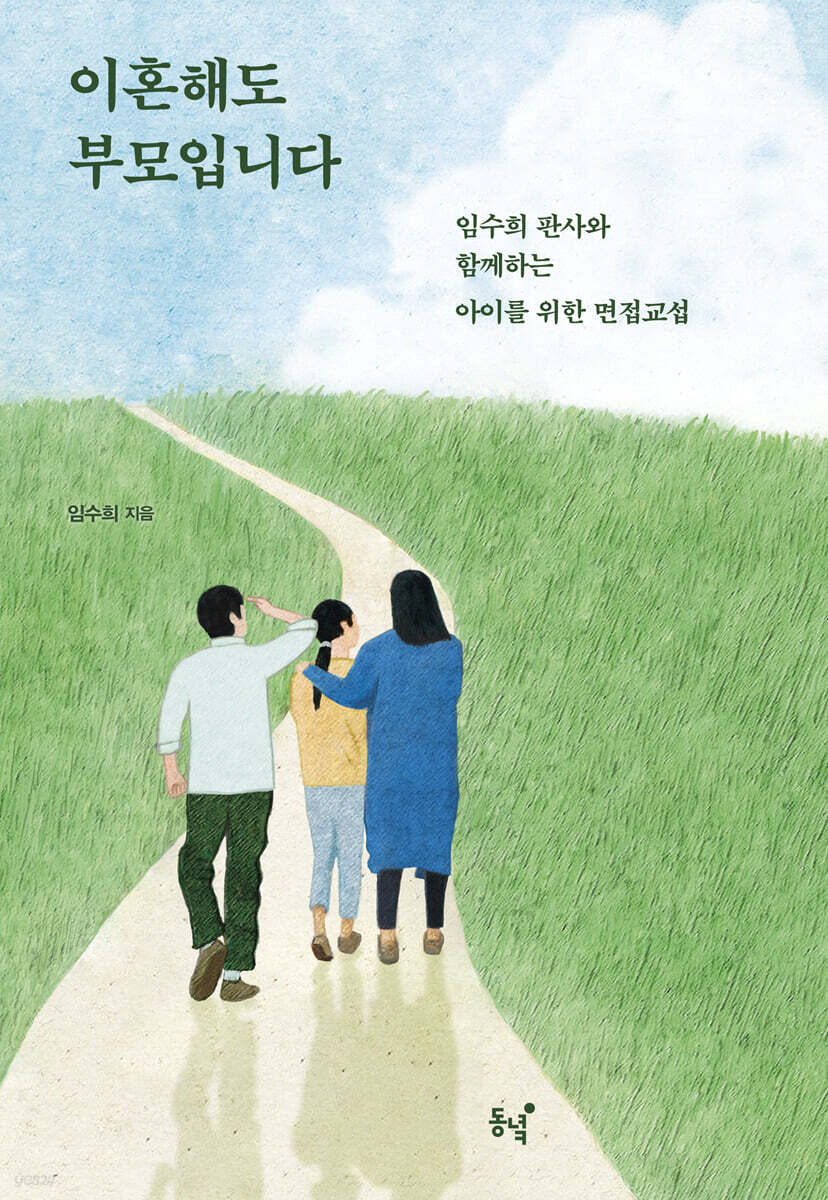 |
Description
Book Introduction
It's not a "divorce book," it's a "parenting book."
:An invitation to child rights and child-centered interview negotiations
*** Recommended by Former Supreme Court Justice Min Yu-sook, Professor Emeritus Noh Hye-ryeon (Soongsil University, Department of Social Welfare), and Attorney Kim Ye-won ***
"Even After Divorce, You Are Still a Parent" is a book written by Judge Lim Su-hee, a leading expert in children's rights in the judiciary, based on her own experience, expertise, and expertise in domestic violence trials. It provides specific guidance on how to maintain a healthy relationship while protecting the best interests of children even after their parents divorce.
:An invitation to child rights and child-centered interview negotiations
*** Recommended by Former Supreme Court Justice Min Yu-sook, Professor Emeritus Noh Hye-ryeon (Soongsil University, Department of Social Welfare), and Attorney Kim Ye-won ***
"Even After Divorce, You Are Still a Parent" is a book written by Judge Lim Su-hee, a leading expert in children's rights in the judiciary, based on her own experience, expertise, and expertise in domestic violence trials. It provides specific guidance on how to maintain a healthy relationship while protecting the best interests of children even after their parents divorce.
- You can preview some of the book's contents.
Preview
index
Recommendation
To those who are reading this book,
Part 1: Parents Who Still Love Their Children Even After Divorce
Chapter 1 The first treasure to take care of when getting a divorce
Chapter 2: Wise Parents Don't Separate Their Children Even After Divorce
Chapter 3 Even if Mom and Dad get divorced, my love for you won't change!
Part 2: The Basics of Interview Negotiation Based on Age and Developmental Status
Chapter 4: The Best Interview Negotiation for Your Child | Principles and Standards
Chapter 5: Even Babies Need Interviews | Infants and Toddlers (Part 1)
Chapter 6: Interviews Tailored to Your Child's Developmental Level and Life Cycle | Infants and Toddlers (Part 2)
Chapter 7: Interviews on Special Days | Kindergarten and Holidays
Chapter 8: Children Need to Prepare for Parental Divorce | Lower Elementary School (Part 1)
Chapter 9: Divorce: Protecting Children's Hearts | Lower Elementary School (Part 2)
Chapter 10: An Opportunity That Will Never Come If You Just Wait | Upper Elementary School
Chapter 11: Dancing with Your Strange Child | Puberty (Part 1)
Chapter 12: Children Who Grow Up Too Early | Puberty (Part 2)
Part 3: Solving in-depth interview negotiation problems in various situations
Chapter 13: How to Avoid Bad Interviews | Interviews Should Be Child-Centered
Chapter 14: Child Support and Visitation Negotiations: The Love-Hate Dynamics
Chapter 15: Dad's 'Girlfriend', Mom's 'Boyfriend', and New Relationships
Chapter 16: Interviews in Remarried Families
Chapter 17: Interview Negotiations for Mom and Dad | Children Raised by Multiple Parents
Chapter 18: Talking to Your Children About Divorce
Chapter 19: Not Custody, but Custodian and Obligor
Chapter 20: Overcoming the Obstacles of Interview Negotiation Together
Chapter 21: People Meet People | What Are Parents?
Chapter 22: When parents are parents, their children find their place.
Concluding Stories
To those who are reading this book,
Part 1: Parents Who Still Love Their Children Even After Divorce
Chapter 1 The first treasure to take care of when getting a divorce
Chapter 2: Wise Parents Don't Separate Their Children Even After Divorce
Chapter 3 Even if Mom and Dad get divorced, my love for you won't change!
Part 2: The Basics of Interview Negotiation Based on Age and Developmental Status
Chapter 4: The Best Interview Negotiation for Your Child | Principles and Standards
Chapter 5: Even Babies Need Interviews | Infants and Toddlers (Part 1)
Chapter 6: Interviews Tailored to Your Child's Developmental Level and Life Cycle | Infants and Toddlers (Part 2)
Chapter 7: Interviews on Special Days | Kindergarten and Holidays
Chapter 8: Children Need to Prepare for Parental Divorce | Lower Elementary School (Part 1)
Chapter 9: Divorce: Protecting Children's Hearts | Lower Elementary School (Part 2)
Chapter 10: An Opportunity That Will Never Come If You Just Wait | Upper Elementary School
Chapter 11: Dancing with Your Strange Child | Puberty (Part 1)
Chapter 12: Children Who Grow Up Too Early | Puberty (Part 2)
Part 3: Solving in-depth interview negotiation problems in various situations
Chapter 13: How to Avoid Bad Interviews | Interviews Should Be Child-Centered
Chapter 14: Child Support and Visitation Negotiations: The Love-Hate Dynamics
Chapter 15: Dad's 'Girlfriend', Mom's 'Boyfriend', and New Relationships
Chapter 16: Interviews in Remarried Families
Chapter 17: Interview Negotiations for Mom and Dad | Children Raised by Multiple Parents
Chapter 18: Talking to Your Children About Divorce
Chapter 19: Not Custody, but Custodian and Obligor
Chapter 20: Overcoming the Obstacles of Interview Negotiation Together
Chapter 21: People Meet People | What Are Parents?
Chapter 22: When parents are parents, their children find their place.
Concluding Stories
Detailed image

Into the book
“I hope that in the future, ‘visitation negotiations’ will be clearly defined as the child’s right to sufficient ‘parenting time with the non-resident parent.’”
--- p.19
“Visiting arrangements based on a child-rights-centered approach can ultimately be said to guarantee ‘parenting time with the non-resident parent’ that serves the child’s best interests.”
--- p.20
“When seeking concrete ways to accomplish the task of guaranteeing parenting time for non-resident parents, there is one thing that must be emphasized.
“It is about listening to and reflecting the opinions and feelings of the child themselves, that is, it is about practically guaranteeing the child’s right to have his or her voice heard.”
--- p.21
“The rules of conduct to be observed during an interview negotiation, such as greeting each other with a smile in front of the children, and not making negative comments about each other when the children are present, are not things that can be simply decided upon and followed.
“Because it is something that can only be adhered to if you get used to it through practice or training and actually implement it in your relationships.”
--- p.50
“The most fundamental and fundamental principle of interview negotiations is to never forget, ‘Interview negotiations are for the child’s benefit!’”
--- p.62
“The way to discuss children’s interviews can be summarized in one word: ‘keep them short, but keep them frequent.’
…due to the baby’s biological cycle and the life cycle that follows, we cannot meet briefly, but we have no choice but to secure sufficient time overall by meeting frequently.”
--- p.83
“You’re divorced, so why do you see the child so often? … I want to ask that question.
"Do you divorce because you have children? Do you divorce because you have a spouse? Do you divorce because you don't want to raise children?"
--- p.83
“No matter how young a child is, he has the right to know about his own future and decisions.
…what would a child know if you told him? No.
"I understand everything! In fact, children know much more than their parents, and they already know a lot."
--- p.92~93
"In countless cases I've worked with, the most successful strategies I've recommended to parents of adolescents are 'texting often' and 'just being present.'"
--- p.134
"The father and mother, who are the obligors, should not fight or trade with each other over the rights of their children, who are the rights holders.
"Parents cannot refuse to pay child support because they refuse to cooperate with visitation negotiations or refuse to pay child support because they don't want to see each other. They cannot negotiate with each other to refuse child support or visitation because they don't want to see each other. Parents do not have the right to do such things."
--- p.162
"You can build a relationship with your children along the lines of 'a person who takes care of the children of your remarried spouse together' or 'a person who has no choice but to meet and spend time with the children of your spouse through visitation arrangements.'
…we can raise a child as a loosely connected network of parents, with the minimum level of cooperation required from all adults.”
--- p.19
“Visiting arrangements based on a child-rights-centered approach can ultimately be said to guarantee ‘parenting time with the non-resident parent’ that serves the child’s best interests.”
--- p.20
“When seeking concrete ways to accomplish the task of guaranteeing parenting time for non-resident parents, there is one thing that must be emphasized.
“It is about listening to and reflecting the opinions and feelings of the child themselves, that is, it is about practically guaranteeing the child’s right to have his or her voice heard.”
--- p.21
“The rules of conduct to be observed during an interview negotiation, such as greeting each other with a smile in front of the children, and not making negative comments about each other when the children are present, are not things that can be simply decided upon and followed.
“Because it is something that can only be adhered to if you get used to it through practice or training and actually implement it in your relationships.”
--- p.50
“The most fundamental and fundamental principle of interview negotiations is to never forget, ‘Interview negotiations are for the child’s benefit!’”
--- p.62
“The way to discuss children’s interviews can be summarized in one word: ‘keep them short, but keep them frequent.’
…due to the baby’s biological cycle and the life cycle that follows, we cannot meet briefly, but we have no choice but to secure sufficient time overall by meeting frequently.”
--- p.83
“You’re divorced, so why do you see the child so often? … I want to ask that question.
"Do you divorce because you have children? Do you divorce because you have a spouse? Do you divorce because you don't want to raise children?"
--- p.83
“No matter how young a child is, he has the right to know about his own future and decisions.
…what would a child know if you told him? No.
"I understand everything! In fact, children know much more than their parents, and they already know a lot."
--- p.92~93
"In countless cases I've worked with, the most successful strategies I've recommended to parents of adolescents are 'texting often' and 'just being present.'"
--- p.134
"The father and mother, who are the obligors, should not fight or trade with each other over the rights of their children, who are the rights holders.
"Parents cannot refuse to pay child support because they refuse to cooperate with visitation negotiations or refuse to pay child support because they don't want to see each other. They cannot negotiate with each other to refuse child support or visitation because they don't want to see each other. Parents do not have the right to do such things."
--- p.162
"You can build a relationship with your children along the lines of 'a person who takes care of the children of your remarried spouse together' or 'a person who has no choice but to meet and spend time with the children of your spouse through visitation arrangements.'
…we can raise a child as a loosely connected network of parents, with the minimum level of cooperation required from all adults.”
--- p.186~187
Publisher's Review
Even if you divorce, you should not be separated from your children.
Divorce is something everyone experiences, and for some, it is a necessary separation.
There is one thing we must keep in mind here.
Divorce is a process that ends the relationship between a couple, but it does not end the relationship between parents and children.
If you were to ask, “What is the most important thing you need to take care of when getting a divorce?” most parents with children would probably answer, “My child.”
However, even though we say that we value our children the most, there are still many cases where we neglect the rights that these children deserve.
The rights that children should be guaranteed here are that even if they are separated from their parents due to divorce or other circumstances, they should be able to continue the relationship with both parents while receiving equal love and care.
The most important premise of this book is that the fundamental prerequisite for realizing this right, and the very practice of it, is interview negotiation.
This is not something that can be followed or rejected based on personal opinion, but rather a legal right guaranteed by the UN Convention on the Rights of the Child, which has the same effect as domestic law.
Therefore, this interview negotiation should be understood as a guarantee of the child's rights, not an exercise of parental rights.
However, there are still many cases where people believe that divorce means that one parent and the child will be separated, or even go so far as to intentionally separate and sever ties with one parent.
According to the Ministry of Gender Equality and Family's "2024 Single-Parent Family Survey," which can be used to gauge the implementation rate of face-to-face negotiations, only 11.8% of respondents answered that "children and non-custodial parents meet regularly," and 18% answered that "there is no contact at all."
These statistics clearly show that our society does not put children's best interests and rights at the center.
"Even After Divorce, You Are Still a Parent" is a book written by Judge Lim Su-hee, a leading expert in children's rights in the judiciary, based on her own experience, expertise, and expertise in domestic violence trials. It provides specific guidance on how to maintain a healthy relationship while protecting the best interests of children even after their parents divorce.
Visitation negotiations are about "sharing parenting time between non-resident parents."
Parents are not those with the 'right' to raise their children, but those with the 'obligation' to do so.
Ultimately, this book reminds us that even after divorce, children have the 'right' to be fully raised by both parents, and parents only have the 'duty' to fulfill their responsibility for raising their children.
As for child rearing, the child is the one with the right and the parents are the ones with the obligation, so even if there is a divorce, the responsibility and obligation to raise the child continue.
This makes it much clearer what is meant by visitation arrangements and child support being determined in the best interests of the child.
Our civil law stipulates that in the case of a divorce between a couple with minor children, custody, visitation, and child support must be determined in a way that reflects the child's welfare.
At this time, visitation negotiations can be understood as the division of parenting time between non-resident parents, and child support can be understood as the division of child-rearing costs, which is a joint responsibility of the parents.
A reliable guidebook and a trusted advisor for healthy interview negotiations.
: From the basics of interview negotiations according to the child's age and developmental stage to advanced interview negotiation problems in various situations.
Based on this understanding, the author provides a friendly explanation, using abundant examples, of what interview negotiation is, what the principles and standards are for interview negotiation, how to conduct interview negotiation according to the child's age and developmental stage, and how to conduct interview negotiation in various situations.
This book guides parents through specific interview negotiation methods based on the general principle that even after divorce, parents' love for their children and their obligation to raise them remain unchanged, so they must build a good cooperative parenting relationship.
Knowing that establishing a positive parenting partnership between divorced couples can be challenging and challenging, the author repeatedly emphasizes its importance throughout the book and provides very specific guidance on the interview process, which is the foundation of such partnership.
That is why we guide you through the method by dividing it into chapters according to your child's age and developmental stage.
The book presents interview negotiation methods in detail, starting from very young infants, through kindergarten, lower elementary school, upper elementary school, and adolescent children.
In it, you can learn in detail about things like holiday interview negotiations, interview negotiation methods for very young babies, the issue of sibling separation, tips for interview negotiations with adolescent children who are starting to distance themselves from their parents, how to explain their parents' divorce to children, and even the dangers of parental alienation syndrome.
In addition to the basics of interview negotiations, it also provides an 'explanatory note' on 'advanced issues' in interview negotiations that arise in various situations surrounding child custody in divorce situations.
It covers how to avoid bad visitation negotiations (such as criticizing the other parent's parenting style or unilaterally canceling or changing visitation negotiations), the relationship between child support and visitation negotiations (“Why should I allow visitation negotiations if I don't pay child support?”), visitation negotiations in remarried families, the misconception that custody rights belong only to the cohabiting parent, cases where both parents must negotiate visitation because the child was raised by someone other than the parents, and visitation negotiations surrounding children born out of wedlock.
What the author continually emphasizes in dealing with such specific and diverse situations of interview negotiation is that if we consider the child's interests, the child's heart, and the child's voice as the standard throughout the entire process, a solution will be found.
A supporter on your journey to becoming a good parent
So, although this book deals with post-divorce interview negotiations, it is not a 'divorce book', but a book that accompanies you on your journey to becoming a 'good parent'.
In other words, this book is also about understanding what kind of relationship parents and children should have through interview negotiations, and what rights children have in our society.
Therefore, this book will be a strong supporter not only for readers who are struggling with their relationships with their children after divorce and need help, but also for readers who are contemplating how to become good parents, practitioners working in the field of divorce and child welfare, and readers interested in children's rights.
The inclusion of brief excerpts from the Convention on the Rights of the Child, legal provisions, and the UN General Commentary on the Rights of the Child at the end of each chapter of the book is an expression of the hope that more members of this society will come a little closer to children's rights.
Divorce is something everyone experiences, and for some, it is a necessary separation.
There is one thing we must keep in mind here.
Divorce is a process that ends the relationship between a couple, but it does not end the relationship between parents and children.
If you were to ask, “What is the most important thing you need to take care of when getting a divorce?” most parents with children would probably answer, “My child.”
However, even though we say that we value our children the most, there are still many cases where we neglect the rights that these children deserve.
The rights that children should be guaranteed here are that even if they are separated from their parents due to divorce or other circumstances, they should be able to continue the relationship with both parents while receiving equal love and care.
The most important premise of this book is that the fundamental prerequisite for realizing this right, and the very practice of it, is interview negotiation.
This is not something that can be followed or rejected based on personal opinion, but rather a legal right guaranteed by the UN Convention on the Rights of the Child, which has the same effect as domestic law.
Therefore, this interview negotiation should be understood as a guarantee of the child's rights, not an exercise of parental rights.
However, there are still many cases where people believe that divorce means that one parent and the child will be separated, or even go so far as to intentionally separate and sever ties with one parent.
According to the Ministry of Gender Equality and Family's "2024 Single-Parent Family Survey," which can be used to gauge the implementation rate of face-to-face negotiations, only 11.8% of respondents answered that "children and non-custodial parents meet regularly," and 18% answered that "there is no contact at all."
These statistics clearly show that our society does not put children's best interests and rights at the center.
"Even After Divorce, You Are Still a Parent" is a book written by Judge Lim Su-hee, a leading expert in children's rights in the judiciary, based on her own experience, expertise, and expertise in domestic violence trials. It provides specific guidance on how to maintain a healthy relationship while protecting the best interests of children even after their parents divorce.
Visitation negotiations are about "sharing parenting time between non-resident parents."
Parents are not those with the 'right' to raise their children, but those with the 'obligation' to do so.
Ultimately, this book reminds us that even after divorce, children have the 'right' to be fully raised by both parents, and parents only have the 'duty' to fulfill their responsibility for raising their children.
As for child rearing, the child is the one with the right and the parents are the ones with the obligation, so even if there is a divorce, the responsibility and obligation to raise the child continue.
This makes it much clearer what is meant by visitation arrangements and child support being determined in the best interests of the child.
Our civil law stipulates that in the case of a divorce between a couple with minor children, custody, visitation, and child support must be determined in a way that reflects the child's welfare.
At this time, visitation negotiations can be understood as the division of parenting time between non-resident parents, and child support can be understood as the division of child-rearing costs, which is a joint responsibility of the parents.
A reliable guidebook and a trusted advisor for healthy interview negotiations.
: From the basics of interview negotiations according to the child's age and developmental stage to advanced interview negotiation problems in various situations.
Based on this understanding, the author provides a friendly explanation, using abundant examples, of what interview negotiation is, what the principles and standards are for interview negotiation, how to conduct interview negotiation according to the child's age and developmental stage, and how to conduct interview negotiation in various situations.
This book guides parents through specific interview negotiation methods based on the general principle that even after divorce, parents' love for their children and their obligation to raise them remain unchanged, so they must build a good cooperative parenting relationship.
Knowing that establishing a positive parenting partnership between divorced couples can be challenging and challenging, the author repeatedly emphasizes its importance throughout the book and provides very specific guidance on the interview process, which is the foundation of such partnership.
That is why we guide you through the method by dividing it into chapters according to your child's age and developmental stage.
The book presents interview negotiation methods in detail, starting from very young infants, through kindergarten, lower elementary school, upper elementary school, and adolescent children.
In it, you can learn in detail about things like holiday interview negotiations, interview negotiation methods for very young babies, the issue of sibling separation, tips for interview negotiations with adolescent children who are starting to distance themselves from their parents, how to explain their parents' divorce to children, and even the dangers of parental alienation syndrome.
In addition to the basics of interview negotiations, it also provides an 'explanatory note' on 'advanced issues' in interview negotiations that arise in various situations surrounding child custody in divorce situations.
It covers how to avoid bad visitation negotiations (such as criticizing the other parent's parenting style or unilaterally canceling or changing visitation negotiations), the relationship between child support and visitation negotiations (“Why should I allow visitation negotiations if I don't pay child support?”), visitation negotiations in remarried families, the misconception that custody rights belong only to the cohabiting parent, cases where both parents must negotiate visitation because the child was raised by someone other than the parents, and visitation negotiations surrounding children born out of wedlock.
What the author continually emphasizes in dealing with such specific and diverse situations of interview negotiation is that if we consider the child's interests, the child's heart, and the child's voice as the standard throughout the entire process, a solution will be found.
A supporter on your journey to becoming a good parent
So, although this book deals with post-divorce interview negotiations, it is not a 'divorce book', but a book that accompanies you on your journey to becoming a 'good parent'.
In other words, this book is also about understanding what kind of relationship parents and children should have through interview negotiations, and what rights children have in our society.
Therefore, this book will be a strong supporter not only for readers who are struggling with their relationships with their children after divorce and need help, but also for readers who are contemplating how to become good parents, practitioners working in the field of divorce and child welfare, and readers interested in children's rights.
The inclusion of brief excerpts from the Convention on the Rights of the Child, legal provisions, and the UN General Commentary on the Rights of the Child at the end of each chapter of the book is an expression of the hope that more members of this society will come a little closer to children's rights.
GOODS SPECIFICS
- Date of issue: August 20, 2025
- Page count, weight, size: 276 pages | 376g | 145*210*18mm
- ISBN13: 9788972971702
- ISBN10: 8972971707
You may also like
카테고리
korean


korean

![GQ KOREA Mark (Monthly): December [2025]](http://librairie.coreenne.fr/cdn/shop/files/8ef265dbbfbf186523ed75ba7319009d.jpg?v=1765340328&width=3840)


