

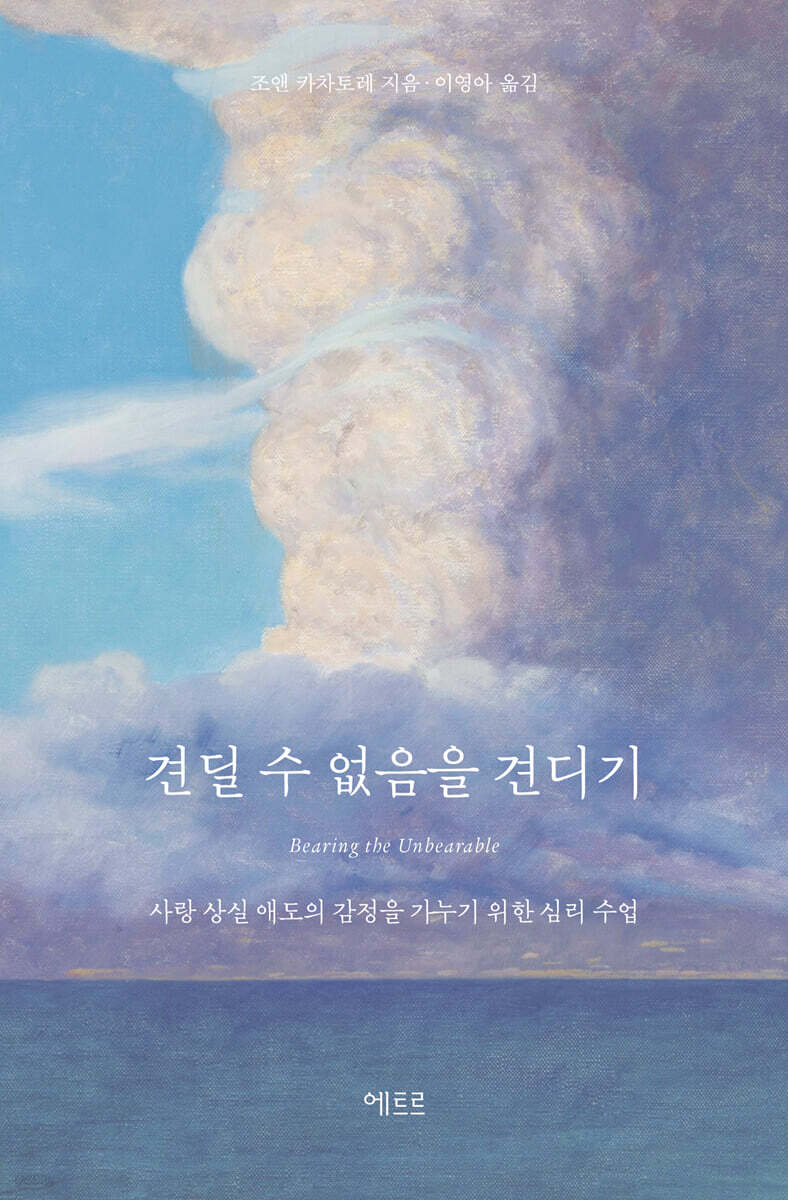
To bear the unbearable
 |
Description
Book Introduction
“How can we endure life when we are shattered?”
Psychology classes to understand and manage emotions after loss
The grief of loss comes to everyone.
No one can escape it.
Especially when a loved one dies suddenly or is tragically killed, the burden of life can become unbearable for those left behind.
Those who have experienced loss experience a range of emotions that can be utterly foreign and eerily painful, a persistent pain that wells up from deep within.
Yet life and death demand that we endure.
But what can we do in the face of unbearable pain, pain that will never go away?
"Enduring the Unendurable" is a book filled with honest reflections and comfort on the common human experiences of love, death, loss, and mourning.
Author Joanne Cacciatore is a psychotherapist specializing in traumatic loss and grief.
He suffered deeply from the death of his newborn daughter, and has been working with people struggling with bereavement trauma for over 20 years.
He shares his experience of traumatic grief and the healing principles he learned from it through various examples, and conveys his understanding of the deep inner self of humanity, which he realized through the process of comforting the pain of others.
This book contains vivid wisdom that only those who have experienced suffering can attain.
It offers empathetic and realistic coping strategies for those who have lost a loved one, mental health professionals, psychotherapists, and those who wish to understand their own grief and the grief of others more deeply and live with greater compassion.
“I hope this book is used to provide a safe space to feel our emotions fully, and to be with those who have been shattered.
This book is an invitation not to turn away from the profound sorrow, to stay in the dark night of the soul that has lost a loved one, and to live in the present, no matter how difficult and painful it may be.” - Page 11
Psychology classes to understand and manage emotions after loss
The grief of loss comes to everyone.
No one can escape it.
Especially when a loved one dies suddenly or is tragically killed, the burden of life can become unbearable for those left behind.
Those who have experienced loss experience a range of emotions that can be utterly foreign and eerily painful, a persistent pain that wells up from deep within.
Yet life and death demand that we endure.
But what can we do in the face of unbearable pain, pain that will never go away?
"Enduring the Unendurable" is a book filled with honest reflections and comfort on the common human experiences of love, death, loss, and mourning.
Author Joanne Cacciatore is a psychotherapist specializing in traumatic loss and grief.
He suffered deeply from the death of his newborn daughter, and has been working with people struggling with bereavement trauma for over 20 years.
He shares his experience of traumatic grief and the healing principles he learned from it through various examples, and conveys his understanding of the deep inner self of humanity, which he realized through the process of comforting the pain of others.
This book contains vivid wisdom that only those who have experienced suffering can attain.
It offers empathetic and realistic coping strategies for those who have lost a loved one, mental health professionals, psychotherapists, and those who wish to understand their own grief and the grief of others more deeply and live with greater compassion.
“I hope this book is used to provide a safe space to feel our emotions fully, and to be with those who have been shattered.
This book is an invitation not to turn away from the profound sorrow, to stay in the dark night of the soul that has lost a loved one, and to live in the present, no matter how difficult and painful it may be.” - Page 11
- You can preview some of the book's contents.
Preview
index
Author's Note 9
01 Attitude toward mourners 23
02 Public and Private Mourning 29
03 Expressing Grief Through Art 33
04 Early Grief Reactions after Bereavement 38
05 The Right to Grieve 47
06 Differences in Mourning Culture 51
07 Vacant Seat 59
08 Pause, Reflect, and Feel the Meaning 64
09 Fear Under Fear 69
10 Love and Pain Are One 72
11 To bypass sorrow, you must also bypass love. 78
12 Intensity of Grief and Coping Abilities 83
13 Contraction and Expansion 86
14 The Clash of Love and Loss 92
15 Infinite and Eternal Love 97
16 Personifying Sadness 100
17 Pausing with Sadness 104
18 Exercises with Emotions 109
19 My heart shed many tears. 112
20 Walking Barefoot 119
21 The Importance of Self-Care 122
22 Self-Care and Sleep 125
23 How to Take Care of Yourself 130
24 Tell your family and friends what you need 135
25 When Self-Care Becomes an Escape Tool 140
26 Learn, adapt, and trust your instincts 142
27 Jaeae Island 146
28 Adapting to Grief 148
29 When We Are Shattered 154
30 Duration of Grief 157
31 The Courage to Remember 160
32 Grief is not a disease 164
33 The Power of Unprocessed Traumatic Grief 168
34 A Long Silent Sorrow 173
35 Guilt and Shame 178
36 Empathy and Compassion 184
37 Remember with Love 189
38 Waves of Sorrow 193
39 Remember Me 196
40 Minor Condolences 200
41 Finding Meaning in Life through Compassion 206
42 Kindness Project 208
43 By knowing suffering 213
44 Fierce Compassion 216
45 Life-Saving Work 219
46 The Price of Not Recognizing Grief and Trauma 226
47 Inherited Sorrow 231
48 Grief is like soup 236
49 The Gift of Darkness 242
50 Right here, right now 247
Recommendation 252
Search 256
01 Attitude toward mourners 23
02 Public and Private Mourning 29
03 Expressing Grief Through Art 33
04 Early Grief Reactions after Bereavement 38
05 The Right to Grieve 47
06 Differences in Mourning Culture 51
07 Vacant Seat 59
08 Pause, Reflect, and Feel the Meaning 64
09 Fear Under Fear 69
10 Love and Pain Are One 72
11 To bypass sorrow, you must also bypass love. 78
12 Intensity of Grief and Coping Abilities 83
13 Contraction and Expansion 86
14 The Clash of Love and Loss 92
15 Infinite and Eternal Love 97
16 Personifying Sadness 100
17 Pausing with Sadness 104
18 Exercises with Emotions 109
19 My heart shed many tears. 112
20 Walking Barefoot 119
21 The Importance of Self-Care 122
22 Self-Care and Sleep 125
23 How to Take Care of Yourself 130
24 Tell your family and friends what you need 135
25 When Self-Care Becomes an Escape Tool 140
26 Learn, adapt, and trust your instincts 142
27 Jaeae Island 146
28 Adapting to Grief 148
29 When We Are Shattered 154
30 Duration of Grief 157
31 The Courage to Remember 160
32 Grief is not a disease 164
33 The Power of Unprocessed Traumatic Grief 168
34 A Long Silent Sorrow 173
35 Guilt and Shame 178
36 Empathy and Compassion 184
37 Remember with Love 189
38 Waves of Sorrow 193
39 Remember Me 196
40 Minor Condolences 200
41 Finding Meaning in Life through Compassion 206
42 Kindness Project 208
43 By knowing suffering 213
44 Fierce Compassion 216
45 Life-Saving Work 219
46 The Price of Not Recognizing Grief and Trauma 226
47 Inherited Sorrow 231
48 Grief is like soup 236
49 The Gift of Darkness 242
50 Right here, right now 247
Recommendation 252
Search 256
Detailed image

Into the book
When we are afraid and in pain, we need someone to listen to our honest feelings.
We need someone who can go down to the bottom of the abyss with us again and again.
We need someone who will hold our hand reliably, without judging us too quickly, without blocking or avoiding our pain.
--- From "Public and Private Mourning"
As the shock of loss begins to lift the veil and the paralysis begins to lift, an indescribable pain wells up from deep within.
A whole new set of emotions, completely unfamiliar and eerily painful, also come to visit.
Everything within us tries to escape the reality of loss, but pain stubbornly asserts its presence.
It forces us to look back and look again at each loss.
In a sense, the mourning process can be said to be an expression of love for the lost object.
--- From "Early Grief Reactions after Bereavement"
Traumatic deaths cause traumatic grief.
Traumatic deaths include sudden, unexpected deaths, violent or mutilated deaths, deaths after prolonged suffering, suicide, homicide, and deaths of children of any age or cause.
When a loved one dies in such a way, we feel like a tree uprooted, terrified, overwhelmed by great anxiety, and our faith in the world is seriously shaken.
And it really shakes things up.
--- From "Differences in Mourning Culture"
The more you practice staying with the emotions that seem to consume you, the more you will be able to trust your own abilities and fully embrace your grief.
Once we accept it, we can more comfortably stay with our emotions and allow them to flow through us.
Through this cycle, we accept our true feelings without losing self-respect, self-trust, or self-compassion.
Whenever sadness arises, a space is created within us to contain it.
--- From "Pausing with Sadness"
Self-care is crucial for those who are grieving.
It must be done without compromise.
When you disconnect from your emotions, you can also disconnect from your body.
The opposite is also true.
Emotions are not just isolated emotional sensations.
Emotions influence our bodily sensations, cognitive processes, social interactions, the expression of existential anxiety, and even our thoughts about emotions.
--- From "The Importance of Self-Care"
Grieving itself is a learning process.
In mourning, we learn a lot about ourselves.
Maybe even things you didn't want to know.
The more I learn about grief, the less scary it becomes, and the more grounded I feel inside.
Grieving is also a process of adaptation.
We find ways to adapt to a life we never expected or wanted.
--- From "Learn, Adapt, Trust Your Intuition"
Practicing grieving means intentionally approaching and re-engaging with grief at every stage of life.
He becomes acutely aware that he is in the grip of grief and accepts the absence of his loved one as an undeniable reality.
I understand that the reason I feel such immense sadness now is because of the time I spent with them.
--- From "Adapting to Grief"
We must consider it a serious duty to look at the shattered fragments of ourselves and to accept the pain with dignity.
When we remember our loved ones, the time and space between us and them connects, and they return to our lives.
--- From "The Duration of Sorrow"
Ritual serves to pay homage to the love and suffering contained in our hearts.
Every society has rituals related to death and mourning.
Through these rituals, we can get closer to our loved ones and continue our bond.
By expressing our emotions, we regain control, find meaning in our lives, and strengthen the foundations of community, enabling us to cope with loss.
We need someone who can go down to the bottom of the abyss with us again and again.
We need someone who will hold our hand reliably, without judging us too quickly, without blocking or avoiding our pain.
--- From "Public and Private Mourning"
As the shock of loss begins to lift the veil and the paralysis begins to lift, an indescribable pain wells up from deep within.
A whole new set of emotions, completely unfamiliar and eerily painful, also come to visit.
Everything within us tries to escape the reality of loss, but pain stubbornly asserts its presence.
It forces us to look back and look again at each loss.
In a sense, the mourning process can be said to be an expression of love for the lost object.
--- From "Early Grief Reactions after Bereavement"
Traumatic deaths cause traumatic grief.
Traumatic deaths include sudden, unexpected deaths, violent or mutilated deaths, deaths after prolonged suffering, suicide, homicide, and deaths of children of any age or cause.
When a loved one dies in such a way, we feel like a tree uprooted, terrified, overwhelmed by great anxiety, and our faith in the world is seriously shaken.
And it really shakes things up.
--- From "Differences in Mourning Culture"
The more you practice staying with the emotions that seem to consume you, the more you will be able to trust your own abilities and fully embrace your grief.
Once we accept it, we can more comfortably stay with our emotions and allow them to flow through us.
Through this cycle, we accept our true feelings without losing self-respect, self-trust, or self-compassion.
Whenever sadness arises, a space is created within us to contain it.
--- From "Pausing with Sadness"
Self-care is crucial for those who are grieving.
It must be done without compromise.
When you disconnect from your emotions, you can also disconnect from your body.
The opposite is also true.
Emotions are not just isolated emotional sensations.
Emotions influence our bodily sensations, cognitive processes, social interactions, the expression of existential anxiety, and even our thoughts about emotions.
--- From "The Importance of Self-Care"
Grieving itself is a learning process.
In mourning, we learn a lot about ourselves.
Maybe even things you didn't want to know.
The more I learn about grief, the less scary it becomes, and the more grounded I feel inside.
Grieving is also a process of adaptation.
We find ways to adapt to a life we never expected or wanted.
--- From "Learn, Adapt, Trust Your Intuition"
Practicing grieving means intentionally approaching and re-engaging with grief at every stage of life.
He becomes acutely aware that he is in the grip of grief and accepts the absence of his loved one as an undeniable reality.
I understand that the reason I feel such immense sadness now is because of the time I spent with them.
--- From "Adapting to Grief"
We must consider it a serious duty to look at the shattered fragments of ourselves and to accept the pain with dignity.
When we remember our loved ones, the time and space between us and them connects, and they return to our lives.
--- From "The Duration of Sorrow"
Ritual serves to pay homage to the love and suffering contained in our hearts.
Every society has rituals related to death and mourning.
Through these rituals, we can get closer to our loved ones and continue our bond.
By expressing our emotions, we regain control, find meaning in our lives, and strengthen the foundations of community, enabling us to cope with loss.
--- From "Small Ceremonies of Condolence in Daily Life"
Publisher's Review
The Impact of Grief on Emotions
“Still, we slowly learn to live with the pain.”
The author approaches trauma and grief from a psychotherapeutic perspective, drawing on clinical experience, research findings, the wisdom of religious saints, and Western psychology to illuminate the emotional impact of bereavement.
Through 50 stories, he explores themes such as the conflict between love and loss, guilt and shame, adapting to grief, the cost of not recognizing grief and trauma, inherited grief, mourning rituals in everyday life, and the importance of self-care.
It presents various cases of people who have suffered the pain of loss and discusses what is needed to heal the body and mind.
We also critically examine the social and cultural structures that lack compassion, are addicted to happiness, and treat the grief of loss as a disease, and consider how we should treat mourners.
Accepting the death of a child, parent, spouse, lover, or pet is difficult.
Still, by learning to understand and accept the emotions that follow a loss, the magnitude and depth of the pain, its meaning and depth, we can gradually move toward healing.
The emotions humans experience during death and mourning are very deep and complex.
Painful emotions such as deep despair, agitation, anxiety, numbness, loss of pleasure, fear, anxiety, excessive worry, guilt and shame, and loneliness are normal and common for those grieving a significant loss.
Grief reactions can also manifest in dramatic behaviors, often when a person rejects the emotions they are supposed to feel during the grieving process.
The author emphasizes the importance of understanding and accepting the emotions of grief through the case of a client who experienced substance abuse, gambling, overspending, promiscuous sex, unsatisfactory interpersonal relationships, reckless behavior, and self-harm after bereavement.
How do we face and comfort the feelings of loss?
The right to mourn, the courage to remember, the need for fierce compassion
“To fully embrace the grief of loss means to embrace the profoundly mysterious paradox that one can become whole only by being shattered by the experience of loss.
Grief empties us, but fills us with emotion.
Fear paralyzes us, but we can give courage to others.
We mourn the absence of our loved ones and wish for their presence.
The old us disappears and a more complete us becomes.
Knowing the darkest night, we can illuminate the world with the light of our loved ones.
We are contradictory beings.
“We are enduring the unbearable.” —Page 13
Through his daughter's untimely death, the author learned that along with the natural human instinct to escape pain, we also have the desire to accept pain as it is and experience it fully.
Only after the pain has been deeply and repeatedly felt does the healing process begin.
As the author explains, this healing is a very mysterious process.
Pain remains constant, but paradoxically, it is precisely in that constantness that pain is transformed into healing.
Therefore, 'enduring the unbearable' is not an impossible task.
Rather, it is the only path to healing.
So how exactly does healing occur? The author argues that through fully experiencing unbearable pain, we come to accept the inevitability of suffering and the helplessness we feel within it. This acceptance, in turn, fosters a renewed sense of compassion for ourselves and all other suffering people.
To heal, you must learn to feel pain and sorrow, have the courage to remember the one who has passed away, and learn to express those feelings to someone who understands, accepts, and empathizes with them.
The author emphasizes that one cannot and should not bear great pain alone.
I keep saying that as long as the pain doesn't go away for weeks, months, or years, we need someone by our side who can understand and accept those feelings with empathy and compassion.
“Still, we slowly learn to live with the pain.”
The author approaches trauma and grief from a psychotherapeutic perspective, drawing on clinical experience, research findings, the wisdom of religious saints, and Western psychology to illuminate the emotional impact of bereavement.
Through 50 stories, he explores themes such as the conflict between love and loss, guilt and shame, adapting to grief, the cost of not recognizing grief and trauma, inherited grief, mourning rituals in everyday life, and the importance of self-care.
It presents various cases of people who have suffered the pain of loss and discusses what is needed to heal the body and mind.
We also critically examine the social and cultural structures that lack compassion, are addicted to happiness, and treat the grief of loss as a disease, and consider how we should treat mourners.
Accepting the death of a child, parent, spouse, lover, or pet is difficult.
Still, by learning to understand and accept the emotions that follow a loss, the magnitude and depth of the pain, its meaning and depth, we can gradually move toward healing.
The emotions humans experience during death and mourning are very deep and complex.
Painful emotions such as deep despair, agitation, anxiety, numbness, loss of pleasure, fear, anxiety, excessive worry, guilt and shame, and loneliness are normal and common for those grieving a significant loss.
Grief reactions can also manifest in dramatic behaviors, often when a person rejects the emotions they are supposed to feel during the grieving process.
The author emphasizes the importance of understanding and accepting the emotions of grief through the case of a client who experienced substance abuse, gambling, overspending, promiscuous sex, unsatisfactory interpersonal relationships, reckless behavior, and self-harm after bereavement.
How do we face and comfort the feelings of loss?
The right to mourn, the courage to remember, the need for fierce compassion
“To fully embrace the grief of loss means to embrace the profoundly mysterious paradox that one can become whole only by being shattered by the experience of loss.
Grief empties us, but fills us with emotion.
Fear paralyzes us, but we can give courage to others.
We mourn the absence of our loved ones and wish for their presence.
The old us disappears and a more complete us becomes.
Knowing the darkest night, we can illuminate the world with the light of our loved ones.
We are contradictory beings.
“We are enduring the unbearable.” —Page 13
Through his daughter's untimely death, the author learned that along with the natural human instinct to escape pain, we also have the desire to accept pain as it is and experience it fully.
Only after the pain has been deeply and repeatedly felt does the healing process begin.
As the author explains, this healing is a very mysterious process.
Pain remains constant, but paradoxically, it is precisely in that constantness that pain is transformed into healing.
Therefore, 'enduring the unbearable' is not an impossible task.
Rather, it is the only path to healing.
So how exactly does healing occur? The author argues that through fully experiencing unbearable pain, we come to accept the inevitability of suffering and the helplessness we feel within it. This acceptance, in turn, fosters a renewed sense of compassion for ourselves and all other suffering people.
To heal, you must learn to feel pain and sorrow, have the courage to remember the one who has passed away, and learn to express those feelings to someone who understands, accepts, and empathizes with them.
The author emphasizes that one cannot and should not bear great pain alone.
I keep saying that as long as the pain doesn't go away for weeks, months, or years, we need someone by our side who can understand and accept those feelings with empathy and compassion.
GOODS SPECIFICS
- Date of issue: February 7, 2025
- Page count, weight, size: 260 pages | 394g | 138*210*18mm
- ISBN13: 9791197826160
- ISBN10: 1197826165
You may also like
카테고리
korean


korean

![GQ KOREA Mark (Monthly): December [2025]](http://librairie.coreenne.fr/cdn/shop/files/8ef265dbbfbf186523ed75ba7319009d.jpg?v=1765340328&width=3840)


