

George Orwell's Prose Collection
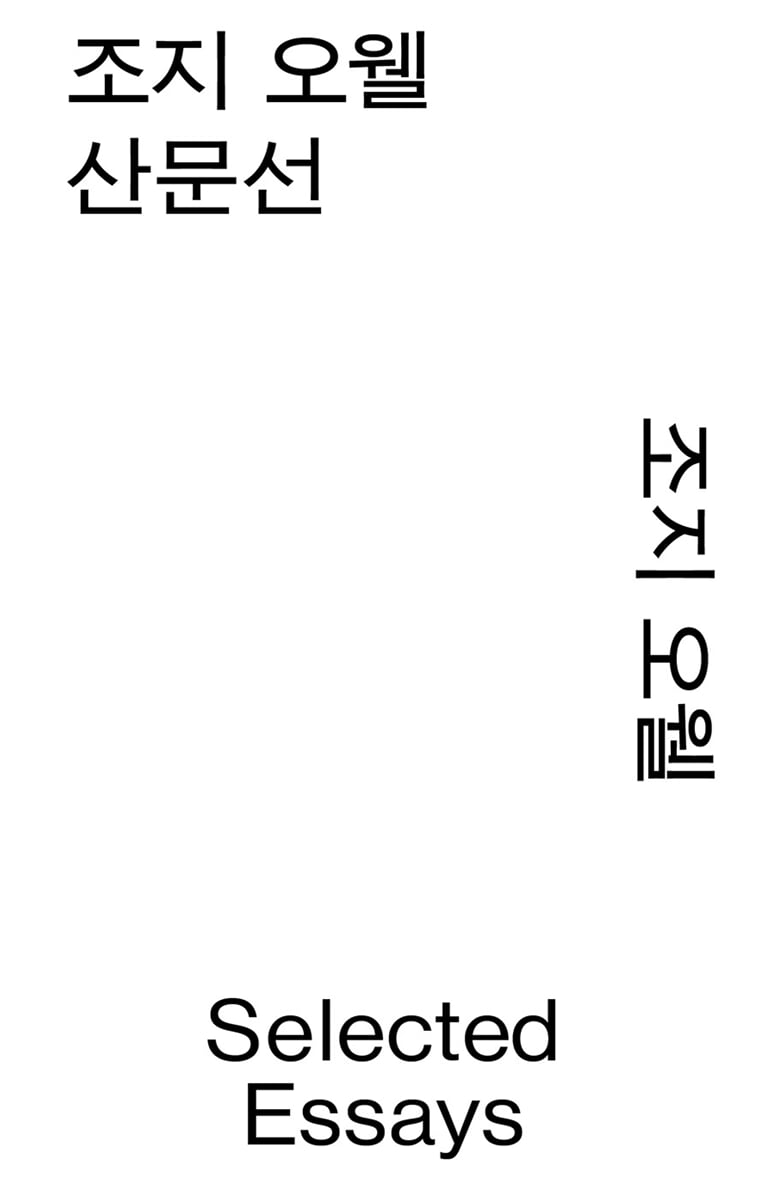 |
Description
Book Introduction
Simple and concise, containing only the essentials
Open Books World Literature Mono Edition
Open Books presents a carefully selected collection of works that have consistently been loved in world literature under the name of Mono Edition.
The mono edition, which contains only the essence of the complete world literature and is published in a more concise and convenient format, has been stripped down to the bare minimum, from the selection of works to the binding of the book.
While Open Books has always offered readers a rich selection of world literature and sturdy hardcovers, the Mono Edition offers a more accessible and familiar way to encounter classics, with its carefully curated selection, lightweight binding, and exceptional price of 8,800 won.
Also, I tried to minimize as much as possible, but I also put more thought into design and quality, and pursued a completeness that was not lacking even with my minimum.
With two options—Open Books World Literature and Mono Edition—you'll discover brilliant classics tailored to your reading habits and tastes.
Open Books World Literature Mono Edition
Open Books presents a carefully selected collection of works that have consistently been loved in world literature under the name of Mono Edition.
The mono edition, which contains only the essence of the complete world literature and is published in a more concise and convenient format, has been stripped down to the bare minimum, from the selection of works to the binding of the book.
While Open Books has always offered readers a rich selection of world literature and sturdy hardcovers, the Mono Edition offers a more accessible and familiar way to encounter classics, with its carefully curated selection, lightweight binding, and exceptional price of 8,800 won.
Also, I tried to minimize as much as possible, but I also put more thought into design and quality, and pursued a completeness that was not lacking even with my minimum.
With two options—Open Books World Literature and Mono Edition—you'll discover brilliant classics tailored to your reading habits and tastes.
- You can preview some of the book's contents.
Preview
index
Why do I write?
hanging
shoot an elephant
Marrakech
temporary shelter for homeless people
How the poor die
A thought on toads
Books and cigarettes
Memories of the Bookstore
Confessions of a Book Reviewer
Boys' Weekly
The decline of British murder
In defense of British cuisine
A cup of delicious tea
Politics and English
My country, left or right
The Lion and the Unicorn: Socialism and the British Character
P.
In defense of G. Woodhouse
You and the atomic bomb
Thoughts on Gandhi
A happy and enjoyable time
Translator's Note: A fair social critique written in clear language.
George Orwell Chronology
hanging
shoot an elephant
Marrakech
temporary shelter for homeless people
How the poor die
A thought on toads
Books and cigarettes
Memories of the Bookstore
Confessions of a Book Reviewer
Boys' Weekly
The decline of British murder
In defense of British cuisine
A cup of delicious tea
Politics and English
My country, left or right
The Lion and the Unicorn: Socialism and the British Character
P.
In defense of G. Woodhouse
You and the atomic bomb
Thoughts on Gandhi
A happy and enjoyable time
Translator's Note: A fair social critique written in clear language.
George Orwell Chronology
Detailed image

Publisher's Review
A carefully selected collection of George Orwell's essays, "George Orwell's Prose," has been published by Open Books, translated by Jin Heo.
George Orwell, a unique writer and journalist in 20th-century English literature, is famous not only for his immortal novels, such as "1984" and "Animal Farm," but also for his numerous outstanding essays and columns published in various media.
Not only as an outstanding novelist, but also as a cool-headed progressive intellectual who diagnosed and criticized social problems, as a sharp critic of British culture, and as a thinker who pondered the role of literature, George Orwell's essays are considered some of the finest prose produced by 20th-century English literature.
This book is a carefully selected collection of some 20 of Orwell's most famous and highly regarded prose pieces, organized by genre. From weighty political critiques to small-scale reflections on daily life, it is a record of Orwell's characteristically clear and honest thinking.
George Orwell, a unique writer and journalist in 20th-century English literature
A selection of outstanding prose pieces that demonstrate his clear insight.
A carefully selected collection of George Orwell's essays, "George Orwell's Prose," has been published by Open Books, translated by Jin Heo.
George Orwell, a unique writer and journalist in 20th-century English literature, is famous not only for his immortal novels, such as "1984" and "Animal Farm," but also for his numerous outstanding essays and columns published in various media.
Not only as an outstanding novelist, but also as a cool-headed progressive intellectual who diagnosed and criticized social problems, as a sharp critic of British culture, and as a thinker who pondered the role of literature, George Orwell's essays are considered to be some of the finest prose produced by 20th-century English literature.
This book is a carefully selected collection of some 20 of Orwell's most famous and highly regarded prose pieces, organized by genre. From weighty political critiques to small-scale reflections on daily life, it is a record of Orwell's characteristically clear and honest thinking.
As the saying goes, “Orwell’s writing begins with essays, and his essays begin with experiences,” Orwell’s essays vividly contain the fragments that formed the foundation of his thoughts and literature, as well as the experiences that became the decisive turning points.
Orwell actually developed his essays into several full-length novels, and he often wrote essays to honestly record his thoughts on experiences and social issues that had a strong impact on him.
From the essays he left behind, we can best confirm the process of his thought formation and encounter Orwell's own vivid voice that cannot be seen in his novels.
Orwell lived a turbulent life in a bygone era.
Witnessing the two world wars, imperialism, totalitarianism, and the rise and tyranny of Hitler, I was deeply struck by the barbarity of humans unjustly oppressing and slaughtering other humans, and I wanted to actively engage in and protest against these issues.
In the process, he concludes that it is always right to stand on the side of the oppressed rather than the oppressor, and gradually refines his thoughts as a writer.
This idea is particularly well expressed in his famous writing theory, “Why I Write” (1946).
In this article, he reveals that the main motivation that led him to write was, above all, “political” reasons to “oppose totalitarianism and support democratic socialism,” and confesses that it was impossible to avoid this topic when writing, especially in the times in which he lived.
As his famous phrase, “The very idea that art should have nothing to do with politics is a political attitude,” suggests, no writing can be free from a specific political attitude, and one must be clearly aware of this.
"Merry, Merry Days" (1947) contains Orwell's memories of his difficult school life as a child.
Born the son of an ordinary colonial civil servant, Orwell endured all kinds of humiliation at school because he received a scholarship to an expensive private school mainly attended by wealthy children.
Despite the blatant class discrimination of the teachers and the disregard of the children, he entered the prestigious Eton School as a scholarship student, but due to his family's financial situation, he could not afford to go to university, so after graduating from Eton, he gave up on going and applied to become a colonial police officer and headed to Burma (Myanmar).
However, upon witnessing the reality of British imperialism oppressing the colonies there, he soon resigns due to disillusionment and a sense of inferiority.
His early works, the famous essays "Shooting an Elephant" (1936) and "The Hanging" (1931), recorded his experiences during this time and contained sharp criticisms of imperialism, which destroyed not only the freedom and personality of the people of the ruled countries but also the white rulers.
After returning to England, Orwell decided to become a full-time writer, and in order to gain a clear understanding of the lives of the poorest classes of society, he deliberately wandered through the slums of London and Paris, living as a vagabond and day laborer.
"The Transit Camp for Vagrants" (1931) and "How the Poor Die" (1946) are works that contain his experiences during this period, and they provide a glimpse into Orwell's spirit, which was always attentive to the realities of the lives of the marginalized.
This book contains a total of 21 excellent prose pieces, including “Books and Cigarettes” (1946) and “Bookshop Memories” (1936), which are light essays in which Orwell, who was a considerable reader and worked as a bookstore clerk, contains small reflections related to books; “The Boy’s Weekly” (1940), an essay in which he reads the problems of British society from the types of popular boys’ magazines; “The Decline of Murder in England” (1946), which reads social changes from the changing nature of murder cases occurring in Britain; and “Politics and the English Language” (1946), which sharply points out the corruption of modern English sentences that have become a tool for obscuring the truth and hindering clear thinking.
In particular, "The Lion and the Unicorn: Socialism and the British Character" (1941), the first complete translation of his work in Korea, is a weighty essay of over 300 pages, containing Orwell's sharp diagnosis and criticism of British national character and politics.
Translator Heo Jin, who translated this book, skillfully translated Orwell's characteristically clear and sharp sentences into clear Korean.
The original translation source was primarily Orwell's 1984 essay collection published by Penguin Books.
George Orwell, a unique writer and journalist in 20th-century English literature, is famous not only for his immortal novels, such as "1984" and "Animal Farm," but also for his numerous outstanding essays and columns published in various media.
Not only as an outstanding novelist, but also as a cool-headed progressive intellectual who diagnosed and criticized social problems, as a sharp critic of British culture, and as a thinker who pondered the role of literature, George Orwell's essays are considered some of the finest prose produced by 20th-century English literature.
This book is a carefully selected collection of some 20 of Orwell's most famous and highly regarded prose pieces, organized by genre. From weighty political critiques to small-scale reflections on daily life, it is a record of Orwell's characteristically clear and honest thinking.
George Orwell, a unique writer and journalist in 20th-century English literature
A selection of outstanding prose pieces that demonstrate his clear insight.
A carefully selected collection of George Orwell's essays, "George Orwell's Prose," has been published by Open Books, translated by Jin Heo.
George Orwell, a unique writer and journalist in 20th-century English literature, is famous not only for his immortal novels, such as "1984" and "Animal Farm," but also for his numerous outstanding essays and columns published in various media.
Not only as an outstanding novelist, but also as a cool-headed progressive intellectual who diagnosed and criticized social problems, as a sharp critic of British culture, and as a thinker who pondered the role of literature, George Orwell's essays are considered to be some of the finest prose produced by 20th-century English literature.
This book is a carefully selected collection of some 20 of Orwell's most famous and highly regarded prose pieces, organized by genre. From weighty political critiques to small-scale reflections on daily life, it is a record of Orwell's characteristically clear and honest thinking.
As the saying goes, “Orwell’s writing begins with essays, and his essays begin with experiences,” Orwell’s essays vividly contain the fragments that formed the foundation of his thoughts and literature, as well as the experiences that became the decisive turning points.
Orwell actually developed his essays into several full-length novels, and he often wrote essays to honestly record his thoughts on experiences and social issues that had a strong impact on him.
From the essays he left behind, we can best confirm the process of his thought formation and encounter Orwell's own vivid voice that cannot be seen in his novels.
Orwell lived a turbulent life in a bygone era.
Witnessing the two world wars, imperialism, totalitarianism, and the rise and tyranny of Hitler, I was deeply struck by the barbarity of humans unjustly oppressing and slaughtering other humans, and I wanted to actively engage in and protest against these issues.
In the process, he concludes that it is always right to stand on the side of the oppressed rather than the oppressor, and gradually refines his thoughts as a writer.
This idea is particularly well expressed in his famous writing theory, “Why I Write” (1946).
In this article, he reveals that the main motivation that led him to write was, above all, “political” reasons to “oppose totalitarianism and support democratic socialism,” and confesses that it was impossible to avoid this topic when writing, especially in the times in which he lived.
As his famous phrase, “The very idea that art should have nothing to do with politics is a political attitude,” suggests, no writing can be free from a specific political attitude, and one must be clearly aware of this.
"Merry, Merry Days" (1947) contains Orwell's memories of his difficult school life as a child.
Born the son of an ordinary colonial civil servant, Orwell endured all kinds of humiliation at school because he received a scholarship to an expensive private school mainly attended by wealthy children.
Despite the blatant class discrimination of the teachers and the disregard of the children, he entered the prestigious Eton School as a scholarship student, but due to his family's financial situation, he could not afford to go to university, so after graduating from Eton, he gave up on going and applied to become a colonial police officer and headed to Burma (Myanmar).
However, upon witnessing the reality of British imperialism oppressing the colonies there, he soon resigns due to disillusionment and a sense of inferiority.
His early works, the famous essays "Shooting an Elephant" (1936) and "The Hanging" (1931), recorded his experiences during this time and contained sharp criticisms of imperialism, which destroyed not only the freedom and personality of the people of the ruled countries but also the white rulers.
After returning to England, Orwell decided to become a full-time writer, and in order to gain a clear understanding of the lives of the poorest classes of society, he deliberately wandered through the slums of London and Paris, living as a vagabond and day laborer.
"The Transit Camp for Vagrants" (1931) and "How the Poor Die" (1946) are works that contain his experiences during this period, and they provide a glimpse into Orwell's spirit, which was always attentive to the realities of the lives of the marginalized.
This book contains a total of 21 excellent prose pieces, including “Books and Cigarettes” (1946) and “Bookshop Memories” (1936), which are light essays in which Orwell, who was a considerable reader and worked as a bookstore clerk, contains small reflections related to books; “The Boy’s Weekly” (1940), an essay in which he reads the problems of British society from the types of popular boys’ magazines; “The Decline of Murder in England” (1946), which reads social changes from the changing nature of murder cases occurring in Britain; and “Politics and the English Language” (1946), which sharply points out the corruption of modern English sentences that have become a tool for obscuring the truth and hindering clear thinking.
In particular, "The Lion and the Unicorn: Socialism and the British Character" (1941), the first complete translation of his work in Korea, is a weighty essay of over 300 pages, containing Orwell's sharp diagnosis and criticism of British national character and politics.
Translator Heo Jin, who translated this book, skillfully translated Orwell's characteristically clear and sharp sentences into clear Korean.
The original translation source was primarily Orwell's 1984 essay collection published by Penguin Books.
GOODS SPECIFICS
- Date of issue: March 5, 2024
- Page count, weight, size: 416 pages | 352g | 120*188*20mm
- ISBN13: 9788932923925
- ISBN10: 8932923922
You may also like
카테고리
korean


korean

![GQ KOREA Mark (Monthly): December [2025]](http://librairie.coreenne.fr/cdn/shop/files/8ef265dbbfbf186523ed75ba7319009d.jpg?v=1765340328&width=3840)


