

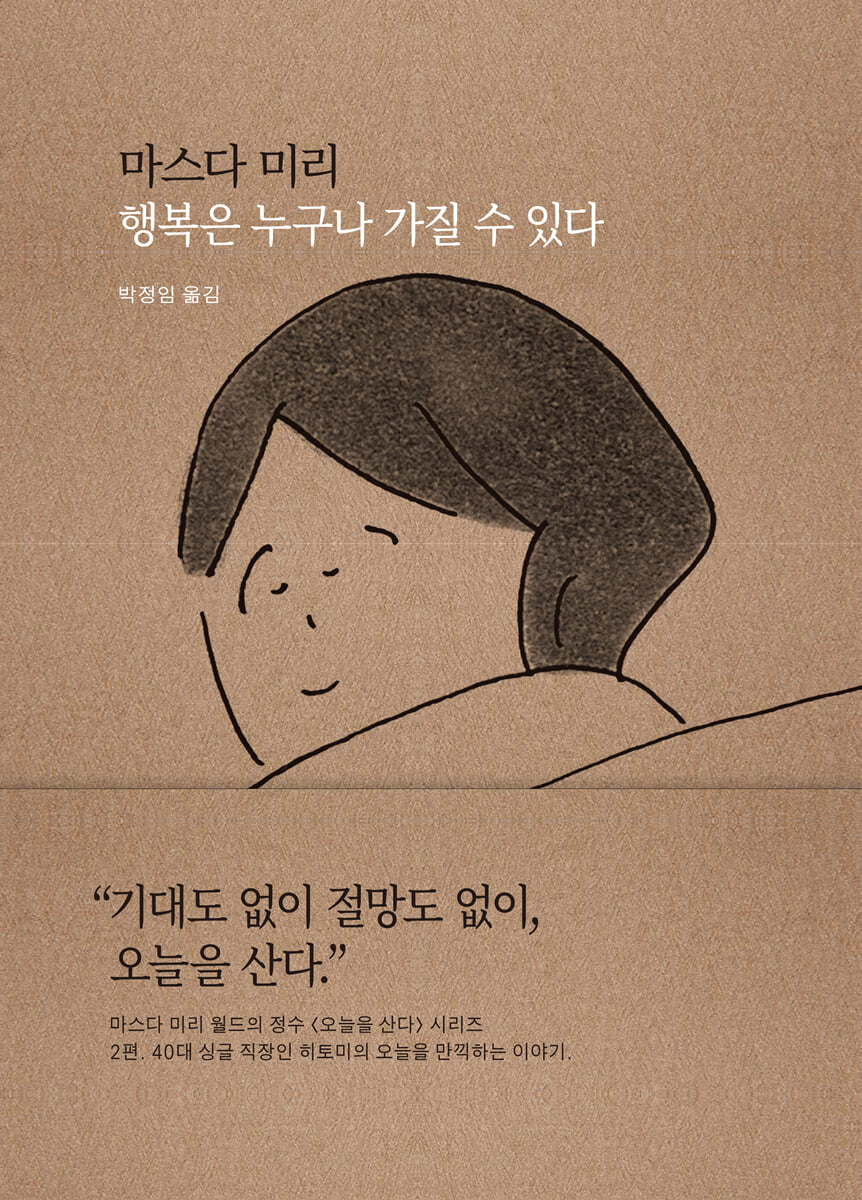
Happiness is something everyone can have
 |
Description
Book Introduction
A time to meet Masuda Miri in a serious way It has been 12 years since Masuda Miri, the writer who cherishes the ordinary 'today', met Korean readers. Masuda Miri, who celebrated her 20th anniversary as a writer in 2022, has spent more than half of her career with Korean readers. Author Masuda Miri, who has been giving meaning to the daily life of a single woman by 'verbalizing' it, has become a special daily life for us. In this newly published work, he defines for the first time the act of drawing and writing about everyday life. “Now that it’s been verbalized like this, I think it really was like that. “It’s a feeling that I can cope with the future.” (From “Everyone’s Life”) In all of Masuda Miri's works, we encounter a consistent story. The story of how to cherish an ordinary day is happiness. Our solid lives do not become happy or change with a single line of famous quotes. When you constantly encounter people who consistently talk about happiness, their world, and their language, you become happier little by little. Encounter that precious world. This is a series of two books containing Masuda Miri's philosophy of life and happiness. 『Everyone's Life』, which contains the story of illustrator Tsuyukusa in her 30s, and 『Anyone Can Have Happiness』, which contains the love story of Hitomi, a single office worker in her 40s. Although each work is independent, we have prepared a special edition to allow you to encounter the author's world more deeply. |
index
1.
A light drink
2.
I didn't say anything
3.
Someone I liked before
4.
Do you like Brahms...
5.
lie
6.
Accelerating love
7.
wavering heart
8.
Autumn with a lover
9.
north wind
10.
Where does emptiness come from?
11.
In a premonition
12.
Marigold
last.
Open the window
Epilogue
A light drink
2.
I didn't say anything
3.
Someone I liked before
4.
Do you like Brahms...
5.
lie
6.
Accelerating love
7.
wavering heart
8.
Autumn with a lover
9.
north wind
10.
Where does emptiness come from?
11.
In a premonition
12.
Marigold
last.
Open the window
Epilogue
Detailed image
.jpg)
Into the book
The sound of the toilet flushing made by the family
Soothing vague loneliness
It was that kind of night.
--- p.27
I'd be lying if I said I wasn't looking forward to it.
But when I choose clothes that fit my age, I feel like I'm denying who I am, so I feel bitter.
'There's no need to feel inferior.'
In the novel "Do You Like Brahms..." that I read in my teens, the main character Paul put on makeup to look younger for his younger lover, and he confessed, "I hated having to dress up like that, it felt like a weakness of mine," and Hitomi would sympathize with him on the day she met Makave.
--- p.44-45
I couldn't say it like that back then.
Because I want to like it
Because I want to be liked
Be unconditionally considerate of Oka and unconditionally agree with him.
But now I have some free time.
That's Makave, a younger man, and a very younger man.
The composure that comes from the confidence of charging forward recklessly.
--- p.54
“I have to contact my cousin about a ancestral rite!! Sorry, I’ll just make a call and go.
“Goodbye~”
Love is
It makes people liars.
I take a taxi at 10pm to meet a younger man.
Not love
You may be intoxicated with yourself.
--- p.61
“I’m back, Mom.”
“Today, corn arrived by courier.
“From a man named Oka.”
“Oh my, you really sent it.”
“Are you friends?”
“A friend of mine from college told me that there was delicious corn in Aomori.
“Wow, the corn is pretty.”
“The grains are sparkling.
“I thought the company sent it because it was a man’s name.”
-- p.69
I'm still on the fence.
It's not that I want you to say, 'I'm your lover'
Dating Makave means I have to get used to this kind of thing in the future.
'I'm the one who's getting hurt because I'm ahead of the curve.'
Denying your own age is tiring.
-- p.104
'climacteric…'
It will come to me someday.
I'm worried because the symptoms vary from person to person.
Living things inevitably grow old.
'It's vain.'
Hitomi thinks for a moment, wondering where this emptiness comes from.
No, it doesn't come from anywhere, it comes from within.
Hitomi, who was aware of the existence of death, was bound to face the 'emptiness' that came from within her, and yet she was excited about the new cake shop.
Soothing vague loneliness
It was that kind of night.
--- p.27
I'd be lying if I said I wasn't looking forward to it.
But when I choose clothes that fit my age, I feel like I'm denying who I am, so I feel bitter.
'There's no need to feel inferior.'
In the novel "Do You Like Brahms..." that I read in my teens, the main character Paul put on makeup to look younger for his younger lover, and he confessed, "I hated having to dress up like that, it felt like a weakness of mine," and Hitomi would sympathize with him on the day she met Makave.
--- p.44-45
I couldn't say it like that back then.
Because I want to like it
Because I want to be liked
Be unconditionally considerate of Oka and unconditionally agree with him.
But now I have some free time.
That's Makave, a younger man, and a very younger man.
The composure that comes from the confidence of charging forward recklessly.
--- p.54
“I have to contact my cousin about a ancestral rite!! Sorry, I’ll just make a call and go.
“Goodbye~”
Love is
It makes people liars.
I take a taxi at 10pm to meet a younger man.
Not love
You may be intoxicated with yourself.
--- p.61
“I’m back, Mom.”
“Today, corn arrived by courier.
“From a man named Oka.”
“Oh my, you really sent it.”
“Are you friends?”
“A friend of mine from college told me that there was delicious corn in Aomori.
“Wow, the corn is pretty.”
“The grains are sparkling.
“I thought the company sent it because it was a man’s name.”
-- p.69
I'm still on the fence.
It's not that I want you to say, 'I'm your lover'
Dating Makave means I have to get used to this kind of thing in the future.
'I'm the one who's getting hurt because I'm ahead of the curve.'
Denying your own age is tiring.
-- p.104
'climacteric…'
It will come to me someday.
I'm worried because the symptoms vary from person to person.
Living things inevitably grow old.
'It's vain.'
Hitomi thinks for a moment, wondering where this emptiness comes from.
No, it doesn't come from anywhere, it comes from within.
Hitomi, who was aware of the existence of death, was bound to face the 'emptiness' that came from within her, and yet she was excited about the new cake shop.
-- p.122
Publisher's Review
Masuda Miri's Theory of Happiness Happiness is everywhere and can be had by anyone.
The world drawn by author Masuda Miri remains unchanged.
The author values the "reassurance" that comes from "confirming one's own consistency," as Hitomi, the protagonist of this work, says. We face changes in every aspect of our lives every day.
Even if you've adapted well to today's changes, you might be worried about whether you'll be able to keep up with tomorrow's changes.
But even though today's weather is different from yesterday's, the seasons come to visit us every year.
Like the seasons, Masuda Miri's world is always welcoming.
This book is a special story drawn by Masuda Miri to commemorate the 500th installment of "This Kind of Daily Life in the Sawamura House" serialized in Shukan Bunshun, Japan's largest weekly magazine, for nearly 10 years.
The main character of this book, Hitomi, a single office worker in her 40s, lives with her parents in their 70s.
A mother who gives her daughter a bright smile and says, “You worked hard today,” as she comes home from work, and a father who maintains an independent life in his old age without giving up his hobby of reading.
The main conversation between the three people is about the changing seasons and delicious food.
Daughter Hitomi explores various restaurants with her single friends, and she bitterly discusses the kinds of exciting things that no longer happen to them now that they are in their 40s, but she would not trade her youth for the present.
Although she is excited about love in her 40s, Hitomi is still Hitomi.
Even in moments of excitement from love, in moments of despair from love, in moments of small talk with parents, even in moments when you sometimes think of your parents' declining health, there is always a self that never changes.
And being sure of that fact.
This is the image of happiness that Masuda Miri conveys to us.
Since ‘I’ exists in everyone, happiness exists in everyone.
How can I find it and have it?
If we fill our daily lives with the conversations and feelings shared by the characters in this book, everyone will be able to find happiness.
The parents do not interfere in the life of their daughter, who is single in her 40s, and find joy in the small changes in her daily life.
I also accept that it is time for me to become independent and protect my daughter.
Her daughter Hitomi enjoys both the stability and bitterness of her 40s.
If you're one of those people who hopes to see me happy when I arrive, I recommend you take a moment to savor the daily lives and conversations of the people in their 40s and 70s featured in this book.
There is something special that can only be felt in Masuda Miri's manga essays.
The world drawn by author Masuda Miri remains unchanged.
The author values the "reassurance" that comes from "confirming one's own consistency," as Hitomi, the protagonist of this work, says. We face changes in every aspect of our lives every day.
Even if you've adapted well to today's changes, you might be worried about whether you'll be able to keep up with tomorrow's changes.
But even though today's weather is different from yesterday's, the seasons come to visit us every year.
Like the seasons, Masuda Miri's world is always welcoming.
This book is a special story drawn by Masuda Miri to commemorate the 500th installment of "This Kind of Daily Life in the Sawamura House" serialized in Shukan Bunshun, Japan's largest weekly magazine, for nearly 10 years.
The main character of this book, Hitomi, a single office worker in her 40s, lives with her parents in their 70s.
A mother who gives her daughter a bright smile and says, “You worked hard today,” as she comes home from work, and a father who maintains an independent life in his old age without giving up his hobby of reading.
The main conversation between the three people is about the changing seasons and delicious food.
Daughter Hitomi explores various restaurants with her single friends, and she bitterly discusses the kinds of exciting things that no longer happen to them now that they are in their 40s, but she would not trade her youth for the present.
Although she is excited about love in her 40s, Hitomi is still Hitomi.
Even in moments of excitement from love, in moments of despair from love, in moments of small talk with parents, even in moments when you sometimes think of your parents' declining health, there is always a self that never changes.
And being sure of that fact.
This is the image of happiness that Masuda Miri conveys to us.
Since ‘I’ exists in everyone, happiness exists in everyone.
How can I find it and have it?
If we fill our daily lives with the conversations and feelings shared by the characters in this book, everyone will be able to find happiness.
The parents do not interfere in the life of their daughter, who is single in her 40s, and find joy in the small changes in her daily life.
I also accept that it is time for me to become independent and protect my daughter.
Her daughter Hitomi enjoys both the stability and bitterness of her 40s.
If you're one of those people who hopes to see me happy when I arrive, I recommend you take a moment to savor the daily lives and conversations of the people in their 40s and 70s featured in this book.
There is something special that can only be felt in Masuda Miri's manga essays.
GOODS SPECIFICS
- Date of issue: March 11, 2024
- Format: Hardcover book binding method guide
- Page count, weight, size: 160 pages | 374g | 148*210*14mm
- ISBN13: 9791198289445
- ISBN10: 1198289449
You may also like
카테고리
korean


korean

![GQ KOREA Mark (Monthly): December [2025]](http://librairie.coreenne.fr/cdn/shop/files/8ef265dbbfbf186523ed75ba7319009d.jpg?v=1765340328&width=3840)


