

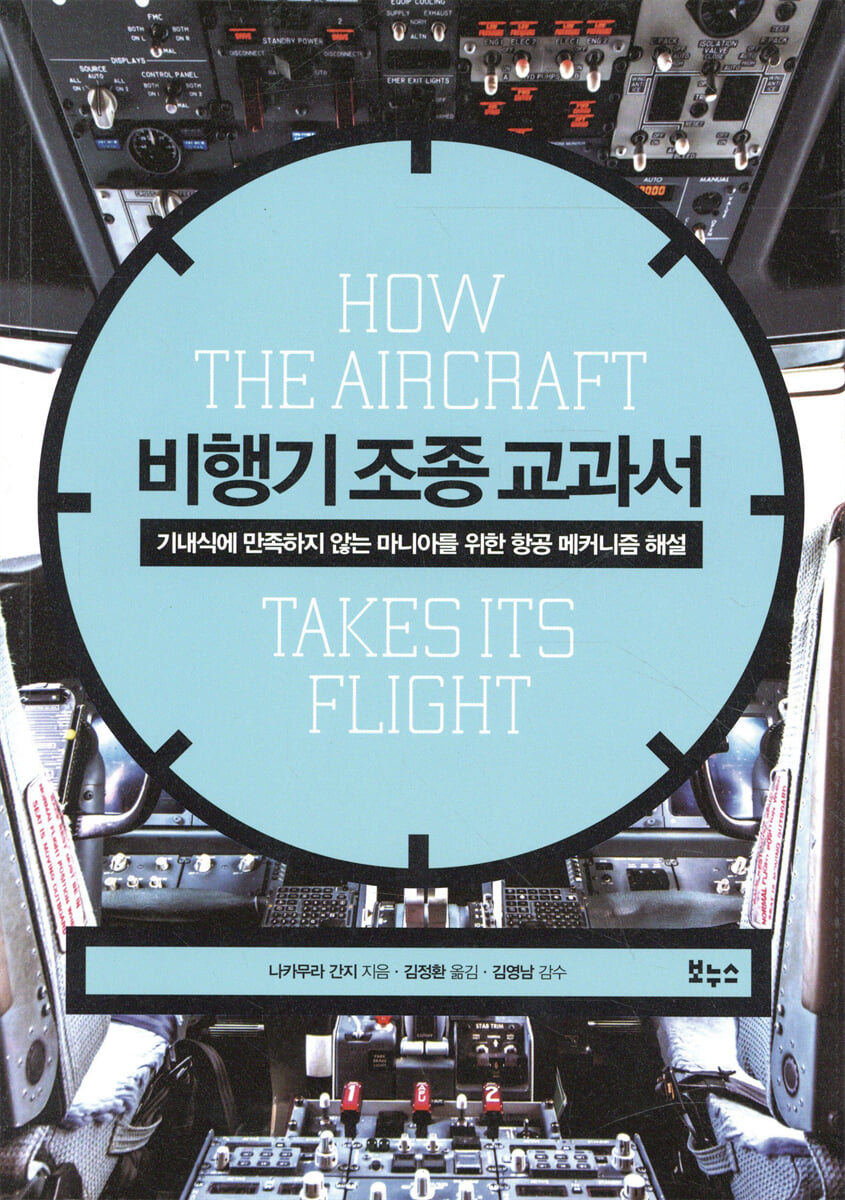
Airplane piloting textbook
 |
Description
Book Introduction
Laying the foundations of airplane mechanisms
98 key knowledge items organized in pictures and diagrams
Jet airliners, which can be considered the pinnacle of modern science, are machines that require extremely complex and demanding technology and knowledge.
Pilots must operate numerous devices in precise ways and at precise times, and must quickly and accurately perceive any situation and then execute the next action.
It is certainly not easy to convey such difficult aviation techniques and aircraft structures to the general public.
But the author of this book makes that difficult task relatively easy.
This is because it helps the general public understand the pilots' flight work through a balanced narrative that is concise but does not miss the key concepts, and it extracts only the key parts and explains them again with easy-to-understand pictures and diagrams.
After reading the text on each page, if you organize the content with the figures and tables right next to it, even difficult concepts and principles will become clear at a glance.
According to recent news, the number of Korean tourists traveling abroad in 2016 will exceed 20 million.
This is a larger number than that of neighboring Japan, and considering that South Korea has a population of around 50 million, it gives an idea of how many people travel abroad.
The number of people interested in airplanes has increased significantly, and many are curious about related knowledge beyond simply boarding airplanes.
However, there are virtually no related textbooks in the aviation field.
Moreover, most of the information available on the Internet is superficial and fragmented.
《Airplane Piloting Textbook》 is an aviation textbook that completely solves this problem.
The author, a former pilot, uses photographs, diagrams, and diagrams to explain the concepts of flight tasks actually performed by airline pilots and the mechanisms of airplanes so that even the general public without prior knowledge can easily understand them.
For those who have always been curious about the structure and principles of airplanes and wanted to know what pilots do, this book will provide valuable aviation knowledge.
98 key knowledge items organized in pictures and diagrams
Jet airliners, which can be considered the pinnacle of modern science, are machines that require extremely complex and demanding technology and knowledge.
Pilots must operate numerous devices in precise ways and at precise times, and must quickly and accurately perceive any situation and then execute the next action.
It is certainly not easy to convey such difficult aviation techniques and aircraft structures to the general public.
But the author of this book makes that difficult task relatively easy.
This is because it helps the general public understand the pilots' flight work through a balanced narrative that is concise but does not miss the key concepts, and it extracts only the key parts and explains them again with easy-to-understand pictures and diagrams.
After reading the text on each page, if you organize the content with the figures and tables right next to it, even difficult concepts and principles will become clear at a glance.
According to recent news, the number of Korean tourists traveling abroad in 2016 will exceed 20 million.
This is a larger number than that of neighboring Japan, and considering that South Korea has a population of around 50 million, it gives an idea of how many people travel abroad.
The number of people interested in airplanes has increased significantly, and many are curious about related knowledge beyond simply boarding airplanes.
However, there are virtually no related textbooks in the aviation field.
Moreover, most of the information available on the Internet is superficial and fragmented.
《Airplane Piloting Textbook》 is an aviation textbook that completely solves this problem.
The author, a former pilot, uses photographs, diagrams, and diagrams to explain the concepts of flight tasks actually performed by airline pilots and the mechanisms of airplanes so that even the general public without prior knowledge can easily understand them.
For those who have always been curious about the structure and principles of airplanes and wanted to know what pilots do, this book will provide valuable aviation knowledge.
- You can preview some of the book's contents.
Preview
index
Preface _ 5
Chapter 1 What Pilots Do Before Departure: Preflight
1-01 The Relationship Between Pilots and Manuals _ 14
1-02 Before departure, the pilots begin a meeting _ 16
1-03 Check the weather first _ 18
1-04 Check flight information _ 20
1-05 Plan your flight _ 22
1-06 How much does an airplane weigh? _ 24
1-07 How to maximize paid load? _ 26
1-08 Checking the Airplane's Balance _ 28
1-09 Heading to the plane at departure gate _ 30
1-10 Preparing the plane for departure _ 32
1-11 Waking up the brain of a sleeping airplane _ 34
1-12 The Relationship Between Airplane Attitude and Gyroscope _ 36
Trivia 1: What is the role of a pilot's uniform? _ 38
Chapter 2: Starting the Airplane Engine: Engine Start
2-01 Checking the Cockpit Situation _ 40
2-02 Boarding begins _ 42
2-03 What Pilots Do 5 Minutes Before Departure _ 44
2-04 Jet Engines and Instruments _ 46
2-05 Preparing for Engine Start _ 48
2-06 Engine Start for Full Flight _ 50
2-07 Let's head for the runway! _ 52
2-08 Checking the Control Unit _ 54
2-09 Proceed to the runway via taxiway _ 56
2-10 How to Use Airplane Lights _ 58
2-11 Operating the Wireless Device _ 60
Fragmented Common Sense 2 From INS to PMS and FMS _ 62
Chapter 3: Take Off: Everything You Need to Know to Fly into the Sky
3-01 Set takeoff thrust _ 64
3-02 How do I set the thrust? _ 66
3-03 What is the size of the takeoff thrust? _ 68
3-04 Accelerate for takeoff _ 70
3-05 V1 (V1) To Take Off or Not to Take Off _ 72
3-06 Lifting the VR Rider _ 74
3-07 Distance required for liftoff _ 76
3-08 V2 (V2) Takes Off Safely _ 78
3-09 From Takeoff Thrust to Climb Thrust _ 80
3-10 Does not always maintain maximum thrust _ 82
3-11 There are two types of takeoff methods _ 84
3-12 What is 'thrust', the force that moves forward? _ 86
Facts and Facts 3: Pushback and Engine Start _ 88
Chapter 4: Climb
4-01 Indicator of Rise _ 90
4-02 Airspeed Meter _ 92
4-03 Speed Required for Flight _ 94
4-04 Barometric Altimeter _ 96
4-05 Flight Level _ 98
4-06 How high will it rise? _ 100
4-07 Turning based on the instrument _ 102
4-08 How to Turn? _ 104
4-09 What is Fly-by-Wire? _ 106
4-10 When to turn on autopilot? _ 108
4-11 Turn with one knob _ 110
Common Sense Tip 4: Why Turn On External Lights_ 112
Chapter 5 Faster, Farther, Higher: Cruise
5-01 Level Off, Transition to Level Flight _ 114
5-02 Long-distance cruising is step-up cruising _ 116
5-03 What to do when cruising short distances? _ 118
5-04 Reduce Costs at ECON Speed _ 120
5-05 What is FMS? _ 122
How to fly over Route 5-06? _ 124
5-07 Checking the fuel level is important _ 126
5-08 From which location do you use fuel? _ 128
5-09 How far can you fly? _ 130
5-10 How high can you go? _ 132
5-11 How fast can you fly? _ 134
5-12 The Amazing World of Maha _ 136
5-13 Why do passenger planes shake? _ 138
5-14 How can I find the location? _ 140
Facts 5: What Sounds Can You Hear in the Cockpit? _ 142
Chapter 6: How Descent Works: Descent & Approach
6-01 Beginning the descent _ 144
6-02 How to descend? _ 146
6-03 There are two types of descent methods _ 148
6-04 Children become resistance _ 150
6-05 The cabin altitude also decreases _ 152
6-06 Activating the anti-icing device _ 154
6-07 What to do while waiting in the air? _ 156
6-08 Set the altimeter to QNH _ 158
Trivia 6: What is the "3x Rule"? _ 160
Chapter 7 Another Beginning of Flight, Landing: Landing
7-01 Finally, entry begins _ 162
7-02 Check the runway in use _ 164
7-03 “Flap One” _ 166
7-04 What does it mean to 'ride the ILS'? _ 168
7-05 Gear Down _ 170
7-06 What should be the landing posture? _ 172
7-07 What if I can't see the runway? _ 174
7-08 Go Around _ 176
7-09 'Pull Operation' on Landing _ 178
7-10 What is VREF? _ 180
7-11 How far is it to land? _ 182
7-12 Auto Landing _ 184
7-13 What are the roles of various reduction devices? _ 186
7-14 After landing, quickly leave the runway _ 188
Fragmented Common Sense 7: Encounters with Flight Seniors _ 190
Chapter 8 Pilot's Attitude in Responding to an Emergency: Emergency
8-01 What are the operating limits? _ 192
8-02 What Stops an Engine from Starting? _ 194
8-03 Sometimes aborted takeoff (RTO) is required _ 196
If you proceed with takeoff from 8-04 V1 _ 198
8-05 Fuel Discharge Method _ 200
8-06 How to Perform an Emergency Descent? _ 202
8-07 Engine failure in the middle of the Pacific _ 204
8-08 What to do in case of fire? _ 206
8-09 What if the hydraulic system fails? _ 208
What if there is a problem with the generator? _ 210
What is the 8-11 ETOPS/EDTO-180 Regulation? _ 212
8-12 How to Select an Airport for an Emergency Landing? _ 214
8-13 When will the collision avoidance system work? _ 216
8-14 What Does a Black Box Do? _ 218
8-15 Structure of the Alarm System _ 220
8-16 What is Simulator Training? _ 222
Search _ 225
References _ 230
Chapter 1 What Pilots Do Before Departure: Preflight
1-01 The Relationship Between Pilots and Manuals _ 14
1-02 Before departure, the pilots begin a meeting _ 16
1-03 Check the weather first _ 18
1-04 Check flight information _ 20
1-05 Plan your flight _ 22
1-06 How much does an airplane weigh? _ 24
1-07 How to maximize paid load? _ 26
1-08 Checking the Airplane's Balance _ 28
1-09 Heading to the plane at departure gate _ 30
1-10 Preparing the plane for departure _ 32
1-11 Waking up the brain of a sleeping airplane _ 34
1-12 The Relationship Between Airplane Attitude and Gyroscope _ 36
Trivia 1: What is the role of a pilot's uniform? _ 38
Chapter 2: Starting the Airplane Engine: Engine Start
2-01 Checking the Cockpit Situation _ 40
2-02 Boarding begins _ 42
2-03 What Pilots Do 5 Minutes Before Departure _ 44
2-04 Jet Engines and Instruments _ 46
2-05 Preparing for Engine Start _ 48
2-06 Engine Start for Full Flight _ 50
2-07 Let's head for the runway! _ 52
2-08 Checking the Control Unit _ 54
2-09 Proceed to the runway via taxiway _ 56
2-10 How to Use Airplane Lights _ 58
2-11 Operating the Wireless Device _ 60
Fragmented Common Sense 2 From INS to PMS and FMS _ 62
Chapter 3: Take Off: Everything You Need to Know to Fly into the Sky
3-01 Set takeoff thrust _ 64
3-02 How do I set the thrust? _ 66
3-03 What is the size of the takeoff thrust? _ 68
3-04 Accelerate for takeoff _ 70
3-05 V1 (V1) To Take Off or Not to Take Off _ 72
3-06 Lifting the VR Rider _ 74
3-07 Distance required for liftoff _ 76
3-08 V2 (V2) Takes Off Safely _ 78
3-09 From Takeoff Thrust to Climb Thrust _ 80
3-10 Does not always maintain maximum thrust _ 82
3-11 There are two types of takeoff methods _ 84
3-12 What is 'thrust', the force that moves forward? _ 86
Facts and Facts 3: Pushback and Engine Start _ 88
Chapter 4: Climb
4-01 Indicator of Rise _ 90
4-02 Airspeed Meter _ 92
4-03 Speed Required for Flight _ 94
4-04 Barometric Altimeter _ 96
4-05 Flight Level _ 98
4-06 How high will it rise? _ 100
4-07 Turning based on the instrument _ 102
4-08 How to Turn? _ 104
4-09 What is Fly-by-Wire? _ 106
4-10 When to turn on autopilot? _ 108
4-11 Turn with one knob _ 110
Common Sense Tip 4: Why Turn On External Lights_ 112
Chapter 5 Faster, Farther, Higher: Cruise
5-01 Level Off, Transition to Level Flight _ 114
5-02 Long-distance cruising is step-up cruising _ 116
5-03 What to do when cruising short distances? _ 118
5-04 Reduce Costs at ECON Speed _ 120
5-05 What is FMS? _ 122
How to fly over Route 5-06? _ 124
5-07 Checking the fuel level is important _ 126
5-08 From which location do you use fuel? _ 128
5-09 How far can you fly? _ 130
5-10 How high can you go? _ 132
5-11 How fast can you fly? _ 134
5-12 The Amazing World of Maha _ 136
5-13 Why do passenger planes shake? _ 138
5-14 How can I find the location? _ 140
Facts 5: What Sounds Can You Hear in the Cockpit? _ 142
Chapter 6: How Descent Works: Descent & Approach
6-01 Beginning the descent _ 144
6-02 How to descend? _ 146
6-03 There are two types of descent methods _ 148
6-04 Children become resistance _ 150
6-05 The cabin altitude also decreases _ 152
6-06 Activating the anti-icing device _ 154
6-07 What to do while waiting in the air? _ 156
6-08 Set the altimeter to QNH _ 158
Trivia 6: What is the "3x Rule"? _ 160
Chapter 7 Another Beginning of Flight, Landing: Landing
7-01 Finally, entry begins _ 162
7-02 Check the runway in use _ 164
7-03 “Flap One” _ 166
7-04 What does it mean to 'ride the ILS'? _ 168
7-05 Gear Down _ 170
7-06 What should be the landing posture? _ 172
7-07 What if I can't see the runway? _ 174
7-08 Go Around _ 176
7-09 'Pull Operation' on Landing _ 178
7-10 What is VREF? _ 180
7-11 How far is it to land? _ 182
7-12 Auto Landing _ 184
7-13 What are the roles of various reduction devices? _ 186
7-14 After landing, quickly leave the runway _ 188
Fragmented Common Sense 7: Encounters with Flight Seniors _ 190
Chapter 8 Pilot's Attitude in Responding to an Emergency: Emergency
8-01 What are the operating limits? _ 192
8-02 What Stops an Engine from Starting? _ 194
8-03 Sometimes aborted takeoff (RTO) is required _ 196
If you proceed with takeoff from 8-04 V1 _ 198
8-05 Fuel Discharge Method _ 200
8-06 How to Perform an Emergency Descent? _ 202
8-07 Engine failure in the middle of the Pacific _ 204
8-08 What to do in case of fire? _ 206
8-09 What if the hydraulic system fails? _ 208
What if there is a problem with the generator? _ 210
What is the 8-11 ETOPS/EDTO-180 Regulation? _ 212
8-12 How to Select an Airport for an Emergency Landing? _ 214
8-13 When will the collision avoidance system work? _ 216
8-14 What Does a Black Box Do? _ 218
8-15 Structure of the Alarm System _ 220
8-16 What is Simulator Training? _ 222
Search _ 225
References _ 230
Detailed image

Publisher's Review
Weight 580 tons, length 73 m, speed 1078 km/h
The pinnacle of cutting-edge technology, dissecting the airplane mechanism!
Every time we board an airplane, people have many curiosities.
First, as you enter and exit the boarding bridge, you are surprised by the complex appearance of the cockpit that you can see briefly.
And I am once again amazed by the fact that a huge airplane weighing hundreds of tons is flying into the sky.
While passengers board, what are the pilots doing in that complex cockpit? What are the principles and mechanisms that enable an airplane to soar? How do they find their destination in the sky without any signposts? A series of questions fill people's minds.
Departure preparation, takeoff, cruising, descent, landing, and emergency response
Understand the core concepts of pilot flight duties and aviation skills.
It is difficult for the average person to answer this question, which everyone has probably thought about at least once while riding an airplane.
This is why the author, a veteran pilot with over 30 years of experience, wrote “Airplane Piloting Textbook.”
This book, which comprehensively explains the structure and principles of an airplane and the core concepts of a pilot's job, provides expert answers to questions in various fields, such as how a pilot operates an airplane, what mechanisms are required for takeoff and landing, and why passengers must sit still for a while on an airplane during takeoff.
To create a book that even the general public can easily understand, the author meticulously follows the pilot's actual movements.
That is, it explains all of the pilot's aviation tasks in order according to the flight sequence, from departure preparation to takeoff, climb, cruise, descent, and landing.
It's like broadcasting a live sports game like baseball or soccer.
Therefore, the structure of the book is similar to the pilot's work order.
Chapter 1 covers preparations for departure.
Pilots prepare thoroughly before boarding a passenger aircraft to ensure a safe flight.
Gather all the manuals and documents required for operation and update related information.
And in the Peace Patch briefing conducted by the dispatcher (operation manager), various matters related to operation are discussed.
The briefing covers everything you need to know about the flight, including weather, flight information, flight route, fuel availability, alternate airports, and the weight and balance of the aircraft. Chapter 1 delves into each of these topics in detail.
Chapters 2 through 7 describe the entire flight process in detail.
Chapter 2 covers engine starting, Chapter 3 explains how to take off, Chapter 4 covers the principles needed to climb an airplane and when to turn on the autopilot, Chapter 5 details things to check on the way to the destination, the flight management system, and cruising methods such as step-up cruising, Chapter 6 covers two methods of descending from the destination and piloting techniques such as hovering, and Chapter 7 covers how to land, which is said to be more difficult than takeoff. These are the core of this book and essential knowledge for anyone who wants to understand the concept of aviation.
By the end of this article, readers will have had most of their questions answered.
Because it covers in detail how airplanes can take off, fly, and land in the sky.
The last eight chapters describe how pilots should respond in the event of various emergencies, such as fire or engine failure.
Since many emergencies are directly related to passenger safety, it can be said that this section is in some ways more important than other sections.
The pinnacle of cutting-edge technology, dissecting the airplane mechanism!
Every time we board an airplane, people have many curiosities.
First, as you enter and exit the boarding bridge, you are surprised by the complex appearance of the cockpit that you can see briefly.
And I am once again amazed by the fact that a huge airplane weighing hundreds of tons is flying into the sky.
While passengers board, what are the pilots doing in that complex cockpit? What are the principles and mechanisms that enable an airplane to soar? How do they find their destination in the sky without any signposts? A series of questions fill people's minds.
Departure preparation, takeoff, cruising, descent, landing, and emergency response
Understand the core concepts of pilot flight duties and aviation skills.
It is difficult for the average person to answer this question, which everyone has probably thought about at least once while riding an airplane.
This is why the author, a veteran pilot with over 30 years of experience, wrote “Airplane Piloting Textbook.”
This book, which comprehensively explains the structure and principles of an airplane and the core concepts of a pilot's job, provides expert answers to questions in various fields, such as how a pilot operates an airplane, what mechanisms are required for takeoff and landing, and why passengers must sit still for a while on an airplane during takeoff.
To create a book that even the general public can easily understand, the author meticulously follows the pilot's actual movements.
That is, it explains all of the pilot's aviation tasks in order according to the flight sequence, from departure preparation to takeoff, climb, cruise, descent, and landing.
It's like broadcasting a live sports game like baseball or soccer.
Therefore, the structure of the book is similar to the pilot's work order.
Chapter 1 covers preparations for departure.
Pilots prepare thoroughly before boarding a passenger aircraft to ensure a safe flight.
Gather all the manuals and documents required for operation and update related information.
And in the Peace Patch briefing conducted by the dispatcher (operation manager), various matters related to operation are discussed.
The briefing covers everything you need to know about the flight, including weather, flight information, flight route, fuel availability, alternate airports, and the weight and balance of the aircraft. Chapter 1 delves into each of these topics in detail.
Chapters 2 through 7 describe the entire flight process in detail.
Chapter 2 covers engine starting, Chapter 3 explains how to take off, Chapter 4 covers the principles needed to climb an airplane and when to turn on the autopilot, Chapter 5 details things to check on the way to the destination, the flight management system, and cruising methods such as step-up cruising, Chapter 6 covers two methods of descending from the destination and piloting techniques such as hovering, and Chapter 7 covers how to land, which is said to be more difficult than takeoff. These are the core of this book and essential knowledge for anyone who wants to understand the concept of aviation.
By the end of this article, readers will have had most of their questions answered.
Because it covers in detail how airplanes can take off, fly, and land in the sky.
The last eight chapters describe how pilots should respond in the event of various emergencies, such as fire or engine failure.
Since many emergencies are directly related to passenger safety, it can be said that this section is in some ways more important than other sections.
GOODS SPECIFICS
- Date of issue: September 5, 2016
- Page count, weight, size: 232 pages | 398g | 148*210*20mm
- ISBN13: 9788964942642
- ISBN10: 8964942647
You may also like
카테고리
korean


korean

![GQ KOREA Mark (Monthly): December [2025]](http://librairie.coreenne.fr/cdn/shop/files/8ef265dbbfbf186523ed75ba7319009d.jpg?v=1765340328&width=3840)


