

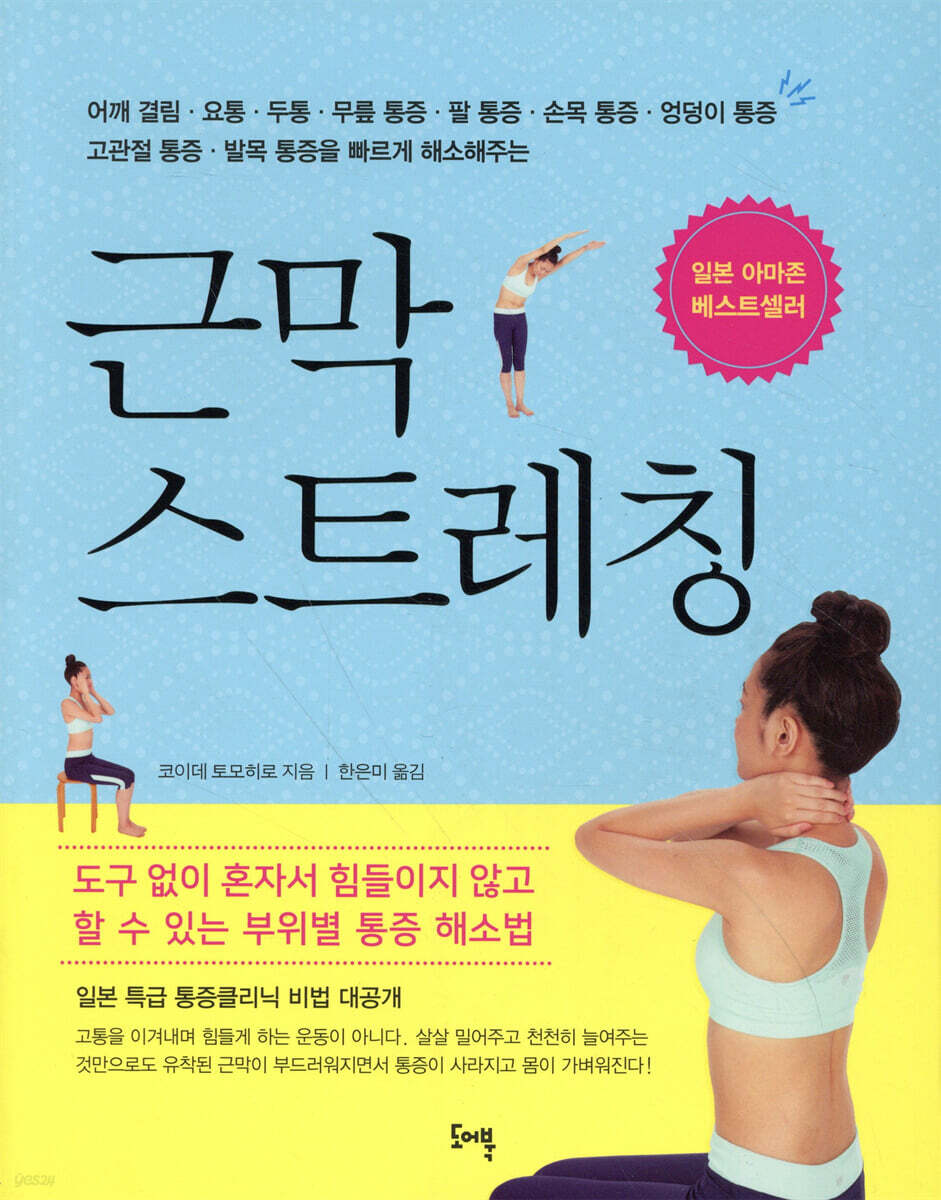
fascial stretching
 |
Description
Book Introduction
The real cause of pain lies not in the joints or muscles, but in the fascia.
Until now, it has been thought that the cause of symptoms such as stiff shoulders or back pain is in the muscles.
However, with the advancement of medicine, it has become known that the cause lies in the adhesion and deformation of the fascia.
Tissues such as muscles, muscle fibers, and internal organs are each covered by individual fasciae.
Because this fascia acts as a cushion for adjacent tissues, it allows smooth movement of each part of the body.
However, if the same posture is maintained for a long time or only one part of the body is overworked, the fascia loses its resilience, causing deformation or pulling of the fascia.
This is fascial adhesion.
When the fascia becomes adhered like this, friction occurs between the fascia, which not only hinders the smooth movement of each tissue, but also causes pain by impairing blood circulation as blood vessels tighten the fascia.
Fascia stretching: Japan's hottest "home workout" right now
Fascia is what is located just under the skin, and it refers to the membrane that wraps around the entire body like a bodysuit, the membrane that wraps around the muscles, and the membrane that wraps around the tissues that make up the body, such as bones, internal organs, blood vessels, and nerves.
When you overwork your body or are subjected to mental stress, cold, or other environmental stress, problems occur in this membrane, causing pain and disharmony.
To relieve these symptoms, it is necessary to correct the fascia that causes pain or disharmony in the body and return it to its original state.
What is effective right there is ‘myofascial release’.
Releasing the fascia improves the body's imbalances, eliminating pain and making the body feel lighter.
Until now, it has been thought that the cause of symptoms such as stiff shoulders or back pain is in the muscles.
However, with the advancement of medicine, it has become known that the cause lies in the adhesion and deformation of the fascia.
Tissues such as muscles, muscle fibers, and internal organs are each covered by individual fasciae.
Because this fascia acts as a cushion for adjacent tissues, it allows smooth movement of each part of the body.
However, if the same posture is maintained for a long time or only one part of the body is overworked, the fascia loses its resilience, causing deformation or pulling of the fascia.
This is fascial adhesion.
When the fascia becomes adhered like this, friction occurs between the fascia, which not only hinders the smooth movement of each tissue, but also causes pain by impairing blood circulation as blood vessels tighten the fascia.
Fascia stretching: Japan's hottest "home workout" right now
Fascia is what is located just under the skin, and it refers to the membrane that wraps around the entire body like a bodysuit, the membrane that wraps around the muscles, and the membrane that wraps around the tissues that make up the body, such as bones, internal organs, blood vessels, and nerves.
When you overwork your body or are subjected to mental stress, cold, or other environmental stress, problems occur in this membrane, causing pain and disharmony.
To relieve these symptoms, it is necessary to correct the fascia that causes pain or disharmony in the body and return it to its original state.
What is effective right there is ‘myofascial release’.
Releasing the fascia improves the body's imbalances, eliminating pain and making the body feel lighter.
- You can preview some of the book's contents.
Preview
index
At the beginning of the book
Features of this book
Structure and Use of This Book
Part 1: The Basics of Myofascial Release
What is fascia?
Why do stiffness and pain occur?
What is myofascial release?
Benefits of Myofascial Release
Basic methods of myofascial release
The Relationship Between Fascia and Pain
Part 2 Frozen Shoulder
Introduction Why do frozen shoulders occur?
Shoulder Pain Relief Tip 1: Relaxing the Shoulder Area
Shoulder Pain Relief Method 2: Relaxing the Front and Sides of Your Neck
Shoulder Stiffness Relief Tip 3: Relaxing the Back of Your Neck
Shoulder Pain Relief Tip 4: Loosen the Shoulder Blades
Pain Type 1: Shoulders are stiff
Pain Type 2: A lump that radiates from the neck to the shoulders.
Pain Type 3: The front of the neck is stiff
Pain Type 4: Stiffness in the back of the neck
Pain Type 5: Pain on the inside of the shoulder blade
Pain Type 6: The area around the shoulder blade is tight
Column: Relieving Pain in Everyday Life - Frozen Shoulder
Part 3 Back Pain
Introduction Why does back pain occur?
Back Pain Relief Tip 1: Relaxing the Area Around Your Waist
Back Pain Relief Method 2: Relaxing from the waist to the lower body
Back Pain Relief Tip 3: Stretching the Back
Pain Type 1: Pain when leaning back
Pain Type 2: Pain on the outside of the lower back when leaning back
Pain Type 3: Pain when bending forward
Pain Type 4: Pain between the pelvis and lower back
Pain Type 5: Pain in the center of the lower back when bending the head
Column: Relieving Pain in Everyday Life - Back Pain
Part 4 Headache
Introduction Why do headaches occur?
Headache Relief Tip 1: Relax from the back of your neck to your upper back.
Headache Relief Tip 2: Relaxing the Front and Sides of Your Neck
Headache Relief Tip 3: Relaxing the Back of Your Neck
Pain Type 1: The back of the head hurts
Pain Type 2: My temples hurt ①
Pain Type 3: My temples hurt ②
Pain Type 4: Eyes hurt
Column: Relieving Pain in Everyday Life - Headache
Part 5 Knee Pain
Introduction Why do knees hurt?
Knee Pain Relief #1: Relaxing the Front of Your Thigh
Knee Pain Relief #2: Relaxing Your Thighs
Knee Pain Relief Tip 3: Relax Your Lower Body
Pain Type 1: Pain on the inside of the knee
Pain Type 2: Pain on the outside and back of the knee
Pain Type 3: Pain above and on the side of the knee
Pain Type 4: Pain below the knee
Pain Type 5: Pain on the side of the knee
Pain Type 6: Pain on the inside of the knee when sitting cross-legged
Column: Relieving Pain in Everyday Life - Knee Pain
Part 6 Arm and Wrist Pain
Introduction Why do I have pain in my arms and wrists?
Pain Type 1: Pain around the wrist
Pain Type 2: Your arm hurts or feels pulled when you pick up an object.
Pain Type 3: Pain on the outside of the elbow
Pain Type 4: Pulling on the inside of the arm
Pain Type 5: Relieve Hand Swelling
Column: Relieving Pain in Everyday Life - Arm and Wrist Pain
Part 7 Hip, Hip Joint, and Ankle Pain
Introduction Why do hip, hip joint, and ankle pain occur?
Pain Type 1: Hip pulling and pain
Pain Type 2: Pain on the outside of the hip joint when sitting cross-legged
Pain Type 3: Ankle Stiffness
Pain Type 4: Pain around the scapula
Pain Type 5: Calf pain or heel pain
Pain Type 6: Achilles tendon pain
Column: Relieve Pain in Everyday Life - Hip, Hip Joint, and Ankle Pain
Part 8 Relief of Painful Symptoms
Pain Type 1: Relief from Cold Hands and Feet
Pain Type 2: Relief from Constipation and Menstrual Pain
Pain Type 3: Relieve Physical Weakness
Column Pain Only Women Experience
Part 9 Pain Prevention
Preventing Shoulder Frozenness (Pain Type 1)
Preventing Back Pain Type 2
Preventing Headaches Caused by Eye Fatigue, Type 3 Pain
Preventing Pain Type 4: Hunchback
Preventing Knee Pain Type 5
Preventing Elbow Pain Type 6
Features of this book
Structure and Use of This Book
Part 1: The Basics of Myofascial Release
What is fascia?
Why do stiffness and pain occur?
What is myofascial release?
Benefits of Myofascial Release
Basic methods of myofascial release
The Relationship Between Fascia and Pain
Part 2 Frozen Shoulder
Introduction Why do frozen shoulders occur?
Shoulder Pain Relief Tip 1: Relaxing the Shoulder Area
Shoulder Pain Relief Method 2: Relaxing the Front and Sides of Your Neck
Shoulder Stiffness Relief Tip 3: Relaxing the Back of Your Neck
Shoulder Pain Relief Tip 4: Loosen the Shoulder Blades
Pain Type 1: Shoulders are stiff
Pain Type 2: A lump that radiates from the neck to the shoulders.
Pain Type 3: The front of the neck is stiff
Pain Type 4: Stiffness in the back of the neck
Pain Type 5: Pain on the inside of the shoulder blade
Pain Type 6: The area around the shoulder blade is tight
Column: Relieving Pain in Everyday Life - Frozen Shoulder
Part 3 Back Pain
Introduction Why does back pain occur?
Back Pain Relief Tip 1: Relaxing the Area Around Your Waist
Back Pain Relief Method 2: Relaxing from the waist to the lower body
Back Pain Relief Tip 3: Stretching the Back
Pain Type 1: Pain when leaning back
Pain Type 2: Pain on the outside of the lower back when leaning back
Pain Type 3: Pain when bending forward
Pain Type 4: Pain between the pelvis and lower back
Pain Type 5: Pain in the center of the lower back when bending the head
Column: Relieving Pain in Everyday Life - Back Pain
Part 4 Headache
Introduction Why do headaches occur?
Headache Relief Tip 1: Relax from the back of your neck to your upper back.
Headache Relief Tip 2: Relaxing the Front and Sides of Your Neck
Headache Relief Tip 3: Relaxing the Back of Your Neck
Pain Type 1: The back of the head hurts
Pain Type 2: My temples hurt ①
Pain Type 3: My temples hurt ②
Pain Type 4: Eyes hurt
Column: Relieving Pain in Everyday Life - Headache
Part 5 Knee Pain
Introduction Why do knees hurt?
Knee Pain Relief #1: Relaxing the Front of Your Thigh
Knee Pain Relief #2: Relaxing Your Thighs
Knee Pain Relief Tip 3: Relax Your Lower Body
Pain Type 1: Pain on the inside of the knee
Pain Type 2: Pain on the outside and back of the knee
Pain Type 3: Pain above and on the side of the knee
Pain Type 4: Pain below the knee
Pain Type 5: Pain on the side of the knee
Pain Type 6: Pain on the inside of the knee when sitting cross-legged
Column: Relieving Pain in Everyday Life - Knee Pain
Part 6 Arm and Wrist Pain
Introduction Why do I have pain in my arms and wrists?
Pain Type 1: Pain around the wrist
Pain Type 2: Your arm hurts or feels pulled when you pick up an object.
Pain Type 3: Pain on the outside of the elbow
Pain Type 4: Pulling on the inside of the arm
Pain Type 5: Relieve Hand Swelling
Column: Relieving Pain in Everyday Life - Arm and Wrist Pain
Part 7 Hip, Hip Joint, and Ankle Pain
Introduction Why do hip, hip joint, and ankle pain occur?
Pain Type 1: Hip pulling and pain
Pain Type 2: Pain on the outside of the hip joint when sitting cross-legged
Pain Type 3: Ankle Stiffness
Pain Type 4: Pain around the scapula
Pain Type 5: Calf pain or heel pain
Pain Type 6: Achilles tendon pain
Column: Relieve Pain in Everyday Life - Hip, Hip Joint, and Ankle Pain
Part 8 Relief of Painful Symptoms
Pain Type 1: Relief from Cold Hands and Feet
Pain Type 2: Relief from Constipation and Menstrual Pain
Pain Type 3: Relieve Physical Weakness
Column Pain Only Women Experience
Part 9 Pain Prevention
Preventing Shoulder Frozenness (Pain Type 1)
Preventing Back Pain Type 2
Preventing Headaches Caused by Eye Fatigue, Type 3 Pain
Preventing Pain Type 4: Hunchback
Preventing Knee Pain Type 5
Preventing Elbow Pain Type 6
Detailed image
Publisher's Review
Pain relief techniques for specific areas that can be done at home without any tools
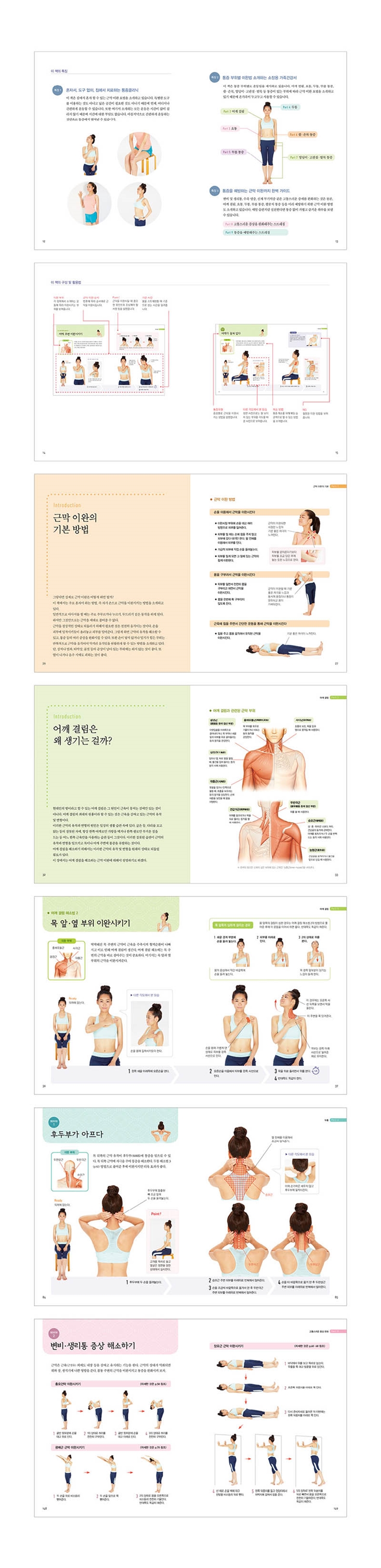
"Fascial Stretching" is an exercise program that combines the combined effects of acupuncture, moxibustion, and massage therapy into stretching, introducing fascial release therapy that can be done alone at home.
Because it doesn't require any special tools or a large space, you can easily exercise anytime, anywhere.
Additionally, all the exercises introduced in this book do not take much time, so there is no burden on time.
You can get rid of the constant pain just by doing some light stretching in the morning and evening.
A complete guide, from pain-specific relaxation techniques to myofascial release to prevent pain.
This book presents exercise methods for each painful area.
Myofascial release therapy is introduced according to the area of pain such as shoulder stiffness, back pain, headache, knee pain, arms/wrist, hip/hip joint, and ankle, so the whole family can use it for a long time.
It also introduces fascial stretching to relieve painful symptoms such as constipation, menstrual cramps, cold hands and feet, and physical weakness, as well as to prevent shoulder stiffness, back pain, headaches, knee pain, and elbow pain.
If you practice it every day as a habit, you can have a light and enjoyable day without pain.
"Fascial Stretching" is an exercise program that combines the combined effects of acupuncture, moxibustion, and massage therapy into stretching, introducing fascial release therapy that can be done alone at home.
Because it doesn't require any special tools or a large space, you can easily exercise anytime, anywhere.
Additionally, all the exercises introduced in this book do not take much time, so there is no burden on time.
You can get rid of the constant pain just by doing some light stretching in the morning and evening.
A complete guide, from pain-specific relaxation techniques to myofascial release to prevent pain.
This book presents exercise methods for each painful area.
Myofascial release therapy is introduced according to the area of pain such as shoulder stiffness, back pain, headache, knee pain, arms/wrist, hip/hip joint, and ankle, so the whole family can use it for a long time.
It also introduces fascial stretching to relieve painful symptoms such as constipation, menstrual cramps, cold hands and feet, and physical weakness, as well as to prevent shoulder stiffness, back pain, headaches, knee pain, and elbow pain.
If you practice it every day as a habit, you can have a light and enjoyable day without pain.
GOODS SPECIFICS
- Date of publication: April 28, 2017
- Page count, weight, size: 168 pages | 492g | 185*235*11mm
- ISBN13: 9791196082000
- ISBN10: 1196082006
You may also like
카테고리
korean


korean

![GQ KOREA Mark (Monthly): December [2025]](http://librairie.coreenne.fr/cdn/shop/files/8ef265dbbfbf186523ed75ba7319009d.jpg?v=1765340328&width=3840)


