

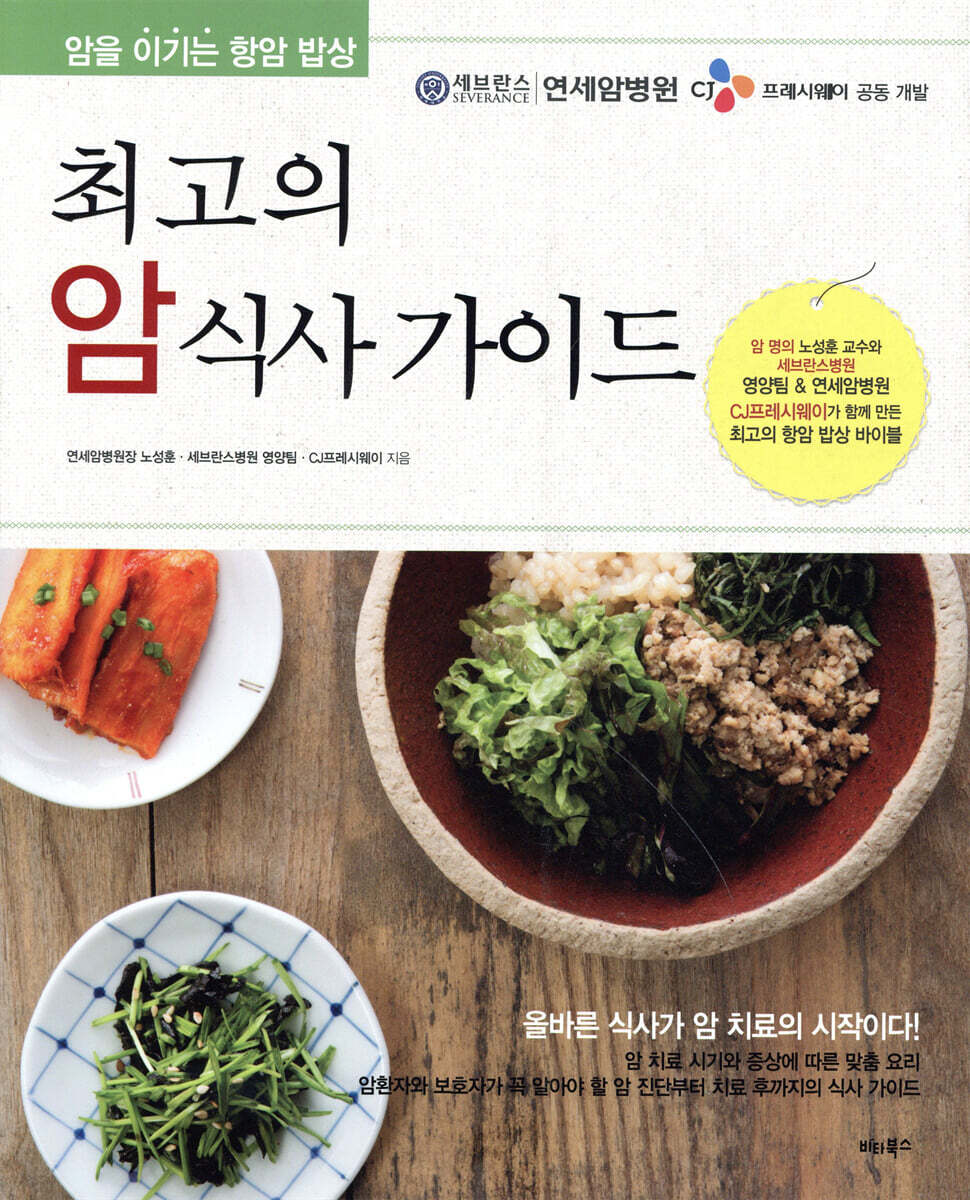
The Ultimate Cancer Diet Guide
 |
Description
Book Introduction
Cancer treatment starts with eating right!
"A Dietary Guide for Cancer Patients and Their Caregivers," jointly developed by Professor Noh Sung-hoon, a cancer specialist, the Severance Hospital Nutrition Team, and CJ Freshway.
After being diagnosed with cancer, you start looking for foods that are said to be good for cancer.
Foods with anti-cancer properties may be effective in preventing cancer, but unfortunately, they are not effective in treating cancer.
In other words, a diet that prevents cancer and a diet that helps treat cancer are different.
Therefore, you should eat according to the appropriate principles during and after cancer treatment.
This book presents dietary principles for maintaining physical strength during cancer treatment and introduces recipes based on these principles.
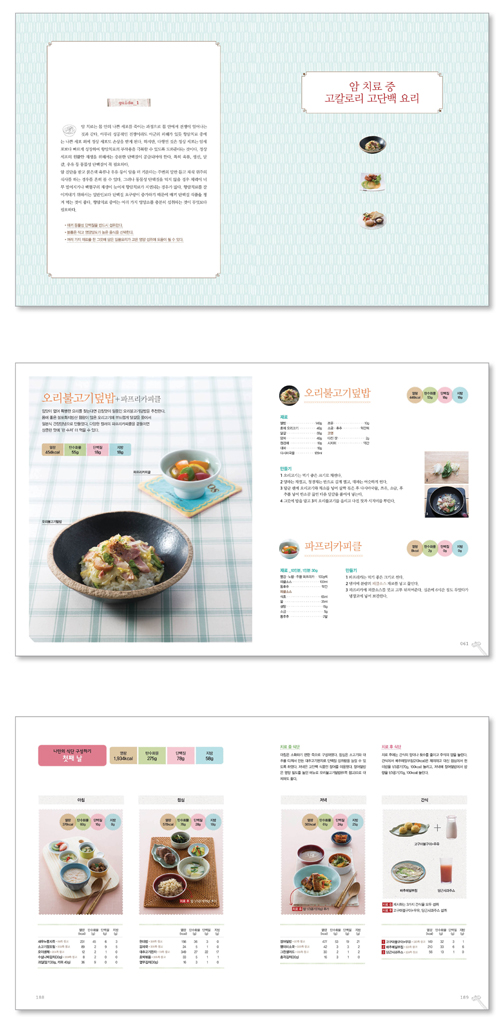
We introduce cooking methods and recipes for each stage of recovery after surgery and how to eat when eating is difficult due to side effects during chemotherapy.
We also include healthy snacks that can help you get the nutrients and calories you're missing between meals.
After cancer treatment, patients may experience weight loss due to anxiety about recurrence, or, conversely, weight gain due to increased appetite, digestive problems due to decreased gastrointestinal function, bowel problems, and the risk of osteoporosis.
We provide diet information for each symptom and introduce dishes that are suitable for each.
It also suggests how to structure your diet during and after treatment.
By practicing the dietary guidelines presented in this book, you will be able to successfully complete cancer treatment and regain a vibrant life.
"A Dietary Guide for Cancer Patients and Their Caregivers," jointly developed by Professor Noh Sung-hoon, a cancer specialist, the Severance Hospital Nutrition Team, and CJ Freshway.
After being diagnosed with cancer, you start looking for foods that are said to be good for cancer.
Foods with anti-cancer properties may be effective in preventing cancer, but unfortunately, they are not effective in treating cancer.
In other words, a diet that prevents cancer and a diet that helps treat cancer are different.
Therefore, you should eat according to the appropriate principles during and after cancer treatment.
This book presents dietary principles for maintaining physical strength during cancer treatment and introduces recipes based on these principles.
We introduce cooking methods and recipes for each stage of recovery after surgery and how to eat when eating is difficult due to side effects during chemotherapy.
We also include healthy snacks that can help you get the nutrients and calories you're missing between meals.
After cancer treatment, patients may experience weight loss due to anxiety about recurrence, or, conversely, weight gain due to increased appetite, digestive problems due to decreased gastrointestinal function, bowel problems, and the risk of osteoporosis.
We provide diet information for each symptom and introduce dishes that are suitable for each.
It also suggests how to structure your diet during and after treatment.
By practicing the dietary guidelines presented in this book, you will be able to successfully complete cancer treatment and regain a vibrant life.
- You can preview some of the book's contents.
Preview
index
Part 1.
Knowing and eating right can help you beat cancer.
1.
After a cancer diagnosis, you need to know the right things to beat cancer.
· There is no need to suddenly change your eating habits after being diagnosed with cancer.
· Eat properly to prepare for future cancer treatment
· Should I take health functional foods or nutritional supplements?
· Nutrient intake guide you should know
2.
During cancer treatment, you need to eat right.
· You can beat cancer by eating well during treatment.
· A good diet is one that cancer patients eat well.
· What foods and how much should I eat during cancer treatment?
· Your weight tells you if you're eating well.
· Eat high-calorie, high-protein meals, even if you eat less.
· Dietary guide according to treatment method
· Dietary Guide after Stomach, Colon, and Thyroid Cancer Surgery
· Dietary Guide for Side Effects During Cancer Treatment
3.
After cancer treatment, practice an anti-cancer diet!
· Make a meal plan to maintain your standard weight
· There are no anti-cancer foods, but there are anti-cancer eating habits.
· Maintain healthy eating habits to prevent relapse after treatment.
· Dietary Guide for Cancer Survivors with Chronic Illnesses
· Meal Guide for Returning to Work
Case 1.
I lived as a model student who listened attentively to the doctor.
Case 2.
Making a miracle in a life with terminal stomach cancer and limited time!
Part 2.
During cancer treatment, cancer-fighting recipes
1.
High-calorie, high-protein diet during cancer treatment
· Eel rice bowl / lotus root pickle
· Shrimp Omelet Rice / Moobeat Pickle
· Duck Bulgogi Rice Bowl / Paprika Pickle
· Jeon Ga-bok / Vegetable fried rice / Cucumber salad
· Pork and Bok Choy Stew / Root Vegetable Rice
· Grilled chicken roll / grilled sweet potato / grilled mushroom
· Grilled ribs / Gondrenamul rice / Fruit mustard salad
· Jujube meatballs / burdock rice / spinach and peanut salad / napa cabbage kimchi
· Fish stew / Two-color pancake / Perilla leaf and onion salad / Modern soybean paste stew
· Tofu steak / Tomato and garlic grilled / Cabbage pickle
2.
Cooking for each stage of post-surgery recovery
Immediately after surgery
Shrimp porridge / beef porridge / salmon and onion porridge / chicken and potato stew / cod braised in soy sauce
Jinbap stage
Mapo tofu rice bowl / chicken and eggplant rice bowl / tomato omelet / grilled flounder in pear juice / mushroom bulgogi
3.
Customized recipes for each side effect during treatment
Nausea and vomiting
Mukbap / Jjanchi rice noodles / Soft tofu soup / Dried apples and mushrooms
oral mucositis
Shrimp and Zucchini Stew / Beef and Eggplant Stew / Rolled Dumplings
diarrhea
Potato porridge / codfish porridge / nutritious steamed eggs
4.
Snacks for nutritional supplementation
Shrimp Avocado Roll / Guacamole / Beef Tortilla Wrap / Open Chicken Sandwich / Egg Cheese Vegetable Stew
Pancakes / Mango Seolgi / Onion Pound Cake / Sweet Potato Balls / Cabbage and Buckwheat Pancake
Special Page Healthy Drinks That Consider Nutrition
Part 3.
After cancer treatment, customized meals based on symptoms
1.
Rather, I'm losing weight
Chicken soy milk pasta / gnocchi / pumpkin bulgogi rice bowl / cup rice / low-sodium jajangmyeon / chicken calzone
2.
My weight keeps increasing
Cheonggukjang vegetable bibimbap / Chinese tofu / konjac salad / seafood shabu-shabu / mushroom japchae rice / ratatouille
3.
I have recurring indigestion
Tofu and pollack roe porridge / yam porridge / mushroom and potato soup / braised beef and pumpkin / steamed fish and vegetables / stir-fried minced beef + pickled cucumber
4.
They tell you to be careful of osteoporosis
Radish radish rice / Grilled pollack with soy sauce / Dried shrimp and seaweed soup / Grilled dried pollack with almonds / Strawberry milk / Ricotta cheese salad
5.
I have problems with my bowel movements.
Vegetable bibimbap / Wild chives and walnut rice / Seaweed bibim noodles / Grilled sweet potatoes with mesh / Barley risotto / Grilled Vietnamese spring rolls
Special Page Cooking for Elderly Cancer Patients
Part 4.
A Diet Guide to Preparing for Cancer
Setting the Table for Cancer-Beatin' Anti-Cancer Foods
Create your own diet
First day / Second day / Third day / Fourth day / Fifth day
Rice: brown rice / black rice / mixed grain rice / black bean rice / barley rice
Potato soup / Miso soup / Beef soup / Seaweed soup / Egg soup
Broccoli Soup / Mushroom Soup / Paprika Soup
Side dishes: raw cucumber salad / braised beef / stir-fried pumpkin / broccoli salad / seasoned wild chives / seasoned mugwort / grilled deodeok with red pepper paste / grilled assorted vegetables / seasoned wild chives / ginseng and cabbage kimchi / lotus root and cabbage kimchi / cucumber salad
Salad Green Salad / Baby Leaf Salad / Blueberry Salad
Snack Baked Potato
Q&A.
Anti-cancer food table, I wonder about this!
Knowing and eating right can help you beat cancer.
1.
After a cancer diagnosis, you need to know the right things to beat cancer.
· There is no need to suddenly change your eating habits after being diagnosed with cancer.
· Eat properly to prepare for future cancer treatment
· Should I take health functional foods or nutritional supplements?
· Nutrient intake guide you should know
2.
During cancer treatment, you need to eat right.
· You can beat cancer by eating well during treatment.
· A good diet is one that cancer patients eat well.
· What foods and how much should I eat during cancer treatment?
· Your weight tells you if you're eating well.
· Eat high-calorie, high-protein meals, even if you eat less.
· Dietary guide according to treatment method
· Dietary Guide after Stomach, Colon, and Thyroid Cancer Surgery
· Dietary Guide for Side Effects During Cancer Treatment
3.
After cancer treatment, practice an anti-cancer diet!
· Make a meal plan to maintain your standard weight
· There are no anti-cancer foods, but there are anti-cancer eating habits.
· Maintain healthy eating habits to prevent relapse after treatment.
· Dietary Guide for Cancer Survivors with Chronic Illnesses
· Meal Guide for Returning to Work
Case 1.
I lived as a model student who listened attentively to the doctor.
Case 2.
Making a miracle in a life with terminal stomach cancer and limited time!
Part 2.
During cancer treatment, cancer-fighting recipes
1.
High-calorie, high-protein diet during cancer treatment
· Eel rice bowl / lotus root pickle
· Shrimp Omelet Rice / Moobeat Pickle
· Duck Bulgogi Rice Bowl / Paprika Pickle
· Jeon Ga-bok / Vegetable fried rice / Cucumber salad
· Pork and Bok Choy Stew / Root Vegetable Rice
· Grilled chicken roll / grilled sweet potato / grilled mushroom
· Grilled ribs / Gondrenamul rice / Fruit mustard salad
· Jujube meatballs / burdock rice / spinach and peanut salad / napa cabbage kimchi
· Fish stew / Two-color pancake / Perilla leaf and onion salad / Modern soybean paste stew
· Tofu steak / Tomato and garlic grilled / Cabbage pickle
2.
Cooking for each stage of post-surgery recovery
Immediately after surgery
Shrimp porridge / beef porridge / salmon and onion porridge / chicken and potato stew / cod braised in soy sauce
Jinbap stage
Mapo tofu rice bowl / chicken and eggplant rice bowl / tomato omelet / grilled flounder in pear juice / mushroom bulgogi
3.
Customized recipes for each side effect during treatment
Nausea and vomiting
Mukbap / Jjanchi rice noodles / Soft tofu soup / Dried apples and mushrooms
oral mucositis
Shrimp and Zucchini Stew / Beef and Eggplant Stew / Rolled Dumplings
diarrhea
Potato porridge / codfish porridge / nutritious steamed eggs
4.
Snacks for nutritional supplementation
Shrimp Avocado Roll / Guacamole / Beef Tortilla Wrap / Open Chicken Sandwich / Egg Cheese Vegetable Stew
Pancakes / Mango Seolgi / Onion Pound Cake / Sweet Potato Balls / Cabbage and Buckwheat Pancake
Special Page Healthy Drinks That Consider Nutrition
Part 3.
After cancer treatment, customized meals based on symptoms
1.
Rather, I'm losing weight
Chicken soy milk pasta / gnocchi / pumpkin bulgogi rice bowl / cup rice / low-sodium jajangmyeon / chicken calzone
2.
My weight keeps increasing
Cheonggukjang vegetable bibimbap / Chinese tofu / konjac salad / seafood shabu-shabu / mushroom japchae rice / ratatouille
3.
I have recurring indigestion
Tofu and pollack roe porridge / yam porridge / mushroom and potato soup / braised beef and pumpkin / steamed fish and vegetables / stir-fried minced beef + pickled cucumber
4.
They tell you to be careful of osteoporosis
Radish radish rice / Grilled pollack with soy sauce / Dried shrimp and seaweed soup / Grilled dried pollack with almonds / Strawberry milk / Ricotta cheese salad
5.
I have problems with my bowel movements.
Vegetable bibimbap / Wild chives and walnut rice / Seaweed bibim noodles / Grilled sweet potatoes with mesh / Barley risotto / Grilled Vietnamese spring rolls
Special Page Cooking for Elderly Cancer Patients
Part 4.
A Diet Guide to Preparing for Cancer
Setting the Table for Cancer-Beatin' Anti-Cancer Foods
Create your own diet
First day / Second day / Third day / Fourth day / Fifth day
Rice: brown rice / black rice / mixed grain rice / black bean rice / barley rice
Potato soup / Miso soup / Beef soup / Seaweed soup / Egg soup
Broccoli Soup / Mushroom Soup / Paprika Soup
Side dishes: raw cucumber salad / braised beef / stir-fried pumpkin / broccoli salad / seasoned wild chives / seasoned mugwort / grilled deodeok with red pepper paste / grilled assorted vegetables / seasoned wild chives / ginseng and cabbage kimchi / lotus root and cabbage kimchi / cucumber salad
Salad Green Salad / Baby Leaf Salad / Blueberry Salad
Snack Baked Potato
Q&A.
Anti-cancer food table, I wonder about this!
Detailed image
Publisher's Review
There may not be anti-cancer foods, but there are anti-cancer eating habits!
We present a cancer diet guide on how to prepare meals during and after cancer treatment.
Currently, 1.1 million people in Korea have been diagnosed with cancer and are receiving treatment, or 1 in 45 people.
According to one statistic, if Koreans live to the age of 81, one in three will develop cancer.
This means that one person in your family may develop cancer.
Although cancer cure rates are increasing thanks to advances in cancer treatment technology, diagnosing cancer is still a bolt from the blue.
You may feel frustrated and scared right now because you don't know what to do, but if you educate yourself about cancer and build up your stamina, you can successfully complete the treatment and regain your health.
There's no need to suddenly change your eating habits after a cancer diagnosis.
It is said that the most anxious time for cancer patients is before they are diagnosed and begin treatment.
In addition to concerns about treatment, there are also increasing questions about food, such as what to eat, how to eat, and whether eating too much will cause cancer cells to grow more.
So, many people change their diet to brown rice, which is said to be good for cancer, and not only do they stop eating red meat, which is said to be a cause of cancer, but they also change their diet to extreme vegetarianism.
However, changing your eating habits right away will not eliminate cancer or be of much help in treating it.
Eating foods that you normally wouldn't eat because they are said to be good for cancer can actually cause psychological stress and lead to digestive problems and physical decline.
Eating right is the beginning of cancer treatment.
According to a 2010 survey by the National Cancer Center, approximately 35% of cancer patients were ‘severely malnourished’, and approximately 30% were ‘malnourished.’
This means that 7 out of 10 cancer patients are malnourished.
When cancer treatment begins, weight loss occurs as eating becomes difficult due to side effects related to digestion and absorption, along with anxiety about the treatment.
Weight loss can lead to a decline in physical strength, making it difficult to endure treatment and even delaying treatment.
Therefore, we must recognize that eating well is part of the treatment itself and strive for it.
Eating well means getting enough nutrients through appropriate portion sizes and nutritionally balanced meals.
During cancer treatment, recipes that can help you beat cancer
Chemotherapy is a process of killing cancer cells, but normal cells are also damaged during this process.
Sufficient protein supply is necessary for smooth regeneration of normal cells.
If you do not eat animal protein, your physical strength may decline or white blood cell regeneration may be delayed, which can delay treatment.
During cancer treatment, you need to eat high-calorie, high-protein foods to endure the treatment well and recover quickly.
However, it is often difficult to eat due to loss of appetite, side effects, etc.
So, we suggest ways and recipes to ensure you get enough calories and protein even if you eat small amounts.
We also introduce dishes that are good to eat during the recovery stage after surgery and when experiencing side effects such as nausea, vomiting, oral mucositis, and diarrhea during cancer treatment.
Because cancer patients cannot eat large amounts at one time, we also include healthy drinks and healthy snacks for nutritional supplementation.
After cancer treatment, customized meals based on symptoms
Even after cancer treatment, some people lose weight due to reasons such as loss of appetite or gastrointestinal dysfunction. On the other hand, some people gain weight due to eating the same food as during cancer treatment or increasing their intake as a form of compensation.
When undergoing surgery or chemotherapy, digestive function may decline, leading to recurring digestive symptoms and problems with bowel movements.
Additionally, if you are receiving chemotherapy or anti-hormone therapy for breast cancer, you must be careful about osteoporosis.
We have included a dietary guide and recipes based on the typical symptoms that may appear after cancer treatment to help you manage your health after cancer treatment.
We also introduce a menu for elderly cancer patients with poor dental health or impaired gastrointestinal function.
A Diet Guide to Anti-Cancer Meals
To successfully treat cancer and recover quickly, you need to consume balanced nutrients and adequate calories, rather than specific anti-cancer foods.
Provides a diet plan for how to eat during cancer treatment.
Because it is difficult to consume large amounts at one time during cancer treatment, the diet consists of three meals and three snacks per day.
It also provides examples of how to adjust your diet when returning to a normal diet after cancer treatment.
The Ultimate Cancer Diet Guide, Developed by Top Authors
It was jointly developed by Professor Noh Sung-hoon, director of Yonsei Cancer Hospital and a cancer specialist, the Severance Hospital nutrition team, which has established proper eating principles for patients and is researching therapeutic diets, and CJ Freshway, which develops and operates specialized therapeutic diets.
Based on extensive clinical experience and development of various menus, we have included dietary guidelines and recipes that cancer patients and their caregivers must know.
■ Author's Note
Food issues have a significant impact on patients' quality of life and treatment.
Depending on the treatment process and post-treatment situation, the content of the diet should vary.
Accordingly, Yonsei Cancer Hospital researches and proposes correct guidelines for food and various menus.
We hope that patients and their families will use the menus and diets suggested in this book to reduce confusion and burden regarding food, and focus on treatment and maintaining health.
Noh Seong-hun, Director of Yonsei Cancer Hospital
This book aims to address the dietary concerns of cancer patients by introducing various menus for each treatment stage and providing a dietary guide to prevent relapse and overcome various nutritional problems after treatment.
It has been designed to be as easy to apply as possible in real life.
We hope this book will be a pleasant companion for cancer patients and their families throughout their cancer treatment journey and in maintaining their health thereafter.
Kim Hyung-mi, head of the nutrition team at Severance Hospital
I remember when my younger sibling was receiving chemotherapy, he had a hard time eating, so he would cry while eating a spoonful, then take a break, and then cry again while eating a spoonful.
We focused on developing menus that increase nutritional density even when eating just one spoonful.
Eating itself is difficult for the patient and the family watching over them, but please do not give up hope of beating cancer and eat a variety of foods.
Seo Hee-jung, CJ Freshway Menu R&D
We present a cancer diet guide on how to prepare meals during and after cancer treatment.
Currently, 1.1 million people in Korea have been diagnosed with cancer and are receiving treatment, or 1 in 45 people.
According to one statistic, if Koreans live to the age of 81, one in three will develop cancer.
This means that one person in your family may develop cancer.
Although cancer cure rates are increasing thanks to advances in cancer treatment technology, diagnosing cancer is still a bolt from the blue.
You may feel frustrated and scared right now because you don't know what to do, but if you educate yourself about cancer and build up your stamina, you can successfully complete the treatment and regain your health.
There's no need to suddenly change your eating habits after a cancer diagnosis.
It is said that the most anxious time for cancer patients is before they are diagnosed and begin treatment.
In addition to concerns about treatment, there are also increasing questions about food, such as what to eat, how to eat, and whether eating too much will cause cancer cells to grow more.
So, many people change their diet to brown rice, which is said to be good for cancer, and not only do they stop eating red meat, which is said to be a cause of cancer, but they also change their diet to extreme vegetarianism.
However, changing your eating habits right away will not eliminate cancer or be of much help in treating it.
Eating foods that you normally wouldn't eat because they are said to be good for cancer can actually cause psychological stress and lead to digestive problems and physical decline.
Eating right is the beginning of cancer treatment.
According to a 2010 survey by the National Cancer Center, approximately 35% of cancer patients were ‘severely malnourished’, and approximately 30% were ‘malnourished.’
This means that 7 out of 10 cancer patients are malnourished.
When cancer treatment begins, weight loss occurs as eating becomes difficult due to side effects related to digestion and absorption, along with anxiety about the treatment.
Weight loss can lead to a decline in physical strength, making it difficult to endure treatment and even delaying treatment.
Therefore, we must recognize that eating well is part of the treatment itself and strive for it.
Eating well means getting enough nutrients through appropriate portion sizes and nutritionally balanced meals.
During cancer treatment, recipes that can help you beat cancer
Chemotherapy is a process of killing cancer cells, but normal cells are also damaged during this process.
Sufficient protein supply is necessary for smooth regeneration of normal cells.
If you do not eat animal protein, your physical strength may decline or white blood cell regeneration may be delayed, which can delay treatment.
During cancer treatment, you need to eat high-calorie, high-protein foods to endure the treatment well and recover quickly.
However, it is often difficult to eat due to loss of appetite, side effects, etc.
So, we suggest ways and recipes to ensure you get enough calories and protein even if you eat small amounts.
We also introduce dishes that are good to eat during the recovery stage after surgery and when experiencing side effects such as nausea, vomiting, oral mucositis, and diarrhea during cancer treatment.
Because cancer patients cannot eat large amounts at one time, we also include healthy drinks and healthy snacks for nutritional supplementation.
After cancer treatment, customized meals based on symptoms
Even after cancer treatment, some people lose weight due to reasons such as loss of appetite or gastrointestinal dysfunction. On the other hand, some people gain weight due to eating the same food as during cancer treatment or increasing their intake as a form of compensation.
When undergoing surgery or chemotherapy, digestive function may decline, leading to recurring digestive symptoms and problems with bowel movements.
Additionally, if you are receiving chemotherapy or anti-hormone therapy for breast cancer, you must be careful about osteoporosis.
We have included a dietary guide and recipes based on the typical symptoms that may appear after cancer treatment to help you manage your health after cancer treatment.
We also introduce a menu for elderly cancer patients with poor dental health or impaired gastrointestinal function.
A Diet Guide to Anti-Cancer Meals
To successfully treat cancer and recover quickly, you need to consume balanced nutrients and adequate calories, rather than specific anti-cancer foods.
Provides a diet plan for how to eat during cancer treatment.
Because it is difficult to consume large amounts at one time during cancer treatment, the diet consists of three meals and three snacks per day.
It also provides examples of how to adjust your diet when returning to a normal diet after cancer treatment.
The Ultimate Cancer Diet Guide, Developed by Top Authors
It was jointly developed by Professor Noh Sung-hoon, director of Yonsei Cancer Hospital and a cancer specialist, the Severance Hospital nutrition team, which has established proper eating principles for patients and is researching therapeutic diets, and CJ Freshway, which develops and operates specialized therapeutic diets.
Based on extensive clinical experience and development of various menus, we have included dietary guidelines and recipes that cancer patients and their caregivers must know.
■ Author's Note
Food issues have a significant impact on patients' quality of life and treatment.
Depending on the treatment process and post-treatment situation, the content of the diet should vary.
Accordingly, Yonsei Cancer Hospital researches and proposes correct guidelines for food and various menus.
We hope that patients and their families will use the menus and diets suggested in this book to reduce confusion and burden regarding food, and focus on treatment and maintaining health.
Noh Seong-hun, Director of Yonsei Cancer Hospital
This book aims to address the dietary concerns of cancer patients by introducing various menus for each treatment stage and providing a dietary guide to prevent relapse and overcome various nutritional problems after treatment.
It has been designed to be as easy to apply as possible in real life.
We hope this book will be a pleasant companion for cancer patients and their families throughout their cancer treatment journey and in maintaining their health thereafter.
Kim Hyung-mi, head of the nutrition team at Severance Hospital
I remember when my younger sibling was receiving chemotherapy, he had a hard time eating, so he would cry while eating a spoonful, then take a break, and then cry again while eating a spoonful.
We focused on developing menus that increase nutritional density even when eating just one spoonful.
Eating itself is difficult for the patient and the family watching over them, but please do not give up hope of beating cancer and eat a variety of foods.
Seo Hee-jung, CJ Freshway Menu R&D
GOODS SPECIFICS
- Date of issue: April 5, 2014
- Page count, weight, size: 216 pages | 824g | 210*297*20mm
- ISBN13: 9791185020273
- ISBN10: 1185020276
You may also like
카테고리
korean


korean

![GQ KOREA Mark (Monthly): December [2025]](http://librairie.coreenne.fr/cdn/shop/files/8ef265dbbfbf186523ed75ba7319009d.jpg?v=1765340328&width=3840)


