

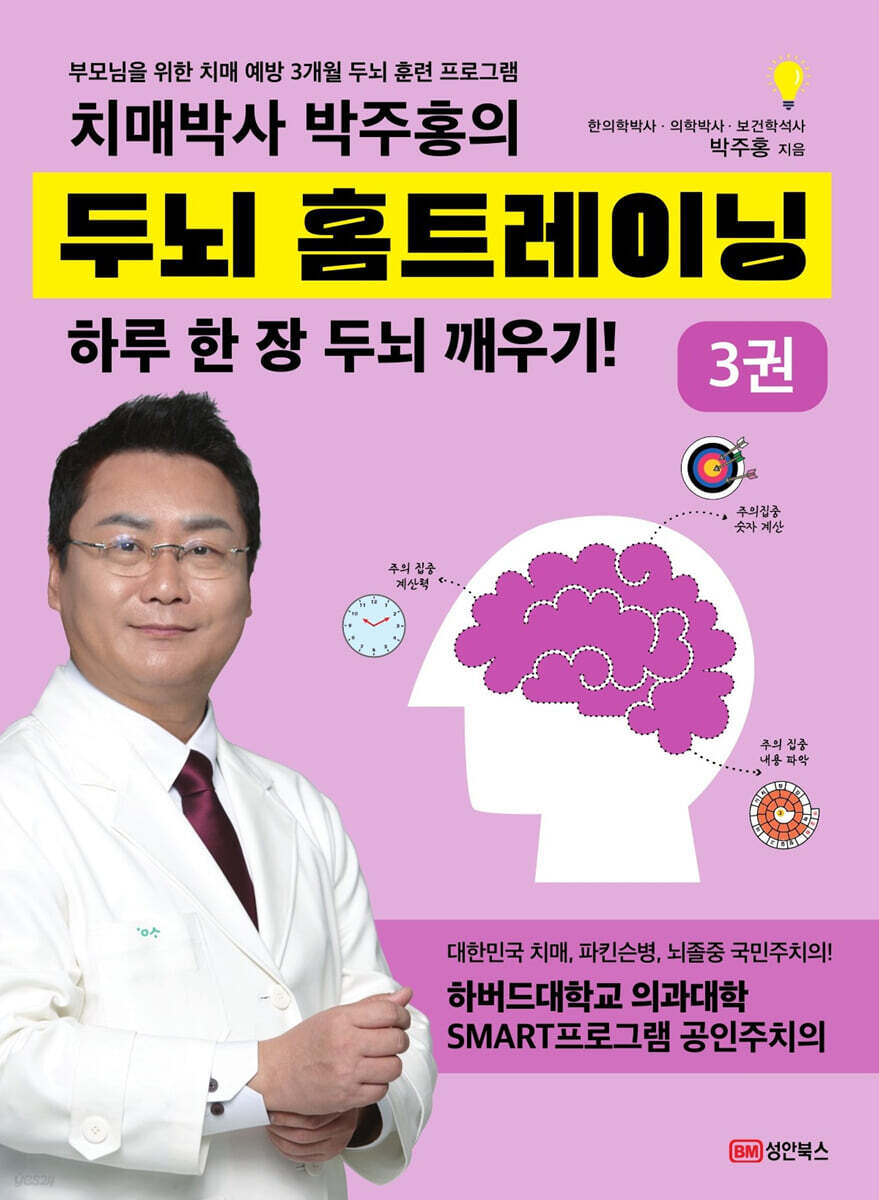
Dementia Doctor Park Joo-hong's Brain Home Training Part 3
 |
Description
Book Introduction
Brain fitness!
Boost your memory and brain power to prevent forgetfulness, mild cognitive impairment, and dementia!
If you enjoy solving it, your brain will be activated naturally!
This book provides a three-month brain home training program to effectively train the brain and prevent dementia.
Just as muscles develop through exercise, the brain can also be trained through so-called brain fitness.
The brain is a very important organ responsible for our thinking, judgment, and motor sense.
To maintain brain health, you must use your brain evenly every day.
This book covers “Attention and calculation skills,” “Attention and content comprehension,” “Attention and visual content comprehension,” “Spatial comprehension and change understanding,” “Surrounding situation comprehension and spatial perception,” and “Language and visual comprehension and combination.”
Problems related to 〈calculation ability〉 include ‘counting money’ and ‘calculating the bottom of a dice.’
'Counting Money' is calculating what kind of bills and coins there are, how many there are, and what their total value is by randomly arranging the front and back of various bills and coins that we use in our daily lives. 'Calculating the Bottom of a Dice' is not simply calculating, but calculating by looking at the markings on the top of the dice and inferring what the markings on the opposite side are.
By making you think again, you can use your brain more effectively.
Problems related to “content comprehension” and “visual content comprehension” include “circle in ascending order” and “spot the difference.”
Practicing more focused observation of objects around you will help you understand the content more clearly.
The shorter the time it takes to grasp the content and the higher the accuracy, the more evidence there is that the brain is actively working.
In 〈Understanding Space and Change〉, we present common types of shapes that we see around us and ask students to figure out what shape is created when each shape is rotated in a certain direction.
In “Understanding the Surrounding Situation and Spatial Perception,” there are problems to find and connect pairs of identical letters, and in “Language and Vision/Understanding and Combination,” there are problems to find hidden four-character idioms and determine whether the colors of letters match, allowing for unique enjoyment and experiences.
In addition, we have prepared activities such as handwriting and coloring to help you focus, relieve stress, and train your brain in a fun way.
The brain is a very important organ that is responsible for our thoughts, judgment, motor sense, etc.
To maintain brain health, you must use your brain evenly every day.
I hope this book will help you maintain a healthy and vibrant brain.
Boost your memory and brain power to prevent forgetfulness, mild cognitive impairment, and dementia!
If you enjoy solving it, your brain will be activated naturally!
This book provides a three-month brain home training program to effectively train the brain and prevent dementia.
Just as muscles develop through exercise, the brain can also be trained through so-called brain fitness.
The brain is a very important organ responsible for our thinking, judgment, and motor sense.
To maintain brain health, you must use your brain evenly every day.
This book covers “Attention and calculation skills,” “Attention and content comprehension,” “Attention and visual content comprehension,” “Spatial comprehension and change understanding,” “Surrounding situation comprehension and spatial perception,” and “Language and visual comprehension and combination.”
Problems related to 〈calculation ability〉 include ‘counting money’ and ‘calculating the bottom of a dice.’
'Counting Money' is calculating what kind of bills and coins there are, how many there are, and what their total value is by randomly arranging the front and back of various bills and coins that we use in our daily lives. 'Calculating the Bottom of a Dice' is not simply calculating, but calculating by looking at the markings on the top of the dice and inferring what the markings on the opposite side are.
By making you think again, you can use your brain more effectively.
Problems related to “content comprehension” and “visual content comprehension” include “circle in ascending order” and “spot the difference.”
Practicing more focused observation of objects around you will help you understand the content more clearly.
The shorter the time it takes to grasp the content and the higher the accuracy, the more evidence there is that the brain is actively working.
In 〈Understanding Space and Change〉, we present common types of shapes that we see around us and ask students to figure out what shape is created when each shape is rotated in a certain direction.
In “Understanding the Surrounding Situation and Spatial Perception,” there are problems to find and connect pairs of identical letters, and in “Language and Vision/Understanding and Combination,” there are problems to find hidden four-character idioms and determine whether the colors of letters match, allowing for unique enjoyment and experiences.
In addition, we have prepared activities such as handwriting and coloring to help you focus, relieve stress, and train your brain in a fun way.
The brain is a very important organ that is responsible for our thoughts, judgment, motor sense, etc.
To maintain brain health, you must use your brain evenly every day.
I hope this book will help you maintain a healthy and vibrant brain.
- You can preview some of the book's contents.
Preview
index
preface
1 month
_Week 1
__Day 1: Counting Money
__2 days: How many sticks were used?
__3 days: Find another letter
__4th: Archery
__Day 5: Find the Difference in the Picture
__6 days: How much does the dumbbell weigh?
__Day 7: Find the Partial Picture
_Week 2
__1 day: Find another one
__2 days: Snail
__3 days: Time it right
__4th: Draw along the shape
__5th: Find the Hidden Letters
__6th: What number goes in the blank?
__7 days: Find the picture and insert it
_Week 3
__1st day: Introduce yourself
__Day 2: Finding the answer to the picture
__Day 3: Finding Different Shapes
__4th: Find the missing pair
__5 days: Connecting the same amount of money
__6th: Finding the Shadow
__7th: Find the Difference Between Horizontal and Vertical Pictures
_Week 4
__1 day: Calculating the back of the dice
__Day 2: Find the Difference
__Day 3: Move the square puzzle
__Day 4: Finding the Maze
__5th: Find the missing numbers
__6th: Find the different picture
__7 days: How many are the same?
2 months
_Week 1
__Day 1: Counting the money in the piggy bank
__2 days: Circle in ascending order
__3 days: Buying things
__Day 4: Find the Difference in the Fairy Tale
__5 days: Calculating the coin purse
__6th: Finding Proverbs
__7 days: Calculating train times
_Week 2
__1 day: I arrived at the airport
__2 days: What is the price of the item?
__3 days: Finding coordinates
__Day 4: Finding the Maze
__5 days: Find the correct number
__6th: Guess the scale
__7 days: Draw on graph paper
_Week 3
__Day 1: Checking out at the kiosk
__Day 2: Guess the hidden four-character idiom
__3 days: Calculating 10-digit numbers
__4th: Find the Hidden Numbers
__5 days: How many in total?
__6th day: Find a pair and connect them
__Day 7: Finding the Item
_Week 4
__1 day: Find the heaviest order
__Day 2: Find the Difference in the Picture
__3 days: Find the same combination
__4 days: Calculating time
__Day 5: Find the vertical difference
__6th: View Calendar
__7 days: Calculating length and width
3 months
_Week 1
__Day 1: Calculating Two Piggy Banks
__2 days: Letter puzzle
__Day 3: Bricklaying
__Day 4: Find the Symmetrical Picture
__Day 5: Word Search
__6th: Calculating Hwatu cards
__Day 7: Finding the Maze
_Week 2
__1 day: Match colors and letters
__2nd day: Fruit basket
__3 days: Calculating the bottom of the dice
__Day 4: Finding Crops
__5 days: Calculating the building
__6 days: Finding the same pattern
__7 days: Calculating symbols
_Week 3
__Day 1: Matching Shapes
__2 days: Calculating the price of an item
__Day 3: Make 100
__4th: Proverb Maze Quiz
__5 days: Calculating the distance
__Day 6: Finding the Maze
__7th: Today's day
_Week 4
__Day 1: Card Coin Link
__2nd day: Playing Yut Nori
__Day 3: Counting the number of leaves
__4 days: Calculate in various ways
__5th: Matching
__6 days: Match the time before and after
__7 days: Icon that appears only once
Appendix: Coloring included
Answer sheet
1 month
_Week 1
__Day 1: Counting Money
__2 days: How many sticks were used?
__3 days: Find another letter
__4th: Archery
__Day 5: Find the Difference in the Picture
__6 days: How much does the dumbbell weigh?
__Day 7: Find the Partial Picture
_Week 2
__1 day: Find another one
__2 days: Snail
__3 days: Time it right
__4th: Draw along the shape
__5th: Find the Hidden Letters
__6th: What number goes in the blank?
__7 days: Find the picture and insert it
_Week 3
__1st day: Introduce yourself
__Day 2: Finding the answer to the picture
__Day 3: Finding Different Shapes
__4th: Find the missing pair
__5 days: Connecting the same amount of money
__6th: Finding the Shadow
__7th: Find the Difference Between Horizontal and Vertical Pictures
_Week 4
__1 day: Calculating the back of the dice
__Day 2: Find the Difference
__Day 3: Move the square puzzle
__Day 4: Finding the Maze
__5th: Find the missing numbers
__6th: Find the different picture
__7 days: How many are the same?
2 months
_Week 1
__Day 1: Counting the money in the piggy bank
__2 days: Circle in ascending order
__3 days: Buying things
__Day 4: Find the Difference in the Fairy Tale
__5 days: Calculating the coin purse
__6th: Finding Proverbs
__7 days: Calculating train times
_Week 2
__1 day: I arrived at the airport
__2 days: What is the price of the item?
__3 days: Finding coordinates
__Day 4: Finding the Maze
__5 days: Find the correct number
__6th: Guess the scale
__7 days: Draw on graph paper
_Week 3
__Day 1: Checking out at the kiosk
__Day 2: Guess the hidden four-character idiom
__3 days: Calculating 10-digit numbers
__4th: Find the Hidden Numbers
__5 days: How many in total?
__6th day: Find a pair and connect them
__Day 7: Finding the Item
_Week 4
__1 day: Find the heaviest order
__Day 2: Find the Difference in the Picture
__3 days: Find the same combination
__4 days: Calculating time
__Day 5: Find the vertical difference
__6th: View Calendar
__7 days: Calculating length and width
3 months
_Week 1
__Day 1: Calculating Two Piggy Banks
__2 days: Letter puzzle
__Day 3: Bricklaying
__Day 4: Find the Symmetrical Picture
__Day 5: Word Search
__6th: Calculating Hwatu cards
__Day 7: Finding the Maze
_Week 2
__1 day: Match colors and letters
__2nd day: Fruit basket
__3 days: Calculating the bottom of the dice
__Day 4: Finding Crops
__5 days: Calculating the building
__6 days: Finding the same pattern
__7 days: Calculating symbols
_Week 3
__Day 1: Matching Shapes
__2 days: Calculating the price of an item
__Day 3: Make 100
__4th: Proverb Maze Quiz
__5 days: Calculating the distance
__Day 6: Finding the Maze
__7th: Today's day
_Week 4
__Day 1: Card Coin Link
__2nd day: Playing Yut Nori
__Day 3: Counting the number of leaves
__4 days: Calculate in various ways
__5th: Matching
__6 days: Match the time before and after
__7 days: Icon that appears only once
Appendix: Coloring included
Answer sheet
Publisher's Review
Treatment of dementia patients can be practiced every day.
Systematic 'brain home training' is essential to make your brain smarter.
Dementia is not a vague story about others or a story about the future, but a problem that is happening right now, for our parents' generation, for me, and for all of us.
Dementia is not a disease that suddenly strikes one day, so you need to prepare and take action from a young age to avoid regrets later.
Dementia primarily involves a decline in the ability to use and control mental activity—in other words, the ability to think, want, and act.
It can make you lose track of what's happening right now, where you are, and who you are.
Because dementia can lead to a vicious cycle of loss of control, mental and physical weakness, decline in social skills, isolation, stress, and depression.
That's why we need to practice brain health every day to break this vicious cycle.
For most dementia patients, medical treatment at a hospital alone is often insufficient to help them recover.
This is because treating dementia requires the patient to make efforts to maintain healthy mindfulness, eating habits, lifestyle, exercise, and hobbies in order to improve invisible memory and cognitive functions.
Dementia can be said to be both a physical and a mental illness.
Therefore, unlike other diseases, medical treatment at the hospital and lifestyle treatment at home must be performed in parallel to prevent the symptoms from worsening and to overcome them.
Therefore, in treating dementia patients, systematic 'brain home training' that can be practiced every day at home is essential to make the brain smarter, in addition to the original treatment.
Systematic 'brain home training' is essential to make your brain smarter.
Dementia is not a vague story about others or a story about the future, but a problem that is happening right now, for our parents' generation, for me, and for all of us.
Dementia is not a disease that suddenly strikes one day, so you need to prepare and take action from a young age to avoid regrets later.
Dementia primarily involves a decline in the ability to use and control mental activity—in other words, the ability to think, want, and act.
It can make you lose track of what's happening right now, where you are, and who you are.
Because dementia can lead to a vicious cycle of loss of control, mental and physical weakness, decline in social skills, isolation, stress, and depression.
That's why we need to practice brain health every day to break this vicious cycle.
For most dementia patients, medical treatment at a hospital alone is often insufficient to help them recover.
This is because treating dementia requires the patient to make efforts to maintain healthy mindfulness, eating habits, lifestyle, exercise, and hobbies in order to improve invisible memory and cognitive functions.
Dementia can be said to be both a physical and a mental illness.
Therefore, unlike other diseases, medical treatment at the hospital and lifestyle treatment at home must be performed in parallel to prevent the symptoms from worsening and to overcome them.
Therefore, in treating dementia patients, systematic 'brain home training' that can be practiced every day at home is essential to make the brain smarter, in addition to the original treatment.
GOODS SPECIFICS
- Date of issue: April 16, 2025
- Page count, weight, size: 128 pages | 210*285*20mm
- ISBN13: 9788970674650
- ISBN10: 8970674659
You may also like
카테고리
korean


korean

![GQ KOREA Mark (Monthly): December [2025]](http://librairie.coreenne.fr/cdn/shop/files/8ef265dbbfbf186523ed75ba7319009d.jpg?v=1765340328&width=3840)


