

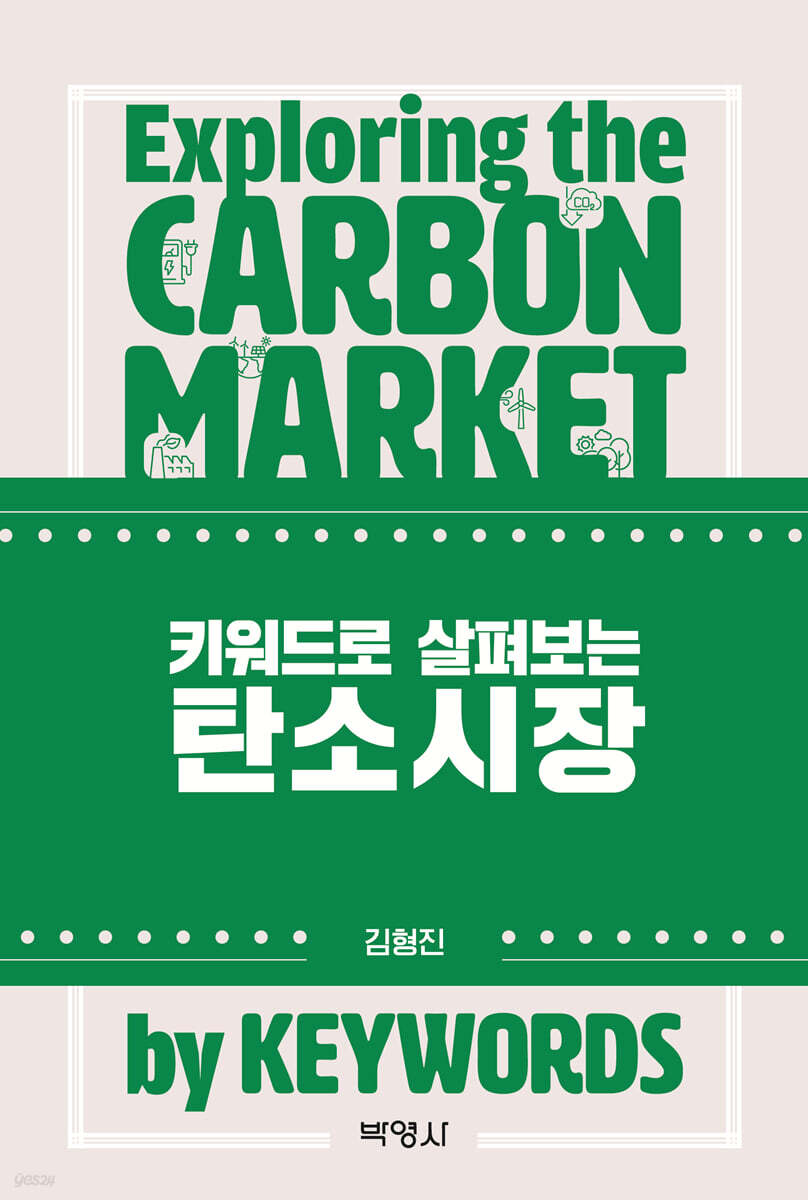
Carbon Market by Keyword
 |
Description
Book Introduction
Carbon markets have now become a common language, transcending a specific sector and impacting businesses, finance, policy, and trade.
However, when first encountering carbon markets, unfamiliar acronyms and different definitions such as RE100, ETS, CBAM, SBTi, ITMO, and REDD+ can be confusing.
This book is designed to lower the barriers to these terms and promote a greater understanding of society as a whole.
This book systematically organizes carbon markets and climate governance around 30 key keywords.
Each topic is structured around concepts, background, systems, markets, cases, and checklists, drawing on credible primary sources. The connections between terms help readers easily grasp the overall flow.
We've tried to guide you step-by-step through how complex regulations intertwine with real-world transactions and what you should check first.
However, when first encountering carbon markets, unfamiliar acronyms and different definitions such as RE100, ETS, CBAM, SBTi, ITMO, and REDD+ can be confusing.
This book is designed to lower the barriers to these terms and promote a greater understanding of society as a whole.
This book systematically organizes carbon markets and climate governance around 30 key keywords.
Each topic is structured around concepts, background, systems, markets, cases, and checklists, drawing on credible primary sources. The connections between terms help readers easily grasp the overall flow.
We've tried to guide you step-by-step through how complex regulations intertwine with real-world transactions and what you should check first.
- You can preview some of the book's contents.
Preview
index
01 What are the UN SDGs? 5
02 What is ESG? 13
03 What is RE100? 19
04 What is SBTi? 29
05 What are carbon emissions credits? 35
06 What is a Regulatory Carbon Market (CCM)? 43
07 What is a Voluntary Carbon Market (VCM)? 49
08 The Role of Carbon Credits in Voluntary Carbon Markets 55
09 What is the United Nations Framework Convention on Climate Change (UNFCCC)? 63
10 What is the Conference of the Parties (COP) to the United Nations Framework Convention on Climate Change? 69
11 What is the Kyoto Protocol? 73
12 Let's take a closer look at the Kyoto Mechanism 83
13 What is the Clean Development Mechanism (CDM)?
14 What is the Emission Trading System (ETS)?
15 What is Article 6 of the Paris Agreement? 103
16 What is the Intergovernmental Panel on Climate Change (IPCC)? 111
17. What are the market size, methods, and characteristics of carbon emission rights development projects?
18 What is REDD+? 127
19 What is CORSIA? 135
How do I get carbon credits certified? 141
21 What is KOC (Korean Offset Credit)? 147
22 What is the TSVCM (Task Force for Voluntary Carbon Market Expansion)? 155
23 What are ITMO (Internationally Transferred Mitigation Outcomes)? 161
24 What are GEO, N-GEO, and C-GEO? 169
25 What is SD-GEO? 175
26 What are carbon taxes and carbon border taxes? 181
27 What is the Carbon Fund? 187
28 How are carbon emissions prices determined? 193
29 What is the structure of the KRX (Korea Exchange) emissions trading market?
30 Other Keyword Summary 203
02 What is ESG? 13
03 What is RE100? 19
04 What is SBTi? 29
05 What are carbon emissions credits? 35
06 What is a Regulatory Carbon Market (CCM)? 43
07 What is a Voluntary Carbon Market (VCM)? 49
08 The Role of Carbon Credits in Voluntary Carbon Markets 55
09 What is the United Nations Framework Convention on Climate Change (UNFCCC)? 63
10 What is the Conference of the Parties (COP) to the United Nations Framework Convention on Climate Change? 69
11 What is the Kyoto Protocol? 73
12 Let's take a closer look at the Kyoto Mechanism 83
13 What is the Clean Development Mechanism (CDM)?
14 What is the Emission Trading System (ETS)?
15 What is Article 6 of the Paris Agreement? 103
16 What is the Intergovernmental Panel on Climate Change (IPCC)? 111
17. What are the market size, methods, and characteristics of carbon emission rights development projects?
18 What is REDD+? 127
19 What is CORSIA? 135
How do I get carbon credits certified? 141
21 What is KOC (Korean Offset Credit)? 147
22 What is the TSVCM (Task Force for Voluntary Carbon Market Expansion)? 155
23 What are ITMO (Internationally Transferred Mitigation Outcomes)? 161
24 What are GEO, N-GEO, and C-GEO? 169
25 What is SD-GEO? 175
26 What are carbon taxes and carbon border taxes? 181
27 What is the Carbon Fund? 187
28 How are carbon emissions prices determined? 193
29 What is the structure of the KRX (Korea Exchange) emissions trading market?
30 Other Keyword Summary 203
Into the book
Carbon markets have now become a common language, transcending a specific sector and impacting businesses, finance, policy, and trade.
However, when first encountering carbon markets, unfamiliar acronyms and different definitions such as RE100, ETS, CBAM, SBTi, ITMO, and REDD+ can be confusing.
This book is designed to lower the barriers to these terms and promote a greater understanding of society as a whole.
This book systematically organizes carbon markets and climate governance around 30 key keywords.
Each topic is structured around concepts, background, systems, markets, cases, and checklists, drawing on credible primary sources. The connections between terms help readers easily grasp the overall flow.
We've tried to guide you step-by-step through how complex regulations intertwine with real-world transactions and what you should check first.
This book will be useful to:
· General readers and students who are new to the carbon market
· Corporate and financial practitioners who must simultaneously understand regulations, reporting, and transactions.
· Policy makers who review the consistency of international norms and domestic systems
The carbon market is a rapidly changing area.
While this book reflects the most current information available at the time of writing, please always check the latest official documentation before making any decisions.
It would have been impossible for me to bring this book to light on my own.
This was possible thanks to the help and encouragement of many people who shared their concerns and paved the way for me in research and business.
Above all, I would like to express my deepest gratitude to the staff at Park Young-sa, who recognized the value of this book and paved the way for its publication.
I would also like to express my gratitude to KCCTS CEO Kim Hang-seok, Senior Researcher Myeong Seong-yoon, Manager Lee Gyeong-jung, and Green Idea Lab CEO Jang Byeong-il for inviting me to the carbon market and working with me on the actual project, as well as ENCC Advisor Jeong Hae-bong for always providing valuable guidance throughout the process.
I would also like to thank GGGI Secretary General Kim Sang-hyeop, KAIST Professors Um Ji-yong and Ahn Byeong-hun, who guided me on the path of Green Management during my doctoral studies.
I was able to take a step forward thanks to the teachers who showed me the balance between theory and practice.
In particular, I would like to express my sincere gratitude to my advisor, Professor Kim Young-geol, who gave me the courage to take on new challenges.
I would also like to express my gratitude to my family and close colleagues who understood my writing process and silently supported me.
I would not have been able to complete it without your support and consideration.
In particular, I would like to express my deepest gratitude to Professor Park Ye-rin, who carefully read the manuscript of this book and pointed out any shortcomings.
I hope this book will serve as a guide for those who are just starting out and a checklist for those already working in the field.
We can create a trustworthy carbon market through understanding and practice based on accurate information and consistent standards.
I sincerely hope that this will be of some help to you, the readers, in your reflections and practice.
November 2025
Kim Hyung-jin
However, when first encountering carbon markets, unfamiliar acronyms and different definitions such as RE100, ETS, CBAM, SBTi, ITMO, and REDD+ can be confusing.
This book is designed to lower the barriers to these terms and promote a greater understanding of society as a whole.
This book systematically organizes carbon markets and climate governance around 30 key keywords.
Each topic is structured around concepts, background, systems, markets, cases, and checklists, drawing on credible primary sources. The connections between terms help readers easily grasp the overall flow.
We've tried to guide you step-by-step through how complex regulations intertwine with real-world transactions and what you should check first.
This book will be useful to:
· General readers and students who are new to the carbon market
· Corporate and financial practitioners who must simultaneously understand regulations, reporting, and transactions.
· Policy makers who review the consistency of international norms and domestic systems
The carbon market is a rapidly changing area.
While this book reflects the most current information available at the time of writing, please always check the latest official documentation before making any decisions.
It would have been impossible for me to bring this book to light on my own.
This was possible thanks to the help and encouragement of many people who shared their concerns and paved the way for me in research and business.
Above all, I would like to express my deepest gratitude to the staff at Park Young-sa, who recognized the value of this book and paved the way for its publication.
I would also like to express my gratitude to KCCTS CEO Kim Hang-seok, Senior Researcher Myeong Seong-yoon, Manager Lee Gyeong-jung, and Green Idea Lab CEO Jang Byeong-il for inviting me to the carbon market and working with me on the actual project, as well as ENCC Advisor Jeong Hae-bong for always providing valuable guidance throughout the process.
I would also like to thank GGGI Secretary General Kim Sang-hyeop, KAIST Professors Um Ji-yong and Ahn Byeong-hun, who guided me on the path of Green Management during my doctoral studies.
I was able to take a step forward thanks to the teachers who showed me the balance between theory and practice.
In particular, I would like to express my sincere gratitude to my advisor, Professor Kim Young-geol, who gave me the courage to take on new challenges.
I would also like to express my gratitude to my family and close colleagues who understood my writing process and silently supported me.
I would not have been able to complete it without your support and consideration.
In particular, I would like to express my deepest gratitude to Professor Park Ye-rin, who carefully read the manuscript of this book and pointed out any shortcomings.
I hope this book will serve as a guide for those who are just starting out and a checklist for those already working in the field.
We can create a trustworthy carbon market through understanding and practice based on accurate information and consistent standards.
I sincerely hope that this will be of some help to you, the readers, in your reflections and practice.
November 2025
Kim Hyung-jin
--- From the preface
GOODS SPECIFICS
- Date of issue: November 20, 2025
- Page count, weight, size: 212 pages | 153*224*20mm
- ISBN13: 9791130321295
- ISBN10: 1130321290
You may also like
카테고리
korean


korean

![GQ KOREA Mark (Monthly): December [2025]](http://librairie.coreenne.fr/cdn/shop/files/8ef265dbbfbf186523ed75ba7319009d.jpg?v=1765340328&width=3840)


