

Magazine B (Monthly): No. 79 Mini (MINI) Korean Edition
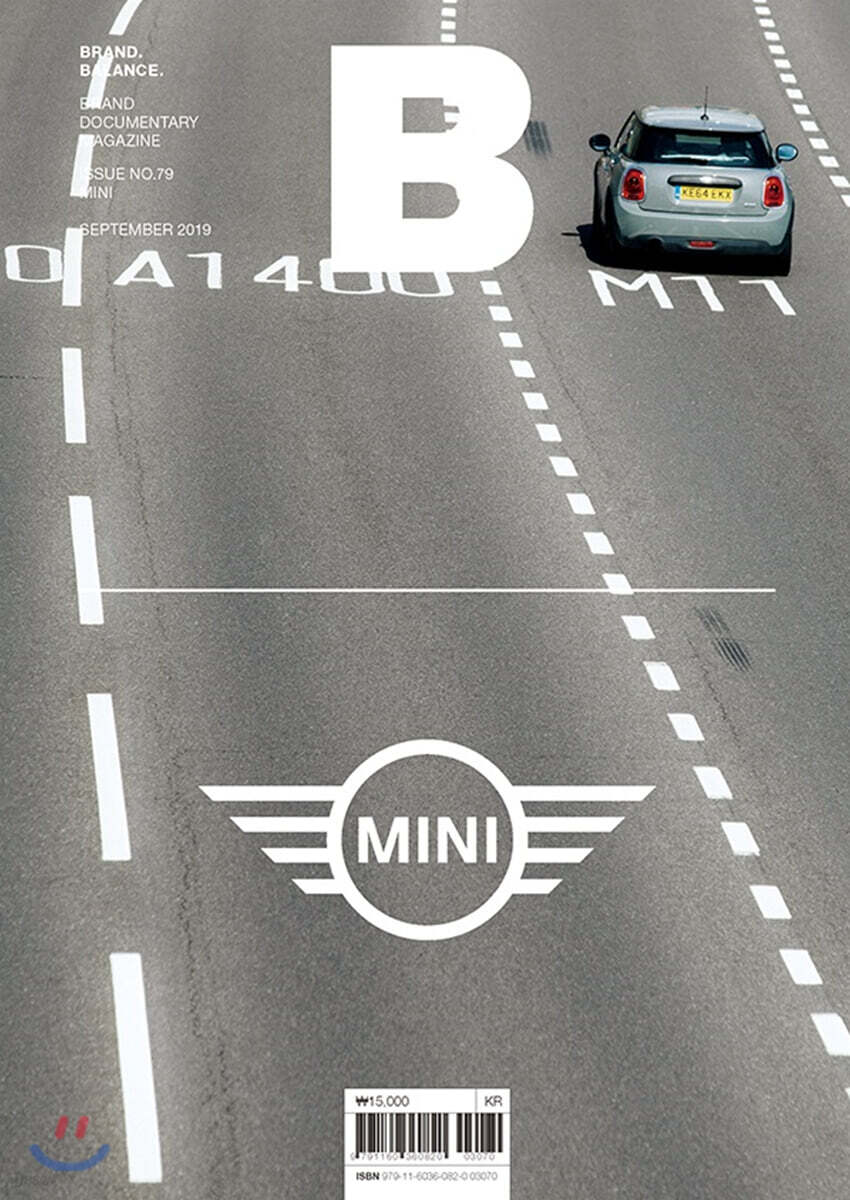 |
Description
Book Introduction
Magazine [B] is an ad-free monthly magazine that introduces one well-balanced brand from around the world each month, discovered from JOH's perspective.
A serious yet readable magazine for everyone interested in brands, from brand executives contemplating new business ventures to those seeking to develop a sense of branding.
A serious yet readable magazine for everyone interested in brands, from brand executives contemplating new business ventures to those seeking to develop a sense of branding.
- You can preview some of the book's contents.
Preview
index
02 Intro
09 Editor's Letter
12 Rules of the Road
Etiquette for Mini drivers to follow when encountering each other on the road
14 Perspectives
Four creators explore the design and value of the Mini.
18 Museum
The history of British cars on display at the Motor Museum in London, and the heritage of the Mini explained by a curator.
24 Opinions
Michael and Charlie Cooper, the third and fourth generations of the Cooper family who instilled racing genes and engineering into the Mini brand.
30 Restorer
The global popularity of the Classic Mini is proven by a specialist restoration company.
36 In London
A travel agency that turned the idea of exploring London in a classic Mini into a business.
42 With Minis
Classic Mini enthusiasts in London
46 Opinion
Christoph Gontart, Head of BMW Group Classic Brand Management
50 Milestones
Classic Mini models that marked 60 years of Mini history
54 Buzzing
Thoughts on the New and Classic Mini shared by Mini owners in online communities
58 Engine Rooms
The engine compartments of the classic and new Minis observed through the bonnet.
60 Versus
The features of the Classic Mini and the New Mini, compared and analyzed in one place.
70 In the Making
The Oxford plant, which is responsible for manufacturing the Mini lineup and some of the lineups after the BMW acquisition, and the head of Mini design
Interview with Oliver Heilmer
82 Minimizers
The lifestyles of Mini owners we met in three cities and their perspectives on mobility in each city.
94 Signal
102 Brand Story
The story of a brand born out of Britain's social and economic crisis and growing to offer solutions for mobility.
110 Interviews
Mini General Manager Bernd Köver
Esther Vane, Head of Mini Brand Strategy and Business Innovation
116 Expansion
Mini is pioneering a new field by applying the motto of 'creative use of space'.
118 Century
The Mini, now a pop culture icon, has had a tumultuous history alongside the automotive industry.
122 British Cars
A British automobile brand that has established a unique identity with unwavering conviction and charm.
126 Figures
Statistics and figures showing Mini's history and growth
129 References
131 Outro
09 Editor's Letter
12 Rules of the Road
Etiquette for Mini drivers to follow when encountering each other on the road
14 Perspectives
Four creators explore the design and value of the Mini.
18 Museum
The history of British cars on display at the Motor Museum in London, and the heritage of the Mini explained by a curator.
24 Opinions
Michael and Charlie Cooper, the third and fourth generations of the Cooper family who instilled racing genes and engineering into the Mini brand.
30 Restorer
The global popularity of the Classic Mini is proven by a specialist restoration company.
36 In London
A travel agency that turned the idea of exploring London in a classic Mini into a business.
42 With Minis
Classic Mini enthusiasts in London
46 Opinion
Christoph Gontart, Head of BMW Group Classic Brand Management
50 Milestones
Classic Mini models that marked 60 years of Mini history
54 Buzzing
Thoughts on the New and Classic Mini shared by Mini owners in online communities
58 Engine Rooms
The engine compartments of the classic and new Minis observed through the bonnet.
60 Versus
The features of the Classic Mini and the New Mini, compared and analyzed in one place.
70 In the Making
The Oxford plant, which is responsible for manufacturing the Mini lineup and some of the lineups after the BMW acquisition, and the head of Mini design
Interview with Oliver Heilmer
82 Minimizers
The lifestyles of Mini owners we met in three cities and their perspectives on mobility in each city.
94 Signal
102 Brand Story
The story of a brand born out of Britain's social and economic crisis and growing to offer solutions for mobility.
110 Interviews
Mini General Manager Bernd Köver
Esther Vane, Head of Mini Brand Strategy and Business Innovation
116 Expansion
Mini is pioneering a new field by applying the motto of 'creative use of space'.
118 Century
The Mini, now a pop culture icon, has had a tumultuous history alongside the automotive industry.
122 British Cars
A British automobile brand that has established a unique identity with unwavering conviction and charm.
126 Figures
Statistics and figures showing Mini's history and growth
129 References
131 Outro
Detailed image

Publisher's Review
This is the seventy-ninth magazine [B].
After publishing two combined issues of two months' worth twice a year, the editorial staff of Magazine [B] is given a breather.
Sometimes I go on vacation with family or friends, and sometimes I diligently prepare for projects for the remaining half of the semester.
It is also a time when I feel that it is just as important to stop for a moment and look back as it is to run with all your might.
But this summer I had to run at full speed.
This is because, in addition to the regular publications, Magazine [B] and Magazine [F], we have planned another publication, the book series 'Jobs', which was released in mid-August.
As the title of the series suggests, Jobs is a book that talks about the jobs, professionals, and professional thinking of this era.
As boundaries between industries and professions blur and opportunities for professionals and amateurs become increasingly equal, I created this book to shed new light on the topic of occupation.
As Jobs wrote in his introduction, “A job is an extension of a brand story.”
A professional's philosophy and attitude toward his or her work are realized in the form of a brand.
Perhaps the magazine [B] had been predicting Jobs' birth all along.
Mini, which started in England in 1959, is also an automobile brand that grew based on the unique philosophy of two professionals.
It has become an icon across design, culture, and lifestyle, to the point where it's awkward to call it just an automobile brand.
The power that has allowed the Mini to maintain its iconic status for nearly 60 years remains intact in its first prototype.
It's quite famous that Alec Issigonis, who designed the Mini, was an engineer, but he considered himself a designer, not an engineer.
This would mean moving back and forth between engineers and designers, using both sets of eyes and thinking.
Thanks to this, the Mini was able to become competitive not only as a small car but also as a car that beautifully implemented optimal space.
And another engineer, John Cooper, used his racing background to make the Mini a car that could even handle the road.
They have shown firsthand what flexible professional thinking can achieve.
Personally, what I find attractive about Mini is its unique expression.
When I was on a business trip to Edinburgh, Scotland, a few years ago, I was quite impressed by the colorful Minis traversing the city's cobblestone streets under thick clouds.
The nimble movements stood out even more in contrast to the massiveness of the Gothic-style architecture, which was almost black.
Among other German cars that looked like near-perfect machines, the Mini was bringing life to the city.
It's not just because it's a small car.
It uses curves without losing its charm, and its vivid character is fully revealed not only when stationary but also when moving, so its presence feels just like that of a person.
I think it was for a similar reason that in the 1960s in London, there was a saying that “If you can afford a Rolls-Royce, you should drive a Mini Cooper.”
Because there is no other car that can imitate or replicate the Mini's unique liveliness.
It is also noteworthy that Mini's vitality came from limitations and restricted situations.
The British historical backdrop of the oil crisis, which forced the production of small, economical cars, paradoxically gave the Mini a positive boost.
Despite her cute appearance, Mini was not a product of abundance, but rather a solution to a crisis.
It is no exaggeration to say that creativity in business, not art, depends on how one perceives and tames limited situations.
Whether it's cost and time constraints, physical size constraints, or human and resource constraints.
The coming society will have countless limitations in many aspects and types.
Not only various laws and regulations, but also political and social agendas that spread rapidly through social media, and issues related to the environment and sustainability, etc., will narrow the scope of creation.
But this should not be viewed only negatively.
The ideas that come from overcoming deficiency give humanity to objects and spaces, and there is no weapon more powerful than being given humanity.
As Mini's success shows, it is ultimately humanity that can embrace everything.
Editor-in-Chief Park Eun-seong
After publishing two combined issues of two months' worth twice a year, the editorial staff of Magazine [B] is given a breather.
Sometimes I go on vacation with family or friends, and sometimes I diligently prepare for projects for the remaining half of the semester.
It is also a time when I feel that it is just as important to stop for a moment and look back as it is to run with all your might.
But this summer I had to run at full speed.
This is because, in addition to the regular publications, Magazine [B] and Magazine [F], we have planned another publication, the book series 'Jobs', which was released in mid-August.
As the title of the series suggests, Jobs is a book that talks about the jobs, professionals, and professional thinking of this era.
As boundaries between industries and professions blur and opportunities for professionals and amateurs become increasingly equal, I created this book to shed new light on the topic of occupation.
As Jobs wrote in his introduction, “A job is an extension of a brand story.”
A professional's philosophy and attitude toward his or her work are realized in the form of a brand.
Perhaps the magazine [B] had been predicting Jobs' birth all along.
Mini, which started in England in 1959, is also an automobile brand that grew based on the unique philosophy of two professionals.
It has become an icon across design, culture, and lifestyle, to the point where it's awkward to call it just an automobile brand.
The power that has allowed the Mini to maintain its iconic status for nearly 60 years remains intact in its first prototype.
It's quite famous that Alec Issigonis, who designed the Mini, was an engineer, but he considered himself a designer, not an engineer.
This would mean moving back and forth between engineers and designers, using both sets of eyes and thinking.
Thanks to this, the Mini was able to become competitive not only as a small car but also as a car that beautifully implemented optimal space.
And another engineer, John Cooper, used his racing background to make the Mini a car that could even handle the road.
They have shown firsthand what flexible professional thinking can achieve.
Personally, what I find attractive about Mini is its unique expression.
When I was on a business trip to Edinburgh, Scotland, a few years ago, I was quite impressed by the colorful Minis traversing the city's cobblestone streets under thick clouds.
The nimble movements stood out even more in contrast to the massiveness of the Gothic-style architecture, which was almost black.
Among other German cars that looked like near-perfect machines, the Mini was bringing life to the city.
It's not just because it's a small car.
It uses curves without losing its charm, and its vivid character is fully revealed not only when stationary but also when moving, so its presence feels just like that of a person.
I think it was for a similar reason that in the 1960s in London, there was a saying that “If you can afford a Rolls-Royce, you should drive a Mini Cooper.”
Because there is no other car that can imitate or replicate the Mini's unique liveliness.
It is also noteworthy that Mini's vitality came from limitations and restricted situations.
The British historical backdrop of the oil crisis, which forced the production of small, economical cars, paradoxically gave the Mini a positive boost.
Despite her cute appearance, Mini was not a product of abundance, but rather a solution to a crisis.
It is no exaggeration to say that creativity in business, not art, depends on how one perceives and tames limited situations.
Whether it's cost and time constraints, physical size constraints, or human and resource constraints.
The coming society will have countless limitations in many aspects and types.
Not only various laws and regulations, but also political and social agendas that spread rapidly through social media, and issues related to the environment and sustainability, etc., will narrow the scope of creation.
But this should not be viewed only negatively.
The ideas that come from overcoming deficiency give humanity to objects and spaces, and there is no weapon more powerful than being given humanity.
As Mini's success shows, it is ultimately humanity that can embrace everything.
Editor-in-Chief Park Eun-seong
GOODS SPECIFICS
- Date of issue: September 10, 2019
- Pages, weight, size: 144 pages | 378g | 170*240*20mm
- ISBN13: 9791160360820
- ISBN10: 1160360820
You may also like
카테고리
korean


korean

![GQ KOREA Mark (Monthly): December [2025]](http://librairie.coreenne.fr/cdn/shop/files/8ef265dbbfbf186523ed75ba7319009d.jpg?v=1765340328&width=3840)


