

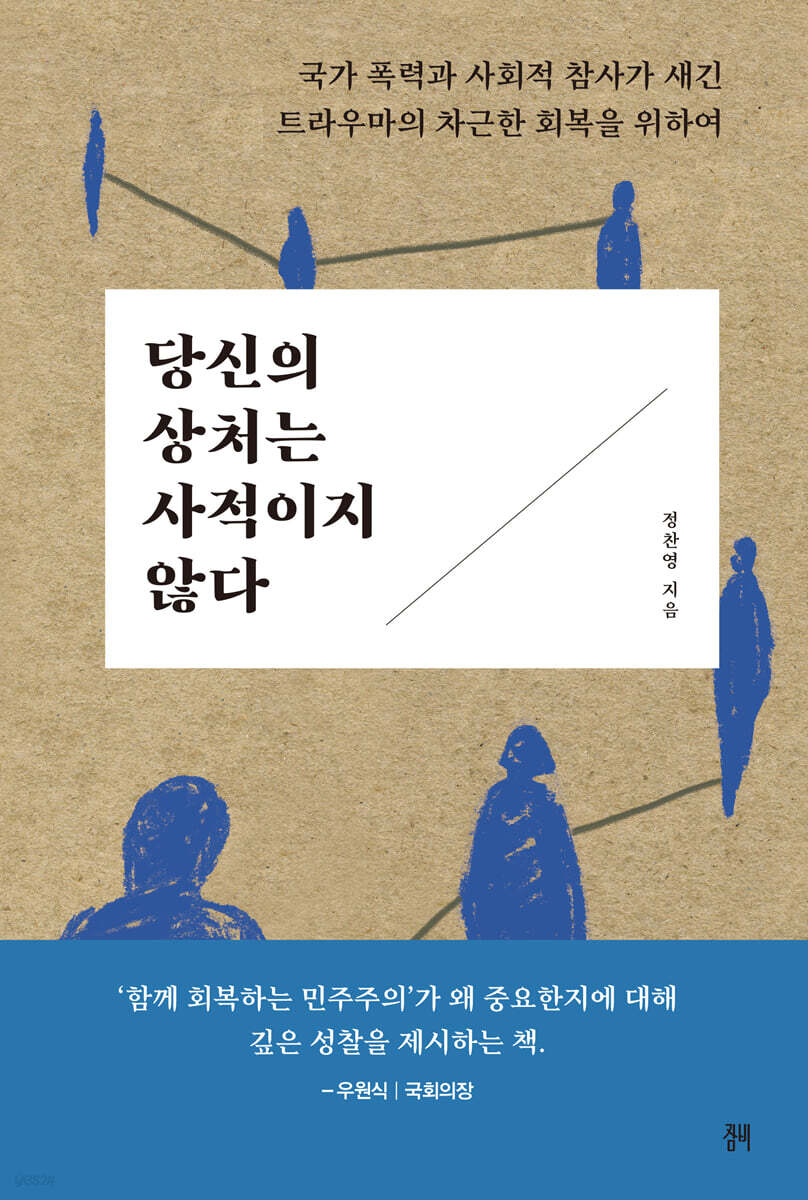
Your wounds are not private
 |
Description
Book Introduction
4·3, 5·18, 4·16, 12·3… After those days when someone's life was shattered,
How much better would we have become?
How else can we improve?
A book that offers deep reflection on why 'democracy that recovers together' is important.
Woo Won-sik | Speaker of the National Assembly
In November 2025, thirteen women wearing red floral scarves appeared in a row at the Seoul Central District Court.
These members of the May 18th sexual violence victim support group, “Yeolmae,” filed a lawsuit for damages for the first time in 45 years for “sexual violence by martial law troops.”
As related articles were published, voices of support for the courageous action followed.
But the cold stare that always follows victims of state violence and social disasters when they speak out still exists.
‘How can you prove that it’s real?’ ‘Stop it, it’s driving me crazy.’ ‘How much benefit are you trying to get from this?’ etc.
This book is a heartbreaking rebuttal to that old, cold gaze, and a challenging proposition.
Chan-Young Jeong, the author of this book and an advisor to 'Yeolmae', has long been healing victims of the May 18th Democratization Movement, as well as those suffering from social trauma, including the Sewol Ferry Disaster and the Jeju Air passenger plane crash.
In the process, we were able to deeply research the reasons why their nightmares do not end even after a long time and find solutions.
In his book, he presents specific examples of how various traumatic emotions, such as traumatic grief, toxic shame, survivor's guilt, and moral damage, actually manifest and how to recover from them, along with interviews with victims.
Furthermore, we examine the reasons why these perpetrators continue to recur, from a psychiatric perspective, and examine the mechanisms by which politicians, religious figures, and their followers become entangled, as well as structural solutions to prevent this.
Above all, it provides comprehensive insights never before offered in any other book on how to prevent such a tragedy from ever happening again in our society.
As hatred toward outgroups deepens and the number of people who re-victimize victims of social trauma increases, the solutions he proposes—"de-extremism centers" and "civic emotional education"—are particularly noteworthy.
How much better would we have become?
How else can we improve?
A book that offers deep reflection on why 'democracy that recovers together' is important.
Woo Won-sik | Speaker of the National Assembly
In November 2025, thirteen women wearing red floral scarves appeared in a row at the Seoul Central District Court.
These members of the May 18th sexual violence victim support group, “Yeolmae,” filed a lawsuit for damages for the first time in 45 years for “sexual violence by martial law troops.”
As related articles were published, voices of support for the courageous action followed.
But the cold stare that always follows victims of state violence and social disasters when they speak out still exists.
‘How can you prove that it’s real?’ ‘Stop it, it’s driving me crazy.’ ‘How much benefit are you trying to get from this?’ etc.
This book is a heartbreaking rebuttal to that old, cold gaze, and a challenging proposition.
Chan-Young Jeong, the author of this book and an advisor to 'Yeolmae', has long been healing victims of the May 18th Democratization Movement, as well as those suffering from social trauma, including the Sewol Ferry Disaster and the Jeju Air passenger plane crash.
In the process, we were able to deeply research the reasons why their nightmares do not end even after a long time and find solutions.
In his book, he presents specific examples of how various traumatic emotions, such as traumatic grief, toxic shame, survivor's guilt, and moral damage, actually manifest and how to recover from them, along with interviews with victims.
Furthermore, we examine the reasons why these perpetrators continue to recur, from a psychiatric perspective, and examine the mechanisms by which politicians, religious figures, and their followers become entangled, as well as structural solutions to prevent this.
Above all, it provides comprehensive insights never before offered in any other book on how to prevent such a tragedy from ever happening again in our society.
As hatred toward outgroups deepens and the number of people who re-victimize victims of social trauma increases, the solutions he proposes—"de-extremism centers" and "civic emotional education"—are particularly noteworthy.
- You can preview some of the book's contents.
Preview
index
Prologue_ Good Stars of the Past and Present
Part 1_ The Past Helps Me
Chapter 1: The Unbearable Sorrow of the Remaining
Why Persistent Grief Disorder Occurs | Grief Colors Life | Traumatic Grief Experiences | Grief: The Struggle Between Permanence and Eternity | Is There a Model for Grief?
Chapter 2: Living with the Guilt of the Living
Where does survivor's guilt lead? | Refusing help | What they truly need | Finding meaning in sacrifice
Chapter 3: Can We Escape Toxic Shame?
Toward Optimal Shame | The Emotion Closest to Death | Abuse Embeds Shame into the Soul | The Dangerous Cycle of Shame and Rage | Can We Break Free from This Vicious Cycle? | How to Become a Healthy Social Emotion
Chapter 4: What is trauma to us?
An Earthquake in Memory: PTSD | A Key Mechanism in Trauma Therapy | How Collective Memory Worked That Day | Why Trauma Is Difficult to Express | Is It Possible to Empathize with Trauma | Persistent Attention and Care
Chapter 5: The Moral Damage of the Martial Law Army and the Disorder of Civil War
Rebellious Anger Disorder | Re-experiencing the Trauma of the December 3rd Martial Law | Moral Damage from Unjust Orders | The Nightmare of the Vietnam War and Restorative Justice | The Reality of People Killing Others
Chapter 6: Narcissists Around Us
The Dark Trinity | What Makes the World a Jungle | Types of Narcissists | How to Create a Narcissist | If You Can't Avoid It Completely
Part 2: The Past Helps Us
Chapter 7: Political Narcissists and Spiritual Narcissists
Power is the Narcissist's Cheat Key | How Narcissists Build Kingdoms | May Mothers Encounter Spiritual Narcissists | When Monotheistic Fundamentalism and Political Extremism Combine | Escape the Narcissist's Shadow
Chapter 8: The Island Created by Martial Law Forces' Sexual Violence
Sexual Violence Raised Under Martial Law | The Destructiveness of Sexual Violence, Aligned with State Violence | The Impact on Body, Mind, and Life | Sexual Torture That Shatters Dignity | The Path to Healing
Chapter 9: The Trauma of State Violence That Shakes Communities
The ripple effect of trauma | The scars etched by state violence | A legacy that transcends generations | A forest lush with vibrant trees
Part 3: The Past Helps the Future
Chapter 10: Suffering is overcome when meaning is found.
The Fragmentation of Our Society | The Healing Wave Effect | Collective Testimonial Healing and Intergroup Testimonial Healing | The Need for a Center for De-Extremism | The Benefits of Civic Emotional Education | For a Resilient Ecosystem
Epilogue_ A Hall of Wisdom Built with Good Citizens
The Unfinished Story_ If Martial Law Had Been Implemented on December 3
main
Part 1_ The Past Helps Me
Chapter 1: The Unbearable Sorrow of the Remaining
Why Persistent Grief Disorder Occurs | Grief Colors Life | Traumatic Grief Experiences | Grief: The Struggle Between Permanence and Eternity | Is There a Model for Grief?
Chapter 2: Living with the Guilt of the Living
Where does survivor's guilt lead? | Refusing help | What they truly need | Finding meaning in sacrifice
Chapter 3: Can We Escape Toxic Shame?
Toward Optimal Shame | The Emotion Closest to Death | Abuse Embeds Shame into the Soul | The Dangerous Cycle of Shame and Rage | Can We Break Free from This Vicious Cycle? | How to Become a Healthy Social Emotion
Chapter 4: What is trauma to us?
An Earthquake in Memory: PTSD | A Key Mechanism in Trauma Therapy | How Collective Memory Worked That Day | Why Trauma Is Difficult to Express | Is It Possible to Empathize with Trauma | Persistent Attention and Care
Chapter 5: The Moral Damage of the Martial Law Army and the Disorder of Civil War
Rebellious Anger Disorder | Re-experiencing the Trauma of the December 3rd Martial Law | Moral Damage from Unjust Orders | The Nightmare of the Vietnam War and Restorative Justice | The Reality of People Killing Others
Chapter 6: Narcissists Around Us
The Dark Trinity | What Makes the World a Jungle | Types of Narcissists | How to Create a Narcissist | If You Can't Avoid It Completely
Part 2: The Past Helps Us
Chapter 7: Political Narcissists and Spiritual Narcissists
Power is the Narcissist's Cheat Key | How Narcissists Build Kingdoms | May Mothers Encounter Spiritual Narcissists | When Monotheistic Fundamentalism and Political Extremism Combine | Escape the Narcissist's Shadow
Chapter 8: The Island Created by Martial Law Forces' Sexual Violence
Sexual Violence Raised Under Martial Law | The Destructiveness of Sexual Violence, Aligned with State Violence | The Impact on Body, Mind, and Life | Sexual Torture That Shatters Dignity | The Path to Healing
Chapter 9: The Trauma of State Violence That Shakes Communities
The ripple effect of trauma | The scars etched by state violence | A legacy that transcends generations | A forest lush with vibrant trees
Part 3: The Past Helps the Future
Chapter 10: Suffering is overcome when meaning is found.
The Fragmentation of Our Society | The Healing Wave Effect | Collective Testimonial Healing and Intergroup Testimonial Healing | The Need for a Center for De-Extremism | The Benefits of Civic Emotional Education | For a Resilient Ecosystem
Epilogue_ A Hall of Wisdom Built with Good Citizens
The Unfinished Story_ If Martial Law Had Been Implemented on December 3
main
Detailed image
.jpg)
Into the book
Those I met while providing testimony healing were great beings who never lost their good fight even in the face of heartbreaking grief from loss and soul-shattering trauma.
Their stories contained as many good stories as there were stars in the night sky.
They repeatedly demonstrated a selflessness that seemed to turn on in the face of immense violence, a transcendence that willingly laid themselves bare and dedicated themselves to the turbulent waves of history, the guilt and responsibility of the living, and the collective memory that interacts with them.
I believe this has become a social resource that protects our democracy and a root of our collective identity.
--- From the "Prologue"
Even after the child was killed, the perpetrator remained in power for a long time.
Surveillance and discrimination against the bereaved families continued, and the stigma attached to the deceased young children as "rioters" and "communists" persisted for decades.
Their emotions were limited, and they had difficulty finding meaning in areas of life other than struggle and parenting.
As parents, what must have been going through their minds? As I held my breath and pondered the immense and intense abyss of their grief, I often felt dizzy or dazed.
--- From "Chapter 1: The Unbearable Sorrow of the Surviving"
Even though many years had passed, Kim Gyeong-cheol's mother, Lim Geum-dan, sobbed with a trembling voice.
He believed that he had given his son an overdose of mycin when he was young, causing his son's hearing loss, and that the martial law soldiers, unable to hear, had beaten him more, leading to his death.
Mr. Im was tormented by that guilt his entire life.
Among the many complex factors that caused the incident, I focused only on the ones related to myself, blamed myself, and suffered.
Why do these psychological mechanisms occur?
Rather than imagining deaths caused by the martial law army's murderous violence and facing the resulting grief head-on, it is less painful to blame oneself by simulating the possibilities that could have unfolded differently.
It may be better to think that something could have been prevented if you had acted differently than to feel powerless over a terrible death.
This kind of psychology also contains the wish to turn back the events and bring the deceased back to life.
This deep, long-lasting survivor's guilt is often overlooked as part of PTSD and is not easily alleviated.
--- From "Chapter 2_Living with the Guilt of the Living"
When you listen to their early life stories, you can easily encounter the adversities of growing up such as neglect, abuse, sexual violence, poverty, dropping out of school, absent parents, and lack of social support.
At least among the women I've met who were ex-prostitutes, none of them wanted to go back to prostitution, even though they could have been properly loved and educated.
Yet, the sex trafficking business owners and brokers who lure and exploit adolescents or those just past adolescence into prostitution, the perpetrators who commit sexual assault, violence, or confinement in the process, the sex buyers, and the parents who are responsible for the adversity of their growing up years do not experience the same shame as women who exit prostitution.
Why doesn't shame take its fair share of responsibility? When treating survivors of trauma from various forms of violence or sexual violence, I've focused on this unequal burden, calling it "the inequity of shame."
Few people have ever attempted to fathom or empathize with the shame experienced by women who have entered the sex trade.
The shame of Kyung-hwa's parents, hidden behind the words "Go die," was probably closer to the shame of worrying about their own reputation than the shame that made them reflect on themselves as parents.
--- From "Chapter 3_Can We Escape Toxic Shame?"
The survivors and bereaved families of May 18 had to re-experience the trauma of the December 3 martial law.
When I called Kim Gil-ja, the mother of the late Moon Jae-hak, after martial law was declared, he said this.
“The comfort that writer Han Kang received from winning the Nobel Prize in Literature did not last long.
The president suddenly appeared on TV and announced that he was declaring martial law.
It was a bolt from the blue.
How could democracy be created through the sacrifice of a son?
I was so angry that my hands were shaking.
I almost hit the television with my cane several times without realizing it, as it showed the president and martial law troops.
My heart pounded as I watched armored vehicles roll out onto the road and soldiers disembark from helicopters and enter the National Assembly building.
It felt like May 18th had happened again.
When I think of martial law, I think of that morning (May 27th).
Oh my! I remember them killing everyone in front of the city hall and then singing a military song while banging their boots to declare their victory.”
--- From “Chapter 4: The Moral Damage of the Martial Law Army and the Disorder of Civilian Resentment”
In any organization, it's easy to find ties between narcissistic leaders and core followers.
Narcissists manipulate their helpers through special displays of affection or praise, inducing anger, shame or guilt, abuse, and gaslighting.
The helper, by being in the narcissist's inner circle, temporarily experiences the narcissist's cherishing, especially in the early stages of a relationship, when the narcissist may shower them with romantic love like a bomb.
Additionally, by surrounding themselves with a narcissist who appears to be attractive or successful, helpers feel like they are more successful and important than they actually are.
As a result, helpers serve as the narcissist's security guards, attack dogs, training agents, cheerleaders, and cleaners.
If the narcissist is addicted to the approval of others, then the helper is an addict who is also addicted to the narcissist.
--- From "Chapter 7_Political Narcissists and Spiritual Narcissists"
During the interview, there was one thing he remembered.
I remember receiving the car keys from the martial law forces when I was sexually assaulted and quickly putting them under the seat so they wouldn't find them.
It was further evidence that he was an active survivor, along with his actions of actively begging to be spared, saying that he was the mother of his children.
His actions spoke volumes about his life and identity.
We have repeatedly dwelled on its meaning.
Those who are unable to cope with traumatic situations have greater difficulty recovering from the trauma.
Fortunately, Minhee kept the two things that were most important to her.
And in the end, he raised his children well.
I have repeatedly expressed my gratitude and respect for that point.
Who can deny it?
--- From "Chapter 8_Islands with a lot of sexual violence by martial law troops"
The negative effects of trauma can also have a ripple effect, spreading throughout society.
In other words, healing trauma can also have a positive chain reaction in society.
When someone shares their experience of being healed, it can spread hope and resilience back to their family and community.
This can only truly happen when combined with group therapy, victim community activities, group testimony therapy or social memory activities, and civil society solidarity.
Their stories contained as many good stories as there were stars in the night sky.
They repeatedly demonstrated a selflessness that seemed to turn on in the face of immense violence, a transcendence that willingly laid themselves bare and dedicated themselves to the turbulent waves of history, the guilt and responsibility of the living, and the collective memory that interacts with them.
I believe this has become a social resource that protects our democracy and a root of our collective identity.
--- From the "Prologue"
Even after the child was killed, the perpetrator remained in power for a long time.
Surveillance and discrimination against the bereaved families continued, and the stigma attached to the deceased young children as "rioters" and "communists" persisted for decades.
Their emotions were limited, and they had difficulty finding meaning in areas of life other than struggle and parenting.
As parents, what must have been going through their minds? As I held my breath and pondered the immense and intense abyss of their grief, I often felt dizzy or dazed.
--- From "Chapter 1: The Unbearable Sorrow of the Surviving"
Even though many years had passed, Kim Gyeong-cheol's mother, Lim Geum-dan, sobbed with a trembling voice.
He believed that he had given his son an overdose of mycin when he was young, causing his son's hearing loss, and that the martial law soldiers, unable to hear, had beaten him more, leading to his death.
Mr. Im was tormented by that guilt his entire life.
Among the many complex factors that caused the incident, I focused only on the ones related to myself, blamed myself, and suffered.
Why do these psychological mechanisms occur?
Rather than imagining deaths caused by the martial law army's murderous violence and facing the resulting grief head-on, it is less painful to blame oneself by simulating the possibilities that could have unfolded differently.
It may be better to think that something could have been prevented if you had acted differently than to feel powerless over a terrible death.
This kind of psychology also contains the wish to turn back the events and bring the deceased back to life.
This deep, long-lasting survivor's guilt is often overlooked as part of PTSD and is not easily alleviated.
--- From "Chapter 2_Living with the Guilt of the Living"
When you listen to their early life stories, you can easily encounter the adversities of growing up such as neglect, abuse, sexual violence, poverty, dropping out of school, absent parents, and lack of social support.
At least among the women I've met who were ex-prostitutes, none of them wanted to go back to prostitution, even though they could have been properly loved and educated.
Yet, the sex trafficking business owners and brokers who lure and exploit adolescents or those just past adolescence into prostitution, the perpetrators who commit sexual assault, violence, or confinement in the process, the sex buyers, and the parents who are responsible for the adversity of their growing up years do not experience the same shame as women who exit prostitution.
Why doesn't shame take its fair share of responsibility? When treating survivors of trauma from various forms of violence or sexual violence, I've focused on this unequal burden, calling it "the inequity of shame."
Few people have ever attempted to fathom or empathize with the shame experienced by women who have entered the sex trade.
The shame of Kyung-hwa's parents, hidden behind the words "Go die," was probably closer to the shame of worrying about their own reputation than the shame that made them reflect on themselves as parents.
--- From "Chapter 3_Can We Escape Toxic Shame?"
The survivors and bereaved families of May 18 had to re-experience the trauma of the December 3 martial law.
When I called Kim Gil-ja, the mother of the late Moon Jae-hak, after martial law was declared, he said this.
“The comfort that writer Han Kang received from winning the Nobel Prize in Literature did not last long.
The president suddenly appeared on TV and announced that he was declaring martial law.
It was a bolt from the blue.
How could democracy be created through the sacrifice of a son?
I was so angry that my hands were shaking.
I almost hit the television with my cane several times without realizing it, as it showed the president and martial law troops.
My heart pounded as I watched armored vehicles roll out onto the road and soldiers disembark from helicopters and enter the National Assembly building.
It felt like May 18th had happened again.
When I think of martial law, I think of that morning (May 27th).
Oh my! I remember them killing everyone in front of the city hall and then singing a military song while banging their boots to declare their victory.”
--- From “Chapter 4: The Moral Damage of the Martial Law Army and the Disorder of Civilian Resentment”
In any organization, it's easy to find ties between narcissistic leaders and core followers.
Narcissists manipulate their helpers through special displays of affection or praise, inducing anger, shame or guilt, abuse, and gaslighting.
The helper, by being in the narcissist's inner circle, temporarily experiences the narcissist's cherishing, especially in the early stages of a relationship, when the narcissist may shower them with romantic love like a bomb.
Additionally, by surrounding themselves with a narcissist who appears to be attractive or successful, helpers feel like they are more successful and important than they actually are.
As a result, helpers serve as the narcissist's security guards, attack dogs, training agents, cheerleaders, and cleaners.
If the narcissist is addicted to the approval of others, then the helper is an addict who is also addicted to the narcissist.
--- From "Chapter 7_Political Narcissists and Spiritual Narcissists"
During the interview, there was one thing he remembered.
I remember receiving the car keys from the martial law forces when I was sexually assaulted and quickly putting them under the seat so they wouldn't find them.
It was further evidence that he was an active survivor, along with his actions of actively begging to be spared, saying that he was the mother of his children.
His actions spoke volumes about his life and identity.
We have repeatedly dwelled on its meaning.
Those who are unable to cope with traumatic situations have greater difficulty recovering from the trauma.
Fortunately, Minhee kept the two things that were most important to her.
And in the end, he raised his children well.
I have repeatedly expressed my gratitude and respect for that point.
Who can deny it?
--- From "Chapter 8_Islands with a lot of sexual violence by martial law troops"
The negative effects of trauma can also have a ripple effect, spreading throughout society.
In other words, healing trauma can also have a positive chain reaction in society.
When someone shares their experience of being healed, it can spread hope and resilience back to their family and community.
This can only truly happen when combined with group therapy, victim community activities, group testimony therapy or social memory activities, and civil society solidarity.
--- From “Chapter 10: Pain is overcome when meaning is found”
Publisher's Review
Toxic shame, traumatic grief, living guilt, moral damage…
Deep trauma is never private.
“The president suddenly appeared on TV and announced that he was declaring martial law.
It was a bolt from the blue.
How could democracy be created through the sacrifice of a son?
(…) It felt like 5?18 was happening again.
When I think of martial law, I think of that morning (May 27th).
"Oh my! I remember them killing everyone in front of the city hall and then singing a military song while banging their boots to declare their victory." "Why are they releasing someone who started a civil war?
I think I'm going to have a heart attack when I hear that guy is coming out.
I don't know what to do with my heart.
“What will become of this country?”
Kim Gil-ja, the mother of the late martyr Moon Jae-hak, who served as the inspiration for the character 'Dong-ho' in Han Kang's novel 'The Boy Acts', expressed these feelings in a phone call with the author after martial law was declared on December 3, 2024.
In fact, there were more than a few victims of the May 18th Democratization Movement who complained of re-experiencing trauma.
Even though 45 years have passed, their fear of state violence is still very much alive.
Why has this wound, which cannot even be grasped or measured, tormented them and us for so long?
This book starts from this very question.
The author, who has spent a long time healing and studying victims of state violence and social disasters, has analyzed in detail the trauma they suffer from, dividing it into several categories.
Among them, 'toxic shame', which paralyzes oneself with self-doubt and self-denial, shows a vicious cycle that is particularly difficult to escape in that it brings about 'anger' as a defense mechanism, and this anger leads to shame again.
The author observes that the perpetrator of shame does not take a proportionate share of the responsibility, leaving the victim to bear the burden alone, and calls this unfair division the “injustice of shame.”
And by presenting this concept to victims of self-loathing, we guide them to develop self-compassion, to treat themselves kindly and understandingly.
He also noted the "moral harm" that occurs to those who experience unethical experiences due to unjust orders or force majeure.
This symptom, which is often seen in soldiers who are mainly involved in combat and given missions such as killing people, was also found to have appeared in some martial law soldiers after the 12/3 martial law.
In addition, it delves into 'traumatic grief', where the grief response is interrupted or distorted due to extreme grief when a loved one is lost in a violent or unexpected manner, and 'survivor's guilt' felt by those who have lost the victims first, and also touches on recovery methods for each.
Trauma spreads like waves
This can also be done in reverse.
Recovery, too, comes in waves.
Social trauma doesn't stop at the individual.
After natural disasters, major catastrophes, incidents of national violence, terrorism, or war, mental health issues such as depression, anxiety, and PTSD spread like wildfire within communities.
Even those who were not directly affected may suffer from traumatic emotions, including survivor's guilt.
It will be easy to understand if you think about the deep despair felt by the entire nation while watching the Sewol ferry disaster.
This spread of trauma to groups that did not directly experience it is called the 'ripple effect'.
The author emphasizes that this can also happen in reverse.
To achieve this, group therapy, community activities for victims, group testimony or social memory activities, and solidarity from civil society are essential.
The most important things for victims to recover are ‘recognition’ and ‘finding meaning.’
That is, it is socially recognized that the suffering I have endured was real and that this sacrifice was not in vain in any way.
To achieve this, healing at the individual level is important, but movement at the social level is also urgent.
In that respect, testimony healing can be an important solution.
This allows victims to experience emotional support, while also allowing the memories of multiple participants to be layered on top of each other, transforming a “private story” into a “publicly verified memory.”
In the process, social proof occurs in which the community acknowledges their innocence and their life story of suffering.
Going a step further, it is also worth noting the "intergroup testimony healing" that brings together the victimized group, the perpetrator group, different victim groups, and communities on both sides of the conflict.
It's not an easy task.
There are also side effects.
But it's worth trying, as it could restore human connection with someone we've demonized and distrusted.
What the author ultimately argues is that the state must step in to address this collective trauma and strengthen social capital.
Hidden here is the answer to those who say to the victims of social trauma incidents, "Enough is enough, it's driving me crazy."
So far, the country has not done anything that warrants the words, "Stop it."
In many cases, the task of uncovering the truth after a disaster has fallen to the bereaved families, who are ignorant of the relevant field. Furthermore, in cases of state violence, the state, which should be held responsible, has consistently resorted to cover-ups and denial.
However, those who did not know better inflicted indiscriminate secondary harm on the victims.
Their wounds festered and their anger built up because they were never properly healed.
As a result, their lives were shattered beyond words, and the impact extended to their children's generation.
The author asks:
“Can the state truly encompass the extent of his long lifelong suffering, including death threats, a miscarriage after gang rape, re-experiencing trauma through clues like smells and soldiers, sexual dysfunction and marital discord, impaired work function, depression, shame and fear, and difficulties in interpersonal relationships?” (Chapter 8: The Island Created by Martial Law Forces’ Sexual Violence/p. 203)
The book contains vivid interviews with actual victims and their bereaved families.
The author argues that as we empathize with their suffering and connect with one another, the divisions and conflicts caused by collective trauma will gradually unify, and that this is the slow but solid path to democracy.
If you are ready to empathize with the suffering of others, whether it be your own or that of your family or neighbors, I urge you to hold your breath and open this book.
Deep trauma is never private.
“The president suddenly appeared on TV and announced that he was declaring martial law.
It was a bolt from the blue.
How could democracy be created through the sacrifice of a son?
(…) It felt like 5?18 was happening again.
When I think of martial law, I think of that morning (May 27th).
"Oh my! I remember them killing everyone in front of the city hall and then singing a military song while banging their boots to declare their victory." "Why are they releasing someone who started a civil war?
I think I'm going to have a heart attack when I hear that guy is coming out.
I don't know what to do with my heart.
“What will become of this country?”
Kim Gil-ja, the mother of the late martyr Moon Jae-hak, who served as the inspiration for the character 'Dong-ho' in Han Kang's novel 'The Boy Acts', expressed these feelings in a phone call with the author after martial law was declared on December 3, 2024.
In fact, there were more than a few victims of the May 18th Democratization Movement who complained of re-experiencing trauma.
Even though 45 years have passed, their fear of state violence is still very much alive.
Why has this wound, which cannot even be grasped or measured, tormented them and us for so long?
This book starts from this very question.
The author, who has spent a long time healing and studying victims of state violence and social disasters, has analyzed in detail the trauma they suffer from, dividing it into several categories.
Among them, 'toxic shame', which paralyzes oneself with self-doubt and self-denial, shows a vicious cycle that is particularly difficult to escape in that it brings about 'anger' as a defense mechanism, and this anger leads to shame again.
The author observes that the perpetrator of shame does not take a proportionate share of the responsibility, leaving the victim to bear the burden alone, and calls this unfair division the “injustice of shame.”
And by presenting this concept to victims of self-loathing, we guide them to develop self-compassion, to treat themselves kindly and understandingly.
He also noted the "moral harm" that occurs to those who experience unethical experiences due to unjust orders or force majeure.
This symptom, which is often seen in soldiers who are mainly involved in combat and given missions such as killing people, was also found to have appeared in some martial law soldiers after the 12/3 martial law.
In addition, it delves into 'traumatic grief', where the grief response is interrupted or distorted due to extreme grief when a loved one is lost in a violent or unexpected manner, and 'survivor's guilt' felt by those who have lost the victims first, and also touches on recovery methods for each.
Trauma spreads like waves
This can also be done in reverse.
Recovery, too, comes in waves.
Social trauma doesn't stop at the individual.
After natural disasters, major catastrophes, incidents of national violence, terrorism, or war, mental health issues such as depression, anxiety, and PTSD spread like wildfire within communities.
Even those who were not directly affected may suffer from traumatic emotions, including survivor's guilt.
It will be easy to understand if you think about the deep despair felt by the entire nation while watching the Sewol ferry disaster.
This spread of trauma to groups that did not directly experience it is called the 'ripple effect'.
The author emphasizes that this can also happen in reverse.
To achieve this, group therapy, community activities for victims, group testimony or social memory activities, and solidarity from civil society are essential.
The most important things for victims to recover are ‘recognition’ and ‘finding meaning.’
That is, it is socially recognized that the suffering I have endured was real and that this sacrifice was not in vain in any way.
To achieve this, healing at the individual level is important, but movement at the social level is also urgent.
In that respect, testimony healing can be an important solution.
This allows victims to experience emotional support, while also allowing the memories of multiple participants to be layered on top of each other, transforming a “private story” into a “publicly verified memory.”
In the process, social proof occurs in which the community acknowledges their innocence and their life story of suffering.
Going a step further, it is also worth noting the "intergroup testimony healing" that brings together the victimized group, the perpetrator group, different victim groups, and communities on both sides of the conflict.
It's not an easy task.
There are also side effects.
But it's worth trying, as it could restore human connection with someone we've demonized and distrusted.
What the author ultimately argues is that the state must step in to address this collective trauma and strengthen social capital.
Hidden here is the answer to those who say to the victims of social trauma incidents, "Enough is enough, it's driving me crazy."
So far, the country has not done anything that warrants the words, "Stop it."
In many cases, the task of uncovering the truth after a disaster has fallen to the bereaved families, who are ignorant of the relevant field. Furthermore, in cases of state violence, the state, which should be held responsible, has consistently resorted to cover-ups and denial.
However, those who did not know better inflicted indiscriminate secondary harm on the victims.
Their wounds festered and their anger built up because they were never properly healed.
As a result, their lives were shattered beyond words, and the impact extended to their children's generation.
The author asks:
“Can the state truly encompass the extent of his long lifelong suffering, including death threats, a miscarriage after gang rape, re-experiencing trauma through clues like smells and soldiers, sexual dysfunction and marital discord, impaired work function, depression, shame and fear, and difficulties in interpersonal relationships?” (Chapter 8: The Island Created by Martial Law Forces’ Sexual Violence/p. 203)
The book contains vivid interviews with actual victims and their bereaved families.
The author argues that as we empathize with their suffering and connect with one another, the divisions and conflicts caused by collective trauma will gradually unify, and that this is the slow but solid path to democracy.
If you are ready to empathize with the suffering of others, whether it be your own or that of your family or neighbors, I urge you to hold your breath and open this book.
GOODS SPECIFICS
- Date of issue: December 1, 2025
- Page count, weight, size: 312 pages | 500g | 146*215*19mm
- ISBN13: 9791198068477
- ISBN10: 1198068477
You may also like
카테고리
korean


korean

![GQ KOREA Mark (Monthly): December [2025]](http://librairie.coreenne.fr/cdn/shop/files/8ef265dbbfbf186523ed75ba7319009d.jpg?v=1765340328&width=3840)


