

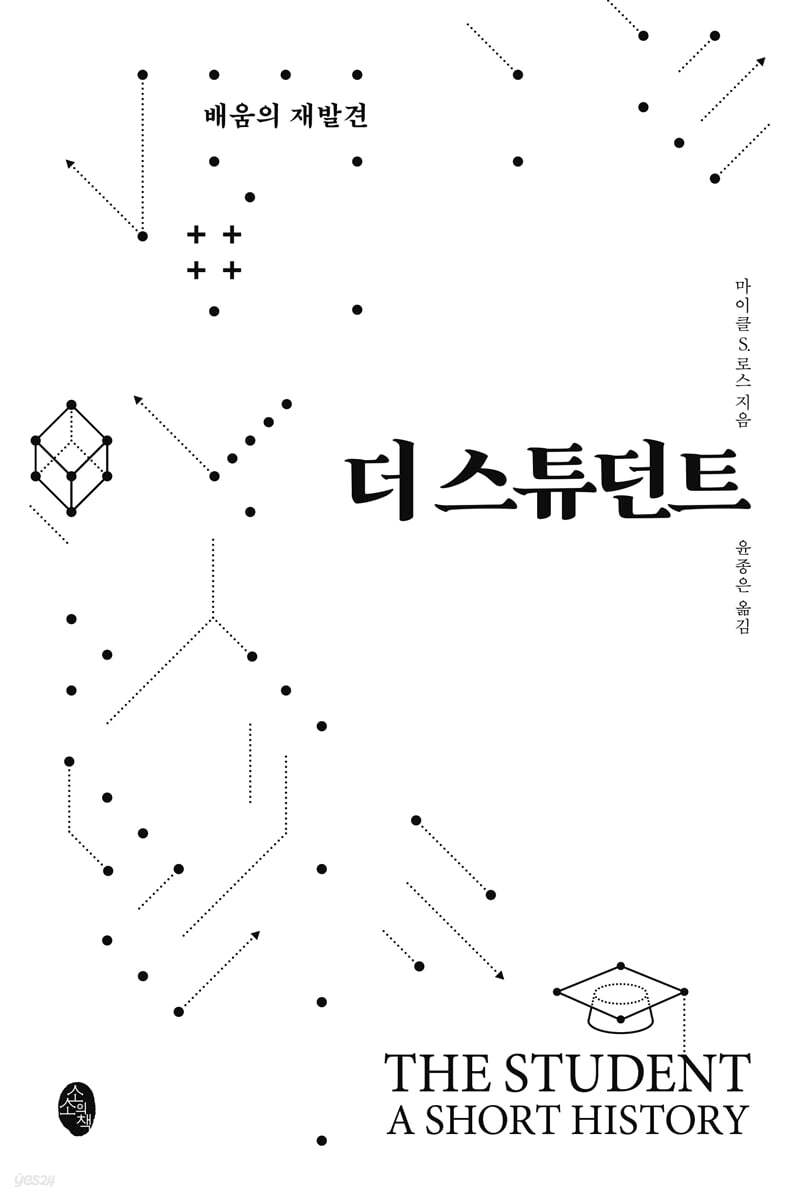
The Student
 |
Description
Book Introduction
What did students learn in history?
A comprehensive history of students written by the president of a prestigious university
From the moment we are born, people live their lives constantly learning.
The subject of learning is the ‘student.’
Yet, how much do we really know about students? And why do we need to learn? In this book, Michael Ross, a world-renowned educational innovator and historian, explores the evolution of learning models across diverse contexts, from the great teachers of ancient times—Confucius, Socrates, and Jesus—through the medieval apprenticeship system, the modern Enlightenment and the transformation of institutionalized schooling, and finally, the university campuses of the 20th and 21st centuries.
Through learning with him, you develop the ability to think for yourself, grow into an independent being, and gain insight into the path to true freedom.
What is a student, what does it mean to be a student, and how that identity reflects the values of our society will soon bring about a new shift in perception for all of us.
A comprehensive history of students written by the president of a prestigious university
From the moment we are born, people live their lives constantly learning.
The subject of learning is the ‘student.’
Yet, how much do we really know about students? And why do we need to learn? In this book, Michael Ross, a world-renowned educational innovator and historian, explores the evolution of learning models across diverse contexts, from the great teachers of ancient times—Confucius, Socrates, and Jesus—through the medieval apprenticeship system, the modern Enlightenment and the transformation of institutionalized schooling, and finally, the university campuses of the 20th and 21st centuries.
Through learning with him, you develop the ability to think for yourself, grow into an independent being, and gain insight into the path to true freedom.
What is a student, what does it mean to be a student, and how that identity reflects the values of our society will soon bring about a new shift in perception for all of us.
- You can preview some of the book's contents.
Preview
index
Admitting ignorance and ignorance
EnteringㆍLearning how to live freely
1. Teachers - Confucius, Socrates, Jesus
Leaving a turbulent homeland
Harmony and Difference
Admit your ignorance
Follow me
2│Learning before the modern era
Teach them how to survive on their own
Apprenticeship in the Middle Ages
Rousseau and Franklin
Teachings for religious life
The identity of the early university
People who achieved freedom through learning
3│The Emergence of the Modern Student
Changes in school education
Being a student
The role of universities
Autonomy or Control
4│University students
Beyond vocational training for economic independence
Opportunities for higher education for women too!
Different types of students
Student culture against prejudice and discrimination
Call for social change
5│Learn without stopping and think for yourself.
To develop the ability to think for yourself
Criticism of higher education
Who is a good student?
Meritocracy and the deepening of inequality
learners, not students
Using Critical Emotions and the Teacher's Role
Which university to choose
Translator's Note
main
Search
EnteringㆍLearning how to live freely
1. Teachers - Confucius, Socrates, Jesus
Leaving a turbulent homeland
Harmony and Difference
Admit your ignorance
Follow me
2│Learning before the modern era
Teach them how to survive on their own
Apprenticeship in the Middle Ages
Rousseau and Franklin
Teachings for religious life
The identity of the early university
People who achieved freedom through learning
3│The Emergence of the Modern Student
Changes in school education
Being a student
The role of universities
Autonomy or Control
4│University students
Beyond vocational training for economic independence
Opportunities for higher education for women too!
Different types of students
Student culture against prejudice and discrimination
Call for social change
5│Learn without stopping and think for yourself.
To develop the ability to think for yourself
Criticism of higher education
Who is a good student?
Meritocracy and the deepening of inequality
learners, not students
Using Critical Emotions and the Teacher's Role
Which university to choose
Translator's Note
main
Search
Detailed image

Into the book
Students were often seen as followers, interlocutors, friends, religious disciples, or beneficiaries, images that aligned with models of learning and learners from core educational traditions.
The first group of students we will examine are those who followed Confucius on his wanderings, learning from him the principles of propriety, righteousness, and how to live a good life in turbulent times.
The second group were Socrates' interlocutors, who adopted from him the method of questioning, which has had a profound influence on the history of philosophy and critical thinking.
The third group is Jesus' apostles.
They accepted Jesus as their teacher and demonstrated their commitment to his teachings by committing themselves to following the path he set forth.
The elements that make up these three student models have recurred throughout Western history and remain relevant in modern and contemporary debates about human freedom.
--- From "1 Teacher - Confucius, Socrates, Jesus"
Apprenticeship training usually involved negotiations and detailed contracts.
At the time, disputes between the parties after signing a contract often resulted in government intervention. Looking at the official records of these disputes, we can see how apprenticeship training was conducted.
Young people who received apprenticeship training worked under the assumption that they would learn a skill from a professional.
The contract detailed how much work the apprentice was expected to do and how much responsibility the master's family had to take for the well-being of the apprentice who became a member of the household.
What happens if the apprentice becomes ill or injured? How will they ensure adequate accommodations? Contracts typically include these details.
--- From "Learning Before the 2nd Modern Era"
Of course, the freedom that students think of does not end with the freedom to choose classes.
American college students have fiercely resisted attempts to control their behavior.
At the University of Virginia, students taunted and physically harassed professors they didn't like, and the "insubordination" of drunken students was a headache for those responsible for maintaining the campus' prestige.
Unlike in Germany, American university administrators and professors felt they had a responsibility to manage students' non-academic lives.
While upper-class American students studying at German universities could easily meet middle-class young people there, most college students in 19th-century America came from wealthy families.
So they were not just listening to the orders of their teachers.
At the University of Virginia, armed students occasionally took over the campus.
They were more interested in the freedom to carry weapons, drink alcohol, and form secret societies than in the freedom to choose their classes.
Hart noted that while students at the University of Göttingen were entering the adult world of freedom of inquiry, many students at American universities wanted the freedom to do as they pleased without adult interference.
--- From "3 The Emergence of Modern Students"
While some schools may have had only a few students protest, by the late 1960s, students at more than 350 colleges and universities across the United States were on strike.
The resistance movement they waged was in line with the global trend of rejecting the current system.
In 1968, street protests against government officials and established political parties took place in cities around the world, including Berlin, London, and Paris.
A wall in Paris's Latin Quarter has been inscribed with the radical phrase "All power to imagination!"
Students who took to the streets wanted to create a festival that explored alternative ways of life.
In contrast, the Vietnam War, which ended in disastrous failure, was an event that symbolized the cold and ugly rigidity of a capitalist society that had boasted of being open to innovation and creativity.
Kant's hope that students, who were clamoring to acknowledge the diverse ways in which they felt and to pursue the complete liberation of the mind, could slowly learn to think for themselves through education without upsetting the existing hierarchical order, seemed naive.
However, the student protesters also naively underestimated the will of the establishment to suppress protests that threatened social order.
--- From "Students from 4 Universities"
In a meritocratic world, students are constantly competing with other students to determine the true winner.
Thus, learning becomes a competition to become the best in any field.
This has nothing to do with the learning that Confucius, Socrates, and Jesus thought of.
Although there was clearly a sense of competition among students at the time, the students who followed the three did not learn in the midst of fierce competition.
In contrast, today's students are constantly taught to compare themselves to their peers and evaluate their standing.
As mentioned earlier, this is precisely why Rousseau emphasized that Emile should keep separate from other students.
When you're around other people, you can get so caught up in how they act and what they think of you that you miss out on learning about your own strengths.
But now we don't care at all about the problems Rousseau worried about.
The first group of students we will examine are those who followed Confucius on his wanderings, learning from him the principles of propriety, righteousness, and how to live a good life in turbulent times.
The second group were Socrates' interlocutors, who adopted from him the method of questioning, which has had a profound influence on the history of philosophy and critical thinking.
The third group is Jesus' apostles.
They accepted Jesus as their teacher and demonstrated their commitment to his teachings by committing themselves to following the path he set forth.
The elements that make up these three student models have recurred throughout Western history and remain relevant in modern and contemporary debates about human freedom.
--- From "1 Teacher - Confucius, Socrates, Jesus"
Apprenticeship training usually involved negotiations and detailed contracts.
At the time, disputes between the parties after signing a contract often resulted in government intervention. Looking at the official records of these disputes, we can see how apprenticeship training was conducted.
Young people who received apprenticeship training worked under the assumption that they would learn a skill from a professional.
The contract detailed how much work the apprentice was expected to do and how much responsibility the master's family had to take for the well-being of the apprentice who became a member of the household.
What happens if the apprentice becomes ill or injured? How will they ensure adequate accommodations? Contracts typically include these details.
--- From "Learning Before the 2nd Modern Era"
Of course, the freedom that students think of does not end with the freedom to choose classes.
American college students have fiercely resisted attempts to control their behavior.
At the University of Virginia, students taunted and physically harassed professors they didn't like, and the "insubordination" of drunken students was a headache for those responsible for maintaining the campus' prestige.
Unlike in Germany, American university administrators and professors felt they had a responsibility to manage students' non-academic lives.
While upper-class American students studying at German universities could easily meet middle-class young people there, most college students in 19th-century America came from wealthy families.
So they were not just listening to the orders of their teachers.
At the University of Virginia, armed students occasionally took over the campus.
They were more interested in the freedom to carry weapons, drink alcohol, and form secret societies than in the freedom to choose their classes.
Hart noted that while students at the University of Göttingen were entering the adult world of freedom of inquiry, many students at American universities wanted the freedom to do as they pleased without adult interference.
--- From "3 The Emergence of Modern Students"
While some schools may have had only a few students protest, by the late 1960s, students at more than 350 colleges and universities across the United States were on strike.
The resistance movement they waged was in line with the global trend of rejecting the current system.
In 1968, street protests against government officials and established political parties took place in cities around the world, including Berlin, London, and Paris.
A wall in Paris's Latin Quarter has been inscribed with the radical phrase "All power to imagination!"
Students who took to the streets wanted to create a festival that explored alternative ways of life.
In contrast, the Vietnam War, which ended in disastrous failure, was an event that symbolized the cold and ugly rigidity of a capitalist society that had boasted of being open to innovation and creativity.
Kant's hope that students, who were clamoring to acknowledge the diverse ways in which they felt and to pursue the complete liberation of the mind, could slowly learn to think for themselves through education without upsetting the existing hierarchical order, seemed naive.
However, the student protesters also naively underestimated the will of the establishment to suppress protests that threatened social order.
--- From "Students from 4 Universities"
In a meritocratic world, students are constantly competing with other students to determine the true winner.
Thus, learning becomes a competition to become the best in any field.
This has nothing to do with the learning that Confucius, Socrates, and Jesus thought of.
Although there was clearly a sense of competition among students at the time, the students who followed the three did not learn in the midst of fierce competition.
In contrast, today's students are constantly taught to compare themselves to their peers and evaluate their standing.
As mentioned earlier, this is precisely why Rousseau emphasized that Emile should keep separate from other students.
When you're around other people, you can get so caught up in how they act and what they think of you that you miss out on learning about your own strengths.
But now we don't care at all about the problems Rousseau worried about.
--- From “5. Learn without stopping and think for yourself”
Publisher's Review
In a world obsessed with academic competition and material success, we delve into the essence of student life!
Deep insight into the true meaning of students and learning
What do we envision and consider the ideal student to be? Recently, there has been growing criticism of our society's distorted educational practices, which force children as young as four or five to take exams with middle and high school-level questions in order to secure admission to prestigious academies.
Moreover, the criticism that college students are too critical and narrow-minded or that they are only focused on finding a job for economic success is not a new issue.
If so, wouldn't we need serious reflection and introspection on what students are and what learning is? Of course, generalizing students can be a dangerous approach.
Because people are born with different talents and temperaments.
Some children have a rich artistic sensibility, while others have an active personality.
While some students strive for balance and harmony by adapting to their educational environment, others develop their intellectual muscles by critiquing every detail of their teachers' teachings.
Nevertheless, the history of students covered in this book provides a broad perspective on various issues surrounding students and learning.
This book examines the concerns of Michael Ross, president of a prestigious American university, who observed the learning styles of actual students for a long time and explored how to foster a sense of purpose and agency through learning from others.
The starting point of this book is the educational models of Confucius, Socrates, and Jesus, who are revered as great teachers of ancient times.
It is deeply rooted in educational traditions that have a significant impact to this day.
Confucius idealized the figure of a gentleman who is faithful to learning, thinks independently, and knows how to criticize while acknowledging differences. Socrates said that true learning begins only when one acknowledges one's ignorance. Jesus said that a student as a religious disciple is someone who willingly accepts the teachings of their teacher and is ready to be reborn.
In medieval Europe, where educational institutions were just beginning to develop, in addition to home education, there was apprenticeship training to acquire specific skills and become independent. Examples include the stories of Jean-Jacques Rousseau and Benjamin Franklin.
In addition, there were students who attended schools established by religious or administrative authorities, and from the 12th century onwards, early universities were established one after another. The function of universities at that time was not to create new knowledge, but to spread the truth that supported religion and society.
In pre-modern Western societies, students developed their abilities with the clear goal of independence.
The independence they pursued was fundamentally an economic issue, but it was also inextricably linked to the culture of society as a whole.
Students were expected to go beyond simply repeating prayers or acquiring skills; they were expected to think about how to become self-reliant and connect with others.
Since the modern era, the connection between education and freedom has been increasingly emphasized.
Critical thought gained popularity, centering on Kant's Enlightenment, and the role of school education, including universities, changed.
Along with this, several controversies surrounding the student were sparked by thinkers.
Du Bois, the African-American civil rights activist, illustrates what it meant to be successful as a student across a variety of educational environments.
It also provides a valuable insight into how students' lives and culture have changed over time, examining issues such as gender discrimination, diverse student types, and the voices calling for social change.
Learning to think for yourself by using the tools and practices you've learned from others is the foundation of free thinking.
Nevertheless, students gradually became indifferent to politics as they built their foundation through repetitive training and college students sought refuge in the private sphere to alleviate economic anxiety.
Is competing with other students to get into a prestigious university or a good job truly the path to becoming a "good student"? In an environment of growing criticism of higher education and increasing meritocracy and inequality, how can students cultivate freedom and independent thinking? The author's suggestions on introducing a new concept of the learner, the role of teachers, and criteria for selecting the right university for each individual are also worth listening to.
This book is rich in history surrounding the existence of students, a subject we have often overlooked or overlooked, as well as case studies of individuals from each period and the arguments of various thinkers.
Students who learn to think for themselves and live freely are the embodiment of all of us who have passed the stage of growth and are living throughout our lives.
Yet, haven't we been oppressed and manipulated by various oppressions and coercions, preventing us from living the lives of true students? This book should prompt us to reflect and awaken.
What have students been like throughout human history?
From the classic priest-scholar relationship of ancient times to modern machine learning.
There are many ways to become a student, but the key is to develop the ability to think for yourself by learning from others.
A student is someone who learns how to become more free.
This book summarizes a long history, exploring the major forms of learning that have developed in a wide variety of contexts from the 6th century BC to the present day.
It begins with a general overview of the early history, then delves into more detail as we move into the 18th-century Enlightenment, when ideals of freedom and learning intertwined.
The latter part of the book focuses on American college students, a subject that has long been the subject of discussion and complaint.
This book traces the emergence of ideals about students and the natural emergence of complaints against those who fail to live up to those ideals. It also examines the ways in which students actually learn, exploring the challenges of how to foster purpose and agency through learning from others.
Chapter 1 first covers three types of students: followers, interlocutors, and religious disciples.
The first case we will look at is Confucius's students.
Confucius's students were adults who followed their teacher to learn.
For them, learning was primarily concerned with accumulating virtue and living harmoniously in relationships with others.
Here we focus on three different types of people who studied under Confucius and who can still be found in schools today.
Next, we look at the students of Socrates, an educator who had a huge influence on the West.
Socrates, known as the father of Western philosophy, gathered his audience through questions, but did not present doctrines for them to follow.
Socrates' students were interlocutors who engaged in conversation with their teacher, and aimed to lead a life of reflection.
The self-awareness they practiced later came to be regarded as an essential element of learning, in line with the modern view that learning is the path to freedom.
Finally, we look at the student as a religious disciple.
Jesus' disciples often referred to him as their teacher (or rabbi) and said that they were so deeply influenced by his teachings that they felt born again.
They also often said that they had never felt more free than when they walked with Jesus.
This ancient teacher-student relationship can be found in today's learning communities.
Respect and honor, core Confucian practices, are still valued virtues in schools, and the Socratic tradition and the religious piety of Jesus continue to shape the modern spirit of critical thinking.
As readers read Chapter 1, they may find themselves in the exemplary students of thousands of years ago.
Chapter 2 then examines what it meant to be a "person with much to learn" in pre-modern Europe.
Although there were few schools in Europe at the time, there was learning aimed at freedom as independence.
Of course, men and women received different education, and there was gender discrimination in formal educational systems such as apprenticeships.
During the Middle Ages, universities were established and literacy provided greater cultural and economic advantages, leading to an increase in the number of people receiving basic education.
But some people were completely out of touch with the learning world, unable to even acquire the education necessary for independence.
Chapter 3 develops the discussion focusing on the concept of enlightenment in the late 18th century.
The Enlightenment cultural movement was not the exclusive domain of students; it was a process in which many societies broke free from their reliance on tradition and sought to alleviate the suffering of the world by utilizing rational thinking.
Science and technology have become useful tools for more people, and they need school education.
As a result, the 18th century saw an increasing familiarity with the idea of the student, which was complicated by the various controversies surrounding the establishment of schools, along with the arguments of the American thinker Ralph Waldo Emerson.
Chapter 4 examines the transformations in higher education through the example of Du Bois, the Black American movement leader, and explores the various types of students who emerged on college campuses.
It also covers campus resistance movements against societal prejudice and discrimination, and the process by which the image of a student commonly thought of today was created following the student movements of the 1960s.
Chapter 5 addresses critiques of modern higher education for fostering meritocracy and inequality, while also revisiting the emergence of the concept of the learner as an autonomous individual who engages in self-directed inquiry and reflection.
And it advises on how the role of teachers in teaching students should change, which universities to choose, etc.
Deep insight into the true meaning of students and learning
What do we envision and consider the ideal student to be? Recently, there has been growing criticism of our society's distorted educational practices, which force children as young as four or five to take exams with middle and high school-level questions in order to secure admission to prestigious academies.
Moreover, the criticism that college students are too critical and narrow-minded or that they are only focused on finding a job for economic success is not a new issue.
If so, wouldn't we need serious reflection and introspection on what students are and what learning is? Of course, generalizing students can be a dangerous approach.
Because people are born with different talents and temperaments.
Some children have a rich artistic sensibility, while others have an active personality.
While some students strive for balance and harmony by adapting to their educational environment, others develop their intellectual muscles by critiquing every detail of their teachers' teachings.
Nevertheless, the history of students covered in this book provides a broad perspective on various issues surrounding students and learning.
This book examines the concerns of Michael Ross, president of a prestigious American university, who observed the learning styles of actual students for a long time and explored how to foster a sense of purpose and agency through learning from others.
The starting point of this book is the educational models of Confucius, Socrates, and Jesus, who are revered as great teachers of ancient times.
It is deeply rooted in educational traditions that have a significant impact to this day.
Confucius idealized the figure of a gentleman who is faithful to learning, thinks independently, and knows how to criticize while acknowledging differences. Socrates said that true learning begins only when one acknowledges one's ignorance. Jesus said that a student as a religious disciple is someone who willingly accepts the teachings of their teacher and is ready to be reborn.
In medieval Europe, where educational institutions were just beginning to develop, in addition to home education, there was apprenticeship training to acquire specific skills and become independent. Examples include the stories of Jean-Jacques Rousseau and Benjamin Franklin.
In addition, there were students who attended schools established by religious or administrative authorities, and from the 12th century onwards, early universities were established one after another. The function of universities at that time was not to create new knowledge, but to spread the truth that supported religion and society.
In pre-modern Western societies, students developed their abilities with the clear goal of independence.
The independence they pursued was fundamentally an economic issue, but it was also inextricably linked to the culture of society as a whole.
Students were expected to go beyond simply repeating prayers or acquiring skills; they were expected to think about how to become self-reliant and connect with others.
Since the modern era, the connection between education and freedom has been increasingly emphasized.
Critical thought gained popularity, centering on Kant's Enlightenment, and the role of school education, including universities, changed.
Along with this, several controversies surrounding the student were sparked by thinkers.
Du Bois, the African-American civil rights activist, illustrates what it meant to be successful as a student across a variety of educational environments.
It also provides a valuable insight into how students' lives and culture have changed over time, examining issues such as gender discrimination, diverse student types, and the voices calling for social change.
Learning to think for yourself by using the tools and practices you've learned from others is the foundation of free thinking.
Nevertheless, students gradually became indifferent to politics as they built their foundation through repetitive training and college students sought refuge in the private sphere to alleviate economic anxiety.
Is competing with other students to get into a prestigious university or a good job truly the path to becoming a "good student"? In an environment of growing criticism of higher education and increasing meritocracy and inequality, how can students cultivate freedom and independent thinking? The author's suggestions on introducing a new concept of the learner, the role of teachers, and criteria for selecting the right university for each individual are also worth listening to.
This book is rich in history surrounding the existence of students, a subject we have often overlooked or overlooked, as well as case studies of individuals from each period and the arguments of various thinkers.
Students who learn to think for themselves and live freely are the embodiment of all of us who have passed the stage of growth and are living throughout our lives.
Yet, haven't we been oppressed and manipulated by various oppressions and coercions, preventing us from living the lives of true students? This book should prompt us to reflect and awaken.
What have students been like throughout human history?
From the classic priest-scholar relationship of ancient times to modern machine learning.
There are many ways to become a student, but the key is to develop the ability to think for yourself by learning from others.
A student is someone who learns how to become more free.
This book summarizes a long history, exploring the major forms of learning that have developed in a wide variety of contexts from the 6th century BC to the present day.
It begins with a general overview of the early history, then delves into more detail as we move into the 18th-century Enlightenment, when ideals of freedom and learning intertwined.
The latter part of the book focuses on American college students, a subject that has long been the subject of discussion and complaint.
This book traces the emergence of ideals about students and the natural emergence of complaints against those who fail to live up to those ideals. It also examines the ways in which students actually learn, exploring the challenges of how to foster purpose and agency through learning from others.
Chapter 1 first covers three types of students: followers, interlocutors, and religious disciples.
The first case we will look at is Confucius's students.
Confucius's students were adults who followed their teacher to learn.
For them, learning was primarily concerned with accumulating virtue and living harmoniously in relationships with others.
Here we focus on three different types of people who studied under Confucius and who can still be found in schools today.
Next, we look at the students of Socrates, an educator who had a huge influence on the West.
Socrates, known as the father of Western philosophy, gathered his audience through questions, but did not present doctrines for them to follow.
Socrates' students were interlocutors who engaged in conversation with their teacher, and aimed to lead a life of reflection.
The self-awareness they practiced later came to be regarded as an essential element of learning, in line with the modern view that learning is the path to freedom.
Finally, we look at the student as a religious disciple.
Jesus' disciples often referred to him as their teacher (or rabbi) and said that they were so deeply influenced by his teachings that they felt born again.
They also often said that they had never felt more free than when they walked with Jesus.
This ancient teacher-student relationship can be found in today's learning communities.
Respect and honor, core Confucian practices, are still valued virtues in schools, and the Socratic tradition and the religious piety of Jesus continue to shape the modern spirit of critical thinking.
As readers read Chapter 1, they may find themselves in the exemplary students of thousands of years ago.
Chapter 2 then examines what it meant to be a "person with much to learn" in pre-modern Europe.
Although there were few schools in Europe at the time, there was learning aimed at freedom as independence.
Of course, men and women received different education, and there was gender discrimination in formal educational systems such as apprenticeships.
During the Middle Ages, universities were established and literacy provided greater cultural and economic advantages, leading to an increase in the number of people receiving basic education.
But some people were completely out of touch with the learning world, unable to even acquire the education necessary for independence.
Chapter 3 develops the discussion focusing on the concept of enlightenment in the late 18th century.
The Enlightenment cultural movement was not the exclusive domain of students; it was a process in which many societies broke free from their reliance on tradition and sought to alleviate the suffering of the world by utilizing rational thinking.
Science and technology have become useful tools for more people, and they need school education.
As a result, the 18th century saw an increasing familiarity with the idea of the student, which was complicated by the various controversies surrounding the establishment of schools, along with the arguments of the American thinker Ralph Waldo Emerson.
Chapter 4 examines the transformations in higher education through the example of Du Bois, the Black American movement leader, and explores the various types of students who emerged on college campuses.
It also covers campus resistance movements against societal prejudice and discrimination, and the process by which the image of a student commonly thought of today was created following the student movements of the 1960s.
Chapter 5 addresses critiques of modern higher education for fostering meritocracy and inequality, while also revisiting the emergence of the concept of the learner as an autonomous individual who engages in self-directed inquiry and reflection.
And it advises on how the role of teachers in teaching students should change, which universities to choose, etc.
GOODS SPECIFICS
- Date of issue: November 13, 2025
- Format: Hardcover book binding method guide
- Page count, weight, size: 260 pages | 450g | 148*225*20mm
- ISBN13: 9791171650309
- ISBN10: 1171650302
You may also like
카테고리
korean


korean

![GQ KOREA Mark (Monthly): December [2025]](http://librairie.coreenne.fr/cdn/shop/files/8ef265dbbfbf186523ed75ba7319009d.jpg?v=1765340328&width=3840)


