

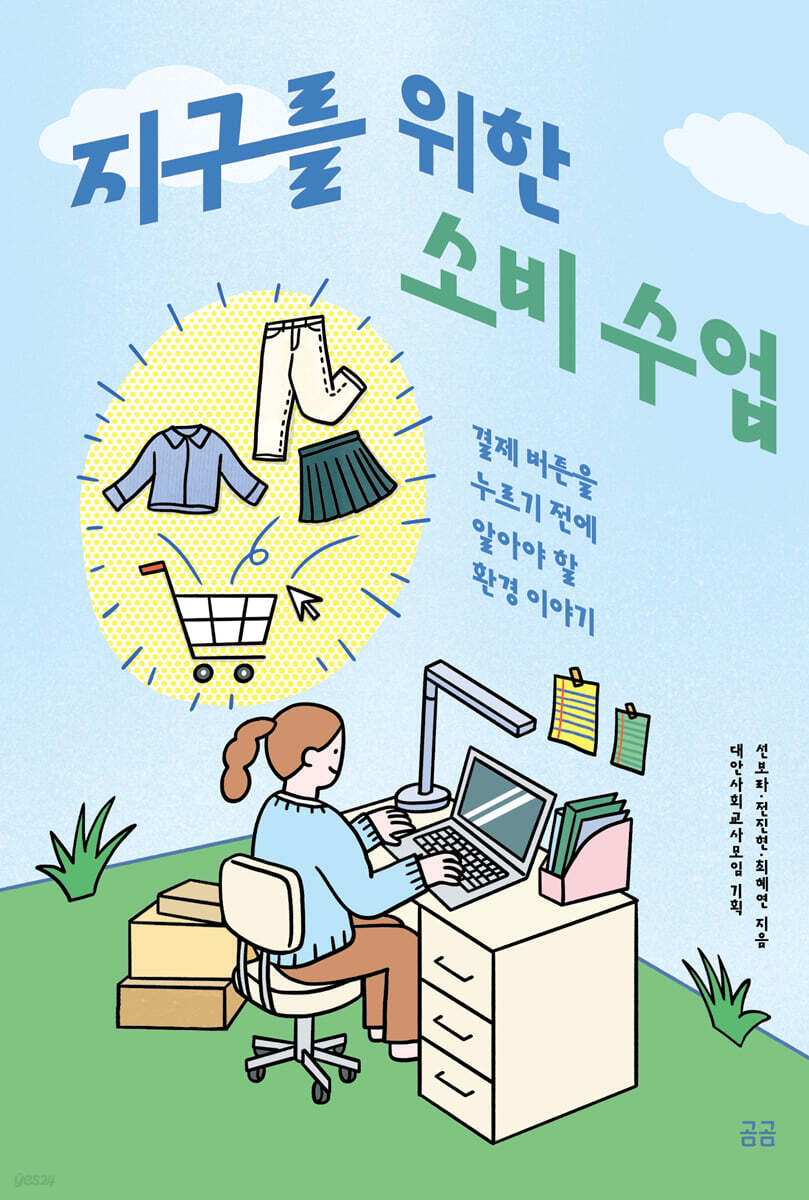
Consumption Class for the Earth
 |
Description
Book Introduction
Didn't you add the climate crisis to your shopping cart today?
- A social studies teacher tells stories about consumption and the environment at a level suitable for young people.
We consume everything we need every day, from items like smartphones, cosmetics, and jeans to social infrastructure like electricity and roads.
However, most of them are consumed in a way that produces a lot of waste, using them only for a short time and then throwing them away, like takeout items.
It is clear that the Earth can no longer sustain the current lifestyle of mass production, mass consumption, and mass disposal.
However, it is not possible to immediately stop all production and consumption, which are the activities that support modern society.
What should we do? Is it possible to consume without harming the environment?
"Consumption Lessons for the Earth" is a book written by a social studies teacher and tailored to the needs of young people. Starting from familiar scenes from everyday life, it examines the environmental problems posed by consumer goods in our daily lives and their solutions, using specific data.
The authors, who have taught environmental classes in schools for many years, not only provide friendly guidance that is easy for young readers to understand, but also structure the book so that it is easy for readers to use.
The day in the life of middle school student Jiwoo, presented at the beginning of each chapter, naturally invites me to reflect on my own life.
Jiwoo is not particularly interested in or indifferent to the environment.
It's an ordinary life of a normal teenager, with the guilt and curiosity that anyone would have.
Because of this, it is easy to empathize and reflect on my life by putting it into Jiwoo's day.
Let's explore with Jiwoo how we can go beyond satisfying personal desires and consume in a way that benefits ourselves and those around us. Let's explore how we can consume responsibly and ethically as "consumers" and "inhabitants" of the Earth.
- A social studies teacher tells stories about consumption and the environment at a level suitable for young people.
We consume everything we need every day, from items like smartphones, cosmetics, and jeans to social infrastructure like electricity and roads.
However, most of them are consumed in a way that produces a lot of waste, using them only for a short time and then throwing them away, like takeout items.
It is clear that the Earth can no longer sustain the current lifestyle of mass production, mass consumption, and mass disposal.
However, it is not possible to immediately stop all production and consumption, which are the activities that support modern society.
What should we do? Is it possible to consume without harming the environment?
"Consumption Lessons for the Earth" is a book written by a social studies teacher and tailored to the needs of young people. Starting from familiar scenes from everyday life, it examines the environmental problems posed by consumer goods in our daily lives and their solutions, using specific data.
The authors, who have taught environmental classes in schools for many years, not only provide friendly guidance that is easy for young readers to understand, but also structure the book so that it is easy for readers to use.
The day in the life of middle school student Jiwoo, presented at the beginning of each chapter, naturally invites me to reflect on my own life.
Jiwoo is not particularly interested in or indifferent to the environment.
It's an ordinary life of a normal teenager, with the guilt and curiosity that anyone would have.
Because of this, it is easy to empathize and reflect on my life by putting it into Jiwoo's day.
Let's explore with Jiwoo how we can go beyond satisfying personal desires and consume in a way that benefits ourselves and those around us. Let's explore how we can consume responsibly and ethically as "consumers" and "inhabitants" of the Earth.
- You can preview some of the book's contents.
Preview
index
Preface: Consumption for a Sustainable Planet
Chapter 1.
Smartphones: The Truth Behind Their Glowing Screens
1.
I want to change my smartphone!
2.
Where does my discarded electronic waste go?
3.
A war broke out because of smartphones?
4.
Guarantee the right to use electronic devices for a long time!
Chapter 2.
In search of cosmetics that are good for my skin and the planet
1.
Will my skin get better the more cosmetics I use?
2.
I'm curious about the ingredients in cosmetics!
3.
What if the sunscreen I'm using is killing coral?
4.
Cosmetics containing microplastics
Chapter 3.
It's time to unplug from fossil fuels.
1.
The end of the fossil fuel era
2.
Renewable energy for sustainable living
3.
Is nuclear energy environmentally friendly?
4.
How to reduce energy consumption in your daily life
Chapter 4.
Avocado sandwiches are drying out the planet?
1.
How was the food on my table produced?
2.
Foreign food comes from fossil fuels.
3.
How many miles did I have to accumulate before the food arrived?
4.
Overflowing food, overflowing food waste
5.
Let's take a look at discarded food too!
Chapter 5.
Plastic: From a headache to a new resource
1.
The Plastic Revenge
2.
Where should all that plastic go?
3.
Plastic: If you can't throw it away, recycle it.
4.
How can we recycle more?
5.
Beyond downcycling
Chapter 6.
When cars stop, the Earth breathes.
1.
Changes brought about by automobiles
2.
The transportation I choose changes the temperature of the planet.
3.
Are electric cars eco-friendly?
4.
What mode of transportation emits the most greenhouse gases?
Chapter 7.
The shadow that flashy fashion leaves on the earth
1.
Fast fashion, faster and faster
2.
There is no such thing as easy-made clothes.
3.
Where do the clothes I throw away go?
4.
Slow fashion that cares about the environment
Chapter 8.
While the delivery boxes are traveling across the country
1.
The Giving Tree
2.
Korea is a society that consumes too much paper
3.
The Hidden Helper of Waste Paper Recycling That No One Knew About
4.
The right way to use the forest
main
Image source
Chapter 1.
Smartphones: The Truth Behind Their Glowing Screens
1.
I want to change my smartphone!
2.
Where does my discarded electronic waste go?
3.
A war broke out because of smartphones?
4.
Guarantee the right to use electronic devices for a long time!
Chapter 2.
In search of cosmetics that are good for my skin and the planet
1.
Will my skin get better the more cosmetics I use?
2.
I'm curious about the ingredients in cosmetics!
3.
What if the sunscreen I'm using is killing coral?
4.
Cosmetics containing microplastics
Chapter 3.
It's time to unplug from fossil fuels.
1.
The end of the fossil fuel era
2.
Renewable energy for sustainable living
3.
Is nuclear energy environmentally friendly?
4.
How to reduce energy consumption in your daily life
Chapter 4.
Avocado sandwiches are drying out the planet?
1.
How was the food on my table produced?
2.
Foreign food comes from fossil fuels.
3.
How many miles did I have to accumulate before the food arrived?
4.
Overflowing food, overflowing food waste
5.
Let's take a look at discarded food too!
Chapter 5.
Plastic: From a headache to a new resource
1.
The Plastic Revenge
2.
Where should all that plastic go?
3.
Plastic: If you can't throw it away, recycle it.
4.
How can we recycle more?
5.
Beyond downcycling
Chapter 6.
When cars stop, the Earth breathes.
1.
Changes brought about by automobiles
2.
The transportation I choose changes the temperature of the planet.
3.
Are electric cars eco-friendly?
4.
What mode of transportation emits the most greenhouse gases?
Chapter 7.
The shadow that flashy fashion leaves on the earth
1.
Fast fashion, faster and faster
2.
There is no such thing as easy-made clothes.
3.
Where do the clothes I throw away go?
4.
Slow fashion that cares about the environment
Chapter 8.
While the delivery boxes are traveling across the country
1.
The Giving Tree
2.
Korea is a society that consumes too much paper
3.
The Hidden Helper of Waste Paper Recycling That No One Knew About
4.
The right way to use the forest
main
Image source
Detailed image

Into the book
Since the late 20th century, the waters of the rivers leading to the Aral Sea have been diverted to grow crops such as cotton, reducing the area of the Aral Sea to about one-tenth of its former size.
As the lake shrank, many creatures living there became extinct, and the people living in villages around the lake had to give up fishing, which was their livelihood.
Additionally, fertilizers and pesticides that flowed into the lake further polluted it, and the salt and sand dust mixed with the desert-like lakebed threatened the health of residents.
---From "There is no such thing as easy-made clothes"
The World Wildlife Fund (WWF) stated in a 2021 report that 40% of the food produced worldwide each year is wasted before it is even eaten.
It is estimated that greenhouse gases from discarded food waste account for approximately 8% of global greenhouse gas emissions.
The amount of food waste in our country is increasing every year, and that means more carbon emissions.
How can we prevent edible food from going to waste? The most important thing is to buy only what you need and consume everything without leaving any behind.
---From "Overflowing Food, Overflowing Food Waste"
Recently in the United States, the number of consumers asserting their 'right to repair and use' is increasing.
To meet their needs, smartphone manufacturers have opened up how they can supply official parts and repairs to consumers.
Samsung Electronics has also begun selling parts, repair manuals, and tools to American consumers for some models.
(…) If repair costs were lower, wouldn’t people use their smartphones longer?
---From "Guarantee the right to use electronic devices for a long time!"
Until now, mankind has lived by mining resources, making things, consuming them, and then throwing them away.
This flow of ‘production-consumption-disposal’ is called a linear economy.
However, the linear economy, which continues to use the Earth's resources and discard them into nature, has now reached its limits.
Not only are our resources depleted, but the Earth is also losing its ability to purify itself.
A new concept proposed to overcome these problems of the linear economy is the circular economy.
A circular economy is a system that minimizes the amount of natural resources input into the economy and the amount of waste thrown out of the economy by repeatedly using resources instead of discarding them.
As the lake shrank, many creatures living there became extinct, and the people living in villages around the lake had to give up fishing, which was their livelihood.
Additionally, fertilizers and pesticides that flowed into the lake further polluted it, and the salt and sand dust mixed with the desert-like lakebed threatened the health of residents.
---From "There is no such thing as easy-made clothes"
The World Wildlife Fund (WWF) stated in a 2021 report that 40% of the food produced worldwide each year is wasted before it is even eaten.
It is estimated that greenhouse gases from discarded food waste account for approximately 8% of global greenhouse gas emissions.
The amount of food waste in our country is increasing every year, and that means more carbon emissions.
How can we prevent edible food from going to waste? The most important thing is to buy only what you need and consume everything without leaving any behind.
---From "Overflowing Food, Overflowing Food Waste"
Recently in the United States, the number of consumers asserting their 'right to repair and use' is increasing.
To meet their needs, smartphone manufacturers have opened up how they can supply official parts and repairs to consumers.
Samsung Electronics has also begun selling parts, repair manuals, and tools to American consumers for some models.
(…) If repair costs were lower, wouldn’t people use their smartphones longer?
---From "Guarantee the right to use electronic devices for a long time!"
Until now, mankind has lived by mining resources, making things, consuming them, and then throwing them away.
This flow of ‘production-consumption-disposal’ is called a linear economy.
However, the linear economy, which continues to use the Earth's resources and discard them into nature, has now reached its limits.
Not only are our resources depleted, but the Earth is also losing its ability to purify itself.
A new concept proposed to overcome these problems of the linear economy is the circular economy.
A circular economy is a system that minimizes the amount of natural resources input into the economy and the amount of waste thrown out of the economy by repeatedly using resources instead of discarding them.
---From "Beyond Downcycling"
Publisher's Review
1.
Didn't you add the climate crisis to your shopping cart today?
- A social studies teacher tells stories about consumption and the environment at a level suitable for young people.
We consume everything we need every day, from items like smartphones, cosmetics, and jeans to social infrastructure like electricity and roads.
However, most of them are consumed in a way that produces a lot of waste, using them only for a short time and then throwing them away, like takeout items.
It is clear that the Earth can no longer sustain the current lifestyle of mass production, mass consumption, and mass disposal.
However, it is not possible to immediately stop all production and consumption, which are the activities that support modern society.
What should we do? Is it possible to consume without harming the environment?
"Consumption Lessons for the Earth" is a book written by a social studies teacher at a level suitable for teenagers. Starting from familiar scenes from everyday life, it examines the environmental problems posed by consumer goods in our daily lives and the alternatives, using specific data.
The authors, who have taught environmental classes in schools for many years, not only provide friendly guidance that is easy for young readers to understand, but also structure the book so that it is easy for readers to use.
The day in the life of middle school student Jiwoo, presented at the beginning of each chapter, naturally invites me to reflect on my own life.
Jiwoo is not particularly interested in or indifferent to the environment.
It's an ordinary life of a normal teenager, with the guilt and curiosity that anyone would have.
Because of this, it is easy to empathize and reflect on my life by putting it into Jiwoo's day.
Let's explore with Jiwoo how we can go beyond satisfying personal desires and consume in a way that benefits ourselves and those around us. Let's explore how we can consume responsibly and ethically as "consumers" and "inhabitants" of the Earth.
2.
Environmental common sense you need to know for sustainable consumption and living
- Carbon neutrality, ESG, the Basel Accord, green taxonomy… A friendly introduction to key environmental issues.
Each chapter of "Consumption Lessons for the Earth" begins with everyday objects such as smartphones, cosmetics, plastic products, T-shirts, and delivery boxes.
It vividly guides you through specific examples, statistics, and visuals to see what traces objects leave on the Earth before they reach us or after they leave our hands.
We can look back on our consumption and lifestyle from a global perspective, such as the reality of wars being waged because of smartphones and the Aral Sea drying up due to the fashion industry.
Additionally, we have compiled essential current affairs terms that are essential for understanding environmental news, such as carbon neutrality, ESG, and green taxonomy, to enhance understanding and literacy of environmental issues.
Chapters 1 and 2 cover smartphones and cosmetics.
Every year, 1.4 billion new smartphones are released worldwide, generating a staggering amount of electronic waste.
Moreover, the process of mining rare earth elements needed for smartphone production is causing wars and destroying gorilla habitats.
Accordingly, voices demanding the 'right to repair' are emerging, mainly in the United States and Europe.
In a society where 'throw away and buy a new one' is common, the demand for electronic devices to last longer makes us think about what values are needed today.
Meanwhile, cosmetics have a huge impact on the marine ecosystem.
Oxybenzone, commonly used in sunscreens, and microplastics used in color cosmetics are flowing into the ocean and harming marine life, including coral.
The book introduces ways to purchase and use cosmetics wisely while avoiding ingredients that are harmful to the environment.
Chapters 3 and 4 examine energy and food issues.
In two chapters, we are confronted with a very big problem of today: 'fossil fuels'.
Although the renewable energy industry is growing, fossil fuel dependence still exceeds 60%.
As imported food becomes more common, our carbon footprint is growing.
However, fossil fuels are soon depleted, and even before depletion, disasters caused by the climate crisis are upon us.
This book introduces alternative examples from home and abroad, such as zero-energy buildings, zero-energy villages, and food banks, and examines the direction of change.
In particular, the case of a middle school built with zero-energy technology serves as a model for the 'sustainable lifestyle' we will create.
Chapters 5 and 6 explore the issues of plastics and transportation.
The author introduces physical and chemical recycling of plastics and provides alternatives.
It remains to be seen whether chemical recycling can transform plastic into a new resource.
Meanwhile, regarding the transportation sector, we look back at how the cities we live in are centered around cars and provide clues to solving transportation problems, such as car-free zones, electric vehicles, and shared cars.
Chapters 7 and 8 take a closer look at the fashion sector and paper consumption.
For those of us accustomed to fast fashion, the traces the massive fashion industry leaves on the planet carry a heavy sense of responsibility.
The book introduces the values of slow fashion and several real-life examples, suggesting ideas for gradually moving away from fast fashion.
Meanwhile, with contactless/online shopping becoming the norm, paper consumption, represented by delivery boxes, is also an issue that must be considered.
This is especially true today, when forests, which are huge carbon sinks, play a very important role in the world of carbon neutrality.
We need to take small steps to protect our forests, such as reflecting on our excessive paper consumption habits, actively using recycled paper, and taking an interest in sustainable forest management.
For the forests and the Earth, the foundation of our lives, we must take a step toward change in our daily lives today.
3.
Now is the time to create a wish list for the planet!
- An eco-friendly living guide that helps you advance your thinking and reflection and promote change in your daily life.
At the end of each chapter, we provide 'Action for a Better Environment' and 'Think More' sections to encourage in-depth and active reading.
Suggestions for everyday practice, such as “Let’s try one vegetarian meal a day,” “Let’s find out about the types of local foods produced around me and where to buy them,” and “Let’s plan a weekly menu using low-carbon ingredients (local foods, meat substitutes, etc.),” drive reflection and change.
It also includes questions that encourage further consideration, such as, "What is the relationship between the rise in single-person households and the increase in plastic use?" and "What factors should be considered when designing plastic products to facilitate recycling?" It's also useful for reading and discussing together in educational settings.
Consumption today is not just about buying, using, and throwing away things; it is also an act of expressing the values one pursues and exercising influence.
Generation Z, in particular, is accustomed to expressing their values through consumption.
According to a 2022 survey conducted by the Korea Chamber of Commerce and Industry targeting the MZ generation, 64.5% of respondents said they would be willing to purchase products from companies that practice ESG management even if the price was higher.
This book explores the problems of consumption with Generation Z readers, as well as how to use the power of consumption correctly.
"Consumption Class for the Earth" recognizes that the problems of environmental pollution and the climate crisis are closely connected to our daily lives, and encourages us to reflect on the lives we have enjoyed so far.
To this end, I propose that we reexamine our behavior and change our lifestyle by focusing on the act of 'consumption'.
It may seem overwhelming, but change starts with resolving to use what you have longer, stopping to think before buying, and reflecting on and changing small, wasteful habits.
Let's start with my day, consuming in harmony with the Earth.
Didn't you add the climate crisis to your shopping cart today?
- A social studies teacher tells stories about consumption and the environment at a level suitable for young people.
We consume everything we need every day, from items like smartphones, cosmetics, and jeans to social infrastructure like electricity and roads.
However, most of them are consumed in a way that produces a lot of waste, using them only for a short time and then throwing them away, like takeout items.
It is clear that the Earth can no longer sustain the current lifestyle of mass production, mass consumption, and mass disposal.
However, it is not possible to immediately stop all production and consumption, which are the activities that support modern society.
What should we do? Is it possible to consume without harming the environment?
"Consumption Lessons for the Earth" is a book written by a social studies teacher at a level suitable for teenagers. Starting from familiar scenes from everyday life, it examines the environmental problems posed by consumer goods in our daily lives and the alternatives, using specific data.
The authors, who have taught environmental classes in schools for many years, not only provide friendly guidance that is easy for young readers to understand, but also structure the book so that it is easy for readers to use.
The day in the life of middle school student Jiwoo, presented at the beginning of each chapter, naturally invites me to reflect on my own life.
Jiwoo is not particularly interested in or indifferent to the environment.
It's an ordinary life of a normal teenager, with the guilt and curiosity that anyone would have.
Because of this, it is easy to empathize and reflect on my life by putting it into Jiwoo's day.
Let's explore with Jiwoo how we can go beyond satisfying personal desires and consume in a way that benefits ourselves and those around us. Let's explore how we can consume responsibly and ethically as "consumers" and "inhabitants" of the Earth.
2.
Environmental common sense you need to know for sustainable consumption and living
- Carbon neutrality, ESG, the Basel Accord, green taxonomy… A friendly introduction to key environmental issues.
Each chapter of "Consumption Lessons for the Earth" begins with everyday objects such as smartphones, cosmetics, plastic products, T-shirts, and delivery boxes.
It vividly guides you through specific examples, statistics, and visuals to see what traces objects leave on the Earth before they reach us or after they leave our hands.
We can look back on our consumption and lifestyle from a global perspective, such as the reality of wars being waged because of smartphones and the Aral Sea drying up due to the fashion industry.
Additionally, we have compiled essential current affairs terms that are essential for understanding environmental news, such as carbon neutrality, ESG, and green taxonomy, to enhance understanding and literacy of environmental issues.
Chapters 1 and 2 cover smartphones and cosmetics.
Every year, 1.4 billion new smartphones are released worldwide, generating a staggering amount of electronic waste.
Moreover, the process of mining rare earth elements needed for smartphone production is causing wars and destroying gorilla habitats.
Accordingly, voices demanding the 'right to repair' are emerging, mainly in the United States and Europe.
In a society where 'throw away and buy a new one' is common, the demand for electronic devices to last longer makes us think about what values are needed today.
Meanwhile, cosmetics have a huge impact on the marine ecosystem.
Oxybenzone, commonly used in sunscreens, and microplastics used in color cosmetics are flowing into the ocean and harming marine life, including coral.
The book introduces ways to purchase and use cosmetics wisely while avoiding ingredients that are harmful to the environment.
Chapters 3 and 4 examine energy and food issues.
In two chapters, we are confronted with a very big problem of today: 'fossil fuels'.
Although the renewable energy industry is growing, fossil fuel dependence still exceeds 60%.
As imported food becomes more common, our carbon footprint is growing.
However, fossil fuels are soon depleted, and even before depletion, disasters caused by the climate crisis are upon us.
This book introduces alternative examples from home and abroad, such as zero-energy buildings, zero-energy villages, and food banks, and examines the direction of change.
In particular, the case of a middle school built with zero-energy technology serves as a model for the 'sustainable lifestyle' we will create.
Chapters 5 and 6 explore the issues of plastics and transportation.
The author introduces physical and chemical recycling of plastics and provides alternatives.
It remains to be seen whether chemical recycling can transform plastic into a new resource.
Meanwhile, regarding the transportation sector, we look back at how the cities we live in are centered around cars and provide clues to solving transportation problems, such as car-free zones, electric vehicles, and shared cars.
Chapters 7 and 8 take a closer look at the fashion sector and paper consumption.
For those of us accustomed to fast fashion, the traces the massive fashion industry leaves on the planet carry a heavy sense of responsibility.
The book introduces the values of slow fashion and several real-life examples, suggesting ideas for gradually moving away from fast fashion.
Meanwhile, with contactless/online shopping becoming the norm, paper consumption, represented by delivery boxes, is also an issue that must be considered.
This is especially true today, when forests, which are huge carbon sinks, play a very important role in the world of carbon neutrality.
We need to take small steps to protect our forests, such as reflecting on our excessive paper consumption habits, actively using recycled paper, and taking an interest in sustainable forest management.
For the forests and the Earth, the foundation of our lives, we must take a step toward change in our daily lives today.
3.
Now is the time to create a wish list for the planet!
- An eco-friendly living guide that helps you advance your thinking and reflection and promote change in your daily life.
At the end of each chapter, we provide 'Action for a Better Environment' and 'Think More' sections to encourage in-depth and active reading.
Suggestions for everyday practice, such as “Let’s try one vegetarian meal a day,” “Let’s find out about the types of local foods produced around me and where to buy them,” and “Let’s plan a weekly menu using low-carbon ingredients (local foods, meat substitutes, etc.),” drive reflection and change.
It also includes questions that encourage further consideration, such as, "What is the relationship between the rise in single-person households and the increase in plastic use?" and "What factors should be considered when designing plastic products to facilitate recycling?" It's also useful for reading and discussing together in educational settings.
Consumption today is not just about buying, using, and throwing away things; it is also an act of expressing the values one pursues and exercising influence.
Generation Z, in particular, is accustomed to expressing their values through consumption.
According to a 2022 survey conducted by the Korea Chamber of Commerce and Industry targeting the MZ generation, 64.5% of respondents said they would be willing to purchase products from companies that practice ESG management even if the price was higher.
This book explores the problems of consumption with Generation Z readers, as well as how to use the power of consumption correctly.
"Consumption Class for the Earth" recognizes that the problems of environmental pollution and the climate crisis are closely connected to our daily lives, and encourages us to reflect on the lives we have enjoyed so far.
To this end, I propose that we reexamine our behavior and change our lifestyle by focusing on the act of 'consumption'.
It may seem overwhelming, but change starts with resolving to use what you have longer, stopping to think before buying, and reflecting on and changing small, wasteful habits.
Let's start with my day, consuming in harmony with the Earth.
GOODS SPECIFICS
- Date of issue: February 20, 2023
- Page count, weight, size: 224 pages | 340g | 135*200*15mm
- ISBN13: 9791160809640
- ISBN10: 116080964X
- KC Certification: Certification Type: Conformity Confirmation
You may also like
카테고리
korean


korean

![GQ KOREA Mark (Monthly): December [2025]](http://librairie.coreenne.fr/cdn/shop/files/8ef265dbbfbf186523ed75ba7319009d.jpg?v=1765340328&width=3840)


