

evolutionary psychology
 |
Description
Book Introduction
The Amazing Science of Understanding Humanity, Guided by a Pioneer in Evolutionary Psychology
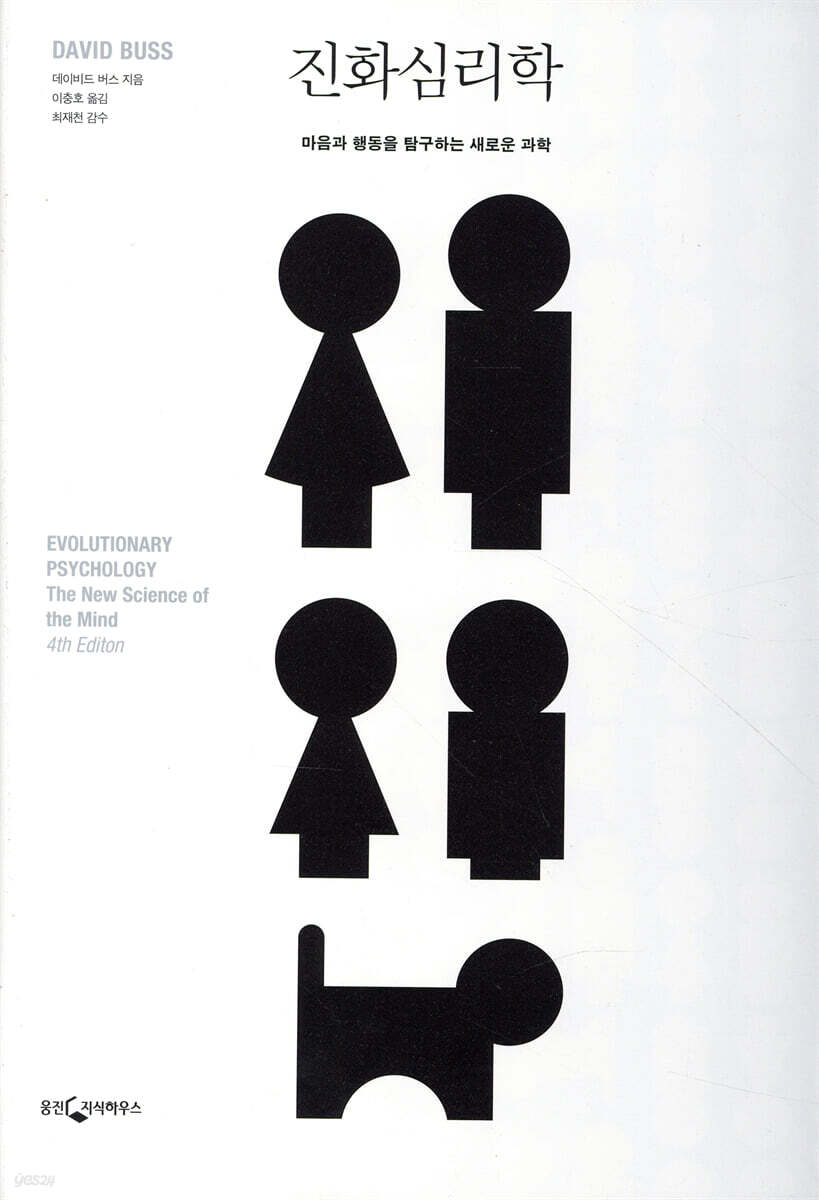
This book, written by David Buss, a key researcher who laid the foundation for evolutionary psychology, was first published in 1999, when there was no systematic evolutionary psychology textbook yet.
Since then, this book has been consistently used as an introductory textbook and reference book in American and European universities.
Human behavior is often difficult to understand with simple logic.
What is it about human nature that drives such behavior? Evolutionary psychology is the science that unravels these mysteries of human nature and behavior.
The puzzles that evolutionary psychology solves are directly related to everyday life.
The world of evolutionary psychology is vast and diverse, encompassing bold mysteries like life and death, marriage and sex, parenting, violence and dominance, murder and war, as well as delicate mysteries like sweet tastes, open landscapes, beauty and youth, and the loveliness of children.
Evolutionary psychology is a discipline that scientifically interprets life's problems by synthesizing modern principles of psychology and evolutionary biology. It is a discipline that modern people must know and is the future of comprehensive research in the 21st century.
This book tells us that the goal of evolutionary psychology is not to rationalize or overlook problematic human behavior, but to understand the underlying mechanisms of behavior and better identify solutions to these problems.
Explains human mind and behavior through the areas of basic survival, mating, parenting and kinship, and group living.
It provides a wealth of statistical data gathered from various sources, a tip box introducing evolutionary psychology debates worth considering, a clear summary of the content at the end of each chapter, and a list of recommended reading to read along with the book.
Readers will discover everything about evolutionary psychology in this book, which compiles everything from the history of this new discipline to its most important insights and the latest trends.
This book, written by David Buss, a key researcher who laid the foundation for evolutionary psychology, was first published in 1999, when there was no systematic evolutionary psychology textbook yet.
Since then, this book has been consistently used as an introductory textbook and reference book in American and European universities.
Human behavior is often difficult to understand with simple logic.
What is it about human nature that drives such behavior? Evolutionary psychology is the science that unravels these mysteries of human nature and behavior.
The puzzles that evolutionary psychology solves are directly related to everyday life.
The world of evolutionary psychology is vast and diverse, encompassing bold mysteries like life and death, marriage and sex, parenting, violence and dominance, murder and war, as well as delicate mysteries like sweet tastes, open landscapes, beauty and youth, and the loveliness of children.
Evolutionary psychology is a discipline that scientifically interprets life's problems by synthesizing modern principles of psychology and evolutionary biology. It is a discipline that modern people must know and is the future of comprehensive research in the 21st century.
This book tells us that the goal of evolutionary psychology is not to rationalize or overlook problematic human behavior, but to understand the underlying mechanisms of behavior and better identify solutions to these problems.
Explains human mind and behavior through the areas of basic survival, mating, parenting and kinship, and group living.
It provides a wealth of statistical data gathered from various sources, a tip box introducing evolutionary psychology debates worth considering, a clear summary of the content at the end of each chapter, and a list of recommended reading to read along with the book.
Readers will discover everything about evolutionary psychology in this book, which compiles everything from the history of this new discipline to its most important insights and the latest trends.
- You can preview some of the book's contents.
Preview
index
Recommendation: From Psychology to Psychological Science
Introduction: Unraveling the Mysteries of Humanity
Acknowledgements
Part 1: Foundations of Evolutionary Psychology
Chapter 1: The Scientific Trends That Gave Birth to Evolutionary Psychology
-Important events in the history of evolutionary thought
-Common misconceptions about evolution
-The origin of modern humans
- Monumental events in the field of psychology
-summation
-Recommended Reading List
Chapter 2: The New Science: Evolutionary Psychology
-The origin of human nature
The Core of Human Nature: The Foundations of Evolved Psychological Mechanisms
- Methods for testing evolutionary hypotheses
-Data source for testing evolutionary hypotheses
-Finding adaptation problems
-summation
-Recommended Reading List
Part 2: Survival Issues
Chapter 3: Fighting Against the Hostile Forces of Nature: The Problem of Human Survival
-Food acquisition and selection
- Finding a place to live: Prefer housing and scenery
Fighting predators and other environmental hazards: fear, panic, anxiety, and 'adaptive biases'
-Why do people die?
-summation
-Recommended Reading List
Part 3: Performance Matching Problems
Chapter 4: Women's Long-Term Mating Strategies
-Theoretical background on the evolution of mate preferences
-Women's preferred spouses
-Contextual effects on women's mate preferences
How do women's mate preferences affect their actual mating behavior?
-summation
-Recommended Reading List
Chapter 5: Men's Long-Term Mating Strategies
-Theoretical background on the evolution of men's mate preferences
-Men's preferred spouses
-Contextual effects on male mating behavior
-The effect of male preferences on actual mating behavior
-summation
-Recommended Reading List
Chapter 6: Short-Term Sexual Strategies
-Theories on male short-term mating
Evidence of an evolved short-term mating psychology
-Female short-term mating
-Contextual effects on short-term mating
-summation
-Recommended Reading List
Part 4: Parenting and Family Issues
Chapter 7 Parenting Issues
-Why do mothers provide more parental care than fathers?
Parental care from an evolutionary perspective
-Theory of conflict between parents and children
-summation
-Recommended Reading List
Chapter 8: Family Matters
-Inclusive fitness theory and its implications
-Empirical findings supporting the meaning of inclusive fitness theory
-summation
-Recommended Reading List
Part 5: Problems of Group Living
Chapter 9 Cooperative Alliance
-The evolution of cooperation
-Reciprocal altruism theory
-Cooperation seen in species other than humans
-Cooperation and altruism among people
-summation
-Recommended Reading List
Chapter 10 Aggression and War
Aggression as a solution to adaptation problems
-Why are men more aggressive than women?
- Empirical evidence supporting a unique adaptive pattern of aggression.
-summation
-Recommended Reading List
Chapter 11 Conflict between the Sexes
-Strategic Intervention Theory
-Conflicts surrounding sexual activity and its timing
-Evolved defenses against sexual violence and sexual assault
- Jealousy and conflict
From Surveillance to Violence: Spouse Retention Tactics
-Conflicts over resource access
-summation
-Recommended Reading List
Chapter 12 Status, Reputation, and Social Dominance
-The emergence of a hierarchy of dominance
-Dominance and status among non-human animals
-Evolutionary theories of dominance, prestige, and status
-summation
-Recommended Reading List
Part 6: Integrative Psychological Science
Chapter 13: Toward an Integrative Evolutionary Psychology
-Evolutionary cognitive psychology
-Evolutionary Social Psychology
-Evolutionary developmental psychology
-Evolutionary personality psychology
-Evolutionary Clinical Psychology
-Evolutionary Cultural Psychology
-Towards Integrative Psychology
-Recommended Reading List
References
Search
Introduction: Unraveling the Mysteries of Humanity
Acknowledgements
Part 1: Foundations of Evolutionary Psychology
Chapter 1: The Scientific Trends That Gave Birth to Evolutionary Psychology
-Important events in the history of evolutionary thought
-Common misconceptions about evolution
-The origin of modern humans
- Monumental events in the field of psychology
-summation
-Recommended Reading List
Chapter 2: The New Science: Evolutionary Psychology
-The origin of human nature
The Core of Human Nature: The Foundations of Evolved Psychological Mechanisms
- Methods for testing evolutionary hypotheses
-Data source for testing evolutionary hypotheses
-Finding adaptation problems
-summation
-Recommended Reading List
Part 2: Survival Issues
Chapter 3: Fighting Against the Hostile Forces of Nature: The Problem of Human Survival
-Food acquisition and selection
- Finding a place to live: Prefer housing and scenery
Fighting predators and other environmental hazards: fear, panic, anxiety, and 'adaptive biases'
-Why do people die?
-summation
-Recommended Reading List
Part 3: Performance Matching Problems
Chapter 4: Women's Long-Term Mating Strategies
-Theoretical background on the evolution of mate preferences
-Women's preferred spouses
-Contextual effects on women's mate preferences
How do women's mate preferences affect their actual mating behavior?
-summation
-Recommended Reading List
Chapter 5: Men's Long-Term Mating Strategies
-Theoretical background on the evolution of men's mate preferences
-Men's preferred spouses
-Contextual effects on male mating behavior
-The effect of male preferences on actual mating behavior
-summation
-Recommended Reading List
Chapter 6: Short-Term Sexual Strategies
-Theories on male short-term mating
Evidence of an evolved short-term mating psychology
-Female short-term mating
-Contextual effects on short-term mating
-summation
-Recommended Reading List
Part 4: Parenting and Family Issues
Chapter 7 Parenting Issues
-Why do mothers provide more parental care than fathers?
Parental care from an evolutionary perspective
-Theory of conflict between parents and children
-summation
-Recommended Reading List
Chapter 8: Family Matters
-Inclusive fitness theory and its implications
-Empirical findings supporting the meaning of inclusive fitness theory
-summation
-Recommended Reading List
Part 5: Problems of Group Living
Chapter 9 Cooperative Alliance
-The evolution of cooperation
-Reciprocal altruism theory
-Cooperation seen in species other than humans
-Cooperation and altruism among people
-summation
-Recommended Reading List
Chapter 10 Aggression and War
Aggression as a solution to adaptation problems
-Why are men more aggressive than women?
- Empirical evidence supporting a unique adaptive pattern of aggression.
-summation
-Recommended Reading List
Chapter 11 Conflict between the Sexes
-Strategic Intervention Theory
-Conflicts surrounding sexual activity and its timing
-Evolved defenses against sexual violence and sexual assault
- Jealousy and conflict
From Surveillance to Violence: Spouse Retention Tactics
-Conflicts over resource access
-summation
-Recommended Reading List
Chapter 12 Status, Reputation, and Social Dominance
-The emergence of a hierarchy of dominance
-Dominance and status among non-human animals
-Evolutionary theories of dominance, prestige, and status
-summation
-Recommended Reading List
Part 6: Integrative Psychological Science
Chapter 13: Toward an Integrative Evolutionary Psychology
-Evolutionary cognitive psychology
-Evolutionary Social Psychology
-Evolutionary developmental psychology
-Evolutionary personality psychology
-Evolutionary Clinical Psychology
-Evolutionary Cultural Psychology
-Towards Integrative Psychology
-Recommended Reading List
References
Search
Publisher's Review
David Buss, the world's most cited scholar
David Buss, a key researcher who laid the foundation for evolutionary psychology, is particularly interested in human behaviors such as 'killing' and 'mating'.
From 1984, he conducted a study on sexual behavior and psychology common to all human beings by surveying 10,047 people living in 37 cultures, 5 islands, and 6 continents around the world for about 5 years.
He created a huge stir in the academic world with his systematic psychological research on 'human mating' and became a world-renowned scholar.
His research results have been repeatedly cited in other scholars' papers and books, and Buss was selected as one of the "world's most cited researchers" by Reuters from 2003 to 2012.
His various books, including “The Evolution of Desire,” “The Murderer Next Door,” and “237 Reasons Why Women Have Sex,” which were translated into Korean and created a sensation, received continuous praise from top psychologists and scientists such as Steven Pinker and Richard Dawkins, and played a role in laying the foundation for the new field of study called evolutionary psychology while also introducing evolutionary psychology to the general public.
This book was written by David Buss to synthesize evolutionary psychology, and was first published in 1999, when there was no systematic evolutionary psychology textbook yet.
Since then, it has been consistently used as an introductory and reference book for liberal arts in universities in the United States and Europe, and its contents have been supplemented through repeated editions.
This book, "Evolutionary Psychology," is a compilation of the history of the new discipline of evolutionary psychology, detailed research, and the most important insights and latest trends.
Everything About Evolutionary Psychology: Clearing Up Misconceptions and Revealing Future Prospects
Containing a vast amount of research, "Evolutionary Psychology" is a textbook that anyone seeking to systematically study evolutionary psychology can always keep by their side as a reference. For those seeking an engaging story about evolutionary psychology, it is a popular textbook brimming with interesting cases no matter where you open it.
It provides a wealth of statistical data gathered from research around the world, a tip box introducing evolutionary psychology debates worth considering, a clear summary of the content at the end of each chapter, and a "recommended reading list" for those who wish to read along.
This book divides the human mind and behavior into the areas of 'basic survival', 'sex and mating', 'parenting and kinship', and 'group living'.
From why people are afraid of snakes to the idea that "other people's misfortune is my happiness," it unravels the mysteries of human behavior and psychology.
The final chapter introduces the branches of evolutionary psychology, providing a comprehensive overview of the field of study and its future prospects, combining evolutionary psychology with cognitive psychology, social psychology, and cultural psychology. This allows readers to predict how this new science will unravel human psychology and behavior in the future.
Uncovering the origins and evolution of the mind, revealing inconvenient truths, and solving modern problems.
The numerous problems and tragedies of modern society are not simply a result of the harsh modern environment; they often have their roots within us.
Evolutionary Psychology says that rather than rationalizing or turning a blind eye to problematic behaviors, we can better find solutions to problems when we understand the underlying behavioral clues that are embedded in our minds.
Whether it's the beautiful nature of caring for children and cooperating with one another, or the dark nature of surviving competition by killing one another, both are part of human nature, and only by examining both sides closely can we truly understand humanity.
Tracing the evolution of the mind is a process of exploration to redesign the human mind.
By understanding the true nature of evolutionary psychology, which is often misused and misunderstood, we can upgrade our "old extension cord" and find ways to best utilize it.
Evolutionary psychology, which synthesizes modern principles of psychology and evolutionary biology to scientifically interpret life's problems, is a discipline that modern people must know and is the future of comprehensive research in the 21st century.
I recommend Evolutionary Psychology, which can be considered the most reliable guidepost for the future.
David Buss, a key researcher who laid the foundation for evolutionary psychology, is particularly interested in human behaviors such as 'killing' and 'mating'.
From 1984, he conducted a study on sexual behavior and psychology common to all human beings by surveying 10,047 people living in 37 cultures, 5 islands, and 6 continents around the world for about 5 years.
He created a huge stir in the academic world with his systematic psychological research on 'human mating' and became a world-renowned scholar.
His research results have been repeatedly cited in other scholars' papers and books, and Buss was selected as one of the "world's most cited researchers" by Reuters from 2003 to 2012.
His various books, including “The Evolution of Desire,” “The Murderer Next Door,” and “237 Reasons Why Women Have Sex,” which were translated into Korean and created a sensation, received continuous praise from top psychologists and scientists such as Steven Pinker and Richard Dawkins, and played a role in laying the foundation for the new field of study called evolutionary psychology while also introducing evolutionary psychology to the general public.
This book was written by David Buss to synthesize evolutionary psychology, and was first published in 1999, when there was no systematic evolutionary psychology textbook yet.
Since then, it has been consistently used as an introductory and reference book for liberal arts in universities in the United States and Europe, and its contents have been supplemented through repeated editions.
This book, "Evolutionary Psychology," is a compilation of the history of the new discipline of evolutionary psychology, detailed research, and the most important insights and latest trends.
Everything About Evolutionary Psychology: Clearing Up Misconceptions and Revealing Future Prospects
Containing a vast amount of research, "Evolutionary Psychology" is a textbook that anyone seeking to systematically study evolutionary psychology can always keep by their side as a reference. For those seeking an engaging story about evolutionary psychology, it is a popular textbook brimming with interesting cases no matter where you open it.
It provides a wealth of statistical data gathered from research around the world, a tip box introducing evolutionary psychology debates worth considering, a clear summary of the content at the end of each chapter, and a "recommended reading list" for those who wish to read along.
This book divides the human mind and behavior into the areas of 'basic survival', 'sex and mating', 'parenting and kinship', and 'group living'.
From why people are afraid of snakes to the idea that "other people's misfortune is my happiness," it unravels the mysteries of human behavior and psychology.
The final chapter introduces the branches of evolutionary psychology, providing a comprehensive overview of the field of study and its future prospects, combining evolutionary psychology with cognitive psychology, social psychology, and cultural psychology. This allows readers to predict how this new science will unravel human psychology and behavior in the future.
Uncovering the origins and evolution of the mind, revealing inconvenient truths, and solving modern problems.
The numerous problems and tragedies of modern society are not simply a result of the harsh modern environment; they often have their roots within us.
Evolutionary Psychology says that rather than rationalizing or turning a blind eye to problematic behaviors, we can better find solutions to problems when we understand the underlying behavioral clues that are embedded in our minds.
Whether it's the beautiful nature of caring for children and cooperating with one another, or the dark nature of surviving competition by killing one another, both are part of human nature, and only by examining both sides closely can we truly understand humanity.
Tracing the evolution of the mind is a process of exploration to redesign the human mind.
By understanding the true nature of evolutionary psychology, which is often misused and misunderstood, we can upgrade our "old extension cord" and find ways to best utilize it.
Evolutionary psychology, which synthesizes modern principles of psychology and evolutionary biology to scientifically interpret life's problems, is a discipline that modern people must know and is the future of comprehensive research in the 21st century.
I recommend Evolutionary Psychology, which can be considered the most reliable guidepost for the future.
GOODS SPECIFICS
- Date of publication: June 13, 2012
- Format: Hardcover book binding method guide
- Page count, weight, size: 736 pages | 1,300g | 170*243*40mm
- ISBN13: 9788901147093
- ISBN10: 8901147092
You may also like
카테고리
korean


korean

![GQ KOREA Mark (Monthly): December [2025]](http://librairie.coreenne.fr/cdn/shop/files/8ef265dbbfbf186523ed75ba7319009d.jpg?v=1765340328&width=3840)


