

The story of that day that goes on and on
 |
Description
Book Introduction
The individual lives piled up layer by layer in every twist and turn of modern and contemporary Korean history.
Time to look into that most private and secret story.
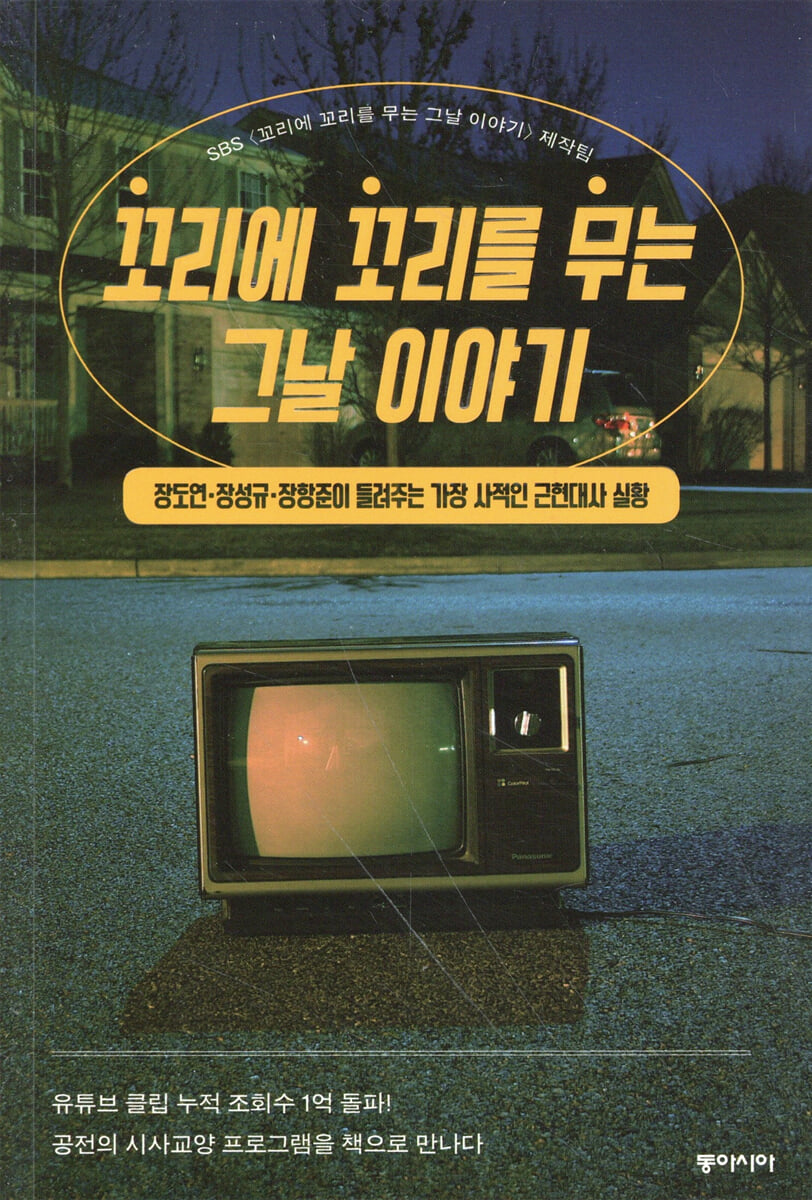
The new book from Dong-Asia Publishing, “The Story of That Day,” is a book that reconstructs the current affairs and cultural program of the same name, “The Story of That Day,” produced and broadcast by SBS, into a single volume.
The three people who took on the role of storytellers on the show, Jang Do-yeon, Jang Seong-gyu, and Jang Hang-jun, created a richer story by adding unexpected chemistry that occurred between the storytellers and their story friends during the broadcast, based on the script provided as reference material before the broadcast.
The broadcast production team painstakingly collected and organized meticulous data, along with voices from the field, and PD notes containing the thoughts of the PDs who handled each broadcast item, have been added to create a flawless volume.
Time to look into that most private and secret story.
The new book from Dong-Asia Publishing, “The Story of That Day,” is a book that reconstructs the current affairs and cultural program of the same name, “The Story of That Day,” produced and broadcast by SBS, into a single volume.
The three people who took on the role of storytellers on the show, Jang Do-yeon, Jang Seong-gyu, and Jang Hang-jun, created a richer story by adding unexpected chemistry that occurred between the storytellers and their story friends during the broadcast, based on the script provided as reference material before the broadcast.
The broadcast production team painstakingly collected and organized meticulous data, along with voices from the field, and PD notes containing the thoughts of the PDs who handled each broadcast item, have been added to create a flawless volume.
- You can preview some of the book's contents.
Preview
index
Recommendation / Jang Do-yeon, Jang Seong-gyu, and Jang Hang-jun
Introduction / SBS "The Story of That Day" Production Team
First story
Chastity That Should Be Protected, Chastity That Cannot Be Protected: The Casanova Park In-soo Case / Seo In-hee
PD Note / Producer Ahn Yoon-tae
Second story
Political Terrorism Remains in the Labyrinth: The KT Kidnapping Case / Jang Yoon-jeong
PD Note / PD Park Ki-young
Third story
People Worse Than Pigs: The Mudeungsan Tarzan Park Heung-sook Incident / Seo In-hee
PD Note / Producer Ahn Yoon-tae
Fourth story
A Sin You Can't Help Hating, A Person You Can't Hate: The Seojin Room Salon Murder Case / Im Dong-sun
PD Note / Producer Yoo Hye-seung
Fifth story
Guilty without Genetic Guilt!: The Hostage Crisis of Escaped Prisoner Ji Kang-heon / Lee Hae-yeon
PD Note / Producer Yoo Hye-seung
The sixth story
People Evaporate, Earth's Last Day!: The 1992 Rapture Incident / Lee Hae-yeon
PD Note / PD Park Sang-goo
Seventh story
Monsters of the Pink Hideout: The Jizong Sect Kidnapping and Murder Case / Son Ha-neul
PD Note / PD Lee Dae-seong
Introduction / SBS "The Story of That Day" Production Team
First story
Chastity That Should Be Protected, Chastity That Cannot Be Protected: The Casanova Park In-soo Case / Seo In-hee
PD Note / Producer Ahn Yoon-tae
Second story
Political Terrorism Remains in the Labyrinth: The KT Kidnapping Case / Jang Yoon-jeong
PD Note / PD Park Ki-young
Third story
People Worse Than Pigs: The Mudeungsan Tarzan Park Heung-sook Incident / Seo In-hee
PD Note / Producer Ahn Yoon-tae
Fourth story
A Sin You Can't Help Hating, A Person You Can't Hate: The Seojin Room Salon Murder Case / Im Dong-sun
PD Note / Producer Yoo Hye-seung
Fifth story
Guilty without Genetic Guilt!: The Hostage Crisis of Escaped Prisoner Ji Kang-heon / Lee Hae-yeon
PD Note / Producer Yoo Hye-seung
The sixth story
People Evaporate, Earth's Last Day!: The 1992 Rapture Incident / Lee Hae-yeon
PD Note / PD Park Sang-goo
Seventh story
Monsters of the Pink Hideout: The Jizong Sect Kidnapping and Murder Case / Son Ha-neul
PD Note / PD Lee Dae-seong
Detailed image
Into the book
Many people say that history is boring, stale, and dogmatic.
It must be because of the memories of memorizing and taking tests during my school days.
History has thus left our hands.
I sincerely hope that the joy of reading the past will be restored through “Kokkomu.”
I hope that the fun continues at the family dinner table and during drinks with friends.
---From "Entering"
This structured sexism is so familiar and natural to some that it is difficult to even recognize it as discrimination.
So, although it is uncomfortable, it is necessary to make an effort to be suspicious and alert.
Do my words and actions carry sexist connotations? How should I perceive and accept everyday discrimination? Is the society we live in truly equal?
---From "PD Notes on the Casanova Park In-soo Case"
So the demolition crew that day were equally desperate.
Among them were district office workers, but most were low-paid day laborers hired by the district office.
The only task assigned to those people by the district office was 'demolition', and they were not organized demolition thugs.
So, if you don't properly carry out the tasks assigned to you by your superiors, you could suffer disadvantages.
Since it's a daily job, they might suddenly tell you not to come to work the next day.
That day, the demolition crew also climbed Mt. Mudeung to make a living.
In the end, it was the state that ordered the cleanup to be done unconditionally, even if it meant setting fire to the area, without any countermeasures, but on the front lines of survival, powerless citizens clashed with each other and a terrible tragedy occurred.
---From "The Third Story: The Mudeungsan Tarzan Park Heung-suk Incident"
After the broadcast, there was controversy and protests that it glorified criminals.
right.
He is a criminal who committed a terrible murder.
Murder can never be justified for any reason.
But as I looked into his life, this thought occurred to me.
Everyone has good and evil in their hearts, and don't we also have times when we face the various aspects of ourselves within ourselves?
Which of these can be said to be my true self?
And ask yourself:
“What will my end be like?”
---From "Seojin Room Salon Murder PD Ga-seon's Note"
October 28th! It was October 28th again! In 1992, strange events unfolded in South Korea! People were taking their own lives, aborting their children after a difficult pregnancy, and soldiers on leave simply vanished without returning to their bases.
People were disappearing without a trace all over the country! And these people had no connection to each other.
The only connection is October 28th! What happens on October 28th? Where did the missing people go?
---From "The Sixth Story: The 1992 Rapture"
As public interest was high at the time, their trial was also conducted quickly.
As a result of the trial, all six members of the Jijonpa were sentenced to death.
And after 7 months, they all disappeared like the dew on the execution ground.
But why did they become monsters who brutally kidnap and murder people?
It must be because of the memories of memorizing and taking tests during my school days.
History has thus left our hands.
I sincerely hope that the joy of reading the past will be restored through “Kokkomu.”
I hope that the fun continues at the family dinner table and during drinks with friends.
---From "Entering"
This structured sexism is so familiar and natural to some that it is difficult to even recognize it as discrimination.
So, although it is uncomfortable, it is necessary to make an effort to be suspicious and alert.
Do my words and actions carry sexist connotations? How should I perceive and accept everyday discrimination? Is the society we live in truly equal?
---From "PD Notes on the Casanova Park In-soo Case"
So the demolition crew that day were equally desperate.
Among them were district office workers, but most were low-paid day laborers hired by the district office.
The only task assigned to those people by the district office was 'demolition', and they were not organized demolition thugs.
So, if you don't properly carry out the tasks assigned to you by your superiors, you could suffer disadvantages.
Since it's a daily job, they might suddenly tell you not to come to work the next day.
That day, the demolition crew also climbed Mt. Mudeung to make a living.
In the end, it was the state that ordered the cleanup to be done unconditionally, even if it meant setting fire to the area, without any countermeasures, but on the front lines of survival, powerless citizens clashed with each other and a terrible tragedy occurred.
---From "The Third Story: The Mudeungsan Tarzan Park Heung-suk Incident"
After the broadcast, there was controversy and protests that it glorified criminals.
right.
He is a criminal who committed a terrible murder.
Murder can never be justified for any reason.
But as I looked into his life, this thought occurred to me.
Everyone has good and evil in their hearts, and don't we also have times when we face the various aspects of ourselves within ourselves?
Which of these can be said to be my true self?
And ask yourself:
“What will my end be like?”
---From "Seojin Room Salon Murder PD Ga-seon's Note"
October 28th! It was October 28th again! In 1992, strange events unfolded in South Korea! People were taking their own lives, aborting their children after a difficult pregnancy, and soldiers on leave simply vanished without returning to their bases.
People were disappearing without a trace all over the country! And these people had no connection to each other.
The only connection is October 28th! What happens on October 28th? Where did the missing people go?
---From "The Sixth Story: The 1992 Rapture"
As public interest was high at the time, their trial was also conducted quickly.
As a result of the trial, all six members of the Jijonpa were sentenced to death.
And after 7 months, they all disappeared like the dew on the execution ground.
But why did they become monsters who brutally kidnap and murder people?
---From "The Seventh Story: The Jijonpa Kidnapping and Murder Case"
Publisher's Review
“Modern people know everything.
“The only thing you don’t know is yourself.”
These are the words of British historian Arnold Toynbee.
We learn about history written in a single line in history books under the name of the “○○○ Incident,” but we do not know what the “person” at the center of it was thinking or in what context the incident occurred.
Producer Choi Sam-ho, who directed “Kokkomu,” clearly summarizes the planning and production intention of “Kokkomu” by saying, “At the center of the incident is undoubtedly ‘people.’”
Likewise, what this book, “The Story of That Day That Keeps on Going,” captures through various events in modern and contemporary history is not historical facts.
It is a story about a 'person' who existed before the incident occurred, and who continues to interact and change before and after the incident.
So what this book talks about is not information or knowledge, but the ‘story’ itself.
And the time spent listening to and telling that story gives us the opportunity to look beyond history and into ourselves.
From 'Easy to Learn History' to 'Easy to Speak History'!
A subversive attempt to overturn the framework of current affairs and culture
“The era of television current affairs and culture is over.” It’s not for nothing that they say this.
This is a claim that has been cautiously raised by some media experts for several years, perhaps even a dozen years.
In fact, it is not just a story about current affairs and culture.
If you look around, the world is overflowing with all kinds of content, and the influence of old media, including broadcasting, is decreasing day by day.
In this way, broadcasters have no choice but to invest more in more ‘safe’ paths to survive.
A provocative drama, a variety show that can generate high viewership ratings.
The narrowing of the position of current affairs and cultural programs, which find it difficult to generate high viewership ratings and attract advertisements compared to the production costs, may have been an inevitable trend of the times.
Moreover, we live in an era where people no longer rely solely on television to access current affairs and culture.
But there's a heretic who goes against this trend. SBS's "The Story of That Day" is that very same person.
It is breaking viewership records day by day, surpassing even the most popular entertainment programs.
Some people link “Kkokkomu” and “You Quiz” (tvN) together and analyze the factors behind their unusual success.
In the age of COVID-19, the desire for 'communication' has become widespread among people, and the 'honest' stories of ordinary people around us, rather than gossip about glamorous celebrities, are cited as factors.
So to speak, this is a change of eye level.
In particular, the transition is particularly dramatic within the broad category of current affairs and culture.
As the era of knowledge and information being monopolized by a select few has passed and the era of the masses has arrived, various media outlets have been promoting the theme of “learning ○○ easily.”
An expert comes down to the public's level and speaks to them.
Of course, it was a meaningful attempt, but it also had limitations.
Experts are experts after all, and it is virtually impossible for them to come down to the level of the general public.
In 〈Kokkomu〉, a completely different approach is taken.
Storytellers are not experts in history, and those who listen to the stories are not people who sit down to study history.
What they exchange is, after all, a ‘story’ between ‘people.’
As director Jang Hang-jun said, “All the passionate moments of modern history that captured my eyes and ears during my youth are contained here,” it looks at history from the perspective of each ordinary citizen living in this era.
That is why the emotional line that “Kokkomu” evokes is so dramatic that it is difficult to think of it as a current affairs piece or a historical story.
They cry and laugh as they reflect on their experiences through stories.
This book, "The Story of That Day That Keeps on Track," fully embodies the production team's desire to capture such vivid "voices."
“History is an unending dialogue between the past and the present.”
Why do we cry and laugh while watching “Kkokkomu”?
If past events were merely in the past, we who live today would have nothing to gain from them.
However, looking at the explosive interest and response pouring in for “Kokkomu,” we can see that this is not the case at all.
What the broadcast production team said they wanted to emphasize most in the broadcast was “our subjective perspective as we live today.”
Recalling the 'Casanova Park In-soo incident' of 1955, we revisit society's view of women, which has continued from that day to the present.
As I recall the name 'Park Heung-sook', who remains a maniacal murderer, I reflect on the lives of individual citizens who are sacrificed to state violence and the development paradigm.
The existence of the limited-time eschatology, which resurfaces whenever it is forgotten, not only due to the 1992 Rapture uproar, but also testifies to the anxiety and fear that people of all generations feel about the 'present.'
From the pilot broadcast of "Kokkomu" to Season 1 and Season 2, which began airing in the spring of 2021, various incidents have been covered on the show, and people's voices have also erupted about them.
Many people are encountering past events through “Kokkomu,” and at times they feel angry and at other times they sympathize.
This enthusiastic response is proof that the production team's intention to tell a "current story" was fully conveyed to the viewers, and at the same time, it means that their story sharply raises questions that we, as people today, must find answers to.
Through "The Story of That Day," readers will encounter sharper, more refined questions.
And through the problems in history, we face the problems that still remain in our society today.
So, what are your thoughts 'today' after hearing the story of 'that day'?
“The only thing you don’t know is yourself.”
These are the words of British historian Arnold Toynbee.
We learn about history written in a single line in history books under the name of the “○○○ Incident,” but we do not know what the “person” at the center of it was thinking or in what context the incident occurred.
Producer Choi Sam-ho, who directed “Kokkomu,” clearly summarizes the planning and production intention of “Kokkomu” by saying, “At the center of the incident is undoubtedly ‘people.’”
Likewise, what this book, “The Story of That Day That Keeps on Going,” captures through various events in modern and contemporary history is not historical facts.
It is a story about a 'person' who existed before the incident occurred, and who continues to interact and change before and after the incident.
So what this book talks about is not information or knowledge, but the ‘story’ itself.
And the time spent listening to and telling that story gives us the opportunity to look beyond history and into ourselves.
From 'Easy to Learn History' to 'Easy to Speak History'!
A subversive attempt to overturn the framework of current affairs and culture
“The era of television current affairs and culture is over.” It’s not for nothing that they say this.
This is a claim that has been cautiously raised by some media experts for several years, perhaps even a dozen years.
In fact, it is not just a story about current affairs and culture.
If you look around, the world is overflowing with all kinds of content, and the influence of old media, including broadcasting, is decreasing day by day.
In this way, broadcasters have no choice but to invest more in more ‘safe’ paths to survive.
A provocative drama, a variety show that can generate high viewership ratings.
The narrowing of the position of current affairs and cultural programs, which find it difficult to generate high viewership ratings and attract advertisements compared to the production costs, may have been an inevitable trend of the times.
Moreover, we live in an era where people no longer rely solely on television to access current affairs and culture.
But there's a heretic who goes against this trend. SBS's "The Story of That Day" is that very same person.
It is breaking viewership records day by day, surpassing even the most popular entertainment programs.
Some people link “Kkokkomu” and “You Quiz” (tvN) together and analyze the factors behind their unusual success.
In the age of COVID-19, the desire for 'communication' has become widespread among people, and the 'honest' stories of ordinary people around us, rather than gossip about glamorous celebrities, are cited as factors.
So to speak, this is a change of eye level.
In particular, the transition is particularly dramatic within the broad category of current affairs and culture.
As the era of knowledge and information being monopolized by a select few has passed and the era of the masses has arrived, various media outlets have been promoting the theme of “learning ○○ easily.”
An expert comes down to the public's level and speaks to them.
Of course, it was a meaningful attempt, but it also had limitations.
Experts are experts after all, and it is virtually impossible for them to come down to the level of the general public.
In 〈Kokkomu〉, a completely different approach is taken.
Storytellers are not experts in history, and those who listen to the stories are not people who sit down to study history.
What they exchange is, after all, a ‘story’ between ‘people.’
As director Jang Hang-jun said, “All the passionate moments of modern history that captured my eyes and ears during my youth are contained here,” it looks at history from the perspective of each ordinary citizen living in this era.
That is why the emotional line that “Kokkomu” evokes is so dramatic that it is difficult to think of it as a current affairs piece or a historical story.
They cry and laugh as they reflect on their experiences through stories.
This book, "The Story of That Day That Keeps on Track," fully embodies the production team's desire to capture such vivid "voices."
“History is an unending dialogue between the past and the present.”
Why do we cry and laugh while watching “Kkokkomu”?
If past events were merely in the past, we who live today would have nothing to gain from them.
However, looking at the explosive interest and response pouring in for “Kokkomu,” we can see that this is not the case at all.
What the broadcast production team said they wanted to emphasize most in the broadcast was “our subjective perspective as we live today.”
Recalling the 'Casanova Park In-soo incident' of 1955, we revisit society's view of women, which has continued from that day to the present.
As I recall the name 'Park Heung-sook', who remains a maniacal murderer, I reflect on the lives of individual citizens who are sacrificed to state violence and the development paradigm.
The existence of the limited-time eschatology, which resurfaces whenever it is forgotten, not only due to the 1992 Rapture uproar, but also testifies to the anxiety and fear that people of all generations feel about the 'present.'
From the pilot broadcast of "Kokkomu" to Season 1 and Season 2, which began airing in the spring of 2021, various incidents have been covered on the show, and people's voices have also erupted about them.
Many people are encountering past events through “Kokkomu,” and at times they feel angry and at other times they sympathize.
This enthusiastic response is proof that the production team's intention to tell a "current story" was fully conveyed to the viewers, and at the same time, it means that their story sharply raises questions that we, as people today, must find answers to.
Through "The Story of That Day," readers will encounter sharper, more refined questions.
And through the problems in history, we face the problems that still remain in our society today.
So, what are your thoughts 'today' after hearing the story of 'that day'?
GOODS SPECIFICS
- Publication date: April 20, 2021
- Page count, weight, size: 344 pages | 350g | 128*188*30mm
- ISBN13: 9788962623680
- ISBN10: 8962623684
You may also like
카테고리
korean


korean

![GQ KOREA Mark (Monthly): December [2025]](http://librairie.coreenne.fr/cdn/shop/files/8ef265dbbfbf186523ed75ba7319009d.jpg?v=1765340328&width=3840)


