

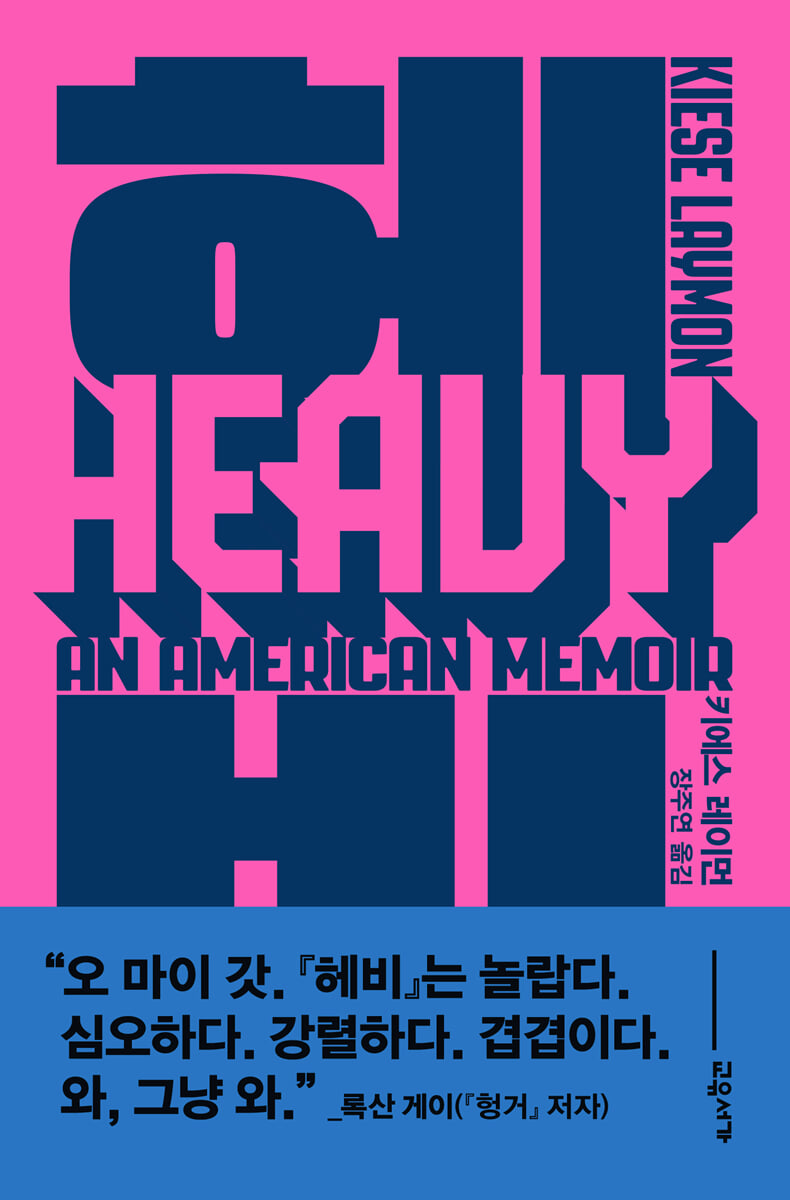
Heavy
 |
Description
Book Introduction
Who can weigh this man?
The most honest and fundamental question that shook American society
“I wanted to write a lie.”
A monumental memoir that elevates personal narrative to the pinnacle of social critique.
“Oh my god.
"Heavy" is amazing.
It's profound.
It's intense.
It's layered.
“Wow, just wow.” _Roxane Gay (author of “Hunger”)
★ Selected as one of the "100 Best Books of the 21st Century" by the New York Times
★ Carnegie Medal for Nonfiction · LA Times Isherwood Autobiographical Prose Award
★ Barnes & Noble Discover Award and Audible Audiobook of the Year Award
Keith Layman's monumental memoir, "Heavy," which reveals the contradictions of American society through the scars etched on one person's body, is finally being published in Korea.
This book, an honest and painful confession of an oppressed body, an unforgettable memory, and a precarious love, shook the Anglo-American literary world immediately upon its publication and established the author as one of the most important writers in modern American literature.
Keith Layman is a leading essayist and novelist in contemporary African American literature. He explores issues of race, class, and identity by intersecting autobiographical experiences with social contexts.
His first novel, The Long Divide, explored the language and memory of black youth, and his essay collection, How to Slowly Kill Yourself and Others in America, weaves personal experience with social critique.
"Heavy" is the first work in which he reveals his confessions and shame without hiding anything, and shows the courage to choose the truth.
The title 'Heavy' goes beyond simple physical weight, and contains the metaphorical weight of history, secrets, and wounds that an individual must carry throughout their life.
At the heart of "Heavy" is the contradictory relationship between a mother who loves but also abuses her son.
Raymond explores the ways in which love and violence coexist within that relationship, and how those wounds are etched into the body and life.
His weight fluctuations are linked to the social oppression of being a Black man and the weight of his family history, and readers witness the moments when personal wounds connect to societal issues.
The book became a New York Times bestseller upon its publication in 2018 and won the Andrew Carnegie Medal, the highest honor awarded by the American Library Association.
It also received overwhelming praise from the media and critics, including being named one of the "100 Best Books of the 21st Century" and "50 Best Memoirs of the Past 50 Years" by the New York Times, and being a finalist in the nonfiction category for the Kirkus Award.
The Washington Post praised the book, calling it “a once-in-a-generation book,” heralding the birth of a work destined to become a classic of our time.
Author Keith Layman was awarded a MacArthur Fellowship in 2022, nicknamed the "Genius Grant," which recognizes individuals who demonstrate exceptional originality and creativity.
The most honest and fundamental question that shook American society
“I wanted to write a lie.”
A monumental memoir that elevates personal narrative to the pinnacle of social critique.
“Oh my god.
"Heavy" is amazing.
It's profound.
It's intense.
It's layered.
“Wow, just wow.” _Roxane Gay (author of “Hunger”)
★ Selected as one of the "100 Best Books of the 21st Century" by the New York Times
★ Carnegie Medal for Nonfiction · LA Times Isherwood Autobiographical Prose Award
★ Barnes & Noble Discover Award and Audible Audiobook of the Year Award
Keith Layman's monumental memoir, "Heavy," which reveals the contradictions of American society through the scars etched on one person's body, is finally being published in Korea.
This book, an honest and painful confession of an oppressed body, an unforgettable memory, and a precarious love, shook the Anglo-American literary world immediately upon its publication and established the author as one of the most important writers in modern American literature.
Keith Layman is a leading essayist and novelist in contemporary African American literature. He explores issues of race, class, and identity by intersecting autobiographical experiences with social contexts.
His first novel, The Long Divide, explored the language and memory of black youth, and his essay collection, How to Slowly Kill Yourself and Others in America, weaves personal experience with social critique.
"Heavy" is the first work in which he reveals his confessions and shame without hiding anything, and shows the courage to choose the truth.
The title 'Heavy' goes beyond simple physical weight, and contains the metaphorical weight of history, secrets, and wounds that an individual must carry throughout their life.
At the heart of "Heavy" is the contradictory relationship between a mother who loves but also abuses her son.
Raymond explores the ways in which love and violence coexist within that relationship, and how those wounds are etched into the body and life.
His weight fluctuations are linked to the social oppression of being a Black man and the weight of his family history, and readers witness the moments when personal wounds connect to societal issues.
The book became a New York Times bestseller upon its publication in 2018 and won the Andrew Carnegie Medal, the highest honor awarded by the American Library Association.
It also received overwhelming praise from the media and critics, including being named one of the "100 Best Books of the 21st Century" and "50 Best Memoirs of the Past 50 Years" by the New York Times, and being a finalist in the nonfiction category for the Kirkus Award.
The Washington Post praised the book, calling it “a once-in-a-generation book,” heralding the birth of a work destined to become a classic of our time.
Author Keith Layman was awarded a MacArthur Fellowship in 2022, nicknamed the "Genius Grant," which recognizes individuals who demonstrate exceptional originality and creativity.
- You can preview some of the book's contents.
Preview
index
Preface to the Korean edition
What happened
Part 1 Young Man
training
There is nothing
wet
Be there
Part 2: Black Abundance
poor
Abbreviation
Hulk
Kang
Part 3: Made at home
Fantastic
disaster
already
soon
Part 4: Addicted Americans
vegetable
horror
seat belt
Promises
reflex
Translator's Note
What happened
Part 1 Young Man
training
There is nothing
wet
Be there
Part 2: Black Abundance
poor
Abbreviation
Hulk
Kang
Part 3: Made at home
Fantastic
disaster
already
soon
Part 4: Addicted Americans
vegetable
horror
seat belt
Promises
reflex
Translator's Note
Into the book
Failure creates shame, and shame allows for correction.
To change your life, you need the courage to face yourself and the strength to bear the emotional weight.
In the process, we can reshape our vision for ourselves, our family, our work, our society, and our nation.
The only thing that can save us is heaviness.
--- From the "Preface to the Korean Edition"
I didn't want to write this to you.
I wanted to write a lie.
--- p.19
Thanks to your constant reminders that I need to read, reread, write, and revise, I've learned to neither fear nor be easily impressed by sentences, paragraphs, commas, or margins.
You gave me a laboratory in the Black South where I could experiment with writing.
In it, I learned how to assemble memories and imagination in every moment that was so painful that I wanted to die.
--- pp.31-32
It didn't matter whether the story was true or fake.
The important thing is that they were good stories.
Because a good story has a way of sounding true.
Because a good story has a way of making us pretend not to see what we just saw.
--- p.49
My body knew that boys were trained to harm girls in ways girls could never harm boys, straight kids were trained to harm queer kids in ways queer kids could never harm straight kids, men were trained to harm women in ways women could never harm men, and parents were trained to harm their children in ways their children could never harm their parents.
--- p.60
You took off all my clothes and made me lie face down on the bed we used to sleep in together.
I don't think I've ever screamed like that.
You made me bury my face in the bed so I couldn't resist.
Of course being beaten hurt, but it hurt even more that you could hit me so hard while looking at my fat, naked, black body as a nine-year-old.
--- p.86
Early the next morning, I had my first wet dream.
I didn't want to tell you.
Because if I told you what my body did while you and Malachi Hunter were together, you'd definitely ask, "Why?"
I hoped you would never touch me again.
--- p.89
“Come in and play with me, Jackson,” the boy said.
"no.
“I’ll stay here,” I said, rolling down the window.
“Want to shoot a squirrel in the head with an air gun in my backyard?”
“No,” I answered.
“My mom won’t let me shoot a squirrel in the head with a gun.
I'm okay."
“But you Jacksonians only shoot guns.”
--- p.96
Before I fell asleep, I asked my grandmother.
If a twelve-year-old weighs 98.8 kilograms, is that too fat?
“Why do you keep weighing me?” asked the grandmother.
“98.8 kilograms is just the right amount of weight.”
“What do you mean by moderately heavy?”
“It’s worth the weight of everything you have to bear.”
--- p.108
Every time you hit my body, I remember what I know and why I know it.
You knew how white people would judge me if I went to school with visible bruises, so unlike in Holy Family, you hit me on my back, butt, and thick thighs, not my arms, neck, hands, or face, where they weren't visible.
--- pp.120-121
You took your hands off the steering wheel and stretched them out towards the police officer.
“Please step away from the car.
This child is my son and he is only fifteen years old so he does not have any identification.
"Could you tell me your badge number, officer?" I hated how stiff your tone sounded whenever you spoke without any abbreviations.
The police ordered both of us out of the car.
--- p.141
We've been told since we were little that our superpower is patience.
The ability to survive no matter how much is taken away.
But I couldn't understand why survival was our superpower.
Because white people made it so many of us couldn't survive.
And even we who survived were destined to break, having learned to bend too much.
--- p.182
During class, I only spoke when I could make a clear argument in defense of black people.
I didn't ask any questions or make any unsubstantiated claims.
Because making a mistake that seemed ignorant in that classroom full of white people was too risky.
For the first time in my life, I felt scared of the classroom.
And whenever I was scared, I always reached for cake.
The cake was safe, intimate, and celebratory.
The cake never fought back.
--- pp.205-206
It was a Friday morning, the day after you pulled a gun on me for talking back to me about whether I should type or handwrite my application for transfer to Oberlin College.
I sat naked in a cold bathtub and tapped your .22 caliber pistol against my temple.
I had already been told by three schools that I would not even be accepted for transfer because I had been expelled from Millsaps for fighting and stealing.
--- p.258
In return for helping them strengthen their power, I received a paycheck, security, and the moral certainty that I was "helping white people become better people."
It was a first for me, but it was also a first for an old black man.
--- p.309
I loved the thrill of pushing my body beyond its limits, but I was actually addicted to controlling the number on the scale.
Controlling that number on the scale has made my body less disgusting and more fulfilling than writing a novel or essay, feeling love, making money, or having sex.
When I lost weight, I was able to forget myself for a little while.
To change your life, you need the courage to face yourself and the strength to bear the emotional weight.
In the process, we can reshape our vision for ourselves, our family, our work, our society, and our nation.
The only thing that can save us is heaviness.
--- From the "Preface to the Korean Edition"
I didn't want to write this to you.
I wanted to write a lie.
--- p.19
Thanks to your constant reminders that I need to read, reread, write, and revise, I've learned to neither fear nor be easily impressed by sentences, paragraphs, commas, or margins.
You gave me a laboratory in the Black South where I could experiment with writing.
In it, I learned how to assemble memories and imagination in every moment that was so painful that I wanted to die.
--- pp.31-32
It didn't matter whether the story was true or fake.
The important thing is that they were good stories.
Because a good story has a way of sounding true.
Because a good story has a way of making us pretend not to see what we just saw.
--- p.49
My body knew that boys were trained to harm girls in ways girls could never harm boys, straight kids were trained to harm queer kids in ways queer kids could never harm straight kids, men were trained to harm women in ways women could never harm men, and parents were trained to harm their children in ways their children could never harm their parents.
--- p.60
You took off all my clothes and made me lie face down on the bed we used to sleep in together.
I don't think I've ever screamed like that.
You made me bury my face in the bed so I couldn't resist.
Of course being beaten hurt, but it hurt even more that you could hit me so hard while looking at my fat, naked, black body as a nine-year-old.
--- p.86
Early the next morning, I had my first wet dream.
I didn't want to tell you.
Because if I told you what my body did while you and Malachi Hunter were together, you'd definitely ask, "Why?"
I hoped you would never touch me again.
--- p.89
“Come in and play with me, Jackson,” the boy said.
"no.
“I’ll stay here,” I said, rolling down the window.
“Want to shoot a squirrel in the head with an air gun in my backyard?”
“No,” I answered.
“My mom won’t let me shoot a squirrel in the head with a gun.
I'm okay."
“But you Jacksonians only shoot guns.”
--- p.96
Before I fell asleep, I asked my grandmother.
If a twelve-year-old weighs 98.8 kilograms, is that too fat?
“Why do you keep weighing me?” asked the grandmother.
“98.8 kilograms is just the right amount of weight.”
“What do you mean by moderately heavy?”
“It’s worth the weight of everything you have to bear.”
--- p.108
Every time you hit my body, I remember what I know and why I know it.
You knew how white people would judge me if I went to school with visible bruises, so unlike in Holy Family, you hit me on my back, butt, and thick thighs, not my arms, neck, hands, or face, where they weren't visible.
--- pp.120-121
You took your hands off the steering wheel and stretched them out towards the police officer.
“Please step away from the car.
This child is my son and he is only fifteen years old so he does not have any identification.
"Could you tell me your badge number, officer?" I hated how stiff your tone sounded whenever you spoke without any abbreviations.
The police ordered both of us out of the car.
--- p.141
We've been told since we were little that our superpower is patience.
The ability to survive no matter how much is taken away.
But I couldn't understand why survival was our superpower.
Because white people made it so many of us couldn't survive.
And even we who survived were destined to break, having learned to bend too much.
--- p.182
During class, I only spoke when I could make a clear argument in defense of black people.
I didn't ask any questions or make any unsubstantiated claims.
Because making a mistake that seemed ignorant in that classroom full of white people was too risky.
For the first time in my life, I felt scared of the classroom.
And whenever I was scared, I always reached for cake.
The cake was safe, intimate, and celebratory.
The cake never fought back.
--- pp.205-206
It was a Friday morning, the day after you pulled a gun on me for talking back to me about whether I should type or handwrite my application for transfer to Oberlin College.
I sat naked in a cold bathtub and tapped your .22 caliber pistol against my temple.
I had already been told by three schools that I would not even be accepted for transfer because I had been expelled from Millsaps for fighting and stealing.
--- p.258
In return for helping them strengthen their power, I received a paycheck, security, and the moral certainty that I was "helping white people become better people."
It was a first for me, but it was also a first for an old black man.
--- p.309
I loved the thrill of pushing my body beyond its limits, but I was actually addicted to controlling the number on the scale.
Controlling that number on the scale has made my body less disgusting and more fulfilling than writing a novel or essay, feeling love, making money, or having sex.
When I lost weight, I was able to forget myself for a little while.
--- p.331
Publisher's Review
The rhythm and flow of hip-hop that breathes life into prose
A powerful narrative that shakes language and rebuilds existence.
“I didn’t want to write this to you.
I wanted to write a lie.” _Page 19
Keith Layman's writing style is rooted in the oral traditions of the African-American Southern community and is characterized by a musical rhythm, much like the flow of rap.
Rough, sensual descriptions intersect with sharp thoughts, and the sentences adjust tension and tempo as if lyrics unfold over a beat.
He adds intense emotional waves to this linguistic rhythm through the second-person point of view ('you') directed at his mother, making the emotions of confession, confrontation, and love resonate in layers.
For example, he recalls a tender moment when his mother taught him to write, but then immediately asks, “Why did you hit me like that?”
This direct narrative, where affection and violence intersect, reveals the author's unwavering determination to confront the truth she has ignored throughout her life, and draws the reader into the midst of the tense emotional tension between mother and son.
This style of writing, which simultaneously reveals the truth of one's own life and evokes the experiences of the Black community, resembles the style of hip-hop, which is deeply personal yet also voices a social voice.
Paradoxically, at the root of this literary attitude lies the survival skill taught by my mother: ‘revision.’
Believing that perfect sentences were the only armor a black boy could have in a world full of prejudice, his mother mercilessly corrected her son's writing with a red pen, demanding perfection.
But for his son, 'rewriting' goes beyond a simple writing skill; it becomes an act of rewriting the history of his life and relationships.
With the sharp tool his mother passed down to him, he digs up the truth he wanted to hide the most.
From childhood sexual abuse, to the family secret of his mother's gambling problem, to the pressure of racism, to the physical weight of his body - he dissects and reconstructs all 'heavy' truths through the act of 'rewriting'.
So, 『Heavy』 is a story of a great literary struggle of a man, accomplished by faithfully following his mother's teachings while at the same time fundamentally betraying them.
His writing takes the form of confession and revelation, but its ultimate goal is self-salvation, reassembling the broken self through language.
At the end of this intense self-exploration, the author finally succeeds in writing his life fully, in his own voice, not in anyone else's.
Read, reread, write, rewrite.
Because you gave me these four things, I began writing this book 30 years ago on my grandmother's porch.
But thanks to those gifts, or perhaps because of those gifts, I had to admit.
Like every other American kid, I've been brutally dishonest with you.
And like every other American parent, you did the same to me.
_Page 32
The wounds of the times depicted through personal confessions,
Crossing family, identity, and race
The power of "Heavy" lies in its dense narrative structure, which expands the story of an individual into a story of the times.
The multi-layered themes of family, body, and society are intertwined and organic, becoming causes and effects of each other.
As a result, moments where micro-narratives and macro-narratives intersect in an individual's life are revealed.
At this time, the body becomes a vessel that holds pain and a living record on which social oppression is imprinted.
The emotional core and primary narrative of this book is the relationship with the mother.
The author does not unilaterally condemn the relationship, which is filled with love and violence, or resolve it only with self-pity.
Instead, it shows a desperate attempt to understand the truth of the relationship more deeply and complexly by revealing and confronting the wounds of both parties.
This long and painful letter he sends to his mother through "Heavy" is a desperate gesture to restore a distorted relationship, and yet it is nothing less than an act of love that refuses to give up on understanding.
I sat at the end of the bed, you sat at the desk.
We looked at each other in silence for a few minutes.
You seemed to think I was blaming you, but I wasn't.
To blame you, I felt like I had to first acknowledge how sad I was and how many times I failed.
Page 355
All the themes of 『Heavy』 are embodied and testified through the author's 'body.'
His body, especially his 'weight', which has changed throughout his life, is the most central symbol of this book.
Here, the body functions as more than a physical body; it is a text where personal and social history intersect.
His weight is a product of a complex web of cravings for his mother's love, a desperate struggle to starve himself out of self-loathing, and a defense mechanism against the threatening gaze of society on the black male body.
This narrative also strongly resonates with Roxane Gay's "Hunger," which confesses to the traces of violence, fear, and survival etched into the body.
The two authors revive repressed bodies and memories through confession, and restore the ethics and memories of the community through their own language, which they have acquired in lieu of silence.
My body knew.
That my weight, that exact number, has long been an emotional, psychological, and spiritual destination for me.
(…) Controlling that number on the scale made my body feel less disgusting and filled me more deeply than writing a novel or essay, feeling love, making money, or having sex.
Page 331
Thus, "Heavy" expands beyond a personal confession into a massive testimony that denounces how heavily the nation called America weighs down on a person's life.
The racism that runs deep in Mississippi, the twisted discipline of a mother who tried to protect her son from white police brutality, and the obesity that comes from poverty and racial prejudice.
"Heavy" vividly reveals how issues of race, class, and gender intersect to shape a person's life.
This demonstrates how the most personal confessions can become the most powerful political testimonies.
Furthermore, it makes us reflect on how facing an individual's trauma is ultimately closely connected to the healing of society as a whole.
If you want to change your life, you have to get heavy.
The great power of empathy that transcends race and borders
Everyone has words they swallow in their hearts.
Even when things aren't okay, we pretend to be okay and smile, and we live our lives ignoring painful memories as if they never happened.
But the feelings that were ignored do not disappear.
It builds up somewhere in the body, becoming an inexplicable anxiety, a shadow that ruins relationships, and before you know it, an invisible weight that weighs down your entire life.
Keith Layman's "Heavy" is a record of one man's fierce and courageous struggle with naked honesty against the very reality of that weight.
This book shatters the world's myths about being a "strong man."
Instead of success and strength, the author places his deepest vulnerabilities and failures on the altar of language.
The scars of racism, the memories of a mother's love and violence, and the broken body that fought against food addiction.
He says in a voice that has thrown off its mask, that it is okay not to be strong, and that only when you acknowledge that weakness can you face your true self.
This is the most fundamental question about the masculinity imposed by modern society, and a literary demonstration of how far honest self-exploration can reach.
The true 'weight' of 'Heavy' lies in the great power of empathy, in which the most personal confession can transcend borders and cultures to become 'my story.'
When we are honest about our darkest parts, we realize we are no longer alone.
And this book gives us a heavy hope that only when we stand up from that weight can our true lives begin.
A powerful narrative that shakes language and rebuilds existence.
“I didn’t want to write this to you.
I wanted to write a lie.” _Page 19
Keith Layman's writing style is rooted in the oral traditions of the African-American Southern community and is characterized by a musical rhythm, much like the flow of rap.
Rough, sensual descriptions intersect with sharp thoughts, and the sentences adjust tension and tempo as if lyrics unfold over a beat.
He adds intense emotional waves to this linguistic rhythm through the second-person point of view ('you') directed at his mother, making the emotions of confession, confrontation, and love resonate in layers.
For example, he recalls a tender moment when his mother taught him to write, but then immediately asks, “Why did you hit me like that?”
This direct narrative, where affection and violence intersect, reveals the author's unwavering determination to confront the truth she has ignored throughout her life, and draws the reader into the midst of the tense emotional tension between mother and son.
This style of writing, which simultaneously reveals the truth of one's own life and evokes the experiences of the Black community, resembles the style of hip-hop, which is deeply personal yet also voices a social voice.
Paradoxically, at the root of this literary attitude lies the survival skill taught by my mother: ‘revision.’
Believing that perfect sentences were the only armor a black boy could have in a world full of prejudice, his mother mercilessly corrected her son's writing with a red pen, demanding perfection.
But for his son, 'rewriting' goes beyond a simple writing skill; it becomes an act of rewriting the history of his life and relationships.
With the sharp tool his mother passed down to him, he digs up the truth he wanted to hide the most.
From childhood sexual abuse, to the family secret of his mother's gambling problem, to the pressure of racism, to the physical weight of his body - he dissects and reconstructs all 'heavy' truths through the act of 'rewriting'.
So, 『Heavy』 is a story of a great literary struggle of a man, accomplished by faithfully following his mother's teachings while at the same time fundamentally betraying them.
His writing takes the form of confession and revelation, but its ultimate goal is self-salvation, reassembling the broken self through language.
At the end of this intense self-exploration, the author finally succeeds in writing his life fully, in his own voice, not in anyone else's.
Read, reread, write, rewrite.
Because you gave me these four things, I began writing this book 30 years ago on my grandmother's porch.
But thanks to those gifts, or perhaps because of those gifts, I had to admit.
Like every other American kid, I've been brutally dishonest with you.
And like every other American parent, you did the same to me.
_Page 32
The wounds of the times depicted through personal confessions,
Crossing family, identity, and race
The power of "Heavy" lies in its dense narrative structure, which expands the story of an individual into a story of the times.
The multi-layered themes of family, body, and society are intertwined and organic, becoming causes and effects of each other.
As a result, moments where micro-narratives and macro-narratives intersect in an individual's life are revealed.
At this time, the body becomes a vessel that holds pain and a living record on which social oppression is imprinted.
The emotional core and primary narrative of this book is the relationship with the mother.
The author does not unilaterally condemn the relationship, which is filled with love and violence, or resolve it only with self-pity.
Instead, it shows a desperate attempt to understand the truth of the relationship more deeply and complexly by revealing and confronting the wounds of both parties.
This long and painful letter he sends to his mother through "Heavy" is a desperate gesture to restore a distorted relationship, and yet it is nothing less than an act of love that refuses to give up on understanding.
I sat at the end of the bed, you sat at the desk.
We looked at each other in silence for a few minutes.
You seemed to think I was blaming you, but I wasn't.
To blame you, I felt like I had to first acknowledge how sad I was and how many times I failed.
Page 355
All the themes of 『Heavy』 are embodied and testified through the author's 'body.'
His body, especially his 'weight', which has changed throughout his life, is the most central symbol of this book.
Here, the body functions as more than a physical body; it is a text where personal and social history intersect.
His weight is a product of a complex web of cravings for his mother's love, a desperate struggle to starve himself out of self-loathing, and a defense mechanism against the threatening gaze of society on the black male body.
This narrative also strongly resonates with Roxane Gay's "Hunger," which confesses to the traces of violence, fear, and survival etched into the body.
The two authors revive repressed bodies and memories through confession, and restore the ethics and memories of the community through their own language, which they have acquired in lieu of silence.
My body knew.
That my weight, that exact number, has long been an emotional, psychological, and spiritual destination for me.
(…) Controlling that number on the scale made my body feel less disgusting and filled me more deeply than writing a novel or essay, feeling love, making money, or having sex.
Page 331
Thus, "Heavy" expands beyond a personal confession into a massive testimony that denounces how heavily the nation called America weighs down on a person's life.
The racism that runs deep in Mississippi, the twisted discipline of a mother who tried to protect her son from white police brutality, and the obesity that comes from poverty and racial prejudice.
"Heavy" vividly reveals how issues of race, class, and gender intersect to shape a person's life.
This demonstrates how the most personal confessions can become the most powerful political testimonies.
Furthermore, it makes us reflect on how facing an individual's trauma is ultimately closely connected to the healing of society as a whole.
If you want to change your life, you have to get heavy.
The great power of empathy that transcends race and borders
Everyone has words they swallow in their hearts.
Even when things aren't okay, we pretend to be okay and smile, and we live our lives ignoring painful memories as if they never happened.
But the feelings that were ignored do not disappear.
It builds up somewhere in the body, becoming an inexplicable anxiety, a shadow that ruins relationships, and before you know it, an invisible weight that weighs down your entire life.
Keith Layman's "Heavy" is a record of one man's fierce and courageous struggle with naked honesty against the very reality of that weight.
This book shatters the world's myths about being a "strong man."
Instead of success and strength, the author places his deepest vulnerabilities and failures on the altar of language.
The scars of racism, the memories of a mother's love and violence, and the broken body that fought against food addiction.
He says in a voice that has thrown off its mask, that it is okay not to be strong, and that only when you acknowledge that weakness can you face your true self.
This is the most fundamental question about the masculinity imposed by modern society, and a literary demonstration of how far honest self-exploration can reach.
The true 'weight' of 'Heavy' lies in the great power of empathy, in which the most personal confession can transcend borders and cultures to become 'my story.'
When we are honest about our darkest parts, we realize we are no longer alone.
And this book gives us a heavy hope that only when we stand up from that weight can our true lives begin.
GOODS SPECIFICS
- Date of issue: September 26, 2025
- Page count, weight, size: 392 pages | 498g | 135*205*25mm
- ISBN13: 9791194523796
- ISBN10: 119452379X
You may also like
카테고리
korean


korean

![GQ KOREA Mark (Monthly): December [2025]](http://librairie.coreenne.fr/cdn/shop/files/8ef265dbbfbf186523ed75ba7319009d.jpg?v=1765340328&width=3840)


