

Sea Language Mind Dictionary
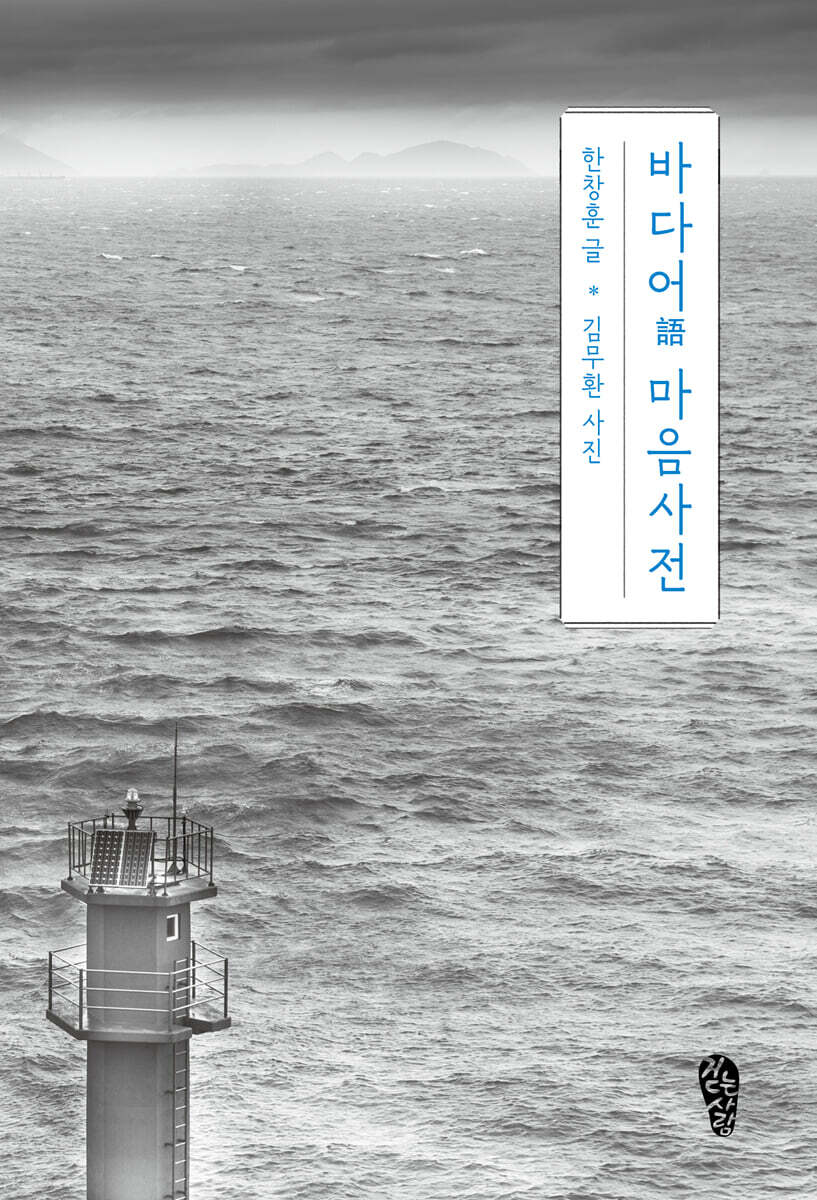 |
Description
Book Introduction
A language embraced by the sea, a heart nurtured by an island
Stories of life picked up by the waves… …
Han Chang-hoon's essay "Sea Language Mind Dictionary" published
As you follow the language of the sea and the islands, at some point you will encounter the deep knots of life.
Novelist Han Chang-hoon's new work, "Sea Words Dictionary of the Heart," is a collection of essays written by a writer who has considered the sea the source of his life, bringing out words and memories buried in his heart for a long time.
Author Han Chang-hoon is from Geomundo Island in Yeosu, and grew up in the sea and island environment, using this as the foundation of his creative work.
For him, the sea is not just a background or scenery, but a way of life and the source of language.
From the boy who grew up on the island to the city and then back to the sea, the sea was always one step ahead, guiding and supporting him.
This book was written based on the accumulation of such time.
"Sea Language Dictionary" is a book compiled based on his own experiences of seeing, hearing, and experiencing while living with the sea for decades. It is not a simple collection of essays, but rather a documentary of regional language and community culture.
The 『Sea Language Dictionary』 contains the language and lifestyle of the islanders.
The voices of grandmothers welcoming their children with “Oh my, oh my, my precious child,” the “seagull fishing method” that likens fish obtained from others instead of fishing, and even the lonely cry of a yellow bird sitting on a stone wall and looking out at the sea.
Contains dialects and expressions that are naturally used in daily life.
These languages are not simply a means of communication; they reflect the identity, emotions, and attitudes toward life of local communities.
The 'Dictionary of the Heart' is not simply an explanation of language, but contains the memories, emotions, and communal life embedded in words.
The sounds of the sea and islands resonate throughout the book.
The book specifically records events the author personally experienced or witnessed, such as the 'sound of the sea' heard in the darkness of his childhood, the scene of moonlight rising over the sea, the waves crashing after a typhoon, and the crisis in a fishing village caused by the release of nuclear contaminated water.
Through this, the sea is presented not as a simple natural environment, but as a mirror that simultaneously reflects the times, the community, and human life.
The author does not simply describe them.
It translates the waves and resonance of the sea into the language of life, and through that language, it awakens a dimension of the heart that we have been missing.
『Sea Word Dictionary』 deals with regional topics, yet has universal meaning.
The sea is a crucial environment that has shaped the lives and emotions of Koreans, and the author's account reminds us of the communal values and meaning of nature that we have been missing.
It calmly describes the reality of a fishing community collapsing in the face of crises such as the death of the ocean and the release of nuclear contaminated water.
But this record does not force despair.
It shows the hearts of people who hold on to each other and persevere in the midst of it all, and the tenacious power of life that rises again even after collapsing.
Through the vast nature of the sea, we read about the fragility and strength of humanity at the same time.
『Sea Language Dictionary』 is not a simple description of scenery, but rather approaches readers as a comprehensive record of language, culture, and life centered around the sea and islands.
Through the lives and communities formed along the sea, and the language of the heart cultivated within them, modern readers will gain an opportunity to reexamine nature, humanity, region, and life.
Mind Dictionary Series
"The Dictionary of the Heart" is a project that explores Korean sentiments through language cultivated across regions, eras, and daily life. "The Dictionary of the Heart of the Sea" is particularly unique in that it explores the unique foundations of life: the ocean and islands. "The Dictionary of the Heart of the Jeju Language" (by Hyun Taek-hoon) / "The Dictionary of the Heart of the Gangwon Province" (by Kim Do-yeon) / "The Dictionary of the Heart of the Chungcheong Province" (by Park Kyung-hee)
Stories of life picked up by the waves… …
Han Chang-hoon's essay "Sea Language Mind Dictionary" published
As you follow the language of the sea and the islands, at some point you will encounter the deep knots of life.
Novelist Han Chang-hoon's new work, "Sea Words Dictionary of the Heart," is a collection of essays written by a writer who has considered the sea the source of his life, bringing out words and memories buried in his heart for a long time.
Author Han Chang-hoon is from Geomundo Island in Yeosu, and grew up in the sea and island environment, using this as the foundation of his creative work.
For him, the sea is not just a background or scenery, but a way of life and the source of language.
From the boy who grew up on the island to the city and then back to the sea, the sea was always one step ahead, guiding and supporting him.
This book was written based on the accumulation of such time.
"Sea Language Dictionary" is a book compiled based on his own experiences of seeing, hearing, and experiencing while living with the sea for decades. It is not a simple collection of essays, but rather a documentary of regional language and community culture.
The 『Sea Language Dictionary』 contains the language and lifestyle of the islanders.
The voices of grandmothers welcoming their children with “Oh my, oh my, my precious child,” the “seagull fishing method” that likens fish obtained from others instead of fishing, and even the lonely cry of a yellow bird sitting on a stone wall and looking out at the sea.
Contains dialects and expressions that are naturally used in daily life.
These languages are not simply a means of communication; they reflect the identity, emotions, and attitudes toward life of local communities.
The 'Dictionary of the Heart' is not simply an explanation of language, but contains the memories, emotions, and communal life embedded in words.
The sounds of the sea and islands resonate throughout the book.
The book specifically records events the author personally experienced or witnessed, such as the 'sound of the sea' heard in the darkness of his childhood, the scene of moonlight rising over the sea, the waves crashing after a typhoon, and the crisis in a fishing village caused by the release of nuclear contaminated water.
Through this, the sea is presented not as a simple natural environment, but as a mirror that simultaneously reflects the times, the community, and human life.
The author does not simply describe them.
It translates the waves and resonance of the sea into the language of life, and through that language, it awakens a dimension of the heart that we have been missing.
『Sea Word Dictionary』 deals with regional topics, yet has universal meaning.
The sea is a crucial environment that has shaped the lives and emotions of Koreans, and the author's account reminds us of the communal values and meaning of nature that we have been missing.
It calmly describes the reality of a fishing community collapsing in the face of crises such as the death of the ocean and the release of nuclear contaminated water.
But this record does not force despair.
It shows the hearts of people who hold on to each other and persevere in the midst of it all, and the tenacious power of life that rises again even after collapsing.
Through the vast nature of the sea, we read about the fragility and strength of humanity at the same time.
『Sea Language Dictionary』 is not a simple description of scenery, but rather approaches readers as a comprehensive record of language, culture, and life centered around the sea and islands.
Through the lives and communities formed along the sea, and the language of the heart cultivated within them, modern readers will gain an opportunity to reexamine nature, humanity, region, and life.
Mind Dictionary Series
"The Dictionary of the Heart" is a project that explores Korean sentiments through language cultivated across regions, eras, and daily life. "The Dictionary of the Heart of the Sea" is particularly unique in that it explores the unique foundations of life: the ocean and islands. "The Dictionary of the Heart of the Jeju Language" (by Hyun Taek-hoon) / "The Dictionary of the Heart of the Gangwon Province" (by Kim Do-yeon) / "The Dictionary of the Heart of the Chungcheong Province" (by Park Kyung-hee)
- You can preview some of the book's contents.
Preview
index
Part 1
Voice of the Sea
Things from the sea
Oh my, oh my, my precious child
Seagull method
Let's mix things up a bit
The dick is huge
Mother, that bird
Route 1 - Follow the thorns
What is yours, do as you please, what is mine, do as I please.
My person who only eats soup
You are the only one
Typhoon's Heart
The typhoon is coming again
The wind blows
Route 2 - The road to Dangjae
I want to try drifting
Oh, you've followed me a lot.
Looks like a new bride
Worm, you're so annoying
Eyes are originally lazy
I'm going to the city, I'm going to the city
Route 3 - The road to Noksan
Ashitang
died in youth
Just change one glass
If I eat at that restaurant, I'll be hungry
If only I had affection
Part 2
Path 4 - The Path Beyond the Neck
Even the mute alcohol and cigarettes know what's on my mind
Because of that guy's last step
Oh, you came in.
sand castle
Route 5 - The Road to Shinchu
Stubbornness is flowing
Blood on the go
Wearing a suit, carrying a knife, and getting beaten up
Sea, sing my song
This evening
I don't eat pork
Grandpa was there
Port, port!
Some examples of gratitude
Station with an ocean view
reluctantly
It's so scary to pass by
bountiful catch festival
Because the hairtail doesn't grow
The East Island Agdeul have come
Route 6 - The Road to Ulleungdo
Did it explode?
Ha, the fog is silent…
What a wonderfully kind gentleman
For the girl
Writer or fisherman?
What are you picking up again?
Saturday comes back in three days
Spring has come
It's like a sea shell
Epilogue - This is what our sea was like
Voice of the Sea
Things from the sea
Oh my, oh my, my precious child
Seagull method
Let's mix things up a bit
The dick is huge
Mother, that bird
Route 1 - Follow the thorns
What is yours, do as you please, what is mine, do as I please.
My person who only eats soup
You are the only one
Typhoon's Heart
The typhoon is coming again
The wind blows
Route 2 - The road to Dangjae
I want to try drifting
Oh, you've followed me a lot.
Looks like a new bride
Worm, you're so annoying
Eyes are originally lazy
I'm going to the city, I'm going to the city
Route 3 - The road to Noksan
Ashitang
died in youth
Just change one glass
If I eat at that restaurant, I'll be hungry
If only I had affection
Part 2
Path 4 - The Path Beyond the Neck
Even the mute alcohol and cigarettes know what's on my mind
Because of that guy's last step
Oh, you came in.
sand castle
Route 5 - The Road to Shinchu
Stubbornness is flowing
Blood on the go
Wearing a suit, carrying a knife, and getting beaten up
Sea, sing my song
This evening
I don't eat pork
Grandpa was there
Port, port!
Some examples of gratitude
Station with an ocean view
reluctantly
It's so scary to pass by
bountiful catch festival
Because the hairtail doesn't grow
The East Island Agdeul have come
Route 6 - The Road to Ulleungdo
Did it explode?
Ha, the fog is silent…
What a wonderfully kind gentleman
For the girl
Writer or fisherman?
What are you picking up again?
Saturday comes back in three days
Spring has come
It's like a sea shell
Epilogue - This is what our sea was like
Into the book
“You little shit, Ruburu is not that kind of guy!”
Korean, especially the Jeolla dialect, resonated sharply in the heart of Paris.
The middle-aged woman's voice was so loud that people from all over the world looked at her, clearly wondering what she meant and why she spoke so loudly.
The important thing is that among all the Earthlings, I was the only one who could understand the language.
I stood there smiling.
The guy who was walking in front of me turned around and
“If this isn’t the case, then what is it?”
He replied.
I pointed my finger at the approaching Jeolla-do woman and said.
“Ruburu is awesome!”
The lady was delighted.
“Oh my, are you from Jeolla Province?”
What other meaning could there be in "Ruburu is not that kind of pair!"?
Besides the fact that you took the wrong road, it just means that I am Korean, and more specifically, from Jeolla Province.
Anyway, it was the Jeolla dialect I had heard the farthest from my life.
The woman said, “Thank you,” and turned left with her husband and walked toward the Louvre Museum.
Language is one's own and one's neighborhood's.
So, if you go abroad and don't know the way, shout out loud.
In Korean.
And that too in their local language.
Someone who understands comes from somewhere.
--- From "Geosigi Zugabuji"
Among my maternal grandparents, the eldest family was devastated by the Yeosu-Suncheon Incident.
The elders of that family were involved with the left wing.
My uncles, his sons, graduated from prestigious universities one after another, but were unable to get the jobs they wanted because of leftist affiliation.
If you are caught by association, you cannot become a civil servant, and even if you get into a large company, your limit is to a manager.
So most of them worked as academy instructors.
I made a lot of money, but is life made up of money alone?
One of them would sometimes ask me to release his frustrations by writing novels while drinking with him.
Then my heart becomes heavy.
How could it not be so?
They told me to write a novel about April 3rd when I went to Jeju, and to write a novel about May 18th when I went to Gwangju (I wrote about May 18th later because I experienced it firsthand in Gwangju when I was a sophomore in high school and almost died twice).
And this is what my uncle asked me to write to solve family problems like Cheonhyeong.
Because then you probably thought your frustration would be relieved.
But I was at a loss and answered like this.
“Uncle, do you know what the so-called blood of the heart, that is, the nature of Han?”
“What is it?” “It means it will never be solved.”
“…….”
“If it is resolved, it was never a problem in the first place.
“How deep is the sadness?”
“…….”
“So, even if I write a novel, I won’t be able to relieve my uncle’s resentment.”
--- From "Blood in the Heart"
This person wrote poetry in secret.
He showed me about five of them.
Old notebook with Beatle Battle font and misspelling (this kind of thing doesn't matter when you're writing).
‘Ah, you write poetry to survive,’ I thought.
One of them was titled 'Cow'.
The story of a cow crying continuously at the beach.
The grandmother who was listening scolded.
“What kind of cow is crying at the beach?
“The cow must cry in the mountains.”
I said something.
“Grandma, the cows here aren’t cows, they’re people.”
However, the grandmother who had been there for a while did not agree in the end.
“But you wrote it as a cow...
Cows need to be in the mountains.
“You can’t be in the gang.”
Since all the poems were vague, I hoped the story would be a little more specific.
If I could just get it in, I would ask someone I know to have it published in a literary magazine.
But he never ended up writing it.
I still understand that I couldn't fix it because if I were to write about it, I would have to go back to that painful story that couldn't be resolved.
It's a real shame and it's a shame to go.
My grandmother and he both passed away.
Holding that lump of unresolved resentment in my chest.
--- From "Blood in the Heart"
So the place we flew to was the South Pacific.
The target fish is tuna.
The fishing method is longline fishing.
The fish are caught and frozen for several months, transported to the Samoa base, and then put to work again.
I lived that life for three years.
So, what about the song? His heart and mouth never let go of the song.
At night, they would go up to the deck or the bridge roof and sing and sing.
Looking at the moon in the night sky, I miss my hometown and family.
I chose a song that was as low and soft as possible so as not to provoke the sea.
Someday I will become a singer and sing in front of people, but for now, ocean, please listen to my song… .
His song, which spread across the night sea, was a song to gather fish and at the same time a song to calm the rough waves and pray for a safe voyage.
The moon was far away and his companions were asleep, so the songs he sang always sounded like the sea.
The waves crashing against the boat were both accompaniment and audience.
--- From "Sea, My Song"
“I’m scared, what’s down there?”
My husband thought the same thing.
What could be beneath the rotten plank?
If it was just a bare floor, there would be no wooden boards.
Right now, I have a feeling there's at least one corpse inside, whose face I can't identify.
He thought for a moment whether any of his former family members were missing, and came to the conclusion that none were.
But if there was a body, it didn't have to be a family member.
And I couldn't help but think that that was where the lethargy in the house began.
He turned around as if told to do so and went back to the living room.
Again the smell of rot and moisture stung my nose.
He held his breath and tore off the rotten wooden board.
After a while, part of it collapsed, and something appeared under his eyes.
It was a very small space.
There was a room.
He descended down like a soldier rushing into enemy territory through a chemical, biological, and radiological attack.
It was barely big enough for a person to lie down in, and the water was high enough to cover their shoes.
There was nothing else.
Except for the stale air.
That night, he called his old aunt for the first time in a long time and heard this answer.
“That’s where my grandfather was hiding during the Yeosun Incident.”
The grandfather who had been hiding there was eventually discovered and executed, and the dark and uncomfortable journey of the family being implicated followed.
In this way, the couple found themselves at a point where their family history, which they had tried so hard to ignore, was becoming part of history.
--- From "Grandpa Was There"
I brought my daughter to the island when she was a newborn (I was living on the mainland at the time).
A few of my grandmother's friends (this person appears often, but to be exact, it's my maternal grandmother) came to see me because I brought my child.
As soon as they saw the child, they looked as if they were about to burst into tears.
“Oh my, oh my, my precious one!”
Each of them said the same thing.
To make it easier to see, the grandmother put the child in a walker and laid out a white cloth in the yard.
A child in a walker on a white cloth and neighborhood grandmothers sitting around it.
And the sound of ‘Oh my, my precious…’ continues.
This word means something is very precious and is often used in everyday life.
The people's voice is as precious as a thousand gold coins, like this.
But in Geomundo, it is only used for children.
All children grow up hearing this saying, “It’s like a lump of gold in the sky (天金) and a thousand pieces of gold (千金).”
Whether they are blood relatives or not, whether they are children I saw yesterday or children I am seeing for the first time, the moment I see them, I say this out loud as if I am in awe.
There is no distinction or prejudice.
I have never heard a more profound expression of love for a child.
--- From "Oh my, my dear"
A young woman in a white blouse and black skirt on a Danma and a young man on the beach against the backdrop of the dazzling May sunlight.
So, the girl was from another village and had come a long way by rowing.
This wonderful scenery, however, does not last long.
“I’ll give you some food.”
“Go back.”
“Oh my… I’ve been rowing for an hour.”
“Who told you to come?”
“Let’s chat for a moment.”
“I have to sleep.”
“It’ll only take a moment.”
“I told you to go.”
The girl finally rowed closer.
My uncle picked up a pebble and threw it.
A stone fell with a thud near the boat.
“Don’t do this.”
“Go back.”
“Why don’t you just say something?”
“I won’t do it.”
“I’ll write it down if you just say a few words.”
“Ah, go back.”
In this way, several words had already been exchanged, and the maiden had to quickly turn the boat around because of the stones flying at her.
He hurried into his room and began to take a little sleep, while his mother watched the girl slowly rowing away for a long time.
'Let's have a chat' means I want to get to know you better and if you're not bad, I'd like to date you, right?
And even marriage.
But this beautiful girl was out of luck, as she had to row for another hour.
My uncle was tired and had just started dating a girl from the next village.
Life is all about timing.
Korean, especially the Jeolla dialect, resonated sharply in the heart of Paris.
The middle-aged woman's voice was so loud that people from all over the world looked at her, clearly wondering what she meant and why she spoke so loudly.
The important thing is that among all the Earthlings, I was the only one who could understand the language.
I stood there smiling.
The guy who was walking in front of me turned around and
“If this isn’t the case, then what is it?”
He replied.
I pointed my finger at the approaching Jeolla-do woman and said.
“Ruburu is awesome!”
The lady was delighted.
“Oh my, are you from Jeolla Province?”
What other meaning could there be in "Ruburu is not that kind of pair!"?
Besides the fact that you took the wrong road, it just means that I am Korean, and more specifically, from Jeolla Province.
Anyway, it was the Jeolla dialect I had heard the farthest from my life.
The woman said, “Thank you,” and turned left with her husband and walked toward the Louvre Museum.
Language is one's own and one's neighborhood's.
So, if you go abroad and don't know the way, shout out loud.
In Korean.
And that too in their local language.
Someone who understands comes from somewhere.
--- From "Geosigi Zugabuji"
Among my maternal grandparents, the eldest family was devastated by the Yeosu-Suncheon Incident.
The elders of that family were involved with the left wing.
My uncles, his sons, graduated from prestigious universities one after another, but were unable to get the jobs they wanted because of leftist affiliation.
If you are caught by association, you cannot become a civil servant, and even if you get into a large company, your limit is to a manager.
So most of them worked as academy instructors.
I made a lot of money, but is life made up of money alone?
One of them would sometimes ask me to release his frustrations by writing novels while drinking with him.
Then my heart becomes heavy.
How could it not be so?
They told me to write a novel about April 3rd when I went to Jeju, and to write a novel about May 18th when I went to Gwangju (I wrote about May 18th later because I experienced it firsthand in Gwangju when I was a sophomore in high school and almost died twice).
And this is what my uncle asked me to write to solve family problems like Cheonhyeong.
Because then you probably thought your frustration would be relieved.
But I was at a loss and answered like this.
“Uncle, do you know what the so-called blood of the heart, that is, the nature of Han?”
“What is it?” “It means it will never be solved.”
“…….”
“If it is resolved, it was never a problem in the first place.
“How deep is the sadness?”
“…….”
“So, even if I write a novel, I won’t be able to relieve my uncle’s resentment.”
--- From "Blood in the Heart"
This person wrote poetry in secret.
He showed me about five of them.
Old notebook with Beatle Battle font and misspelling (this kind of thing doesn't matter when you're writing).
‘Ah, you write poetry to survive,’ I thought.
One of them was titled 'Cow'.
The story of a cow crying continuously at the beach.
The grandmother who was listening scolded.
“What kind of cow is crying at the beach?
“The cow must cry in the mountains.”
I said something.
“Grandma, the cows here aren’t cows, they’re people.”
However, the grandmother who had been there for a while did not agree in the end.
“But you wrote it as a cow...
Cows need to be in the mountains.
“You can’t be in the gang.”
Since all the poems were vague, I hoped the story would be a little more specific.
If I could just get it in, I would ask someone I know to have it published in a literary magazine.
But he never ended up writing it.
I still understand that I couldn't fix it because if I were to write about it, I would have to go back to that painful story that couldn't be resolved.
It's a real shame and it's a shame to go.
My grandmother and he both passed away.
Holding that lump of unresolved resentment in my chest.
--- From "Blood in the Heart"
So the place we flew to was the South Pacific.
The target fish is tuna.
The fishing method is longline fishing.
The fish are caught and frozen for several months, transported to the Samoa base, and then put to work again.
I lived that life for three years.
So, what about the song? His heart and mouth never let go of the song.
At night, they would go up to the deck or the bridge roof and sing and sing.
Looking at the moon in the night sky, I miss my hometown and family.
I chose a song that was as low and soft as possible so as not to provoke the sea.
Someday I will become a singer and sing in front of people, but for now, ocean, please listen to my song… .
His song, which spread across the night sea, was a song to gather fish and at the same time a song to calm the rough waves and pray for a safe voyage.
The moon was far away and his companions were asleep, so the songs he sang always sounded like the sea.
The waves crashing against the boat were both accompaniment and audience.
--- From "Sea, My Song"
“I’m scared, what’s down there?”
My husband thought the same thing.
What could be beneath the rotten plank?
If it was just a bare floor, there would be no wooden boards.
Right now, I have a feeling there's at least one corpse inside, whose face I can't identify.
He thought for a moment whether any of his former family members were missing, and came to the conclusion that none were.
But if there was a body, it didn't have to be a family member.
And I couldn't help but think that that was where the lethargy in the house began.
He turned around as if told to do so and went back to the living room.
Again the smell of rot and moisture stung my nose.
He held his breath and tore off the rotten wooden board.
After a while, part of it collapsed, and something appeared under his eyes.
It was a very small space.
There was a room.
He descended down like a soldier rushing into enemy territory through a chemical, biological, and radiological attack.
It was barely big enough for a person to lie down in, and the water was high enough to cover their shoes.
There was nothing else.
Except for the stale air.
That night, he called his old aunt for the first time in a long time and heard this answer.
“That’s where my grandfather was hiding during the Yeosun Incident.”
The grandfather who had been hiding there was eventually discovered and executed, and the dark and uncomfortable journey of the family being implicated followed.
In this way, the couple found themselves at a point where their family history, which they had tried so hard to ignore, was becoming part of history.
--- From "Grandpa Was There"
I brought my daughter to the island when she was a newborn (I was living on the mainland at the time).
A few of my grandmother's friends (this person appears often, but to be exact, it's my maternal grandmother) came to see me because I brought my child.
As soon as they saw the child, they looked as if they were about to burst into tears.
“Oh my, oh my, my precious one!”
Each of them said the same thing.
To make it easier to see, the grandmother put the child in a walker and laid out a white cloth in the yard.
A child in a walker on a white cloth and neighborhood grandmothers sitting around it.
And the sound of ‘Oh my, my precious…’ continues.
This word means something is very precious and is often used in everyday life.
The people's voice is as precious as a thousand gold coins, like this.
But in Geomundo, it is only used for children.
All children grow up hearing this saying, “It’s like a lump of gold in the sky (天金) and a thousand pieces of gold (千金).”
Whether they are blood relatives or not, whether they are children I saw yesterday or children I am seeing for the first time, the moment I see them, I say this out loud as if I am in awe.
There is no distinction or prejudice.
I have never heard a more profound expression of love for a child.
--- From "Oh my, my dear"
A young woman in a white blouse and black skirt on a Danma and a young man on the beach against the backdrop of the dazzling May sunlight.
So, the girl was from another village and had come a long way by rowing.
This wonderful scenery, however, does not last long.
“I’ll give you some food.”
“Go back.”
“Oh my… I’ve been rowing for an hour.”
“Who told you to come?”
“Let’s chat for a moment.”
“I have to sleep.”
“It’ll only take a moment.”
“I told you to go.”
The girl finally rowed closer.
My uncle picked up a pebble and threw it.
A stone fell with a thud near the boat.
“Don’t do this.”
“Go back.”
“Why don’t you just say something?”
“I won’t do it.”
“I’ll write it down if you just say a few words.”
“Ah, go back.”
In this way, several words had already been exchanged, and the maiden had to quickly turn the boat around because of the stones flying at her.
He hurried into his room and began to take a little sleep, while his mother watched the girl slowly rowing away for a long time.
'Let's have a chat' means I want to get to know you better and if you're not bad, I'd like to date you, right?
And even marriage.
But this beautiful girl was out of luck, as she had to row for another hour.
My uncle was tired and had just started dating a girl from the next village.
Life is all about timing.
--- From "Let's Mix It Up"
Publisher's Review
Author's Note
This book is a story set at sea.
but
Bar-touch bar-d-r-l bar-r-l.
The place where King Talhae of Silla and Empress Heo of Garak Kingdom crossed over.
The world of peace.
A space of abundance and vitality, yet at the same time a place of fear.
Where the dragon lives.
The place where Cheoyong saw the four legs.
The hometown of Grandmother Yongnyeo, the founder of the Goryeo Dynasty.
The temple of the Bodhisattva of the Sea Water Avalokitesvara on Mount Potalaka.
King Munmu's new house.
The realm of reincarnation.
The place where the Three Sacred Mountains, where the elixir of life grows, are located.
The place where Simcheong died and was resurrected.
The scene with the local chief inspector.
And then Poseidon's territory.
Another name for Isis, the goddess of the moon who married Osiris.
The place where Uranus' severed penis created foam and gave birth to Aphrodite.
A space of sexual desire.
A symbolic object of flow, death, and time, which Virginia Woolf and Freud saw as the human soul (fish) being drawn into.
I'm not trying to say that it's a place where you can live and eat like a namajagi rescue dog and live and eat like a namajagi rescue dog.
All of this is something I have learned or read.
Instead, the story is like this.
I was born on Geomundo Island in Samsan-myeon, Yeosu-si, Jeollanam-do (I remember sighing at the boundless expanse and deep blue of the sea when I first saw it, barely able to walk, but there is no evidence to support this). I have written novels and prose using the language and emotions I learned here.
In my youth, I rode fishing boats and workboats to Namhae-do and Changsin-do in Gyeongsangnam-do, Gamak Bay and Dolsando in Yeosu, Geumodo, Nokdong in Goheung, Saengildo in Wando, Geumildo, and even Cheongsando beyond that.
At the same time, I have been wandering around several seaside factories and sites and now I live on my home island.
Although the setting is mainly Geomundo Island, the words and hidden meanings heard on that island and in the sea are the 'Dictionary of the Sea Language Mind'.
The language I learned is the spirit and culture of the sea and the islands.
It is a habit of speech passed down through generations, a common attitude toward objects, a shared interpretation, and a group's thoughts about nature and events.
So, this book is a story of the accumulated feelings of the island and sea people.
Those feelings that were small but repeated moment by moment and accumulated.
Fall 2025
Han Chang-hoon
This book is a story set at sea.
but
Bar-touch bar-d-r-l bar-r-l.
The place where King Talhae of Silla and Empress Heo of Garak Kingdom crossed over.
The world of peace.
A space of abundance and vitality, yet at the same time a place of fear.
Where the dragon lives.
The place where Cheoyong saw the four legs.
The hometown of Grandmother Yongnyeo, the founder of the Goryeo Dynasty.
The temple of the Bodhisattva of the Sea Water Avalokitesvara on Mount Potalaka.
King Munmu's new house.
The realm of reincarnation.
The place where the Three Sacred Mountains, where the elixir of life grows, are located.
The place where Simcheong died and was resurrected.
The scene with the local chief inspector.
And then Poseidon's territory.
Another name for Isis, the goddess of the moon who married Osiris.
The place where Uranus' severed penis created foam and gave birth to Aphrodite.
A space of sexual desire.
A symbolic object of flow, death, and time, which Virginia Woolf and Freud saw as the human soul (fish) being drawn into.
I'm not trying to say that it's a place where you can live and eat like a namajagi rescue dog and live and eat like a namajagi rescue dog.
All of this is something I have learned or read.
Instead, the story is like this.
I was born on Geomundo Island in Samsan-myeon, Yeosu-si, Jeollanam-do (I remember sighing at the boundless expanse and deep blue of the sea when I first saw it, barely able to walk, but there is no evidence to support this). I have written novels and prose using the language and emotions I learned here.
In my youth, I rode fishing boats and workboats to Namhae-do and Changsin-do in Gyeongsangnam-do, Gamak Bay and Dolsando in Yeosu, Geumodo, Nokdong in Goheung, Saengildo in Wando, Geumildo, and even Cheongsando beyond that.
At the same time, I have been wandering around several seaside factories and sites and now I live on my home island.
Although the setting is mainly Geomundo Island, the words and hidden meanings heard on that island and in the sea are the 'Dictionary of the Sea Language Mind'.
The language I learned is the spirit and culture of the sea and the islands.
It is a habit of speech passed down through generations, a common attitude toward objects, a shared interpretation, and a group's thoughts about nature and events.
So, this book is a story of the accumulated feelings of the island and sea people.
Those feelings that were small but repeated moment by moment and accumulated.
Fall 2025
Han Chang-hoon
GOODS SPECIFICS
- Date of issue: September 26, 2025
- Page count, weight, size: 262 pages | 326g | 130*190*16mm
- ISBN13: 9791175010147
- ISBN10: 1175010146
You may also like
카테고리
korean


korean

![GQ KOREA Mark (Monthly): December [2025]](http://librairie.coreenne.fr/cdn/shop/files/8ef265dbbfbf186523ed75ba7319009d.jpg?v=1765340328&width=3840)


