

The power of reflection
 |
Description
Book Introduction
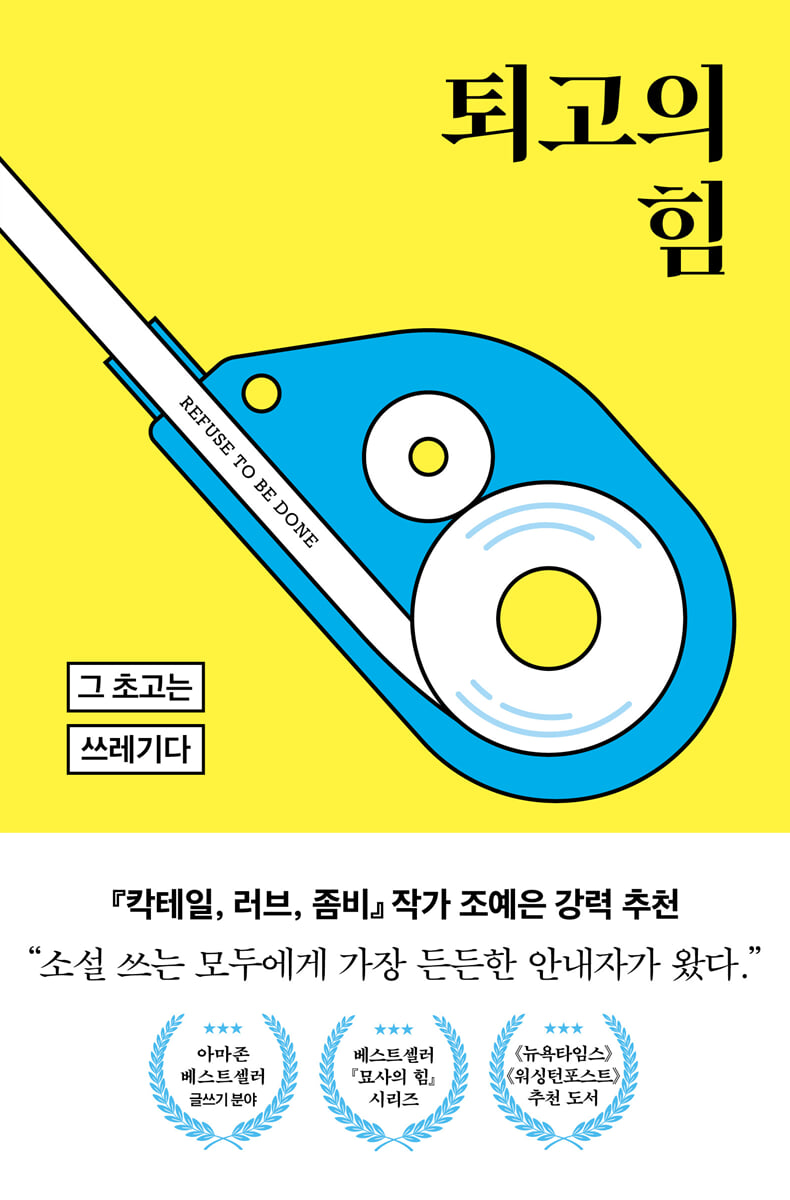
“The most reliable guide for all novelists has arrived.”
_Highly recommended by Jo Ye-eun, author of "Cocktail, Love, Zombie"
When does your manuscript become a work of art?
A special lecture on rewriting by Amazon bestselling author and creative writing professor Matt Bell.
The cheat key to perfecting a poor draft is in the editing process!
New books in the bestselling writing series, "The Power of Description," "The Power of the First Sentence," and "The Power of Point of View."
No matter how great a writer's work is, if it hasn't been revised, it's just a 'manuscript' and not a 'work of art'.
The process of rewriting and revising is the essence of writing.
"The Power of Revision" is a book written by Matt Bell, a bestselling author with experience as an editor and a creative writing professor who teaches writers. Based on his accumulated know-how, it distills the essential skills of editing that must be remembered.
“Let’s fix it right the second time.” Under this motto, the book is structured in three stages.
The work is completed when the 'first draft', which is the seed of the work, is boldly and firmly 'revised' and finally undergoes a transformation called 'revision'.
Whether you're a beginner writer who's never finished a novel before, an established writer struggling with an unexpected obstacle, or a veteran writer looking to develop a more engaging work, you can receive help tailored to your individual needs.
The cheat key to perfecting a poor draft is in the revision process.
Anyone who has ever written a piece of writing knows how painful it is to go back and edit a piece you've barely finished.
By following the step-by-step guide in this book, which takes responsibility for the beginning and end of novel writing, the difficult and daunting process will pass in an instant, and you will acquire smart editing techniques that will bring to life previously undiscovered novel possibilities.
Packed with vivid advice from world-renowned authors, abundant quotes, and immediately applicable practical techniques, this book will guide writers safely to their final destination: "writing."
_Highly recommended by Jo Ye-eun, author of "Cocktail, Love, Zombie"
When does your manuscript become a work of art?
A special lecture on rewriting by Amazon bestselling author and creative writing professor Matt Bell.
The cheat key to perfecting a poor draft is in the editing process!
New books in the bestselling writing series, "The Power of Description," "The Power of the First Sentence," and "The Power of Point of View."
No matter how great a writer's work is, if it hasn't been revised, it's just a 'manuscript' and not a 'work of art'.
The process of rewriting and revising is the essence of writing.
"The Power of Revision" is a book written by Matt Bell, a bestselling author with experience as an editor and a creative writing professor who teaches writers. Based on his accumulated know-how, it distills the essential skills of editing that must be remembered.
“Let’s fix it right the second time.” Under this motto, the book is structured in three stages.
The work is completed when the 'first draft', which is the seed of the work, is boldly and firmly 'revised' and finally undergoes a transformation called 'revision'.
Whether you're a beginner writer who's never finished a novel before, an established writer struggling with an unexpected obstacle, or a veteran writer looking to develop a more engaging work, you can receive help tailored to your individual needs.
The cheat key to perfecting a poor draft is in the revision process.
Anyone who has ever written a piece of writing knows how painful it is to go back and edit a piece you've barely finished.
By following the step-by-step guide in this book, which takes responsibility for the beginning and end of novel writing, the difficult and daunting process will pass in an instant, and you will acquire smart editing techniques that will bring to life previously undiscovered novel possibilities.
Packed with vivid advice from world-renowned authors, abundant quotes, and immediately applicable practical techniques, this book will guide writers safely to their final destination: "writing."
- You can preview some of the book's contents.
Preview
index
Preface: It takes three manuscripts for a story to become a work of art.
Chapter 1_Draft: First Manuscript
Today's task is not to finish a book.
Well begun is half done
To find inspiration
Let's fill and expand our imaginations
Everything about the characters who create the story
Let's send it back to the same place
Let's create a clear scene
If you're stuck, be bold
Draft revision strategy for finishing
It's okay if the first draft is bad
Chapter 2: Proposal: Second Manuscript
Anyway, I finished the first draft!
The answer lies in the original plot.
Now let's fix the novel
The first principle of this book
Second, no, first completion!
Chapter 3: Revision: Third Manuscript
The second principle of this book
Manuscripts viewed on a monitor vs. manuscripts viewed on paper
Let's read it out loud
Let's break it down into easy-to-handle parts
Let's transform it into an effective scene
Let's divide the chapters according to the work.
Finally, a sentence!
The Secret to Realistic Conversations
It's time to use a highlighter.
Let's change the shape here and there
What your readers want isn't your logic.
Let's cut off everything that can be cut off.
Let's do a little more
Conclusion: It's not just the story that changes.
Chapter 1_Draft: First Manuscript
Today's task is not to finish a book.
Well begun is half done
To find inspiration
Let's fill and expand our imaginations
Everything about the characters who create the story
Let's send it back to the same place
Let's create a clear scene
If you're stuck, be bold
Draft revision strategy for finishing
It's okay if the first draft is bad
Chapter 2: Proposal: Second Manuscript
Anyway, I finished the first draft!
The answer lies in the original plot.
Now let's fix the novel
The first principle of this book
Second, no, first completion!
Chapter 3: Revision: Third Manuscript
The second principle of this book
Manuscripts viewed on a monitor vs. manuscripts viewed on paper
Let's read it out loud
Let's break it down into easy-to-handle parts
Let's transform it into an effective scene
Let's divide the chapters according to the work.
Finally, a sentence!
The Secret to Realistic Conversations
It's time to use a highlighter.
Let's change the shape here and there
What your readers want isn't your logic.
Let's cut off everything that can be cut off.
Let's do a little more
Conclusion: It's not just the story that changes.
Detailed image

Into the book
The goal is not efficient work, but good work.
The road to great work is long and arduous, so there are many times when you have to retrace your steps.
But there is no other way.
In the end, we have no choice but to walk silently, believing that the path will lead us to our destination.
--- p.61
As George Saunders said, the writer's job is to "go toward complexity."
Rather than keeping the protagonist away from the rapids, it is “driving them into the rapids.”
Drive the protagonist into a corner and prevent him from getting out.
Stories are built on tension, conflict, physical danger, and complex emotions.
--- p.78
Look back at what you've written and think about the length of sentences, paragraphs, and scenes.
Once you know your writing pace, try anything you can to vary it.
If you've only written half-page scenes so far, try writing a five-page scene.
Conversely, if you only wrote five-page scenes, try inserting shorter scenes in between and see how that changes your novel.
--- p.95
I start my revision by retyping the first page of the draft.
As I transcribe it, I apply the plot that I have painstakingly organized and revise it.
If you like this approach, use the draft as a guide and make the most of it.
Instead, you have to retype everything again.
entire.
--- p.124
Most writers are very concerned about sentences from the very beginning, and find it quite difficult to distance themselves from them.
This is because the goodness or badness of the sentence itself is used as an indicator of whether or not the writer is a 'real' writer.
--- p.148
The emotions hidden in a character's words must be revealed through detailed information or actions.
A man who says, “I will love you forever” while staring at the floor may not be sincere in his love, and a man who trembles and confesses in front of a mafia boss is likely under duress, no matter how detailed his statement may be.
--- p.166
Unfortunately, this is precisely the problem.
Because what your readers want is not your logic.
Readers want to draw conclusions from fragmentary facts, figure out the motivations behind certain actions, connect scenes, and uncover secrets—all of this.
--- p.174
This is the hardest step.
You must be exhausted, you must be sick and tired of writing, and you must be ready to throw in the towel and end it all, as long as it's not writing.
But that won't work.
It's not over yet.
Don't finish it.
Just a little bit more left.
The road to great work is long and arduous, so there are many times when you have to retrace your steps.
But there is no other way.
In the end, we have no choice but to walk silently, believing that the path will lead us to our destination.
--- p.61
As George Saunders said, the writer's job is to "go toward complexity."
Rather than keeping the protagonist away from the rapids, it is “driving them into the rapids.”
Drive the protagonist into a corner and prevent him from getting out.
Stories are built on tension, conflict, physical danger, and complex emotions.
--- p.78
Look back at what you've written and think about the length of sentences, paragraphs, and scenes.
Once you know your writing pace, try anything you can to vary it.
If you've only written half-page scenes so far, try writing a five-page scene.
Conversely, if you only wrote five-page scenes, try inserting shorter scenes in between and see how that changes your novel.
--- p.95
I start my revision by retyping the first page of the draft.
As I transcribe it, I apply the plot that I have painstakingly organized and revise it.
If you like this approach, use the draft as a guide and make the most of it.
Instead, you have to retype everything again.
entire.
--- p.124
Most writers are very concerned about sentences from the very beginning, and find it quite difficult to distance themselves from them.
This is because the goodness or badness of the sentence itself is used as an indicator of whether or not the writer is a 'real' writer.
--- p.148
The emotions hidden in a character's words must be revealed through detailed information or actions.
A man who says, “I will love you forever” while staring at the floor may not be sincere in his love, and a man who trembles and confesses in front of a mafia boss is likely under duress, no matter how detailed his statement may be.
--- p.166
Unfortunately, this is precisely the problem.
Because what your readers want is not your logic.
Readers want to draw conclusions from fragmentary facts, figure out the motivations behind certain actions, connect scenes, and uncover secrets—all of this.
--- p.174
This is the hardest step.
You must be exhausted, you must be sick and tired of writing, and you must be ready to throw in the towel and end it all, as long as it's not writing.
But that won't work.
It's not over yet.
Don't finish it.
Just a little bit more left.
--- p.180
Publisher's Review
The cheat key to perfecting a poor draft is in the editing process!
A reliable pacemaker who will stay by the writer's side until the end.
“A book that will catch every writer who wants to run away.” Publisher's Weekly
Only those who have experienced it know the pain of retirement.
The pain of rejection is more bitter than the pain of creation, which creates something from nothing.
The longer the text, the more painful it becomes.
Even for the most skilled writer, finding the courage to go back to the beginning after finishing a difficult draft is not as easy as it sounds.
The same goes for not hesitating to erase scenes or sentences that you have put a lot of effort into writing.
This is why most writers find the revision stage the most difficult, and why they miss out on so much during this stage, even though there is plenty of potential for improvement.
Matt Bell, author of "The Power of Retirement," knows this better than anyone.
A bestselling author whose novel Appleseed was selected as one of the New York Times' Notable Books of 2021, he has also worked as an editor at a publishing company, reading and editing other people's writing, and is also a professor who teaches creative writing.
Having worked as a writer for over 10 years, I have honed effective writing methods and editing skills based on my own and countless other authors' writing experiences.
He effectively summarizes the various methods he has acquired and guides writers who are faced with the wall of rejection.
After reading this book, you will gain a new understanding of what it means to revise and re-revise a novel.
From the great writer Milan Kundera to the fantasy master Ursula K.
Even Le Guin,
A solid writing guide filled with the experiences and advice of countless great writers.
How did world-renowned authors approach revision? This book contains their experiences, advice, and vivid tips.
Milan Kundera's thoughts on the time that covers events, Flannery O'Connor's words on the source of a writer's imagination, Joan Didion's famous quotes defining the characteristics of a protagonist, and Ursula K.
Even Le Guin's logic.
Readers will find solace in knowing that great writers have faced similar struggles, and they will realize that the writing techniques the author introduces are not limited to the author's personal experience but are helpful to all works.
Furthermore, we will examine in detail how various techniques of retouching were applied to achieve effectiveness through the works of famous artists.
In this process, it provides an understanding of storytelling in general, including novels, across various fields such as TV dramas and movies.
This book will serve as a solid guide to the essence of storytelling for all writers seeking to create a robust world, regardless of genre.
The Secret to Writing a Novel That Perfects the More You Erase
How can I rewrite it 'properly'?
Changing character behavior, creating new settings, removing unnecessary dialogue… Will this really improve a work? The core technique of revision is "revision."
Only bold revisions that 'tear apart' and 'repair' scenes and chapters, rather than revisions that 'polish' paragraphs or sentences, can improve a work and turn a mere 'manuscript' into a 'work' that readers are waiting for.
For example, rather than changing a character's actions, it is better to merge one character with another; rather than creating new locations here and there, it is much more powerful to eliminate all meaningless locations and leave only one; and rather than deleting unnecessary dialogue here and there, it is advantageous to identify the type of dialogue and change it into a format that suits the scene.
The three stages of drafting, revising, and refining presented by the author in this book contain everything that makes a novel a novel.
Chapter 1, "The First Draft," encourages readers to let go of their desire to write a book today and focus on creating a "poor first draft." Chapter 2, "Revising," encourages readers not to be afraid of erasing and rewriting, as a true first draft will be born after revision.
Chapter 3, “Retreat,” teaches us that all the removed parts are incorporated into the work and function properly, instilling in us the patience to continue the arduous work.
Above all, it is of great help in honing one's mind as a creator by emphasizing the beginning as much as the end, as it emphasizes the beginning as well as the end of the novel.
Even if you're faced with a blank page, as dark as pure white, or trapped in a maze of dense type, if you use this book as a guide and advance step by step, you'll safely reach your destination: completion.
A reliable pacemaker who will stay by the writer's side until the end.
“A book that will catch every writer who wants to run away.” Publisher's Weekly
Only those who have experienced it know the pain of retirement.
The pain of rejection is more bitter than the pain of creation, which creates something from nothing.
The longer the text, the more painful it becomes.
Even for the most skilled writer, finding the courage to go back to the beginning after finishing a difficult draft is not as easy as it sounds.
The same goes for not hesitating to erase scenes or sentences that you have put a lot of effort into writing.
This is why most writers find the revision stage the most difficult, and why they miss out on so much during this stage, even though there is plenty of potential for improvement.
Matt Bell, author of "The Power of Retirement," knows this better than anyone.
A bestselling author whose novel Appleseed was selected as one of the New York Times' Notable Books of 2021, he has also worked as an editor at a publishing company, reading and editing other people's writing, and is also a professor who teaches creative writing.
Having worked as a writer for over 10 years, I have honed effective writing methods and editing skills based on my own and countless other authors' writing experiences.
He effectively summarizes the various methods he has acquired and guides writers who are faced with the wall of rejection.
After reading this book, you will gain a new understanding of what it means to revise and re-revise a novel.
From the great writer Milan Kundera to the fantasy master Ursula K.
Even Le Guin,
A solid writing guide filled with the experiences and advice of countless great writers.
How did world-renowned authors approach revision? This book contains their experiences, advice, and vivid tips.
Milan Kundera's thoughts on the time that covers events, Flannery O'Connor's words on the source of a writer's imagination, Joan Didion's famous quotes defining the characteristics of a protagonist, and Ursula K.
Even Le Guin's logic.
Readers will find solace in knowing that great writers have faced similar struggles, and they will realize that the writing techniques the author introduces are not limited to the author's personal experience but are helpful to all works.
Furthermore, we will examine in detail how various techniques of retouching were applied to achieve effectiveness through the works of famous artists.
In this process, it provides an understanding of storytelling in general, including novels, across various fields such as TV dramas and movies.
This book will serve as a solid guide to the essence of storytelling for all writers seeking to create a robust world, regardless of genre.
The Secret to Writing a Novel That Perfects the More You Erase
How can I rewrite it 'properly'?
Changing character behavior, creating new settings, removing unnecessary dialogue… Will this really improve a work? The core technique of revision is "revision."
Only bold revisions that 'tear apart' and 'repair' scenes and chapters, rather than revisions that 'polish' paragraphs or sentences, can improve a work and turn a mere 'manuscript' into a 'work' that readers are waiting for.
For example, rather than changing a character's actions, it is better to merge one character with another; rather than creating new locations here and there, it is much more powerful to eliminate all meaningless locations and leave only one; and rather than deleting unnecessary dialogue here and there, it is advantageous to identify the type of dialogue and change it into a format that suits the scene.
The three stages of drafting, revising, and refining presented by the author in this book contain everything that makes a novel a novel.
Chapter 1, "The First Draft," encourages readers to let go of their desire to write a book today and focus on creating a "poor first draft." Chapter 2, "Revising," encourages readers not to be afraid of erasing and rewriting, as a true first draft will be born after revision.
Chapter 3, “Retreat,” teaches us that all the removed parts are incorporated into the work and function properly, instilling in us the patience to continue the arduous work.
Above all, it is of great help in honing one's mind as a creator by emphasizing the beginning as much as the end, as it emphasizes the beginning as well as the end of the novel.
Even if you're faced with a blank page, as dark as pure white, or trapped in a maze of dense type, if you use this book as a guide and advance step by step, you'll safely reach your destination: completion.
GOODS SPECIFICS
- Date of issue: June 16, 2023
- Page count, weight, size: 192 pages | 266g | 135*205*13mm
- ISBN13: 9791155816165
- ISBN10: 1155816161
You may also like
카테고리
korean


korean

![GQ KOREA Mark (Monthly): December [2025]](http://librairie.coreenne.fr/cdn/shop/files/8ef265dbbfbf186523ed75ba7319009d.jpg?v=1765340328&width=3840)


