

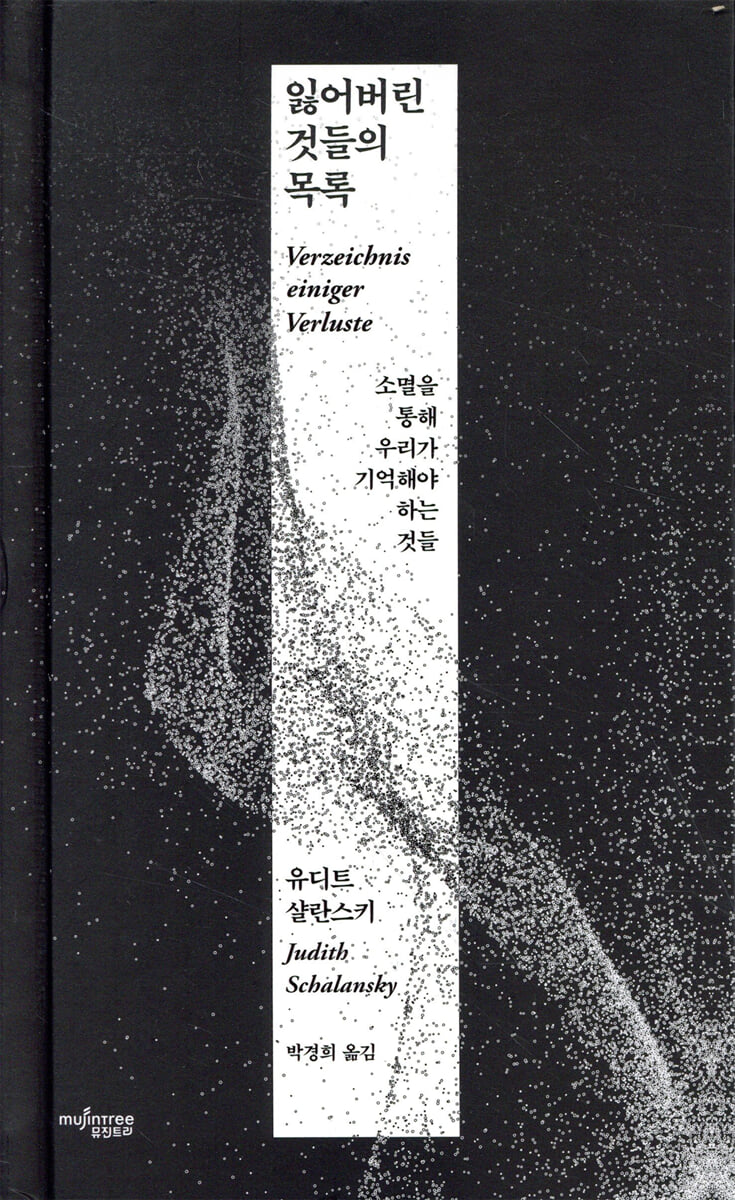
List of Lost Things
 |
Description
Book Introduction
World history is full of things that have been lost.
Things that we know existed in some form but have disappeared, been intentionally destroyed, or carelessly lost.
In this book, author Judith Schalansky selects twelve of these vanished things and reminds us of what we must remember through their disappearance.
The book's story begins on Tuanaki, a small island in the South Pacific that disappeared in the mid-19th century.
An island located in the northeastern Pacific Ocean, where there was nothing, and it is believed to have disappeared from the Earth around the end of 1842.
The author traces the island's existence by researching materials and unfolds the fascinating story of the explorers who sailed long distances to it and the indigenous people who lived there.
The author draws attention to various phenomena of disappearance and destruction and reminds us of the presence of the absent through things that are now certain to have disappeared: the extinct Caspian Tiger, the Villa Sachetti, the former residence of the ill-fated Cardinal Giulio Sachetti but which collapsed one day, the silent film "The Boy in Blue", which was definitely shot by director Friedrich Wilhelm Murnau but which only remains in 35 fragments, the poet Sappho and her love songs, and the seven books of Mani, the founder of Manichaeism.
To what extent can loss, absence, and margin exist?
In this book, we can sense the author's desire to recreate through literary means what has been lost and what he does not wish to lose.
Things that we know existed in some form but have disappeared, been intentionally destroyed, or carelessly lost.
In this book, author Judith Schalansky selects twelve of these vanished things and reminds us of what we must remember through their disappearance.
The book's story begins on Tuanaki, a small island in the South Pacific that disappeared in the mid-19th century.
An island located in the northeastern Pacific Ocean, where there was nothing, and it is believed to have disappeared from the Earth around the end of 1842.
The author traces the island's existence by researching materials and unfolds the fascinating story of the explorers who sailed long distances to it and the indigenous people who lived there.
The author draws attention to various phenomena of disappearance and destruction and reminds us of the presence of the absent through things that are now certain to have disappeared: the extinct Caspian Tiger, the Villa Sachetti, the former residence of the ill-fated Cardinal Giulio Sachetti but which collapsed one day, the silent film "The Boy in Blue", which was definitely shot by director Friedrich Wilhelm Murnau but which only remains in 35 fragments, the poet Sappho and her love songs, and the seven books of Mani, the founder of Manichaeism.
To what extent can loss, absence, and margin exist?
In this book, we can sense the author's desire to recreate through literary means what has been lost and what he does not wish to lose.
- You can preview some of the book's contents.
Preview
index
A word of caution
introduction
Tuanaki
Caspian tiger
Guerike's Unicorn
Villa Sacchetti
boy in blue
Sapo's Love Song
The castle of the von Baer family
The Seven Books of Mani
Greifswald Port
Encyclopedia of the Forest
Republic Palace
Kinau's Lunar Studies
index
Translator's Note
introduction
Tuanaki
Caspian tiger
Guerike's Unicorn
Villa Sacchetti
boy in blue
Sapo's Love Song
The castle of the von Baer family
The Seven Books of Mani
Greifswald Port
Encyclopedia of the Forest
Republic Palace
Kinau's Lunar Studies
index
Translator's Note
Into the book
“As a result, we can only mourn what is absent, what is missing: some relic, some information, sometimes nothing more than a rumor, a half-erased trace, a reverberation of an echo that has reached us.”
--- p.19
“I had to think about the forces inside the Earth.
Where power is exerted, the primordial cycle of rise and fall, prosperity and decline, is shortened.
Islands rise and sink.
The lifespan of an island is shorter than that of a continent, and islands are a temporary phenomenon.
“As I walked along the reverently lined globes, measured against the millions of years of time and the boundless expanse of the ocean, I was convinced that on the backs of all the globes displayed in the map section, shining turquoise, azure, or azure, I had finally found a clue, a thin umbilical cord connecting Mangaia and Tuanaki.”
--- p.50
“Finally, my gaze turned again to the pale blue globe.
I quickly found the location.
Right there, among the scattered islands south of the equator, was this perfect land.
In a remote part of the world.
Everything I once knew about that place has been forgotten.
But the world mourns only what it knew, unable to fathom what it has lost by the disappearance of that tiny island.
“Even though the Earth had allowed this little lost land to become its navel.”
--- p.52
“We know that the fragments of poetry are the promise of an endless romanticism, a modern ideal that is still influential.
And poetry, even now, has a more implicit emptiness, a space that amplifies meaning, than any other literary genre.
Punctuation marks appear like ghostly limbs alongside words, asserting a lost perfection.
Had they retained their original form, Sappho's poems would have seemed as strange to us as the once dazzlingly painted statues of antiquity.”
--- p.19
“I had to think about the forces inside the Earth.
Where power is exerted, the primordial cycle of rise and fall, prosperity and decline, is shortened.
Islands rise and sink.
The lifespan of an island is shorter than that of a continent, and islands are a temporary phenomenon.
“As I walked along the reverently lined globes, measured against the millions of years of time and the boundless expanse of the ocean, I was convinced that on the backs of all the globes displayed in the map section, shining turquoise, azure, or azure, I had finally found a clue, a thin umbilical cord connecting Mangaia and Tuanaki.”
--- p.50
“Finally, my gaze turned again to the pale blue globe.
I quickly found the location.
Right there, among the scattered islands south of the equator, was this perfect land.
In a remote part of the world.
Everything I once knew about that place has been forgotten.
But the world mourns only what it knew, unable to fathom what it has lost by the disappearance of that tiny island.
“Even though the Earth had allowed this little lost land to become its navel.”
--- p.52
“We know that the fragments of poetry are the promise of an endless romanticism, a modern ideal that is still influential.
And poetry, even now, has a more implicit emptiness, a space that amplifies meaning, than any other literary genre.
Punctuation marks appear like ghostly limbs alongside words, asserting a lost perfection.
Had they retained their original form, Sappho's poems would have seemed as strange to us as the once dazzlingly painted statues of antiquity.”
--- p.153
Publisher's Review
“To be alive is to experience loss.”
A unique record of mourning for lost or forgotten human history and objects
This is a unique record of mourning by German author Judith Schalansky, who literary re-enacts twelve 'disappeared things' and their loss.
In this book, Schalansky focuses on fading echoes and faded traces, rumors and legends, ellipses and phantasms, cataloging the missing and the vanished.
The protagonists of this story, which exerts its epic power at a point where conventional traditions fail, are people who fight against transience in remote places.
Like a hermit accumulating knowledge of humanity in a secluded garden, a painter of ruins creating a past that never existed, Greta Garbo in her later years questioning death amidst the empty daily life traversing Manhattan, and the author himself tracing the lost historicity of the former East Germany through the gaps of his childhood.
Schalansky's voluminous book is so richly detailed that it reads like twelve factions.
Drawing on a wealth of information and an impressive reading list, the author explores our existence through a captivating narrative that traverses a fantasy world.
To what extent can loss, absence, and margin exist?
The twelve stories, selected by the author, who is interested in scientific and ecological phenomena, unfold in a poetic yet close observation, with themes and forms interacting in surprising ways.
“Like all books, this one began with a desire to preserve something, to bring the past back to life, to call up what was forgotten, to make the silent speak, to mourn loss.
Even though we can't get anything back through the act of writing, we can make everything experienceable.
Therefore, this book is as much about what is sought as it is about what is found, about what is lost as much as what is gained, and suggests that the difference between presence and absence can be minimal as long as memory exists.” _ 30p
Each of the twelve lists, which make you wonder how they chose these topics, has its own unique story.
The presumed lost island of Tuanaki in the Pacific, the Caspian tiger that is no longer seen anywhere, the mythical unicorn, the architect Piranesi who never built a single building in his life and only dwelled on ruins, Murnau's films that remain in a few film fragments and Greta Garbo who wanders Manhattan like a ghost, Sappho's poems that remain in fragments, a burned-out castle in northern Germany, the nearly lost doctrines of Mani, the founder of Manichaeism, the dried-up River Riga that once made the port of Greifswald a trade hub, a hermit who created his own encyclopedia in the forest, the demolished Palace of the Republic, a lunar scientist who fell in love with the moon and will live on it in the distant future - through these lists of things that are now certain to have disappeared, the author draws attention to various phenomena of disappearance and destruction and reminds us of the presence of the absent.
The book's story begins on Tuanaki, a small island in the South Pacific that disappeared in the mid-19th century.
An island located in the northeastern Pacific Ocean, where there was nothing, and it is believed to have disappeared from the Earth around the end of 1842.
The author traces the island's existence by researching materials, and describes in detail the stories of the explorers who sailed long distances to it and the indigenous people who lived there.
Set in the ancient Roman amphitheater, the story of the Caspian Tiger is as captivating as a drama.
A tiger whose name comes from its speed as a bow and its roughness like the Tigris River, which is famous for having the strongest current of all rivers.
The Caspian tiger, once widespread across the globe and a dominant force in the animal kingdom, has not been seen anywhere since 1964.
The authors believe that mass hunting, habitat loss, and a decline in the most important prey species are the causes of the Caspian tiger's extinction.
Published in October 2018, “An Inventory of Things Lost” had already achieved the feat of winning the Wilhelm Rabe Prize, a prestigious German literary award, even before its publication.
The book, which was described by the judges as “a very heterogeneous text,” has exactly the same number of pages devoted to the introduction and the twelve stories.
Schalansky said of it that her intention was to "make sure each chapter had its fair share of weight."
In stories connected by themes of loss, oblivion, and memory, the author's tone changes colorfully depending on the subject matter.
The author breathes rich imagination into "Things That Have Disappeared" by giving vivid voices to those who have left their own traces and countless gaps.
Born and raised in Greifswald, a port city in northern Germany, Schalansky naturally reveals her identity throughout the book.
This work continues the fictional exploration of distant islands and life in the former East Germany that she explored in her first literary successes, Map of Distant Islands (2009) and Why Does a Giraffe Have a Long Neck (2011).
Four of the twelve stories take the author's first-person perspective, two of which are set in her hometown, and some of the stories also include memories from her childhood.
In this book, which the author describes as a “montage work” and where “the line between fact and fiction is blurred,” the author uses various storytelling methods to compellingly convey what we need to remember through what has been lost.
So, after reading this book, the words, “To be alive is to experience loss,” and “To forget everything is terrible, but what is more terrible is to forget nothing,” resonate deeply with me.
“By leaving the everyday and exploring unfamiliar times and corners with the author, the world becomes one, like a globe.” After reading this book, readers will also learn the valuable lesson that what is gone does not lose its vitality as long as we wish to keep it in our memories.
Awards this book has received
- 2022 Carl Amery Prize
- 〈Text & Language〉 2019 Finalist (〈Text & Sprache〉 2019, Shortlist)
- Bestseller in FOCUS, stern und Borsenblatt
- The Most Beautiful German Book of 2019 (Die schonsten deutschen Bucher 2019)
- 2021 Jan Michalski Literature Prize Nominee (Jan Michalski Literaturpreis 2021, Longlist)
- 2021 National Book Award Longlist
- Austrian Public Broadcasting's Best Books (ORF-Bestenliste)
- 2020 Italian Strega Award (Premio Strega Europeo 2020)
- Southwest German Broadcasting's Best Books (SWR-Bestenliste)
- 2021 International Booker Prize Longlist
- 2021 Warwick Prize for Women in Translation
- 2018 Wilhelm Raabe Literature Prize (Wilhelm Raabe-Literaturpreis 2018)
A unique record of mourning for lost or forgotten human history and objects
This is a unique record of mourning by German author Judith Schalansky, who literary re-enacts twelve 'disappeared things' and their loss.
In this book, Schalansky focuses on fading echoes and faded traces, rumors and legends, ellipses and phantasms, cataloging the missing and the vanished.
The protagonists of this story, which exerts its epic power at a point where conventional traditions fail, are people who fight against transience in remote places.
Like a hermit accumulating knowledge of humanity in a secluded garden, a painter of ruins creating a past that never existed, Greta Garbo in her later years questioning death amidst the empty daily life traversing Manhattan, and the author himself tracing the lost historicity of the former East Germany through the gaps of his childhood.
Schalansky's voluminous book is so richly detailed that it reads like twelve factions.
Drawing on a wealth of information and an impressive reading list, the author explores our existence through a captivating narrative that traverses a fantasy world.
To what extent can loss, absence, and margin exist?
The twelve stories, selected by the author, who is interested in scientific and ecological phenomena, unfold in a poetic yet close observation, with themes and forms interacting in surprising ways.
“Like all books, this one began with a desire to preserve something, to bring the past back to life, to call up what was forgotten, to make the silent speak, to mourn loss.
Even though we can't get anything back through the act of writing, we can make everything experienceable.
Therefore, this book is as much about what is sought as it is about what is found, about what is lost as much as what is gained, and suggests that the difference between presence and absence can be minimal as long as memory exists.” _ 30p
Each of the twelve lists, which make you wonder how they chose these topics, has its own unique story.
The presumed lost island of Tuanaki in the Pacific, the Caspian tiger that is no longer seen anywhere, the mythical unicorn, the architect Piranesi who never built a single building in his life and only dwelled on ruins, Murnau's films that remain in a few film fragments and Greta Garbo who wanders Manhattan like a ghost, Sappho's poems that remain in fragments, a burned-out castle in northern Germany, the nearly lost doctrines of Mani, the founder of Manichaeism, the dried-up River Riga that once made the port of Greifswald a trade hub, a hermit who created his own encyclopedia in the forest, the demolished Palace of the Republic, a lunar scientist who fell in love with the moon and will live on it in the distant future - through these lists of things that are now certain to have disappeared, the author draws attention to various phenomena of disappearance and destruction and reminds us of the presence of the absent.
The book's story begins on Tuanaki, a small island in the South Pacific that disappeared in the mid-19th century.
An island located in the northeastern Pacific Ocean, where there was nothing, and it is believed to have disappeared from the Earth around the end of 1842.
The author traces the island's existence by researching materials, and describes in detail the stories of the explorers who sailed long distances to it and the indigenous people who lived there.
Set in the ancient Roman amphitheater, the story of the Caspian Tiger is as captivating as a drama.
A tiger whose name comes from its speed as a bow and its roughness like the Tigris River, which is famous for having the strongest current of all rivers.
The Caspian tiger, once widespread across the globe and a dominant force in the animal kingdom, has not been seen anywhere since 1964.
The authors believe that mass hunting, habitat loss, and a decline in the most important prey species are the causes of the Caspian tiger's extinction.
Published in October 2018, “An Inventory of Things Lost” had already achieved the feat of winning the Wilhelm Rabe Prize, a prestigious German literary award, even before its publication.
The book, which was described by the judges as “a very heterogeneous text,” has exactly the same number of pages devoted to the introduction and the twelve stories.
Schalansky said of it that her intention was to "make sure each chapter had its fair share of weight."
In stories connected by themes of loss, oblivion, and memory, the author's tone changes colorfully depending on the subject matter.
The author breathes rich imagination into "Things That Have Disappeared" by giving vivid voices to those who have left their own traces and countless gaps.
Born and raised in Greifswald, a port city in northern Germany, Schalansky naturally reveals her identity throughout the book.
This work continues the fictional exploration of distant islands and life in the former East Germany that she explored in her first literary successes, Map of Distant Islands (2009) and Why Does a Giraffe Have a Long Neck (2011).
Four of the twelve stories take the author's first-person perspective, two of which are set in her hometown, and some of the stories also include memories from her childhood.
In this book, which the author describes as a “montage work” and where “the line between fact and fiction is blurred,” the author uses various storytelling methods to compellingly convey what we need to remember through what has been lost.
So, after reading this book, the words, “To be alive is to experience loss,” and “To forget everything is terrible, but what is more terrible is to forget nothing,” resonate deeply with me.
“By leaving the everyday and exploring unfamiliar times and corners with the author, the world becomes one, like a globe.” After reading this book, readers will also learn the valuable lesson that what is gone does not lose its vitality as long as we wish to keep it in our memories.
Awards this book has received
- 2022 Carl Amery Prize
- 〈Text & Language〉 2019 Finalist (〈Text & Sprache〉 2019, Shortlist)
- Bestseller in FOCUS, stern und Borsenblatt
- The Most Beautiful German Book of 2019 (Die schonsten deutschen Bucher 2019)
- 2021 Jan Michalski Literature Prize Nominee (Jan Michalski Literaturpreis 2021, Longlist)
- 2021 National Book Award Longlist
- Austrian Public Broadcasting's Best Books (ORF-Bestenliste)
- 2020 Italian Strega Award (Premio Strega Europeo 2020)
- Southwest German Broadcasting's Best Books (SWR-Bestenliste)
- 2021 International Booker Prize Longlist
- 2021 Warwick Prize for Women in Translation
- 2018 Wilhelm Raabe Literature Prize (Wilhelm Raabe-Literaturpreis 2018)
GOODS SPECIFICS
- Publication date: November 24, 2022
- Format: Hardcover book binding method guide
- Page count, weight, size: 316 pages | 380g | 120*200*20mm
- ISBN13: 9791161111131
- ISBN10: 1161111131
You may also like
카테고리
korean


korean

![GQ KOREA Mark (Monthly): December [2025]](http://librairie.coreenne.fr/cdn/shop/files/8ef265dbbfbf186523ed75ba7319009d.jpg?v=1765340328&width=3840)


