

The epitome of a town you'd want to live in
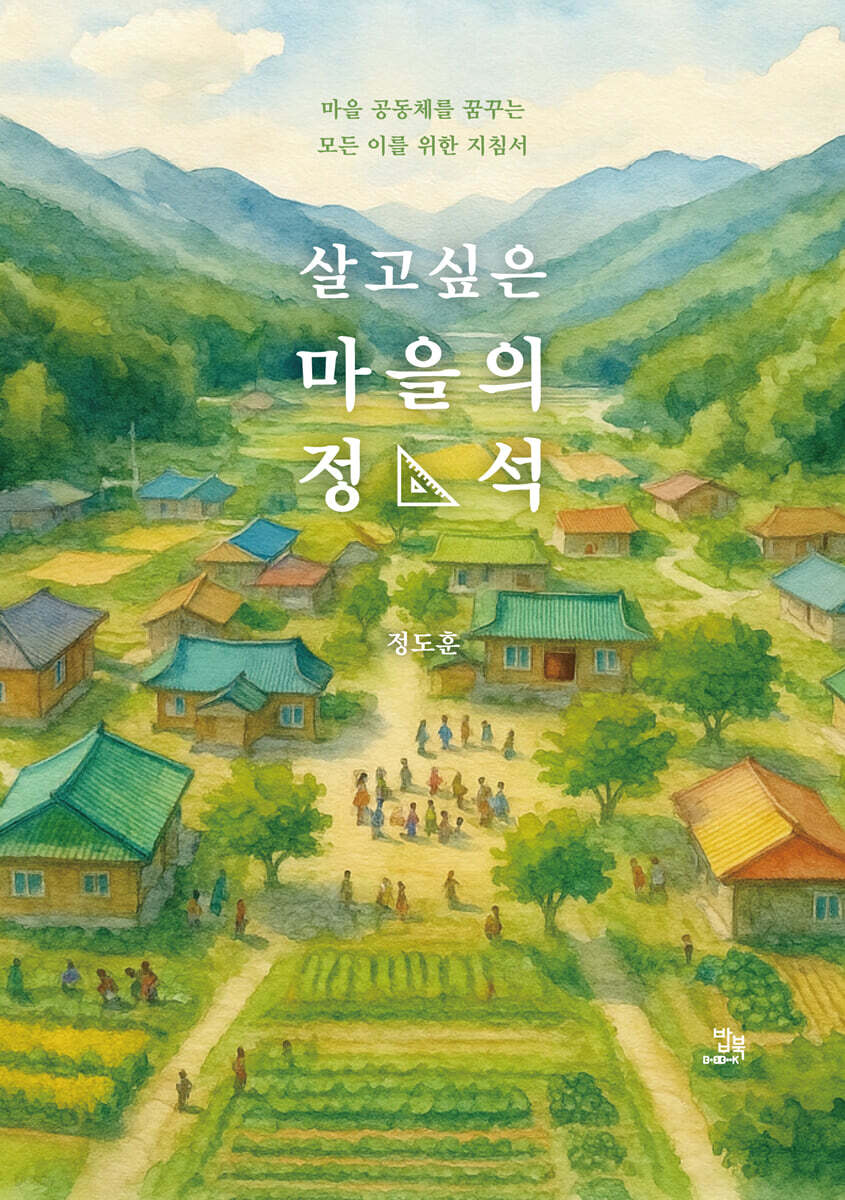 |
Description
Book Introduction
A classic guide to restoring the community where everyone wants to live.
Saving Our Village: A Fun Way to Learn with Vivid Case Studies and Q&A-style Organizations
“If the village survives, the region survives, and if the region survives, the country survives.”
This is the author's belief, having worked in rural villages for over 20 years.
This is a proposition not only for the author but also for the future of the Republic of Korea.
This is a guidebook that shows how to create and nurture a town you would like to live in, based on the author's experience and continuous research on this proposition.
The secret to creating a village community, a village where everyone would want to live like in their dreams, has been summarized in a classic way.
Although it is called a guidebook, it is structured like a design book with abundant examples and question-and-answer formats, making it fun to read and understand.
Rather than criticizing the realistic challenges facing rural communities—aging, declining income, and community breakdown—the book offers a path of hope, offering concrete ways to find a way within them.
It presents specific and practical implementation plans for village management principles, restoration of resident relationships, and village projects, so anyone interested, including field activists, public officials, village residents, and leaders, can use it as a reference book.
Saving Our Village: A Fun Way to Learn with Vivid Case Studies and Q&A-style Organizations
“If the village survives, the region survives, and if the region survives, the country survives.”
This is the author's belief, having worked in rural villages for over 20 years.
This is a proposition not only for the author but also for the future of the Republic of Korea.
This is a guidebook that shows how to create and nurture a town you would like to live in, based on the author's experience and continuous research on this proposition.
The secret to creating a village community, a village where everyone would want to live like in their dreams, has been summarized in a classic way.
Although it is called a guidebook, it is structured like a design book with abundant examples and question-and-answer formats, making it fun to read and understand.
Rather than criticizing the realistic challenges facing rural communities—aging, declining income, and community breakdown—the book offers a path of hope, offering concrete ways to find a way within them.
It presents specific and practical implementation plans for village management principles, restoration of resident relationships, and village projects, so anyone interested, including field activists, public officials, village residents, and leaders, can use it as a reference book.
- You can preview some of the book's contents.
Preview
index
Preface: Proper Restoration of Village Communities and Our Future
INTRO In the village now
Situation 1.
The person who moved in is not cooperating with the village affairs.
Situation 2.
I'm 60 years old and I'm the youngest in my neighborhood.
Situation 3.
Do you know the person who moved in as a householder?
Situation 4.
Why did you take on the role of village head and cause trouble?
Situation 5.
Why did the experience village create conflict?
Chapter 1: A Village Must Have a Foundation for Operation
1.
Let's register the village as a group
2.
Let's create a bylaw for running the village.
3.
Let's manage residents (members)
4.
Let's create a working executive system.
5.
Let's establish the principles for running the village.
Chapter 2: We must create a framework for citizen participation.
1.
Why Citizen Participation Is Important
2.
The village head must be a planner who coordinates with executives.
3.
Let's build a sense of community in our village through our efforts.
4.
Let's have regular class meetings
5.
Let's have a village event that everyone can enjoy.
Chapter 3: Villages also have stages of growth.
1.
Securing the awareness of a living community comes first.
2.
We need learning communities to strengthen the capacity of residents.
3.
An economic community must have clear goals.
4.
Ultimately, the village aims to be a sharing community.
Chapter 4: Setting the Direction for Village Development
1.
Scenario 10 years later
2.
Conditions for a town where people want to live
3.
First is relationship, second is relationship
4.
Strength from within is important
5.
A village can become a paradise for the city.
Chapter 5: The Role of Local Government in Village Development
1.
Clearly understand why you should support the village.
2.
Make a board that fits your area
3.
Hire competent professionals
4.
Don't obsess over short-term results
5.
Trust in the power of the village itself
Epilogue - The Power to Revive a Village
INTRO In the village now
Situation 1.
The person who moved in is not cooperating with the village affairs.
Situation 2.
I'm 60 years old and I'm the youngest in my neighborhood.
Situation 3.
Do you know the person who moved in as a householder?
Situation 4.
Why did you take on the role of village head and cause trouble?
Situation 5.
Why did the experience village create conflict?
Chapter 1: A Village Must Have a Foundation for Operation
1.
Let's register the village as a group
2.
Let's create a bylaw for running the village.
3.
Let's manage residents (members)
4.
Let's create a working executive system.
5.
Let's establish the principles for running the village.
Chapter 2: We must create a framework for citizen participation.
1.
Why Citizen Participation Is Important
2.
The village head must be a planner who coordinates with executives.
3.
Let's build a sense of community in our village through our efforts.
4.
Let's have regular class meetings
5.
Let's have a village event that everyone can enjoy.
Chapter 3: Villages also have stages of growth.
1.
Securing the awareness of a living community comes first.
2.
We need learning communities to strengthen the capacity of residents.
3.
An economic community must have clear goals.
4.
Ultimately, the village aims to be a sharing community.
Chapter 4: Setting the Direction for Village Development
1.
Scenario 10 years later
2.
Conditions for a town where people want to live
3.
First is relationship, second is relationship
4.
Strength from within is important
5.
A village can become a paradise for the city.
Chapter 5: The Role of Local Government in Village Development
1.
Clearly understand why you should support the village.
2.
Make a board that fits your area
3.
Hire competent professionals
4.
Don't obsess over short-term results
5.
Trust in the power of the village itself
Epilogue - The Power to Revive a Village
Publisher's Review
A clear solution for a vibrant, vibrant village where everyone is happy.
The town the book talks about where people want to live doesn't just mean living well.
It is a living, vibrant village where residents are the masters, planning, learning, cooperating, and sharing.
In other words, it is a community where the quality of life improves and happiness increases.
The book presents a village growth model as a community with four stages: 'living community → learning community → economic community → sharing community' as its central axis.
Next, we will explain in an interesting way how each stage should be formed and how to move the hearts of residents through real village cases, conversations, and expert commentary.
Each case and conversation with the residents is something that anyone has experienced or could experience in their own village.
Based on these realistic examples, the author presents solutions with the insight and perspective gained from extensive field experience.
Clear messages like “A village project where residents are mere bystanders can never succeed” and “A village with learning never ages” reach readers by pointing out what we are missing while calling for village restoration and what needs to change to fit today.
Restoring village communities will brighten the future of the Republic of Korea.
Today, South Korea faces the crisis of local extinction.
Despite the massive investment of budgets and the introduction of various policies, the crisis remains unwavering.
Our village is like the grassroots of each region and even the country.
This is why the proposition, 'If the village survives, the region survives, and if the region survives, the country survives' holds true.
Faced with the crisis of disappearing provinces and villages, the world's top ten economies are nothing more than a facade.
As our traditional villages are revived and revitalized, and we form a single community with our neighbors, the crisis of local extinction will naturally subside, and our future will become brighter.
Restoring village communities will brighten the future of the Republic of Korea.
This is why this book was published.
Above all, the book views the village as a living space centered on people and relationships, not as an object of business.
This makes us dream of a larger community, thinking beyond the village and thinking about what kind of society we dream of and hope for.
It embodies the hope that a village where everyone is happy and forms a community by working together rather than becoming unhappy due to competition and selfishness, such a village will spread throughout the entire Korean society.
The town the book talks about where people want to live doesn't just mean living well.
It is a living, vibrant village where residents are the masters, planning, learning, cooperating, and sharing.
In other words, it is a community where the quality of life improves and happiness increases.
The book presents a village growth model as a community with four stages: 'living community → learning community → economic community → sharing community' as its central axis.
Next, we will explain in an interesting way how each stage should be formed and how to move the hearts of residents through real village cases, conversations, and expert commentary.
Each case and conversation with the residents is something that anyone has experienced or could experience in their own village.
Based on these realistic examples, the author presents solutions with the insight and perspective gained from extensive field experience.
Clear messages like “A village project where residents are mere bystanders can never succeed” and “A village with learning never ages” reach readers by pointing out what we are missing while calling for village restoration and what needs to change to fit today.
Restoring village communities will brighten the future of the Republic of Korea.
Today, South Korea faces the crisis of local extinction.
Despite the massive investment of budgets and the introduction of various policies, the crisis remains unwavering.
Our village is like the grassroots of each region and even the country.
This is why the proposition, 'If the village survives, the region survives, and if the region survives, the country survives' holds true.
Faced with the crisis of disappearing provinces and villages, the world's top ten economies are nothing more than a facade.
As our traditional villages are revived and revitalized, and we form a single community with our neighbors, the crisis of local extinction will naturally subside, and our future will become brighter.
Restoring village communities will brighten the future of the Republic of Korea.
This is why this book was published.
Above all, the book views the village as a living space centered on people and relationships, not as an object of business.
This makes us dream of a larger community, thinking beyond the village and thinking about what kind of society we dream of and hope for.
It embodies the hope that a village where everyone is happy and forms a community by working together rather than becoming unhappy due to competition and selfishness, such a village will spread throughout the entire Korean society.
GOODS SPECIFICS
- Date of issue: November 10, 2025
- Page count, weight, size: 256 pages | 148*210*20mm
- ISBN13: 9791172231194
- ISBN10: 1172231192
You may also like
카테고리
korean


korean

![GQ KOREA Mark (Monthly): December [2025]](http://librairie.coreenne.fr/cdn/shop/files/8ef265dbbfbf186523ed75ba7319009d.jpg?v=1765340328&width=3840)


