

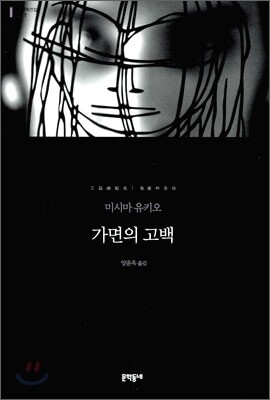
Confession of a Mask
 |
Description
Book Introduction
The inner confession of a masked writer
This is the first full-length novel by Yukio Mishima, a representative Japanese aesthetic writer.
The author's intimate homosexual tendencies were logically expressed by linking them to his upbringing and surroundings from birth to adulthood, giving a fresh shock to the Japanese literary world upon publication.
The story he tells, as if he had grown up wearing a mask his entire life, is a true confession that comes from deep within the human heart.
The first-person novel, "Confession of a Mask," is composed of four chapters, starting with an episode about the protagonist's birth and continuing through his mid-twenties, when he graduates from college and resigns from his job. It contains the author's own life story.
The author, who discovered his bare self in the very desire for art, that is, the desire to wear a mask, is opening a new and fresh chapter in confessional literature by focusing on the truth hidden behind the act of confession.
This is the first full-length novel by Yukio Mishima, a representative Japanese aesthetic writer.
The author's intimate homosexual tendencies were logically expressed by linking them to his upbringing and surroundings from birth to adulthood, giving a fresh shock to the Japanese literary world upon publication.
The story he tells, as if he had grown up wearing a mask his entire life, is a true confession that comes from deep within the human heart.
The first-person novel, "Confession of a Mask," is composed of four chapters, starting with an episode about the protagonist's birth and continuing through his mid-twenties, when he graduates from college and resigns from his job. It contains the author's own life story.
The author, who discovered his bare self in the very desire for art, that is, the desire to wear a mask, is opening a new and fresh chapter in confessional literature by focusing on the truth hidden behind the act of confession.
- You can preview some of the book's contents.
Preview
index
Chapter 1
Chapter 2
Chapter 3
Chapter 4
Yukio Mishima, The Man and Literature (Shoichi Sayeki)
About "Confessions of a Mask" (Tsuneari Fukuda)
Commentary | Confessions of a Masked Writer (Heo Ho)
Translator's Note
Yukio Mishima's Chronology
Chapter 2
Chapter 3
Chapter 4
Yukio Mishima, The Man and Literature (Shoichi Sayeki)
About "Confessions of a Mask" (Tsuneari Fukuda)
Commentary | Confessions of a Masked Writer (Heo Ho)
Translator's Note
Yukio Mishima's Chronology
Into the book
I had a feeling that there was some kind of desire in this world that made the body shiver.
Looking up at the unkempt young man, I was overcome with the desire to be like him, to be that person.
I distinctly remember that there were two important elements to that desire.
One thing was his dark blue overalls, and the other was his job.
The dark brown overalls clearly outlined the lower body.
It seemed to move smoothly and walk towards me.
I felt an irresistible pull towards those dark brown overalls.
I couldn't figure out why.
--- p.18
“Huh, you’re wearing really childish gloves.”
“Adults should wear fur gloves too.”
“That’s too bad.
“Don’t you even know what it’s like to wear leather gloves? Look at this.”
Omi suddenly thrust his snow-wet leather glove against my flushed cheek.
I flinched and dodged.
A vivid sensation burned on my cheeks and left a mark like a brand.
I felt myself looking at him with truly clear eyes.
-From that moment on, I loved Omi.
If such crude language is permissible, it was the first love I ever felt in my life.
Moreover, it was clearly a love that was connected to physical desire.
--- pp.64~65
In ukiyo-e woodblock prints from the Genroku period, the faces of men and women in love are often depicted with striking similarities.
The universal ideal of beauty expressed in Greek sculpture also turned towards men and women who resembled each other.
Could it be that there is a secret meaning of love contained here?
Isn't it true that deep within love flows an impossible desire to resemble the other person without any difference?
Isn't it this longing that drives man to that tragic rebellion, that futile struggle to make the absolutely impossible possible from the opposite extreme?
In other words, if loving each other doesn't mean becoming completely similar to each other, isn't there a psychological system that tries to use this kind of rebellion, where people try to be completely different from each other, to win each other's favor?
Moreover, sadly, the resemblance to each other ends up being a fleeting illusion.
Because even if the girl in love becomes bold and the boy in love becomes introverted, they will try to resemble each other and eventually, they will have no choice but to pass over each other's existence and go beyond, to a beyond where there is no object.
--- pp.82~83
I received a copy and before I even finished reading it, I completely understood the facts.
It wasn't a fact of defeat.
For me, and only for me, it was the beginning of a scary day.
The mere mention of that name made me shiver, and the fact that the 'daily life' of a human being, which I had deceived myself into thinking would never come, was now inevitably about to begin tomorrow.
Looking up at the unkempt young man, I was overcome with the desire to be like him, to be that person.
I distinctly remember that there were two important elements to that desire.
One thing was his dark blue overalls, and the other was his job.
The dark brown overalls clearly outlined the lower body.
It seemed to move smoothly and walk towards me.
I felt an irresistible pull towards those dark brown overalls.
I couldn't figure out why.
--- p.18
“Huh, you’re wearing really childish gloves.”
“Adults should wear fur gloves too.”
“That’s too bad.
“Don’t you even know what it’s like to wear leather gloves? Look at this.”
Omi suddenly thrust his snow-wet leather glove against my flushed cheek.
I flinched and dodged.
A vivid sensation burned on my cheeks and left a mark like a brand.
I felt myself looking at him with truly clear eyes.
-From that moment on, I loved Omi.
If such crude language is permissible, it was the first love I ever felt in my life.
Moreover, it was clearly a love that was connected to physical desire.
--- pp.64~65
In ukiyo-e woodblock prints from the Genroku period, the faces of men and women in love are often depicted with striking similarities.
The universal ideal of beauty expressed in Greek sculpture also turned towards men and women who resembled each other.
Could it be that there is a secret meaning of love contained here?
Isn't it true that deep within love flows an impossible desire to resemble the other person without any difference?
Isn't it this longing that drives man to that tragic rebellion, that futile struggle to make the absolutely impossible possible from the opposite extreme?
In other words, if loving each other doesn't mean becoming completely similar to each other, isn't there a psychological system that tries to use this kind of rebellion, where people try to be completely different from each other, to win each other's favor?
Moreover, sadly, the resemblance to each other ends up being a fleeting illusion.
Because even if the girl in love becomes bold and the boy in love becomes introverted, they will try to resemble each other and eventually, they will have no choice but to pass over each other's existence and go beyond, to a beyond where there is no object.
--- pp.82~83
I received a copy and before I even finished reading it, I completely understood the facts.
It wasn't a fact of defeat.
For me, and only for me, it was the beginning of a scary day.
The mere mention of that name made me shiver, and the fact that the 'daily life' of a human being, which I had deceived myself into thinking would never come, was now inevitably about to begin tomorrow.
--- p.193
Publisher's Review
“He is a magician who creates something out of nothing.
“Confessions of a Mask” is not only the best work he has written, but also one of the best achievements that will remain for a very long time in postwar literature.” --- Fukuda Tsuneari (literary critic)
"Confessions of a Mask" is the first full-length novel by Yukio Mishima, a representative Japanese aesthetic writer. Its groundbreaking content and elegant descriptions not only gave a fresh shock to the Japanese literary world at the time of its publication, but it also holds the most important value as a source for the study of Mishima's literature. Furthermore, it is a sensational work that announced the emergence of men's literature.
The very fact that he logically expressed his own intimate homosexual tendencies, linking them to his upbringing from birth to adulthood and his surroundings, was a fresh shock to the Japanese literary world at the time.
Critics welcomed the emergence of this new literature with rave reviews, such as, “This work marks the beginning of the 20th century in Japanese literature.”
This work clearly displays the aesthetic worldview of Yukio Mishima, who considered life itself to be the highest art.
Yukio Mishima's autobiographical novel, which created a unique world of beauty with its splendid prose.
To properly understand the autobiographical nature of 『Confession of a Mask』, we must first examine his life.
Yukio Mishima, whose real name was Kimitake Hiraoka, was born on January 14, 1925, the eldest of two sons and one daughter, to an elite bureaucrat who graduated from the University of Tokyo, and a mother who came from a family of educators.
Born prematurely, he survived several near-death experiences and spent his childhood under the overprotection of his grandmother.
He completed elementary, middle, and high school at Gakushuin, an aristocratic school. He graduated at the top of his class in 1944 and entered the Faculty of Law at the University of Tokyo at his father's recommendation.
Mishima, who had been actively engaged in creative work since the age of thirteen, fully displaying his precocious talent, made his official debut in the Japanese literary world in 1946 when his short story "Cigarettes" was published in the magazine "Human" at the recommendation of Yasunari Kawabata.
After graduating from university, Mishima worked at the Banking Bureau of the Ministry of Finance, but resigned after less than a year and began his career as a full-time writer.
At that time, I received a request from Kawate Shobo to write a long novel, and the novel I wrote was “Confession of a Mask.”
He did not agree with the proletarian literature that was popular at the time, and instead built his own world of beauty with his splendid prose. He published masterpieces such as “Thirst for Love,” “Blue Days,” and “The Sound of Waves” in succession, and reached the peak of his literary career at the age of only thirty-one with “The Temple of the Golden Pavilion,” the pinnacle of Mishima’s literature.
Yukio Mishima, in his late 30s, published the "February 26 Incident Trilogy" based on the February 26 Incident, a coup d'état by young military officers, and showed a tendency toward both civil and military discipline and nationalism.
And in September 1965, when he was forty, he began serializing the four-part series "The Sea of Abundance" in the magazine "Shincho," and on the morning of November 25, 1970, after submitting the final manuscript to the magazine, Mishima arrived at the Ichigaya Garrison of the Japan Ground Self-Defense Force with four of his followers, took the commander-in-chief hostage, gathered the men under the balcony, and gave a speech urging the Self-Defense Forces to rise up, but when there was no response, he committed suicide by seppuku in the commander-in-chief's office according to a traditional ritual.
He was forty-five years old.
Confessions of a Mask, or the Artist's Bare Face
Numerous writers have written 'Portraits of the Artist in His Young Days' about themselves.
It was out of the opposite desire that I wanted to write this novel.
In this novel, I am completely conceived as a ‘writer.’
......
I tried to create a complete confessional fiction.
The title 'Confession of a Mask' also contains such meaning.
(Author's Note)
The first-person novel, "Confessions of a Mask," is composed of four chapters, starting with the episode about the protagonist's birth and continuing until his mid-twenties, when he graduates from college and resigns from his job, which is almost identical to Mishima's chronology introduced above.
From around that time, I began to vaguely understand that what appeared to others as my acting was an expression of my desire to return to my essence, and that what appeared to others as my natural self was in fact my acting.
(Author's Note)
Yukio Mishima could not help but discover his bare face in the very desire for art, that is, the desire to wear a mask.
"Confession of a Mask" expresses this desire without filtering.
Also, the author's own commentary included in the first edition includes the following words:
This book is my last will and testament to the realm of death where I have lived until now.
Writing this book means paradoxical suicide for me.
If you film a suicide and then replay it, the person who committed it will fly from the bottom of the valley to the top of the cliff at a furious speed and come back to life.
What I have attempted by writing this book is a technique for restoring such life.
Although it is called a confession, I let 'lies' run wild in this novel.
Let those lies spread wherever they wanted.
Then the lies will be abundant and will not disturb the field of 'truth'.
In the same sense, only a mask that has dug into the flesh, a mask with flesh on it, can confess.
The essence of confession is that it is impossible.
(Author's Note)
The content that Yukio Mishima stated in “Confessions of a Mask” is truly varied and colorful.
It is interesting that in the first part, he starts off with an unbelievable story about seeing the scene at the time of his birth, and then starts his candid confession as if the work were all fiction. However, the story of his childhood as the eldest son in a family whose fortune was rapidly declining and being overprotected by his grandmother and living like a girl, the story of wanting to be a sewage collector after seeing one, the story of young people going wild at a festival, the story of being excited about dressing up, his attachment to tragedy, Joan of Arc facing death, a fairy tale prince being killed by a dragon, masturbation, 'acting' in a war game and the shock of the martyrdom of St. Sebastian, and his love for his older classmate Omi are listed in the first half, Chapters 1 and 2.
Chapters 3 and 4 then describe in detail how such a protagonist reacts to interactions with the opposite sex in real life, perhaps based on his own experiences.
Sonoko is actually modeled after the younger sister of Mishima's close friend.
"Confession of a Mask" differs significantly from existing confessional literature in that it conceptualizes past episodes rather than realistically confessing them. It is also on a different level in that it focuses on the truth hidden behind the act of confession.
Mishima himself described this work as "excrement born of a mental crisis," and the reactions of critics at the time were similar: "It feels like being possessed by a fox," "A sharp and paradoxical work," "The emergence of male literature," "Self-praise, self-intoxication," "He is completely new."
The intense expressions such as 'The 20th century begins only through this work' stand out.
After writing a novel like "Confessions of a Mask," which seemed to have barely conquered the monster within, two conflicting tendencies clearly emerged in my twenty-four-year-old mind.
One was the feeling that I had to survive somehow, and the other was the inclination towards a clear, intellectual, and bright classicism.
(Author's Note)
"Confessions of a Mask" is not only one of Yukio Mishima's finest works, but it also marks the beginning of a new era of Japanese literature after the war, proving that Yukio Mishima's sensuous yet sophisticated prose still possesses literary value.
“Confessions of a Mask” is not only the best work he has written, but also one of the best achievements that will remain for a very long time in postwar literature.” --- Fukuda Tsuneari (literary critic)
"Confessions of a Mask" is the first full-length novel by Yukio Mishima, a representative Japanese aesthetic writer. Its groundbreaking content and elegant descriptions not only gave a fresh shock to the Japanese literary world at the time of its publication, but it also holds the most important value as a source for the study of Mishima's literature. Furthermore, it is a sensational work that announced the emergence of men's literature.
The very fact that he logically expressed his own intimate homosexual tendencies, linking them to his upbringing from birth to adulthood and his surroundings, was a fresh shock to the Japanese literary world at the time.
Critics welcomed the emergence of this new literature with rave reviews, such as, “This work marks the beginning of the 20th century in Japanese literature.”
This work clearly displays the aesthetic worldview of Yukio Mishima, who considered life itself to be the highest art.
Yukio Mishima's autobiographical novel, which created a unique world of beauty with its splendid prose.
To properly understand the autobiographical nature of 『Confession of a Mask』, we must first examine his life.
Yukio Mishima, whose real name was Kimitake Hiraoka, was born on January 14, 1925, the eldest of two sons and one daughter, to an elite bureaucrat who graduated from the University of Tokyo, and a mother who came from a family of educators.
Born prematurely, he survived several near-death experiences and spent his childhood under the overprotection of his grandmother.
He completed elementary, middle, and high school at Gakushuin, an aristocratic school. He graduated at the top of his class in 1944 and entered the Faculty of Law at the University of Tokyo at his father's recommendation.
Mishima, who had been actively engaged in creative work since the age of thirteen, fully displaying his precocious talent, made his official debut in the Japanese literary world in 1946 when his short story "Cigarettes" was published in the magazine "Human" at the recommendation of Yasunari Kawabata.
After graduating from university, Mishima worked at the Banking Bureau of the Ministry of Finance, but resigned after less than a year and began his career as a full-time writer.
At that time, I received a request from Kawate Shobo to write a long novel, and the novel I wrote was “Confession of a Mask.”
He did not agree with the proletarian literature that was popular at the time, and instead built his own world of beauty with his splendid prose. He published masterpieces such as “Thirst for Love,” “Blue Days,” and “The Sound of Waves” in succession, and reached the peak of his literary career at the age of only thirty-one with “The Temple of the Golden Pavilion,” the pinnacle of Mishima’s literature.
Yukio Mishima, in his late 30s, published the "February 26 Incident Trilogy" based on the February 26 Incident, a coup d'état by young military officers, and showed a tendency toward both civil and military discipline and nationalism.
And in September 1965, when he was forty, he began serializing the four-part series "The Sea of Abundance" in the magazine "Shincho," and on the morning of November 25, 1970, after submitting the final manuscript to the magazine, Mishima arrived at the Ichigaya Garrison of the Japan Ground Self-Defense Force with four of his followers, took the commander-in-chief hostage, gathered the men under the balcony, and gave a speech urging the Self-Defense Forces to rise up, but when there was no response, he committed suicide by seppuku in the commander-in-chief's office according to a traditional ritual.
He was forty-five years old.
Confessions of a Mask, or the Artist's Bare Face
Numerous writers have written 'Portraits of the Artist in His Young Days' about themselves.
It was out of the opposite desire that I wanted to write this novel.
In this novel, I am completely conceived as a ‘writer.’
......
I tried to create a complete confessional fiction.
The title 'Confession of a Mask' also contains such meaning.
(Author's Note)
The first-person novel, "Confessions of a Mask," is composed of four chapters, starting with the episode about the protagonist's birth and continuing until his mid-twenties, when he graduates from college and resigns from his job, which is almost identical to Mishima's chronology introduced above.
From around that time, I began to vaguely understand that what appeared to others as my acting was an expression of my desire to return to my essence, and that what appeared to others as my natural self was in fact my acting.
(Author's Note)
Yukio Mishima could not help but discover his bare face in the very desire for art, that is, the desire to wear a mask.
"Confession of a Mask" expresses this desire without filtering.
Also, the author's own commentary included in the first edition includes the following words:
This book is my last will and testament to the realm of death where I have lived until now.
Writing this book means paradoxical suicide for me.
If you film a suicide and then replay it, the person who committed it will fly from the bottom of the valley to the top of the cliff at a furious speed and come back to life.
What I have attempted by writing this book is a technique for restoring such life.
Although it is called a confession, I let 'lies' run wild in this novel.
Let those lies spread wherever they wanted.
Then the lies will be abundant and will not disturb the field of 'truth'.
In the same sense, only a mask that has dug into the flesh, a mask with flesh on it, can confess.
The essence of confession is that it is impossible.
(Author's Note)
The content that Yukio Mishima stated in “Confessions of a Mask” is truly varied and colorful.
It is interesting that in the first part, he starts off with an unbelievable story about seeing the scene at the time of his birth, and then starts his candid confession as if the work were all fiction. However, the story of his childhood as the eldest son in a family whose fortune was rapidly declining and being overprotected by his grandmother and living like a girl, the story of wanting to be a sewage collector after seeing one, the story of young people going wild at a festival, the story of being excited about dressing up, his attachment to tragedy, Joan of Arc facing death, a fairy tale prince being killed by a dragon, masturbation, 'acting' in a war game and the shock of the martyrdom of St. Sebastian, and his love for his older classmate Omi are listed in the first half, Chapters 1 and 2.
Chapters 3 and 4 then describe in detail how such a protagonist reacts to interactions with the opposite sex in real life, perhaps based on his own experiences.
Sonoko is actually modeled after the younger sister of Mishima's close friend.
"Confession of a Mask" differs significantly from existing confessional literature in that it conceptualizes past episodes rather than realistically confessing them. It is also on a different level in that it focuses on the truth hidden behind the act of confession.
Mishima himself described this work as "excrement born of a mental crisis," and the reactions of critics at the time were similar: "It feels like being possessed by a fox," "A sharp and paradoxical work," "The emergence of male literature," "Self-praise, self-intoxication," "He is completely new."
The intense expressions such as 'The 20th century begins only through this work' stand out.
After writing a novel like "Confessions of a Mask," which seemed to have barely conquered the monster within, two conflicting tendencies clearly emerged in my twenty-four-year-old mind.
One was the feeling that I had to survive somehow, and the other was the inclination towards a clear, intellectual, and bright classicism.
(Author's Note)
"Confessions of a Mask" is not only one of Yukio Mishima's finest works, but it also marks the beginning of a new era of Japanese literature after the war, proving that Yukio Mishima's sensuous yet sophisticated prose still possesses literary value.
GOODS SPECIFICS
- Date of issue: December 15, 2009
- Page count, weight, size: 272 pages | 367g | 148*210*20mm
- ISBN13: 9788954609128
- ISBN10: 8954609120
You may also like
카테고리
korean


korean

![ELLE 엘르 스페셜 에디션 A형 : 12월 [2025]](http://librairie.coreenne.fr/cdn/shop/files/b8e27a3de6c9538896439686c6b0e8fb.jpg?v=1766436872&width=3840)


