

Nuclear-armed North Korea, South Korea's choice
 |
Description
Book Introduction
North Korea is a nuclear-armed state with over 50 nuclear warheads.
Accordingly, public opinion on nuclear armament is also high in Korea.
Is nuclear armament possible for South Korea, and will it contribute to peace on the Korean Peninsula? Lee Je-hoon is a professional journalist who has covered unification, diplomacy, and security on the ground for 30 years.
He examines North Korea's history of nuclear development and the process of North Korea-US nuclear negotiations to analyze public opinion on South Korea's nuclear armament.
It also introduces various examples, such as Israel's 'ambiguous strategy' of possessing nuclear weapons but neither admitting nor denying it, Japan, a 'de facto nuclear state', Taiwan's choice of a 'silicon shield' strategy instead of nuclear weapons, and India and Pakistan, which are fighting a war despite possessing nuclear weapons.
If South Korea were to arm itself with nuclear weapons, it would have to violate international law, and at that point it would face economic sanctions from the international community.
Can South Korea, a highly export-dependent, open trade nation, endure the same suffering North Korea is currently experiencing? And that's in a democratic political system where the government changes hands through elections.
Nuclear armament advocates say that peace can only be maintained by 'fighting nuclear weapons with nuclear weapons.'
However, the author says that nuclear armament of South Korea is impossible, and that the only way to guarantee peace, coexistence, and prosperity on the Korean Peninsula is 'denuclearization.'
Accordingly, public opinion on nuclear armament is also high in Korea.
Is nuclear armament possible for South Korea, and will it contribute to peace on the Korean Peninsula? Lee Je-hoon is a professional journalist who has covered unification, diplomacy, and security on the ground for 30 years.
He examines North Korea's history of nuclear development and the process of North Korea-US nuclear negotiations to analyze public opinion on South Korea's nuclear armament.
It also introduces various examples, such as Israel's 'ambiguous strategy' of possessing nuclear weapons but neither admitting nor denying it, Japan, a 'de facto nuclear state', Taiwan's choice of a 'silicon shield' strategy instead of nuclear weapons, and India and Pakistan, which are fighting a war despite possessing nuclear weapons.
If South Korea were to arm itself with nuclear weapons, it would have to violate international law, and at that point it would face economic sanctions from the international community.
Can South Korea, a highly export-dependent, open trade nation, endure the same suffering North Korea is currently experiencing? And that's in a democratic political system where the government changes hands through elections.
Nuclear armament advocates say that peace can only be maintained by 'fighting nuclear weapons with nuclear weapons.'
However, the author says that nuclear armament of South Korea is impossible, and that the only way to guarantee peace, coexistence, and prosperity on the Korean Peninsula is 'denuclearization.'
- You can preview some of the book's contents.
Preview
index
Opening Remarks: To Grasp the Sleeve of History
Part 1: Nuclear-Armed North Korea
Chapter 1: The Historical Roots of the North Korean Nuclear Issue
Chapter 2: North Korea's Declaration of Nuclear Armament
Chapter 3: The Collapse of the US-North Korea Geneva Agreement: A Critical Turning Point
Chapter 4: BDA Sanctions and the First Nuclear Test: The Gates of Hell Open
Chapter 5: Kim Jong-il's Death and Kim Jong-un's Parallel Policy
Chapter 6: The Brief Peace of 2018 and the Hanoi Deal
Chapter 7: Where is Kim Jong-un's North Korea headed?
Part 2: Mixed Choices
Chapter 1 Israel?···? Jewish Nuclear
Chapter 2 India?···? Hindu Nuclear
Chapter 3: Pakistan?...? Islamic Nuclear
[Boron] Cargil War?···? Conventional War Between Nuclear-Armed Powers
Chapter 4 Japan?···?Virtual Nukes
Chapter 5: Taiwan?···? Silicon Shield, TSMC
Part 3 Korea's Choice
Chapter 1: Park Chung-hee's Nuclear Development Program
Chapter 2: Chun Doo-hwan's Dismantlement of the Nuclear Program, Roh Tae-woo's Declaration of Denuclearization
Chapter 3: Raising the Voice for Nuclear Possession
[Boron] There are many people in favor of nuclear armament.
Chapter 4: There is no path to nuclear armament for South Korea.
Closing Remarks: How to Cross the Desert
Americas
Part 1: Nuclear-Armed North Korea
Chapter 1: The Historical Roots of the North Korean Nuclear Issue
Chapter 2: North Korea's Declaration of Nuclear Armament
Chapter 3: The Collapse of the US-North Korea Geneva Agreement: A Critical Turning Point
Chapter 4: BDA Sanctions and the First Nuclear Test: The Gates of Hell Open
Chapter 5: Kim Jong-il's Death and Kim Jong-un's Parallel Policy
Chapter 6: The Brief Peace of 2018 and the Hanoi Deal
Chapter 7: Where is Kim Jong-un's North Korea headed?
Part 2: Mixed Choices
Chapter 1 Israel?···? Jewish Nuclear
Chapter 2 India?···? Hindu Nuclear
Chapter 3: Pakistan?...? Islamic Nuclear
[Boron] Cargil War?···? Conventional War Between Nuclear-Armed Powers
Chapter 4 Japan?···?Virtual Nukes
Chapter 5: Taiwan?···? Silicon Shield, TSMC
Part 3 Korea's Choice
Chapter 1: Park Chung-hee's Nuclear Development Program
Chapter 2: Chun Doo-hwan's Dismantlement of the Nuclear Program, Roh Tae-woo's Declaration of Denuclearization
Chapter 3: Raising the Voice for Nuclear Possession
[Boron] There are many people in favor of nuclear armament.
Chapter 4: There is no path to nuclear armament for South Korea.
Closing Remarks: How to Cross the Desert
Americas
Detailed image

Into the book
Bush's decision and implementation of the complete withdrawal of tactical nuclear weapons deployed in South Korea was a subcategory of the United States' global nonproliferation strategy in the early post-Cold War period.
It was a multi-purpose stepping stone, aimed at addressing suspicions of North Korea's nuclear development, which were showing signs of emerging as a security issue in Northeast Asia, by preemptively preparing for the complete withdrawal of South Korea's deployed tactical nuclear weapons, and even eliminating the very foundation of South Korea's nuclear weapons development technology.
--- p.32
Siegfried Hecker called the collapse of the US-North Korea Geneva Agreement “the most fatal turning point” in North Korea’s nuclear history.
The Bush administration's destruction of the US-North Korea Geneva Agreement, using the suspicion of North Korea's highly enriched uranium program (HEUP), the true nature of which was not yet confirmed, as an excuse, "may have been an ideological victory for hardliners, but a disaster for US security."
“It is absolutely unacceptable that they gave North Korea a free pass to restart Yongbyon and manufacture a plutonium bomb in less than a year because of the long-term threat that would take another 10 years.”
--- p.77
Kim Dae-jung, who was the president of South Korea at the time and dealt directly with Bush and the neocons, pointed out their hidden intentions as follows.
“Those neoconservatives, so to speak, think of China as a hypothetical future enemy, and they are trying to expand their military capabilities, such as by building missile defense systems. So, shouldn’t there be some excuse?
That's North Korea." What the neocons needed was not reconciliation and cooperation toward the end of the Cold War in Northeast Asia, but tension, and to do that, they needed a villain called North Korea.
--- p.79
Park Joo-hwa of the Korea Institute for National Unification analyzed, “The percentage of citizens who want nuclear armament has remained at the level of 60 to 70 percent for a long time,” and “Public opinion on nuclear armament is long-term rather than short-term or momentary.”
According to Park Joo-hwa's analysis, the South Korean people view nuclear armament not only from the perspective of the North Korean nuclear threat, but also from the perspective of South Korea's overall security environment and defense capabilities befitting its national prestige.
Park Joo-hwa pointed out that it reflected a sense of crisis over North Korea's nuclear program, a desire for national defense capabilities commensurate with the country's status as an advanced nation, and concerns about security and prosperity amidst changing international circumstances.
It was a multi-purpose stepping stone, aimed at addressing suspicions of North Korea's nuclear development, which were showing signs of emerging as a security issue in Northeast Asia, by preemptively preparing for the complete withdrawal of South Korea's deployed tactical nuclear weapons, and even eliminating the very foundation of South Korea's nuclear weapons development technology.
--- p.32
Siegfried Hecker called the collapse of the US-North Korea Geneva Agreement “the most fatal turning point” in North Korea’s nuclear history.
The Bush administration's destruction of the US-North Korea Geneva Agreement, using the suspicion of North Korea's highly enriched uranium program (HEUP), the true nature of which was not yet confirmed, as an excuse, "may have been an ideological victory for hardliners, but a disaster for US security."
“It is absolutely unacceptable that they gave North Korea a free pass to restart Yongbyon and manufacture a plutonium bomb in less than a year because of the long-term threat that would take another 10 years.”
--- p.77
Kim Dae-jung, who was the president of South Korea at the time and dealt directly with Bush and the neocons, pointed out their hidden intentions as follows.
“Those neoconservatives, so to speak, think of China as a hypothetical future enemy, and they are trying to expand their military capabilities, such as by building missile defense systems. So, shouldn’t there be some excuse?
That's North Korea." What the neocons needed was not reconciliation and cooperation toward the end of the Cold War in Northeast Asia, but tension, and to do that, they needed a villain called North Korea.
--- p.79
Park Joo-hwa of the Korea Institute for National Unification analyzed, “The percentage of citizens who want nuclear armament has remained at the level of 60 to 70 percent for a long time,” and “Public opinion on nuclear armament is long-term rather than short-term or momentary.”
According to Park Joo-hwa's analysis, the South Korean people view nuclear armament not only from the perspective of the North Korean nuclear threat, but also from the perspective of South Korea's overall security environment and defense capabilities befitting its national prestige.
Park Joo-hwa pointed out that it reflected a sense of crisis over North Korea's nuclear program, a desire for national defense capabilities commensurate with the country's status as an advanced nation, and concerns about security and prosperity amidst changing international circumstances.
--- p.296-297
Publisher's Review
A Geopolitical Prism to Understand the Ambiguous North American Negotiations and the Northeast Asian Situation
Contrary to international concerns, domestic interest and understanding of the North Korean nuclear issue are low.
It is an old problem and the cause is complex, so it is difficult to determine the truth through news alone.
It is also common to think that North Korea's rhetoric and endless brinkmanship are largely responsible for the North Korea-US negotiations.
To understand this issue, a fact-based, historical approach to North Korea's nuclear weapons development and North Korea-US negotiations is necessary.
We must also understand the diplomatic strategies and intentions of each country, including South Korea, North Korea, the United States, Japan, China, and Russia, within the context of their geopolitical relationships.
North Korea's first nuclear test on October 9, 2006, the gates of hell open!
When North Korea announced its withdrawal from the Nuclear Non-Proliferation Treaty (NPT) on March 12, 1993, North Korea seemed eager to see who was the "coward" by shouting that they would not hesitate to go to war.
As the war loomed, stock prices plummeted and 54 million packs of ramen were sold out in an instant.
Fortunately, through the Geneva Agreement of October 21, 1994, North Korea agreed to freeze its nuclear facilities in exchange for light-water reactors to resolve its power shortage.
However, the new Bush administration wanted to break the Geneva Agreement, which was a 'weak negotiation with the enemy'.
When the Geneva Agreement was broken in 2002, North Korea declared that it would develop nuclear weapons.
North Korea conducted its first nuclear test on October 9, 2006, after its Foreign Ministry issued a statement on February 10, 2005, stating that it had "developed nuclear weapons for self-defense."
This is the moment when the 'gates of hell' on the Korean Peninsula open.
Trump's "Hanoi Change of Heart" Missed a "Once-in-a-Life" Opportunity to Solve the North Korean Nuclear Issue
As soon as Obama took office, North Korea conducted its second nuclear test.
A disappointed Obama abandoned the North Korean nuclear issue, maintaining a stance of "strategic patience" throughout his eight-year term.
Meanwhile, North Korea has strengthened its nuclear armament capabilities through several nuclear tests and missile launches.
With the inauguration of the Moon Jae-in administration in 2017 and North Korea's participation in the Pyeongchang Olympics, a spring breeze of peace began to blow.
The frozen North Korea-US negotiations have been thawed by the successive inter-Korean summits.
The 'North Korea-US Summit' was held in Singapore in 2018 and in Hanoi in 2019.
But everything went down the drain with Trump's famous 'Hanoi change of heart'.
Immediately after North Korea declared the breakdown of negotiations, it said, "The United States has blown a golden opportunity."
Amidst the failure of international cooperation on sanctions against North Korea, North Korea resolves to embark on a "difficult and arduous march."
North Korea has not given up on negotiations even after the Hanoi no-deal, but harsh words have been exchanged and no further progress has been made.
After that, North Korea decided to embark on a 'difficult march of suffering' by focusing on developing nuclear weapons and missiles.
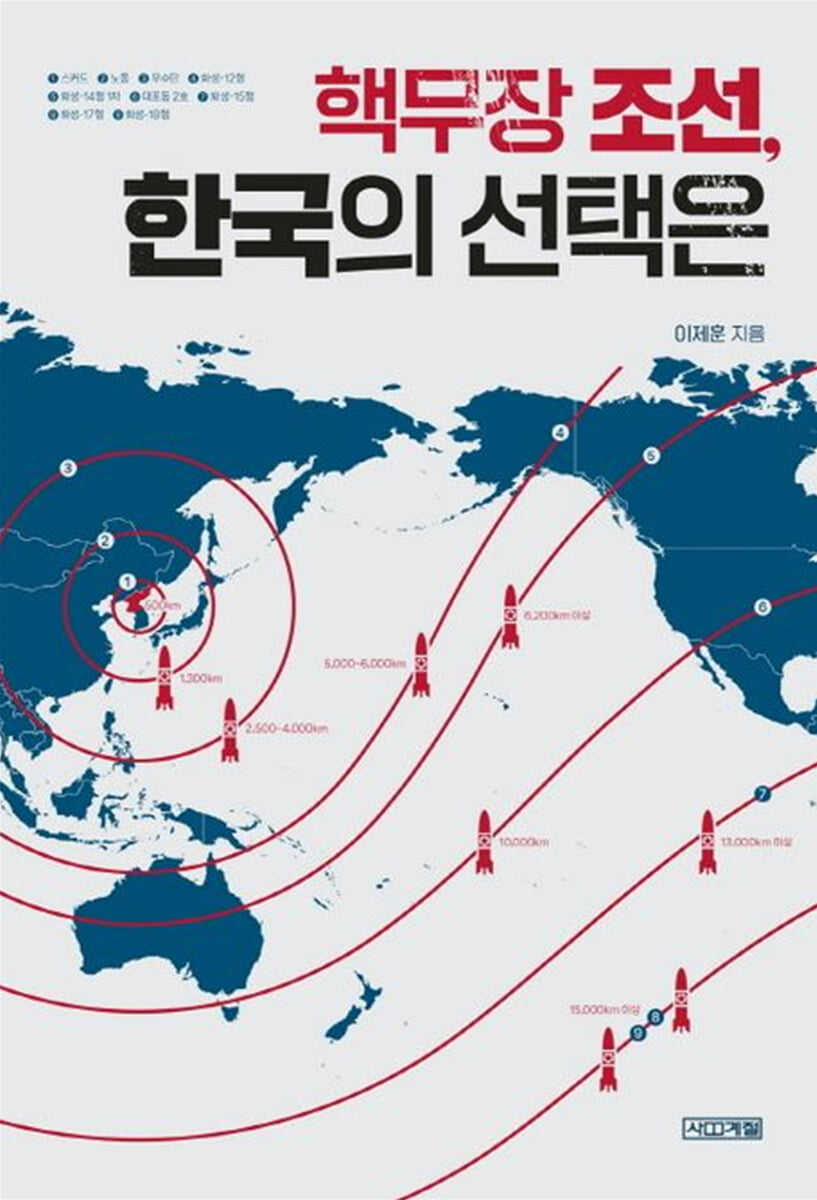
When the Russo-Ukrainian War broke out on February 24, 2022, North Korea sided with Russia, and on March 24, it test-launched a new intercontinental ballistic missile, the Hwasong-17, which has an extended range that reaches the entire United States.
In response, the United States took the lead in imposing sanctions against North Korea at the UN Security Council, but faced opposition from China and Russia.
China and Russia, which had consistently voted in favor, have turned their backs.
In the changed international situation following the Russo-Russian War, it became difficult to expect international cooperation any longer.
North Korea possesses 50 nuclear warheads and possesses enough nuclear material to assemble 90 warheads.
North Korea, which declared that it would "absolutely not give up its nuclear weapons," began its rampage by test-launching another intercontinental ballistic missile on November 19, 2022.
And during the three years of the Yoon Seok-yeol administration, inter-Korean relations also broke down as they exchanged 'anti-North Korea leaflets' and 'balloon trash.'
North Korea is estimated to possess 50 nuclear warheads and enough nuclear material to produce 90 warheads as of 2024.
Russia, which restored its military alliance with North Korea in the wake of the Russo-Russian War, claims that "the issue is closed (there is no need for further discussion) because the denuclearization of North Korea is impossible in a situation where the ROK-US military alliance has already grown to a nuclear level."
Public opinion on nuclear armament that began during the Park Chung-hee era
South Korea also embarked on developing nuclear weapons during the Park Chung-hee regime.
It was a period of overlapping security crises, including the withdrawal of US troops from Korea during the Nixon and Carter administrations and North Korea's limited war between 1968 and 1975.
The United States exerted all-out pressure to stop Park Chung-hee's nuclear development program.
Chun Doo-hwan, who seized power by massacring his own people, scrapped Park Chung-hee's nuclear program in exchange for receiving approval from the United States for his regime, and Roh Tae-woo established a denuclearization path for South Korea by announcing the "Joint Declaration on the Denuclearization of the Korean Peninsula" with North Korea in 1991 in an effort to broaden South Korea's diplomatic horizons and improve inter-Korean relations in the early post-Cold War era.
However, during recent elections, the voices of politicians advocating for nuclear armament are growing louder.
Public opinion in favor also soared to 60%.
Is nuclear armament possible for South Korea?
Nuclear armament advocates argue that peace can be achieved only by 'fighting nuclear weapons with nuclear weapons.'
If South Korea were to arm itself with nuclear weapons, it would have to violate international law and withdraw from the NPT.
Then, economic sanctions from the international community will begin immediately.
South Korea is an open trade country where governments change through elections and the economy is highly dependent on exports.
Can we truly endure the chaos and suffering? An even greater obstacle is the Korea-US Nuclear Energy Agreement, which the US signed out of concern over South Korea's nuclear armament.
According to this agreement, uranium enrichment and reprocessing, which are the core of nuclear development, cannot be used for peaceful purposes without the permission of the United States.
If this agreement is scrapped, it will be impossible to import nuclear fuel to operate nuclear power plants.
Eventually, power supply will be cut off throughout society, and we will experience a dark suffering similar to that of North Korea.
Denuclearization is the only path to peace, coexistence, and prosperity on the Korean Peninsula.
This book is a comprehensive report on public opinion on the denuclearization of the Korean Peninsula and nuclear armament.
First, we will look back at the history of North Korea's nuclear armament and North Korea-US negotiations, and analyze whether peace can be maintained only by "fighting nuclear weapons with nuclear weapons" through the examples of countries that have successfully acquired nuclear weapons.
In particular, the image of countries like India and Pakistan, which are engaged in a conventional arms race while still armed with nuclear weapons, has great implications for us.
Lee Je-hoon, author of “Nuclear-Armed North Korea: Korea’s Choice,” argues that nuclear armament in South Korea is technically and diplomatically impossible, and that the only path to peace, coexistence, and prosperity on the Korean Peninsula is “denuclearization.”
A comprehensive report on the denuclearization of the Korean Peninsula written by a journalist with 30 years of experience specializing in unification, foreign affairs, and security.
Author Lee Je-hoon has been covering unification, diplomacy, and security issues for 30 years at the Hankyoreh, and received his doctorate with a thesis titled “The Roh Tae-woo Administration’s Northern Policy and the Asymmetric Post-Cold War.”
Although several books on the North Korean nuclear issue have been published, most of them have been in the form of memoirs written by people who worked on North Korea issues in South Korea and the United States.
Otherwise, it is a book that unilaterally criticizes North Korea.
"Nuclear-Armed North Korea: Korea's Choice" presents technical issues related to nuclear weapons in a simple and concise manner, while organizing the facts based on historical data on political and diplomatic points and sharply analyzing the underlying meaning.
And based on this, it clearly criticizes the recently emerging 'nuclear armament theory'.
Therefore, this book will serve as a guide to peace for all those who wish for peace on the Korean Peninsula.
Contrary to international concerns, domestic interest and understanding of the North Korean nuclear issue are low.
It is an old problem and the cause is complex, so it is difficult to determine the truth through news alone.
It is also common to think that North Korea's rhetoric and endless brinkmanship are largely responsible for the North Korea-US negotiations.
To understand this issue, a fact-based, historical approach to North Korea's nuclear weapons development and North Korea-US negotiations is necessary.
We must also understand the diplomatic strategies and intentions of each country, including South Korea, North Korea, the United States, Japan, China, and Russia, within the context of their geopolitical relationships.
North Korea's first nuclear test on October 9, 2006, the gates of hell open!
When North Korea announced its withdrawal from the Nuclear Non-Proliferation Treaty (NPT) on March 12, 1993, North Korea seemed eager to see who was the "coward" by shouting that they would not hesitate to go to war.
As the war loomed, stock prices plummeted and 54 million packs of ramen were sold out in an instant.
Fortunately, through the Geneva Agreement of October 21, 1994, North Korea agreed to freeze its nuclear facilities in exchange for light-water reactors to resolve its power shortage.
However, the new Bush administration wanted to break the Geneva Agreement, which was a 'weak negotiation with the enemy'.
When the Geneva Agreement was broken in 2002, North Korea declared that it would develop nuclear weapons.
North Korea conducted its first nuclear test on October 9, 2006, after its Foreign Ministry issued a statement on February 10, 2005, stating that it had "developed nuclear weapons for self-defense."
This is the moment when the 'gates of hell' on the Korean Peninsula open.
Trump's "Hanoi Change of Heart" Missed a "Once-in-a-Life" Opportunity to Solve the North Korean Nuclear Issue
As soon as Obama took office, North Korea conducted its second nuclear test.
A disappointed Obama abandoned the North Korean nuclear issue, maintaining a stance of "strategic patience" throughout his eight-year term.
Meanwhile, North Korea has strengthened its nuclear armament capabilities through several nuclear tests and missile launches.
With the inauguration of the Moon Jae-in administration in 2017 and North Korea's participation in the Pyeongchang Olympics, a spring breeze of peace began to blow.
The frozen North Korea-US negotiations have been thawed by the successive inter-Korean summits.
The 'North Korea-US Summit' was held in Singapore in 2018 and in Hanoi in 2019.
But everything went down the drain with Trump's famous 'Hanoi change of heart'.
Immediately after North Korea declared the breakdown of negotiations, it said, "The United States has blown a golden opportunity."
Amidst the failure of international cooperation on sanctions against North Korea, North Korea resolves to embark on a "difficult and arduous march."
North Korea has not given up on negotiations even after the Hanoi no-deal, but harsh words have been exchanged and no further progress has been made.
After that, North Korea decided to embark on a 'difficult march of suffering' by focusing on developing nuclear weapons and missiles.
When the Russo-Ukrainian War broke out on February 24, 2022, North Korea sided with Russia, and on March 24, it test-launched a new intercontinental ballistic missile, the Hwasong-17, which has an extended range that reaches the entire United States.
In response, the United States took the lead in imposing sanctions against North Korea at the UN Security Council, but faced opposition from China and Russia.
China and Russia, which had consistently voted in favor, have turned their backs.
In the changed international situation following the Russo-Russian War, it became difficult to expect international cooperation any longer.
North Korea possesses 50 nuclear warheads and possesses enough nuclear material to assemble 90 warheads.
North Korea, which declared that it would "absolutely not give up its nuclear weapons," began its rampage by test-launching another intercontinental ballistic missile on November 19, 2022.
And during the three years of the Yoon Seok-yeol administration, inter-Korean relations also broke down as they exchanged 'anti-North Korea leaflets' and 'balloon trash.'
North Korea is estimated to possess 50 nuclear warheads and enough nuclear material to produce 90 warheads as of 2024.
Russia, which restored its military alliance with North Korea in the wake of the Russo-Russian War, claims that "the issue is closed (there is no need for further discussion) because the denuclearization of North Korea is impossible in a situation where the ROK-US military alliance has already grown to a nuclear level."
Public opinion on nuclear armament that began during the Park Chung-hee era
South Korea also embarked on developing nuclear weapons during the Park Chung-hee regime.
It was a period of overlapping security crises, including the withdrawal of US troops from Korea during the Nixon and Carter administrations and North Korea's limited war between 1968 and 1975.
The United States exerted all-out pressure to stop Park Chung-hee's nuclear development program.
Chun Doo-hwan, who seized power by massacring his own people, scrapped Park Chung-hee's nuclear program in exchange for receiving approval from the United States for his regime, and Roh Tae-woo established a denuclearization path for South Korea by announcing the "Joint Declaration on the Denuclearization of the Korean Peninsula" with North Korea in 1991 in an effort to broaden South Korea's diplomatic horizons and improve inter-Korean relations in the early post-Cold War era.
However, during recent elections, the voices of politicians advocating for nuclear armament are growing louder.
Public opinion in favor also soared to 60%.
Is nuclear armament possible for South Korea?
Nuclear armament advocates argue that peace can be achieved only by 'fighting nuclear weapons with nuclear weapons.'
If South Korea were to arm itself with nuclear weapons, it would have to violate international law and withdraw from the NPT.
Then, economic sanctions from the international community will begin immediately.
South Korea is an open trade country where governments change through elections and the economy is highly dependent on exports.
Can we truly endure the chaos and suffering? An even greater obstacle is the Korea-US Nuclear Energy Agreement, which the US signed out of concern over South Korea's nuclear armament.
According to this agreement, uranium enrichment and reprocessing, which are the core of nuclear development, cannot be used for peaceful purposes without the permission of the United States.
If this agreement is scrapped, it will be impossible to import nuclear fuel to operate nuclear power plants.
Eventually, power supply will be cut off throughout society, and we will experience a dark suffering similar to that of North Korea.
Denuclearization is the only path to peace, coexistence, and prosperity on the Korean Peninsula.
This book is a comprehensive report on public opinion on the denuclearization of the Korean Peninsula and nuclear armament.
First, we will look back at the history of North Korea's nuclear armament and North Korea-US negotiations, and analyze whether peace can be maintained only by "fighting nuclear weapons with nuclear weapons" through the examples of countries that have successfully acquired nuclear weapons.
In particular, the image of countries like India and Pakistan, which are engaged in a conventional arms race while still armed with nuclear weapons, has great implications for us.
Lee Je-hoon, author of “Nuclear-Armed North Korea: Korea’s Choice,” argues that nuclear armament in South Korea is technically and diplomatically impossible, and that the only path to peace, coexistence, and prosperity on the Korean Peninsula is “denuclearization.”
A comprehensive report on the denuclearization of the Korean Peninsula written by a journalist with 30 years of experience specializing in unification, foreign affairs, and security.
Author Lee Je-hoon has been covering unification, diplomacy, and security issues for 30 years at the Hankyoreh, and received his doctorate with a thesis titled “The Roh Tae-woo Administration’s Northern Policy and the Asymmetric Post-Cold War.”
Although several books on the North Korean nuclear issue have been published, most of them have been in the form of memoirs written by people who worked on North Korea issues in South Korea and the United States.
Otherwise, it is a book that unilaterally criticizes North Korea.
"Nuclear-Armed North Korea: Korea's Choice" presents technical issues related to nuclear weapons in a simple and concise manner, while organizing the facts based on historical data on political and diplomatic points and sharply analyzing the underlying meaning.
And based on this, it clearly criticizes the recently emerging 'nuclear armament theory'.
Therefore, this book will serve as a guide to peace for all those who wish for peace on the Korean Peninsula.
GOODS SPECIFICS
- Date of issue: June 23, 2025
- Page count, weight, size: 384 pages | 624g | 148*210*25mm
- ISBN13: 9791169813815
- ISBN10: 116981381X
You may also like
카테고리
korean


korean

![GQ KOREA Mark (Monthly): December [2025]](http://librairie.coreenne.fr/cdn/shop/files/8ef265dbbfbf186523ed75ba7319009d.jpg?v=1765340328&width=3840)


