

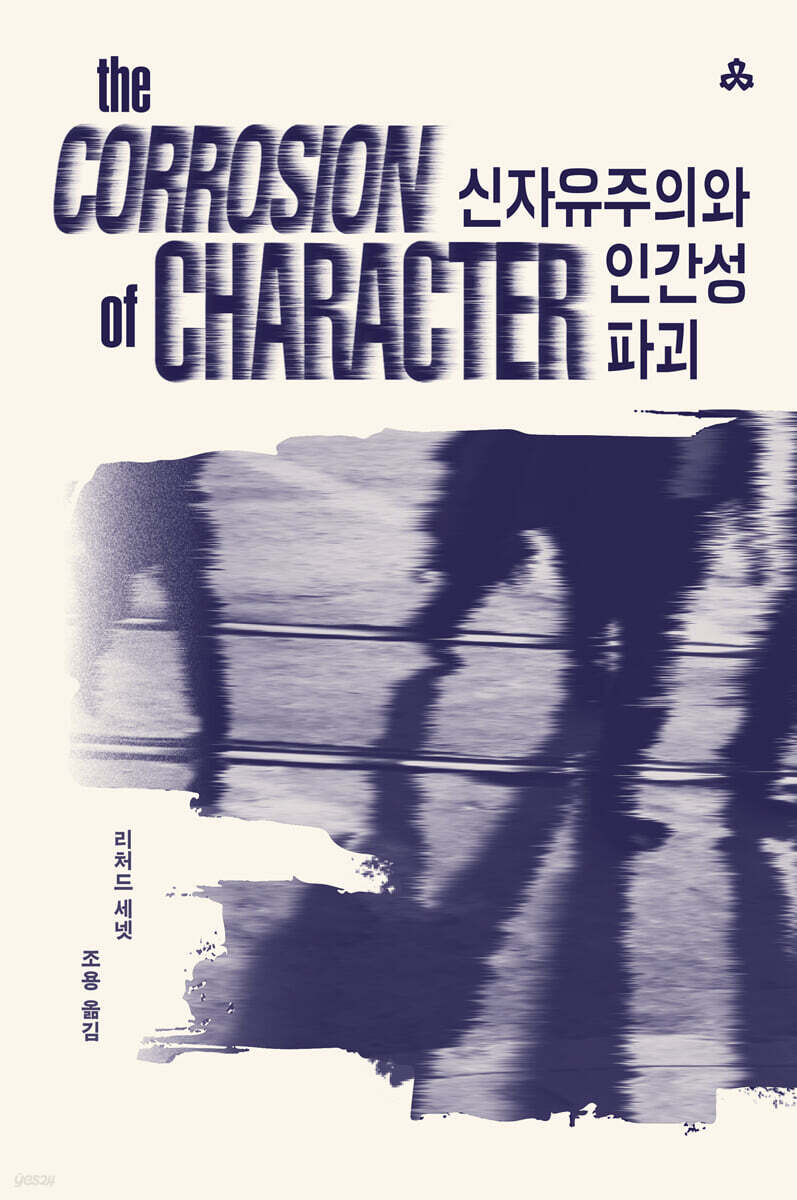
Neoliberalism and the Destruction of Humanity
 |
Description
Book Introduction
25 years after "The Hidden Wounds of Class"
Another masterpiece that delves into the lives and inner lives of the drifting working class.
★Revised edition commemorating the publication of "The Hidden Wounds of Class"★
It became a bestseller in Germany.
The book that brought Sennett the reputation of being "the American read in Europe."
"Neoliberalism and the Destruction of Humanity" examines how "flexible capitalism," or neoliberalism, has fundamentally transformed capitalism and shaken our lives and our inner selves to their core.
In this thoughtful book, written in essay form, Richard Sennett impressively demonstrates how neoliberalism, which seems to promise individuals greater choice and freedom, conceals a subtle logic of governance, and how humanity is challenged and destroyed under this system.
This book, which can be considered a sequel to "The Hidden Wounds of Class," which is considered a classic that "gave the lower classes a human face," became a bestseller in Germany and brought Sennett the reputation of "an American read in Europe."
Sennett, who has denounced the fatal flaws of neoliberalism, frankly admits that he himself does not know what a comprehensive political program is.
But he is confident.
He says this:
“I don’t think a system that can provide a compelling reason why we should care for one another as human beings will be able to maintain its legitimacy for long.” This legitimacy is precisely what the participants in the Davos Forum, the vanguard and spearhead of neoliberalism, and the system they have established have overlooked.
They are utterly and maliciously incompetent when it comes to matters of humanity.
It is our unavoidable duty to confront the problem of destroyed humanity and seek a path different from neoliberalism.
Another masterpiece that delves into the lives and inner lives of the drifting working class.
★Revised edition commemorating the publication of "The Hidden Wounds of Class"★
It became a bestseller in Germany.
The book that brought Sennett the reputation of being "the American read in Europe."
"Neoliberalism and the Destruction of Humanity" examines how "flexible capitalism," or neoliberalism, has fundamentally transformed capitalism and shaken our lives and our inner selves to their core.
In this thoughtful book, written in essay form, Richard Sennett impressively demonstrates how neoliberalism, which seems to promise individuals greater choice and freedom, conceals a subtle logic of governance, and how humanity is challenged and destroyed under this system.
This book, which can be considered a sequel to "The Hidden Wounds of Class," which is considered a classic that "gave the lower classes a human face," became a bestseller in Germany and brought Sennett the reputation of "an American read in Europe."
Sennett, who has denounced the fatal flaws of neoliberalism, frankly admits that he himself does not know what a comprehensive political program is.
But he is confident.
He says this:
“I don’t think a system that can provide a compelling reason why we should care for one another as human beings will be able to maintain its legitimacy for long.” This legitimacy is precisely what the participants in the Davos Forum, the vanguard and spearhead of neoliberalism, and the system they have established have overlooked.
They are utterly and maliciously incompetent when it comes to matters of humanity.
It is our unavoidable duty to confront the problem of destroyed humanity and seek a path different from neoliberalism.
- You can preview some of the book's contents.
Preview
index
introduction
drifting
Humanity under attack by neoliberal labor
daily
Problems with old capitalism
pliability
Time for a new restructuring
Incomprehensibility
Why Modern Forms of Labor Are Difficult to Understand
risk
Risks that bring about chaos and stagnation
work ethic
Changing work ethics
failure
How to deal with failure
We, that dangerous pronoun
A means of rescuing a drifting life
supplement
Americas
drifting
Humanity under attack by neoliberal labor
daily
Problems with old capitalism
pliability
Time for a new restructuring
Incomprehensibility
Why Modern Forms of Labor Are Difficult to Understand
risk
Risks that bring about chaos and stagnation
work ethic
Changing work ethics
failure
How to deal with failure
We, that dangerous pronoun
A means of rescuing a drifting life
supplement
Americas
Detailed image

Into the book
Workers must now be quick-witted and skillfully adapt to unexpected changes.
We must also continue to take risks and challenge ourselves, and reduce our reliance on regulations and formal procedures.
--- p.10~11
These days, the word flexibility is used as another way to remove the smell of oppression from capitalism.
Flexibility attacks rigid bureaucratic systems and highlights the value of adventure, creating the illusion that flexibility also gives people more freedom in life.
--- p.11
The most confusing aspect of flexibility is its impact on an individual's humanity.
--- p.12
What impressed Enrico and his generation most was their regular, linear approach to life, doing almost the same thing every day, their entire lives.
If you spend such monotonous years, the achievements in life will pile up one by one.
--- p.16
He had a clear life story, built up materially and spiritually.
So his life was meaningful to him as a coherent story.
--- p.17
In modern organizations, this short-term time frame leaves little room for informal trust to mature.
--- p.29
Rico couldn't model his father's actions at home, which had ensured his success, even survival, at work.
--- p.32
A more comprehensive definition of Rico's dilemma is that short-term capitalism threatens to undermine his humanity, particularly the qualities that enable him to maintain a sustainable sense of self while forming bonds with others.
--- p.33
Lost between the extremes of wandering experience and unwavering will is the story of the events that could give order to his actions.
--- p.38
Diderot believed that everyday tasks were similar to rote learning, which was essential in the learning process.
Smith, on the other hand, believed that routine tasks were mind-numbing.
Modern society is on Smith's side.
--- p.41
'Flexibility' refers to the ability of a tree to bend and then return to its original shape, that is, to both test and restore its shape.
(…) But in reality, the focus is largely on the one of the two powers of flexibility that allows people to bend.
--- p.60
The ability to break with one's past and the confidence to embrace division are two human qualities that emerge from the truly neoliberal figures of Davos.
--- p.85
From the perspective of the automated workflow, everything was clear, but emotionally, everything was incomprehensible.
--- p.92
Program-dependent workers lacked the knowledge gained through hands-on training.
When you look at it this way, they don't understand their work.
--- p.93
If you lack understanding of what you do, your connection and passion for your work will be superficial.
--- p.103
She said she always felt like she was on trial and was so confused that she didn't know where she stood.
--- p.109
She was the strongest woman I've ever met.
But the thought that she had no anchor to keep her from drifting in the vast, glittering sea of advertising agencies tormented her.
--- p.110
Adventure is something that everyone must take on every day.
--- p.112
Modern adventure culture is unique in that not moving is seen as a corpse-like stability and a sign of failure.
Therefore, the departure itself is considered more important than the destination.
--- p.123
Today's work ethic threatens the depth of experience more than ever before.
--- p.141
The new order of culture shakes the very structure of the self.
--- p.169
Neoliberalism's short-term and flexible timeframes prevent individuals from creating a coherent life story from their work, that is, from their jobs.
--- p.177
They turned inward towards themselves.
--- p.189
Modern capitalism has, perhaps unintentionally, strengthened the value of place and fostered a yearning for community.
--- p.200
To resist the new economy rather than escape it, can we incorporate ongoing personal relationships into our use of the word "we"?
Social cohesion fundamentally begins with feelings of interdependence.
--- p.202
In modern economic systems where trust is not a major issue, where there is no reason to need it, indifference spreads.
In the past, indifference had a strong material color in class-based capitalism.
In contrast, the indifference that spreads in flexible capitalism is more personal.
--- p.213
This shows the problem of humanity in modern capitalism.
There is history, but there is no story of shared hardship, no shared destiny.
--- p.214
I don't know what kind of political program would meet the psychological needs of individuals.
However, I believe that a system that fails to provide valuable reasons why we should care for one another as human beings will not be able to maintain its legitimacy for long.
We must also continue to take risks and challenge ourselves, and reduce our reliance on regulations and formal procedures.
--- p.10~11
These days, the word flexibility is used as another way to remove the smell of oppression from capitalism.
Flexibility attacks rigid bureaucratic systems and highlights the value of adventure, creating the illusion that flexibility also gives people more freedom in life.
--- p.11
The most confusing aspect of flexibility is its impact on an individual's humanity.
--- p.12
What impressed Enrico and his generation most was their regular, linear approach to life, doing almost the same thing every day, their entire lives.
If you spend such monotonous years, the achievements in life will pile up one by one.
--- p.16
He had a clear life story, built up materially and spiritually.
So his life was meaningful to him as a coherent story.
--- p.17
In modern organizations, this short-term time frame leaves little room for informal trust to mature.
--- p.29
Rico couldn't model his father's actions at home, which had ensured his success, even survival, at work.
--- p.32
A more comprehensive definition of Rico's dilemma is that short-term capitalism threatens to undermine his humanity, particularly the qualities that enable him to maintain a sustainable sense of self while forming bonds with others.
--- p.33
Lost between the extremes of wandering experience and unwavering will is the story of the events that could give order to his actions.
--- p.38
Diderot believed that everyday tasks were similar to rote learning, which was essential in the learning process.
Smith, on the other hand, believed that routine tasks were mind-numbing.
Modern society is on Smith's side.
--- p.41
'Flexibility' refers to the ability of a tree to bend and then return to its original shape, that is, to both test and restore its shape.
(…) But in reality, the focus is largely on the one of the two powers of flexibility that allows people to bend.
--- p.60
The ability to break with one's past and the confidence to embrace division are two human qualities that emerge from the truly neoliberal figures of Davos.
--- p.85
From the perspective of the automated workflow, everything was clear, but emotionally, everything was incomprehensible.
--- p.92
Program-dependent workers lacked the knowledge gained through hands-on training.
When you look at it this way, they don't understand their work.
--- p.93
If you lack understanding of what you do, your connection and passion for your work will be superficial.
--- p.103
She said she always felt like she was on trial and was so confused that she didn't know where she stood.
--- p.109
She was the strongest woman I've ever met.
But the thought that she had no anchor to keep her from drifting in the vast, glittering sea of advertising agencies tormented her.
--- p.110
Adventure is something that everyone must take on every day.
--- p.112
Modern adventure culture is unique in that not moving is seen as a corpse-like stability and a sign of failure.
Therefore, the departure itself is considered more important than the destination.
--- p.123
Today's work ethic threatens the depth of experience more than ever before.
--- p.141
The new order of culture shakes the very structure of the self.
--- p.169
Neoliberalism's short-term and flexible timeframes prevent individuals from creating a coherent life story from their work, that is, from their jobs.
--- p.177
They turned inward towards themselves.
--- p.189
Modern capitalism has, perhaps unintentionally, strengthened the value of place and fostered a yearning for community.
--- p.200
To resist the new economy rather than escape it, can we incorporate ongoing personal relationships into our use of the word "we"?
Social cohesion fundamentally begins with feelings of interdependence.
--- p.202
In modern economic systems where trust is not a major issue, where there is no reason to need it, indifference spreads.
In the past, indifference had a strong material color in class-based capitalism.
In contrast, the indifference that spreads in flexible capitalism is more personal.
--- p.213
This shows the problem of humanity in modern capitalism.
There is history, but there is no story of shared hardship, no shared destiny.
--- p.214
I don't know what kind of political program would meet the psychological needs of individuals.
However, I believe that a system that fails to provide valuable reasons why we should care for one another as human beings will not be able to maintain its legitimacy for long.
--- p.215
Publisher's Review
25 years after "The Hidden Wounds of Class"
Another masterpiece that delves into the lives and inner lives of the drifting working class.
★Revised edition commemorating the publication of "The Hidden Wounds of Class"★
It became a bestseller in Germany.
The book that brought Sennett the reputation of being "the American read in Europe."
"Neoliberalism and the Destruction of Humanity" examines how "flexible capitalism," or neoliberalism, has fundamentally transformed capitalism and shaken our lives and our inner selves to their core.
In this thoughtful book, written in essay form, Richard Sennett impressively demonstrates how neoliberalism, which seems to promise individuals greater choice and freedom, conceals a subtle logic of governance, and how humanity is challenged and destroyed under this system.
This book, which can be considered a sequel to "The Hidden Wounds of Class," which is considered a classic that "gave the lower classes a human face," became a bestseller in Germany and brought Sennett the reputation of "an American read in Europe."
Sennett begins the book with the story of Rico.
Rico is the son of Enrico, whom Sennett met 25 years before writing this book, while writing The Hidden Wounds of Class.
Enrico, who worked as a janitor in a building, belonged to the lower class and lived a life that could easily seem boring, doing the same job all his life.
But Enrico had pride.
It's the pride that you are the author of your own life.
Enrico was content to draw his own life story from the routine and linear labor.
But Rico can't do that.
Unlike his father, he became a member of the top 5 percent of earners.
But we are trapped in the trap of neoliberalism and are unable to move.
In a social climate that demands flexible adaptability to constantly approaching change and endless adventures, it is impossible for Rico to create a solid life narrative like his father.
Rico suffers from anxiety and nervousness at work, and at home, he feels anxious about the lack of long-term value.
In return for his upward mobility, Rico lost the full story of the events that gave him a sense of order in his actions.
Rico's humanity is being damaged.
Denis Diderot vs. Adam Smith
Repetitive, routine labor vs. the "flexibility" of neoliberalism
Sennett adds to this the debate between Denis Diderot and Adam Smith.
In his Encyclopédie and The Wealth of Nations, published in 1751–1772 and 1766, respectively, Diderot emphasized the virtue of repetitive work, while Smith praised change, claiming that fixed routines paralyze the mind.
Diderot believed that something valuable could sprout from repeated work, as actors do, and Smith, while expressing concern about the moral consequences of endless change, defended it as having profound economic implications.
As we know, modern society is on Smith's side.
Sennett, who revitalizes the 18th-century classics into contemporary debates, diagnoses that in today's culture of 'flexibility,' the issues of daily life and labor that preoccupied Diderot and Smith are once again at a historical crossroads.
Flexibility originally meant both the ability to bend and the ability to bounce back, but neoliberalism only takes the first of these meanings.
Neoliberalism focuses only on changing the form of human labor and has no interest in restoring the humanity that is destroyed as a result.
After clearly outlining the ways in which neoliberalism operates and its characteristics—discontinuous organizational reform, flexible specialization, and decentralized cohesion—Sennett gives concrete substance to his interpretation through observations from the Davos Forum, where the world's political and business leaders gather.
Davos attendees, including Bill Gates, praise the confidence to thrive in chaos and the resilience to thrive in the face of disorientation.
And it is precisely this ability that draws the line between winners and losers.
A 'true winner' is one who does not suffer from mental breakdown even in the midst of constant adventure and change.
In the face of the logic of neoliberalism, which emphasizes flexibility, Rico's confusion cannot be seriously considered.
Only Rico's economic achievements shine hollowly.
How neoliberalism is shaking up our labor narrative,
Does it further take away control of your life?
The majority of the working class, with the exception of a small privileged elite, do not know what to do under the neoliberal system.
Sennett tells the story of a bakery in Boston.
This bakery, where the bakers were mainly Greek immigrants in the past, required incredibly hard physical labor.
But the hard work did not alienate the bakers.
Their pride in their profession as bakers was immense.
But that's not the case anymore, with expensive machines taking over the entire baking process.
Nowadays, no one needs to go through years of repetitive training to become a baker.
You don't even need to get your hands covered in flour.
Just put the ingredients into the machine as directed and press the button for the bread you want.
The dark side of this seemingly "progressive" change is revealed when the machine breaks down.
The workers had no choice but to sit back and wait helplessly until the machine repairman arrived.
They were 'bakers' but there was nothing they could do.
Because there was no knowledge gained through manual training.
In such situations, they cannot have dignity as bakers and are overcome with emotional turmoil and a feeling of uselessness.
This lack of understanding of one's work robs one of one's passion for work and makes it superficial.
The situation is made worse by the fact that bakers are forced to work in various locations due to 'flexible' work schedules.
The story of the owner of the bar that Sennett often visited teaches the same lesson.
Rose, who has been running a bar in New York for a long time, was suddenly struck by the urge for 'change'.
I felt a sense of crisis that if I continued like this, I would end up like a ‘tattered, worn-out suit.’
Rose started her career as a marketer by knocking on the door of a mainstream advertising agency.
But the results were disastrous.
Rose felt confused and tested throughout, always feeling like she was floating on a vast ocean without an anchor.
What bothered her more than anything was that the know-how she had acquired while running the bar was completely denied by the company.
Middle-aged Rose was already treated as a symbol of rigidity contrasting with flexibility from her age.
Eventually, Rose quit the advertising agency, which seemed to embody all the hallmarks of neoliberalism, and returned to the bar she ran a year later.
Rose was true to the truism of our time that not taking risks means failing, but the price she paid was a serious drop in her self-esteem.
Rose's failure has to do with the neoliberal work ethic.
As even Boston bakeries demonstrate, today's work ethic threatens the depth of experience.
In flexible capitalism, all work is assigned to teams, and ‘communication’ and ‘collaboration’ acquire the status of work itself.
However, these labor experiences prevent workers from reaching the essence of the experience and only leave them on the surface.
Moreover, the neoliberal team culture, which emphasizes only communication and collaboration while pursuing the illusion of "innovation for innovation's sake," is also dangerous because it creates the illusion that traditional, authoritarian leaders have disappeared from companies.
But the reality is the exact opposite.
In neoliberal team culture, mutual surveillance and pressure among colleagues replace traditional, vertical control.
Sennett's diagnosis is that the labor promoted by neoliberalism is a disguise of cooperation, subtly serving the interests of the company.
The ruling logic of neoliberalism
The Birth of a Worker Who 'Reproaches Himself'
Under the changing capitalist system, people who are hurt find themselves being pushed in the wrong direction.
Instead of questioning the system, we prepare ourselves for another adventure: transforming our selves. Sennett's observations of the psychological transformations experienced by programmers laid off from IBM clearly illustrate the destructive relationship between neoliberalism and humanity.
Until the mid-1980s, IBM was run in a thoroughly patriarchal capitalist manner, following a vertical, bureaucratic order.
The workers faithfully carried out the tasks assigned to them from above, and in return, the company provided generous wages and extensive benefits.
However, IBM misjudged the growth potential of the personal computer industry and faced a major crisis, and was hit hard by the challenge of "flexible" companies such as Microsoft.
The painful change has begun.
Programmers were laid off one after another.
At first, they blamed the layoffs on a conspiracy between the company and their superiors.
But when even the boss who had led the layoffs was fired, and the stories of plausible higher-ups' schemes were exhausted, their conversation entered a second phase.
They found an external enemy.
The targets included global economic restructuring and the influx of cheap foreign labor.
But this too was not a true 'realization' of the cause of the dismissal.
The third phase of the conversation that finally arrived was 'self-reproach'.
They should have prepared for change long before the difficult situation arose.
I should have been creative, proactive, and taken on adventures without relying on the company.
They began to view their layoffs as a tragedy of their own making.
In the process of ruminating on failure, self-reproach arose that my own elimination was the real cause of all problems.
Can the category of 'us' be reconstructed?
An urgent call for a humane system
Sennett is pessimistic about the neoliberal present, but he does not blindly romanticize the past.
As he has mentioned several times, the working class of the past suffered from incredibly hard labor.
That is, both past and present capitalism have their own advantages and disadvantages.
Now that neoliberalism has finally achieved hegemony, the problem of the destruction of humanity is only becoming more prominent.
So what should we do in this gloomy world? Sennett once again summons the pronoun "we."
'We' is dangerous because it often brings people together in a conservative and defensive way.
But neoliberalism increasingly heightens the need to fill the content of this pronoun in a different way.
The need to form an 'us' to counter all the negative effects on humanity brought about by neoliberalism becomes urgent.
Sennett distances himself from communitarianism, which emphasizes only unity, and traces a colorful trajectory of thought regarding the category of "we," which is strengthened by conflict rather than agreement.
Thus, at a time when individuals can no longer be certain that they are needed by others, it clearly calls to mind the need to piece together and unfold the narratives of those who share their struggles.
On the other hand, this is also a question of the legitimacy of the system.
Sennett frankly admits that he himself does not know what a political program would be that would encompass all the problems of neoliberalism.
But he is confident.
He says this:
“I don’t think a system that can provide a compelling reason why we should care for one another as human beings will be able to maintain its legitimacy for long.” This legitimacy is precisely what the participants in the Davos Forum, the vanguard and spearhead of neoliberalism, and the system they have established have overlooked.
They are utterly and maliciously incompetent when it comes to matters of humanity.
It is our unavoidable duty to confront the problem of destroyed humanity and seek a path different from neoliberalism.
Another masterpiece that delves into the lives and inner lives of the drifting working class.
★Revised edition commemorating the publication of "The Hidden Wounds of Class"★
It became a bestseller in Germany.
The book that brought Sennett the reputation of being "the American read in Europe."
"Neoliberalism and the Destruction of Humanity" examines how "flexible capitalism," or neoliberalism, has fundamentally transformed capitalism and shaken our lives and our inner selves to their core.
In this thoughtful book, written in essay form, Richard Sennett impressively demonstrates how neoliberalism, which seems to promise individuals greater choice and freedom, conceals a subtle logic of governance, and how humanity is challenged and destroyed under this system.
This book, which can be considered a sequel to "The Hidden Wounds of Class," which is considered a classic that "gave the lower classes a human face," became a bestseller in Germany and brought Sennett the reputation of "an American read in Europe."
Sennett begins the book with the story of Rico.
Rico is the son of Enrico, whom Sennett met 25 years before writing this book, while writing The Hidden Wounds of Class.
Enrico, who worked as a janitor in a building, belonged to the lower class and lived a life that could easily seem boring, doing the same job all his life.
But Enrico had pride.
It's the pride that you are the author of your own life.
Enrico was content to draw his own life story from the routine and linear labor.
But Rico can't do that.
Unlike his father, he became a member of the top 5 percent of earners.
But we are trapped in the trap of neoliberalism and are unable to move.
In a social climate that demands flexible adaptability to constantly approaching change and endless adventures, it is impossible for Rico to create a solid life narrative like his father.
Rico suffers from anxiety and nervousness at work, and at home, he feels anxious about the lack of long-term value.
In return for his upward mobility, Rico lost the full story of the events that gave him a sense of order in his actions.
Rico's humanity is being damaged.
Denis Diderot vs. Adam Smith
Repetitive, routine labor vs. the "flexibility" of neoliberalism
Sennett adds to this the debate between Denis Diderot and Adam Smith.
In his Encyclopédie and The Wealth of Nations, published in 1751–1772 and 1766, respectively, Diderot emphasized the virtue of repetitive work, while Smith praised change, claiming that fixed routines paralyze the mind.
Diderot believed that something valuable could sprout from repeated work, as actors do, and Smith, while expressing concern about the moral consequences of endless change, defended it as having profound economic implications.
As we know, modern society is on Smith's side.
Sennett, who revitalizes the 18th-century classics into contemporary debates, diagnoses that in today's culture of 'flexibility,' the issues of daily life and labor that preoccupied Diderot and Smith are once again at a historical crossroads.
Flexibility originally meant both the ability to bend and the ability to bounce back, but neoliberalism only takes the first of these meanings.
Neoliberalism focuses only on changing the form of human labor and has no interest in restoring the humanity that is destroyed as a result.
After clearly outlining the ways in which neoliberalism operates and its characteristics—discontinuous organizational reform, flexible specialization, and decentralized cohesion—Sennett gives concrete substance to his interpretation through observations from the Davos Forum, where the world's political and business leaders gather.
Davos attendees, including Bill Gates, praise the confidence to thrive in chaos and the resilience to thrive in the face of disorientation.
And it is precisely this ability that draws the line between winners and losers.
A 'true winner' is one who does not suffer from mental breakdown even in the midst of constant adventure and change.
In the face of the logic of neoliberalism, which emphasizes flexibility, Rico's confusion cannot be seriously considered.
Only Rico's economic achievements shine hollowly.
How neoliberalism is shaking up our labor narrative,
Does it further take away control of your life?
The majority of the working class, with the exception of a small privileged elite, do not know what to do under the neoliberal system.
Sennett tells the story of a bakery in Boston.
This bakery, where the bakers were mainly Greek immigrants in the past, required incredibly hard physical labor.
But the hard work did not alienate the bakers.
Their pride in their profession as bakers was immense.
But that's not the case anymore, with expensive machines taking over the entire baking process.
Nowadays, no one needs to go through years of repetitive training to become a baker.
You don't even need to get your hands covered in flour.
Just put the ingredients into the machine as directed and press the button for the bread you want.
The dark side of this seemingly "progressive" change is revealed when the machine breaks down.
The workers had no choice but to sit back and wait helplessly until the machine repairman arrived.
They were 'bakers' but there was nothing they could do.
Because there was no knowledge gained through manual training.
In such situations, they cannot have dignity as bakers and are overcome with emotional turmoil and a feeling of uselessness.
This lack of understanding of one's work robs one of one's passion for work and makes it superficial.
The situation is made worse by the fact that bakers are forced to work in various locations due to 'flexible' work schedules.
The story of the owner of the bar that Sennett often visited teaches the same lesson.
Rose, who has been running a bar in New York for a long time, was suddenly struck by the urge for 'change'.
I felt a sense of crisis that if I continued like this, I would end up like a ‘tattered, worn-out suit.’
Rose started her career as a marketer by knocking on the door of a mainstream advertising agency.
But the results were disastrous.
Rose felt confused and tested throughout, always feeling like she was floating on a vast ocean without an anchor.
What bothered her more than anything was that the know-how she had acquired while running the bar was completely denied by the company.
Middle-aged Rose was already treated as a symbol of rigidity contrasting with flexibility from her age.
Eventually, Rose quit the advertising agency, which seemed to embody all the hallmarks of neoliberalism, and returned to the bar she ran a year later.
Rose was true to the truism of our time that not taking risks means failing, but the price she paid was a serious drop in her self-esteem.
Rose's failure has to do with the neoliberal work ethic.
As even Boston bakeries demonstrate, today's work ethic threatens the depth of experience.
In flexible capitalism, all work is assigned to teams, and ‘communication’ and ‘collaboration’ acquire the status of work itself.
However, these labor experiences prevent workers from reaching the essence of the experience and only leave them on the surface.
Moreover, the neoliberal team culture, which emphasizes only communication and collaboration while pursuing the illusion of "innovation for innovation's sake," is also dangerous because it creates the illusion that traditional, authoritarian leaders have disappeared from companies.
But the reality is the exact opposite.
In neoliberal team culture, mutual surveillance and pressure among colleagues replace traditional, vertical control.
Sennett's diagnosis is that the labor promoted by neoliberalism is a disguise of cooperation, subtly serving the interests of the company.
The ruling logic of neoliberalism
The Birth of a Worker Who 'Reproaches Himself'
Under the changing capitalist system, people who are hurt find themselves being pushed in the wrong direction.
Instead of questioning the system, we prepare ourselves for another adventure: transforming our selves. Sennett's observations of the psychological transformations experienced by programmers laid off from IBM clearly illustrate the destructive relationship between neoliberalism and humanity.
Until the mid-1980s, IBM was run in a thoroughly patriarchal capitalist manner, following a vertical, bureaucratic order.
The workers faithfully carried out the tasks assigned to them from above, and in return, the company provided generous wages and extensive benefits.
However, IBM misjudged the growth potential of the personal computer industry and faced a major crisis, and was hit hard by the challenge of "flexible" companies such as Microsoft.
The painful change has begun.
Programmers were laid off one after another.
At first, they blamed the layoffs on a conspiracy between the company and their superiors.
But when even the boss who had led the layoffs was fired, and the stories of plausible higher-ups' schemes were exhausted, their conversation entered a second phase.
They found an external enemy.
The targets included global economic restructuring and the influx of cheap foreign labor.
But this too was not a true 'realization' of the cause of the dismissal.
The third phase of the conversation that finally arrived was 'self-reproach'.
They should have prepared for change long before the difficult situation arose.
I should have been creative, proactive, and taken on adventures without relying on the company.
They began to view their layoffs as a tragedy of their own making.
In the process of ruminating on failure, self-reproach arose that my own elimination was the real cause of all problems.
Can the category of 'us' be reconstructed?
An urgent call for a humane system
Sennett is pessimistic about the neoliberal present, but he does not blindly romanticize the past.
As he has mentioned several times, the working class of the past suffered from incredibly hard labor.
That is, both past and present capitalism have their own advantages and disadvantages.
Now that neoliberalism has finally achieved hegemony, the problem of the destruction of humanity is only becoming more prominent.
So what should we do in this gloomy world? Sennett once again summons the pronoun "we."
'We' is dangerous because it often brings people together in a conservative and defensive way.
But neoliberalism increasingly heightens the need to fill the content of this pronoun in a different way.
The need to form an 'us' to counter all the negative effects on humanity brought about by neoliberalism becomes urgent.
Sennett distances himself from communitarianism, which emphasizes only unity, and traces a colorful trajectory of thought regarding the category of "we," which is strengthened by conflict rather than agreement.
Thus, at a time when individuals can no longer be certain that they are needed by others, it clearly calls to mind the need to piece together and unfold the narratives of those who share their struggles.
On the other hand, this is also a question of the legitimacy of the system.
Sennett frankly admits that he himself does not know what a political program would be that would encompass all the problems of neoliberalism.
But he is confident.
He says this:
“I don’t think a system that can provide a compelling reason why we should care for one another as human beings will be able to maintain its legitimacy for long.” This legitimacy is precisely what the participants in the Davos Forum, the vanguard and spearhead of neoliberalism, and the system they have established have overlooked.
They are utterly and maliciously incompetent when it comes to matters of humanity.
It is our unavoidable duty to confront the problem of destroyed humanity and seek a path different from neoliberalism.
GOODS SPECIFICS
- Date of issue: April 10, 2025
- Page count, weight, size: 240 pages | 328g | 141*212*16mm
- ISBN13: 9788931024746
- ISBN10: 8931024746
You may also like
카테고리
korean


korean

![GQ KOREA Mark (Monthly): December [2025]](http://librairie.coreenne.fr/cdn/shop/files/8ef265dbbfbf186523ed75ba7319009d.jpg?v=1765340328&width=3840)


