

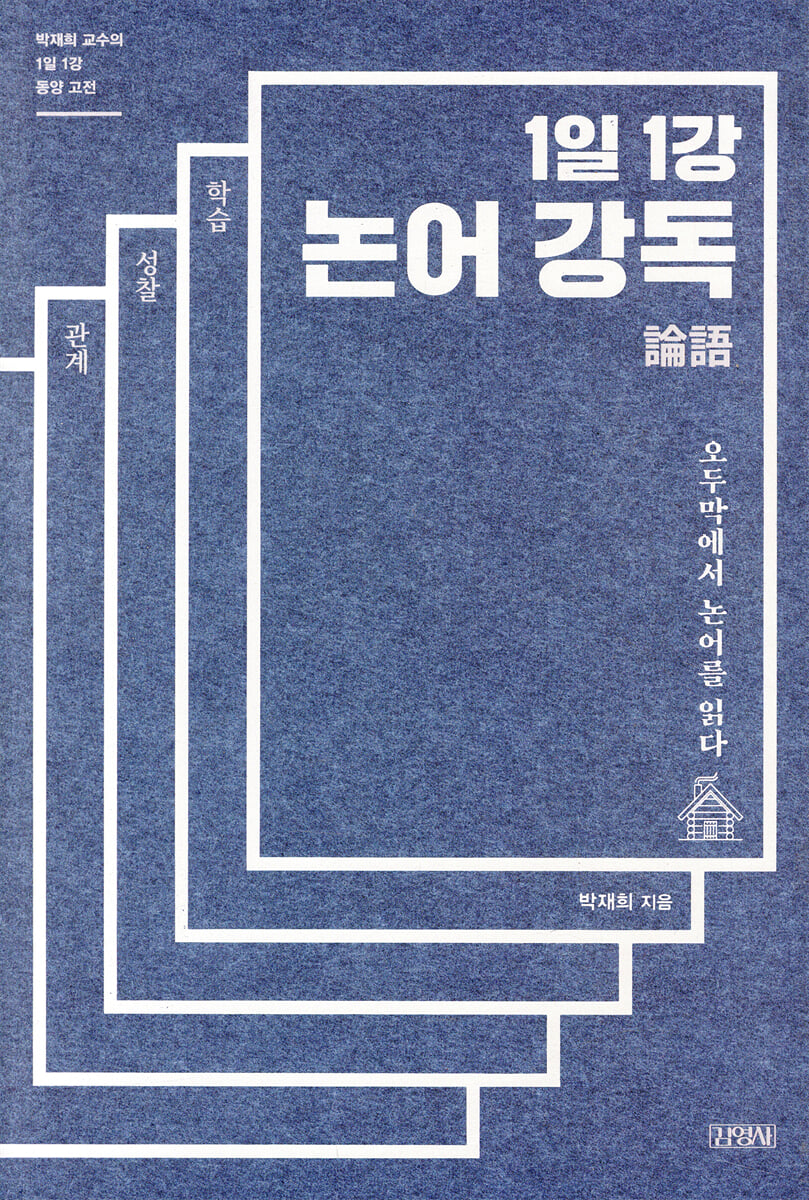
Reading the Analects of Confucius one lesson a day
 |
Description
Book Introduction
A new classic reading project like never before
A creative reinterpretation of classics to meet the new zeitgeist. Professor Park Jae-hee, a recipient of the Order of Civil Merit, is back with the [1-Lecture-A-Day Oriental Classics Series], a key figure in the Oriental classics craze. Professor Jaehee Park, author of 『3-Minute Classics』 and 『The Gate of Classics』, who possesses both a solid academic foundation and popular appeal, presents a new canon of classics that has been ‘transformed’ in the spirit of ‘learning from the past to know the new.’ Read all 498 sentences of the Analects of Confucius, one sentence a day, and instill them into your life with a modern reinterpretation of the classics! |
- You can preview some of the book's contents.
Preview
index
introduction
Before entering
Chapter 1 Learning
The Joy of Learning | The Practice of Learning | The Outcome of Learning | The Goals of Learning
Chapter 2 Reflection
Self-reflection│Relationship reflection│Happiness reflection│Social reflection
Chapter 3 Relationships
Human Relationships│Friendships│Organizational Relationships│Family Relationships
Chapter 4 Love
The Essence of Love│The Practice of Love
Chapter 5: Music
Human Order: Yes│Human Reconciliation: Evil
Chapter 6 The Gentleman
The Definition of a Gentleman│The Life of a Gentleman
Chapter 7 Talent
Character Evaluation│Talent
Chapter 8 Politics
Political Philosophy│Political Goals│Political Methods│Politicians
Chapter 9: Confucius and His Disciples
Confucius│Confucius's disciples│An Hui│Zigong│Zilu│Other disciples
Epilogue
Before entering
Chapter 1 Learning
The Joy of Learning | The Practice of Learning | The Outcome of Learning | The Goals of Learning
Chapter 2 Reflection
Self-reflection│Relationship reflection│Happiness reflection│Social reflection
Chapter 3 Relationships
Human Relationships│Friendships│Organizational Relationships│Family Relationships
Chapter 4 Love
The Essence of Love│The Practice of Love
Chapter 5: Music
Human Order: Yes│Human Reconciliation: Evil
Chapter 6 The Gentleman
The Definition of a Gentleman│The Life of a Gentleman
Chapter 7 Talent
Character Evaluation│Talent
Chapter 8 Politics
Political Philosophy│Political Goals│Political Methods│Politicians
Chapter 9: Confucius and His Disciples
Confucius│Confucius's disciples│An Hui│Zigong│Zilu│Other disciples
Epilogue
Detailed image

Into the book
“Reinterpretation is important in classical translation.
Without a reinterpretation that reflects the zeitgeist of the time when the classics are translated, classical translation will remain a repetitive act of intellectuals.
What makes Dasan's translation of the Analects of Confucius shine is that he reinterpreted the Analects with the insight of a Silhak scholar from the late Joseon Dynasty.
Dasan's Analects, translated with the perspective of a Confucian scholar and a practical scholar to reflect the needs of the times, was a futuristic spirit that opened a new era.
The Renaissance opened a new door to modernity through the reinterpretation of classics, and Zen Buddhism opened a new path to enlightenment through the reinterpretation of Buddhist scriptures.
Confucianism's Neo-Confucianism established the rationality of reason through a reinterpretation of advanced Confucian classics.
When translating classics, the author's intention is important, but how that intention should be reinterpreted according to the times is also important.
I hope that this translation, which breaks the mold and format of existing translations, will open the floodgates for reinterpreting the Analects and popularize the new method of classical translation—deconstruction and assembly.”
---From the "Preface"
“Narrow-minded knowledge does not tolerate thoughts different from mine.
I believe that only the knowledge I believe to be correct is justice, and I condemn as heretics anyone who has different thoughts and knowledge from me, and even go so far as to commit violence.
A mature society is one that recognizes diversity.
There are many things we consider heretical.
Confucius says that if the verbal abuse and violence against same-sex marriage, people with different religions and ideologies, and people with different ideas from the direction society pursues continue, the harm will eventually come back to them.”
--- p.28
“Confucius seems to have lived his life at work, in the village, and at home, doing his best to align his knowledge with his actions.
When you read about Confucius's daily life, you realize that he was no different from ordinary people.
Confucius is not someone who came down from the heavens, but someone among us.
“Confucius is a fascinating person simply because he was human and not a god.”
--- p.130
“Confucius believed that rites could serve the function of controlling those in power who were steeped in greed and extravagance.
To return to basics, reflect on my position, and become a leader who empathizes with the world's pain, I must know the basic spirit of courtesy, "my place," and live a life of restraint.
That is the right name of one who knows one's place.
Honesty is the right action that is worthy of one's name.
Confucius harshly evaluated the new aristocracy who used unethical practices because they had money and power.”
--- p.225
“Officials must make good decisions about whether to advance or retreat.
Especially, if you move forward recklessly in this dizzying world, your body will be hurt or your heart will be wounded.
Sometimes, when you feel the time is not right, the truly wise thing to do is to quietly step back and wait for the right time.
There is both advancing and retreating, and the more difficult of these is the foolish act of waiting for the right time and knowing when to retreat.
It is difficult to be intelligent, and it is also difficult to live like a fool, but it is most difficult for an intelligent person to give up his intelligence and live like a fool.
Sometimes it is the truly intelligent people who choose to step down from their positions with the wisdom of a fool.”
--- p.311
“Confucius, as seen in the Analects, is not a perfect sage in every way.
Sometimes we make mistakes and do the wrong things.
However, Confucius was a person who immediately accepted and admitted his mistakes when someone pointed them out.
He confesses his shortcomings to his disciples and laments that the world does not accept him.
But what is clear is that Confucius did not leave the world and go into the mountains.
He did not choose the path of a hermit because he believed that his philosophy could be realized in the marketplace rather than in the nature of the mountains.
This is the important reason why Confucianism became a philosophy of humanity, a philosophy of reality.”
--- p.465
“Now I am at the age when Confucius left his homeland of Lu and began to wander the world.
Now, I am going on a journey of wandering to engrave the classics that have been deeply engraved in my heart into words in books.
The important thing is to avoid sequential translation, which has been the custom so far.
Because we know that no matter how hard we try, it will be difficult to surpass the excellent translations of wise scholars who have been doing so for thousands of years.
Just as 『One Lecture a Day, One Analects』 went through a process of dismantling and reassembling, the next book will also go through this process.
My hope is to present an alternative for the future through a translation that preserves the original meaning of the classics while also meeting the spirit and needs of the times.
“I think it’s time to stop thinking about everything for a moment and take some time to fix up the cabin.”
Without a reinterpretation that reflects the zeitgeist of the time when the classics are translated, classical translation will remain a repetitive act of intellectuals.
What makes Dasan's translation of the Analects of Confucius shine is that he reinterpreted the Analects with the insight of a Silhak scholar from the late Joseon Dynasty.
Dasan's Analects, translated with the perspective of a Confucian scholar and a practical scholar to reflect the needs of the times, was a futuristic spirit that opened a new era.
The Renaissance opened a new door to modernity through the reinterpretation of classics, and Zen Buddhism opened a new path to enlightenment through the reinterpretation of Buddhist scriptures.
Confucianism's Neo-Confucianism established the rationality of reason through a reinterpretation of advanced Confucian classics.
When translating classics, the author's intention is important, but how that intention should be reinterpreted according to the times is also important.
I hope that this translation, which breaks the mold and format of existing translations, will open the floodgates for reinterpreting the Analects and popularize the new method of classical translation—deconstruction and assembly.”
---From the "Preface"
“Narrow-minded knowledge does not tolerate thoughts different from mine.
I believe that only the knowledge I believe to be correct is justice, and I condemn as heretics anyone who has different thoughts and knowledge from me, and even go so far as to commit violence.
A mature society is one that recognizes diversity.
There are many things we consider heretical.
Confucius says that if the verbal abuse and violence against same-sex marriage, people with different religions and ideologies, and people with different ideas from the direction society pursues continue, the harm will eventually come back to them.”
--- p.28
“Confucius seems to have lived his life at work, in the village, and at home, doing his best to align his knowledge with his actions.
When you read about Confucius's daily life, you realize that he was no different from ordinary people.
Confucius is not someone who came down from the heavens, but someone among us.
“Confucius is a fascinating person simply because he was human and not a god.”
--- p.130
“Confucius believed that rites could serve the function of controlling those in power who were steeped in greed and extravagance.
To return to basics, reflect on my position, and become a leader who empathizes with the world's pain, I must know the basic spirit of courtesy, "my place," and live a life of restraint.
That is the right name of one who knows one's place.
Honesty is the right action that is worthy of one's name.
Confucius harshly evaluated the new aristocracy who used unethical practices because they had money and power.”
--- p.225
“Officials must make good decisions about whether to advance or retreat.
Especially, if you move forward recklessly in this dizzying world, your body will be hurt or your heart will be wounded.
Sometimes, when you feel the time is not right, the truly wise thing to do is to quietly step back and wait for the right time.
There is both advancing and retreating, and the more difficult of these is the foolish act of waiting for the right time and knowing when to retreat.
It is difficult to be intelligent, and it is also difficult to live like a fool, but it is most difficult for an intelligent person to give up his intelligence and live like a fool.
Sometimes it is the truly intelligent people who choose to step down from their positions with the wisdom of a fool.”
--- p.311
“Confucius, as seen in the Analects, is not a perfect sage in every way.
Sometimes we make mistakes and do the wrong things.
However, Confucius was a person who immediately accepted and admitted his mistakes when someone pointed them out.
He confesses his shortcomings to his disciples and laments that the world does not accept him.
But what is clear is that Confucius did not leave the world and go into the mountains.
He did not choose the path of a hermit because he believed that his philosophy could be realized in the marketplace rather than in the nature of the mountains.
This is the important reason why Confucianism became a philosophy of humanity, a philosophy of reality.”
--- p.465
“Now I am at the age when Confucius left his homeland of Lu and began to wander the world.
Now, I am going on a journey of wandering to engrave the classics that have been deeply engraved in my heart into words in books.
The important thing is to avoid sequential translation, which has been the custom so far.
Because we know that no matter how hard we try, it will be difficult to surpass the excellent translations of wise scholars who have been doing so for thousands of years.
Just as 『One Lecture a Day, One Analects』 went through a process of dismantling and reassembling, the next book will also go through this process.
My hope is to present an alternative for the future through a translation that preserves the original meaning of the classics while also meeting the spirit and needs of the times.
“I think it’s time to stop thinking about everything for a moment and take some time to fix up the cabin.”
---From the "Epilogue"
Publisher's Review
Professor Jaehee Park, a leading classical commentator, presents the first installment of the One-Lecture-A-Day Oriental Classics Project.
Deconstructing and reassembling 498 sentences from the 2,500-year-old Analects! A modern interpretation that breaks free from inertia!
The Power of Reading the Analects of Confucius, One Page a Day
An Eastern philosopher who advocates for the popularization of classics, emphasizing the principle that "classics are not mere tales, but truths that accompany us in every moment of our lives." Professor Park Jae-hee, a recipient of the Order of Civil Merit, has sparked a craze for Eastern classics in South Korea, attracting audiences from CEOs to young people. He is back with the "One Lecture a Day: Eastern Classics Series."
Professor Park Jae-hee is a leading scholar who has been at the forefront of popularizing classics not only in the classroom but also through lectures, writing, and broadcasting.
With its solid translation of the original text, clear modern commentary, and outstanding appeal to the general public, it captivated people of all ages and eras, from CEOs and office workers to students and housewives, captivating them with the charm of Eastern classics, earning it the nickname "National Medal of Honor."
The first volume of Professor Park Jae-hee's new Oriental classics reading project [One Lecture a Day Oriental Classics Series] is "One Lecture a Day Analects Reading."
For Professor Park Jae-hee, classics are not something that must be preserved as is.
It must be a future spirit that opens a new era.
The Analects, which have been handed down in various editions over the ages with background knowledge and context omitted, were boldly dismantled and completely re-edited by topic and item, completely transforming the 2,500-year-old framework of the Analects.
The Analects of Confucius, newly reborn by converting the classic text, fully preserves the essence of the classics in the spirit of 'learning from the past to understand the new', while responding to the spirit and demands of the new era.
“Reinterpretation is important in classical translation.
Without a reinterpretation that reflects the zeitgeist of the time when the classics are translated, classical translation will remain a repetitive act of intellectuals.
When translating classics, the author's intention is important, but how that intention should be reinterpreted according to the times is also important.
I hope that this translation, which breaks the mold and format of existing translations, will open the floodgates for reinterpreting the Analects and popularize the new method of classical translation—deconstruction and assembly.”
Professor Park Jae-hee sees Confucius in the Analects not as a sage but as a person who tried to put into practice the knowledge he had learned throughout his life.
Just as learning and practice were not separate to Confucius, 『One Lecture a Day: Analects Reading』 is structured to be easily accessible and put into practice, with one verse a day as a topic of conversation for life.
By creatively reinterpreting classics, often perceived as mere museum relics, it answers the questions of our time and shows us why we must continue to read them.
This book, responding to the new zeitgeist, will guide us through today's uncertainties due to COVID-19 and provide wisdom and insight for creating a worthwhile life.
Easy Analects
One verse per page - Friendly full translation and pronunciation, clear commentary, and even Chinese character interpretations.
『One Lesson a Day, One Analects Reading』 provides the essence of one passage of the Analects compressed into one page.
The content of the Analects is mostly recorded based on Confucius's words without explanation of specific situations and contexts.
In addition, the compressed nature of Chinese characters further increases the difficulty.
The title of each chapter is also named after the first word of the first verse, and no other meaning can be found.
『One Lesson a Day, One Analects Reading』 contains the original text, translation, and commentary for each passage of the Analects, and is contained within a single page (1-2 pages) so that you can read it without any burden, no matter where or when you open it.
Also, for readers who want to study Chinese characters along with the Analects, pronunciations are provided for all Chinese characters, and for archaic or difficult Chinese characters, usage and meaning are provided together.
The original location of the original text is also indicated, so that existing versions can be checked at a glance.
Professor Park Jae-hee's friendly commentary on each phrase provides detailed explanations of the situation, history, and customs of 2,500 years ago.
From the grand historical context of the late Spring and Autumn Period, which experienced rapid social change due to increased productivity, to even the smallest details like the form and meaning of the Palilmu, a ritual presided over by the emperor, the commentary helps us fully understand the context of the original text, which can easily be overlooked.
Faithful Analects
Reclassified into nine themes - reorganized into core themes that run through the Analects.
『One Lesson a Day, One Analects Reading』 boldly innovates the structure of the Analects and reorganizes them by topic.
The text of the Analects was edited by Confucius's disciples after his death, but it is believed that it was created and revised by multiple parties over hundreds of years.
Because of this, not only do various versions exist, but the format and editing are also inconsistent, making it difficult for beginners to read.
Because of these characteristics of the Analects, many scholars, from Zhu Xi's 『Analects and Commentaries』 to Jeong Yak-yong's 『Analects and Commentaries』, have compiled their own thoughts through the work of annotating the Analects.
『One Lecture a Day, One Lesson on the Analects』 boldly changed the existing system that had been passed down like inertia despite its inconsistency, selecting nine topics and regrouping them by category.
By reorganizing the Analects by topic, we can see at a glance which topics Confucius considered important and the core messages he intended to convey through those topics.
Regarding the first topic, learning, if we look at Confucius's words on learning together, it becomes clear that Confucius understood learning not simply as the accumulation of knowledge, but in a practical sense.
Confucius's definition of learning without practice as meaningless is much clearer.
As these scattered topics come together, the core themes and messages that run through the Analects become more clearly revealed.
1. Learning: Go to a higher level through learning.
2. Reflection: Reflect on yourself every day.
3. Relationships: If you build relationships with virtue, you will not be lonely.
4. Love: Love is abandoning selfishness and being considerate of the other person.
5. Etiquette and Music: Etiquette and music can only shine when the foundation is good.
6. Gentleman: A gentleman is a person whose inner self and outer form are well-balanced.
7. Talent: The task of talent is heavy and the road ahead is long.
8. Politics: Politics is managing myself to make the people of the world happy.
9. Confucius and his disciples: Heaven wanted to use Confucius as a wooden fish to spread the Way to the world.
Modern Analects
The Rebirth of a Classic - A Creative Reinterpretation of a Classic That Answers the Questions of Our Times!
Instead of holding up the Analects as a holy book, 『One Lesson a Day: Analects Reading』 reinterprets them to suit the perspective of modern people.
He connects Confucius's words, "Those who go around talking about things they heard on the street have abandoned virtue," to social media and fake news, and compares the difficult old official position of "sasa" (士師) to the position of the Prosecutor General.
He does not avoid criticism of the original text of the Analects.
In the passage, “Only women and small people are difficult to deal with, because if you get close to them they become rude, and if you stay away they become resentful,” the problem of ‘degrading women’ is dealt with head-on, and the criticism of the polluted aspects of Confucianism continues.
In this way, Confucius's message was reinterpreted to fit today's circumstances, reflecting the spirit and demands of the times.
Compared to the times in which Confucius lived, the world today is incomparably different and more complex.
Nevertheless, the value of the classics remains valid because, although the times have changed, our way of life and our essential nature have not.
All the fundamental problems of life that we worry about can be found in the Analects.
The various human figures that appear in the Analects are very similar to us today: the appearance of his disciples worrying about finding a job, the appearance of Confucius scolding such disciples while at the same time looking at them with affection and pity, and even the appearance of Confucius as a father having an awkward conversation with his son.
Through a modern reinterpretation of Eastern classics, we will find answers to various life issues we face, such as love, friendship, interpersonal relationships, social life, and politics.
One-Lesson-A-Day Oriental Classics Series
“Now, I am going on a journey of wandering to engrave the classics that have been deeply engraved in my heart into words in books.
The important thing is to avoid sequential translation, which has been the custom so far.
Because we know that no matter how hard we try, it will be difficult to surpass the excellent translations of wise scholars who have been doing so for thousands of years.
Just as 『One Lecture a Day: Analects Reading』 went through a process of dismantling and reassembling, the next book will also go through this process.”
Reading classics is the process of reinterpreting the original text to fit the times we live in and breathing new life into old classics.
Professor Park Jae-hee's new [One Lecture a Day, Oriental Classics Series] aims to create a new canon of classics that has been 'transformed' through bold reconstruction while fully preserving the essence of the classics in the spirit of 'learning from the past and learning from the new.'
Through creative translations that reflect the spirit of the times while preserving the original meaning of the great classics, we are bringing a new wind of change to the popularization of Eastern classics and presenting a new milestone in the reading of classics.
As a follow-up to the 『One Lecture a Day, One Analects Reading』 series, we plan to publish a complete translation of Lao Tzu's 'Tao Te Ching', another pillar of Eastern thought, and 'The Art of War', which provides insight into humanity through war.
"One Lecture a Day: Reading the Tao Te Ching in the Himalayas" (published)
"One Lecture a Day: Reading The Art of War in New York" (published)
Deconstructing and reassembling 498 sentences from the 2,500-year-old Analects! A modern interpretation that breaks free from inertia!
The Power of Reading the Analects of Confucius, One Page a Day
An Eastern philosopher who advocates for the popularization of classics, emphasizing the principle that "classics are not mere tales, but truths that accompany us in every moment of our lives." Professor Park Jae-hee, a recipient of the Order of Civil Merit, has sparked a craze for Eastern classics in South Korea, attracting audiences from CEOs to young people. He is back with the "One Lecture a Day: Eastern Classics Series."
Professor Park Jae-hee is a leading scholar who has been at the forefront of popularizing classics not only in the classroom but also through lectures, writing, and broadcasting.
With its solid translation of the original text, clear modern commentary, and outstanding appeal to the general public, it captivated people of all ages and eras, from CEOs and office workers to students and housewives, captivating them with the charm of Eastern classics, earning it the nickname "National Medal of Honor."
The first volume of Professor Park Jae-hee's new Oriental classics reading project [One Lecture a Day Oriental Classics Series] is "One Lecture a Day Analects Reading."
For Professor Park Jae-hee, classics are not something that must be preserved as is.
It must be a future spirit that opens a new era.
The Analects, which have been handed down in various editions over the ages with background knowledge and context omitted, were boldly dismantled and completely re-edited by topic and item, completely transforming the 2,500-year-old framework of the Analects.
The Analects of Confucius, newly reborn by converting the classic text, fully preserves the essence of the classics in the spirit of 'learning from the past to understand the new', while responding to the spirit and demands of the new era.
“Reinterpretation is important in classical translation.
Without a reinterpretation that reflects the zeitgeist of the time when the classics are translated, classical translation will remain a repetitive act of intellectuals.
When translating classics, the author's intention is important, but how that intention should be reinterpreted according to the times is also important.
I hope that this translation, which breaks the mold and format of existing translations, will open the floodgates for reinterpreting the Analects and popularize the new method of classical translation—deconstruction and assembly.”
Professor Park Jae-hee sees Confucius in the Analects not as a sage but as a person who tried to put into practice the knowledge he had learned throughout his life.
Just as learning and practice were not separate to Confucius, 『One Lecture a Day: Analects Reading』 is structured to be easily accessible and put into practice, with one verse a day as a topic of conversation for life.
By creatively reinterpreting classics, often perceived as mere museum relics, it answers the questions of our time and shows us why we must continue to read them.
This book, responding to the new zeitgeist, will guide us through today's uncertainties due to COVID-19 and provide wisdom and insight for creating a worthwhile life.
Easy Analects
One verse per page - Friendly full translation and pronunciation, clear commentary, and even Chinese character interpretations.
『One Lesson a Day, One Analects Reading』 provides the essence of one passage of the Analects compressed into one page.
The content of the Analects is mostly recorded based on Confucius's words without explanation of specific situations and contexts.
In addition, the compressed nature of Chinese characters further increases the difficulty.
The title of each chapter is also named after the first word of the first verse, and no other meaning can be found.
『One Lesson a Day, One Analects Reading』 contains the original text, translation, and commentary for each passage of the Analects, and is contained within a single page (1-2 pages) so that you can read it without any burden, no matter where or when you open it.
Also, for readers who want to study Chinese characters along with the Analects, pronunciations are provided for all Chinese characters, and for archaic or difficult Chinese characters, usage and meaning are provided together.
The original location of the original text is also indicated, so that existing versions can be checked at a glance.
Professor Park Jae-hee's friendly commentary on each phrase provides detailed explanations of the situation, history, and customs of 2,500 years ago.
From the grand historical context of the late Spring and Autumn Period, which experienced rapid social change due to increased productivity, to even the smallest details like the form and meaning of the Palilmu, a ritual presided over by the emperor, the commentary helps us fully understand the context of the original text, which can easily be overlooked.
Faithful Analects
Reclassified into nine themes - reorganized into core themes that run through the Analects.
『One Lesson a Day, One Analects Reading』 boldly innovates the structure of the Analects and reorganizes them by topic.
The text of the Analects was edited by Confucius's disciples after his death, but it is believed that it was created and revised by multiple parties over hundreds of years.
Because of this, not only do various versions exist, but the format and editing are also inconsistent, making it difficult for beginners to read.
Because of these characteristics of the Analects, many scholars, from Zhu Xi's 『Analects and Commentaries』 to Jeong Yak-yong's 『Analects and Commentaries』, have compiled their own thoughts through the work of annotating the Analects.
『One Lecture a Day, One Lesson on the Analects』 boldly changed the existing system that had been passed down like inertia despite its inconsistency, selecting nine topics and regrouping them by category.
By reorganizing the Analects by topic, we can see at a glance which topics Confucius considered important and the core messages he intended to convey through those topics.
Regarding the first topic, learning, if we look at Confucius's words on learning together, it becomes clear that Confucius understood learning not simply as the accumulation of knowledge, but in a practical sense.
Confucius's definition of learning without practice as meaningless is much clearer.
As these scattered topics come together, the core themes and messages that run through the Analects become more clearly revealed.
1. Learning: Go to a higher level through learning.
2. Reflection: Reflect on yourself every day.
3. Relationships: If you build relationships with virtue, you will not be lonely.
4. Love: Love is abandoning selfishness and being considerate of the other person.
5. Etiquette and Music: Etiquette and music can only shine when the foundation is good.
6. Gentleman: A gentleman is a person whose inner self and outer form are well-balanced.
7. Talent: The task of talent is heavy and the road ahead is long.
8. Politics: Politics is managing myself to make the people of the world happy.
9. Confucius and his disciples: Heaven wanted to use Confucius as a wooden fish to spread the Way to the world.
Modern Analects
The Rebirth of a Classic - A Creative Reinterpretation of a Classic That Answers the Questions of Our Times!
Instead of holding up the Analects as a holy book, 『One Lesson a Day: Analects Reading』 reinterprets them to suit the perspective of modern people.
He connects Confucius's words, "Those who go around talking about things they heard on the street have abandoned virtue," to social media and fake news, and compares the difficult old official position of "sasa" (士師) to the position of the Prosecutor General.
He does not avoid criticism of the original text of the Analects.
In the passage, “Only women and small people are difficult to deal with, because if you get close to them they become rude, and if you stay away they become resentful,” the problem of ‘degrading women’ is dealt with head-on, and the criticism of the polluted aspects of Confucianism continues.
In this way, Confucius's message was reinterpreted to fit today's circumstances, reflecting the spirit and demands of the times.
Compared to the times in which Confucius lived, the world today is incomparably different and more complex.
Nevertheless, the value of the classics remains valid because, although the times have changed, our way of life and our essential nature have not.
All the fundamental problems of life that we worry about can be found in the Analects.
The various human figures that appear in the Analects are very similar to us today: the appearance of his disciples worrying about finding a job, the appearance of Confucius scolding such disciples while at the same time looking at them with affection and pity, and even the appearance of Confucius as a father having an awkward conversation with his son.
Through a modern reinterpretation of Eastern classics, we will find answers to various life issues we face, such as love, friendship, interpersonal relationships, social life, and politics.
One-Lesson-A-Day Oriental Classics Series
“Now, I am going on a journey of wandering to engrave the classics that have been deeply engraved in my heart into words in books.
The important thing is to avoid sequential translation, which has been the custom so far.
Because we know that no matter how hard we try, it will be difficult to surpass the excellent translations of wise scholars who have been doing so for thousands of years.
Just as 『One Lecture a Day: Analects Reading』 went through a process of dismantling and reassembling, the next book will also go through this process.”
Reading classics is the process of reinterpreting the original text to fit the times we live in and breathing new life into old classics.
Professor Park Jae-hee's new [One Lecture a Day, Oriental Classics Series] aims to create a new canon of classics that has been 'transformed' through bold reconstruction while fully preserving the essence of the classics in the spirit of 'learning from the past and learning from the new.'
Through creative translations that reflect the spirit of the times while preserving the original meaning of the great classics, we are bringing a new wind of change to the popularization of Eastern classics and presenting a new milestone in the reading of classics.
As a follow-up to the 『One Lecture a Day, One Analects Reading』 series, we plan to publish a complete translation of Lao Tzu's 'Tao Te Ching', another pillar of Eastern thought, and 'The Art of War', which provides insight into humanity through war.
"One Lecture a Day: Reading the Tao Te Ching in the Himalayas" (published)
"One Lecture a Day: Reading The Art of War in New York" (published)
GOODS SPECIFICS
- Date of issue: August 19, 2020
- Page count, weight, size: 592 pages | 956g | 152*225*35mm
- ISBN13: 9788934986584
- ISBN10: 8934986581
You may also like
카테고리
korean


korean

![GQ KOREA Mark (Monthly): December [2025]](http://librairie.coreenne.fr/cdn/shop/files/8ef265dbbfbf186523ed75ba7319009d.jpg?v=1765340328&width=3840)


