

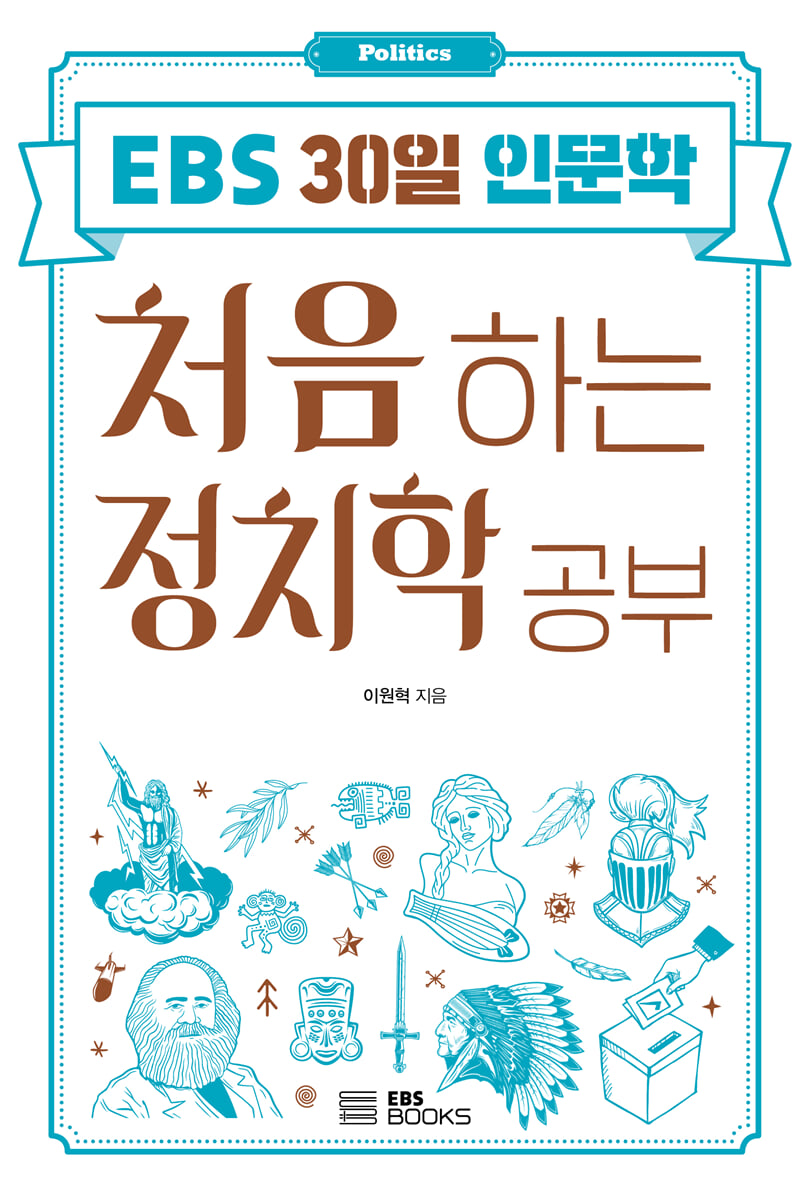
Studying political science for the first time
 |
Description
Book Introduction
[EBS 30 Days of Humanities] Series Volume 5,
The flow of human 'political thought' clearly organized in one volume!
“Aristotle declared that ‘man is a political animal’
“For tens of thousands of years, mankind has been living through politics!”
All the political forms invented by mankind from primitive times to the present day!
“This book is a compilation of political ideas that have made human civilization possible over the past several thousand years, organized by era.
This book contains a journey that begins with the political forms of primitive mankind, continues through the political order of the East and West in ancient and medieval times, and continues to the modern and contemporary times when various political ideas emerged.” - From the opening remarks
The flow of human 'political thought' clearly organized in one volume!
“Aristotle declared that ‘man is a political animal’
“For tens of thousands of years, mankind has been living through politics!”
All the political forms invented by mankind from primitive times to the present day!
“This book is a compilation of political ideas that have made human civilization possible over the past several thousand years, organized by era.
This book contains a journey that begins with the political forms of primitive mankind, continues through the political order of the East and West in ancient and medieval times, and continues to the modern and contemporary times when various political ideas emerged.” - From the opening remarks
- You can preview some of the book's contents.
Preview
index
Opening 5
1-Day Totemism_The Birth of a Group: The Force That Defines and Binds a Group 13
2-Day Animism: The Birth of Norms: The Starting Point of Political Society 19
3-Day Shamanism: The Birth of Politics: The Beginning of Political Power 26
4-Day Oriental Mythology: Humanism and the Qualification of Power: Mythology and Politics in Korea and China 33
5-Day Western Mythology: The Primordial Flow of Human Intellectual History: Western Mythology and Politics 40
Six-Day Revolutionary Thought: The Origins of Eastern Revolutionary Thought: Mencius and the Politics of the Kingly Way 47
7-Day Anti-War Pacifism_The Origins of Anti-War Pacifism: Mozi and Universal Love 53
8 Days of Rule of Law - Organizing Humanity Beyond the World of Myth: Legalism and the Rule of Law 60
9 Days of Democracy_The Beginning of Democracy: Greek Democracy 67
10-Day Republicanism: Separation of Powers and Public Governance: The Roman Republic, Part 74
11th Millenarianism: The Idealism of the Bluebird in the Oppressive Middle Ages: The Origins of the Western Social Revolutionary Movement 80
12th Feudalism: A Society of Contracts and Oaths: Autonomous Power Born Through Land 86
13th Day Chivalry: The Prince on a White Horse Who Was a Debaucher: A Social Promise for Controlling Force 93
14 Days of Bushido: 100 Icons of Loyalty and Sacrifice: Japanese Medieval Thought That Never Existed in the Middle Ages
15th Social Contract Theory_The Revolutionary Lie from the Egg: The Divergence Between Absolute Monarchy and Modern Democratic Society 107
16th Nationalism: We Are Descendants of Dangun, But Since When?: The Light and Shadow of the Name "Nation" 114
17th Liberalism: The Powerhouse of Evolving Ideology: The Colorful Appearance of Modern Political Thought 121
Conservatism on the 18th: Why Is My Father Conservative?: A Reaction to Transformation 129
19th Imperialism: A Glorious and Brilliant Robbery: The Truth Hidden Behind the Grandiose Logic 136
20 Days of Socialism: The Ideal Society Humans Challenge: Defeated Political Ideologies Still Existing 145
21 Days of Democracy: The 21st Century's Most Sacred Religion: A Political Thought That's Not Perfect, But It's Enough to Promise Hope 153
22nd Anarchism_All Things Help Each Other: Are Nations and Governments Really Necessary? 161
23rd Social Darwinism_The Origin of the Cruel History of Maljukgeori: Power Disguised as Science and Progress 169
24th Nazism_The Dark Side of Humanity: Nazism and Fascism 178
25th Wahhabism: Where Does Islamic Extremism Come From?: Islamic Restorationism 186
26th Feminism: Challenging the Problems of Half of Humanity: A Broad Spectrum of Controversial Ideas 192
27th Neoliberalism: All Imperfect Humans Need Is Freedom: Savior or Devil? 201
28th Ecology: Can Humans Coexist with Nature?: 209 Ideas Expected to Grow Further in the Future
29th Juche Idea_North Korea's Ideology: The Consequences of an Independent Path 216
30 Days of Social Democracy: European Socialism Breaking with Marx: Revisions and Reforms of Marxism 225
Closing remarks 233
Reference 237
1-Day Totemism_The Birth of a Group: The Force That Defines and Binds a Group 13
2-Day Animism: The Birth of Norms: The Starting Point of Political Society 19
3-Day Shamanism: The Birth of Politics: The Beginning of Political Power 26
4-Day Oriental Mythology: Humanism and the Qualification of Power: Mythology and Politics in Korea and China 33
5-Day Western Mythology: The Primordial Flow of Human Intellectual History: Western Mythology and Politics 40
Six-Day Revolutionary Thought: The Origins of Eastern Revolutionary Thought: Mencius and the Politics of the Kingly Way 47
7-Day Anti-War Pacifism_The Origins of Anti-War Pacifism: Mozi and Universal Love 53
8 Days of Rule of Law - Organizing Humanity Beyond the World of Myth: Legalism and the Rule of Law 60
9 Days of Democracy_The Beginning of Democracy: Greek Democracy 67
10-Day Republicanism: Separation of Powers and Public Governance: The Roman Republic, Part 74
11th Millenarianism: The Idealism of the Bluebird in the Oppressive Middle Ages: The Origins of the Western Social Revolutionary Movement 80
12th Feudalism: A Society of Contracts and Oaths: Autonomous Power Born Through Land 86
13th Day Chivalry: The Prince on a White Horse Who Was a Debaucher: A Social Promise for Controlling Force 93
14 Days of Bushido: 100 Icons of Loyalty and Sacrifice: Japanese Medieval Thought That Never Existed in the Middle Ages
15th Social Contract Theory_The Revolutionary Lie from the Egg: The Divergence Between Absolute Monarchy and Modern Democratic Society 107
16th Nationalism: We Are Descendants of Dangun, But Since When?: The Light and Shadow of the Name "Nation" 114
17th Liberalism: The Powerhouse of Evolving Ideology: The Colorful Appearance of Modern Political Thought 121
Conservatism on the 18th: Why Is My Father Conservative?: A Reaction to Transformation 129
19th Imperialism: A Glorious and Brilliant Robbery: The Truth Hidden Behind the Grandiose Logic 136
20 Days of Socialism: The Ideal Society Humans Challenge: Defeated Political Ideologies Still Existing 145
21 Days of Democracy: The 21st Century's Most Sacred Religion: A Political Thought That's Not Perfect, But It's Enough to Promise Hope 153
22nd Anarchism_All Things Help Each Other: Are Nations and Governments Really Necessary? 161
23rd Social Darwinism_The Origin of the Cruel History of Maljukgeori: Power Disguised as Science and Progress 169
24th Nazism_The Dark Side of Humanity: Nazism and Fascism 178
25th Wahhabism: Where Does Islamic Extremism Come From?: Islamic Restorationism 186
26th Feminism: Challenging the Problems of Half of Humanity: A Broad Spectrum of Controversial Ideas 192
27th Neoliberalism: All Imperfect Humans Need Is Freedom: Savior or Devil? 201
28th Ecology: Can Humans Coexist with Nature?: 209 Ideas Expected to Grow Further in the Future
29th Juche Idea_North Korea's Ideology: The Consequences of an Independent Path 216
30 Days of Social Democracy: European Socialism Breaking with Marx: Revisions and Reforms of Marxism 225
Closing remarks 233
Reference 237
Detailed image

Into the book
Tens of thousands of years before the ancient Greek philosopher Aristotle declared that “man is a political animal,” we humans have been living and engaging in politics.
Because humans have lived in various environments, the forms of politics have also varied depending on the era, environment, region, and ethnicity.
In these diverse environments, it was political thought or ideology that made human politics work.
This was not simply a dominant discourse in which the strong ruled over the weak, but rather a device necessary for a group to create or maintain a system as a nation or society.
These devices have protected humans and built civilizations, but at times they have also killed humans and destroyed civilizations.
--- p.5-6
What effect did this "imagination" bring? It was the birth of a group.
In primitive times, groups that formed naturally consisted of only a few dozen people.
On the other hand, groups that shared these imaginations could recognize each other as one group even if their residences were somewhat separated.
As 'descendants of the lion', the various prides recognized each other as a single group and could help and rely on each other.
When these groups have order and a sense of homogeneity, they become a society.
--- p.16
Humans created their first norms through animism, and by overcoming animism, they created a civilization that separated itself from nature.
Animism is the starting point of human political society.
According to Yuval Harari, an Israeli historian and famous author, the greatest success factor of Homo sapiens is 'imagination'.
Humans formed groups and created nations and laws through imagination.
Animism is the starting point, where humans created a superhuman order over invisible nature and established themselves within nature.
--- p.25
The four sides communicated with nature, gods, and the dead, and served to provide direction for the living.
They also treated illnesses and decided where the group would live or migrate.
They conveyed the laws of nature and God to humans through a kind of incantation.
Shamans, who convey the voice of God, naturally become divine beings and are regarded as divine beings within the group.
The role of a shaman was not limited to spiritual guidance, but extended to providing specific directions for daily life, so there were more and more cases where a shaman also took on the role of leader within the group.
The prehistoric patriarchal society thus began with the emergence of shamans.
--- p.29-30
Mencius' revolutionary theory was able to achieve hegemony because it reflected the desires of all classes of society.
From the perspective of the king, the lords, and the scholars, recognition of their role in governance rationalized their domination over the ruled classes and provided them with a justification to keep their rivals in check.
But behind the scenes, he pursued the interests of the people by imposing on them the responsibility of self-realization through moral practice.
From the perspective of the common people, who were the ruling class, Mencius' revolutionary theory not only provided an opportunity for social advancement, but also presented a new perspective on the common people, elevating them from mere tools of labor to beings with the potential to be reborn as moral and political subjects.
--- p.52
Before the Legalists, the driving force behind human behavior was 'mythical' thinking.
For fear of being punished by God, one had to avoid doing bad things and conform to the values of society.
Even Confucianism, which advocated rationality, based its ethical values on the mythical value of the time, Heaven.
Therefore, the king, as the Son of Heaven, was a being who carried out the will of heaven.
However, the Legalists pointed out the fiction and irrationality of these ideas.
In order to lead selfish people in an organized and social manner, rational values are more effective than mythical values, and these rational values, like mythical values, must have universality and equality, which is what is called 'law'.
--- p.65
The Roman Republic differs from modern democracy in that it had the limitations of an aristocratic system and thus restricted citizens' right to vote and political participation.
However, in order to avoid repeating the failures of Athens, Rome modified democracy to create its own system of government, and even elected tribunes to protect the rights of the common people.
Modern democracy also grapples with the dilemma of democratic values such as citizens' right to vote and the expansion of their rights, and the efficiency of state administration such as prevention of partisan politics and professionalism in administration.
Although we cannot replicate the Roman method of restricting voting rights based on wealth and status, their thoughts and efforts, which endlessly pondered the rights of citizens while running the great empire of Rome, still serve as a great example for modern society.
--- p.79
In ancient times, the stability of the royal power meant the stability of the nation, so ancient countries justified the power of the king by granting the king a secret birth that was different from that of ordinary people.
In ancient societies where the foundation of the state was not strong, any ordinary person could easily rebel to become king.
Rebellions and wars not only brought about massacres and regime changes, they also caused division.
For a clan society to develop into an ancient state society, wide-ranging integration was necessary, and the role of this was played by a king who received power from the gods.
This theory that the king's power comes from God is called the 'divine right of kings'.
--- p.107-108
Nationalism dismantled the hierarchical classes and vertical human relationships that had persisted throughout human history and established reciprocal and equal relationships within the community.
It also served as a liberation zone for the Third World by leading to communal unity against the imperialism of Western powers.
And it spread the cultural phenomena that had been monopolized by the upper class into universal phenomena within the community.
One of the reasons why the reform movement in China, the reforms of the Enlightenment Party in the late Joseon Dynasty (the period from the end of the Joseon Dynasty to the Korean Empire), and the various reform attempts of the European Slavic aristocracy failed was because the content of the reforms was not about universal problems within the community, but about national systems that were difficult for the general public to understand.
--- p.119-120
Since liberation, Korean society has always been politically divided.
Immediately after liberation, there was division between those for and against trusteeship and between the left and right, and after the Korean War, there was political division between democracy and anti-democracy, and regionalism.
Since the 2000s, when the Cold War and the era of democratization had more or less ended, progressives and conservatives have become the two camps that divide Korean politics and society.
--- p.129
However, there are also reasons why imperialism and colonial rule still persist in the 21st century, one of which is the 'neocolonial theory'.
The view is that a country that was once a colony still depends economically and politically on the colonial mother country and suffers from financial and resource drain.
African countries are a prime example, as their socio-economic structures are still stuck in the colonial era, causing their surplus capital and resources to flow into the colonial mother countries.
This situation is further exacerbated by the country's political instability, including dictatorship and corruption.
--- p.143
Democracy is established as a definition and goal in modern politics in that it secures the right to vote for the majority.
However, even putting aside the differences in reality and the pros and cons of the competing systems of capitalism and socialism, questions about the problems inherent in democracy itself continue to be raised.
Democracy is about power being generated and governing through the majority opinion, but in modern society, there is a question of whether the 'majority opinion' is truly the majority opinion.
In other words, the argument is that majority opinions can be planned or controlled by a minority through capital or culture.
In a society where capital and information are monopolized, such deception becomes more sophisticated.
The very foundation of democracy and the belief that majority opinion is good are being shaken.
--- p.159-160
The movie "The Cruel History of Maljukgeori" clearly shows the violent school environment during the Yushin regime.
The violence manifests itself between teachers and students, between male students, and between education itself and students.
The weak are cowardly, the strong are proud and seek to enlighten the weak.
This image in the movie depicts Korean society as a 'society that worships power.'
Where did such a social landscape originate? The theory of social Darwinism, which emerged in the late 19th and early 20th centuries, is considered its starting point.
--- p.169
Feminism is bound to be a controversial ideology because it views half of humanity as objects of liberation while also viewing the other half as perpetrators.
However, discrimination against women should not be easily discounted because its traces remain most strongly even in modern society where racial, class, and religious discrimination have been somewhat resolved.
Feminism will continue to be raised as long as gender discrimination and conflict remain unresolved, and like other ideologies, it will continue to grow by compensating for its shortcomings.
Because humans have lived in various environments, the forms of politics have also varied depending on the era, environment, region, and ethnicity.
In these diverse environments, it was political thought or ideology that made human politics work.
This was not simply a dominant discourse in which the strong ruled over the weak, but rather a device necessary for a group to create or maintain a system as a nation or society.
These devices have protected humans and built civilizations, but at times they have also killed humans and destroyed civilizations.
--- p.5-6
What effect did this "imagination" bring? It was the birth of a group.
In primitive times, groups that formed naturally consisted of only a few dozen people.
On the other hand, groups that shared these imaginations could recognize each other as one group even if their residences were somewhat separated.
As 'descendants of the lion', the various prides recognized each other as a single group and could help and rely on each other.
When these groups have order and a sense of homogeneity, they become a society.
--- p.16
Humans created their first norms through animism, and by overcoming animism, they created a civilization that separated itself from nature.
Animism is the starting point of human political society.
According to Yuval Harari, an Israeli historian and famous author, the greatest success factor of Homo sapiens is 'imagination'.
Humans formed groups and created nations and laws through imagination.
Animism is the starting point, where humans created a superhuman order over invisible nature and established themselves within nature.
--- p.25
The four sides communicated with nature, gods, and the dead, and served to provide direction for the living.
They also treated illnesses and decided where the group would live or migrate.
They conveyed the laws of nature and God to humans through a kind of incantation.
Shamans, who convey the voice of God, naturally become divine beings and are regarded as divine beings within the group.
The role of a shaman was not limited to spiritual guidance, but extended to providing specific directions for daily life, so there were more and more cases where a shaman also took on the role of leader within the group.
The prehistoric patriarchal society thus began with the emergence of shamans.
--- p.29-30
Mencius' revolutionary theory was able to achieve hegemony because it reflected the desires of all classes of society.
From the perspective of the king, the lords, and the scholars, recognition of their role in governance rationalized their domination over the ruled classes and provided them with a justification to keep their rivals in check.
But behind the scenes, he pursued the interests of the people by imposing on them the responsibility of self-realization through moral practice.
From the perspective of the common people, who were the ruling class, Mencius' revolutionary theory not only provided an opportunity for social advancement, but also presented a new perspective on the common people, elevating them from mere tools of labor to beings with the potential to be reborn as moral and political subjects.
--- p.52
Before the Legalists, the driving force behind human behavior was 'mythical' thinking.
For fear of being punished by God, one had to avoid doing bad things and conform to the values of society.
Even Confucianism, which advocated rationality, based its ethical values on the mythical value of the time, Heaven.
Therefore, the king, as the Son of Heaven, was a being who carried out the will of heaven.
However, the Legalists pointed out the fiction and irrationality of these ideas.
In order to lead selfish people in an organized and social manner, rational values are more effective than mythical values, and these rational values, like mythical values, must have universality and equality, which is what is called 'law'.
--- p.65
The Roman Republic differs from modern democracy in that it had the limitations of an aristocratic system and thus restricted citizens' right to vote and political participation.
However, in order to avoid repeating the failures of Athens, Rome modified democracy to create its own system of government, and even elected tribunes to protect the rights of the common people.
Modern democracy also grapples with the dilemma of democratic values such as citizens' right to vote and the expansion of their rights, and the efficiency of state administration such as prevention of partisan politics and professionalism in administration.
Although we cannot replicate the Roman method of restricting voting rights based on wealth and status, their thoughts and efforts, which endlessly pondered the rights of citizens while running the great empire of Rome, still serve as a great example for modern society.
--- p.79
In ancient times, the stability of the royal power meant the stability of the nation, so ancient countries justified the power of the king by granting the king a secret birth that was different from that of ordinary people.
In ancient societies where the foundation of the state was not strong, any ordinary person could easily rebel to become king.
Rebellions and wars not only brought about massacres and regime changes, they also caused division.
For a clan society to develop into an ancient state society, wide-ranging integration was necessary, and the role of this was played by a king who received power from the gods.
This theory that the king's power comes from God is called the 'divine right of kings'.
--- p.107-108
Nationalism dismantled the hierarchical classes and vertical human relationships that had persisted throughout human history and established reciprocal and equal relationships within the community.
It also served as a liberation zone for the Third World by leading to communal unity against the imperialism of Western powers.
And it spread the cultural phenomena that had been monopolized by the upper class into universal phenomena within the community.
One of the reasons why the reform movement in China, the reforms of the Enlightenment Party in the late Joseon Dynasty (the period from the end of the Joseon Dynasty to the Korean Empire), and the various reform attempts of the European Slavic aristocracy failed was because the content of the reforms was not about universal problems within the community, but about national systems that were difficult for the general public to understand.
--- p.119-120
Since liberation, Korean society has always been politically divided.
Immediately after liberation, there was division between those for and against trusteeship and between the left and right, and after the Korean War, there was political division between democracy and anti-democracy, and regionalism.
Since the 2000s, when the Cold War and the era of democratization had more or less ended, progressives and conservatives have become the two camps that divide Korean politics and society.
--- p.129
However, there are also reasons why imperialism and colonial rule still persist in the 21st century, one of which is the 'neocolonial theory'.
The view is that a country that was once a colony still depends economically and politically on the colonial mother country and suffers from financial and resource drain.
African countries are a prime example, as their socio-economic structures are still stuck in the colonial era, causing their surplus capital and resources to flow into the colonial mother countries.
This situation is further exacerbated by the country's political instability, including dictatorship and corruption.
--- p.143
Democracy is established as a definition and goal in modern politics in that it secures the right to vote for the majority.
However, even putting aside the differences in reality and the pros and cons of the competing systems of capitalism and socialism, questions about the problems inherent in democracy itself continue to be raised.
Democracy is about power being generated and governing through the majority opinion, but in modern society, there is a question of whether the 'majority opinion' is truly the majority opinion.
In other words, the argument is that majority opinions can be planned or controlled by a minority through capital or culture.
In a society where capital and information are monopolized, such deception becomes more sophisticated.
The very foundation of democracy and the belief that majority opinion is good are being shaken.
--- p.159-160
The movie "The Cruel History of Maljukgeori" clearly shows the violent school environment during the Yushin regime.
The violence manifests itself between teachers and students, between male students, and between education itself and students.
The weak are cowardly, the strong are proud and seek to enlighten the weak.
This image in the movie depicts Korean society as a 'society that worships power.'
Where did such a social landscape originate? The theory of social Darwinism, which emerged in the late 19th and early 20th centuries, is considered its starting point.
--- p.169
Feminism is bound to be a controversial ideology because it views half of humanity as objects of liberation while also viewing the other half as perpetrators.
However, discrimination against women should not be easily discounted because its traces remain most strongly even in modern society where racial, class, and religious discrimination have been somewhat resolved.
Feminism will continue to be raised as long as gender discrimination and conflict remain unresolved, and like other ideologies, it will continue to grow by compensating for its shortcomings.
--- p.200
Publisher's Review
How did ‘politics’ come into being in the first place?
Democracy, liberalism, imperialism, socialism, etc.
Why did various political ideologies emerge and under what circumstances?
Let's take a closer look at the true nature of the 'political ideas' that humanity has devised from ancient times to the present!
The ancient Greek philosopher Plato said, “The greatest penalty for ignoring politics is to be ruled by your own worst enemies.”
As Plato said, politics is not something to be watched or ridiculed, but something to be constantly watched with a sense of responsibility.
Because it has a great influence on our lives, whether we know it or not.
So when and how did politics emerge and reach the present?
"Studying Political Science for Beginners" focuses on the keyword "politics," tracing the process by which humans formed groups, formed societies, and created nations from ancient times to the present.
In that process, there are things that are difficult for us to understand today, such as millenarianism, German Nazism, medieval European chivalry, and Japanese bushido, as well as liberalism, conservatism, and socialism that have survived to this day, and even 'democracy', which we now consider the highest value.
But what exactly are the ○○isms and ○○-isms we're talking about here? What background and why did they arise? This book will explain it at a glance.
This book contains a clear, chronological overview of the political ideas that have guided the governing system of human society to date.
This will be a great opportunity to take a quick look at human political history in the format of 'One Keyword a Day.'
Above all, this book allows readers to objectively examine various political ideologies and political forms, regardless of right or wrong or good or bad.
From primitive totemism to modern social democracy
Every political form ever devised by mankind!
How did early humans, living scattered across the globe, form communities? How did these diverse groups form and maintain societies? And who, how, and why did the central focus—that is, power—come to power? The author of this book offers three answers to these questions: totemism, animism, and shamanism.
And it is said that this is where ‘politics’ was born.
As the title suggests, 『Studying Politics for Beginners』 is a book that introduces ‘politics’ to the general public.
From the inception of politics to its present state, the various political ideologies that have shaped human society, and even notable modern ideas like feminism and ecology, this will be a valuable opportunity to examine the political environment around us through the keyword "politics."
A particular strength of this book is that it objectively explains the various political ideologies that have dominated the world to date, entirely from a scholar's perspective, without ideological bias or personal preferences.
It is often thought that German Nazism, Japanese imperialism, and North Korea's Juche ideology were harmful to humanity and bad ideologies, but when viewed in light of the times and circumstances of those times, it is understandable that they were somewhat understandable.
Even 'democracy', which is currently considered the highest value, is facing the problem of 'centrism' and questions about whether 'majority rule' is truly the majority opinion.
In this way, this book provides a good opportunity to objectively understand at a glance the various political ideas that humanity has devised so far, regardless of good or bad, right or wrong.
The author wrote this in the closing remarks:
“Every idea is always followed by the question of public choice and the responsibility that comes with it.
…of course, no one in the public would have explicitly condoned or directly established power.
But just by living our daily lives in that system, we are living with responsibility for that era.” Even without necessarily mentioning responsibility, readers will be able to take away from this book a lot of information that is good to know from a common sense perspective.
Democracy, liberalism, imperialism, socialism, etc.
Why did various political ideologies emerge and under what circumstances?
Let's take a closer look at the true nature of the 'political ideas' that humanity has devised from ancient times to the present!
The ancient Greek philosopher Plato said, “The greatest penalty for ignoring politics is to be ruled by your own worst enemies.”
As Plato said, politics is not something to be watched or ridiculed, but something to be constantly watched with a sense of responsibility.
Because it has a great influence on our lives, whether we know it or not.
So when and how did politics emerge and reach the present?
"Studying Political Science for Beginners" focuses on the keyword "politics," tracing the process by which humans formed groups, formed societies, and created nations from ancient times to the present.
In that process, there are things that are difficult for us to understand today, such as millenarianism, German Nazism, medieval European chivalry, and Japanese bushido, as well as liberalism, conservatism, and socialism that have survived to this day, and even 'democracy', which we now consider the highest value.
But what exactly are the ○○isms and ○○-isms we're talking about here? What background and why did they arise? This book will explain it at a glance.
This book contains a clear, chronological overview of the political ideas that have guided the governing system of human society to date.
This will be a great opportunity to take a quick look at human political history in the format of 'One Keyword a Day.'
Above all, this book allows readers to objectively examine various political ideologies and political forms, regardless of right or wrong or good or bad.
From primitive totemism to modern social democracy
Every political form ever devised by mankind!
How did early humans, living scattered across the globe, form communities? How did these diverse groups form and maintain societies? And who, how, and why did the central focus—that is, power—come to power? The author of this book offers three answers to these questions: totemism, animism, and shamanism.
And it is said that this is where ‘politics’ was born.
As the title suggests, 『Studying Politics for Beginners』 is a book that introduces ‘politics’ to the general public.
From the inception of politics to its present state, the various political ideologies that have shaped human society, and even notable modern ideas like feminism and ecology, this will be a valuable opportunity to examine the political environment around us through the keyword "politics."
A particular strength of this book is that it objectively explains the various political ideologies that have dominated the world to date, entirely from a scholar's perspective, without ideological bias or personal preferences.
It is often thought that German Nazism, Japanese imperialism, and North Korea's Juche ideology were harmful to humanity and bad ideologies, but when viewed in light of the times and circumstances of those times, it is understandable that they were somewhat understandable.
Even 'democracy', which is currently considered the highest value, is facing the problem of 'centrism' and questions about whether 'majority rule' is truly the majority opinion.
In this way, this book provides a good opportunity to objectively understand at a glance the various political ideas that humanity has devised so far, regardless of good or bad, right or wrong.
The author wrote this in the closing remarks:
“Every idea is always followed by the question of public choice and the responsibility that comes with it.
…of course, no one in the public would have explicitly condoned or directly established power.
But just by living our daily lives in that system, we are living with responsibility for that era.” Even without necessarily mentioning responsibility, readers will be able to take away from this book a lot of information that is good to know from a common sense perspective.
GOODS SPECIFICS
- Date of issue: August 20, 2023
- Page count, weight, size: 248 pages | 406g | 145*215*15mm
- ISBN13: 9788954777803
- ISBN10: 8954777805
You may also like
카테고리
korean


korean

![GQ KOREA Mark (Monthly): December [2025]](http://librairie.coreenne.fr/cdn/shop/files/8ef265dbbfbf186523ed75ba7319009d.jpg?v=1765340328&width=3840)


