

Vygotsky's Child Studies and Writing Education
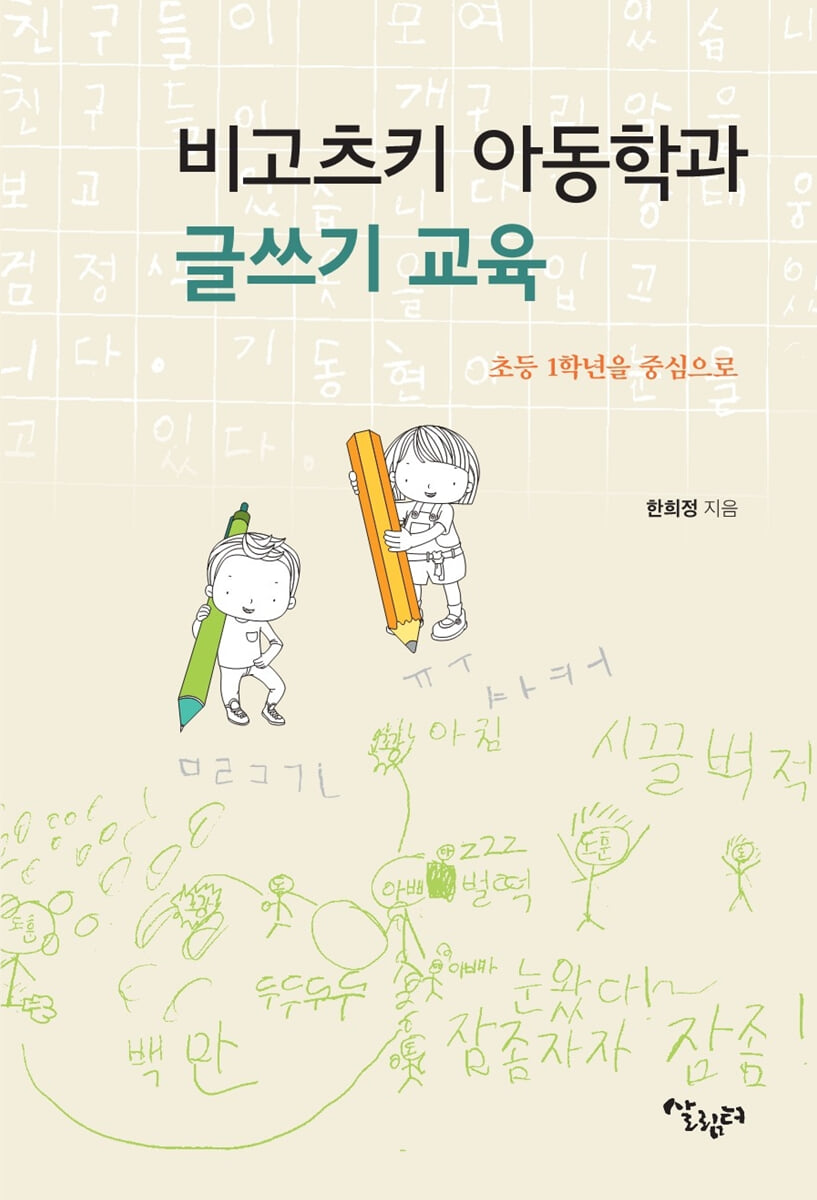 |
Description
Book Introduction
Chapter 1 explores theoretically the implications of writing instruction for child development.
We explore what Vygotsky means by development and what new things the seven-year-old crisis facing first-graders holds in store.
Chapter 2 reviews the current elementary school Korean language curriculum and related research to summarize the significance and purpose of this study.
Chapter 3 structures the practical process so far as a 'transitional writing program' and records what was implemented in the classroom over the two years from 2018 to 2019.
Chapter 4 analyzes the two-year implementation process and explores the educational and practical implications of the 'Transitional Writing Program.'
Just as Vygotsky's work remains unfinished, so too is the program of transitional writing unfinished.
I think it would be great if this program could be completed with meaningful learning experiences between teachers and students in the classroom.
We explore what Vygotsky means by development and what new things the seven-year-old crisis facing first-graders holds in store.
Chapter 2 reviews the current elementary school Korean language curriculum and related research to summarize the significance and purpose of this study.
Chapter 3 structures the practical process so far as a 'transitional writing program' and records what was implemented in the classroom over the two years from 2018 to 2019.
Chapter 4 analyzes the two-year implementation process and explores the educational and practical implications of the 'Transitional Writing Program.'
Just as Vygotsky's work remains unfinished, so too is the program of transitional writing unfinished.
I think it would be great if this program could be completed with meaningful learning experiences between teachers and students in the classroom.
- You can preview some of the book's contents.
Preview
index
introduction
Realizing that theory and practice are different ways of looking at the same thing _ 4
Chapter 1: Children, Writing, and Development
Elementary School 1st Grade, The Ugly Seven Years Old _ 12
Vygotsky's Child Development: Growth and Differentiation _ 16
Development, the emergence of something new
Genetics and Environment in Child Development
Experience as an integration of the child's personality and situation
Teachers exist as the final product of development
Understanding Childhood Ages: Age and Crisis _ 29
Social context and crisis of development
Until the crisis of 7 years old
The Seven-Year-Old Crisis and First Grade: Consciousness and Mastery _ 40
The crisis of the 7-year-old
The emergence and conscious understanding of the primal self
Chapter 2: Children and Writing
What are you teaching? _ 54
Korean language curriculum
Basic literacy and introductory character education
What are we discussing? _ 68
Elementary school first grade Korean language curriculum
First grade writing development
Slow learners and class dropouts
Chapter 3: Writing Classes for All ChildrenM
Four Children's Stories _ 79
Design of a Transitional Writing Program _ 83
Transitional Writing Program Based on the First Grade Curriculum
Structuring a Transitional Writing Program
Running a Transitive Writing Program _ 99
Korean language and writing diagnostic activities
Learning the sound values and letter structure
Using the vocabulary notebook
Share your weekend stories
Tell me about your experience
Make sentences from pictures
Picture diary we write together
Writing with a theme
Chapter 4: The Antagonistic Relationship Between Child Development and Writing Learning
Transitional Writing Programs and the Implications of Child Development _ 225
Transitional writing as an experiential, meaning-centered approach
Transitional writing from interpersonal to intrapersonal functions
Transitional Writing as a Social Construction of the Zone of Proximal Development
The process and results of the activity participation of slow learners _ 236
Restructuring the Environment through the Classroom: Han-gil
Overcoming the Structural Crisis: Wooseop
Beyond the Functional Crisis: Happiness
The Overlapping of Structural, Functional, and Genetic Crises: Love
The Practical Implications of Transitional Writing Programs _ 253
Development through learning to write
The educational significance of writing in first grade elementary school
Practical Implications for Slow Learners
Chapter 5: Epilogue
For a Classroom Where Everyone Participates _ 280
References _ 284
Table and Figure Table of Contents
Realizing that theory and practice are different ways of looking at the same thing _ 4
Chapter 1: Children, Writing, and Development
Elementary School 1st Grade, The Ugly Seven Years Old _ 12
Vygotsky's Child Development: Growth and Differentiation _ 16
Development, the emergence of something new
Genetics and Environment in Child Development
Experience as an integration of the child's personality and situation
Teachers exist as the final product of development
Understanding Childhood Ages: Age and Crisis _ 29
Social context and crisis of development
Until the crisis of 7 years old
The Seven-Year-Old Crisis and First Grade: Consciousness and Mastery _ 40
The crisis of the 7-year-old
The emergence and conscious understanding of the primal self
Chapter 2: Children and Writing
What are you teaching? _ 54
Korean language curriculum
Basic literacy and introductory character education
What are we discussing? _ 68
Elementary school first grade Korean language curriculum
First grade writing development
Slow learners and class dropouts
Chapter 3: Writing Classes for All ChildrenM
Four Children's Stories _ 79
Design of a Transitional Writing Program _ 83
Transitional Writing Program Based on the First Grade Curriculum
Structuring a Transitional Writing Program
Running a Transitive Writing Program _ 99
Korean language and writing diagnostic activities
Learning the sound values and letter structure
Using the vocabulary notebook
Share your weekend stories
Tell me about your experience
Make sentences from pictures
Picture diary we write together
Writing with a theme
Chapter 4: The Antagonistic Relationship Between Child Development and Writing Learning
Transitional Writing Programs and the Implications of Child Development _ 225
Transitional writing as an experiential, meaning-centered approach
Transitional writing from interpersonal to intrapersonal functions
Transitional Writing as a Social Construction of the Zone of Proximal Development
The process and results of the activity participation of slow learners _ 236
Restructuring the Environment through the Classroom: Han-gil
Overcoming the Structural Crisis: Wooseop
Beyond the Functional Crisis: Happiness
The Overlapping of Structural, Functional, and Genetic Crises: Love
The Practical Implications of Transitional Writing Programs _ 253
Development through learning to write
The educational significance of writing in first grade elementary school
Practical Implications for Slow Learners
Chapter 5: Epilogue
For a Classroom Where Everyone Participates _ 280
References _ 284
Table and Figure Table of Contents
GOODS SPECIFICS
- Date of issue: December 31, 2022
- Page count, weight, size: 300 pages | 153*224*20mm
- ISBN13: 9791159302473
- ISBN10: 1159302472
You may also like
카테고리
korean


korean

![GQ KOREA Mark (Monthly): December [2025]](http://librairie.coreenne.fr/cdn/shop/files/8ef265dbbfbf186523ed75ba7319009d.jpg?v=1765340328&width=3840)


