

Mango and grenade
 |
Description
Book Introduction
'What is a theory of man?'
Irreproducible, one-time actions and choices in unexpected situations encountered in life,
What is the point of observing and recording these situations and behaviors?
『Mango and Grenade - Life History Theory』 is a complete Korean translation of a book published in Japan in 2018 by Masahiko Kishi, a sociologist well known in Korea for his various works, including 『Sociology of the Fragmentary』.
This book deals with the study of the assimilation and identity issues of the Okinawan people, which is Masahiko Kishi's main field of research, and the methodology of life history. It is an attempt to seek a 'new theory of humanity' based on the insights and awareness of the problems the author gained through such research.
『Mango and Grenade』 is a collection of various writings on various topics, sometimes like essays, sometimes like research papers on sociological methodology, in the author's unique style of focusing on the trivialities of everyday life and trying to get closer to reality through them.
Regarding the structure of this book, the author also states in the introduction that it is not necessary to read the chapters in order and that you can start anywhere.
In this interweaving of lighthearted stories and theoretical discussions, readers can observe various debates about the problems of quantitative and qualitative research in Japanese sociology and the methods of interpreting stories while reading light stories collected from the field of oral history listening, and as they read, they can grasp the structure of the book, intertwined with the warp and weft.
Irreproducible, one-time actions and choices in unexpected situations encountered in life,
What is the point of observing and recording these situations and behaviors?
『Mango and Grenade - Life History Theory』 is a complete Korean translation of a book published in Japan in 2018 by Masahiko Kishi, a sociologist well known in Korea for his various works, including 『Sociology of the Fragmentary』.
This book deals with the study of the assimilation and identity issues of the Okinawan people, which is Masahiko Kishi's main field of research, and the methodology of life history. It is an attempt to seek a 'new theory of humanity' based on the insights and awareness of the problems the author gained through such research.
『Mango and Grenade』 is a collection of various writings on various topics, sometimes like essays, sometimes like research papers on sociological methodology, in the author's unique style of focusing on the trivialities of everyday life and trying to get closer to reality through them.
Regarding the structure of this book, the author also states in the introduction that it is not necessary to read the chapters in order and that you can start anywhere.
In this interweaving of lighthearted stories and theoretical discussions, readers can observe various debates about the problems of quantitative and qualitative research in Japanese sociology and the methods of interpreting stories while reading light stories collected from the field of oral history listening, and as they read, they can grasp the structure of the book, intertwined with the warp and weft.
- You can preview some of the book's contents.
Preview
index
5 for Korean readers
Entering 13
Mango and Grenade - The Moment When a Story is Born, Length 42
Stripping the Quotations - Methods of Postconstructivist Sociology 64
Flour of the Sea - The Story of Multiple Times 109
Pudding and the Stag Beetle - Detail, Circuit 125
Changing the Way We Talk About Okinawa - Belief in Reality 155
Coordination and Intervention - The Social Validity of Social Research 185
Living Under the Binge: On Choice and Responsibility 248
Tobacco and Cocoa - 270 for 'Theory of Man'
Reference 295
First appearance list 300
Translator's Note 301
Entering 13
Mango and Grenade - The Moment When a Story is Born, Length 42
Stripping the Quotations - Methods of Postconstructivist Sociology 64
Flour of the Sea - The Story of Multiple Times 109
Pudding and the Stag Beetle - Detail, Circuit 125
Changing the Way We Talk About Okinawa - Belief in Reality 155
Coordination and Intervention - The Social Validity of Social Research 185
Living Under the Binge: On Choice and Responsibility 248
Tobacco and Cocoa - 270 for 'Theory of Man'
Reference 295
First appearance list 300
Translator's Note 301
Into the book
When I hear stories about life in Okinawa (I think this is the same in Korea), I often think that even if it is the story of an ordinary, nameless individual, it is the very history of Okinawa before and after the war.
I cannot take this as a piece of quantitative research, nor can I simply appreciate it as a fabricated 'story'.
This story is not representative, typical, or average; it is the story of an individual, unique person. However, it is also the story of the great social changes and historical circumstances of Okinawa's postwar history.
(…) All the stories contained here are evidence of people who were born by chance in a time or place they did not choose, and who struggled to live a better life under harsh social conditions and structural constraints.
I sincerely hope that we can continue this journey, together with our Korean readers, to find ways to imagine the grander historical and social structures beyond the confines of individual stories.
--- From "To Korean Readers"
Ethnographers write about how people lived in a certain way at a certain historical point in time, in a certain place, and under certain circumstances.
When we write it, we are not simply describing the interpretation or understanding of the parties.
We record based on our own rights.
And through this, the world is created.
What is written here is 'Theory of Human Action'.
It is connected to the world.
In that sense, everything is real.
This is what it means to say that the details are true.
And this gives us a fairly general idea of what the world is like, what human behavior and interaction are like.
The story itself is an activity of interpretation by the parties involved.
It is necessary to first describe the interpretive practices on which the parties base their actions and utterances, and then we add our own interpretations to that story.
In this way, the investigator becomes involved in the reciprocal act of this interpretive practice.
--- p.157~158
When we talk about sociology, we often think of it as a discipline that explains the principles of how society works through grand theories or studies social problems and their solutions.
According to this definition, the humans living within it do not receive much attention.
But Masahiko Kishi, like his writing style, picks up the stories of people who find it difficult to belong anywhere.
The stories of people who clearly exist like small stones on the road, but are hidden in the huge structure or cannot be contained in numbers.
(…) The sociologist's job is to listen to stories and record them again and again.
In doing so, we can broaden our understanding of humanity, which will ultimately become a theory about humanity.
This book is an attempt at a theory about human beings, and is a small result of that attempt.
By reading this book, we come to understand the Okinawan people, or our neighbors in general, ordinary people.
And just as a relationship arises between a speaker and a listener, a relationship also arises between Masahiko Kishi, who listens to a story and then relays it back to us.
Perhaps the connection is an agreement that we are all human, and that by listening to and understanding the stories of others, we can expand our understanding of humanity as a whole.
I cannot take this as a piece of quantitative research, nor can I simply appreciate it as a fabricated 'story'.
This story is not representative, typical, or average; it is the story of an individual, unique person. However, it is also the story of the great social changes and historical circumstances of Okinawa's postwar history.
(…) All the stories contained here are evidence of people who were born by chance in a time or place they did not choose, and who struggled to live a better life under harsh social conditions and structural constraints.
I sincerely hope that we can continue this journey, together with our Korean readers, to find ways to imagine the grander historical and social structures beyond the confines of individual stories.
--- From "To Korean Readers"
Ethnographers write about how people lived in a certain way at a certain historical point in time, in a certain place, and under certain circumstances.
When we write it, we are not simply describing the interpretation or understanding of the parties.
We record based on our own rights.
And through this, the world is created.
What is written here is 'Theory of Human Action'.
It is connected to the world.
In that sense, everything is real.
This is what it means to say that the details are true.
And this gives us a fairly general idea of what the world is like, what human behavior and interaction are like.
The story itself is an activity of interpretation by the parties involved.
It is necessary to first describe the interpretive practices on which the parties base their actions and utterances, and then we add our own interpretations to that story.
In this way, the investigator becomes involved in the reciprocal act of this interpretive practice.
--- p.157~158
When we talk about sociology, we often think of it as a discipline that explains the principles of how society works through grand theories or studies social problems and their solutions.
According to this definition, the humans living within it do not receive much attention.
But Masahiko Kishi, like his writing style, picks up the stories of people who find it difficult to belong anywhere.
The stories of people who clearly exist like small stones on the road, but are hidden in the huge structure or cannot be contained in numbers.
(…) The sociologist's job is to listen to stories and record them again and again.
In doing so, we can broaden our understanding of humanity, which will ultimately become a theory about humanity.
This book is an attempt at a theory about human beings, and is a small result of that attempt.
By reading this book, we come to understand the Okinawan people, or our neighbors in general, ordinary people.
And just as a relationship arises between a speaker and a listener, a relationship also arises between Masahiko Kishi, who listens to a story and then relays it back to us.
Perhaps the connection is an agreement that we are all human, and that by listening to and understanding the stories of others, we can expand our understanding of humanity as a whole.
--- From the Translator's Note
Publisher's Review
The various sociological theoretical issues that Masahiko Kishi addresses in this book are issues that can be sufficiently addressed in Korea today.
Regarding the difference between quantitative research, which is often considered to guarantee objectivity, and qualitative research, which is considered to contain subjective content rather than objectivity, the author argues that life history research can overcome the limitations of quantitative and qualitative research and complement their respective shortcomings.
In particular, the author demonstrates the usefulness of sociological theory by moving beyond a discussion that simply interprets the 'way of telling a story' and by arguing that it can be approached in a way that goes beyond the various descriptive possibilities of reality and approaches reality. Furthermore, he demonstrates that the dichotomy between the individual and the structure can be applied more realistically through the simple research method of oral listening.
In other words, through this book, Kishi Masahiko attempts to return oral history research, which has been reduced to merely interpreting stories, to reality.
These attempts have become increasingly clear as we examine the field from various angles through oral history research conducted over a long period of time in Okinawa and the discriminated villages, as well as oral history listening research conducted by various researchers on minority groups.
Furthermore, the author focuses on the multiple time periods that can be found in the narrator's oral history, and reveals in detail the process by which the narrator gradually comes to accept that this was the actual reality and that what the narrator says is the actual reality.
In this way, the author shows us the meaning of sociology again as a process of creating a theory about human beings.
The main text of this book consists of eight chapters.
These individual chapters are not numbered.
However, while one chapter is an episode-centered narrative, the other chapter is structured in a way that they intersect each other in a way that refutes and organizes the theory.
This format allows readers to begin reading at the point of interest, following the author's advice.
If readers begin reading with the entertaining sections containing various everyday conversations and move on to the more theoretical sections, more complex discussions will become more accessible.
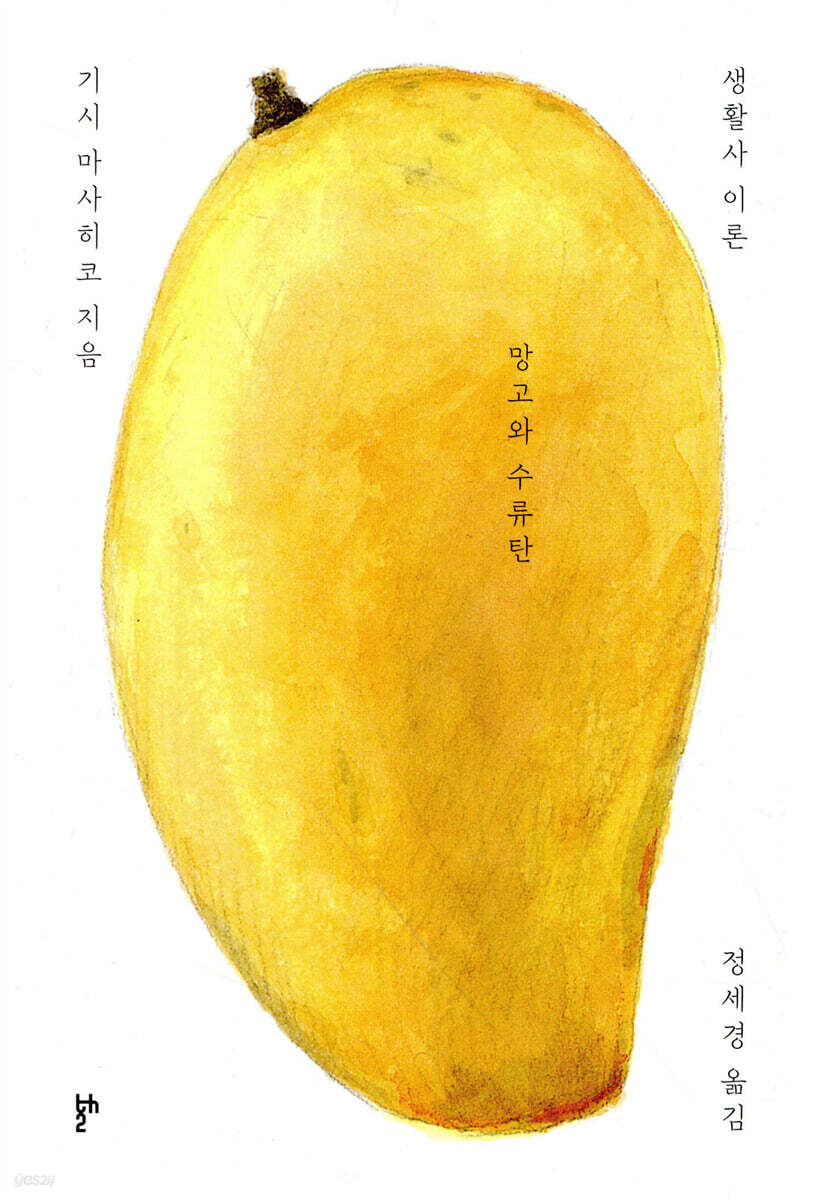
How did the intriguing title "Mango and Grenade" come about? During an oral history survey conducted in Okinawa, a grandmother recounted a mass suicide incident that occurred in Okinawa some 70 years ago. During this process, she personally prepared sweet mangoes to feed to the author and her students.
This overlapping reality in multiple times tells us that the story is true, and through its unfamiliarity, it tells us about the past history and makes us ponder its meaning.
The author says that the reality that suddenly appears before us and the principle of tolerance (Davidson) that allows us to accept it are the ways in which we can understand others.
It also devotes a significant portion of its time to showing readers how responsibility is imposed on individuals through structures and the violence of social perspectives that easily shift responsibility to individuals.
Reading "Mangoes and Grenades" offers readers an opportunity to consider not only the Okinawa issue but ultimately how to construct a "theory of humanity," how to accept the truth conveyed to us through oral narratives, and how to empathize with and build solidarity with all of us, each individual trying their best to live well within the given structure.
What Masahiko Kishi is trying to convey through this exploration of humanity, which continues from his previous work, “Sociology of the Fragmentary,” is perhaps the first step toward “seeking a way to think about Okinawa’s postwar history and social structure from the personal stories of Okinawans, and to think about what ‘Japan’ has done to Okinawa (and neighboring Asian countries)” (p. 9).
This provides clear implications for Korean society, and it presents an interesting yet serious challenge to all of us who live steadfastly within the structure, as well as to readers who wish to consider these issues together.
Regarding the difference between quantitative research, which is often considered to guarantee objectivity, and qualitative research, which is considered to contain subjective content rather than objectivity, the author argues that life history research can overcome the limitations of quantitative and qualitative research and complement their respective shortcomings.
In particular, the author demonstrates the usefulness of sociological theory by moving beyond a discussion that simply interprets the 'way of telling a story' and by arguing that it can be approached in a way that goes beyond the various descriptive possibilities of reality and approaches reality. Furthermore, he demonstrates that the dichotomy between the individual and the structure can be applied more realistically through the simple research method of oral listening.
In other words, through this book, Kishi Masahiko attempts to return oral history research, which has been reduced to merely interpreting stories, to reality.
These attempts have become increasingly clear as we examine the field from various angles through oral history research conducted over a long period of time in Okinawa and the discriminated villages, as well as oral history listening research conducted by various researchers on minority groups.
Furthermore, the author focuses on the multiple time periods that can be found in the narrator's oral history, and reveals in detail the process by which the narrator gradually comes to accept that this was the actual reality and that what the narrator says is the actual reality.
In this way, the author shows us the meaning of sociology again as a process of creating a theory about human beings.
The main text of this book consists of eight chapters.
These individual chapters are not numbered.
However, while one chapter is an episode-centered narrative, the other chapter is structured in a way that they intersect each other in a way that refutes and organizes the theory.
This format allows readers to begin reading at the point of interest, following the author's advice.
If readers begin reading with the entertaining sections containing various everyday conversations and move on to the more theoretical sections, more complex discussions will become more accessible.
How did the intriguing title "Mango and Grenade" come about? During an oral history survey conducted in Okinawa, a grandmother recounted a mass suicide incident that occurred in Okinawa some 70 years ago. During this process, she personally prepared sweet mangoes to feed to the author and her students.
This overlapping reality in multiple times tells us that the story is true, and through its unfamiliarity, it tells us about the past history and makes us ponder its meaning.
The author says that the reality that suddenly appears before us and the principle of tolerance (Davidson) that allows us to accept it are the ways in which we can understand others.
It also devotes a significant portion of its time to showing readers how responsibility is imposed on individuals through structures and the violence of social perspectives that easily shift responsibility to individuals.
Reading "Mangoes and Grenades" offers readers an opportunity to consider not only the Okinawa issue but ultimately how to construct a "theory of humanity," how to accept the truth conveyed to us through oral narratives, and how to empathize with and build solidarity with all of us, each individual trying their best to live well within the given structure.
What Masahiko Kishi is trying to convey through this exploration of humanity, which continues from his previous work, “Sociology of the Fragmentary,” is perhaps the first step toward “seeking a way to think about Okinawa’s postwar history and social structure from the personal stories of Okinawans, and to think about what ‘Japan’ has done to Okinawa (and neighboring Asian countries)” (p. 9).
This provides clear implications for Korean society, and it presents an interesting yet serious challenge to all of us who live steadfastly within the structure, as well as to readers who wish to consider these issues together.
GOODS SPECIFICS
- Date of issue: January 5, 2021
- Page count, weight, size: 304 pages | 280g | 127*188*16mm
- ISBN13: 9791190186094
- ISBN10: 1190186098
You may also like
카테고리
korean


korean

![GQ KOREA Mark (Monthly): December [2025]](http://librairie.coreenne.fr/cdn/shop/files/8ef265dbbfbf186523ed75ba7319009d.jpg?v=1765340328&width=3840)


