

Spatial innovation to create a happy school
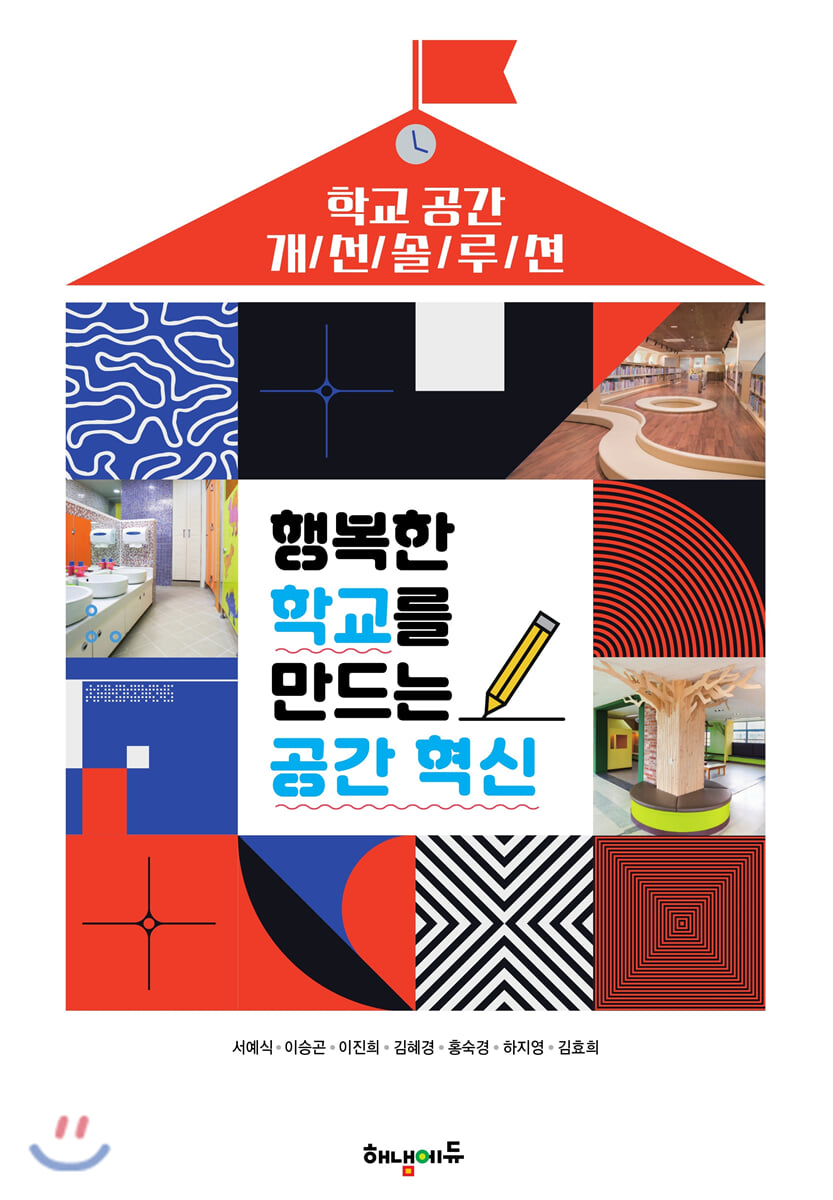 |
Description
Book Introduction
Why should we care about school spaces?
An interest in school spaces becomes the foundation for innovation that changes school culture.
A Guide to Improving School Spaces for a New School Culture!
Spatial reorganization is a hot topic in schools these days.
Since the school space improvement project became a key policy task of the Ministry of Education, a large budget has been provided for this project, and as a result, interest in space improvement has increased significantly in schools.
School space improvement projects do not stop at simply updating the physical environment, such as facilities and equipment.
Improving school spaces is a process of creating a new school culture to prepare for future education.
Therefore, in the project to improve school spaces, it is very important that teachers and students, who are the users of the school space, become the main players.
Recent school space improvement projects are also progressing in a direction where school members actively explore the space and participate proactively.
This book covers a wide range of topics related to improving school spaces, from the importance and educational implications of improving school spaces to examples of teachers' classrooms that address aesthetic approaches to school spaces and space improvement projects implemented at various schools.
In particular, we aimed to provide practical assistance to those working on improving school spaces by meticulously organizing the improvement process for each detailed space in the school, such as the school gate, entrance, library, lounge, cultural space, and restrooms that students encounter on a daily basis.
All cases have been newly decorated or improved from the perspective of user participation, including teachers and students.
The ultimate goal of the school space improvement project is to return school spaces to learning experiences that contribute to students' lives.
If we assume that innovation in school education means renewing the essence of school education every day, then renewing the space could be an opportunity to restore the essence of school education that has been neglected so far.
An interest in school spaces becomes the foundation for innovation that changes school culture.
A Guide to Improving School Spaces for a New School Culture!
Spatial reorganization is a hot topic in schools these days.
Since the school space improvement project became a key policy task of the Ministry of Education, a large budget has been provided for this project, and as a result, interest in space improvement has increased significantly in schools.
School space improvement projects do not stop at simply updating the physical environment, such as facilities and equipment.
Improving school spaces is a process of creating a new school culture to prepare for future education.
Therefore, in the project to improve school spaces, it is very important that teachers and students, who are the users of the school space, become the main players.
Recent school space improvement projects are also progressing in a direction where school members actively explore the space and participate proactively.
This book covers a wide range of topics related to improving school spaces, from the importance and educational implications of improving school spaces to examples of teachers' classrooms that address aesthetic approaches to school spaces and space improvement projects implemented at various schools.
In particular, we aimed to provide practical assistance to those working on improving school spaces by meticulously organizing the improvement process for each detailed space in the school, such as the school gate, entrance, library, lounge, cultural space, and restrooms that students encounter on a daily basis.
All cases have been newly decorated or improved from the perspective of user participation, including teachers and students.
The ultimate goal of the school space improvement project is to return school spaces to learning experiences that contribute to students' lives.
If we assume that innovation in school education means renewing the essence of school education every day, then renewing the space could be an opportunity to restore the essence of school education that has been neglected so far.
- You can preview some of the book's contents.
Preview
index
preface
prolog
Part 1: Revisiting School Space
· How to Start Improving School Spaces
· A model for improving school spaces through user participation
Part 2: Changing School Space with Our Own Hands
· Warm Saeul School Creation Space Project
· Spatial Sensitivity Development Project
● School space revitalized through club activities
Part 3: The Reality of School Space Reconfiguration
· School gate/entrance
· library
· Student lounge
· Student self-government and cultural space
· Painting/extension
School Restroom Improvement Project, "Dream Together"
The school that went out to the village in Part 4, the village that came into the school
Dongtan Central Intersection, a village educational community connecting local communities and schools
· Gyeonggi School Art Creation Center, a space for communication through art
prolog
Part 1: Revisiting School Space
· How to Start Improving School Spaces
· A model for improving school spaces through user participation
Part 2: Changing School Space with Our Own Hands
· Warm Saeul School Creation Space Project
· Spatial Sensitivity Development Project
● School space revitalized through club activities
Part 3: The Reality of School Space Reconfiguration
· School gate/entrance
· library
· Student lounge
· Student self-government and cultural space
· Painting/extension
School Restroom Improvement Project, "Dream Together"
The school that went out to the village in Part 4, the village that came into the school
Dongtan Central Intersection, a village educational community connecting local communities and schools
· Gyeonggi School Art Creation Center, a space for communication through art
Detailed image
.jpg)
Into the book
The project of improving school spaces is unfamiliar to both teachers and students.
For some, this can be a challenging and rewarding undertaking, but for others, it can be a burdensome and time-consuming undertaking.
However, if all school members put their heads together and make the task of improving school spaces a shared concern, a more satisfactory school space can be created.
Moreover, teachers and students gain the experience of restoring the sovereignty of the school community by participating as users in the process of improving the space.
A key educational benefit of the school space improvement project is that it empowers school members to explore the spaces they need and consider ways to improve them, thereby empowering them to participate as active citizens with self-determination within the community.
--- From "How to Start Improving School Space"
To improve user-participatory spaces, we actively encourage not only students and teachers to directly participate in the expression and creation of spaces, but also external architectural experts to take their ideas and carry them out.
All indirect activities, including guiding students and teachers, who are regular users of the space, in planning the space and stimulating their interest, are part of restoring the democracy of the space.
Students who experience sovereignty as owners of space will be able to grow into citizens who design this society beyond school.
In this way, the space reconstruction project embodies the values of democratic citizen education centered on communication and cooperation.
--- From the "Warm Saeul School Creation Space Project"
The traditional school gates and entrances with their rigid feel show the bureaucratic organizational culture and the solemnity of authority.
Some schools have gates that are so large that they are overwhelming, while others have no separation between vehicle and pedestrian passageways, posing a threat to students' safety.
There are places where Japanese native Kaizuka cedar trees stand in a row along the passage from the school gate to the entrance, and many schools have large-scale lesson stones.
This spatial arrangement and configuration from the school gate to the entrance is a typical example of the teacher arrangement that has been established in schools since the Japanese colonial period, and is a direct transplant of the past barracks arrangement.
The school entrance is the first place you see when you enter the school, and it serves as a place of welcome as well as communication and encounter.
However, most school entrances are filled with posters of special educational programs whose implementation is unclear and whose validity is low, or with old awards, plaques, and trophies that represent the school's history.
In many cases, spaces that should be places for active exchange end up with only traces of the past, leaving behind spaces that fail to attract students' curiosity.
--- From "The Reality of School Space Restructuring: School Gates? Entrances"
Why do students need a break room? The stress of relentless academic work not only increases student fatigue, but can also sometimes lead to aggression and even violent language and behavior.
So schools desperately need spaces where students can stop and take a break.
…From an affordance perspective, the physical environment provided to students can either reinforce or inhibit certain behaviors.
From this perspective, school break spaces can make a difference in students' daily lives.
The break room allows students to have more time to talk and interact, which greatly helps in forming friendly social relationships among students.
Establishing a student lounge is also a symbolic declaration that students will be viewed as social beings rather than objects of control.
Providing spaces within schools where students can relax and interact with friends should be a duty, not a favor.
--- From "The Reality of School Space Restructuring, Student Lounge"
A rich aesthetic experience not only provides us with emotional stability, but also opens our eyes to the world by allowing us to experience it in new and original ways.
Engaging with an object through aesthetic experience also means not looking at it through stereotypes or habits, but rather focusing on its various aspects, thereby actively interacting with aspects that have been overlooked so far.
In this respect, the ‘place’ for aesthetic experience has an important meaning.
Art spaces for aesthetic experience serve as a springboard for our own growth, allowing us to encounter the world in a creative way.
These art spaces become a means to change functionally oriented, passive art activities by going beyond the segmented approach to art activities.
For some, this can be a challenging and rewarding undertaking, but for others, it can be a burdensome and time-consuming undertaking.
However, if all school members put their heads together and make the task of improving school spaces a shared concern, a more satisfactory school space can be created.
Moreover, teachers and students gain the experience of restoring the sovereignty of the school community by participating as users in the process of improving the space.
A key educational benefit of the school space improvement project is that it empowers school members to explore the spaces they need and consider ways to improve them, thereby empowering them to participate as active citizens with self-determination within the community.
--- From "How to Start Improving School Space"
To improve user-participatory spaces, we actively encourage not only students and teachers to directly participate in the expression and creation of spaces, but also external architectural experts to take their ideas and carry them out.
All indirect activities, including guiding students and teachers, who are regular users of the space, in planning the space and stimulating their interest, are part of restoring the democracy of the space.
Students who experience sovereignty as owners of space will be able to grow into citizens who design this society beyond school.
In this way, the space reconstruction project embodies the values of democratic citizen education centered on communication and cooperation.
--- From the "Warm Saeul School Creation Space Project"
The traditional school gates and entrances with their rigid feel show the bureaucratic organizational culture and the solemnity of authority.
Some schools have gates that are so large that they are overwhelming, while others have no separation between vehicle and pedestrian passageways, posing a threat to students' safety.
There are places where Japanese native Kaizuka cedar trees stand in a row along the passage from the school gate to the entrance, and many schools have large-scale lesson stones.
This spatial arrangement and configuration from the school gate to the entrance is a typical example of the teacher arrangement that has been established in schools since the Japanese colonial period, and is a direct transplant of the past barracks arrangement.
The school entrance is the first place you see when you enter the school, and it serves as a place of welcome as well as communication and encounter.
However, most school entrances are filled with posters of special educational programs whose implementation is unclear and whose validity is low, or with old awards, plaques, and trophies that represent the school's history.
In many cases, spaces that should be places for active exchange end up with only traces of the past, leaving behind spaces that fail to attract students' curiosity.
--- From "The Reality of School Space Restructuring: School Gates? Entrances"
Why do students need a break room? The stress of relentless academic work not only increases student fatigue, but can also sometimes lead to aggression and even violent language and behavior.
So schools desperately need spaces where students can stop and take a break.
…From an affordance perspective, the physical environment provided to students can either reinforce or inhibit certain behaviors.
From this perspective, school break spaces can make a difference in students' daily lives.
The break room allows students to have more time to talk and interact, which greatly helps in forming friendly social relationships among students.
Establishing a student lounge is also a symbolic declaration that students will be viewed as social beings rather than objects of control.
Providing spaces within schools where students can relax and interact with friends should be a duty, not a favor.
--- From "The Reality of School Space Restructuring, Student Lounge"
A rich aesthetic experience not only provides us with emotional stability, but also opens our eyes to the world by allowing us to experience it in new and original ways.
Engaging with an object through aesthetic experience also means not looking at it through stereotypes or habits, but rather focusing on its various aspects, thereby actively interacting with aspects that have been overlooked so far.
In this respect, the ‘place’ for aesthetic experience has an important meaning.
Art spaces for aesthetic experience serve as a springboard for our own growth, allowing us to encounter the world in a creative way.
These art spaces become a means to change functionally oriented, passive art activities by going beyond the segmented approach to art activities.
--- From "A Space for Communication Through Art, Gyeonggi School Art Creation Center"
GOODS SPECIFICS
- Publication date: November 5, 2020
- Page count, weight, size: 252 pages | 470g | 152*225*15mm
- ISBN13: 9788964461822
- ISBN10: 8964461827
You may also like
카테고리
korean


korean

![GQ KOREA Mark (Monthly): December [2025]](http://librairie.coreenne.fr/cdn/shop/files/8ef265dbbfbf186523ed75ba7319009d.jpg?v=1765340328&width=3840)


