

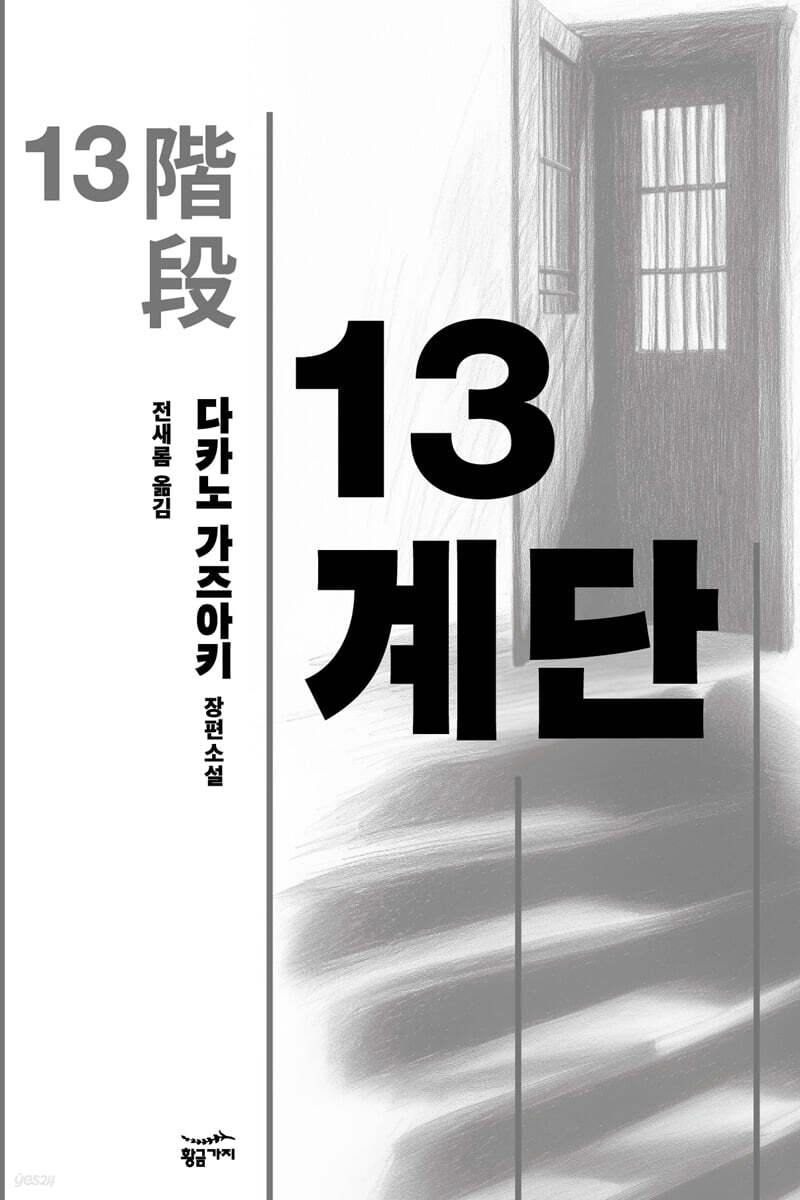
13 steps
 |
Description
Book Introduction
A masterpiece of social mystery novels
Recover edition commemorating the 20th anniversary of the Korean edition
The monumental debut work of Japanese mystery master Kazuaki Takano, "The Thirteen Steps," has been republished in a new format and design, 20 years after its first Korean edition in 2005.
"The 13 Steps," a thrilling portrayal of a reinvestigation by a former convict and a prison guard to clear the name of a prisoner sentenced to death, was unanimously selected by the judges to win the 47th Edogawa Ranpo Award. After its publication, it received enthusiastic support from critics and readers, rose to the top mystery best-seller rankings, and was even made into a movie that swept the Japanese box office.
In Korea, it has been loved by mystery readers for a long time, selling over 100,000 copies.
With its meticulous plot that keeps the tension high with twist after twist, and its detailed depiction of reality based on extensive research, "The 13 Steps" is an excellent example of a social mystery novel that confronts the subject of the death penalty and the modern crime management system head-on, delivering timeless fun and emotion.
Recover edition commemorating the 20th anniversary of the Korean edition
The monumental debut work of Japanese mystery master Kazuaki Takano, "The Thirteen Steps," has been republished in a new format and design, 20 years after its first Korean edition in 2005.
"The 13 Steps," a thrilling portrayal of a reinvestigation by a former convict and a prison guard to clear the name of a prisoner sentenced to death, was unanimously selected by the judges to win the 47th Edogawa Ranpo Award. After its publication, it received enthusiastic support from critics and readers, rose to the top mystery best-seller rankings, and was even made into a movie that swept the Japanese box office.
In Korea, it has been loved by mystery readers for a long time, selling over 100,000 copies.
With its meticulous plot that keeps the tension high with twist after twist, and its detailed depiction of reality based on extensive research, "The 13 Steps" is an excellent example of a social mystery novel that confronts the subject of the death penalty and the modern crime management system head-on, delivering timeless fun and emotion.
- You can preview some of the book's contents.
Preview
index
Prologue 9
Chapter 1: Social Reintegration 16
Chapter 2, Incident 60
Chapter 3 Investigation 98
Chapter 4: Past 172
Chapter 5 Evidence 264
Chapter 6 Executing the Defendant to Death 329
Epilogue: What Two People Did 386
Commentary 404
Translator's Note 410
Reference 414
Chapter 1: Social Reintegration 16
Chapter 2, Incident 60
Chapter 3 Investigation 98
Chapter 4: Past 172
Chapter 5 Evidence 264
Chapter 6 Executing the Defendant to Death 329
Epilogue: What Two People Did 386
Commentary 404
Translator's Note 410
Reference 414
Publisher's Review
Only 3 months left,
Reveal the innocence of the death row inmate who lost his memory.
After serving about two years in prison for assault resulting in death, young man Junichi Mikami is released and is immediately frustrated by the cold reality upon returning to society.
His parents were in deep debt trying to pay compensation to the victims' families, and his younger brother, who was unable to attend school because of his older brother's crime, had left home to fend for himself.
Jun-ichi, who is at a loss about what to do next, is visited by Nango, a prison guard who treated him kindly during his time in prison.
Nango, who is about to retire, is invited by an anonymous reader to join him in a project he has proposed for a large sum of money.
The task was to find evidence that would exonerate a death row inmate who had no recollection of his crimes.
The man in question was Ryo Kihara, who was sentenced to death for the brutal murder of a guardian who managed a criminal.
As a detainee awaiting death in a detention center, he lived in fear every day and had no memory of the crime due to the trauma he suffered on the day of the incident. However, he recently began to recall some fragmentary memories and requested a retrial.
However, with only three months left until the execution, Junichi and Nango retrace the steps of the incident to solve the mystery of the '13 steps' that Ryo remembered.
Are humans truly capable of regeneration?
A problematic work dealing with the death penalty and modern crime management systems.
Unlike South Korea, which is classified as a de facto abolitionist country due to the absence of any executions for nearly 30 years, Japan is a country where the death penalty system is maintained, with executions still taking place as of 2022.
This work does not stop at symbolically bringing in the image of the 13 steps that traditionally symbolize the gallows, but also reveals in detail the reality of the death penalty system, which involves thirteen steps and thirteen officials from sentencing to execution.
It comprehensively examines issues surrounding the system, such as the influence of political situations and public opinion, such as cabinet reshuffles, on executions, the ambiguous criteria for pardons, and the contradiction that the more people are killed, the more lives are extended through trials and administrative procedures.
At the same time, it vividly conveys the fear felt by death row inmates as they await death and the trauma felt by the prison guards who carry out the executions.
Nango, a prison guard, tries to recall Kant's words that "absolute retribution is the fundamental principle of punishment" when he carries out an execution during his time on duty. However, he begins to feel skeptical about the system as he witnesses the eerie fear felt by death row inmates and instances where the rehabilitation of each individual is not properly considered.
On the one hand, 『13 Steps』 also makes us think about the meaning of ‘regeneration.’
Can others truly judge the "sentiment of war"? Can we judge from outward appearances whether a person who has committed a crime is truly remorseful? While this question lacks a clear answer, it forces us to consider the reality that a diverse range of individuals—from death row inmates with no memory of their crimes, to ex-convicts who diligently reintegrate into society, to those caught in a vicious cycle of crime—are overlooked in blind spots of law and institutions.
Miyuki Miyabe, a former Ranpo Prize judge, stated in her commentary that she believes the underlying question of this book is, “What kind of debt can a person bear toward society and still live for society (or others)?”
"The 13 Steps" is a work that poses profound questions to readers and society through two characters who, rather than being professional investigators, feel the weight of sin more intimately than anyone else.
Reveal the innocence of the death row inmate who lost his memory.
After serving about two years in prison for assault resulting in death, young man Junichi Mikami is released and is immediately frustrated by the cold reality upon returning to society.
His parents were in deep debt trying to pay compensation to the victims' families, and his younger brother, who was unable to attend school because of his older brother's crime, had left home to fend for himself.
Jun-ichi, who is at a loss about what to do next, is visited by Nango, a prison guard who treated him kindly during his time in prison.
Nango, who is about to retire, is invited by an anonymous reader to join him in a project he has proposed for a large sum of money.
The task was to find evidence that would exonerate a death row inmate who had no recollection of his crimes.
The man in question was Ryo Kihara, who was sentenced to death for the brutal murder of a guardian who managed a criminal.
As a detainee awaiting death in a detention center, he lived in fear every day and had no memory of the crime due to the trauma he suffered on the day of the incident. However, he recently began to recall some fragmentary memories and requested a retrial.
However, with only three months left until the execution, Junichi and Nango retrace the steps of the incident to solve the mystery of the '13 steps' that Ryo remembered.
Are humans truly capable of regeneration?
A problematic work dealing with the death penalty and modern crime management systems.
Unlike South Korea, which is classified as a de facto abolitionist country due to the absence of any executions for nearly 30 years, Japan is a country where the death penalty system is maintained, with executions still taking place as of 2022.
This work does not stop at symbolically bringing in the image of the 13 steps that traditionally symbolize the gallows, but also reveals in detail the reality of the death penalty system, which involves thirteen steps and thirteen officials from sentencing to execution.
It comprehensively examines issues surrounding the system, such as the influence of political situations and public opinion, such as cabinet reshuffles, on executions, the ambiguous criteria for pardons, and the contradiction that the more people are killed, the more lives are extended through trials and administrative procedures.
At the same time, it vividly conveys the fear felt by death row inmates as they await death and the trauma felt by the prison guards who carry out the executions.
Nango, a prison guard, tries to recall Kant's words that "absolute retribution is the fundamental principle of punishment" when he carries out an execution during his time on duty. However, he begins to feel skeptical about the system as he witnesses the eerie fear felt by death row inmates and instances where the rehabilitation of each individual is not properly considered.
On the one hand, 『13 Steps』 also makes us think about the meaning of ‘regeneration.’
Can others truly judge the "sentiment of war"? Can we judge from outward appearances whether a person who has committed a crime is truly remorseful? While this question lacks a clear answer, it forces us to consider the reality that a diverse range of individuals—from death row inmates with no memory of their crimes, to ex-convicts who diligently reintegrate into society, to those caught in a vicious cycle of crime—are overlooked in blind spots of law and institutions.
Miyuki Miyabe, a former Ranpo Prize judge, stated in her commentary that she believes the underlying question of this book is, “What kind of debt can a person bear toward society and still live for society (or others)?”
"The 13 Steps" is a work that poses profound questions to readers and society through two characters who, rather than being professional investigators, feel the weight of sin more intimately than anyone else.
GOODS SPECIFICS
- Date of issue: June 13, 2025
- Page count, weight, size: 416 pages | 140*210*30mm
- ISBN13: 9791170525912
- ISBN10: 1170525911
You may also like
카테고리
korean


korean

![GQ KOREA Mark (Monthly): December [2025]](http://librairie.coreenne.fr/cdn/shop/files/8ef265dbbfbf186523ed75ba7319009d.jpg?v=1765340328&width=3840)


