

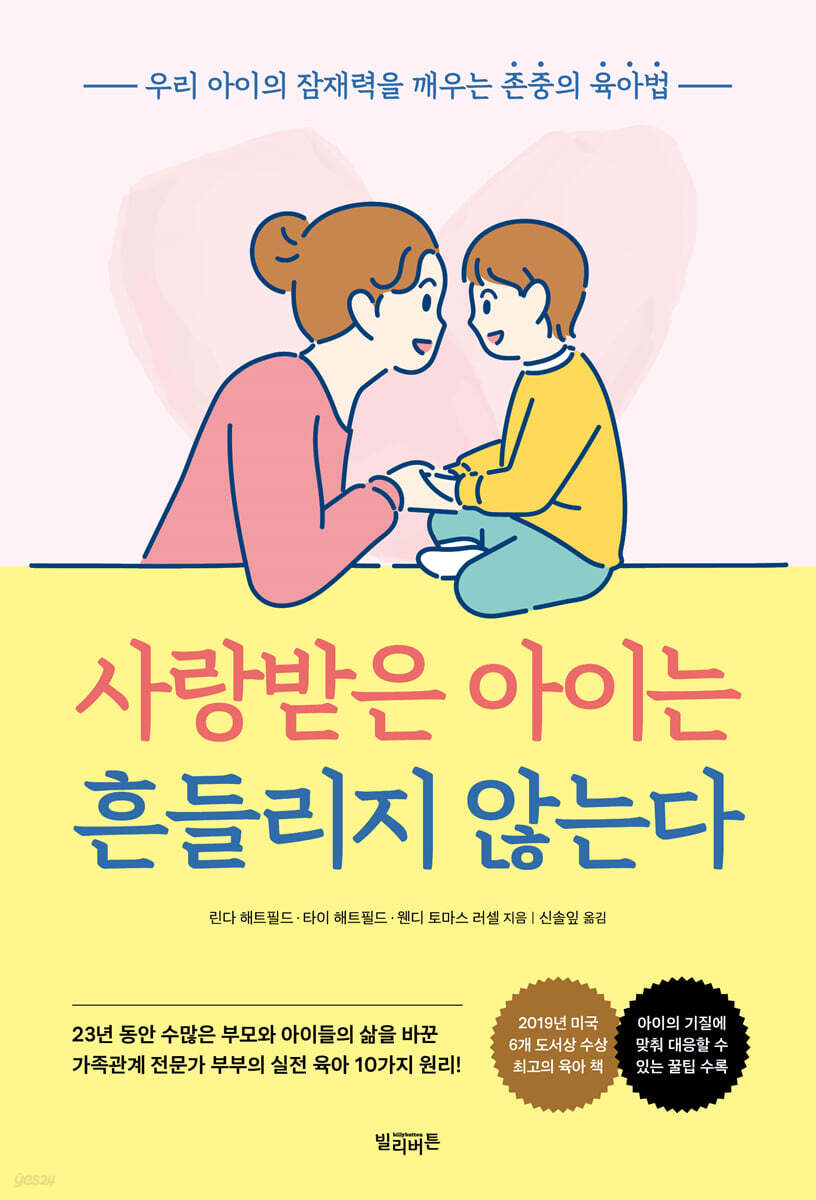
A child who is loved is unshaken
 |
Description
Book Introduction
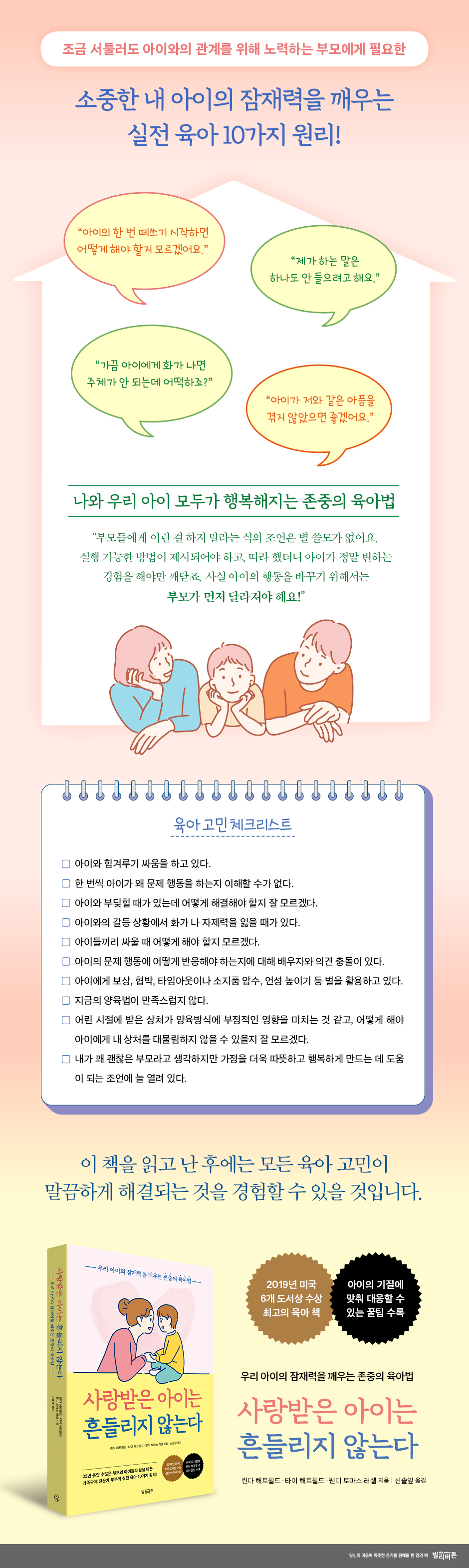
The foundation of happy parenting is respecting your child. To be happy with your child Ten Principles Parents Should Know! What if your appointment is approaching and you need to leave the house quickly, but your child suddenly throws a tantrum, saying they don't like the outfit and refuses to go out? What if you're walking hand-in-hand with your child in a crowded shopping mall on the weekend, and they want to let go and wander around alone? Or what if you're playing with a neighbor and see them stealing their friend's toy, and no matter how much you try to persuade or scold them to return it, they still throw a tantrum? Every time this happens, mothers scold their children, only to regret it and even blame themselves. When a child behaves in a way that embarrasses the parents, blaming yourself for being a lacking parent or punishing the child and scolding them harshly will ultimately distance the parent from the child. Education and discipline must change as times change. Because it is most important to understand and examine the heart behind a child's actions, not just their behavior. This book contains a parenting education program created by a couple who have studied the relationship between children and parents for a long time, based on their experiences and research raising children. Although each child-rearing environment and culture is different, there are ten unchanging principles. Children have emotional needs, act irrationally when stressed, want to express their emotions, and go through developmental stages appropriate for their age. Moreover, each child has a unique temperament, learns from observing their parents' behavior, grows by solving their own problems, sets their own standards, and hopes that their parents will respect them. And when a child's desires are repeatedly frustrated, he or she shows a four-stage response. The media is full of tips on how to be a good parent, but they aren't always easy to follow. This book kindly explains ten principles that parents must know, and if you follow them step by step, it will guide you on the path to healthy parenting that understands and respects your child's heart. |
- You can preview some of the book's contents.
Preview
index
Prologue Dreaming of happy days with you and your child
Chapter 1: Rewards and Punishments Don't Solve Any Problem
Misconceptions about rewards and punishments revealed by Adler
Ten Principles Parents Should Know
To you who still believe that punishment works
Chapter 2: I hope my child grows up well.
To find your way without getting lost
Changing your attitude toward children
You don't have to be perfect
Chapter 3: Principle 1 | Children Have Emotional Needs
Build positive emotions in your emotional account
The Seven Emotional Needs of Children
A guardian who protects the child's needs
When Praise Becomes a Problem
Chapter 4: Principle 2 | Children Respond to Stress
Where my child's heart resides
How to calm your parents' hearts
The Amazing Power of the Senses
A child standing facing a wall
If your child throws a tantrum
So that you can always find your center of mind
Chapter 5: Principle 3 | Children Want to Express Their Emotions
Until you can read a child's mind
How Repressed Emotions Change
Empathy that conveys true feelings
Emotional blocking words and emotional recognition words
After empathizing with the child
Chapter 6: Principle 4 | Children Grow a Little Every Day
Children have their own pace.
When a negative temperament is a positive sign
Chapter 7: Principle 5 | Each child is born with a unique temperament.
All children are different
To get to know my child better
Chapter 8: Principle Six | Children Learn by Watching Their Parents
Children who follow along
When my flaws are revealed
Forgive and accept me
Admit your mistakes honestly
Chapter 9: Principle Seven | Children need opportunities to solve their own problems.
The pain needed to grow
Between interest and interference
Chapter 10: Principle Eight | We Need Someone Who Respects Our Children's Boundaries
Boundaries that children must learn
Let go of guilt
Standards parents should set
How to Gently Protect My Boundaries
Eight Ways to Respect Your Child's Boundaries
Chapter 11: Principle 9: Children Need Age-Appropriate Limits
Limits are necessary, but punishment is not.
assert limits leisurely
Clearly identify the cause of the problem
How to keep what you both agree on without conflict
Should we negotiate anything?
Sometimes conflict is necessary
Chapter 12: The Tenth Principle | Children become frustrated when their needs are not met.
What happens when a child's unmet needs arise?
When you can't understand your child's behavior, you have to become a detective.
Chapter 13: Emergency Solutions for Parents
Respond to the child's actions and words.
Questions to remember when dealing with children
A Heart-Centered Parenting Toolkit You Can Use Anytime
Practice applying solutions to your life
Chapter 1: Rewards and Punishments Don't Solve Any Problem
Misconceptions about rewards and punishments revealed by Adler
Ten Principles Parents Should Know
To you who still believe that punishment works
Chapter 2: I hope my child grows up well.
To find your way without getting lost
Changing your attitude toward children
You don't have to be perfect
Chapter 3: Principle 1 | Children Have Emotional Needs
Build positive emotions in your emotional account
The Seven Emotional Needs of Children
A guardian who protects the child's needs
When Praise Becomes a Problem
Chapter 4: Principle 2 | Children Respond to Stress
Where my child's heart resides
How to calm your parents' hearts
The Amazing Power of the Senses
A child standing facing a wall
If your child throws a tantrum
So that you can always find your center of mind
Chapter 5: Principle 3 | Children Want to Express Their Emotions
Until you can read a child's mind
How Repressed Emotions Change
Empathy that conveys true feelings
Emotional blocking words and emotional recognition words
After empathizing with the child
Chapter 6: Principle 4 | Children Grow a Little Every Day
Children have their own pace.
When a negative temperament is a positive sign
Chapter 7: Principle 5 | Each child is born with a unique temperament.
All children are different
To get to know my child better
Chapter 8: Principle Six | Children Learn by Watching Their Parents
Children who follow along
When my flaws are revealed
Forgive and accept me
Admit your mistakes honestly
Chapter 9: Principle Seven | Children need opportunities to solve their own problems.
The pain needed to grow
Between interest and interference
Chapter 10: Principle Eight | We Need Someone Who Respects Our Children's Boundaries
Boundaries that children must learn
Let go of guilt
Standards parents should set
How to Gently Protect My Boundaries
Eight Ways to Respect Your Child's Boundaries
Chapter 11: Principle 9: Children Need Age-Appropriate Limits
Limits are necessary, but punishment is not.
assert limits leisurely
Clearly identify the cause of the problem
How to keep what you both agree on without conflict
Should we negotiate anything?
Sometimes conflict is necessary
Chapter 12: The Tenth Principle | Children become frustrated when their needs are not met.
What happens when a child's unmet needs arise?
When you can't understand your child's behavior, you have to become a detective.
Chapter 13: Emergency Solutions for Parents
Respond to the child's actions and words.
Questions to remember when dealing with children
A Heart-Centered Parenting Toolkit You Can Use Anytime
Practice applying solutions to your life
Detailed image
Into the book
I thought he was past that age, but he kept throwing tantrums more and more often.
From then on, a power struggle with the child began.
Caring for the child wasn't as enjoyable as it used to be, and my husband and I were increasingly clashing over basic parenting techniques.
How should we respond when a child loses self-control and throws a tantrum? This approach has led to arguments about whether or not it's toxic for both the child and the parent.
--- p.5
As we all know, the Hatfields also knew how complicated and confusing raising a child can be.
The couple also knew that each child is different, and that parenting methods that work well for one child may not work for another.
Linda, who raised three daughters, said:
“Advice to parents telling their children not to do this is of little use.
“You have to be presented with a feasible solution, and then you can experience real change immediately.”
--- p.
6
But what happens when you have the courage to let go of unfounded beliefs and embrace a new perspective? What happens when you realize that you can only influence your child if you form a strong bond with him or her? The more you try to control your child, the more your relationship will deteriorate.
If you trust your child and work through things together, just like you would with a trustworthy coworker, your relationship will become stronger.
--- p.
22
But renowned experts say that praising is something parents should avoid.
Praise doesn't boost a child's self-esteem; it destroys it little by little.
What we need to do is encourage, not praise.
--- p.
98
A child's developmental stage is not a choice.
No matter how excellent the parenting method, it cannot control or manipulate the developmental stages that a child must go through.
Developmental stages are absolutely necessary and absolutely unavoidable.
Of course, it's not always good, but at least it's designed accurately according to the child's age.
--- p.
183
When you offer emotional validation, you gain the space to decide what is and is not acceptable, and whether those boundaries are valid in any given situation.
You cooked for your family, and you don't want to wake up and make another dish while you're eating it.
If a child doesn't like the food his or her parents make, he or she is old enough to make his or her own bread and spread jam on it.
And you have the logic that you would never, under any circumstances, make a different food just for your child.
--- p.
264
The limits we set for our children vary depending on their age, as well as their family history, culture, environment, and philosophy.
The younger the child, the more limitations there are on their behavior.
Babies are absolutely dependent on their parents for their safety and health.
When a child is young, there are bound to be many limitations.
However, as the child grows and the frontal lobe develops, this limitation begins to gradually decrease.
This is because as children reach their developmental goals one by one, the responsibility for health and safety, which was once the responsibility of parents, must be returned to the child.
Ideally, this process begins gradually in childhood, so that by the time children graduate from high school, they seek advice rather than following the limits set by their parents.
--- p.
280
Thomas Gordon writes in Parenting:
“Most parents hate conflict, are deeply distressed when it occurs, and are confused about how to resolve it constructively.
But the reality is that if one person's desires do not conflict with the other person's for a certain period of time, it cannot be considered a proper relationship.
“When two or more people (or groups) come together, conflict is bound to arise.”
From then on, a power struggle with the child began.
Caring for the child wasn't as enjoyable as it used to be, and my husband and I were increasingly clashing over basic parenting techniques.
How should we respond when a child loses self-control and throws a tantrum? This approach has led to arguments about whether or not it's toxic for both the child and the parent.
--- p.5
As we all know, the Hatfields also knew how complicated and confusing raising a child can be.
The couple also knew that each child is different, and that parenting methods that work well for one child may not work for another.
Linda, who raised three daughters, said:
“Advice to parents telling their children not to do this is of little use.
“You have to be presented with a feasible solution, and then you can experience real change immediately.”
--- p.
6
But what happens when you have the courage to let go of unfounded beliefs and embrace a new perspective? What happens when you realize that you can only influence your child if you form a strong bond with him or her? The more you try to control your child, the more your relationship will deteriorate.
If you trust your child and work through things together, just like you would with a trustworthy coworker, your relationship will become stronger.
--- p.
22
But renowned experts say that praising is something parents should avoid.
Praise doesn't boost a child's self-esteem; it destroys it little by little.
What we need to do is encourage, not praise.
--- p.
98
A child's developmental stage is not a choice.
No matter how excellent the parenting method, it cannot control or manipulate the developmental stages that a child must go through.
Developmental stages are absolutely necessary and absolutely unavoidable.
Of course, it's not always good, but at least it's designed accurately according to the child's age.
--- p.
183
When you offer emotional validation, you gain the space to decide what is and is not acceptable, and whether those boundaries are valid in any given situation.
You cooked for your family, and you don't want to wake up and make another dish while you're eating it.
If a child doesn't like the food his or her parents make, he or she is old enough to make his or her own bread and spread jam on it.
And you have the logic that you would never, under any circumstances, make a different food just for your child.
--- p.
264
The limits we set for our children vary depending on their age, as well as their family history, culture, environment, and philosophy.
The younger the child, the more limitations there are on their behavior.
Babies are absolutely dependent on their parents for their safety and health.
When a child is young, there are bound to be many limitations.
However, as the child grows and the frontal lobe develops, this limitation begins to gradually decrease.
This is because as children reach their developmental goals one by one, the responsibility for health and safety, which was once the responsibility of parents, must be returned to the child.
Ideally, this process begins gradually in childhood, so that by the time children graduate from high school, they seek advice rather than following the limits set by their parents.
--- p.
280
Thomas Gordon writes in Parenting:
“Most parents hate conflict, are deeply distressed when it occurs, and are confused about how to resolve it constructively.
But the reality is that if one person's desires do not conflict with the other person's for a certain period of time, it cannot be considered a proper relationship.
“When two or more people (or groups) come together, conflict is bound to arise.”
--- p.
311
311
Publisher's Review
Changing the lives of countless parents and children for 23 years
Parenting with Kindness, Certainty, and Respect
A child who studies well, a child who is polite, a child who is good at greeting people, a child who takes good care of his or her younger siblings.
All parents would have the same wish for their precious children to grow up well.
But sometimes, contrary to parents' wishes, children throw tantrums, throw tantrums, and get angry for reasons that are incomprehensible.
When I come home from work, exhausted and tired, and deal with my child's tantrum, I find myself yelling at him without realizing it.
This book explains ten principles on how parents can treat their children as individuals, based on the author's own insights gained through personal practice and research.
For parents who get angry at their children and then turn around and regret it later, we help you follow along from start to finish.
Above all, it will help you achieve a 'win-win' without having to compromise or give up on either what your children want or what your parents want.
A positive and strong relationship between children and parents
The first thing to do is to look into the child's heart.
Children want to feel that they are valuable and worthy.
Of course, children are precious beings, but what is important is not what the parents think and feel, but what the child feels with his or her skin and heart.
To do this, it is important to ask for, accept, and understand the child's opinions, thoughts, and feelings.
Children grow up with self-esteem and a sense of self-importance, nourished by respect and communication with their parents.
Children are sensitive to their parents' emotions and attitudes, so they quickly realize that they are pretending.
You need to treat them like they really are important, not make them feel like they are.
From small questions like, “Where should I put this picture?”, “What do you want for a snack?”, or “Should I take a bath now or after dinner?” to asking your child to show you the taekwondo he or she recently learned or watching his or her favorite TV show together.
Through these expressions, children feel how important they are and grow up to be self-respecting children.
The author says that the parent's role is to simply love their child wholeheartedly rather than being impatient or anxious when they feel their child is outstanding or slow in some area.
Rather than projecting your expectations about what kind of person you want your child to become, it means looking into their heart, paying attention, and supporting them.
If you give your child love that he or she can feel anytime, anywhere, you can build a strong and unwavering relationship with him or her.
As much as you love, your child's emotional account
Fill yourself with positive emotions
A child's mind is like a bankbook, accumulating positive and negative emotions.
Cooking your child's favorite food, taking them for a walk in the park, and telling them you love them before bed are all ways to build positive emotions in your child's mind.
On the other hand, if you refuse your children's requests to play because you are busy, scold them for complaining about their side dishes, or yell at them for not going to bed, negative emotions will build up in the child's mind.
It is impossible for the time spent with children to always be filled with positive and happy emotions.
There are times when you have to stop dangerous things, scold them for misbehaving, or just be too busy and tired to give your child your full attention.
So, how can we protect our children's hearts in the midst of our busy, everyday lives? It begins with fully empathizing with their feelings and fostering a connection.
1.
Lower your body and make eye contact with the child.
2.
Try to empathize with your child's feelings by placing a hand on their shoulder or holding their hand.
3.
I don't care about anything else and only focus on the child.
4.
Listen carefully to what your child says and react with things like "yeah", "oh", or "cool".
This method is great when your child is feeling positive emotions, but it can be very helpful when they are feeling negative emotions.
This book helps parents maintain a loving gaze toward their children, who often cause them embarrassment and anger. It also provides practical, practical examples of the latest research and new parenting paradigms.
It will serve as a definitive guide for parents who dream of a happy relationship with their children.
Parenting with Kindness, Certainty, and Respect
A child who studies well, a child who is polite, a child who is good at greeting people, a child who takes good care of his or her younger siblings.
All parents would have the same wish for their precious children to grow up well.
But sometimes, contrary to parents' wishes, children throw tantrums, throw tantrums, and get angry for reasons that are incomprehensible.
When I come home from work, exhausted and tired, and deal with my child's tantrum, I find myself yelling at him without realizing it.
This book explains ten principles on how parents can treat their children as individuals, based on the author's own insights gained through personal practice and research.
For parents who get angry at their children and then turn around and regret it later, we help you follow along from start to finish.
Above all, it will help you achieve a 'win-win' without having to compromise or give up on either what your children want or what your parents want.
A positive and strong relationship between children and parents
The first thing to do is to look into the child's heart.
Children want to feel that they are valuable and worthy.
Of course, children are precious beings, but what is important is not what the parents think and feel, but what the child feels with his or her skin and heart.
To do this, it is important to ask for, accept, and understand the child's opinions, thoughts, and feelings.
Children grow up with self-esteem and a sense of self-importance, nourished by respect and communication with their parents.
Children are sensitive to their parents' emotions and attitudes, so they quickly realize that they are pretending.
You need to treat them like they really are important, not make them feel like they are.
From small questions like, “Where should I put this picture?”, “What do you want for a snack?”, or “Should I take a bath now or after dinner?” to asking your child to show you the taekwondo he or she recently learned or watching his or her favorite TV show together.
Through these expressions, children feel how important they are and grow up to be self-respecting children.
The author says that the parent's role is to simply love their child wholeheartedly rather than being impatient or anxious when they feel their child is outstanding or slow in some area.
Rather than projecting your expectations about what kind of person you want your child to become, it means looking into their heart, paying attention, and supporting them.
If you give your child love that he or she can feel anytime, anywhere, you can build a strong and unwavering relationship with him or her.
As much as you love, your child's emotional account
Fill yourself with positive emotions
A child's mind is like a bankbook, accumulating positive and negative emotions.
Cooking your child's favorite food, taking them for a walk in the park, and telling them you love them before bed are all ways to build positive emotions in your child's mind.
On the other hand, if you refuse your children's requests to play because you are busy, scold them for complaining about their side dishes, or yell at them for not going to bed, negative emotions will build up in the child's mind.
It is impossible for the time spent with children to always be filled with positive and happy emotions.
There are times when you have to stop dangerous things, scold them for misbehaving, or just be too busy and tired to give your child your full attention.
So, how can we protect our children's hearts in the midst of our busy, everyday lives? It begins with fully empathizing with their feelings and fostering a connection.
1.
Lower your body and make eye contact with the child.
2.
Try to empathize with your child's feelings by placing a hand on their shoulder or holding their hand.
3.
I don't care about anything else and only focus on the child.
4.
Listen carefully to what your child says and react with things like "yeah", "oh", or "cool".
This method is great when your child is feeling positive emotions, but it can be very helpful when they are feeling negative emotions.
This book helps parents maintain a loving gaze toward their children, who often cause them embarrassment and anger. It also provides practical, practical examples of the latest research and new parenting paradigms.
It will serve as a definitive guide for parents who dream of a happy relationship with their children.
GOODS SPECIFICS
- Date of issue: May 6, 2022
- Page count, weight, size: 392 pages | 680g | 153*210*23mm
- ISBN13: 9791191228816
- ISBN10: 1191228819
You may also like
카테고리
korean


korean

![GQ KOREA Mark (Monthly): December [2025]](http://librairie.coreenne.fr/cdn/shop/files/8ef265dbbfbf186523ed75ba7319009d.jpg?v=1765340328&width=3840)


