

Mr. Beanie Covers the Basics of Confectionery
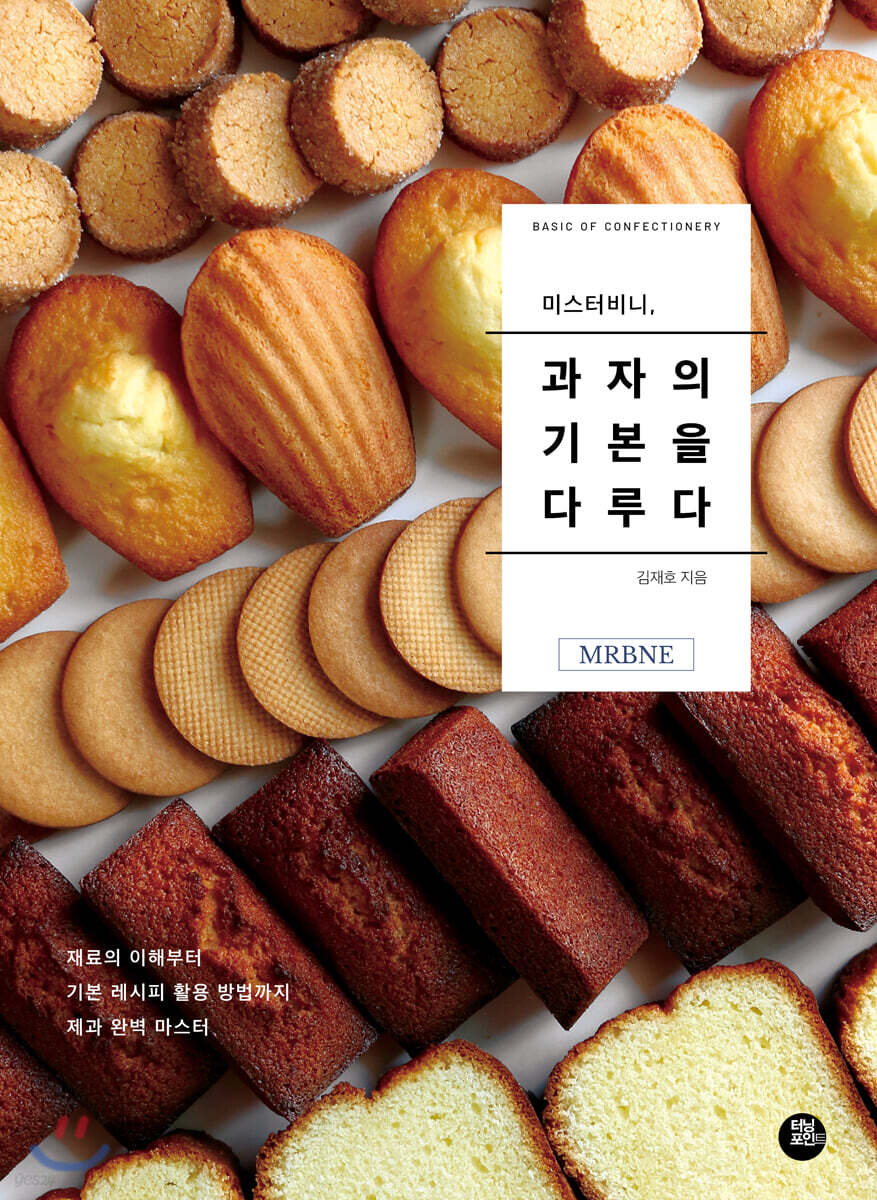 |
Description
Book Introduction
A month of classes ends in 59 seconds!
Baking class 'Mr. Bini', famous for its detailed theoretical classes
Confectionery know-how revealed!
The first pastry book by Mr. Beanie, famous among home bakers for his 'Macau-worthy Egg Tart Recipe'.
Mr. Bini, known for emphasizing theory in his classes, provides thorough and detailed explanations of the basics of pastry.
"Mr. Beanie, Covering the Basics of Snacks" is largely divided into three parts.
Part 1 provides a detailed introduction to the basic ingredients that make up confectionery, basic tools, basic common sense, and preparation before work, helping you build a comprehensive knowledge of confectionery.
Part 2 reveals 10 basic cookie recipes and 5 cream recipes.
In particular, Mr. Bini's unique recipe, which is explained in 'simple ingredient ratios', will be attractive to home bakers who find the measurement method of dividing it into 1g units difficult.
In places where you might wonder, "Why is it done like this?" or "Why is it like this?", the principles of the process are explained to help you understand.
You can also upgrade your skills through the 'Baking Lab' corner, where you can directly compare various failure cases with photos and analyze the reasons for failure.
Part 3 provides a friendly guide to help you understand the role of each ingredient in the cookie and learn how to use it yourself.
These days, there are many colorful and extravagant desserts.
Even when you're making cookies that show off your skills, there comes a time when you want to brush up on the basics.
Cookies made with knowledge of the basics are different.
Confectionery becomes easier and more fun when you understand the characteristics of the ingredients and the principles of the process.
Whether you're a beginner or an expert in pastry, it's time to build a solid foundation with "Mr. Beanie: The Basics of Confectionery."
Baking class 'Mr. Bini', famous for its detailed theoretical classes
Confectionery know-how revealed!
The first pastry book by Mr. Beanie, famous among home bakers for his 'Macau-worthy Egg Tart Recipe'.
Mr. Bini, known for emphasizing theory in his classes, provides thorough and detailed explanations of the basics of pastry.
"Mr. Beanie, Covering the Basics of Snacks" is largely divided into three parts.
Part 1 provides a detailed introduction to the basic ingredients that make up confectionery, basic tools, basic common sense, and preparation before work, helping you build a comprehensive knowledge of confectionery.
Part 2 reveals 10 basic cookie recipes and 5 cream recipes.
In particular, Mr. Bini's unique recipe, which is explained in 'simple ingredient ratios', will be attractive to home bakers who find the measurement method of dividing it into 1g units difficult.
In places where you might wonder, "Why is it done like this?" or "Why is it like this?", the principles of the process are explained to help you understand.
You can also upgrade your skills through the 'Baking Lab' corner, where you can directly compare various failure cases with photos and analyze the reasons for failure.
Part 3 provides a friendly guide to help you understand the role of each ingredient in the cookie and learn how to use it yourself.
These days, there are many colorful and extravagant desserts.
Even when you're making cookies that show off your skills, there comes a time when you want to brush up on the basics.
Cookies made with knowledge of the basics are different.
Confectionery becomes easier and more fun when you understand the characteristics of the ingredients and the principles of the process.
Whether you're a beginner or an expert in pastry, it's time to build a solid foundation with "Mr. Beanie: The Basics of Confectionery."
- You can preview some of the book's contents.
Preview
index
prolog
Before starting the book
How to Use This Book
Part 01 Basic knowledge of confectionery
Chapter 01 Basic Materials
butter
sugar
egg
flour
dairy products
powdered ingredients
leavening agent
spices
Chocolate & Fruit Puree
Chapter 02 Basic Tools
frother
oven
Main tools
Various small tools
baking pan
Chapter 03 Basic Common Sense
quite
meringue
Part
Cream
phenomenon in confectionery
Confectionery Terms
Storage method
Expiration date
maturation
Chapter 04 Preparation before work
Measure the ingredients
Preprocess the materials
Prepare the necessary tools
Take out the frame in advance
Set the temperature to the right temperature for your work.
Part 02 Basic Confectionery Recipes
Chapter 01 Basic Cookie Recipes
Butter cookies
Sabre
Shaped cookies
Madeleine
In the refugee camp
pound cake
Genoise
Dacquoise
macaroon
choux
Chapter 02 Basic Cream Recipe
Crème pâtissière
Crème Chantilly
Creme Diplomat
Crème au beurre
ganache
Part 03 Understanding and Using Materials
Chapter 01 Role of each material
cookie dough
Baked pastry dough
foam dough
Nut dough
Choux dough
Chapter 02 How to Use Basic Recipes
STEP 1.
Understand the properties of materials
STEP 2.
Add additional ingredients
STEP 3.
Adjust the proportions of the ingredients
STEP 4.
Use both methods
Before starting the book
How to Use This Book
Part 01 Basic knowledge of confectionery
Chapter 01 Basic Materials
butter
sugar
egg
flour
dairy products
powdered ingredients
leavening agent
spices
Chocolate & Fruit Puree
Chapter 02 Basic Tools
frother
oven
Main tools
Various small tools
baking pan
Chapter 03 Basic Common Sense
quite
meringue
Part
Cream
phenomenon in confectionery
Confectionery Terms
Storage method
Expiration date
maturation
Chapter 04 Preparation before work
Measure the ingredients
Preprocess the materials
Prepare the necessary tools
Take out the frame in advance
Set the temperature to the right temperature for your work.
Part 02 Basic Confectionery Recipes
Chapter 01 Basic Cookie Recipes
Butter cookies
Sabre
Shaped cookies
Madeleine
In the refugee camp
pound cake
Genoise
Dacquoise
macaroon
choux
Chapter 02 Basic Cream Recipe
Crème pâtissière
Crème Chantilly
Creme Diplomat
Crème au beurre
ganache
Part 03 Understanding and Using Materials
Chapter 01 Role of each material
cookie dough
Baked pastry dough
foam dough
Nut dough
Choux dough
Chapter 02 How to Use Basic Recipes
STEP 1.
Understand the properties of materials
STEP 2.
Add additional ingredients
STEP 3.
Adjust the proportions of the ingredients
STEP 4.
Use both methods
Detailed image

Publisher's Review
Everything you need to know about baking from the hottest baking class right now, "Mr. Beanie."
Learning the basics of confectionery through delicate processes and failure cases.
Among home bakers, one formula works.
'Mr. Beanie = Egg Tart'.
Unfortunately, this book does not include an egg tart recipe.
However, since they're making "That Egg Tart," famous for its golden recipe, wouldn't the basic pastry also be delicious? It's certainly something to look forward to.
This book focuses on those very 'basics'.
Cookies made with knowledge of the basics are different.
Confectionery becomes easier when you understand the characteristics of the ingredients and the principles of the process.
Every process in confectionery has a clear reason.
The recipe explains the principles that correspond to numerous 'whys' such as 'Why do we do this?' and 'Why does it turn out like this?'
Whether it's a simple process or a difficult one, understanding the principles is different from just doing it.
There are many hidden principles in the numerous processes that are easily overlooked.
By understanding the principles and looking at examples of failure, you can create cookies with the shape and texture you want.
124g of cake flour, 36g of sugar, 43g of eggs…
Why not just keep it simple, 120g, 30g, 40g?
Mr. Beanie's Unique "Simple Ingredient Ratio" Recipe Revealed
For those new to baking, measuring in gram units can seem quite unfamiliar.
Some people might think that this cookie was a failure because they mismeasured 1-2 grams from the amount written in the recipe.
Would replacing 124g of flour with 120g, 36g of sugar with 30g, and 43g of eggs with 40g make a significant difference in the cookie? Mr. Bini's "Simple Ingredient Ratio" recipe began with this very question.
This book provides recipes for the basic cookies and creams you must make using simple ingredient ratios, making it a little easier to approach baking.
The author says that it is important to understand the big picture of baking by directly observing how the basic ingredients of baking - butter, sugar, eggs, and flour - change depending on the recipe and ratio.
Rather than dwelling on the difference between 1g and 5g, the secret to making better cookies is understanding the role and properties of each ingredient and making it the right way.
Things both beginners and experts at home baking should know
A comprehensive overview of the basics of confectionery
Just blindly following recipes won't help you improve your pastry skills.
To upgrade your skills and create more delicious confectionery, you need to understand the basics of confectionery.
In "Mr. Bini, Covering the Basics of Confectionery," the types and properties of basic ingredients, basic tools and how to use them, their pros and cons, general confectionery theory and common sense, and preparations that must be made before making confectionery are covered in detail to help with the overall understanding of confectionery.
Learning the basics of confectionery through delicate processes and failure cases.
Among home bakers, one formula works.
'Mr. Beanie = Egg Tart'.
Unfortunately, this book does not include an egg tart recipe.
However, since they're making "That Egg Tart," famous for its golden recipe, wouldn't the basic pastry also be delicious? It's certainly something to look forward to.
This book focuses on those very 'basics'.
Cookies made with knowledge of the basics are different.
Confectionery becomes easier when you understand the characteristics of the ingredients and the principles of the process.
Every process in confectionery has a clear reason.
The recipe explains the principles that correspond to numerous 'whys' such as 'Why do we do this?' and 'Why does it turn out like this?'
Whether it's a simple process or a difficult one, understanding the principles is different from just doing it.
There are many hidden principles in the numerous processes that are easily overlooked.
By understanding the principles and looking at examples of failure, you can create cookies with the shape and texture you want.
124g of cake flour, 36g of sugar, 43g of eggs…
Why not just keep it simple, 120g, 30g, 40g?
Mr. Beanie's Unique "Simple Ingredient Ratio" Recipe Revealed
For those new to baking, measuring in gram units can seem quite unfamiliar.
Some people might think that this cookie was a failure because they mismeasured 1-2 grams from the amount written in the recipe.
Would replacing 124g of flour with 120g, 36g of sugar with 30g, and 43g of eggs with 40g make a significant difference in the cookie? Mr. Bini's "Simple Ingredient Ratio" recipe began with this very question.
This book provides recipes for the basic cookies and creams you must make using simple ingredient ratios, making it a little easier to approach baking.
The author says that it is important to understand the big picture of baking by directly observing how the basic ingredients of baking - butter, sugar, eggs, and flour - change depending on the recipe and ratio.
Rather than dwelling on the difference between 1g and 5g, the secret to making better cookies is understanding the role and properties of each ingredient and making it the right way.
Things both beginners and experts at home baking should know
A comprehensive overview of the basics of confectionery
Just blindly following recipes won't help you improve your pastry skills.
To upgrade your skills and create more delicious confectionery, you need to understand the basics of confectionery.
In "Mr. Bini, Covering the Basics of Confectionery," the types and properties of basic ingredients, basic tools and how to use them, their pros and cons, general confectionery theory and common sense, and preparations that must be made before making confectionery are covered in detail to help with the overall understanding of confectionery.
GOODS SPECIFICS
- Publication date: November 14, 2019
- Page count, weight, size: 248 pages | 798g | 188*257*20mm
- ISBN13: 9791161340579
- ISBN10: 1161340572
You may also like
카테고리
korean


korean

![ELLE 엘르 스페셜 에디션 A형 : 12월 [2025]](http://librairie.coreenne.fr/cdn/shop/files/b8e27a3de6c9538896439686c6b0e8fb.jpg?v=1766436872&width=3840)


