

Colonial Table
 |
Description
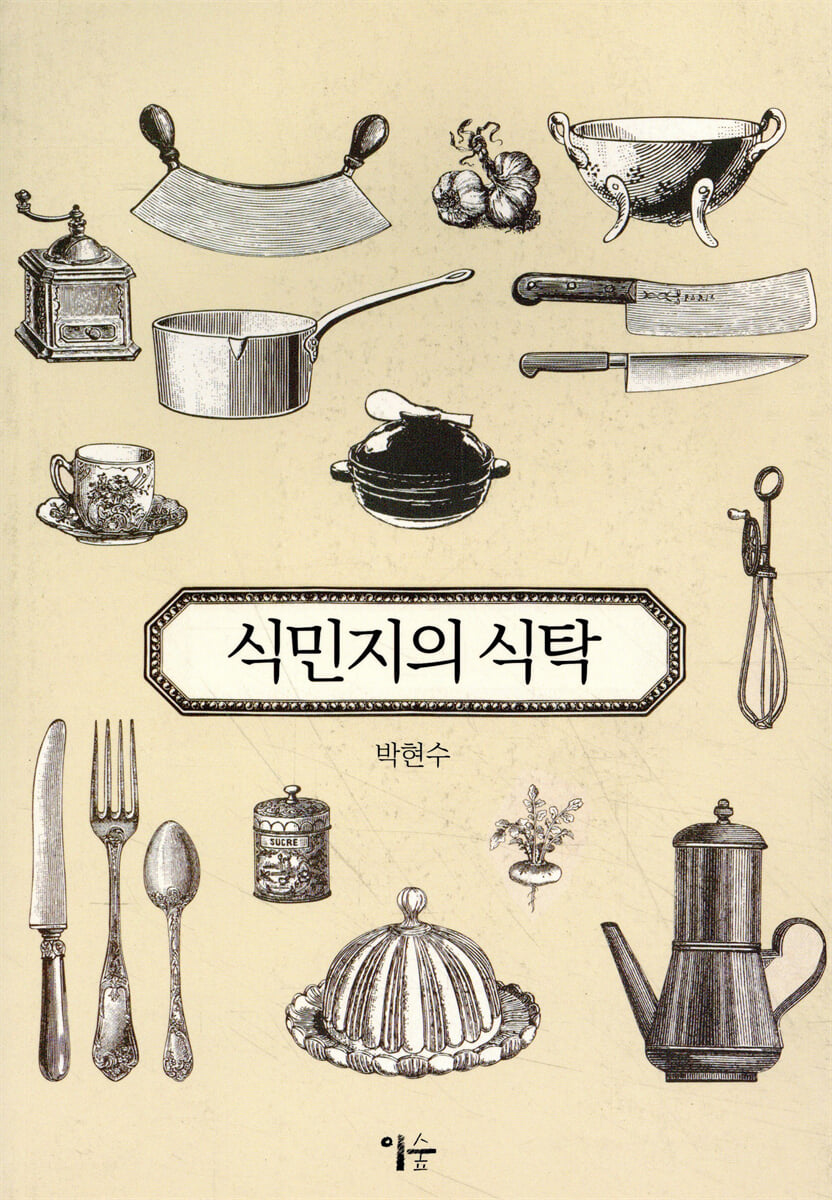
Book Introduction
Background and History of the Colonial Table
Interest in food is greater than ever.
However, going beyond the one-dimensional phenomenon of simply being absorbed in finding a good restaurant or competing to see who can eat more, the author seeks to question the full meaning of the act of eating.
This book sits somewhere between the explosive interest in food and the relatively lack of research on it.
On the one hand, there is the idea of relieving readers' curiosity and interest in food, and on the other hand, there is also the question of, "If it's delicious, can I eat anything, and can I eat a lot of it?"
The act of eating is not limited to simply relieving hunger and enjoying taste.
The act of choosing ingredients, cooking food, or going to a restaurant to eat is primarily related to personal experience and preference.
Furthermore, it is linked to social and cultural tastes and is also governed by institutional foundations.
If the way we think and act today is intertwined with the beginnings of modern times, then it is also true that we eat the way we do today.
What is unfortunate is that in Korea, that period is intertwined with the history of colonialism.
That is also why this book focuses on the colonial table.
Interest in food is greater than ever.
However, going beyond the one-dimensional phenomenon of simply being absorbed in finding a good restaurant or competing to see who can eat more, the author seeks to question the full meaning of the act of eating.
This book sits somewhere between the explosive interest in food and the relatively lack of research on it.
On the one hand, there is the idea of relieving readers' curiosity and interest in food, and on the other hand, there is also the question of, "If it's delicious, can I eat anything, and can I eat a lot of it?"
The act of eating is not limited to simply relieving hunger and enjoying taste.
The act of choosing ingredients, cooking food, or going to a restaurant to eat is primarily related to personal experience and preference.
Furthermore, it is linked to social and cultural tastes and is also governed by institutional foundations.
If the way we think and act today is intertwined with the beginnings of modern times, then it is also true that we eat the way we do today.
What is unfortunate is that in Korea, that period is intertwined with the history of colonialism.
That is also why this book focuses on the colonial table.
- You can preview some of the book's contents.
Preview
index
Entering...5
Chapter 1.
Youngchae, stop crying and try this… 13
-Lee Gwang-su's "Heartlessness" (1917)
1.
14. A dish with raw meat sandwiched between two pieces of rice cake
2.
Cider, Ramune, and Ochani Bento! 19
3.
Tilted Scales 23
4.
The other side of the sandwich, soybean paste stew 25
5.
Familiar or Uncomfortable 31
Dessert: How Did They Make Sandwiches Back Then? 40
Chapter 2.
A table on a ferry, a udon restaurant in Busan… 41
-Yeom Sang-seop's "Mansejeon" (1924)
1.
Take your turn to eat 42
2.
44 from Tokyo to Busan
3.
54 Japanese Two-Story Houses Filling Busan
4.
Is it really a noodle restaurant that sells alcohol? 59
5.
Scenery of the fleeting cheers of "Jeon" 67
Dessert: The official ferry service begins operation 69
Chapter 3.
Seolleongtang that I couldn't eat... 71
-Hyeon Jin-geon's "Lucky Day" (1924)
1.
'Lucky Day' or 'Unlucky Day' 72
2.
What were seolleongtang restaurants like back then? 74
3.
Rich flavor and premium nutrition 79
4.
86 Misconceptions About Seolleongtang
5.
Rickshaw puller Kim Cheomji 97
Dessert: 100 Ways to Make Seolleongtang
Chapter 4.
Tavern Scene… 101
-Chae Man-sik's "Bandit" (1929)
1.
A place called Tavern 103
2.
The housewife, the owner, and Mokro 105
3.
Free snacks this delicious? 110
4.
The hostess's rhythm or the tavern's style 119
5.
Some of the Charms of a Tavern 123
Dessert: Izakaya and Ajinomoto 127
Chapter 5.
Can you buy me a drink tonight? … 129
Park Tae-won's "A Day in the Life of Novelist Gubo" (1934)
1.
Meeting or pastime, Nakrangpara 131
2.
Mr. Gubo's Long Day 139
3.
You also drink 'Garupis' 140
4.
Paradise Garden Cafe 148
5.
Can Mr. Gubo's walk ever stop? 158
Dessert: Check out a 1920s cafe menu 161
Chapter 6.
You little punk, are you the only one paying for it? … 163
Kim Yu-jeong's short stories (1933-1936)
1.
Scene from a Country Inn 165
2.
For the price of a meal, you can get 172 of those precious mushrooms.
3.
You don't have potatoes like this at home, do you? 178
4.
They weren't crazy about 'Sexuality' 186
Dessert: How were mushrooms prepared back then? 191
Chapter 7.
The Leftover Table… 193
-Lee Sang's "Wings" (1936)
1.
195, 18th house, 33rd block
2.
Their Food, Laughing and Tofu 196
3.
The sound of a miracle that I hear every now and then is better than Mozart's music. 206
4.
Alienation, or the Absence of the "I" 216
Dessert: Gyeongseong Station Tea Room, Opening and Closing 220
Chapter 8.
Foods of the Eclectic and Contrasting Kinds… 221
-Shim Hoon's "Evergreen" (1935-1936)
1.
Rice curry or curry rice 223
2.
Do I have to take medicine while eating gulbi? 230
3.
Foods like Jijimi and Moonshine 235
4.
The Value of Passing Sacrifice 247
Dessert: What did kids like back then? 250
Chapter 9.
There are no roses here that I like… 251
-Kim Mal-bong's "The Rose" (1939)
1.
Is Obokbu a department store? 253
2.
Mitsukoshi Department Store's Restaurant 255
3.
Dream or Fairy Tale, Chosun Hotel Restaurant 264
4.
Light and Darkness at the Chosun Hotel 275
Dessert: Check out the Chosun Hotel pamphlet 278
Chapter 10.
Silent and confusing… 281
-Lee Tae-jun's "Youthful Voice" (1940)
1.
Eunsim, Deukju, and Chiwon 283
2.
A place where gentlemen often go out, 'Bar' 286
3.
If we're going to do it, let's go to Meiji Confectionery 293
4.
Course 302 at the Imperial Hotel in Japan
5.
What are you thinking and what are you hesitating about? 308
Dessert: How do you differentiate between restaurants, bars, cafes, tea rooms, milk bars, and parlors? 311
Helpful Articles … 313
Chapter 1.
Youngchae, stop crying and try this… 13
-Lee Gwang-su's "Heartlessness" (1917)
1.
14. A dish with raw meat sandwiched between two pieces of rice cake
2.
Cider, Ramune, and Ochani Bento! 19
3.
Tilted Scales 23
4.
The other side of the sandwich, soybean paste stew 25
5.
Familiar or Uncomfortable 31
Dessert: How Did They Make Sandwiches Back Then? 40
Chapter 2.
A table on a ferry, a udon restaurant in Busan… 41
-Yeom Sang-seop's "Mansejeon" (1924)
1.
Take your turn to eat 42
2.
44 from Tokyo to Busan
3.
54 Japanese Two-Story Houses Filling Busan
4.
Is it really a noodle restaurant that sells alcohol? 59
5.
Scenery of the fleeting cheers of "Jeon" 67
Dessert: The official ferry service begins operation 69
Chapter 3.
Seolleongtang that I couldn't eat... 71
-Hyeon Jin-geon's "Lucky Day" (1924)
1.
'Lucky Day' or 'Unlucky Day' 72
2.
What were seolleongtang restaurants like back then? 74
3.
Rich flavor and premium nutrition 79
4.
86 Misconceptions About Seolleongtang
5.
Rickshaw puller Kim Cheomji 97
Dessert: 100 Ways to Make Seolleongtang
Chapter 4.
Tavern Scene… 101
-Chae Man-sik's "Bandit" (1929)
1.
A place called Tavern 103
2.
The housewife, the owner, and Mokro 105
3.
Free snacks this delicious? 110
4.
The hostess's rhythm or the tavern's style 119
5.
Some of the Charms of a Tavern 123
Dessert: Izakaya and Ajinomoto 127
Chapter 5.
Can you buy me a drink tonight? … 129
Park Tae-won's "A Day in the Life of Novelist Gubo" (1934)
1.
Meeting or pastime, Nakrangpara 131
2.
Mr. Gubo's Long Day 139
3.
You also drink 'Garupis' 140
4.
Paradise Garden Cafe 148
5.
Can Mr. Gubo's walk ever stop? 158
Dessert: Check out a 1920s cafe menu 161
Chapter 6.
You little punk, are you the only one paying for it? … 163
Kim Yu-jeong's short stories (1933-1936)
1.
Scene from a Country Inn 165
2.
For the price of a meal, you can get 172 of those precious mushrooms.
3.
You don't have potatoes like this at home, do you? 178
4.
They weren't crazy about 'Sexuality' 186
Dessert: How were mushrooms prepared back then? 191
Chapter 7.
The Leftover Table… 193
-Lee Sang's "Wings" (1936)
1.
195, 18th house, 33rd block
2.
Their Food, Laughing and Tofu 196
3.
The sound of a miracle that I hear every now and then is better than Mozart's music. 206
4.
Alienation, or the Absence of the "I" 216
Dessert: Gyeongseong Station Tea Room, Opening and Closing 220
Chapter 8.
Foods of the Eclectic and Contrasting Kinds… 221
-Shim Hoon's "Evergreen" (1935-1936)
1.
Rice curry or curry rice 223
2.
Do I have to take medicine while eating gulbi? 230
3.
Foods like Jijimi and Moonshine 235
4.
The Value of Passing Sacrifice 247
Dessert: What did kids like back then? 250
Chapter 9.
There are no roses here that I like… 251
-Kim Mal-bong's "The Rose" (1939)
1.
Is Obokbu a department store? 253
2.
Mitsukoshi Department Store's Restaurant 255
3.
Dream or Fairy Tale, Chosun Hotel Restaurant 264
4.
Light and Darkness at the Chosun Hotel 275
Dessert: Check out the Chosun Hotel pamphlet 278
Chapter 10.
Silent and confusing… 281
-Lee Tae-jun's "Youthful Voice" (1940)
1.
Eunsim, Deukju, and Chiwon 283
2.
A place where gentlemen often go out, 'Bar' 286
3.
If we're going to do it, let's go to Meiji Confectionery 293
4.
Course 302 at the Imperial Hotel in Japan
5.
What are you thinking and what are you hesitating about? 308
Dessert: How do you differentiate between restaurants, bars, cafes, tea rooms, milk bars, and parlors? 311
Helpful Articles … 313
Into the book
A 1903 article in the Family Friend specifically described sandwiches as a good food to pack for picnics or hikes, and as thin bread with ham, jam, and butter.
At that time, it was a time commonly referred to as the "Rokumeikan" era in Japan, and due to the desire for Westernization, food was also greatly influenced by Western styles.
The first company to sell sandwiches as ekiben was Ofunaken in 1898.
As you can see in the image above, it was labeled 'Hygienic Sandwich Travel' and the price was 20 cents.
Ofunaken Company has been selling Ofunaken sandwiches as ekiben since its founding, and it became very popular with passengers as soon as it was put on sale.
--- p.12
How did passengers eat on colonial-era trains? There were two main ways to eat.
Since the 'special express' or 'express' trains had dining cars, I used those.
In the case of 'local' trains, there were often no dining cars or sleeping cars, so many passengers bought packed lunches and ate them.
Of course, among the passengers on special express or express trains, there were some who ate packed lunches instead of using the dining car.
(Omitted) There is a novel by Lee Tae-jun called “Hometown.”
Although it has the same title as the well-known novel by Lee Gi-yeong, Lee Tae-jun's is a short story.
In "Hometown," there is a scene where Yun Geon takes a night train from Tokyo to Shimonoseki and gets off at the Kobe station to buy a lunch box.
This tells us that at that time, our country could not enter the train compartment.
Lunch boxes were bought when the train stopped at the station, or prepared in advance before boarding the train, like Lee In-hwa in "Mansejeon" or Soong, Gap-jin, and Ok-sun in "Soil."
If you look at Choi Dok-gyeon's novel, Seungbangbigok, you can see that the fact that our noses were not allowed to enter the cabin was also the case on trains running in Joseon.
--- p.19~20
The meal scene on the ferry in "Mansejeon" provides some interesting information.
First, third-class passengers ate inside their cabins, not in the dining room.
The reason why Lee In-hwa, who had gone out onto the deck, hurried back to the cabin was because the sailors were carrying lunch boxes one after another into the cabin.
This suggests that food cooked in the kitchen was brought to the guest room for eating.
Since there were only a few tables, the passengers who arrived first would eat, and then the food and side dishes would be served again for the next passengers to eat.
The previous scuffle also occurred because a guest sat down before the food and side dishes were served.
Lee In-hwa, who had been waiting at the table, sits down among the other passengers when it is her turn.
Then he eats like crazy, but in "Mansejeon" he does not reveal what he ate.
--- p.48
Of course, there were many cases where I only ate at a Japanese noodle restaurant during lunch time.
In Chapter 10 of this book, "The Mute Youth," when Eun-shim comes to stay at Jeong-seon's house, Jeong-seon leaves Eun-shim behind and tells her to have lunch at a soba restaurant near his house.
In Kang Kyung-ae's novel 『Human Problems』, there is a passage where Shin Cheol-i feels better after eating two bowls of 'Kake Udon' in front of 'Umi-gwan'.
If you eat udon or soba for a meal, the price is around 5 jeon, which is an affordable price, comparable to that of 'hotteok'.
In terms of time, the Japanese noodle restaurant that appeared in “Mansejeon” was from the early days when udon and soba restaurants were introduced to Joseon.
In the novel, it appears to be located on Daechangjeong Street, so it is not far from the Busan dock or station.
So, most of the guests were Japanese who came and went from Busan or settled in Busan, and the number of Korean guests would have gradually increased after that.
In 『Three Generations』, the place where Deokgi and Gyeongae stopped by was a restaurant in Jingogae, and in Gyeongseong, there were many Japanese noodle restaurants in Bonjeong and Meiji-jeong, which were places where Japanese people were active.
Japanese noodle restaurants also offer delivery.
In 『Three Generations』, there is a scene where Gyeong-ae delivers soba to Byeong-hwa and Pil-sun, who have suffered humiliation.
Also, in the serial novel 『Hwangwonhaeng』, detective chief Myeon-hu takes Ae-ra in for questioning. While asking about Cheol-ho's whereabouts, Myeon-hu orders 'tempura soba' for Ae-ra when it is meal time.
Also, in Jang Hyuk-ju's "Three Curves," there is a scene where Jong-taek tries to order delivery from a Japanese noodle restaurant over the phone, but Pil-su gets angry and says that he is not the type of person to eat udon.
--- p.62~63
Another piece of information the novel tells us is that the Seolleongtang restaurant was open even at dawn.
It seems that when buying breakfast, it was common to eat at a seolleongtang restaurant.
According to newspaper media articles, the representative restaurants at the time included Seolleongtang restaurants, Naengmyeon restaurants, and taverns.
Except for a few enthusiasts, eating naengmyeon for breakfast would have been common, so pubs and seolleongtang restaurants would have been the places to have breakfast.
It is said that even during the colonial era, it was not uncommon for Seolleongtang restaurants to be open 24 hours a day, not just at dawn.
--- p.75~76
Although it does not appear in the quote, in "Sanjeok" it is written that guests shared red chopsticks when grilling side dishes.
In rare cases, guests would use disposable chopsticks, but it was more common to use communal chopsticks.
In addition to the grilled food, the tavern's customers also ate soups to drink with alcohol, such as chutang, seonjitguk, and sundaeguk.
But one unique thing about the tavern is that they don't use spoons even when eating soup or stew.
I guess it couldn't be helped.
While standing, I had to eat the soup while grilling the side dishes with chopsticks, and when the alcohol I had been waiting for came out on the table, I had to drink that too.
So it would have been difficult to even use a spoon.
Whether because they had no hands or because they liked to eat from the bowl, tavern patrons preferred to drink the broth from soups or stews from the bowl.
--- p.109
The representative drink of Nakrangpara was 'Gabaecha', or coffee, which Mr. Gubo drank.
Along with coffee, black tea was also a popular menu item.
What other drinks were sold at Nakrang Para? In the novel, a friend who works at a newspaper company orders "Chodalsu."
Since Jo Dal-su was a soda, or carbonated beverage, it seems that they also sold things like ramune, citron, and cider.
For more specific information about the drink, please refer to the illustration in "The Daily Life of Novelist Kubo."
Another illustration depicting the interior of Nakrangpara depicts 'Brazilian coffee' and 'Lipton black tea'.
Also seen is 'Calpis' along with 'Ice Cream' and 'Cocoa'.
And in the novel, there is a guest sitting in a corner eating 'toast', so we can see that there were also simple snacks on the menu.
--- p.133~134
It refers to the laughing 'herring'.
The name 'blue fish' was given after looking at the color of its body.
There were many names for mackerel, such as nueo, deungeo, gosimcheongeo, and gugudae.
It may be the fish with the most names.
In the book 『Myeongmul Giryak』, it is recorded as ‘Biyu-eo (肥儒魚)’, and it is said that the name came from the fact that it was cheap and delicious, so it helped poor scholars gain weight.
It seems right, but it also seems far-fetched.
The months with the most laughter were February and March, when winter was passing.
It was cooked in various ways, such as in stir-fries, steamed dishes, and braised dishes, and it was also eaten as porridge made with just the meat.
But most commonly it was eaten roasted.
In October 1936, the Chosun Ilbo introduced a method for deliciously grilling bisque.
First, he said that small fish should be skewered and grilled so that the flesh is less brittle, and freshwater fish should be grilled far from the fire.
On the other hand, since the fish has a lot of fat, it is said that it tastes better and has less of a fishy smell if you place it on a grill and cook it over high heat until the fat drips and smoke rises.
--- p.196~197
Until the old days, tofu was a precious food that could be offered in royal ceremonies, but this was not the case during the colonial era.
In 『Joseon Musang Shinsik Yori Jebeop』, tofu is introduced as a food that is nutritious, easy to eat, and easy to digest.
However, the criticism that the manufacturing and selling processes are unsanitary is more prominent.
In order for the tofu to coagulate well, the boiling water needs to be good, but he said that there was something like cigarette ash falling on it.
In addition, it is said that there are hygiene problems because the tofu is made with dirty hands and the vendors walk around all day without covering the tofu plate with anything.
It was from the late 19th century to the early 20th century that tofu, which was made at home, was produced by companies or cooperatives run by tofu merchants.
That too was done by Japanese people who came to Joseon.
In June 1909, the Daehan Maeil Shinbo published an article about Japanese tofu merchants who had established a tofu company with a capital of 10,000 won.
Afterwards, Korean tofu merchants also established a cooperative and began producing and selling tofu.
--- p.201
Mr. Gubo, who visited Gyeongseong Station, happened to meet a middle school classmate and went to the tea room as well.
A classmate offers Gubo a 'garupis', but Gubo says he would rather drink black tea or coffee.
My classmate's lover also refuses the 'garupis' and eats ice cream.
Considering this, the few foods listed on the menu that 'I' read several times in the novel would have been coffee, black tea, Calpis, ice cream, etc. along with beer.
There may also be added soda, such as cider or citron.
The reason why it is assumed that cider and citron were sold is because in the case of Ramune, it was purchased cheaply at the station store or at 'Urico', so it would not have been necessary to drink it in a tea room.
As previously confirmed through “The Daily Life of Novelist Gubo,” coffee and black tea at teahouses and tea houses at the time cost 10 jeon, while Calpis and cider were more expensive at around 13 to 15 jeon.
It may have been cheaper than the grill, which was a high-end restaurant, but since it was a tea room located in Gyeongseong Station, it would have been a bit more expensive than a typical tea house or cafe.
But since it was 'me' who threw the money my wife gave me into the toilet, of course that was conscious, but it probably had nothing to do with whether it was cheap or expensive.
--- p.211~212
In May 1935, the Dong-A Ilbo published an article stating that rice curry had become a popular food in Korea, available everywhere except in remote rural areas.
Looking at this, we can see that rice curry had already become established in Joseon by the 1930s.
Among the Western dishes introduced to Japan, rice curry was able to spread quickly and widely because its cooking method was not much different from that of traditional dishes.
This also means that the cooking method was not difficult, which is also connected to the reason why I enjoy eating curry these days.
Of course, when rice curry was first introduced to Joseon, it was bought and eaten at restaurants.
Where was rice curry sold? Rice curry was a little different from other Western dishes.
This is because it was a ‘fusion of Western and Chinese food’, such as tonkatsu and croquette.
Here, the eclectic food was something that was introduced to Japan and changed, resulting in a food that was somewhere between Western and Japanese.
In other words, it was neither Western nor Japanese food.
At that time, it was a time commonly referred to as the "Rokumeikan" era in Japan, and due to the desire for Westernization, food was also greatly influenced by Western styles.
The first company to sell sandwiches as ekiben was Ofunaken in 1898.
As you can see in the image above, it was labeled 'Hygienic Sandwich Travel' and the price was 20 cents.
Ofunaken Company has been selling Ofunaken sandwiches as ekiben since its founding, and it became very popular with passengers as soon as it was put on sale.
--- p.12
How did passengers eat on colonial-era trains? There were two main ways to eat.
Since the 'special express' or 'express' trains had dining cars, I used those.
In the case of 'local' trains, there were often no dining cars or sleeping cars, so many passengers bought packed lunches and ate them.
Of course, among the passengers on special express or express trains, there were some who ate packed lunches instead of using the dining car.
(Omitted) There is a novel by Lee Tae-jun called “Hometown.”
Although it has the same title as the well-known novel by Lee Gi-yeong, Lee Tae-jun's is a short story.
In "Hometown," there is a scene where Yun Geon takes a night train from Tokyo to Shimonoseki and gets off at the Kobe station to buy a lunch box.
This tells us that at that time, our country could not enter the train compartment.
Lunch boxes were bought when the train stopped at the station, or prepared in advance before boarding the train, like Lee In-hwa in "Mansejeon" or Soong, Gap-jin, and Ok-sun in "Soil."
If you look at Choi Dok-gyeon's novel, Seungbangbigok, you can see that the fact that our noses were not allowed to enter the cabin was also the case on trains running in Joseon.
--- p.19~20
The meal scene on the ferry in "Mansejeon" provides some interesting information.
First, third-class passengers ate inside their cabins, not in the dining room.
The reason why Lee In-hwa, who had gone out onto the deck, hurried back to the cabin was because the sailors were carrying lunch boxes one after another into the cabin.
This suggests that food cooked in the kitchen was brought to the guest room for eating.
Since there were only a few tables, the passengers who arrived first would eat, and then the food and side dishes would be served again for the next passengers to eat.
The previous scuffle also occurred because a guest sat down before the food and side dishes were served.
Lee In-hwa, who had been waiting at the table, sits down among the other passengers when it is her turn.
Then he eats like crazy, but in "Mansejeon" he does not reveal what he ate.
--- p.48
Of course, there were many cases where I only ate at a Japanese noodle restaurant during lunch time.
In Chapter 10 of this book, "The Mute Youth," when Eun-shim comes to stay at Jeong-seon's house, Jeong-seon leaves Eun-shim behind and tells her to have lunch at a soba restaurant near his house.
In Kang Kyung-ae's novel 『Human Problems』, there is a passage where Shin Cheol-i feels better after eating two bowls of 'Kake Udon' in front of 'Umi-gwan'.
If you eat udon or soba for a meal, the price is around 5 jeon, which is an affordable price, comparable to that of 'hotteok'.
In terms of time, the Japanese noodle restaurant that appeared in “Mansejeon” was from the early days when udon and soba restaurants were introduced to Joseon.
In the novel, it appears to be located on Daechangjeong Street, so it is not far from the Busan dock or station.
So, most of the guests were Japanese who came and went from Busan or settled in Busan, and the number of Korean guests would have gradually increased after that.
In 『Three Generations』, the place where Deokgi and Gyeongae stopped by was a restaurant in Jingogae, and in Gyeongseong, there were many Japanese noodle restaurants in Bonjeong and Meiji-jeong, which were places where Japanese people were active.
Japanese noodle restaurants also offer delivery.
In 『Three Generations』, there is a scene where Gyeong-ae delivers soba to Byeong-hwa and Pil-sun, who have suffered humiliation.
Also, in the serial novel 『Hwangwonhaeng』, detective chief Myeon-hu takes Ae-ra in for questioning. While asking about Cheol-ho's whereabouts, Myeon-hu orders 'tempura soba' for Ae-ra when it is meal time.
Also, in Jang Hyuk-ju's "Three Curves," there is a scene where Jong-taek tries to order delivery from a Japanese noodle restaurant over the phone, but Pil-su gets angry and says that he is not the type of person to eat udon.
--- p.62~63
Another piece of information the novel tells us is that the Seolleongtang restaurant was open even at dawn.
It seems that when buying breakfast, it was common to eat at a seolleongtang restaurant.
According to newspaper media articles, the representative restaurants at the time included Seolleongtang restaurants, Naengmyeon restaurants, and taverns.
Except for a few enthusiasts, eating naengmyeon for breakfast would have been common, so pubs and seolleongtang restaurants would have been the places to have breakfast.
It is said that even during the colonial era, it was not uncommon for Seolleongtang restaurants to be open 24 hours a day, not just at dawn.
--- p.75~76
Although it does not appear in the quote, in "Sanjeok" it is written that guests shared red chopsticks when grilling side dishes.
In rare cases, guests would use disposable chopsticks, but it was more common to use communal chopsticks.
In addition to the grilled food, the tavern's customers also ate soups to drink with alcohol, such as chutang, seonjitguk, and sundaeguk.
But one unique thing about the tavern is that they don't use spoons even when eating soup or stew.
I guess it couldn't be helped.
While standing, I had to eat the soup while grilling the side dishes with chopsticks, and when the alcohol I had been waiting for came out on the table, I had to drink that too.
So it would have been difficult to even use a spoon.
Whether because they had no hands or because they liked to eat from the bowl, tavern patrons preferred to drink the broth from soups or stews from the bowl.
--- p.109
The representative drink of Nakrangpara was 'Gabaecha', or coffee, which Mr. Gubo drank.
Along with coffee, black tea was also a popular menu item.
What other drinks were sold at Nakrang Para? In the novel, a friend who works at a newspaper company orders "Chodalsu."
Since Jo Dal-su was a soda, or carbonated beverage, it seems that they also sold things like ramune, citron, and cider.
For more specific information about the drink, please refer to the illustration in "The Daily Life of Novelist Kubo."
Another illustration depicting the interior of Nakrangpara depicts 'Brazilian coffee' and 'Lipton black tea'.
Also seen is 'Calpis' along with 'Ice Cream' and 'Cocoa'.
And in the novel, there is a guest sitting in a corner eating 'toast', so we can see that there were also simple snacks on the menu.
--- p.133~134
It refers to the laughing 'herring'.
The name 'blue fish' was given after looking at the color of its body.
There were many names for mackerel, such as nueo, deungeo, gosimcheongeo, and gugudae.
It may be the fish with the most names.
In the book 『Myeongmul Giryak』, it is recorded as ‘Biyu-eo (肥儒魚)’, and it is said that the name came from the fact that it was cheap and delicious, so it helped poor scholars gain weight.
It seems right, but it also seems far-fetched.
The months with the most laughter were February and March, when winter was passing.
It was cooked in various ways, such as in stir-fries, steamed dishes, and braised dishes, and it was also eaten as porridge made with just the meat.
But most commonly it was eaten roasted.
In October 1936, the Chosun Ilbo introduced a method for deliciously grilling bisque.
First, he said that small fish should be skewered and grilled so that the flesh is less brittle, and freshwater fish should be grilled far from the fire.
On the other hand, since the fish has a lot of fat, it is said that it tastes better and has less of a fishy smell if you place it on a grill and cook it over high heat until the fat drips and smoke rises.
--- p.196~197
Until the old days, tofu was a precious food that could be offered in royal ceremonies, but this was not the case during the colonial era.
In 『Joseon Musang Shinsik Yori Jebeop』, tofu is introduced as a food that is nutritious, easy to eat, and easy to digest.
However, the criticism that the manufacturing and selling processes are unsanitary is more prominent.
In order for the tofu to coagulate well, the boiling water needs to be good, but he said that there was something like cigarette ash falling on it.
In addition, it is said that there are hygiene problems because the tofu is made with dirty hands and the vendors walk around all day without covering the tofu plate with anything.
It was from the late 19th century to the early 20th century that tofu, which was made at home, was produced by companies or cooperatives run by tofu merchants.
That too was done by Japanese people who came to Joseon.
In June 1909, the Daehan Maeil Shinbo published an article about Japanese tofu merchants who had established a tofu company with a capital of 10,000 won.
Afterwards, Korean tofu merchants also established a cooperative and began producing and selling tofu.
--- p.201
Mr. Gubo, who visited Gyeongseong Station, happened to meet a middle school classmate and went to the tea room as well.
A classmate offers Gubo a 'garupis', but Gubo says he would rather drink black tea or coffee.
My classmate's lover also refuses the 'garupis' and eats ice cream.
Considering this, the few foods listed on the menu that 'I' read several times in the novel would have been coffee, black tea, Calpis, ice cream, etc. along with beer.
There may also be added soda, such as cider or citron.
The reason why it is assumed that cider and citron were sold is because in the case of Ramune, it was purchased cheaply at the station store or at 'Urico', so it would not have been necessary to drink it in a tea room.
As previously confirmed through “The Daily Life of Novelist Gubo,” coffee and black tea at teahouses and tea houses at the time cost 10 jeon, while Calpis and cider were more expensive at around 13 to 15 jeon.
It may have been cheaper than the grill, which was a high-end restaurant, but since it was a tea room located in Gyeongseong Station, it would have been a bit more expensive than a typical tea house or cafe.
But since it was 'me' who threw the money my wife gave me into the toilet, of course that was conscious, but it probably had nothing to do with whether it was cheap or expensive.
--- p.211~212
In May 1935, the Dong-A Ilbo published an article stating that rice curry had become a popular food in Korea, available everywhere except in remote rural areas.
Looking at this, we can see that rice curry had already become established in Joseon by the 1930s.
Among the Western dishes introduced to Japan, rice curry was able to spread quickly and widely because its cooking method was not much different from that of traditional dishes.
This also means that the cooking method was not difficult, which is also connected to the reason why I enjoy eating curry these days.
Of course, when rice curry was first introduced to Joseon, it was bought and eaten at restaurants.
Where was rice curry sold? Rice curry was a little different from other Western dishes.
This is because it was a ‘fusion of Western and Chinese food’, such as tonkatsu and croquette.
Here, the eclectic food was something that was introduced to Japan and changed, resulting in a food that was somewhere between Western and Japanese.
In other words, it was neither Western nor Japanese food.
--- p.226~227
Publisher's Review
Various food scenes seen through novels
What kind of food was served in the Mitsukoshi Department Store restaurant during the colonial era, and how much did it cost? How was the menu of the Chosun Hotel's course meals structured, and what did they taste like? How could a tavern sell a bowl of makgeolli and a single type of grilled food for what would be roughly 1,500 won in today's terms?
These are the questions raised by the author of this book.
It may feel trivial, but it is also interesting.
The book's curiosity about colonial-era food is not limited to the questions above.
The author focuses on foods that first appeared in the colonial era, such as sandwiches, rice curry, lunch, and soba, and also looks at the menus of Nakrangpa-ra, Gyeongseong Station Tea Room, and Myeongchi Confectionery.
On the one hand, it also focuses on foods that were forced to be pushed to one side of the table due to the shackles of colonialism, such as bijim, jijim, janggukbap, and pine mushrooms.
"The Colonial Table" borrows from colonial novels to answer questions that are perhaps too mundane and trivial to be easily answered.
Although there have been quite a few books published on food from the 1920s and 1930s, most have focused on newspaper and magazine articles.
It may not be unrelated to the fact that it is still difficult to recall the food or restaurants of the colonial era.
As a literary researcher, the author of the book focuses on food in novels.
The novels referenced are representative Korean novels such as Lee Gwang-su's "Heartlessness," Yeom Sang-seop's "Mansejeon," Yi Sang's "Wings," Sim Hoon's "Evergreen Tree," and Park Tae-won's "A Day in the Life of Novelist Gubo."
With the help of these novels, readers will be able to roughly picture the restaurant's scenery, menu, and even the checkout process.
Rich image resources to aid reading
The book is rich in hard-to-find old image material.
Images such as illustrations that were published when the novel was serialized, newspaper advertisements for Ajinomoto and Rice Curry, and menus from the colonial era help us imagine the food and restaurants of the 1920s and 1930s.
Considering the scarcity of visual image data reproducing the colonial era, this will be a valuable resource for illuminating not only the food and restaurants of the time, but also the overall food culture.
The author acknowledges that focusing on the dining table featured in the novel may be merely one piece of the puzzle or mosaic of colonial Korea, but he hopes that by putting those pieces together one by one, a complete picture of modernity, or the life that shaped it, will emerge.
This book was selected for the 2022 Humanities Education Content Development Support Project of the Korea Creative Content Agency.
What kind of food was served in the Mitsukoshi Department Store restaurant during the colonial era, and how much did it cost? How was the menu of the Chosun Hotel's course meals structured, and what did they taste like? How could a tavern sell a bowl of makgeolli and a single type of grilled food for what would be roughly 1,500 won in today's terms?
These are the questions raised by the author of this book.
It may feel trivial, but it is also interesting.
The book's curiosity about colonial-era food is not limited to the questions above.
The author focuses on foods that first appeared in the colonial era, such as sandwiches, rice curry, lunch, and soba, and also looks at the menus of Nakrangpa-ra, Gyeongseong Station Tea Room, and Myeongchi Confectionery.
On the one hand, it also focuses on foods that were forced to be pushed to one side of the table due to the shackles of colonialism, such as bijim, jijim, janggukbap, and pine mushrooms.
"The Colonial Table" borrows from colonial novels to answer questions that are perhaps too mundane and trivial to be easily answered.
Although there have been quite a few books published on food from the 1920s and 1930s, most have focused on newspaper and magazine articles.
It may not be unrelated to the fact that it is still difficult to recall the food or restaurants of the colonial era.
As a literary researcher, the author of the book focuses on food in novels.
The novels referenced are representative Korean novels such as Lee Gwang-su's "Heartlessness," Yeom Sang-seop's "Mansejeon," Yi Sang's "Wings," Sim Hoon's "Evergreen Tree," and Park Tae-won's "A Day in the Life of Novelist Gubo."
With the help of these novels, readers will be able to roughly picture the restaurant's scenery, menu, and even the checkout process.
Rich image resources to aid reading
The book is rich in hard-to-find old image material.
Images such as illustrations that were published when the novel was serialized, newspaper advertisements for Ajinomoto and Rice Curry, and menus from the colonial era help us imagine the food and restaurants of the 1920s and 1930s.
Considering the scarcity of visual image data reproducing the colonial era, this will be a valuable resource for illuminating not only the food and restaurants of the time, but also the overall food culture.
The author acknowledges that focusing on the dining table featured in the novel may be merely one piece of the puzzle or mosaic of colonial Korea, but he hopes that by putting those pieces together one by one, a complete picture of modernity, or the life that shaped it, will emerge.
This book was selected for the 2022 Humanities Education Content Development Support Project of the Korea Creative Content Agency.
GOODS SPECIFICS
- Publication date: November 10, 2022
- Page count, weight, size: 320 pages | 500g | 152*220*20mm
- ISBN13: 9791191131413
- ISBN10: 1191131416
You may also like
카테고리
korean


korean

![GQ KOREA Mark (Monthly): December [2025]](http://librairie.coreenne.fr/cdn/shop/files/8ef265dbbfbf186523ed75ba7319009d.jpg?v=1765340328&width=3840)


