

Hannibal
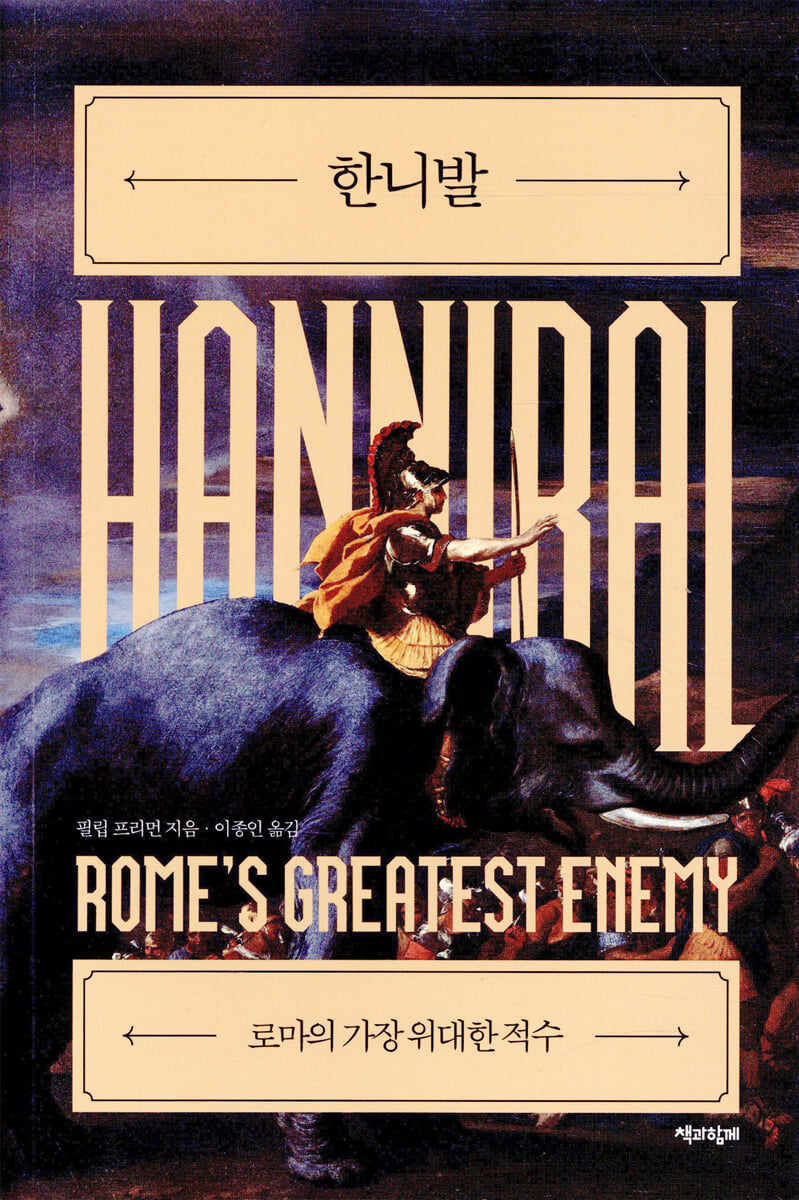 |
Description
Book Introduction
Those who dared to change the course of history by standing up to the great Roman Empire
The most objective biography of a man
Two thousand years ago, Hannibal Barca, the Carthaginian general, led an army of elephants across the snow-covered Alps, aimed for the heart of Rome, and almost held the fate of Rome in his hands.
The Roman historian Polybius criticized historians who exalted the historical significance of Hannibal's crossing of the Alps, while Livy disparaged Hannibal as a cruel, barbarian, and greedy man.
Even today, the prevailing opinion is that his choice not to advance on Rome after the great victory at the Battle of Cannae was a mistake.
There is a famous anecdote about his subordinate Maharbal lamenting that Hannibal, who opposed the advance on Rome, “knows how to win a fight, but does not know how to use victory.”
But is that a fair assessment? Author Philip Freeman recreates Hannibal's struggle against Rome, using objective facts to the fullest extent possible, eliminating the denigration and biases of Roman historians.
Reading this biography, which elegantly unfolds the domestic and international circumstances that forced him to undertake the risky crossing of the Alps, the inevitable reasons why he could not or did not advance on Rome after the Battle of Cannae, and the devoted and humane side of him that shared in the suffering of his soldiers, will lead you to evaluate him with a different standard than before.
The fascinating speculation about how world history might have changed if Hannibal had won adds to the enjoyment of reading.
The most objective biography of a man
Two thousand years ago, Hannibal Barca, the Carthaginian general, led an army of elephants across the snow-covered Alps, aimed for the heart of Rome, and almost held the fate of Rome in his hands.
The Roman historian Polybius criticized historians who exalted the historical significance of Hannibal's crossing of the Alps, while Livy disparaged Hannibal as a cruel, barbarian, and greedy man.
Even today, the prevailing opinion is that his choice not to advance on Rome after the great victory at the Battle of Cannae was a mistake.
There is a famous anecdote about his subordinate Maharbal lamenting that Hannibal, who opposed the advance on Rome, “knows how to win a fight, but does not know how to use victory.”
But is that a fair assessment? Author Philip Freeman recreates Hannibal's struggle against Rome, using objective facts to the fullest extent possible, eliminating the denigration and biases of Roman historians.
Reading this biography, which elegantly unfolds the domestic and international circumstances that forced him to undertake the risky crossing of the Alps, the inevitable reasons why he could not or did not advance on Rome after the Battle of Cannae, and the devoted and humane side of him that shared in the suffering of his soldiers, will lead you to evaluate him with a different standard than before.
The fascinating speculation about how world history might have changed if Hannibal had won adds to the enjoyment of reading.
- You can preview some of the book's contents.
Preview
index
Prologue: The Oath
Timeline
Introduction of main characters
Map of Hannibal's invasion route of Rome
1.
Carthage
2.
Sicily
3.
Spain
4.
Carthage Nova
5.
Saguntum
6.
Gaul
7.
Alps
8.
Tichinus River
9.
Trebia River
10.
Arno Marsh
11.
Lake Trasimeno
12.
Campania
13.
Geronium
14.
Kannai
15.
Rome
16.
Capua
17.
Metaurus
18.
Zama
19.
exile
20.
legacy
Epilogue: What if Hannibal had won?
Translator's Note
References
main
Timeline
Introduction of main characters
Map of Hannibal's invasion route of Rome
1.
Carthage
2.
Sicily
3.
Spain
4.
Carthage Nova
5.
Saguntum
6.
Gaul
7.
Alps
8.
Tichinus River
9.
Trebia River
10.
Arno Marsh
11.
Lake Trasimeno
12.
Campania
13.
Geronium
14.
Kannai
15.
Rome
16.
Capua
17.
Metaurus
18.
Zama
19.
exile
20.
legacy
Epilogue: What if Hannibal had won?
Translator's Note
References
main
Into the book
Then Hamilcar's expression changed.
He spoke to his son very seriously.
First, place your hand on the still warm lamb that was placed on the altar and swear a most solemn oath before Baal and all the gods.
If you go to Spain with me, you will have to become a soldier of Carthage, but first you must swear to hate Rome forever.
Swear before this Father that you will fight to the end, without holding back your anger against them, until your last breath.
Hannibal had been born with a deep animosity toward the Romans, and he did not hesitate for a moment to take the oath his father demanded.
Whatever future the gods had in store for him, he vowed to give his life and soul to fight to the end against Carthage's greatest enemy, the powerful and ruthless Rome.
---From the "Prologue"
The fascinating world of Carthage was the ideal city for a bright and curious boy like Hannibal to grow up in.
Ships from Europe, Africa, and Asia entered the city's harbor daily, bringing countless merchants and visitors into the city's smelting pot of prosperity.
It was a truly world-class city.
It was a global city, free from narrow regionalism, always ready to embrace new ideas, and open to all.
Hannibal soon left for Spain and would not return home for many years, but Carthage, with its bustling streets, vibrant culture, and vision for the wider world, would always remain in his heart.
---「2.
From "Sicily"
Thus, in 218 BC, Rome and Carthage went to war again.
Rome declared that it would send Roman troops to Spain and Africa to wage this war, and that it would win it at all costs to firmly and unequivocally demonstrate that Rome was the dominant power in the western Mediterranean.
But Rome was leaving one thing out of its calculations.
That is, Hannibal was trying to completely change the rules of the war game that had existed until then by invading mainland Italy.
---「5.
From "Saguntum"
Five months had passed since Hannibal and his men left Carthage Nova in far-off Spain.
He began his march through the Alps with a force of nearly 50,000 men.
However, when they actually arrived in Italy, the remaining troops were 20,000 infantry and 6,000 cavalry.
With such a loss of troops, it is easy to think that Hannibal's plan to conquer Rome would ultimately end in misfortune, as he lost more than half his army, an insurmountable loss.
But what is truly remarkable is that, despite losing so many soldiers on such a rugged mountain pass, he was able to cross the mountain range with the morale of nearly half of his troops intact.
No one, not even the Romans, thought such a thing was possible.
---「7.
Among the Alps
In any battle, there comes a moment when soldiers on both sides realize who will win and who will die.
When Mago's forces attacked the Roman legions from behind, the Roman soldiers knew they would not escape alive.
A terrible massacre occurred as the Carthaginians surrounded the Roman forces and began to cut them down like wheat.
…It is unclear where Scipio, still recovering from his wounds, was when the battle took place or what role he played in it, but he too survived the massacre.
However, we can be sure that his son, young Scipio, was a junior officer on the front lines of the Battle of the Trebia River.
At this point, he realized once again that Hannibal was a master of strategy and tactics, and that Rome would have to master his tactics if it wanted to win against him.
---「9.
From "Trebia River"
His plan was to challenge Hannibal to battle, defeat the insolent invader, and win the glory of a triumphant general, and he hoped to accomplish this feat alone, without any help from his fellow consul Servilius.
Hannibal, a mind reader who could read the minds of his opponents like a ghost, longed to face such an arrogant commander.
Polybius described Hannibal's methods as follows:
“Anyone who commands an army must strive to discover the weaknesses of the enemy commander’s heart, not his exposed physical appearance.”
---「11.
From "Lake Trasimeno"
Meanwhile, the Carthaginian center was steadily retreating under the onslaught of the Roman infantry.
None of the Roman commanders realized that they were being caught in the enemy's crossfire.
However, this was a siege operation planned by Hannibal.
As he had done in several previous battles, he used a trick of retreat to draw the Roman infantry deep into the Carthaginian lens, until the Carthaginian cavalry broke through the Roman wings and attacked from the rear, completely surrounding the Romans.
The Carthaginian cavalry mercilessly attacked the Romans from behind.
Although the Roman army had an overwhelming numerical superiority over their enemy, they were trapped like rats in a trap, with no room to move and nowhere to run.
The Romans were now without cavalry support on either side, and many of the allied cavalry fled the battlefield in haste.
He spoke to his son very seriously.
First, place your hand on the still warm lamb that was placed on the altar and swear a most solemn oath before Baal and all the gods.
If you go to Spain with me, you will have to become a soldier of Carthage, but first you must swear to hate Rome forever.
Swear before this Father that you will fight to the end, without holding back your anger against them, until your last breath.
Hannibal had been born with a deep animosity toward the Romans, and he did not hesitate for a moment to take the oath his father demanded.
Whatever future the gods had in store for him, he vowed to give his life and soul to fight to the end against Carthage's greatest enemy, the powerful and ruthless Rome.
---From the "Prologue"
The fascinating world of Carthage was the ideal city for a bright and curious boy like Hannibal to grow up in.
Ships from Europe, Africa, and Asia entered the city's harbor daily, bringing countless merchants and visitors into the city's smelting pot of prosperity.
It was a truly world-class city.
It was a global city, free from narrow regionalism, always ready to embrace new ideas, and open to all.
Hannibal soon left for Spain and would not return home for many years, but Carthage, with its bustling streets, vibrant culture, and vision for the wider world, would always remain in his heart.
---「2.
From "Sicily"
Thus, in 218 BC, Rome and Carthage went to war again.
Rome declared that it would send Roman troops to Spain and Africa to wage this war, and that it would win it at all costs to firmly and unequivocally demonstrate that Rome was the dominant power in the western Mediterranean.
But Rome was leaving one thing out of its calculations.
That is, Hannibal was trying to completely change the rules of the war game that had existed until then by invading mainland Italy.
---「5.
From "Saguntum"
Five months had passed since Hannibal and his men left Carthage Nova in far-off Spain.
He began his march through the Alps with a force of nearly 50,000 men.
However, when they actually arrived in Italy, the remaining troops were 20,000 infantry and 6,000 cavalry.
With such a loss of troops, it is easy to think that Hannibal's plan to conquer Rome would ultimately end in misfortune, as he lost more than half his army, an insurmountable loss.
But what is truly remarkable is that, despite losing so many soldiers on such a rugged mountain pass, he was able to cross the mountain range with the morale of nearly half of his troops intact.
No one, not even the Romans, thought such a thing was possible.
---「7.
Among the Alps
In any battle, there comes a moment when soldiers on both sides realize who will win and who will die.
When Mago's forces attacked the Roman legions from behind, the Roman soldiers knew they would not escape alive.
A terrible massacre occurred as the Carthaginians surrounded the Roman forces and began to cut them down like wheat.
…It is unclear where Scipio, still recovering from his wounds, was when the battle took place or what role he played in it, but he too survived the massacre.
However, we can be sure that his son, young Scipio, was a junior officer on the front lines of the Battle of the Trebia River.
At this point, he realized once again that Hannibal was a master of strategy and tactics, and that Rome would have to master his tactics if it wanted to win against him.
---「9.
From "Trebia River"
His plan was to challenge Hannibal to battle, defeat the insolent invader, and win the glory of a triumphant general, and he hoped to accomplish this feat alone, without any help from his fellow consul Servilius.
Hannibal, a mind reader who could read the minds of his opponents like a ghost, longed to face such an arrogant commander.
Polybius described Hannibal's methods as follows:
“Anyone who commands an army must strive to discover the weaknesses of the enemy commander’s heart, not his exposed physical appearance.”
---「11.
From "Lake Trasimeno"
Meanwhile, the Carthaginian center was steadily retreating under the onslaught of the Roman infantry.
None of the Roman commanders realized that they were being caught in the enemy's crossfire.
However, this was a siege operation planned by Hannibal.
As he had done in several previous battles, he used a trick of retreat to draw the Roman infantry deep into the Carthaginian lens, until the Carthaginian cavalry broke through the Roman wings and attacked from the rear, completely surrounding the Romans.
The Carthaginian cavalry mercilessly attacked the Romans from behind.
Although the Roman army had an overwhelming numerical superiority over their enemy, they were trapped like rats in a trap, with no room to move and nowhere to run.
The Romans were now without cavalry support on either side, and many of the allied cavalry fled the battlefield in haste.
---「14.
From "Kannai"
From "Kannai"
Publisher's Review
Why didn't Hannibal conquer Rome when it was right in front of him?
Was he truly a loser who couldn't capitalize on his victory?
Those who dared to change the course of history by standing up to a great empire
The most objective biography of a man
Two thousand years ago, Hannibal Barca, the Carthaginian general, led an army of elephants across the snow-covered Alps, aimed for the heart of Rome, and almost held the fate of Rome in his hands.
The Roman historian Polybius criticized historians who exalted the historical significance of Hannibal's crossing of the Alps, while Livy disparaged Hannibal as a cruel, barbarian, and greedy man.
Even today, the prevailing opinion is that his choice not to advance on Rome after the great victory at the Battle of Cannae was a mistake.
There is a famous anecdote about his subordinate Maharbal lamenting that Hannibal, who opposed the advance on Rome, “knows how to win a fight, but does not know how to use victory.”
But is that a fair assessment? Author Philip Freeman recreates Hannibal's struggle against Rome, using objective facts to the fullest extent possible, eliminating the denigration and biases of Roman historians.
Reading this biography, which elegantly unfolds the domestic and international circumstances that forced him to undertake the risky crossing of the Alps, the inevitable reasons why he could not or did not advance on Rome after the Battle of Cannae, and the devoted and humane side of him that shared in the suffering of his soldiers, will lead you to evaluate him with a different standard than before.
The fascinating speculation about how world history might have changed if Hannibal had won adds to the enjoyment of reading.
“A thorough account of the military career of Hannibal, one of the most complex and important figures in the ancient world.
Freeman brings the great but ill-fated Carthaginian general Hannibal to life with cinematic clarity, persuasively portraying his tactical and strategic brilliance, which is still studied today.” ― [Kirkus Reviews]
“Freeman brings to life Hannibal’s life and battles a scenario more astonishing than any novelist could have imagined.” ― [Booklist]
Hannibal, the greatest military leader and genius of strategy and tactics,
What kind of person was he really?
“This book covers the brutal nature of war and the brilliant military tactics of both Carthage and Rome, but it focuses more on portraying the true story of one leader who resisted the overwhelming might of the ancient world’s great empires.
…This book is the story of a man who, against all odds, dared to change the course of history.” ― From “Prologue” (p. 12)
The book begins with a scene from Hannibal's childhood, when he swears eternal hatred for Rome before all the gods in the temple of Carthage.
Hannibal, a ten-year-old boy who had witnessed the tragedy of his country being massacred and trampled by the Roman army in the First Punic War, swore revenge and left for Spain with his father.
His life, from his return to his homeland of Carthage after 34 years to his final battle with Scipio, remains a legend in the history of war.
After the First Punic War, Rome predicted that it would win the Second Punic War with its massive military power.
But at this time, Rome overlooked the presence of a genius strategist named Hannibal in Carthage.
Hannibal was like a variable that reversed the mighty flow of history at the time.
The Romans never expected Hannibal to embark on a bold campaign of conquest, crossing the towering Alps and striking into the heart of Italy.
Despite being outnumbered deep in enemy territory, Hannibal won a series of victories at the Ticinus, Trebia, and Lake Trasimene in the early stages of the war, and achieved a great victory at Cannae, annihilating over 50,000 Romans.
The Romans trembled at the fear of the barbarians approaching their city gates.
Hannibal attempted to besiege Rome by winning over the Italian cities that had allied with Rome, but the Roman alliance proved to be stronger than expected.
After 15 years of fighting alone in Italy without support from his home country, Hannibal was finally forced to return to Carthage to fight Scipio, and the Second Punic War ended with Carthage's defeat.
Although Hannibal was a defeated general, he was an unparalleled hero who captivated many later generations.
Few historical figures can rival Hannibal as a military commander, and his strategic and tactical genius has been highly regarded throughout the ages.
As a military leader, he knew the hearts of his soldiers well and had an exceptional ability to detect the enemy's invisible weaknesses.
Freeman reveals the human side of Hannibal, a seasoned politician, diplomat, and devoted patriot, hidden behind the narratives of Roman historians.
Neither Polybius nor Livy,
The Hannibal War: Breaking Away from the Roman-Centric Perspective
“Ultimately, how we evaluate Hannibal depends on what we want to see in him.
…even the Romans could not help but respect his determination, his brilliance, and ultimately his kindness.
We too should be evaluated equally.” ― From “Chapter 20 Legacy” (pp. 261-262)
Representative ancient historical works that cover Hannibal's life and the Punic Wars include Polybius's "History" and Livy's "History of Rome."
However, the works of the two historians are a history of the Hannibal War from the perspective of the victorious Romans.
Freeman's book, Hannibal, takes a critical look at this and attempts to describe Hannibal's life from a third, objective perspective, neither Polybius nor Livy.
To redress the skewed narrative of the war, the full story of the Hannibal War is presented from Carthage's perspective, if possible.
Why Hannibal did not march on Rome after his crushing victory at Cannae has been debated for over two thousand years.
The author gives the following reasons for this:
First, it was clear that a siege attacking the sturdy walls surrounding Rome would be a costly battle requiring far more troops and supplies, and Hannibal was not in a position to do so.
Hannibal fundamentally believed that the occupation of Rome was unnecessary.
According to the ancient traditional rules, Rome should have surrendered after losing tens of thousands of soldiers in a series of battles with Carthage.
But Rome did not follow the rules that everyone else followed, and it never gave up or surrendered.
Hannibal's failure was probably that he failed to realize this.
Hannibal had to fight against the Roman legions in Italy on his own, without any reinforcements from home.
Fabius Maximus of Rome, who realized this fact, carried out a delaying tactic by waging a long war of attrition to exhaust the enemy and cause them to fall, which resulted in a very advantageous situation for Rome in the middle of the war.
Afterwards, when the young general Scipio proposed to invade Carthage's stronghold in North Africa and withdraw Hannibal's army from Italy to North Africa, the Roman Republic accepted Scipio's proposal and was able to win a victory against Carthage.
Rome was able to achieve victory by sending out Fabius when the national situation required delaying tactics, and Scipio when a bold invasion was needed.
In this way, the author persuasively describes the various issues surrounding Hannibal and Rome based on objective circumstances and logical grounds.
The translator, who translated not only this book but also Livy's 『Roman History』 into Korean, said that if he had to choose one of the three books by Polybius, Livy, and Freeman, he would recommend this book for its objective and neutrality.
Was he truly a loser who couldn't capitalize on his victory?
Those who dared to change the course of history by standing up to a great empire
The most objective biography of a man
Two thousand years ago, Hannibal Barca, the Carthaginian general, led an army of elephants across the snow-covered Alps, aimed for the heart of Rome, and almost held the fate of Rome in his hands.
The Roman historian Polybius criticized historians who exalted the historical significance of Hannibal's crossing of the Alps, while Livy disparaged Hannibal as a cruel, barbarian, and greedy man.
Even today, the prevailing opinion is that his choice not to advance on Rome after the great victory at the Battle of Cannae was a mistake.
There is a famous anecdote about his subordinate Maharbal lamenting that Hannibal, who opposed the advance on Rome, “knows how to win a fight, but does not know how to use victory.”
But is that a fair assessment? Author Philip Freeman recreates Hannibal's struggle against Rome, using objective facts to the fullest extent possible, eliminating the denigration and biases of Roman historians.
Reading this biography, which elegantly unfolds the domestic and international circumstances that forced him to undertake the risky crossing of the Alps, the inevitable reasons why he could not or did not advance on Rome after the Battle of Cannae, and the devoted and humane side of him that shared in the suffering of his soldiers, will lead you to evaluate him with a different standard than before.
The fascinating speculation about how world history might have changed if Hannibal had won adds to the enjoyment of reading.
“A thorough account of the military career of Hannibal, one of the most complex and important figures in the ancient world.
Freeman brings the great but ill-fated Carthaginian general Hannibal to life with cinematic clarity, persuasively portraying his tactical and strategic brilliance, which is still studied today.” ― [Kirkus Reviews]
“Freeman brings to life Hannibal’s life and battles a scenario more astonishing than any novelist could have imagined.” ― [Booklist]
Hannibal, the greatest military leader and genius of strategy and tactics,
What kind of person was he really?
“This book covers the brutal nature of war and the brilliant military tactics of both Carthage and Rome, but it focuses more on portraying the true story of one leader who resisted the overwhelming might of the ancient world’s great empires.
…This book is the story of a man who, against all odds, dared to change the course of history.” ― From “Prologue” (p. 12)
The book begins with a scene from Hannibal's childhood, when he swears eternal hatred for Rome before all the gods in the temple of Carthage.
Hannibal, a ten-year-old boy who had witnessed the tragedy of his country being massacred and trampled by the Roman army in the First Punic War, swore revenge and left for Spain with his father.
His life, from his return to his homeland of Carthage after 34 years to his final battle with Scipio, remains a legend in the history of war.
After the First Punic War, Rome predicted that it would win the Second Punic War with its massive military power.
But at this time, Rome overlooked the presence of a genius strategist named Hannibal in Carthage.
Hannibal was like a variable that reversed the mighty flow of history at the time.
The Romans never expected Hannibal to embark on a bold campaign of conquest, crossing the towering Alps and striking into the heart of Italy.
Despite being outnumbered deep in enemy territory, Hannibal won a series of victories at the Ticinus, Trebia, and Lake Trasimene in the early stages of the war, and achieved a great victory at Cannae, annihilating over 50,000 Romans.
The Romans trembled at the fear of the barbarians approaching their city gates.
Hannibal attempted to besiege Rome by winning over the Italian cities that had allied with Rome, but the Roman alliance proved to be stronger than expected.
After 15 years of fighting alone in Italy without support from his home country, Hannibal was finally forced to return to Carthage to fight Scipio, and the Second Punic War ended with Carthage's defeat.
Although Hannibal was a defeated general, he was an unparalleled hero who captivated many later generations.
Few historical figures can rival Hannibal as a military commander, and his strategic and tactical genius has been highly regarded throughout the ages.
As a military leader, he knew the hearts of his soldiers well and had an exceptional ability to detect the enemy's invisible weaknesses.
Freeman reveals the human side of Hannibal, a seasoned politician, diplomat, and devoted patriot, hidden behind the narratives of Roman historians.
Neither Polybius nor Livy,
The Hannibal War: Breaking Away from the Roman-Centric Perspective
“Ultimately, how we evaluate Hannibal depends on what we want to see in him.
…even the Romans could not help but respect his determination, his brilliance, and ultimately his kindness.
We too should be evaluated equally.” ― From “Chapter 20 Legacy” (pp. 261-262)
Representative ancient historical works that cover Hannibal's life and the Punic Wars include Polybius's "History" and Livy's "History of Rome."
However, the works of the two historians are a history of the Hannibal War from the perspective of the victorious Romans.
Freeman's book, Hannibal, takes a critical look at this and attempts to describe Hannibal's life from a third, objective perspective, neither Polybius nor Livy.
To redress the skewed narrative of the war, the full story of the Hannibal War is presented from Carthage's perspective, if possible.
Why Hannibal did not march on Rome after his crushing victory at Cannae has been debated for over two thousand years.
The author gives the following reasons for this:
First, it was clear that a siege attacking the sturdy walls surrounding Rome would be a costly battle requiring far more troops and supplies, and Hannibal was not in a position to do so.
Hannibal fundamentally believed that the occupation of Rome was unnecessary.
According to the ancient traditional rules, Rome should have surrendered after losing tens of thousands of soldiers in a series of battles with Carthage.
But Rome did not follow the rules that everyone else followed, and it never gave up or surrendered.
Hannibal's failure was probably that he failed to realize this.
Hannibal had to fight against the Roman legions in Italy on his own, without any reinforcements from home.
Fabius Maximus of Rome, who realized this fact, carried out a delaying tactic by waging a long war of attrition to exhaust the enemy and cause them to fall, which resulted in a very advantageous situation for Rome in the middle of the war.
Afterwards, when the young general Scipio proposed to invade Carthage's stronghold in North Africa and withdraw Hannibal's army from Italy to North Africa, the Roman Republic accepted Scipio's proposal and was able to win a victory against Carthage.
Rome was able to achieve victory by sending out Fabius when the national situation required delaying tactics, and Scipio when a bold invasion was needed.
In this way, the author persuasively describes the various issues surrounding Hannibal and Rome based on objective circumstances and logical grounds.
The translator, who translated not only this book but also Livy's 『Roman History』 into Korean, said that if he had to choose one of the three books by Polybius, Livy, and Freeman, he would recommend this book for its objective and neutrality.
GOODS SPECIFICS
- Publication date: October 17, 2022
- Page count, weight, size: 288 pages | 438g | 152*225*17mm
- ISBN13: 9791191432848
- ISBN10: 119143284X
You may also like
카테고리
korean


korean

![GQ KOREA Mark (Monthly): December [2025]](http://librairie.coreenne.fr/cdn/shop/files/8ef265dbbfbf186523ed75ba7319009d.jpg?v=1765340328&width=3840)


