

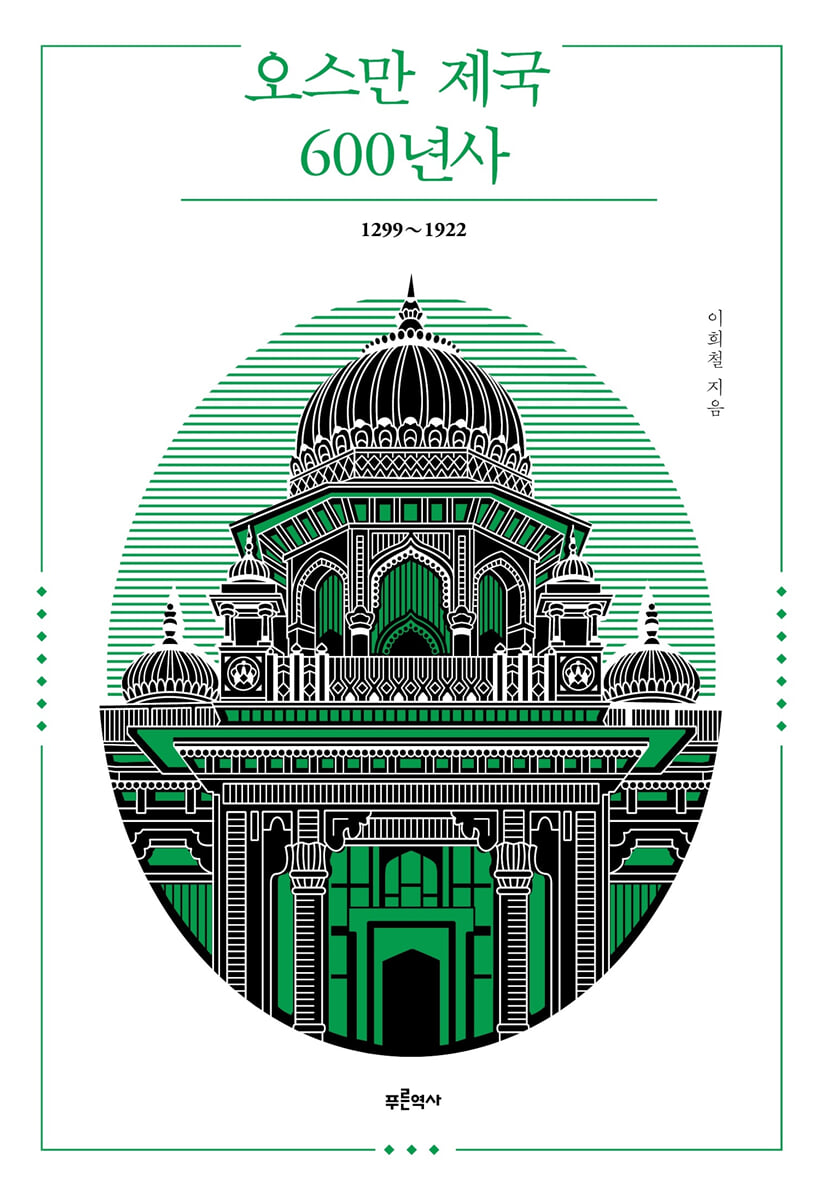
600 Years of the Ottoman Empire 1299–1922
 |
Description
Book Introduction
This book describes the 600-year history of the Ottoman Empire in a chronological format.
In addition, it helps readers better understand the characteristics of the Ottoman Empire, such as its military power through war and conquest, its multi-ethnic and multi-religious society, its religious tolerance, its intellectual, cultural, and artistic achievements, its unique spiritual values and beliefs, its outstanding architectural culture and art, and its exchanges and mutual influences with Europe.
Having studied international relations, or diplomatic politics, in graduate school, I attempted to examine the complex international relations of the Ottoman Empire from the perspective of a part of world history.
There are two main perspectives on understanding the Ottoman Empire from a modern perspective.
The first is about the process and expansion strategy of a small principality on the periphery of the Byzantine Empire growing into a world power, and the second is about the Ottoman Empire's perception of the rapid changes in Europe since the Renaissance and the Age of Exploration, and the changes and innovations it faced.
The author divided the history of the Ottoman Empire into five stages, referring to the five stages generally accepted as the life cycle of an empire: birth, heyday, stagnation, decline, and collapse. The three centuries following the formation and heyday of the nation, from the 17th to the 19th centuries, were divided into centuries because they had distinct characteristics of change by century.
In addition, it helps readers better understand the characteristics of the Ottoman Empire, such as its military power through war and conquest, its multi-ethnic and multi-religious society, its religious tolerance, its intellectual, cultural, and artistic achievements, its unique spiritual values and beliefs, its outstanding architectural culture and art, and its exchanges and mutual influences with Europe.
Having studied international relations, or diplomatic politics, in graduate school, I attempted to examine the complex international relations of the Ottoman Empire from the perspective of a part of world history.
There are two main perspectives on understanding the Ottoman Empire from a modern perspective.
The first is about the process and expansion strategy of a small principality on the periphery of the Byzantine Empire growing into a world power, and the second is about the Ottoman Empire's perception of the rapid changes in Europe since the Renaissance and the Age of Exploration, and the changes and innovations it faced.
The author divided the history of the Ottoman Empire into five stages, referring to the five stages generally accepted as the life cycle of an empire: birth, heyday, stagnation, decline, and collapse. The three centuries following the formation and heyday of the nation, from the 17th to the 19th centuries, were divided into centuries because they had distinct characteristics of change by century.
- You can preview some of the book's contents.
Preview
index
In publishing the book
Ottoman Empire Chronicles
01 Turks and Turks in History
Origins of the Turks
Islamic Seljuk Empire
13th century Anatolia
02 Founding Period 1300-1453
Early conquest project
Ankara Daejeon Emergency Situation
Reunification of the Ottoman Empire
The strategically important Balkans
Conquest of Constantinople, the millennium old city
Migration and settlement in the Balkans
The two major military organizations that brought about the Ottoman heyday
The Sultan's Court, the Grand Vizier's Cabinet
National Philosophy during the Founding Period
03 World Empire 1453-1600
The Empire of Mehmed II the Conqueror
Selim I conquers the Mamluk Sultanate
Persian Safavid Dynasty
Suleiman the Magnificent's World Empire
Madrasahs and court schools, the cradle of talent
Istanbul, the city of artisans and artists
A world empire with a strong government and a strong military
04 The Age of Turmoil 1600-1700
The 17th century in crisis
The Age of Exploration: Lagging Behind Change
National finances struggling with deficits
Attempts at Janissary reform
Corrupt officials, disorderly society
'Mad' Sultan Ibrahim
Mehmed IV, the Hunter
1683 Austrian invasion of Vienna
A long road of stagnation and decline
05 The Age of Change and Diplomacy 1700-1800
The Rise of Europe and the Decline of the Ottomans
peace treaties with major powers
Tulip era
Confrontation with Imperial Russia
18th century reform attempts
Selim III's reform plan, the "New Order"
Breaking away from Ottoman-centric diplomacy
Turkish style popular in Europe
Failure of reorganization and evaluation reform
06 Reform and Modernization 1800–1922
The 19th century, the age of revolution
Mahmud II's innovations
The rise of Balkan nationalism
Egyptian problem
Western-style modernization and Tanzimat reform
Introduction of a constitutional monarchy
Foreign debt introduction and economic difficulties
The Fall of the Empire
Summary and Evaluation From Ottomans to Turks
References
annotation
Search
Ottoman Empire Chronicles
01 Turks and Turks in History
Origins of the Turks
Islamic Seljuk Empire
13th century Anatolia
02 Founding Period 1300-1453
Early conquest project
Ankara Daejeon Emergency Situation
Reunification of the Ottoman Empire
The strategically important Balkans
Conquest of Constantinople, the millennium old city
Migration and settlement in the Balkans
The two major military organizations that brought about the Ottoman heyday
The Sultan's Court, the Grand Vizier's Cabinet
National Philosophy during the Founding Period
03 World Empire 1453-1600
The Empire of Mehmed II the Conqueror
Selim I conquers the Mamluk Sultanate
Persian Safavid Dynasty
Suleiman the Magnificent's World Empire
Madrasahs and court schools, the cradle of talent
Istanbul, the city of artisans and artists
A world empire with a strong government and a strong military
04 The Age of Turmoil 1600-1700
The 17th century in crisis
The Age of Exploration: Lagging Behind Change
National finances struggling with deficits
Attempts at Janissary reform
Corrupt officials, disorderly society
'Mad' Sultan Ibrahim
Mehmed IV, the Hunter
1683 Austrian invasion of Vienna
A long road of stagnation and decline
05 The Age of Change and Diplomacy 1700-1800
The Rise of Europe and the Decline of the Ottomans
peace treaties with major powers
Tulip era
Confrontation with Imperial Russia
18th century reform attempts
Selim III's reform plan, the "New Order"
Breaking away from Ottoman-centric diplomacy
Turkish style popular in Europe
Failure of reorganization and evaluation reform
06 Reform and Modernization 1800–1922
The 19th century, the age of revolution
Mahmud II's innovations
The rise of Balkan nationalism
Egyptian problem
Western-style modernization and Tanzimat reform
Introduction of a constitutional monarchy
Foreign debt introduction and economic difficulties
The Fall of the Empire
Summary and Evaluation From Ottomans to Turks
References
annotation
Search
Into the book
The Turkic warriors and nomads were driven by climate change, population growth, food shortages, and geopolitical power struggles, forcing them to leave their original homeland and migrate to the region where the Altai and Tien Shan mountain ranges meet, beginning in the 1700s BC.
For 3,500 years, the Turkic people lived a nomadic life in the steppe regions across Eurasia, so their culture was based on the steppe nomadic culture.
--- p.22
The Osman Gazi declared independence in Söyüt in 1299.
The small border town of Söyüt became the seedbed of the Ottoman Empire, and the Ottomans subsequently carried out conquests of Byzantine territory.
--- p.54
Bayezid's army faced a combined European force of over 100,000 men at Nicopolis, Bulgaria, on September 25, 1396.
In the Battle of Nicopolis, one of the last crusades of the Middle Ages, Bayezid I was victorious against a large European coalition.
With this victory, Bulgaria became completely part of the Ottoman Empire.
The Caliph, the religious leader of the Islamic world in Egypt, gave Bayezid I the title of 'Sultan of the World of Rum' (Sultan of the European World).
--- p.64~65
After the conquest of Constantinople, the city's name was changed to Istanbul.
Mehmed II was well aware of the strategic importance of Constantinople and believed that conquering it would give him world domination.
He called himself 'Lord of two continents and master of two seas.'
The two continents were Europe and Asia, and the two oceans were the Black Sea and the Mediterranean Sea.
Mehmed was a Muslim warrior and monarch prepared to build a 'world empire'.
--- p.91
To praise the immortal achievements of Suleiman, historians call the 16th century the "Age of the Turks" or the "Age of Suleiman."
The Western world gave him the title 'The Magnificent Sultan Suleyman', while the Islamic world gave him the title 'Kanuni Sultan Suleyman'.
--- p.144~145
During his expedition to Chaldran in 1514, Selim I brought bookbinders, calligraphers, gold leaf artists, and painters from Tabriz to Istanbul.
During the Mamluk expedition of 1516-17, more than 100 artisans and their families migrated to Istanbul.
Selim I's introduction of Persian artists to the palace marked a turning point in the development of art in the Ottoman Empire.
--- p.163
Amidst the tremendous changes in Europe, the Ottoman Empire found itself at a point where it had to integrate into the global economic system.
With the development of maritime technology and the advent of the Age of Exploration, Europeans began to travel the world and trade, but this was both unfortunate and disastrous for the Ottoman Empire.
Until the 16th century, the Ottoman Empire was a major spice trading center.
Asian spices entered the Ottoman Empire via the Mediterranean Sea, Egypt, and the Arabian Peninsula, and the Silk Road connecting China also served as a spice sales route connecting to the Ottoman Empire.
The Ottoman Empire, which had virtually monopolized world trade, had to give up that position to the Europeans.
--- p.182
Ibrahim Sultan's eight-year reign was, in a word, a disaster in terms of statecraft.
With the disappearance of the iron rule of Murad IV, the country fell into a state of anarchy.
Ibrahim Sultan earned the nickname 'Mad (Delhi)' Sultan due to his erratic behavior caused by severe nervous breakdowns.
He was similar to Mustafa I (15th Sultan), who emerged from the cafes and became the Sultan, but was nicknamed the 'Mad Sultan' due to his bizarre behavior.
--- p.206
After the failure of the Ottoman expedition to Vienna, the wars with European countries were settled, but the Ottoman Empire's hegemony over Central Europe lost its luster.
The Treaty of Karlowitz was the first instance in which the Ottoman Empire drafted and concluded a treaty with a foreign power through negotiation, a European-style diplomatic process.
--- p.223
In the 18th century, Europe entered an era of centralized absolute monarchy as the power of feudal lords weakened and the power of kings grew stronger.
Throughout the centuries, European nations, caught in the tension between Catholicism and Protestantism, formed and destroyed alliances according to their own interests, pursuing only strategic choices of balance of power.
The five major European powers, Austria, Russia, Britain, Prussia, and France, pursued diplomacy with the Ottoman Empire based on the Machiavellian political philosophy of using any means necessary to achieve national interests.
--- p.233
A period of peace, the 'Tulip Age', began, lasting 12 years from 1718 to 1730.
The Tulip Age was a period of political and economic stability compared to previous periods, and the Ottoman capital reached the pinnacle of sophistication by imitating Western technology, consumer culture, and social lifestyles.
Ahmed III was a broad-minded and cultured monarch who appeared 150 years after Sultan Suleiman the Magnificent.
--- p.240
In Western Europe, interest in Ottoman Turkish culture began in the 16th century, and the craze for consuming and imitating exotic Turkish culture and customs became active among the French upper class in the 18th century.
The Turkish style expressed in this trend of art spread throughout Western Europe.
The trend of Turkish culture becoming popular in Western Europe as a fantasy about the Orient was called 'Turquerie' (Turkish style).
--- p.278~279
From the mid-1860s, new intellectuals influenced by enlightenment thinkers such as Montesquieu and Rousseau began to emerge.
Among the new intellectuals, there were many who had been educated in France and knew French culture and language.
This is because in the Ottoman Empire, French missionaries in particular had relatively free activities, and many Turks came into contact with missionaries.
The newly emerging intellectuals were mainly young Turks, including writers, bureaucrats, scholars, and soldiers, who were nationalists seeking to change the old system.
--- p.321
The newly born Republic of Turkey, although its territory was significantly reduced compared to the past, was born as a completely independent state free from administrative, financial, and political control by the European powers.
For 3,500 years, the Turkic people lived a nomadic life in the steppe regions across Eurasia, so their culture was based on the steppe nomadic culture.
--- p.22
The Osman Gazi declared independence in Söyüt in 1299.
The small border town of Söyüt became the seedbed of the Ottoman Empire, and the Ottomans subsequently carried out conquests of Byzantine territory.
--- p.54
Bayezid's army faced a combined European force of over 100,000 men at Nicopolis, Bulgaria, on September 25, 1396.
In the Battle of Nicopolis, one of the last crusades of the Middle Ages, Bayezid I was victorious against a large European coalition.
With this victory, Bulgaria became completely part of the Ottoman Empire.
The Caliph, the religious leader of the Islamic world in Egypt, gave Bayezid I the title of 'Sultan of the World of Rum' (Sultan of the European World).
--- p.64~65
After the conquest of Constantinople, the city's name was changed to Istanbul.
Mehmed II was well aware of the strategic importance of Constantinople and believed that conquering it would give him world domination.
He called himself 'Lord of two continents and master of two seas.'
The two continents were Europe and Asia, and the two oceans were the Black Sea and the Mediterranean Sea.
Mehmed was a Muslim warrior and monarch prepared to build a 'world empire'.
--- p.91
To praise the immortal achievements of Suleiman, historians call the 16th century the "Age of the Turks" or the "Age of Suleiman."
The Western world gave him the title 'The Magnificent Sultan Suleyman', while the Islamic world gave him the title 'Kanuni Sultan Suleyman'.
--- p.144~145
During his expedition to Chaldran in 1514, Selim I brought bookbinders, calligraphers, gold leaf artists, and painters from Tabriz to Istanbul.
During the Mamluk expedition of 1516-17, more than 100 artisans and their families migrated to Istanbul.
Selim I's introduction of Persian artists to the palace marked a turning point in the development of art in the Ottoman Empire.
--- p.163
Amidst the tremendous changes in Europe, the Ottoman Empire found itself at a point where it had to integrate into the global economic system.
With the development of maritime technology and the advent of the Age of Exploration, Europeans began to travel the world and trade, but this was both unfortunate and disastrous for the Ottoman Empire.
Until the 16th century, the Ottoman Empire was a major spice trading center.
Asian spices entered the Ottoman Empire via the Mediterranean Sea, Egypt, and the Arabian Peninsula, and the Silk Road connecting China also served as a spice sales route connecting to the Ottoman Empire.
The Ottoman Empire, which had virtually monopolized world trade, had to give up that position to the Europeans.
--- p.182
Ibrahim Sultan's eight-year reign was, in a word, a disaster in terms of statecraft.
With the disappearance of the iron rule of Murad IV, the country fell into a state of anarchy.
Ibrahim Sultan earned the nickname 'Mad (Delhi)' Sultan due to his erratic behavior caused by severe nervous breakdowns.
He was similar to Mustafa I (15th Sultan), who emerged from the cafes and became the Sultan, but was nicknamed the 'Mad Sultan' due to his bizarre behavior.
--- p.206
After the failure of the Ottoman expedition to Vienna, the wars with European countries were settled, but the Ottoman Empire's hegemony over Central Europe lost its luster.
The Treaty of Karlowitz was the first instance in which the Ottoman Empire drafted and concluded a treaty with a foreign power through negotiation, a European-style diplomatic process.
--- p.223
In the 18th century, Europe entered an era of centralized absolute monarchy as the power of feudal lords weakened and the power of kings grew stronger.
Throughout the centuries, European nations, caught in the tension between Catholicism and Protestantism, formed and destroyed alliances according to their own interests, pursuing only strategic choices of balance of power.
The five major European powers, Austria, Russia, Britain, Prussia, and France, pursued diplomacy with the Ottoman Empire based on the Machiavellian political philosophy of using any means necessary to achieve national interests.
--- p.233
A period of peace, the 'Tulip Age', began, lasting 12 years from 1718 to 1730.
The Tulip Age was a period of political and economic stability compared to previous periods, and the Ottoman capital reached the pinnacle of sophistication by imitating Western technology, consumer culture, and social lifestyles.
Ahmed III was a broad-minded and cultured monarch who appeared 150 years after Sultan Suleiman the Magnificent.
--- p.240
In Western Europe, interest in Ottoman Turkish culture began in the 16th century, and the craze for consuming and imitating exotic Turkish culture and customs became active among the French upper class in the 18th century.
The Turkish style expressed in this trend of art spread throughout Western Europe.
The trend of Turkish culture becoming popular in Western Europe as a fantasy about the Orient was called 'Turquerie' (Turkish style).
--- p.278~279
From the mid-1860s, new intellectuals influenced by enlightenment thinkers such as Montesquieu and Rousseau began to emerge.
Among the new intellectuals, there were many who had been educated in France and knew French culture and language.
This is because in the Ottoman Empire, French missionaries in particular had relatively free activities, and many Turks came into contact with missionaries.
The newly emerging intellectuals were mainly young Turks, including writers, bureaucrats, scholars, and soldiers, who were nationalists seeking to change the old system.
--- p.321
The newly born Republic of Turkey, although its territory was significantly reduced compared to the past, was born as a completely independent state free from administrative, financial, and political control by the European powers.
--- p.335
Publisher's Review
The most powerful and longest-lasting nation in history
600 Years of the Ottoman Empire
The Ottoman Empire, the 'Forgotten Empire'
In Western history, the Ottoman Empire was a 'forgotten empire'.
The rise and expansion of the Ottoman Empire in the 15th century was a shock and a challenge to Europeans.
Until the early 20th century, during the existence of the Ottoman Empire, the Christian world (Europe) and the Islamic world (the Ottoman Empire) were locked in a structure of confrontation.
And by the latter half of the 20th century, in the dichotomous discourse between the West (Christianity) and the East (Islam) that emphasized the superiority of the Christian world, Islam became an object of concern for the West, and the Ottoman Empire, which had plagued Europe, was merely an 'other' outside the Christian world.
Because of this, Western research on the Ottoman Empire was delayed.
The Ottoman Empire was one of the most powerful and longest-lasting empires in history, and one that had a profound impact on world history.
It was in the 14th century that the nomadic Turks settled in the Anatolian Peninsula and encountered Europeans on European 'land' after conquering Constantinople of the Byzantine Empire.
From then until the 19th century, Europe and the Ottoman Empire coexisted, exchanging political and cultural influences in a fierce competition for survival.
Behind the great changes in Europe, such as the Renaissance, the Age of Exploration, and the Reformation, there was the Ottoman Empire.
When the Ottoman Empire occupied Constantinople, Greek scholars in the Eastern Roman Empire fled to Western Europe to escape Islam, and Western Europeans, inspired by the Eastern Roman Middle Eastern learning that the Greek scholars brought with them, began to develop a trend of re-exploring Greek learning.
This is the beginning of the Renaissance.
The same was true of the Age of Exploration.
When the sea routes to India and the East via the Mediterranean and Red Sea were blocked by the Ottoman Empire, Europeans pioneered new sea routes to Asia and eventually discovered the New World.
For this reason, the Ottoman Empire, long forgotten in Western history, has been revived as a proud axis of Western history through the research of Turkish, American, British, and French historians in the past half century.
Ottoman Empire vs. Roman Empire
The Ottoman Empire resembles the Roman Empire in many ways.
Just as Rome grew from a small town on the Italian Peninsula into a vast empire, the Ottoman Empire also grew from a small town on the Anatolian Peninsula into a vast military empire.
Both empires are similar in that they are models of Mediterranean hegemony, and their histories are marked by wars of conquest.
Yet, both empires united diverse ethnic groups based on vast territories and the rule of law, and exerted great cultural influence in the fields of religion and art.
Also, while the Romans had the Roman Empire and their own religion and culture, the Turks had the Ottoman Empire and their own religion and culture.
If Rome was the world's capital for all Romans, Istanbul (formerly Constantinople) was the world's capital for all Ottomans.
Just as the Roman Empire was an eternal empire to Europeans, the Ottoman Empire was an eternal empire to all Turks.
The flow of 600 years of grand history
This book describes the 600-year history of the Ottoman Empire in a chronological format.
In addition, it helps readers better understand the characteristics of the Ottoman Empire, such as its military power through war and conquest, its multi-ethnic and multi-religious society, its religious tolerance, its intellectual, cultural, and artistic achievements, its unique spiritual values and beliefs, its outstanding architectural culture and art, and its exchanges and mutual influences with Europe.
Having studied international relations, or diplomatic politics, in graduate school, I attempted to examine the complex international relations of the Ottoman Empire from the perspective of a part of world history.
There are two main perspectives on understanding the Ottoman Empire from a modern perspective.
The first is about the process and expansion strategy of a small principality on the periphery of the Byzantine Empire growing into a world power, and the second is about the Ottoman Empire's perception of the rapid changes in Europe since the Renaissance and the Age of Exploration, and the changes and innovations it faced.
The author divided the history of the Ottoman Empire into five stages, referring to the five stages generally accepted as the life cycle of an empire: birth, heyday, stagnation, decline, and collapse. The three centuries following the formation and heyday of the nation, from the 17th to the 19th centuries, were divided into centuries because they had distinct characteristics of change by century.
This book is divided into six parts.
Part 1 examines the past history of the Turks, the ancestors of the Turks, and the process by which the Turks entered the Anatolian Peninsula and established the Seljuk Empire.
Part 2 covers the period of the founding of the nation from 1300 to 1453.
The period of the 1st to 7th sultans is the process by which the emirate that began in the western border of Anatolia grew and expanded into the Ottoman Sultanate.
Part 3 covers the period from 1453 to 1600, the golden age of the Ottoman Empire, when the Ottoman Sultanate emerged as a world empire, the golden age of the Ottoman Empire and the Classical Age.
This is the period from the 7th Sultan to the 12th Sultan.
Part 4 explores the turbulent 17th-century Ottoman Empire from 1600 to 1700.
The period from the 13th to the 22nd Sultan.
It deals with the slowdown in the expansion of the Ottoman Empire, the decline of the Sultan's authority, and the crisis of his rule, which led to a long period of stagnation.
Part 5, a period of change and diplomacy, covers the 18th-century Ottoman Empire from 1700 to 1800.
The period from the 23rd to the 28th Sultan was a period of decline in which the centralized system was weakened and territories were lost.
It was also a time when the five major European powers, Austria, Russia, Britain, Prussia, and France, were preoccupied with pursuing unilateral strategic interests in the territory of the Ottoman Empire.
Finally, Part 6 covers the period from 1800 to 1922, through the process of reform and modernization, and the fall of the country due to World War I.
The period from the 29th to the 36th Sultanate includes a period of crisis in which the Sultan faced serious internal challenges due to resistance to reform and the nationalist fervor of ethnic minorities striving for independence.
600 Years of the Ottoman Empire
The Ottoman Empire, the 'Forgotten Empire'
In Western history, the Ottoman Empire was a 'forgotten empire'.
The rise and expansion of the Ottoman Empire in the 15th century was a shock and a challenge to Europeans.
Until the early 20th century, during the existence of the Ottoman Empire, the Christian world (Europe) and the Islamic world (the Ottoman Empire) were locked in a structure of confrontation.
And by the latter half of the 20th century, in the dichotomous discourse between the West (Christianity) and the East (Islam) that emphasized the superiority of the Christian world, Islam became an object of concern for the West, and the Ottoman Empire, which had plagued Europe, was merely an 'other' outside the Christian world.
Because of this, Western research on the Ottoman Empire was delayed.
The Ottoman Empire was one of the most powerful and longest-lasting empires in history, and one that had a profound impact on world history.
It was in the 14th century that the nomadic Turks settled in the Anatolian Peninsula and encountered Europeans on European 'land' after conquering Constantinople of the Byzantine Empire.
From then until the 19th century, Europe and the Ottoman Empire coexisted, exchanging political and cultural influences in a fierce competition for survival.
Behind the great changes in Europe, such as the Renaissance, the Age of Exploration, and the Reformation, there was the Ottoman Empire.
When the Ottoman Empire occupied Constantinople, Greek scholars in the Eastern Roman Empire fled to Western Europe to escape Islam, and Western Europeans, inspired by the Eastern Roman Middle Eastern learning that the Greek scholars brought with them, began to develop a trend of re-exploring Greek learning.
This is the beginning of the Renaissance.
The same was true of the Age of Exploration.
When the sea routes to India and the East via the Mediterranean and Red Sea were blocked by the Ottoman Empire, Europeans pioneered new sea routes to Asia and eventually discovered the New World.
For this reason, the Ottoman Empire, long forgotten in Western history, has been revived as a proud axis of Western history through the research of Turkish, American, British, and French historians in the past half century.
Ottoman Empire vs. Roman Empire
The Ottoman Empire resembles the Roman Empire in many ways.
Just as Rome grew from a small town on the Italian Peninsula into a vast empire, the Ottoman Empire also grew from a small town on the Anatolian Peninsula into a vast military empire.
Both empires are similar in that they are models of Mediterranean hegemony, and their histories are marked by wars of conquest.
Yet, both empires united diverse ethnic groups based on vast territories and the rule of law, and exerted great cultural influence in the fields of religion and art.
Also, while the Romans had the Roman Empire and their own religion and culture, the Turks had the Ottoman Empire and their own religion and culture.
If Rome was the world's capital for all Romans, Istanbul (formerly Constantinople) was the world's capital for all Ottomans.
Just as the Roman Empire was an eternal empire to Europeans, the Ottoman Empire was an eternal empire to all Turks.
The flow of 600 years of grand history
This book describes the 600-year history of the Ottoman Empire in a chronological format.
In addition, it helps readers better understand the characteristics of the Ottoman Empire, such as its military power through war and conquest, its multi-ethnic and multi-religious society, its religious tolerance, its intellectual, cultural, and artistic achievements, its unique spiritual values and beliefs, its outstanding architectural culture and art, and its exchanges and mutual influences with Europe.
Having studied international relations, or diplomatic politics, in graduate school, I attempted to examine the complex international relations of the Ottoman Empire from the perspective of a part of world history.
There are two main perspectives on understanding the Ottoman Empire from a modern perspective.
The first is about the process and expansion strategy of a small principality on the periphery of the Byzantine Empire growing into a world power, and the second is about the Ottoman Empire's perception of the rapid changes in Europe since the Renaissance and the Age of Exploration, and the changes and innovations it faced.
The author divided the history of the Ottoman Empire into five stages, referring to the five stages generally accepted as the life cycle of an empire: birth, heyday, stagnation, decline, and collapse. The three centuries following the formation and heyday of the nation, from the 17th to the 19th centuries, were divided into centuries because they had distinct characteristics of change by century.
This book is divided into six parts.
Part 1 examines the past history of the Turks, the ancestors of the Turks, and the process by which the Turks entered the Anatolian Peninsula and established the Seljuk Empire.
Part 2 covers the period of the founding of the nation from 1300 to 1453.
The period of the 1st to 7th sultans is the process by which the emirate that began in the western border of Anatolia grew and expanded into the Ottoman Sultanate.
Part 3 covers the period from 1453 to 1600, the golden age of the Ottoman Empire, when the Ottoman Sultanate emerged as a world empire, the golden age of the Ottoman Empire and the Classical Age.
This is the period from the 7th Sultan to the 12th Sultan.
Part 4 explores the turbulent 17th-century Ottoman Empire from 1600 to 1700.
The period from the 13th to the 22nd Sultan.
It deals with the slowdown in the expansion of the Ottoman Empire, the decline of the Sultan's authority, and the crisis of his rule, which led to a long period of stagnation.
Part 5, a period of change and diplomacy, covers the 18th-century Ottoman Empire from 1700 to 1800.
The period from the 23rd to the 28th Sultan was a period of decline in which the centralized system was weakened and territories were lost.
It was also a time when the five major European powers, Austria, Russia, Britain, Prussia, and France, were preoccupied with pursuing unilateral strategic interests in the territory of the Ottoman Empire.
Finally, Part 6 covers the period from 1800 to 1922, through the process of reform and modernization, and the fall of the country due to World War I.
The period from the 29th to the 36th Sultanate includes a period of crisis in which the Sultan faced serious internal challenges due to resistance to reform and the nationalist fervor of ethnic minorities striving for independence.
GOODS SPECIFICS
- Date of issue: June 30, 2022
- Page count, weight, size: 384 pages | 576g | 152*224*23mm
- ISBN13: 9791156122203
- ISBN10: 1156122201
You may also like
카테고리
korean


korean

![GQ KOREA Mark (Monthly): December [2025]](http://librairie.coreenne.fr/cdn/shop/files/8ef265dbbfbf186523ed75ba7319009d.jpg?v=1765340328&width=3840)


