

Humanity Headquarters
 |
Description
Book Introduction
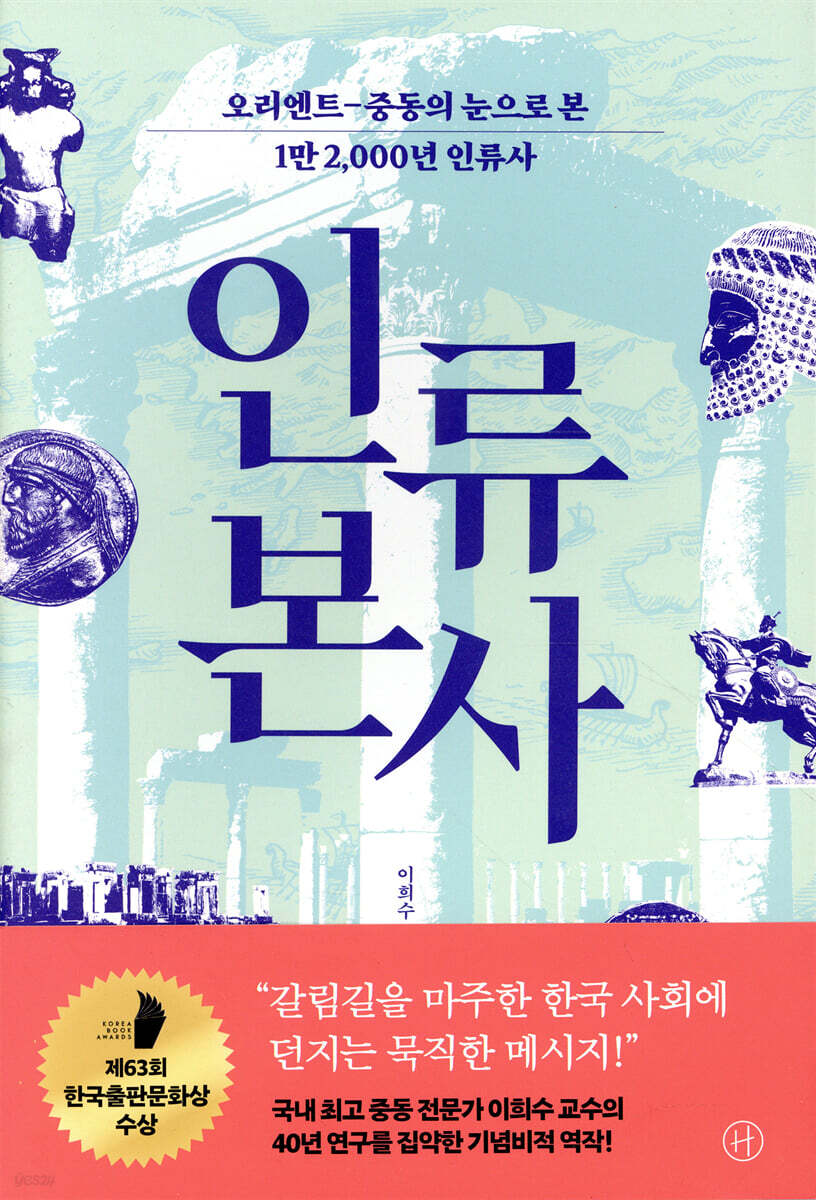
The epic of the 'intermediate civilization' that crosses the East and West! Revive the History of the Orient and the Middle East: The Roots of Lost Civilization The Orient-Middle East region is the cradle of great civilizations and a historical hub that has driven human progress for approximately 12,000 years. However, the existing 'universal view of history' that divided the world into the 'West' and the 'East' and traced the footsteps of humanity centered on the historical patterns of the West has completely ignored the Orient and the Middle East, which actually preserve the roots of human civilization. As a result, we are completely ignorant of the history and culture of this region, which gave rise to human society today. We have been indiscriminately pursuing and reproducing an unbalanced, disconnected, and distorted, half-baked historical perception. 『Headquarters of Humanity』 is the first masterpiece in Korea that declares the history of the Orient-Middle East region as the root history of humanity, or ‘headquarters’, by Professor Lee Hee-soo, Korea’s top Middle East expert, and completes the trajectory of human history in the Orient-Middle East, from the ancient Anatolian civilization 12,000 years ago, through the ancient Orient civilizations such as the Hittites and Phrygia, and the history of the Islamic kingdoms after the 7th century, to the rise and fall of the modern Ottoman and Mughal empires. By reorganizing the history of 15 empires and kingdoms in the Orient-Middle East region, which opened the door to the dawn of human society and profoundly influenced the development of exchanges between the East and the West as "intermediate civilizations," we have rewritten human history from its core and roots. The epic story of the 12,000-year "intermediate civilization" spanning the East and the West unfolds at the center of human history, where the first civilizations emerged and matured. |
- You can preview some of the book's contents.
Preview
index
In publishing the book
Prologue: The story of humanity begins in Anatolia, the cradle of civilization.
Part 1: 10,000 Years of History in Anatolia, Babylonia, and Persia
Chapter 1: Anatolian Civilization: The Dawn of Human History
1 Göbekli Tepe
2 Çatalhöyük
Chapter 2 Babylonia: The Land of Hammurabi's Code
1 Restoration of Mesopotamian and Middle-Eastern Civilizations
2 Old Babylonian Kingdom
3 Successor states of Babylonia
4 Babylonian Culture
Chapter 3: The Hittites: A Technologically Advanced Powerhouse that Ushered in the Iron Age
1 Hittite History and Governance
2 Battle of Kadesh
3 The Mystery of Iron Production and the Fall of the Hittites
Chapter 4 Phrygia: From Myth to History, the Mystery of King Midas
1 History and Culture of Phrygia
Chapter 5: Achaemenid Persia: Humanity's First Great Empire
1 History of the Achaemenid Persian Empire
2 Governance of Persia
3 Persian Culture
4 The Persian Wars and the Fall of the Empire
Chapter 6: Parthia: The 500-Year Empire that Faced Rome
1 The conquests of Alexander the Great and the establishment of Parthia
2 The Rise and Fall of the Parthian Empire
3 Governance and Culture of the Parthian Empire
Chapter 7 Sassanid Persia: The End of a 1,200-Year Empire
1 The Rise and Development of Sassanid Persia
2 Religion of the Sassanid Empire
3 Sassanid Persian Culture and Foreign Relations
4 The Fall of the Persian Empire
Part 2: The History of Islamic Civilization, Which Led to Great Prosperity for Humanity
Chapter 8 Abbas: The Golden Age of Islam
1 The Beginning of the Islamic Empire
2 The Rise and Prosperity of the Abbasid Empire
3 The decline of the Abbasid Empire and the rise of the Turks
Chapter 9: Khwarazmshah: The Islamic Kingdom of Central Asia
1 13th century Khwarazmshah, the most powerful Islamic kingdom in Central Asia
2 The Rise and Fall of the Khwarazmshahs
Chapter 10: Timur: The Renaissance of Central Asia
1. The establishment of the Timurid Empire
2 Renaissance in Central Asia
Chapter 11: Umayyad and Nasrid: Islamic Culture in the Iberian Peninsula
1 Umayyad Dynasty
2 Nasrid Dynasty
Chapter 12: The Safavids: The Pride of Iranian Shia
1. Establishment of the Safavid Dynasty
2 The Reign of Abbas I and the Rise of the Safavids
3 The Decline and Fall of the Safavid Empire
Chapter 13 Mali and Songhai: An African Renaissance
1 Islamic kingdom in sub-Saharan West Africa
2 African Culture
3 Islamization of Africa
Chapter 14: The Ottoman Empire: The Greatest Empire in Humanity
1 The establishment and development of the Ottoman Empire
2 The Fall of Constantinople and the Fall of the Byzantine Empire
3 The Ottoman Golden Age
4 Governance and Culture of the Ottoman Empire
5 The Decline of the Ottoman Empire and the Reform Movement
Chapter 15: The Mughal Empire that Gave Birth to the Taj Mahal
1. Founding of the Mughal Empire
2 The Rise and Decline of the Mughal Empire
3 Governance and Economy of the Mughal Empire
4 Culture of the Mughal Empire
Prologue: The story of humanity begins in Anatolia, the cradle of civilization.
Part 1: 10,000 Years of History in Anatolia, Babylonia, and Persia
Chapter 1: Anatolian Civilization: The Dawn of Human History
1 Göbekli Tepe
2 Çatalhöyük
Chapter 2 Babylonia: The Land of Hammurabi's Code
1 Restoration of Mesopotamian and Middle-Eastern Civilizations
2 Old Babylonian Kingdom
3 Successor states of Babylonia
4 Babylonian Culture
Chapter 3: The Hittites: A Technologically Advanced Powerhouse that Ushered in the Iron Age
1 Hittite History and Governance
2 Battle of Kadesh
3 The Mystery of Iron Production and the Fall of the Hittites
Chapter 4 Phrygia: From Myth to History, the Mystery of King Midas
1 History and Culture of Phrygia
Chapter 5: Achaemenid Persia: Humanity's First Great Empire
1 History of the Achaemenid Persian Empire
2 Governance of Persia
3 Persian Culture
4 The Persian Wars and the Fall of the Empire
Chapter 6: Parthia: The 500-Year Empire that Faced Rome
1 The conquests of Alexander the Great and the establishment of Parthia
2 The Rise and Fall of the Parthian Empire
3 Governance and Culture of the Parthian Empire
Chapter 7 Sassanid Persia: The End of a 1,200-Year Empire
1 The Rise and Development of Sassanid Persia
2 Religion of the Sassanid Empire
3 Sassanid Persian Culture and Foreign Relations
4 The Fall of the Persian Empire
Part 2: The History of Islamic Civilization, Which Led to Great Prosperity for Humanity
Chapter 8 Abbas: The Golden Age of Islam
1 The Beginning of the Islamic Empire
2 The Rise and Prosperity of the Abbasid Empire
3 The decline of the Abbasid Empire and the rise of the Turks
Chapter 9: Khwarazmshah: The Islamic Kingdom of Central Asia
1 13th century Khwarazmshah, the most powerful Islamic kingdom in Central Asia
2 The Rise and Fall of the Khwarazmshahs
Chapter 10: Timur: The Renaissance of Central Asia
1. The establishment of the Timurid Empire
2 Renaissance in Central Asia
Chapter 11: Umayyad and Nasrid: Islamic Culture in the Iberian Peninsula
1 Umayyad Dynasty
2 Nasrid Dynasty
Chapter 12: The Safavids: The Pride of Iranian Shia
1. Establishment of the Safavid Dynasty
2 The Reign of Abbas I and the Rise of the Safavids
3 The Decline and Fall of the Safavid Empire
Chapter 13 Mali and Songhai: An African Renaissance
1 Islamic kingdom in sub-Saharan West Africa
2 African Culture
3 Islamization of Africa
Chapter 14: The Ottoman Empire: The Greatest Empire in Humanity
1 The establishment and development of the Ottoman Empire
2 The Fall of Constantinople and the Fall of the Byzantine Empire
3 The Ottoman Golden Age
4 Governance and Culture of the Ottoman Empire
5 The Decline of the Ottoman Empire and the Reform Movement
Chapter 15: The Mughal Empire that Gave Birth to the Taj Mahal
1. Founding of the Mughal Empire
2 The Rise and Decline of the Mughal Empire
3 Governance and Economy of the Mughal Empire
4 Culture of the Mughal Empire
Detailed image
.jpg)
Publisher's Review
Beyond the stereotypical East/West dichotomy
A complete and splendid history of human civilization revisited through the eyes of the "Chinese"
Today, if we divide the concept of 'history' by habit, we naturally end up dividing it into 'Western history' and 'Eastern history.'
'Western history' started from Greece and Rome and went through the Middle Ages, the Age of Exploration, the Renaissance, the Reformation, and ended with the Industrial Revolution and modern civilization, monopolizing the name of 'world history', while 'Eastern history', which was artificially fostered to emphasize the balance between the East and the West, was exclusively Chinese history.
The rest of the world was relegated to regional, peripheral, and non-mainstream history, and Western and Eastern history continued to be strictly separated like two sides of a coin, until it was only in the modern era that they were said to have merged as the West "enlightened the East."
However, this is a completely wrong perception of history.
Western civilization and culture did not originate in the West, and there has never been a time in human history when the East and the West did not interact.
The Earth was not flat like a coin, and so there clearly existed an 'intermediate civilization' that closely connected the West and the East, and, going back further, a 'central civilization' that gave birth to 'human civilization' itself.
It was simply ignored by the stereotypical East/West dichotomy.
The birthplace of civilization was the 'Orient-Middle East'.
『Humanity Headquarters』 rewrites human history based on the Orient-Middle East region.
This attempt at reading history may seem new, and the name "main history" may feel unfamiliar, but in reality it is an attempt to reclaim the lost history.
The Orient, derived from the Latin word 'Oriens' meaning 'where the sun rises', was the historical homeland where the first civilization of mankind emerged, centered on the Anatolian Peninsula, which is today the territory of the Republic of Turkey.
The Middle East, based in the Mesopotamian region between the Euphrates and Tigris rivers, was the cradle of civilization that created all the artifacts essential to sustaining human society, including mythology, writing, politics, and technology.
Furthermore, the Orient-Middle East was the most advanced center on Earth, driving human progress for approximately 12,000 years from the emergence of human society until the Industrial Revolution, and was a core base of civilization that led the development of exchanges and exchanges by connecting the politics, economy, and culture of the East and the West along the 6,400-kilometer Silk Road.
Therefore, discussing the history of civilization without understanding the Orient and the Middle East is no different from the irony of talking about the history of civilization without civilization.
Rereading history through the eyes of the "Central West" is a groundbreaking event that allows us to delve into the complete history of human civilization, and it is a great first step toward reclaiming the lost roots of human civilization by overcoming the historical distortion and cognitive disconnect caused by the East/West dichotomy.
From the Anatolian civilization of 10,000 BC to the modern Ottoman Empire
The first complete history of civilization in the Orient and the Middle East, spanning 12,000 years.
『Humanity Headquarters』 reconstructs the 12,000-year history of the Orient-Middle Eastern world as a single flow through the history of 15 empires and kingdoms that arose and fell in this region, centering on the Anatolian Peninsula and Mesopotamia, and encompassing Central Asia, the Indian Subcontinent, North Africa, and the Iberian Peninsula.
Starting with the Anatolian civilization led by Göbekli Tepe and Çatalhöyük, which shook the foundations of historical studies at the time of their excavation, the Babylonian-Persian civilization that dominated the ancient Middle East, including Babylonia, Achaemenid Persia, and Sassanid Persia, as well as the major empires of the Oriental civilization, such as the Hittites, Phrygia, and Parthia, which have not been properly introduced in Korea until now, are clearly illuminated, thereby straightening the framework of human history that has been passed down in a broken spine.
If we follow the story of the Islamic empires that flowed smoothly from the appearance of Muhammad in the 7th century to the Abbasid, Safavid, and Ottoman empires, we can clearly understand how Islamic civilization led to the great prosperity of all mankind.
Furthermore, by broadening our geographical perspective to include the Khwarazmshahs and Timur of Central Asia, the Umayyads and Nasrids of the Iberian Peninsula, the Mali and Songhai of Africa, and the Mughals of the Indian subcontinent, we can finally understand the globality of Islam, which today has a population of 2 billion.
Beyond simply skimming the history of numerous empires, this book systematically organizes diverse historical knowledge to enable an in-depth interpretation of the history of civilization, encompassing governance formed within each nation's unique political context, major wars and battles that transformed the world's geopolitical landscape, the various religions that served as the foundation of ruling ideologies and indicators of the lives of imperial subjects, and even the art, architecture, and lifestyle cultures that have persisted to this day.
This attempt to capture the 12,000-year history of Oriental-Middle Eastern civilization, from the Anatolian civilization of 10,000 BC to the modern Ottoman and Mughal empires, in such a rich and complete manner is the first and only achievement of its kind in Korea.
Professor Lee Hee-soo, a Middle East-Islam authority recognized by the media and academia
A monumental masterpiece that culminates 40 years of field research and research results.
This unprecedented historical achievement stems from the author's unparalleled capabilities, having been the first Korean to receive a doctorate from Istanbul University in Turkey and having conducted field research for 40 years across the Islamic world, including Turkey, Saudi Arabia, Tunisia, Iran, and Uzbekistan.
Professor Lee Hee-soo has built a global reputation through his activities at the Institute of Islamic History and Culture (IRCICA), the International Institute of Central Asian Studies (IICAS), and the Tunisian Institute of Social and Economic Research (CERES) under the Organization of Islamic Cooperation (OIC), which is called the “UN of the Islamic world.” In Korea, he has also served as the Chairman of the Africa and Middle East Division of the Policy Advisory Committee of the Ministry of Foreign Affairs, the President of the Korean Association of Middle East Studies, and the President of the Korean Association of Islamic Studies, and has been readily available to any place where assistance and insight on the Middle East and Islam are needed.
Whenever a so-called "Middle East issue" arises, he conducts interviews with media outlets, broadly explaining the current situation from a public perspective and actively responding to anti-intellectual hatred, thereby solidifying his position as the country's leading authority on the Middle East and Islam.
『Humanity Headquarters』 vividly recreates the cultural flavor of the empires of the Middle East, which are difficult to access in real life, by including the author's travelogues from his visits to local historical sites in the Orient and Middle East, such as Göbekli Tepe, Persepolis, Samarkand, and the Alhambra Palace, before the readers' eyes.
As a cultural anthropologist, reading the author's travelogue, which depicts the unique geographic environment and sociocultural context of each place from a relativistic and local perspective, you will have the astonishing experience of standing in the middle of a historical site from thousands of years ago.
Over 200 color photographs and maps also vividly convey the local atmosphere.
This is a monumental masterpiece by the author who dedicated his entire life to introducing the previously unfamiliar Orient-Middle Eastern civilization to the Korean people.
We invite you to join us on this journey to reclaim the origins of humanity, following the 12,000 years of glorious history and mysterious culture preserved in the birthplace of civilization.
A complete and splendid history of human civilization revisited through the eyes of the "Chinese"
Today, if we divide the concept of 'history' by habit, we naturally end up dividing it into 'Western history' and 'Eastern history.'
'Western history' started from Greece and Rome and went through the Middle Ages, the Age of Exploration, the Renaissance, the Reformation, and ended with the Industrial Revolution and modern civilization, monopolizing the name of 'world history', while 'Eastern history', which was artificially fostered to emphasize the balance between the East and the West, was exclusively Chinese history.
The rest of the world was relegated to regional, peripheral, and non-mainstream history, and Western and Eastern history continued to be strictly separated like two sides of a coin, until it was only in the modern era that they were said to have merged as the West "enlightened the East."
However, this is a completely wrong perception of history.
Western civilization and culture did not originate in the West, and there has never been a time in human history when the East and the West did not interact.
The Earth was not flat like a coin, and so there clearly existed an 'intermediate civilization' that closely connected the West and the East, and, going back further, a 'central civilization' that gave birth to 'human civilization' itself.
It was simply ignored by the stereotypical East/West dichotomy.
The birthplace of civilization was the 'Orient-Middle East'.
『Humanity Headquarters』 rewrites human history based on the Orient-Middle East region.
This attempt at reading history may seem new, and the name "main history" may feel unfamiliar, but in reality it is an attempt to reclaim the lost history.
The Orient, derived from the Latin word 'Oriens' meaning 'where the sun rises', was the historical homeland where the first civilization of mankind emerged, centered on the Anatolian Peninsula, which is today the territory of the Republic of Turkey.
The Middle East, based in the Mesopotamian region between the Euphrates and Tigris rivers, was the cradle of civilization that created all the artifacts essential to sustaining human society, including mythology, writing, politics, and technology.
Furthermore, the Orient-Middle East was the most advanced center on Earth, driving human progress for approximately 12,000 years from the emergence of human society until the Industrial Revolution, and was a core base of civilization that led the development of exchanges and exchanges by connecting the politics, economy, and culture of the East and the West along the 6,400-kilometer Silk Road.
Therefore, discussing the history of civilization without understanding the Orient and the Middle East is no different from the irony of talking about the history of civilization without civilization.
Rereading history through the eyes of the "Central West" is a groundbreaking event that allows us to delve into the complete history of human civilization, and it is a great first step toward reclaiming the lost roots of human civilization by overcoming the historical distortion and cognitive disconnect caused by the East/West dichotomy.
From the Anatolian civilization of 10,000 BC to the modern Ottoman Empire
The first complete history of civilization in the Orient and the Middle East, spanning 12,000 years.
『Humanity Headquarters』 reconstructs the 12,000-year history of the Orient-Middle Eastern world as a single flow through the history of 15 empires and kingdoms that arose and fell in this region, centering on the Anatolian Peninsula and Mesopotamia, and encompassing Central Asia, the Indian Subcontinent, North Africa, and the Iberian Peninsula.
Starting with the Anatolian civilization led by Göbekli Tepe and Çatalhöyük, which shook the foundations of historical studies at the time of their excavation, the Babylonian-Persian civilization that dominated the ancient Middle East, including Babylonia, Achaemenid Persia, and Sassanid Persia, as well as the major empires of the Oriental civilization, such as the Hittites, Phrygia, and Parthia, which have not been properly introduced in Korea until now, are clearly illuminated, thereby straightening the framework of human history that has been passed down in a broken spine.
If we follow the story of the Islamic empires that flowed smoothly from the appearance of Muhammad in the 7th century to the Abbasid, Safavid, and Ottoman empires, we can clearly understand how Islamic civilization led to the great prosperity of all mankind.
Furthermore, by broadening our geographical perspective to include the Khwarazmshahs and Timur of Central Asia, the Umayyads and Nasrids of the Iberian Peninsula, the Mali and Songhai of Africa, and the Mughals of the Indian subcontinent, we can finally understand the globality of Islam, which today has a population of 2 billion.
Beyond simply skimming the history of numerous empires, this book systematically organizes diverse historical knowledge to enable an in-depth interpretation of the history of civilization, encompassing governance formed within each nation's unique political context, major wars and battles that transformed the world's geopolitical landscape, the various religions that served as the foundation of ruling ideologies and indicators of the lives of imperial subjects, and even the art, architecture, and lifestyle cultures that have persisted to this day.
This attempt to capture the 12,000-year history of Oriental-Middle Eastern civilization, from the Anatolian civilization of 10,000 BC to the modern Ottoman and Mughal empires, in such a rich and complete manner is the first and only achievement of its kind in Korea.
Professor Lee Hee-soo, a Middle East-Islam authority recognized by the media and academia
A monumental masterpiece that culminates 40 years of field research and research results.
This unprecedented historical achievement stems from the author's unparalleled capabilities, having been the first Korean to receive a doctorate from Istanbul University in Turkey and having conducted field research for 40 years across the Islamic world, including Turkey, Saudi Arabia, Tunisia, Iran, and Uzbekistan.
Professor Lee Hee-soo has built a global reputation through his activities at the Institute of Islamic History and Culture (IRCICA), the International Institute of Central Asian Studies (IICAS), and the Tunisian Institute of Social and Economic Research (CERES) under the Organization of Islamic Cooperation (OIC), which is called the “UN of the Islamic world.” In Korea, he has also served as the Chairman of the Africa and Middle East Division of the Policy Advisory Committee of the Ministry of Foreign Affairs, the President of the Korean Association of Middle East Studies, and the President of the Korean Association of Islamic Studies, and has been readily available to any place where assistance and insight on the Middle East and Islam are needed.
Whenever a so-called "Middle East issue" arises, he conducts interviews with media outlets, broadly explaining the current situation from a public perspective and actively responding to anti-intellectual hatred, thereby solidifying his position as the country's leading authority on the Middle East and Islam.
『Humanity Headquarters』 vividly recreates the cultural flavor of the empires of the Middle East, which are difficult to access in real life, by including the author's travelogues from his visits to local historical sites in the Orient and Middle East, such as Göbekli Tepe, Persepolis, Samarkand, and the Alhambra Palace, before the readers' eyes.
As a cultural anthropologist, reading the author's travelogue, which depicts the unique geographic environment and sociocultural context of each place from a relativistic and local perspective, you will have the astonishing experience of standing in the middle of a historical site from thousands of years ago.
Over 200 color photographs and maps also vividly convey the local atmosphere.
This is a monumental masterpiece by the author who dedicated his entire life to introducing the previously unfamiliar Orient-Middle Eastern civilization to the Korean people.
We invite you to join us on this journey to reclaim the origins of humanity, following the 12,000 years of glorious history and mysterious culture preserved in the birthplace of civilization.
GOODS SPECIFICS
- Publication date: June 27, 2022
- Page count, weight, size: 720 pages | 898g | 143*210*40mm
- ISBN13: 9791160805321
- ISBN10: 1160805326
You may also like
카테고리
korean


korean

![GQ KOREA Mark (Monthly): December [2025]](http://librairie.coreenne.fr/cdn/shop/files/8ef265dbbfbf186523ed75ba7319009d.jpg?v=1765340328&width=3840)


