

Kafka's Prague
 |
Description
Book Introduction
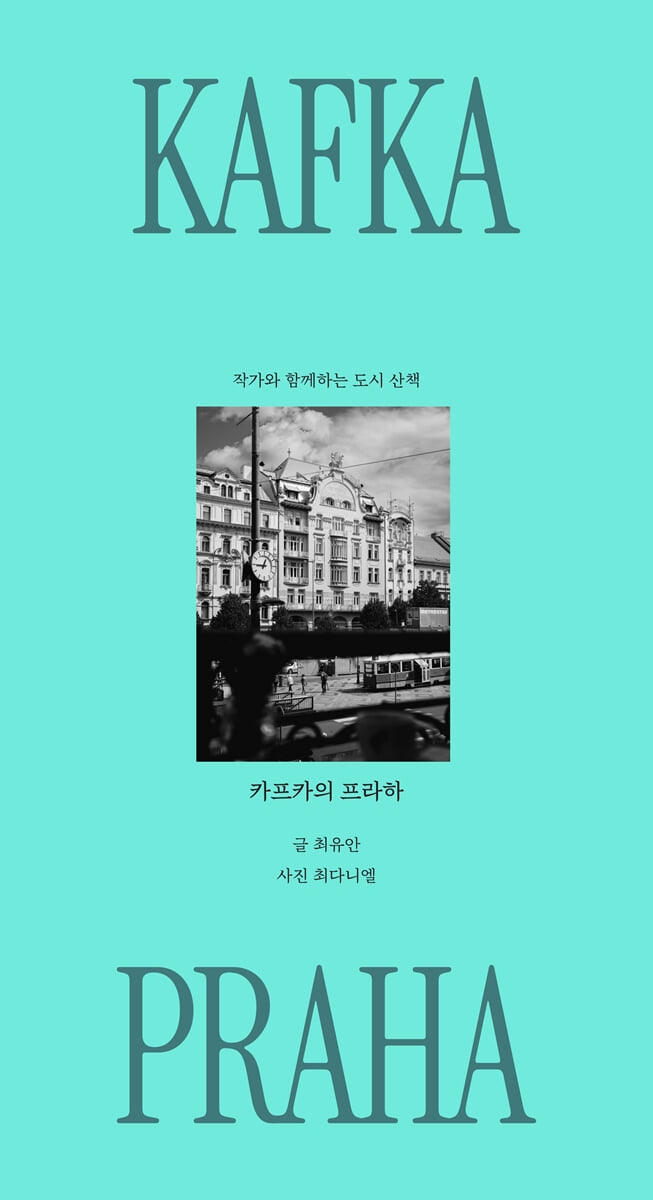
The first book in the "City Walks" series A Prague Travel Guide with Kafka's Literature Kafka's life and literature unfold along five walking paths. Literary publisher [Sojeonseoga] is publishing 『Kafka's Prague』 by novelist Choi Yu-an as the first book in the "City Walk" series. The "City Walk" series, which suggests the most literary way to enjoy the city, features young Korean novelists walking the walks of great novelists, allowing readers to see the novelists' cities in a new light. To mark the 100th anniversary of Kafka's death, we revisit his life and literary world in Prague, the city of love and hate where he spent his entire life. In a walking path composed of five keywords: career, love, family, friendship, and literature, novelist Choi Yu-an imagines Kafka's daily life and traces the starting point of his literary inspiration. The maps included with each walking trail serve as a useful guide for travelers to Prague following in Kafka's footsteps. Novelist Choi Yu-an feels a deep sense of solidarity with Kafka, sharing the commonality of both his profession and his literary pursuits, and sympathizes with him as a fellow writer, offering him comfort. His life as a young man before becoming a great writer is redrawn in each location. The five short stories by Kafka introduced at the end of the walk are also a point where the two novelists exquisitely meet. These are short stories such as “The Lawyer” and “Trees,” and are less familiar to domestic readers compared to his representative works. The author translates this directly, introduces it in close connection with the keywords of each walking trail, and concludes each walking trail. Additionally, the 56 photos taken by photographer Daniel Choi, who has been observing and capturing Prague for a long time, help readers to imagine the scenery without having to go to Prague. Follow the walking map and walk around Prague to find the places in the photos. Kafka's time-worn places unfold along every path you walk. |
- You can preview some of the book's contents.
Preview
index
Ⅰ.
prolog
Ⅱ.
Prague Walk: Starting Your Walk
#Walking path 1.
N-jobber Kafka
1.
Charles Bridge
2.
Charles University in Prague
3.
Civil court, criminal court
4.
Ashikura Chongni Generali
5.
Korea Occupational Safety and Health Agency
Short story "The Lawyer"
# Walking trail 2.
lovers
6.
Max Brod's House
7.
Evropa Hotel
8.
Kafka Museum
Short story "Wedding Preparations in the Country"
#Walking path 3.
family
9.
Birthplace: Beje House
10.
Minuti House
11.
Elementary school near Masuna Street
12.
Houses on Celetna Street
13.
Goltzkinsky Palace
14.
Opeltuffe House
15.
Synagogue
16.
Kafka Cemetery
The short story "Trees"
#Walking path 4.
friend
17.
Kafka's Cultural Zone
-Café Arco and Union / Café Louvre / Cabaret Lucerna and Kino Lucerna / Café Savoy
18.
Narodni
19.
swimming school
Short story "Community"
#Walking path 5.
Kafka's Studios
20.
Rodi House
21.
Vilkova Street
22.
The studio on Deulouha Street
23.
Schönborn Palace
24.
petric acid
25.
Golden Alley Workshop
Short story "A Loud Noise"
Ⅲ.
Epilogue
Ⅳ.
References
prolog
Ⅱ.
Prague Walk: Starting Your Walk
#Walking path 1.
N-jobber Kafka
1.
Charles Bridge
2.
Charles University in Prague
3.
Civil court, criminal court
4.
Ashikura Chongni Generali
5.
Korea Occupational Safety and Health Agency
Short story "The Lawyer"
# Walking trail 2.
lovers
6.
Max Brod's House
7.
Evropa Hotel
8.
Kafka Museum
Short story "Wedding Preparations in the Country"
#Walking path 3.
family
9.
Birthplace: Beje House
10.
Minuti House
11.
Elementary school near Masuna Street
12.
Houses on Celetna Street
13.
Goltzkinsky Palace
14.
Opeltuffe House
15.
Synagogue
16.
Kafka Cemetery
The short story "Trees"
#Walking path 4.
friend
17.
Kafka's Cultural Zone
-Café Arco and Union / Café Louvre / Cabaret Lucerna and Kino Lucerna / Café Savoy
18.
Narodni
19.
swimming school
Short story "Community"
#Walking path 5.
Kafka's Studios
20.
Rodi House
21.
Vilkova Street
22.
The studio on Deulouha Street
23.
Schönborn Palace
24.
petric acid
25.
Golden Alley Workshop
Short story "A Loud Noise"
Ⅲ.
Epilogue
Ⅳ.
References
Detailed image
.jpg)
Into the book
If you go to Prague, you will meet Kafka even if you don't know him.
Because almost every souvenir shop carries souvenirs with Kafka's face or writing on them.
Because wherever you go in this city, there are traces of Kafka.
But in the past, I also just passed by those streets.
After thinking about it again, I think maybe that wasn't Kafka.
When I read Kafka's novels, my mind often becomes dizzy, as if my consciousness is clouded.
I think I was on guard for the moment when he would let me go into the maze he had laid out.
--- p.10
Kafka pointed to the center of Prague and said that his life was confined within that small circle.
The circle of Kafka that I saw was much larger and deeper than he had imagined.
As I wrote this, I often found myself looking into the circle Kafka had drawn, under the illusion that the small world was gradually turning into deeper colors.
--- p.29
Is this the end of my search for what I want to do?
Kafka must have thought about that as he walked in and out of that court.
As I stepped out of the shadows, the feeling I had was one of sadness.
Novel, what the heck is that?
I wanted to say that, but I already knew that I could never say that to Kafka (me at that time).
--- p.50
The facade of the building features a bust of a statue that was unveiled during the Prague Spring in the mid-1960s.
The birth of Kafka, the Prague Spring, and the silence of midsummer.
As I pondered the tens of thousands of years of time that had piled up here, I suddenly felt lost.
It was a strange feeling that Kafka, too, was just a person who passed through this place, and that he was approaching me with some kind of entity.
--- p.110
Kafka coughed up bloody phlegm here in June 1917.
It was the beginning of many illnesses he would suffer in the future.
Since then, he has not been able to swim, so Kafka must have lost a long-time hobby.
I felt even more sorry.
Even before you get sick, try to shake off the sadness you're holding onto by floating on the water.
I wish I could have surpassed my father, who only knew how to subdue people with force, and become a great person.
I thought so, but the past was not like that, and Kafka would have chosen his own way.
--- p.193
Did he dream, the dream of becoming an Indian, of mounting a galloping horse without hesitation and gliding through the air, still running after everything that made him run seemed to have vanished?
Kafka's Prague would have been like that.
The freedom of walking on a land where people have disappeared, the sense of liberation felt on the empty streets.
We take a walk like Kafka and taste the freedom that can only be felt in the time we liberate ourselves.
In Prague at noon.
--- p.216
The three-story building where Kafka lived was always dark.
I looked at it and drew a new Kafka every day.
Some days I felt pity, some days I felt sympathy, and some days I felt jealousy.
As he deepened inside me, a feeling that was neither pity nor jealousy nor anything else entered me and gradually deepened.
And I knew that for a long time to come, I would be looking at him, his figure so deeply embedded in me.
--- p.237
Prague in the darkness has completely lost its charming appearance and has become a place where ghosts of time, flowing out from the layers of time, run rampant.
A sight where everything seems to be shrouded in darkness.
I couldn't take my eyes off that moment I happened to witness.
Then he let the sentence flow out of his mouth.
[The village was buried in deep snow.] That was the first line of Kafka's last novel, The Castle.
Because almost every souvenir shop carries souvenirs with Kafka's face or writing on them.
Because wherever you go in this city, there are traces of Kafka.
But in the past, I also just passed by those streets.
After thinking about it again, I think maybe that wasn't Kafka.
When I read Kafka's novels, my mind often becomes dizzy, as if my consciousness is clouded.
I think I was on guard for the moment when he would let me go into the maze he had laid out.
--- p.10
Kafka pointed to the center of Prague and said that his life was confined within that small circle.
The circle of Kafka that I saw was much larger and deeper than he had imagined.
As I wrote this, I often found myself looking into the circle Kafka had drawn, under the illusion that the small world was gradually turning into deeper colors.
--- p.29
Is this the end of my search for what I want to do?
Kafka must have thought about that as he walked in and out of that court.
As I stepped out of the shadows, the feeling I had was one of sadness.
Novel, what the heck is that?
I wanted to say that, but I already knew that I could never say that to Kafka (me at that time).
--- p.50
The facade of the building features a bust of a statue that was unveiled during the Prague Spring in the mid-1960s.
The birth of Kafka, the Prague Spring, and the silence of midsummer.
As I pondered the tens of thousands of years of time that had piled up here, I suddenly felt lost.
It was a strange feeling that Kafka, too, was just a person who passed through this place, and that he was approaching me with some kind of entity.
--- p.110
Kafka coughed up bloody phlegm here in June 1917.
It was the beginning of many illnesses he would suffer in the future.
Since then, he has not been able to swim, so Kafka must have lost a long-time hobby.
I felt even more sorry.
Even before you get sick, try to shake off the sadness you're holding onto by floating on the water.
I wish I could have surpassed my father, who only knew how to subdue people with force, and become a great person.
I thought so, but the past was not like that, and Kafka would have chosen his own way.
--- p.193
Did he dream, the dream of becoming an Indian, of mounting a galloping horse without hesitation and gliding through the air, still running after everything that made him run seemed to have vanished?
Kafka's Prague would have been like that.
The freedom of walking on a land where people have disappeared, the sense of liberation felt on the empty streets.
We take a walk like Kafka and taste the freedom that can only be felt in the time we liberate ourselves.
In Prague at noon.
--- p.216
The three-story building where Kafka lived was always dark.
I looked at it and drew a new Kafka every day.
Some days I felt pity, some days I felt sympathy, and some days I felt jealousy.
As he deepened inside me, a feeling that was neither pity nor jealousy nor anything else entered me and gradually deepened.
And I knew that for a long time to come, I would be looking at him, his figure so deeply embedded in me.
--- p.237
Prague in the darkness has completely lost its charming appearance and has become a place where ghosts of time, flowing out from the layers of time, run rampant.
A sight where everything seems to be shrouded in darkness.
I couldn't take my eyes off that moment I happened to witness.
Then he let the sentence flow out of his mouth.
[The village was buried in deep snow.] That was the first line of Kafka's last novel, The Castle.
--- p.257
Publisher's Review
The most literary way to enjoy the city
Walk the novelist's path yourself
As a traveler, there are many ways to approach a city.
Get closer to unfamiliar landscapes, glimpse new cultures and lifestyles, and explore traces of the city's history.
In a city, there are layers of time and stories.
Depending on what kind of traveler you are, the city presents itself in a new way.
Literary publisher [Sojeonseoga] proposes the [City Walk] series as the most literary way to enjoy the city.
We aim to create a space where young novelists of today can walk through a city where the time of great novelists has accumulated, and encounter each other across centuries.
The gap in time becomes meaningless on the walking path, the starting point of inspiration for the world of great works.
Any reader who sets out on a journey with the [City Walk] series will be able to see the novelists' cities in a new light by following the literary conversation between the two novelists.
If you go to Prague, you will meet Kafka even if you don't know him.
A map drawn by career, love, family, friendship, and literature
Kafka's Prague in Five Walking Paths
Places captured in 56 photos
Prague, the capital of the Czech Republic, a jewel of a city steeped in history.
This is a city that cannot be missed by travelers heading to Eastern or Central Europe.
Anyone who has visited Prague will think of the novelist [Franz Kafka] who cannot be left out when discussing this city.
Kafka's face is placed all over the city, and his name can be easily found in any bookstore, making it seem like a part of Prague.
Kafka wanted to escape this city where he had spent most of his life.
This book depicts Kafka's walks within the context of the relationship between Prague and Kafka, which is called [love and hate].
Kafka pointed to the center of Prague and said that his life was confined within that small circle.
The circle of Kafka that I saw was much larger and deeper than he had imagined.
As I wrote this, I often found myself looking into the circle Kafka had drawn, under the illusion that the small world was gradually turning into deeper colors.
- From the text
The book is largely divided into five walking trails.
Career, love, family, friendship, literature.
Novelist Choi Yu-an describes Kafka's Prague, which she personally walked through, based on five important keywords from Kafka's life and literary world.
Additionally, a map of the walking trails is included in the book, helping anyone traveling in Prague easily find Kafka's places.
Choi Yu-an, who majored in German, studied European regional studies, and now teaches at the Department of German Language and Literature while writing novels, walks through Prague, a city that is both familiar and unfamiliar to him, with the mind of Kafka.
Walking through spaces that still hold time and spaces where only traces remain, we relive the emotions and inspirations hidden throughout Kafka's life a hundred years ago.
The walking path of [N-Jobber Kafka], which he took while struggling between his career and literature, crosses the Charles Bridge, the representative bridge of Prague, and continues to the old town and the new city center.
When you reach the Workers' Accident Insurance Corporation, Kafka's last workplace, which is now a hotel, a statue of Kafka welcomes travelers.
In [The Lovers], a walk of young Kafka, who was struggling with love amidst a series of engagements and broken engagements, you can see the house of Max Brod, where he met his first fiancée Felice Bauer, the Hotel Europa (now the Grand Hotel), where he first read the short story "The Sentence," and the Kafka Museum, where records of his conversations with his lovers are collected.
On the [family] walking trail near the old town, you can find the house where Kafka actually lived.
Kafka called this [the small circle].
You can walk along the path that young Kafka took to school, or the path he would have walked after leaving home due to conflict with his father.
[Friend] On the walking path is the life of an ordinary young man, Kafka.
You can catch a glimpse of him gathering with like-minded friends to discuss literature at places like [Café Louvre], going to the cinema [Kino Lucerna] to watch silent films, and sometimes crossing the Vltava River to go swimming.
In [Kafka's Studios], the novelist Kafka's walking path takes you to the places where Kafka stayed up late into the night, including the Lodi House overlooking the Vltava River, the first studio he took on Vilkova Street after becoming independent because he couldn't stray far from the old town where his father's house was, and the last studio on Golden Alley.
A conversation between two novelists caught between their profession and literature.
A deep and secret bond unfolds in the alleys of Prague.
The three-story building where Kafka lived was always dark.
I looked at it and drew a new Kafka every day.
Some days I felt pity, some days I felt sympathy, and some days I felt jealousy.
As he deepened inside me, a feeling that was neither pity nor jealousy nor anything else entered me and gradually deepened.
And I knew that for a long time to come, I would be looking at him, his figure so deeply embedded in me.
- From the text
Kafka, who had to catch both dreams and reality, is what we call a [N-jobber] these days.
For him, literature was the most important element in life, so he wrote while holding down another job until his health deteriorated.
Kafka, who majored in law, worked in legal affairs at an insurance company and the Workers' Accident Insurance Corporation.
Throughout his diary and letters, we find him struggling and tormented between his career and literature.
Author Choi Yu-an, who wrote this book, also writes novels while teaching at a university.
I always crave literature, but I can't spend all my time on it.
Author Choi Yu-an, who writes with inspiration gained from her work and research on German regional studies, must have read Kafka's novels, such as "The Trial" and "The Castle," which reflect her feelings about the legal bureaucracy, and, as a fellow novelist in the same situation, must have understood and empathized with the difficulties.
This book begins with the camaraderie and solidarity between these two novelists.
Kafka's literary world introduced through five short stories
Introduction and inclusion of "The Lawyer" and four other works translated by the author himself.
The five short stories by Kafka introduced at the end of each of the five walks are also a point where the two novelists meet exquisitely.
These are short stories such as “The Lawyer” and “Trees,” and are less familiar to domestic readers compared to his representative works.
"The Lawyer" is a literary expression of Kafka's professional side related to law; "Wedding Preparations in the Country" contains the feelings of a single man who has always wandered without being able to get married; "Trees" reminds us of Kafka's origins, family, through the strong roots of a winter tree; "Community" gives a glimpse into the feelings of belonging to a community but ultimately being alone; and "A Loud Noise" depicts Kafka's nervousness caused by the noise near his studio.
Some of Kafka's labyrinthine sentences have been translated by the author himself and included.
These sentences serve as an entrance into the true world of Kafka after a walk together.
Walk the novelist's path yourself
As a traveler, there are many ways to approach a city.
Get closer to unfamiliar landscapes, glimpse new cultures and lifestyles, and explore traces of the city's history.
In a city, there are layers of time and stories.
Depending on what kind of traveler you are, the city presents itself in a new way.
Literary publisher [Sojeonseoga] proposes the [City Walk] series as the most literary way to enjoy the city.
We aim to create a space where young novelists of today can walk through a city where the time of great novelists has accumulated, and encounter each other across centuries.
The gap in time becomes meaningless on the walking path, the starting point of inspiration for the world of great works.
Any reader who sets out on a journey with the [City Walk] series will be able to see the novelists' cities in a new light by following the literary conversation between the two novelists.
If you go to Prague, you will meet Kafka even if you don't know him.
A map drawn by career, love, family, friendship, and literature
Kafka's Prague in Five Walking Paths
Places captured in 56 photos
Prague, the capital of the Czech Republic, a jewel of a city steeped in history.
This is a city that cannot be missed by travelers heading to Eastern or Central Europe.
Anyone who has visited Prague will think of the novelist [Franz Kafka] who cannot be left out when discussing this city.
Kafka's face is placed all over the city, and his name can be easily found in any bookstore, making it seem like a part of Prague.
Kafka wanted to escape this city where he had spent most of his life.
This book depicts Kafka's walks within the context of the relationship between Prague and Kafka, which is called [love and hate].
Kafka pointed to the center of Prague and said that his life was confined within that small circle.
The circle of Kafka that I saw was much larger and deeper than he had imagined.
As I wrote this, I often found myself looking into the circle Kafka had drawn, under the illusion that the small world was gradually turning into deeper colors.
- From the text
The book is largely divided into five walking trails.
Career, love, family, friendship, literature.
Novelist Choi Yu-an describes Kafka's Prague, which she personally walked through, based on five important keywords from Kafka's life and literary world.
Additionally, a map of the walking trails is included in the book, helping anyone traveling in Prague easily find Kafka's places.
Choi Yu-an, who majored in German, studied European regional studies, and now teaches at the Department of German Language and Literature while writing novels, walks through Prague, a city that is both familiar and unfamiliar to him, with the mind of Kafka.
Walking through spaces that still hold time and spaces where only traces remain, we relive the emotions and inspirations hidden throughout Kafka's life a hundred years ago.
The walking path of [N-Jobber Kafka], which he took while struggling between his career and literature, crosses the Charles Bridge, the representative bridge of Prague, and continues to the old town and the new city center.
When you reach the Workers' Accident Insurance Corporation, Kafka's last workplace, which is now a hotel, a statue of Kafka welcomes travelers.
In [The Lovers], a walk of young Kafka, who was struggling with love amidst a series of engagements and broken engagements, you can see the house of Max Brod, where he met his first fiancée Felice Bauer, the Hotel Europa (now the Grand Hotel), where he first read the short story "The Sentence," and the Kafka Museum, where records of his conversations with his lovers are collected.
On the [family] walking trail near the old town, you can find the house where Kafka actually lived.
Kafka called this [the small circle].
You can walk along the path that young Kafka took to school, or the path he would have walked after leaving home due to conflict with his father.
[Friend] On the walking path is the life of an ordinary young man, Kafka.
You can catch a glimpse of him gathering with like-minded friends to discuss literature at places like [Café Louvre], going to the cinema [Kino Lucerna] to watch silent films, and sometimes crossing the Vltava River to go swimming.
In [Kafka's Studios], the novelist Kafka's walking path takes you to the places where Kafka stayed up late into the night, including the Lodi House overlooking the Vltava River, the first studio he took on Vilkova Street after becoming independent because he couldn't stray far from the old town where his father's house was, and the last studio on Golden Alley.
A conversation between two novelists caught between their profession and literature.
A deep and secret bond unfolds in the alleys of Prague.
The three-story building where Kafka lived was always dark.
I looked at it and drew a new Kafka every day.
Some days I felt pity, some days I felt sympathy, and some days I felt jealousy.
As he deepened inside me, a feeling that was neither pity nor jealousy nor anything else entered me and gradually deepened.
And I knew that for a long time to come, I would be looking at him, his figure so deeply embedded in me.
- From the text
Kafka, who had to catch both dreams and reality, is what we call a [N-jobber] these days.
For him, literature was the most important element in life, so he wrote while holding down another job until his health deteriorated.
Kafka, who majored in law, worked in legal affairs at an insurance company and the Workers' Accident Insurance Corporation.
Throughout his diary and letters, we find him struggling and tormented between his career and literature.
Author Choi Yu-an, who wrote this book, also writes novels while teaching at a university.
I always crave literature, but I can't spend all my time on it.
Author Choi Yu-an, who writes with inspiration gained from her work and research on German regional studies, must have read Kafka's novels, such as "The Trial" and "The Castle," which reflect her feelings about the legal bureaucracy, and, as a fellow novelist in the same situation, must have understood and empathized with the difficulties.
This book begins with the camaraderie and solidarity between these two novelists.
Kafka's literary world introduced through five short stories
Introduction and inclusion of "The Lawyer" and four other works translated by the author himself.
The five short stories by Kafka introduced at the end of each of the five walks are also a point where the two novelists meet exquisitely.
These are short stories such as “The Lawyer” and “Trees,” and are less familiar to domestic readers compared to his representative works.
"The Lawyer" is a literary expression of Kafka's professional side related to law; "Wedding Preparations in the Country" contains the feelings of a single man who has always wandered without being able to get married; "Trees" reminds us of Kafka's origins, family, through the strong roots of a winter tree; "Community" gives a glimpse into the feelings of belonging to a community but ultimately being alone; and "A Loud Noise" depicts Kafka's nervousness caused by the noise near his studio.
Some of Kafka's labyrinthine sentences have been translated by the author himself and included.
These sentences serve as an entrance into the true world of Kafka after a walk together.
GOODS SPECIFICS
- Date of issue: September 20, 2024
- Page count, weight, size: 272 pages | 278g | 110*202*20mm
- ISBN13: 9791198275097
- ISBN10: 119827509X
You may also like
카테고리
korean


korean

![GQ KOREA Mark (Monthly): December [2025]](http://librairie.coreenne.fr/cdn/shop/files/8ef265dbbfbf186523ed75ba7319009d.jpg?v=1765340328&width=3840)


