

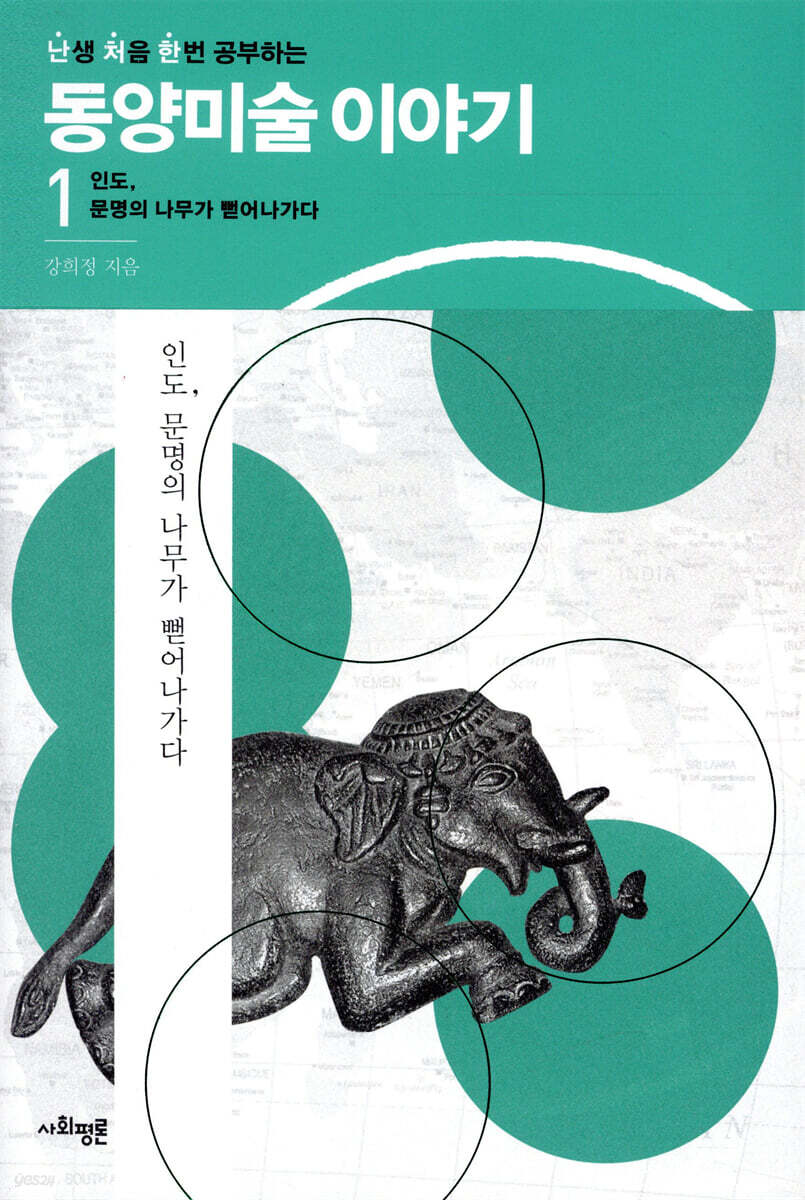
The Embarrassing Story of Oriental Art 1
 |
Description
Book Introduction
"The Embarrassing Story of Oriental Art" is the third journey in the popular "Embarrassing Series," a series of books about all the knowledge in this world that you can study for the first time in your life.
It allows us to break away from the Western-centric perspective, rewrite art history from our own perspective, and look more deeply into ourselves.
The first volume, which begins with this, deals with ancient Indian art.
India may not be the starting point of Oriental art that we expect.
However, the author connects not only our country but also China, Japan, and the entire East through the link of ancient India.
As we follow the lectures that begin with the Indus Valley Civilization and finally reach the main Buddha statue at Seokguram Grotto in Gyeongju, we come to realize how close we are to India.
You will also have the experience of seeing oriental art pieces that you would normally just pass by without seeing them in a new light.
It allows us to break away from the Western-centric perspective, rewrite art history from our own perspective, and look more deeply into ourselves.
The first volume, which begins with this, deals with ancient Indian art.
India may not be the starting point of Oriental art that we expect.
However, the author connects not only our country but also China, Japan, and the entire East through the link of ancient India.
As we follow the lectures that begin with the Indus Valley Civilization and finally reach the main Buddha statue at Seokguram Grotto in Gyeongju, we come to realize how close we are to India.
You will also have the experience of seeing oriental art pieces that you would normally just pass by without seeing them in a new light.
- You can preview some of the book's contents.
Preview
index
Ⅰ In Search of the Origins of Eastern Civilization - Oriental Art Around Us
01 Ordinary is great
02 Incredible India! Incredible India?
Ⅱ The Birth of India - Civilization on the Indus River
01 Suninders, overturning stereotypes
02 In a planned city 4500 years ago
03 Creating the ideal body
Ⅲ Truth Triumphs - The Birth of Buddhism and the Age of Stupas
01 A new wind sweeping across India
02 The sun rises in the east and sets in the west.
It started from the 03 tower
04 The story becomes vivid when captured in stone
05 From Stupa to Tower
Ⅳ Beyond India to Asia, Beyond Faith to Art - The Birth of Buddhist Statues
01 Different eyes to look at people
02 A 500-year taboo is broken
01 Ordinary is great
02 Incredible India! Incredible India?
Ⅱ The Birth of India - Civilization on the Indus River
01 Suninders, overturning stereotypes
02 In a planned city 4500 years ago
03 Creating the ideal body
Ⅲ Truth Triumphs - The Birth of Buddhism and the Age of Stupas
01 A new wind sweeping across India
02 The sun rises in the east and sets in the west.
It started from the 03 tower
04 The story becomes vivid when captured in stone
05 From Stupa to Tower
Ⅳ Beyond India to Asia, Beyond Faith to Art - The Birth of Buddhist Statues
01 Different eyes to look at people
02 A 500-year taboo is broken
Detailed image

Into the book
Art contains the history and culture of those who created it, that is, the world.
Whether intentionally or not, we have seen the world through a Western lens, but that is only one perspective among many.
Of course, there is no big problem if you look at the world as you know it and as you are used to.
Still, it's worth the effort to break out of the closed mold.
It's like waking up from an egg to open up a wider world.
Because understanding Oriental art, and even the Orient, is about understanding ourselves.
Only then can we discover aspects of ourselves we never knew existed.
More than anything, I hope this journey will serve as a window through which we can look around us.
I promise you that the world you encounter will be much more colorful than the previous one.
--- p.42, from Part 1, Chapter 1, “Ordinary is Great”
To understand the true value of ancient relics, a different mindset is required.
It's imagination.
Let's say you were digging the ground when no one knew about comb-pattern pottery and accidentally discovered it.
What do you think? (…) Some people might recognize it as a great discovery at first sight, but most people won’t.
Since it was my first time seeing it, I would just pass it by without thinking, thinking, 'Who buried a broken flower pot?'
Then, even if you make a great discovery, it is of no use.
The story begins when you can ask, 'Could it be that this was used a long time ago?'
--- p.83~84, from Part 2, Chapter 1, “Sanders Who Overturned Stereotypes”
To make something tactile and tactile just by looking at it is something that only sculpture can do.
(…) Indian sculptures are so good at expressing the feeling of flesh that you just want to touch them.
That's why when I go to a museum, I tell myself, 'I shouldn't touch it, I shouldn't touch it,' but I find myself reaching for it.
--- p.165, from Part 2, Chapter 3, “Creating the Ideal Body”
Have you ever heard the greeting "Become a Buddha" at a temple? It's written with the character "成" (to become) and the character "불" (佛), meaning to become a Buddha.
We offer our greetings to everyone who comes to the temple to become a Buddha.
(…) Ultimately, it is the idea of equality that everyone can become a Buddha through enlightenment.
That must have been the most important message that Buddhism wanted to convey to people, even while embracing existing traditions.
That powerful message slowly lit a fire in the hearts of the Indian people.
--- p.212, from Part 3, Chapter 1, “A New Wind Sweeping India”
This is the 3rd century BC.
There was a time when I wanted to draw, but didn't have the right materials.
Indian paintings did not appear until 700 years later.
It appears later when the construction of stone cave temples begins.
(…) For that reason, Indians seem to have been more persistent in their observation and effort when creating sculptures.
The delayed development of alternative media of expression may have actually led to the development of realistic physical expressions that are rare in other regions.
--- p.256, from Part 3, Chapter 2, “The sun rises in the east and sets in the west”
Looking back, it was all thanks to sculpture that the stories that had been passed down by word of mouth in India were able to reach us.
It all started with carving stories into stones to be placed in the stupa.
Because of the sculpture, the life of Buddha and the Buddhist 'law' would have come to life vividly for the people of that time, like black and white film being changed to color film.
That power spread beyond China and Korea to Japan, and created new art.
The Buddhism we know is the result of this process.
Ultimately, the stories of those who survived on the rocks are what unite Asia today.
--- p.390, from Part 3, Chapter 4, “Stories Come to Life in Stone”
Sometimes I think like this.
The fact that we can see Buddhist statues just by going to a nearby temple is because the Kushan Empire spread Buddhism widely. Isn't it also thanks to that that the main Buddha statue at Seokguram Grotto in Gyeongju, which you must visit at least once, was created?
The visual symbols that make Buddha Buddha and the numerous cultures that influenced Buddhist statues from Greece and Rome to West Asia and Central Asia were newly fused in the Kushan Empire and passed on to our country.
We are seeing the results here on earth.
--- p.494, from Part 4, Chapter 2, “A 500-Year Taboo is Broken”
I wonder what kind of East each of us will encounter at the end of our lecture.
And I hope that you will have the moment to fall in love with Oriental art, just like I did.
I don't know what the trigger was.
Because love comes at unexpected moments.
It's not like someone can force you to come.
I just hope that during this journey, for which we have diligently prepared, we can all enjoy art from our own perspectives.
Whether intentionally or not, we have seen the world through a Western lens, but that is only one perspective among many.
Of course, there is no big problem if you look at the world as you know it and as you are used to.
Still, it's worth the effort to break out of the closed mold.
It's like waking up from an egg to open up a wider world.
Because understanding Oriental art, and even the Orient, is about understanding ourselves.
Only then can we discover aspects of ourselves we never knew existed.
More than anything, I hope this journey will serve as a window through which we can look around us.
I promise you that the world you encounter will be much more colorful than the previous one.
--- p.42, from Part 1, Chapter 1, “Ordinary is Great”
To understand the true value of ancient relics, a different mindset is required.
It's imagination.
Let's say you were digging the ground when no one knew about comb-pattern pottery and accidentally discovered it.
What do you think? (…) Some people might recognize it as a great discovery at first sight, but most people won’t.
Since it was my first time seeing it, I would just pass it by without thinking, thinking, 'Who buried a broken flower pot?'
Then, even if you make a great discovery, it is of no use.
The story begins when you can ask, 'Could it be that this was used a long time ago?'
--- p.83~84, from Part 2, Chapter 1, “Sanders Who Overturned Stereotypes”
To make something tactile and tactile just by looking at it is something that only sculpture can do.
(…) Indian sculptures are so good at expressing the feeling of flesh that you just want to touch them.
That's why when I go to a museum, I tell myself, 'I shouldn't touch it, I shouldn't touch it,' but I find myself reaching for it.
--- p.165, from Part 2, Chapter 3, “Creating the Ideal Body”
Have you ever heard the greeting "Become a Buddha" at a temple? It's written with the character "成" (to become) and the character "불" (佛), meaning to become a Buddha.
We offer our greetings to everyone who comes to the temple to become a Buddha.
(…) Ultimately, it is the idea of equality that everyone can become a Buddha through enlightenment.
That must have been the most important message that Buddhism wanted to convey to people, even while embracing existing traditions.
That powerful message slowly lit a fire in the hearts of the Indian people.
--- p.212, from Part 3, Chapter 1, “A New Wind Sweeping India”
This is the 3rd century BC.
There was a time when I wanted to draw, but didn't have the right materials.
Indian paintings did not appear until 700 years later.
It appears later when the construction of stone cave temples begins.
(…) For that reason, Indians seem to have been more persistent in their observation and effort when creating sculptures.
The delayed development of alternative media of expression may have actually led to the development of realistic physical expressions that are rare in other regions.
--- p.256, from Part 3, Chapter 2, “The sun rises in the east and sets in the west”
Looking back, it was all thanks to sculpture that the stories that had been passed down by word of mouth in India were able to reach us.
It all started with carving stories into stones to be placed in the stupa.
Because of the sculpture, the life of Buddha and the Buddhist 'law' would have come to life vividly for the people of that time, like black and white film being changed to color film.
That power spread beyond China and Korea to Japan, and created new art.
The Buddhism we know is the result of this process.
Ultimately, the stories of those who survived on the rocks are what unite Asia today.
--- p.390, from Part 3, Chapter 4, “Stories Come to Life in Stone”
Sometimes I think like this.
The fact that we can see Buddhist statues just by going to a nearby temple is because the Kushan Empire spread Buddhism widely. Isn't it also thanks to that that the main Buddha statue at Seokguram Grotto in Gyeongju, which you must visit at least once, was created?
The visual symbols that make Buddha Buddha and the numerous cultures that influenced Buddhist statues from Greece and Rome to West Asia and Central Asia were newly fused in the Kushan Empire and passed on to our country.
We are seeing the results here on earth.
--- p.494, from Part 4, Chapter 2, “A 500-Year Taboo is Broken”
I wonder what kind of East each of us will encounter at the end of our lecture.
And I hope that you will have the moment to fall in love with Oriental art, just like I did.
I don't know what the trigger was.
Because love comes at unexpected moments.
It's not like someone can force you to come.
I just hope that during this journey, for which we have diligently prepared, we can all enjoy art from our own perspectives.
--- p.498, from Part 4, Chapter 2, “A 500-Year Taboo is Broken”
Publisher's Review
★ The third installment in the trusted "Awkward Series"! Packed with the best of "Awkward Art Stories" and "Awkward Classics Class"!
★ Volumes 1 and 2, covering the art of ancient India, the birthplace of Buddhism, a worldview that connects Asia, and ancient China, where a unique worldview of Northeast Asia was created, are being published simultaneously! Reflect on our roots through art!
Oriental Art: How to Understand Ourselves
When most of us think of art, we think of Western painters like Van Gogh or Picasso.
Most books published under the name of art are books on Western art.
It's as if the art we've created on our own land never existed in the first place.
Perhaps, in fact, we have no art to boast about?
Professor Kang Hee-jung, author of “The Embarrassing Story of Oriental Art” (a story about Oriental art studied for the first time in one’s life), answers that this is not the case.
We are simply accustomed to viewing the world and art through a Western lens, and to view Eastern art, we need a story that fits us perfectly.
Art contains the history and culture of those who created it, that is, the world.
This is why “understanding Oriental art, and furthermore, the Orient, is the same as understanding ourselves.”
Of course, understanding the flow of oriental art is not as simple as it sounds.
First of all, the scope of ‘East’ is very vague.
There is also an unimaginably large gap between the general image of Oriental art and actual art.
The well-known genre paintings of Kim Hong-do and Shin Yun-bok, or ink paintings like those of Jeong Seon, are only a part of Oriental art.
The author begins the lectures in the book by making it clear that “the world of Oriental art we are about to explore is much broader and deeper.”
In fact, the Oriental art presented in the book is not a boring or stale relic, as has been easily misunderstood, but rather a colorful trace of life that we have overlooked and overlooked.
The fact that 『The Embarrassing Story of Oriental Art』 was able to overcome many difficulties and see the light of day is thanks to the author, Professor Kang Hee-jung, who has long served as a bridge between academia and the public and has been a self-proclaimed evangelist of Oriental art.
Professor Kang Hee-jung, who has steadily expanded her research scope to include not only Korean and Chinese art, but also Indian and Southeast Asian art, is a rare scholar who has a broad perspective that crisscrosses all of Asia and cleverly interprets the complex and difficult-to-organize flow of Oriental art in everyday language.
As you follow the guidance of Professor Kang Hee-jung, who says she finds the most rewarding connection with people through Oriental art, you'll soon find yourself searching for traces of art all around you.
India is always by our side
The starting point of 『The Embarrassing Story of Oriental Art』 is India.
Because we live in a world that has continued from ancient India.
Many of the words we use, such as lecture, hall, public, and knowledge, have their origins in Buddhist terms created in India.
The Bosingak bell struck on New Year's Day is a work of art, but it is also made for Buddhist rituals.
There are countless other examples.
Through Buddhism, which came from India, we can find connections not only with our ancestors of the distant past, but also with the East, with countries in Asia that seemed to have no connection at all.
If Christianity was the religion that united Europe, then Buddhism was the religion that united Asia.
The story begins by looking back at the pre-Indus and Indus civilizations in India, which led to the birth of Buddhism.
The Indus Valley Civilization, which was a relatively equal society, disappeared with the arrival of the Aryans, who created the caste system, but this inequality ultimately brought about great innovation.
This is the birth of Buddhism.
If Indian society had been egalitarian throughout, the cry of Buddhism would not have spread with such great resonance.
And the first object of worship and work of art put forward in Buddhism was the pagoda.
The sculptures that adorned those first pagodas contain the past and present lives of the Buddha, as well as the hearts of those who supported the sculptures and prayed for a better next life.
It took about 500 years from the time the first pagoda was built for the first Buddha statue to be created.
And then, after another 200 years, Buddhism was introduced to our country.
The main Buddha statue at Seokguram Grotto in Gyeongju, which we love so much, is also a work that came out under this trend.
The inner strength of the 'embarrassing series' is intact
"The Embarrassing Story of Oriental Art" is the third journey in the popular "Embarrassing Series," a series of books about all the knowledge in this world that you can study for the first time in your life.
Like the book that opened the series, 『Awkward Art Story』 (by Yang Jeong-mu), it allows readers to read the illustrations comfortably without turning the pages, and like the book that followed, 『Awkward Classics Class』 (by Min Eun-gi), it provides a variety of materials that could not be shown in the main text through QR codes.
As with previous series, the dialogue between the professor and the virtual reader lowers the threshold for appreciating unfamiliar art, and illustrations drawn by an illustrator specializing in Oriental painting are included at appropriate places to aid the reader's understanding.
Also, as the theme is Oriental art, we did not lose sight of our goal of getting to know ourselves by actively featuring our country's art throughout.
These days, the power of culture is more prominent than ever.
Eastern culture is our precious cultural asset and foundation, just like Greco-Roman mythology is to the West.
"The Embarrassing Story of Oriental Art" is an ambitious journey that seeks to delve into that vast culture.
At the end of that path, readers will discover a beauty that they can, for the first time in their lives, consider completely their own.
★ Volumes 1 and 2, covering the art of ancient India, the birthplace of Buddhism, a worldview that connects Asia, and ancient China, where a unique worldview of Northeast Asia was created, are being published simultaneously! Reflect on our roots through art!
Oriental Art: How to Understand Ourselves
When most of us think of art, we think of Western painters like Van Gogh or Picasso.
Most books published under the name of art are books on Western art.
It's as if the art we've created on our own land never existed in the first place.
Perhaps, in fact, we have no art to boast about?
Professor Kang Hee-jung, author of “The Embarrassing Story of Oriental Art” (a story about Oriental art studied for the first time in one’s life), answers that this is not the case.
We are simply accustomed to viewing the world and art through a Western lens, and to view Eastern art, we need a story that fits us perfectly.
Art contains the history and culture of those who created it, that is, the world.
This is why “understanding Oriental art, and furthermore, the Orient, is the same as understanding ourselves.”
Of course, understanding the flow of oriental art is not as simple as it sounds.
First of all, the scope of ‘East’ is very vague.
There is also an unimaginably large gap between the general image of Oriental art and actual art.
The well-known genre paintings of Kim Hong-do and Shin Yun-bok, or ink paintings like those of Jeong Seon, are only a part of Oriental art.
The author begins the lectures in the book by making it clear that “the world of Oriental art we are about to explore is much broader and deeper.”
In fact, the Oriental art presented in the book is not a boring or stale relic, as has been easily misunderstood, but rather a colorful trace of life that we have overlooked and overlooked.
The fact that 『The Embarrassing Story of Oriental Art』 was able to overcome many difficulties and see the light of day is thanks to the author, Professor Kang Hee-jung, who has long served as a bridge between academia and the public and has been a self-proclaimed evangelist of Oriental art.
Professor Kang Hee-jung, who has steadily expanded her research scope to include not only Korean and Chinese art, but also Indian and Southeast Asian art, is a rare scholar who has a broad perspective that crisscrosses all of Asia and cleverly interprets the complex and difficult-to-organize flow of Oriental art in everyday language.
As you follow the guidance of Professor Kang Hee-jung, who says she finds the most rewarding connection with people through Oriental art, you'll soon find yourself searching for traces of art all around you.
India is always by our side
The starting point of 『The Embarrassing Story of Oriental Art』 is India.
Because we live in a world that has continued from ancient India.
Many of the words we use, such as lecture, hall, public, and knowledge, have their origins in Buddhist terms created in India.
The Bosingak bell struck on New Year's Day is a work of art, but it is also made for Buddhist rituals.
There are countless other examples.
Through Buddhism, which came from India, we can find connections not only with our ancestors of the distant past, but also with the East, with countries in Asia that seemed to have no connection at all.
If Christianity was the religion that united Europe, then Buddhism was the religion that united Asia.
The story begins by looking back at the pre-Indus and Indus civilizations in India, which led to the birth of Buddhism.
The Indus Valley Civilization, which was a relatively equal society, disappeared with the arrival of the Aryans, who created the caste system, but this inequality ultimately brought about great innovation.
This is the birth of Buddhism.
If Indian society had been egalitarian throughout, the cry of Buddhism would not have spread with such great resonance.
And the first object of worship and work of art put forward in Buddhism was the pagoda.
The sculptures that adorned those first pagodas contain the past and present lives of the Buddha, as well as the hearts of those who supported the sculptures and prayed for a better next life.
It took about 500 years from the time the first pagoda was built for the first Buddha statue to be created.
And then, after another 200 years, Buddhism was introduced to our country.
The main Buddha statue at Seokguram Grotto in Gyeongju, which we love so much, is also a work that came out under this trend.
The inner strength of the 'embarrassing series' is intact
"The Embarrassing Story of Oriental Art" is the third journey in the popular "Embarrassing Series," a series of books about all the knowledge in this world that you can study for the first time in your life.
Like the book that opened the series, 『Awkward Art Story』 (by Yang Jeong-mu), it allows readers to read the illustrations comfortably without turning the pages, and like the book that followed, 『Awkward Classics Class』 (by Min Eun-gi), it provides a variety of materials that could not be shown in the main text through QR codes.
As with previous series, the dialogue between the professor and the virtual reader lowers the threshold for appreciating unfamiliar art, and illustrations drawn by an illustrator specializing in Oriental painting are included at appropriate places to aid the reader's understanding.
Also, as the theme is Oriental art, we did not lose sight of our goal of getting to know ourselves by actively featuring our country's art throughout.
These days, the power of culture is more prominent than ever.
Eastern culture is our precious cultural asset and foundation, just like Greco-Roman mythology is to the West.
"The Embarrassing Story of Oriental Art" is an ambitious journey that seeks to delve into that vast culture.
At the end of that path, readers will discover a beauty that they can, for the first time in their lives, consider completely their own.
GOODS SPECIFICS
- Publication date: February 16, 2022
- Page count, weight, size: 512 pages | 810g | 152*225*30mm
- ISBN13: 9791162732069
- ISBN10: 1162732067
You may also like
카테고리
korean


korean

![GQ KOREA Mark (Monthly): December [2025]](http://librairie.coreenne.fr/cdn/shop/files/8ef265dbbfbf186523ed75ba7319009d.jpg?v=1765340328&width=3840)


