

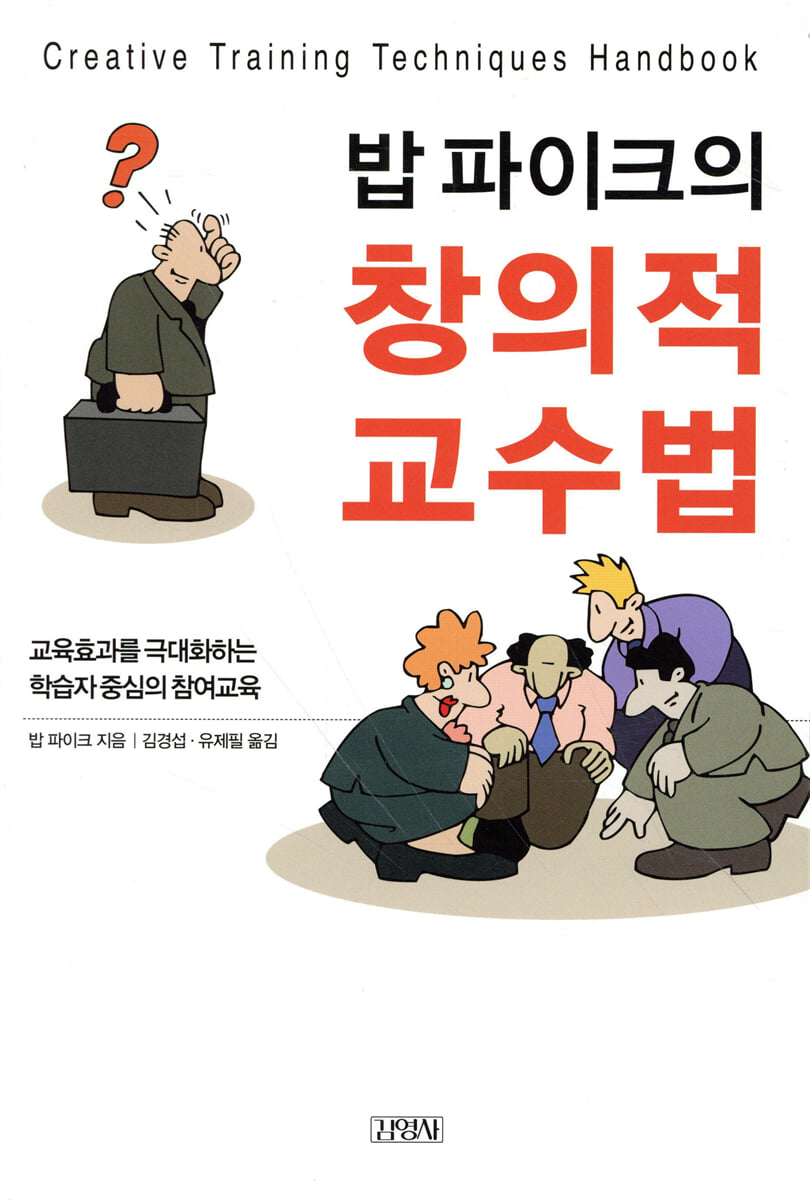
Bob Pike's Creative Teaching Method
 |
Description
Book Introduction
'Creative teaching' refers to a participant-centered educational technique that encourages and guides students to become active learners who can create knowledge rather than mere recipients of knowledge.
This is a training program that focuses on "how to learn most effectively from the perspective of students and participants" rather than "how to teach," and emphasizes the entire process from the planning stage of education to implementation and achievement of results, while developing creative and applicable human resources.
To this end, the author divides the lecture into eight steps and provides know-how to effectively prepare lectures, motivate participants, and keep them engaged.
This is a training program that focuses on "how to learn most effectively from the perspective of students and participants" rather than "how to teach," and emphasizes the entire process from the planning stage of education to implementation and achievement of results, while developing creative and applicable human resources.
To this end, the author divides the lecture into eight steps and provides know-how to effectively prepare lectures, motivate participants, and keep them engaged.
index
1.
The Origins of Creative Education
2.
Preparing a presentation
3.
Let's get motivated
4.
Visual teaching aids
5.
Group participation
6.
Creating creative teaching materials
7.
Creating Effective Teaching Materials
8.
Presentation techniques
9.
Adapt your training program to your needs
10.
Learning through diagnostic tools
11.
Modification of existing educational programs
12.
Participant-Centered Teaching Methods for Technology Education
13.
Participant-Centered Teaching Methods for Computer Education
14.
General theory and methods of e-Learning
15.
Participant Management Techniques
16.
finish
Appendix 1.
Other List
Appendix 2.
Development or purchase of training programs
Appendix 3. OHP Slide Preparation and Presentation Techniques
The Origins of Creative Education
2.
Preparing a presentation
3.
Let's get motivated
4.
Visual teaching aids
5.
Group participation
6.
Creating creative teaching materials
7.
Creating Effective Teaching Materials
8.
Presentation techniques
9.
Adapt your training program to your needs
10.
Learning through diagnostic tools
11.
Modification of existing educational programs
12.
Participant-Centered Teaching Methods for Technology Education
13.
Participant-Centered Teaching Methods for Computer Education
14.
General theory and methods of e-Learning
15.
Participant Management Techniques
16.
finish
Appendix 1.
Other List
Appendix 2.
Development or purchase of training programs
Appendix 3. OHP Slide Preparation and Presentation Techniques
Publisher's Review
Don't lecture, involve!
The globally acclaimed teaching bible, Creative Teaching, has been released in its 3rd revised edition!
Creative teaching refers to a participant-centered educational concept that promotes the motto of ‘Instructor-led, participant-centered.’
The creative teaching method, founded by Bob Pike, a globally recognized teaching expert, has been passed on to instructors, consultants, managers, and executives around the world for over 30 years. The Creative Training Techniques Handbook, which contains actual field teaching know-how, has also been loved as a teaching method bible.
The recently published Korean edition of "Bob Pike's Creative Teaching" is significant in that it fully reflects the revised third edition published last year and includes the latest teaching methods, including computer education and e-learning.
What is creative teaching?
Creative teaching is not a collection of tricks or techniques, but rather a system that helps people learn effectively by enhancing their learning, memory, and practical abilities.
This training program focuses on achieving results, which is considered important in real-world work. The system is flexible, continuously incorporating the latest research findings and new ideas while maintaining the fundamental principles.
And unlike general teaching methods, it focuses on encouraging participant participation rather than instructor intervention.
Some of the basic principles of creative teaching include:
Rule 1: Adults are like oversized children.
Rather than relying on existing experiences, we must have opportunities to experience things firsthand, like children do through trial and error through play.
Rule 2: People don't argue about their own information and opinions.
People will be more receptive to the information if the instructor teaches them only the 20% they haven't discovered through small group discussions, rather than telling them everything.
Rule 3: Learning is directly proportional to fun.
If participants can have fun through fun, humor, and entertainment, it can enhance the learning process and bring more benefits to the participants.
Principle 4: Learning is difficult unless behavior changes.
The purpose of education is not to know what you know, but to acquire the skills to do it.
Principle 5: The father has the mother, but the child has no freedom.
To translate, it means, 'Just because mom or dad knows, doesn't mean the child knows.'
In order for participants to properly complete the training, the instructor must first have an accurate understanding of the content.
14 Creative Teaching Techniques of Successful Instructors
1.
Preparing for Your Presentation: How to Get a Great Response and Results Before You Begin
2.
Motivate participants: Encourage participants to continue learning even after the training is over.
3.
Use Visual Aids: How to Focus Attention During Instruction
4.
Encourage group participation: Facilitate learning outcomes through active participation of participants.
5.
Create creative teaching materials: assignments, case studies, and role-plays that encourage participants to learn from each other and share life experiences.
6.
Create effective teaching materials: Create materials that easily categorize need-to-know information, good-to-know information, and reference materials.
7.
Use Effective Presentation Techniques: How to Prepare and Deliver a Successful Presentation
8.
Adapt your training program to meet your participants' needs: How to fill your needs both inside and outside your organization.
9.
Use Tools That Stimulate Curiosity: How to Learn Through Diagnostic Tools
10.
Transforming Existing Training Programs: How to Transform Lecture-Based Training into Participant-Based Training
11.
Participant-Centered Teaching for Technology Education: Making Boring and Uninteresting Technology Education Interesting and Dynamic
12.
Participant-Centered Teaching Methods for Computer Education: Making Computer Education Interesting and Dynamic
13.
The Power and Method of E-Learning: Separating Fiction from Truth and Utilizing the Latest Technology
14.
Participant Management Techniques: Managing participant learning through participant-centered teaching methods.
The globally acclaimed teaching bible, Creative Teaching, has been released in its 3rd revised edition!
Creative teaching refers to a participant-centered educational concept that promotes the motto of ‘Instructor-led, participant-centered.’
The creative teaching method, founded by Bob Pike, a globally recognized teaching expert, has been passed on to instructors, consultants, managers, and executives around the world for over 30 years. The Creative Training Techniques Handbook, which contains actual field teaching know-how, has also been loved as a teaching method bible.
The recently published Korean edition of "Bob Pike's Creative Teaching" is significant in that it fully reflects the revised third edition published last year and includes the latest teaching methods, including computer education and e-learning.
What is creative teaching?
Creative teaching is not a collection of tricks or techniques, but rather a system that helps people learn effectively by enhancing their learning, memory, and practical abilities.
This training program focuses on achieving results, which is considered important in real-world work. The system is flexible, continuously incorporating the latest research findings and new ideas while maintaining the fundamental principles.
And unlike general teaching methods, it focuses on encouraging participant participation rather than instructor intervention.
Some of the basic principles of creative teaching include:
Rule 1: Adults are like oversized children.
Rather than relying on existing experiences, we must have opportunities to experience things firsthand, like children do through trial and error through play.
Rule 2: People don't argue about their own information and opinions.
People will be more receptive to the information if the instructor teaches them only the 20% they haven't discovered through small group discussions, rather than telling them everything.
Rule 3: Learning is directly proportional to fun.
If participants can have fun through fun, humor, and entertainment, it can enhance the learning process and bring more benefits to the participants.
Principle 4: Learning is difficult unless behavior changes.
The purpose of education is not to know what you know, but to acquire the skills to do it.
Principle 5: The father has the mother, but the child has no freedom.
To translate, it means, 'Just because mom or dad knows, doesn't mean the child knows.'
In order for participants to properly complete the training, the instructor must first have an accurate understanding of the content.
14 Creative Teaching Techniques of Successful Instructors
1.
Preparing for Your Presentation: How to Get a Great Response and Results Before You Begin
2.
Motivate participants: Encourage participants to continue learning even after the training is over.
3.
Use Visual Aids: How to Focus Attention During Instruction
4.
Encourage group participation: Facilitate learning outcomes through active participation of participants.
5.
Create creative teaching materials: assignments, case studies, and role-plays that encourage participants to learn from each other and share life experiences.
6.
Create effective teaching materials: Create materials that easily categorize need-to-know information, good-to-know information, and reference materials.
7.
Use Effective Presentation Techniques: How to Prepare and Deliver a Successful Presentation
8.
Adapt your training program to meet your participants' needs: How to fill your needs both inside and outside your organization.
9.
Use Tools That Stimulate Curiosity: How to Learn Through Diagnostic Tools
10.
Transforming Existing Training Programs: How to Transform Lecture-Based Training into Participant-Based Training
11.
Participant-Centered Teaching for Technology Education: Making Boring and Uninteresting Technology Education Interesting and Dynamic
12.
Participant-Centered Teaching Methods for Computer Education: Making Computer Education Interesting and Dynamic
13.
The Power and Method of E-Learning: Separating Fiction from Truth and Utilizing the Latest Technology
14.
Participant Management Techniques: Managing participant learning through participant-centered teaching methods.
GOODS SPECIFICS
- Date of issue: July 5, 2004
- Page count, weight, size: 396 pages | 759g | 153*224*30mm
- ISBN13: 9788934911333
- ISBN10: 8934911336
You may also like
카테고리
korean


korean

![GQ KOREA Mark (Monthly): December [2025]](http://librairie.coreenne.fr/cdn/shop/files/8ef265dbbfbf186523ed75ba7319009d.jpg?v=1765340328&width=3840)


