

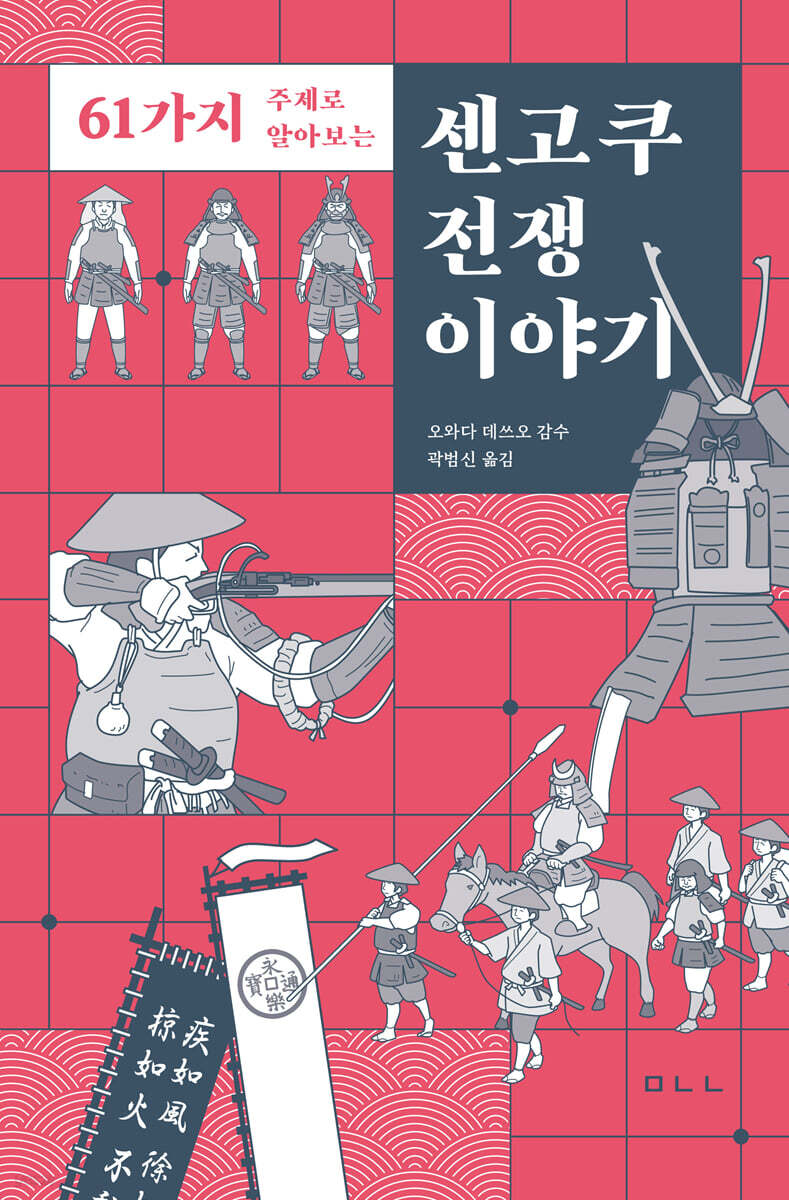
The Story of the Sengoku War
 |
Description
Book Introduction
The Sengoku period in Japan, which lasted for about 100 years starting in the mid-15th century, was a time when numerous local lords (daimyo) fiercely fought for the survival and prosperity of their families. It was also a time when Japan began to accept Western civilization through exchanges with European maritime powers, represented by the introduction of firearms.
It is also a period worth examining from the perspective of war history, as it saw major changes in tactics based on the spread of new weapons such as cannons and muskets, and the activities of ashigaru (foot soldiers).
This book covers a wide range of topics, from weapons and tactics to diplomacy and post-war management, focusing on how the wars and battles of the Sengoku period were actually fought.
Although it is not a specialized book, the information it covers is quite specific and contains much that may be difficult to understand even for those interested in the Sengoku period.
The greatest strength of this book is that it conveys information that is difficult to explain through text alone in an easy-to-understand manner through an appropriate combination of text and illustrations.
Given the paucity of books on Japan's Warring States period, we hope the publication of this Korean edition will satisfy the interest of readers interested in the period.
It is also a period worth examining from the perspective of war history, as it saw major changes in tactics based on the spread of new weapons such as cannons and muskets, and the activities of ashigaru (foot soldiers).
This book covers a wide range of topics, from weapons and tactics to diplomacy and post-war management, focusing on how the wars and battles of the Sengoku period were actually fought.
Although it is not a specialized book, the information it covers is quite specific and contains much that may be difficult to understand even for those interested in the Sengoku period.
The greatest strength of this book is that it conveys information that is difficult to explain through text alone in an easy-to-understand manner through an appropriate combination of text and illustrations.
Given the paucity of books on Japan's Warring States period, we hope the publication of this Korean edition will satisfy the interest of readers interested in the period.
- You can preview some of the book's contents.
Preview
index
To begin with
Sengoku 1: Mastering the Attributes and Battles with Representative Sengoku Daimyo
Sengoku 2: Learning through Attributes: Military Organization of the Sengoku Period
The evolution of Sengoku III combat styles, learned through attributes.
Chapter 1: The Laws of Battle
· Battles during the Sengoku period had rules and order.
· Victory or defeat is determined by formation.
· How are the commander's orders conveyed?
· You can win with a small force if you launch a surprise attack!?
· A 'decoy operation' where you pretend to be defeated and then annihilate your opponent.
· When in a state of calm, provoke the opponent.
Salt, Bluff, and Words - Ingenious Strategies to Decide the Match
· Initiate an attack with 'Ah, ah' and 'Oh!'
Fighting isn't just for men! Female warriors from the Sengoku period
· Ashigaru's essential equipment and spear
· Overwhelm your opponents with numbers! Group tactics using long spears.
· A long spear can be used as a clothesline or as a ladder!?
· The pride of the warrior: the sword was also used by the Ashigaru
· A deadly sword technique to defeat enemies from all sides!
· Intrusion, wiretapping, and river crossing - the wide range of uses of ninja tools
· A bow boasting a range of 400m
· The cannon turns an amateur into a proper soldier.
· An invincible unit equipped with cannons, bows, and spears
· Use new and old weapons appropriately to suppress long-range combat.
· Sengoku's strongest combat weapon: the cannon
· There were more soldiers killed by stones than by swords!?
· Modern weapons using gunpowder
· Pitching was important not only for its defensive performance but also for its style.
· As the defense was pursued, the face was increasingly covered.
· Armor has been in service for 2,000 years.
· Can a shield block bows and cannons?
· Vital points to target when defeating enemies
· Tactics for defeating fully armed opponents
· Only those with a lot of money could become a knight.
· Differences between mounted warriors and infantry, mounted combat techniques
· The warhorse fought with heavy armor no less than that of a man.
· To find the location of the captain, look for 'Umajirushi' and 'Hatajirushi'!
· Essential items to make you stand out on the battlefield
· How to avoid attacking your allies! Markers to distinguish between enemies.
· Plains, rivers, and castles - places that are easily chosen as battlefields
· Destroy the enemy's ships and throw them into the sea!
· Castles boasting luxurious tenshukakus have been around since the mid-Sengoku period.
· Burn and flood - whatever it takes to take the castle
· Fully prepared to defend the castle
· Column 1 It is rare to see a 'falling star' that causes massive damage!?
Chapter 2: The Law of Dispatch and Advancement
· Before a battle begins, there is a shower of bells and shouts.
· It was a custom of the Sengoku period to consult fortune telling before going on a campaign.
· The hidden protagonist, the 'military', predicted the fortunes of the battle.
· The marches of the Sengoku period were organized around a general.
· A famous supporting character from the Sengoku period who transports supplies for soldiers
· Surprisingly, I was able to eat my fill while on active duty!?
· It was harder to secure something to drink than to eat.
· Underwear from the Sengoku period that allowed you to do your business without taking it off
· How did soldiers sleep during the war?
· Radical treatments of the Sengoku period
· Ashigaru's weapons and armor were either rented or individually paid for.
· There were even cases where people lost money gambling and had their clothes stolen!?
· Column 2: Hot Springs are the Best for Burning Wounds! The Secret Hot Springs Beloved by Takeda Shingen
Chapter 3: The Laws of Secret Operations and Post-War Processing
· The diplomatic strategies of the Sengoku period were terribly cruel.
· Mobilize all possible means - espionage activities during the Sengoku period
· Political maneuvers of the Sengoku period to deceive and drive the enemy into ruin
· Traditional, but surprisingly fast! - The Beacon Relay that conveys your feelings
· Just throw away the corpse anywhere!? The corpse disposal was extremely messy.
· The price of defeat did not end with the confiscation of territory.
· The sad fate of seppuku awaiting the defeated Sengoku warriors.
· How were the achievements of the soldiers who achieved great feats confirmed?
· An award ceremony after a battle where the brave were praised
· Soldiers of the victorious nations were permitted to loot.
· Column 3 The Beautiful Death of Kimura Shigenari, Praised Even by His Enemy Tokugawa Ieyasu
People and their lives during the Sengoku period
Sengoku period chronology
References
Sengoku 1: Mastering the Attributes and Battles with Representative Sengoku Daimyo
Sengoku 2: Learning through Attributes: Military Organization of the Sengoku Period
The evolution of Sengoku III combat styles, learned through attributes.
Chapter 1: The Laws of Battle
· Battles during the Sengoku period had rules and order.
· Victory or defeat is determined by formation.
· How are the commander's orders conveyed?
· You can win with a small force if you launch a surprise attack!?
· A 'decoy operation' where you pretend to be defeated and then annihilate your opponent.
· When in a state of calm, provoke the opponent.
Salt, Bluff, and Words - Ingenious Strategies to Decide the Match
· Initiate an attack with 'Ah, ah' and 'Oh!'
Fighting isn't just for men! Female warriors from the Sengoku period
· Ashigaru's essential equipment and spear
· Overwhelm your opponents with numbers! Group tactics using long spears.
· A long spear can be used as a clothesline or as a ladder!?
· The pride of the warrior: the sword was also used by the Ashigaru
· A deadly sword technique to defeat enemies from all sides!
· Intrusion, wiretapping, and river crossing - the wide range of uses of ninja tools
· A bow boasting a range of 400m
· The cannon turns an amateur into a proper soldier.
· An invincible unit equipped with cannons, bows, and spears
· Use new and old weapons appropriately to suppress long-range combat.
· Sengoku's strongest combat weapon: the cannon
· There were more soldiers killed by stones than by swords!?
· Modern weapons using gunpowder
· Pitching was important not only for its defensive performance but also for its style.
· As the defense was pursued, the face was increasingly covered.
· Armor has been in service for 2,000 years.
· Can a shield block bows and cannons?
· Vital points to target when defeating enemies
· Tactics for defeating fully armed opponents
· Only those with a lot of money could become a knight.
· Differences between mounted warriors and infantry, mounted combat techniques
· The warhorse fought with heavy armor no less than that of a man.
· To find the location of the captain, look for 'Umajirushi' and 'Hatajirushi'!
· Essential items to make you stand out on the battlefield
· How to avoid attacking your allies! Markers to distinguish between enemies.
· Plains, rivers, and castles - places that are easily chosen as battlefields
· Destroy the enemy's ships and throw them into the sea!
· Castles boasting luxurious tenshukakus have been around since the mid-Sengoku period.
· Burn and flood - whatever it takes to take the castle
· Fully prepared to defend the castle
· Column 1 It is rare to see a 'falling star' that causes massive damage!?
Chapter 2: The Law of Dispatch and Advancement
· Before a battle begins, there is a shower of bells and shouts.
· It was a custom of the Sengoku period to consult fortune telling before going on a campaign.
· The hidden protagonist, the 'military', predicted the fortunes of the battle.
· The marches of the Sengoku period were organized around a general.
· A famous supporting character from the Sengoku period who transports supplies for soldiers
· Surprisingly, I was able to eat my fill while on active duty!?
· It was harder to secure something to drink than to eat.
· Underwear from the Sengoku period that allowed you to do your business without taking it off
· How did soldiers sleep during the war?
· Radical treatments of the Sengoku period
· Ashigaru's weapons and armor were either rented or individually paid for.
· There were even cases where people lost money gambling and had their clothes stolen!?
· Column 2: Hot Springs are the Best for Burning Wounds! The Secret Hot Springs Beloved by Takeda Shingen
Chapter 3: The Laws of Secret Operations and Post-War Processing
· The diplomatic strategies of the Sengoku period were terribly cruel.
· Mobilize all possible means - espionage activities during the Sengoku period
· Political maneuvers of the Sengoku period to deceive and drive the enemy into ruin
· Traditional, but surprisingly fast! - The Beacon Relay that conveys your feelings
· Just throw away the corpse anywhere!? The corpse disposal was extremely messy.
· The price of defeat did not end with the confiscation of territory.
· The sad fate of seppuku awaiting the defeated Sengoku warriors.
· How were the achievements of the soldiers who achieved great feats confirmed?
· An award ceremony after a battle where the brave were praised
· Soldiers of the victorious nations were permitted to loot.
· Column 3 The Beautiful Death of Kimura Shigenari, Praised Even by His Enemy Tokugawa Ieyasu
People and their lives during the Sengoku period
Sengoku period chronology
References
GOODS SPECIFICS
- Date of issue: March 2, 2023
- Page count, weight, size: 192 pages | 339g | 152*225*14mm
- ISBN13: 9791197505201
- ISBN10: 1197505202
You may also like
카테고리
korean


korean

![GQ KOREA Mark (Monthly): December [2025]](http://librairie.coreenne.fr/cdn/shop/files/8ef265dbbfbf186523ed75ba7319009d.jpg?v=1765340328&width=3840)


