

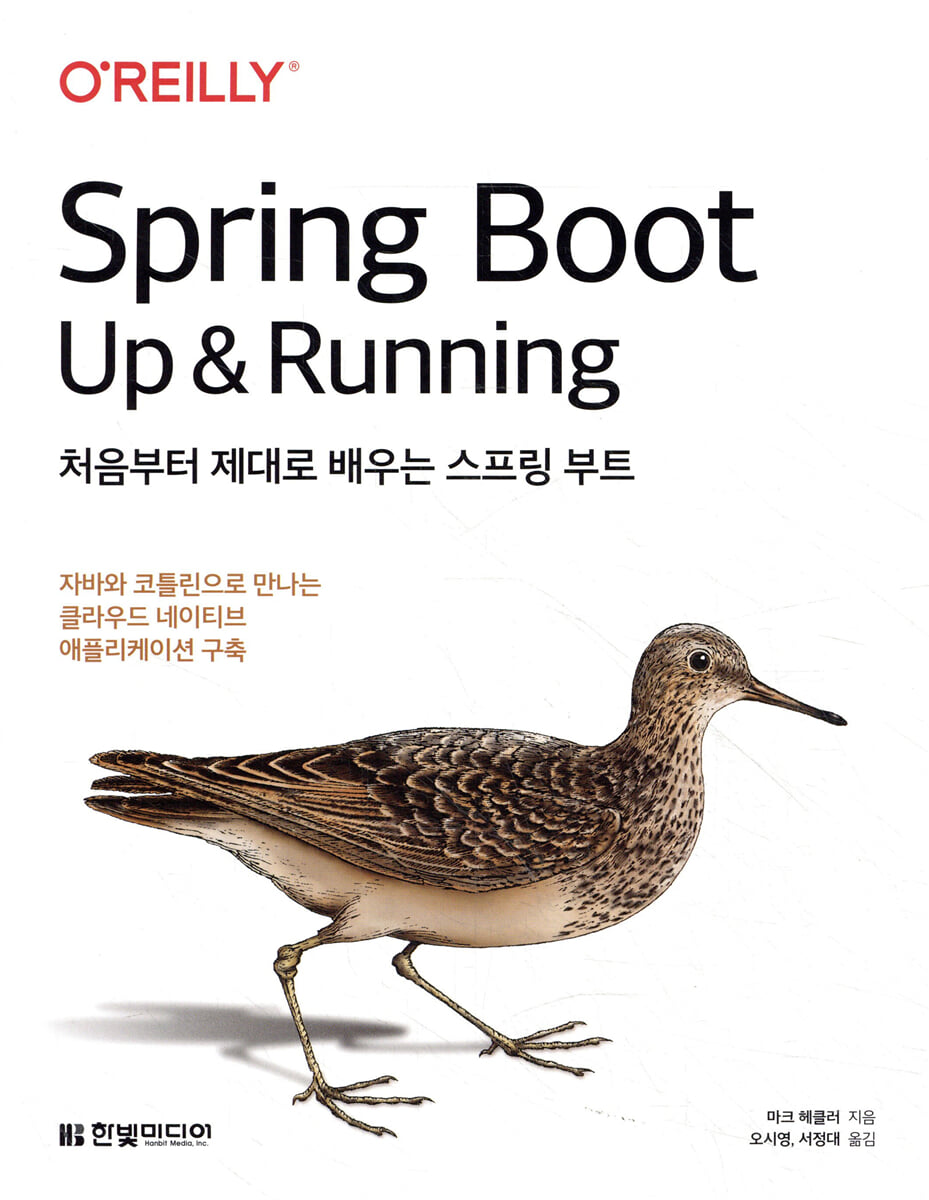
Learning Spring Boot from the Beginner
 |
Description
Book Introduction
Everything about Spring Boot, from tool selection to application security and deployment.
Spring Boot supports both Java and Kotlin languages.
Developers can choose the appropriate language based on their preferences and the characteristics of their project.
This book is designed to provide a quick overview of the strengths of Java, a widely used mature language and the official language of the Spring Framework, and the advantages of Kotlin, a language that allows for concise and secure code.
It also provides insight into which build tool to choose between Maven and Gradle.
From creating an application in Spring Initializer to debugging, deploying, and monitoring, this book covers everything about Spring Boot.
Spring Boot supports both Java and Kotlin languages.
Developers can choose the appropriate language based on their preferences and the characteristics of their project.
This book is designed to provide a quick overview of the strengths of Java, a widely used mature language and the official language of the Spring Framework, and the advantages of Kotlin, a language that allows for concise and secure code.
It also provides insight into which build tool to choose between Maven and Gradle.
From creating an application in Spring Initializer to debugging, deploying, and monitoring, this book covers everything about Spring Boot.
- You can preview some of the book's contents.
Preview
index
CHAPTER 1 Spring Boot
_1.1 Core features of Spring Boot
_1.2 In conclusion
CHAPTER 2 Selecting and Starting Tools
_2.1 Maven vs.
Gradle
_2.2 Java vs.
Kotlin
_2.3 Selecting a Spring Boot version
_2.4 Spring Initializer
_2.5 Using Spring Boot CLI without any hesitation
_2.6 Using an Integrated Development Environment (IDE)
_2.7 Journey to main()
_2.8 In conclusion
CHAPTER 3: YOUR FIRST REST API
_3.1 Why and how to use the API?
_3.2 What is REST and why is it important?
_3.3 API, HTTP method style
_3.4 Starting with GET
_3.5 Believe, but verify
_3.6 In conclusion
CHAPTER 4 DATABASE ACCESS
_4.1 Automatic configuration priming for DB access
_4.2 What you will get in the future
_4.3 Data storage and retrieval
_4.4 Additional polishing
_4.5 In conclusion
CHAPTER 5 APPLICATION SETUP AND INSPECTION
_5.1 Application Settings
_5.2 Automatic Configuration Report
_5.3 Actuator
_5.4 In conclusion
CHAPTER 6 Digging into the Data
_6.1 Entity Definition
_6.2 Template Support
_6.3 Repository Support
_6.4 @Before
_6.5 Creating a Template-Based Service with Redis
_6.6 Converting from template to repository
_6.7 Creating a repository-based service with JPA
_6.8 Creating a repository-based service using a NoSQL document database
_6.9 Creating a repository-based service using a NoSQL graph database
_6.10 In conclusion
CHAPTER 7 Building Applications with Spring MVC
_7.1 What does Spring MVC mean?
_7.2 Interacting with the User with the Template Engine
_7.3 Message Delivery
_7.4 Creating a conversation with WebSockets
_7.5 In conclusion
CHAPTER 8 Reactive Programming with Project Reactor and Spring WebFlux
_8.1 Reactive Programming
_8.2 Project Reactor
_8.3 Tomcat vs.
Netty
_8.4 Reactive Data Access
_8.5 Reactive Thymeleaf
_8.6 RSocket for fully reactive inter-process communication
_8.7 In conclusion
CHAPTER 9 Testing Applications for Production
_9.1 Unit Tests
_9.2 @SpringBootTest
_9.3 Slice Test
_9.4 In conclusion
CHAPTER 10 APPLICATION SECURITY
_10.1 Authentication and Authorization
_10.2 Spring Security Overview
_10.3 Implementing Form-Based Authentication and Authorization with Spring Security
_10.4 Implementing OIDC and OAuth2 for Authentication and Authorization
_10.5 In conclusion
CHAPTER 11 APPLICATION DISTRIBUTION
_11.1 Executable JAR
_11.2 JAR extension
_11.3 Deploying Spring Boot Applications to Containers
_11.4 Utility container image for Spring Boot application testing
_11.5 In conclusion
CHAPTER 12 DIVIDING DEEPER WITH REACTIVE
_12.1 When to use reactive?
_12.2 Testing Reactive Applications
_12.3 Diagnosing and Debugging Reactive Applications
_12.4 In conclusion
_1.1 Core features of Spring Boot
_1.2 In conclusion
CHAPTER 2 Selecting and Starting Tools
_2.1 Maven vs.
Gradle
_2.2 Java vs.
Kotlin
_2.3 Selecting a Spring Boot version
_2.4 Spring Initializer
_2.5 Using Spring Boot CLI without any hesitation
_2.6 Using an Integrated Development Environment (IDE)
_2.7 Journey to main()
_2.8 In conclusion
CHAPTER 3: YOUR FIRST REST API
_3.1 Why and how to use the API?
_3.2 What is REST and why is it important?
_3.3 API, HTTP method style
_3.4 Starting with GET
_3.5 Believe, but verify
_3.6 In conclusion
CHAPTER 4 DATABASE ACCESS
_4.1 Automatic configuration priming for DB access
_4.2 What you will get in the future
_4.3 Data storage and retrieval
_4.4 Additional polishing
_4.5 In conclusion
CHAPTER 5 APPLICATION SETUP AND INSPECTION
_5.1 Application Settings
_5.2 Automatic Configuration Report
_5.3 Actuator
_5.4 In conclusion
CHAPTER 6 Digging into the Data
_6.1 Entity Definition
_6.2 Template Support
_6.3 Repository Support
_6.4 @Before
_6.5 Creating a Template-Based Service with Redis
_6.6 Converting from template to repository
_6.7 Creating a repository-based service with JPA
_6.8 Creating a repository-based service using a NoSQL document database
_6.9 Creating a repository-based service using a NoSQL graph database
_6.10 In conclusion
CHAPTER 7 Building Applications with Spring MVC
_7.1 What does Spring MVC mean?
_7.2 Interacting with the User with the Template Engine
_7.3 Message Delivery
_7.4 Creating a conversation with WebSockets
_7.5 In conclusion
CHAPTER 8 Reactive Programming with Project Reactor and Spring WebFlux
_8.1 Reactive Programming
_8.2 Project Reactor
_8.3 Tomcat vs.
Netty
_8.4 Reactive Data Access
_8.5 Reactive Thymeleaf
_8.6 RSocket for fully reactive inter-process communication
_8.7 In conclusion
CHAPTER 9 Testing Applications for Production
_9.1 Unit Tests
_9.2 @SpringBootTest
_9.3 Slice Test
_9.4 In conclusion
CHAPTER 10 APPLICATION SECURITY
_10.1 Authentication and Authorization
_10.2 Spring Security Overview
_10.3 Implementing Form-Based Authentication and Authorization with Spring Security
_10.4 Implementing OIDC and OAuth2 for Authentication and Authorization
_10.5 In conclusion
CHAPTER 11 APPLICATION DISTRIBUTION
_11.1 Executable JAR
_11.2 JAR extension
_11.3 Deploying Spring Boot Applications to Containers
_11.4 Utility container image for Spring Boot application testing
_11.5 In conclusion
CHAPTER 12 DIVIDING DEEPER WITH REACTIVE
_12.1 When to use reactive?
_12.2 Testing Reactive Applications
_12.3 Diagnosing and Debugging Reactive Applications
_12.4 In conclusion
Publisher's Review
What this book covers
ㆍ How to simplify native application development and deployment
How to build a reactive application as a distributed system
Architecture and approach that improve developer productivity and application portability.
ㆍ How to deploy applications quickly and reliably
ㆍ How to monitor the status of applications and systems
Debugging, testing, and securing cloud-based applications
“The kite flies against the wind.”
_John Neal, in his essay 'Enterprise and Perseverance' in The Weekly Mirror
Welcome to 『Learn Spring Boot Properly from the Beginner』.
It's nice to meet you.
These days, there are many Spring Boot books that are useful in various ways.
There are many good books written by great authors.
But every author has to make big and small decisions that make their book special, such as what to include and what to leave out, and how to present it effectively.
What is secondary to one author may be essential to another.
Like any other developer, we are all developers and we all have our own opinions.
My opinion is this:
There is something missing that would be absolutely essential and extremely helpful if shared with developers who are new to Spring Boot.
And the missing pieces have become more and more apparent as I've met and interacted with developers from all over the world, both those who are proficient and those who are new to Spring Boot.
We all learn different things at different times and in different ways.
That's how I came up with the idea for this book.
If you are new to Spring Boot, or would like to learn more about Spring Boot, consider this:
Wouldn't it always be helpful to have a book covering the basics? This book was written with you in mind.
This book covers the core features of Spring Boot while also providing a brief introduction to how to effectively use these features in real-world applications.
It's an honor to be on this journey with you.
So let's get started! _From the introduction
ㆍ How to simplify native application development and deployment
How to build a reactive application as a distributed system
Architecture and approach that improve developer productivity and application portability.
ㆍ How to deploy applications quickly and reliably
ㆍ How to monitor the status of applications and systems
Debugging, testing, and securing cloud-based applications
“The kite flies against the wind.”
_John Neal, in his essay 'Enterprise and Perseverance' in The Weekly Mirror
Welcome to 『Learn Spring Boot Properly from the Beginner』.
It's nice to meet you.
These days, there are many Spring Boot books that are useful in various ways.
There are many good books written by great authors.
But every author has to make big and small decisions that make their book special, such as what to include and what to leave out, and how to present it effectively.
What is secondary to one author may be essential to another.
Like any other developer, we are all developers and we all have our own opinions.
My opinion is this:
There is something missing that would be absolutely essential and extremely helpful if shared with developers who are new to Spring Boot.
And the missing pieces have become more and more apparent as I've met and interacted with developers from all over the world, both those who are proficient and those who are new to Spring Boot.
We all learn different things at different times and in different ways.
That's how I came up with the idea for this book.
If you are new to Spring Boot, or would like to learn more about Spring Boot, consider this:
Wouldn't it always be helpful to have a book covering the basics? This book was written with you in mind.
This book covers the core features of Spring Boot while also providing a brief introduction to how to effectively use these features in real-world applications.
It's an honor to be on this journey with you.
So let's get started! _From the introduction
GOODS SPECIFICS
- Date of issue: May 8, 2023
- Page count, weight, size: 384 pages | 690g | 183*235*16mm
- ISBN13: 9791169210966
- ISBN10: 1169210961
You may also like
카테고리
korean


korean

![GQ KOREA Mark (Monthly): December [2025]](http://librairie.coreenne.fr/cdn/shop/files/8ef265dbbfbf186523ed75ba7319009d.jpg?v=1765340328&width=3840)


