

Hanok with Hangeul
 |
Description
Book Introduction
Finding Hidden Hangul in Hanok
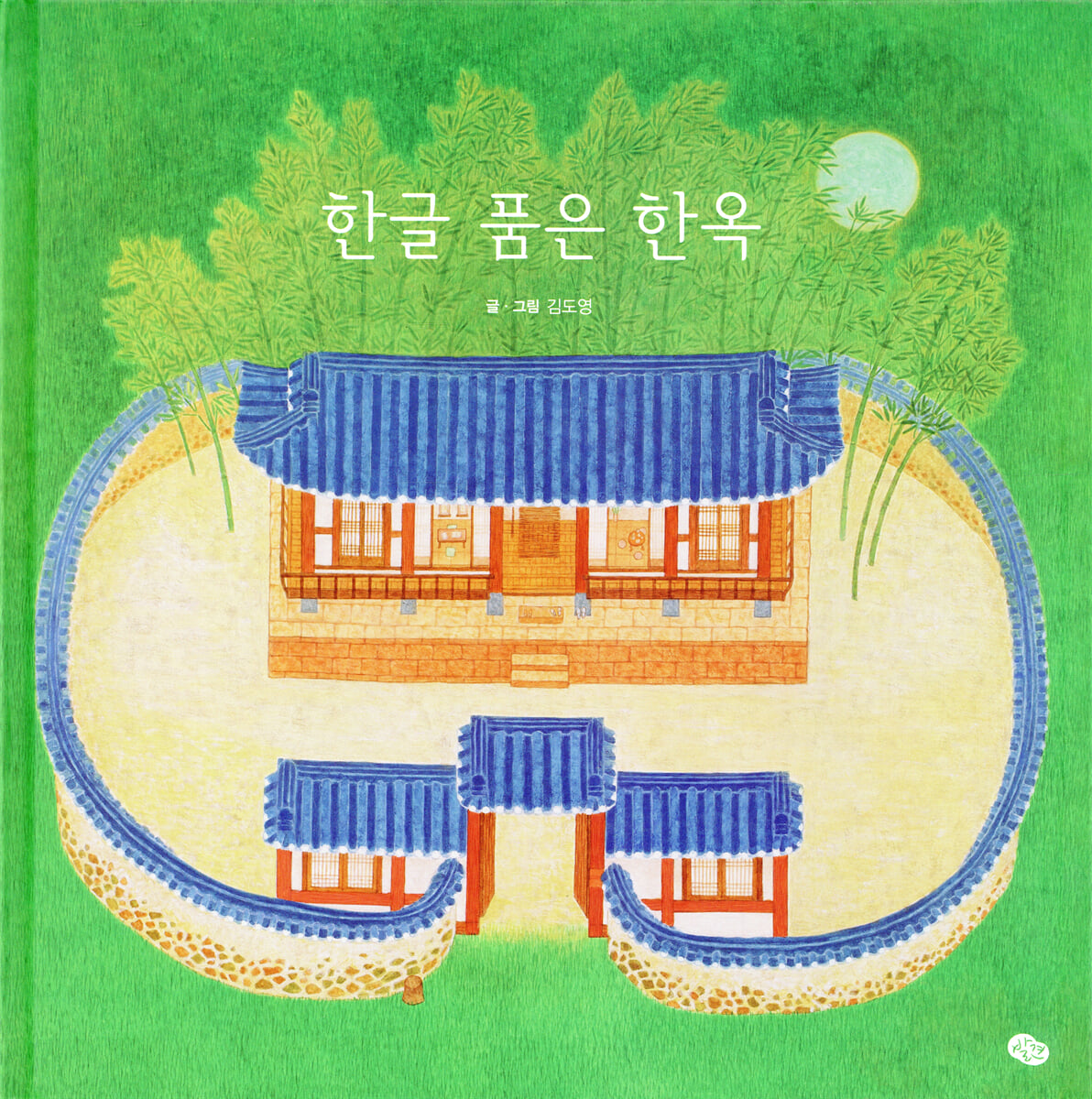
A beautiful picture book combining Korean and Hanok.
Our traditional Korean house, Hanok, was built in accordance with the principles of yin-yang and the five elements and feng shui, but it was also built in a letter-shaped structure to contain the wishes of the heart.
So, when you look at a Hanok from above, it looks like Hangul.
One day, Korean painter Kim Do-young discovered Hangeul in a Hanok (traditional Korean house), and from that day on, he became an artist who builds houses with his paintings.
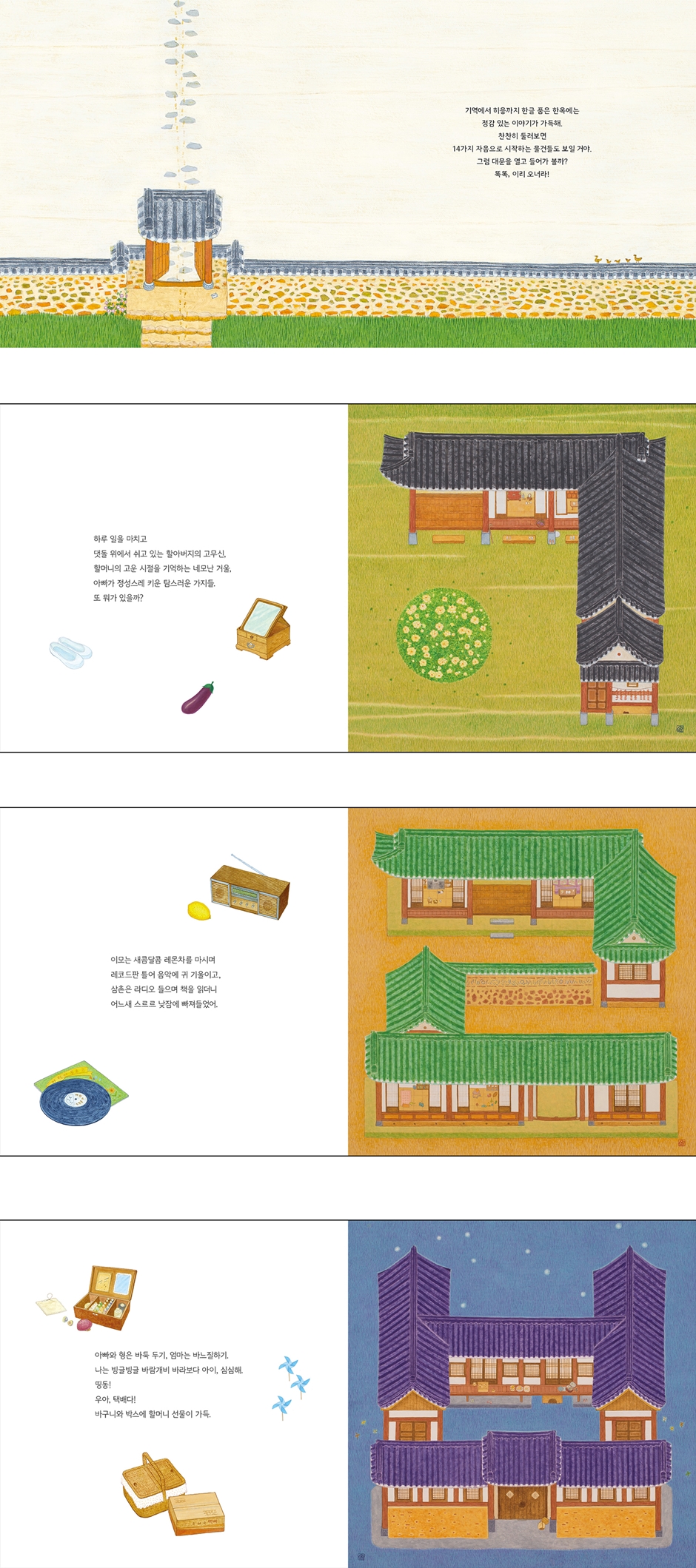
As I was drawing 'Giyeokja Hanok', 'Nieunja Hanok', and 'Diggyeotja Hanok' on Korean paper, I soon completed all 14 Korean consonant-shaped houses.
The author studied and encountered many Hanoks and even drew actual Hanoks. In “Hanok Embracing Hangeul,” you can see historic Hanoks such as Chusa’s House in Yesan, Dosan Seowon in Andong, and Cheonwoogak in Seoul.
If you look closely at the consonant-shaped hanoks from Giyeok to Heeut that appear in 『Hanok Embracing Hangeul』, you can see objects starting with the same consonant positioned here and there under the tiled roofs like their owners.
The artist painted objects inside the house to give us time to pause in front of the painting and look around carefully.
For example, in the M-shaped Hanok, you can find objects such as a mixer, a millstone, and dumplings.
You too can stop by as a guest, look up Hangul, and listen to the stories told throughout the Hanok.
Young readers will learn the Korean consonants from Giyeok to Hieut, and will be able to fully experience the beauty of Hanok, our traditional house.
Moreover, it will be a valuable opportunity to learn about the lives and culture of our ancestors and experience our own unique old sentiments.
A beautiful picture book combining Korean and Hanok.
Our traditional Korean house, Hanok, was built in accordance with the principles of yin-yang and the five elements and feng shui, but it was also built in a letter-shaped structure to contain the wishes of the heart.
So, when you look at a Hanok from above, it looks like Hangul.
One day, Korean painter Kim Do-young discovered Hangeul in a Hanok (traditional Korean house), and from that day on, he became an artist who builds houses with his paintings.
As I was drawing 'Giyeokja Hanok', 'Nieunja Hanok', and 'Diggyeotja Hanok' on Korean paper, I soon completed all 14 Korean consonant-shaped houses.
The author studied and encountered many Hanoks and even drew actual Hanoks. In “Hanok Embracing Hangeul,” you can see historic Hanoks such as Chusa’s House in Yesan, Dosan Seowon in Andong, and Cheonwoogak in Seoul.
If you look closely at the consonant-shaped hanoks from Giyeok to Heeut that appear in 『Hanok Embracing Hangeul』, you can see objects starting with the same consonant positioned here and there under the tiled roofs like their owners.
The artist painted objects inside the house to give us time to pause in front of the painting and look around carefully.
For example, in the M-shaped Hanok, you can find objects such as a mixer, a millstone, and dumplings.
You too can stop by as a guest, look up Hangul, and listen to the stories told throughout the Hanok.
Young readers will learn the Korean consonants from Giyeok to Hieut, and will be able to fully experience the beauty of Hanok, our traditional house.
Moreover, it will be a valuable opportunity to learn about the lives and culture of our ancestors and experience our own unique old sentiments.
- You can preview some of the book's contents.
Preview
Detailed image
GOODS SPECIFICS
- Publication date: July 15, 2022
- Format: Hardcover book binding method guide
- Page count, weight, size: 36 pages | 420g | 255*257*8mm
- ISBN13: 9791164633296
- ISBN10: 1164633295
- KC Certification: Certification Type: Conformity Confirmation
You may also like
카테고리
korean


korean

![GQ KOREA Mark (Monthly): December [2025]](http://librairie.coreenne.fr/cdn/shop/files/8ef265dbbfbf186523ed75ba7319009d.jpg?v=1765340328&width=3840)


