

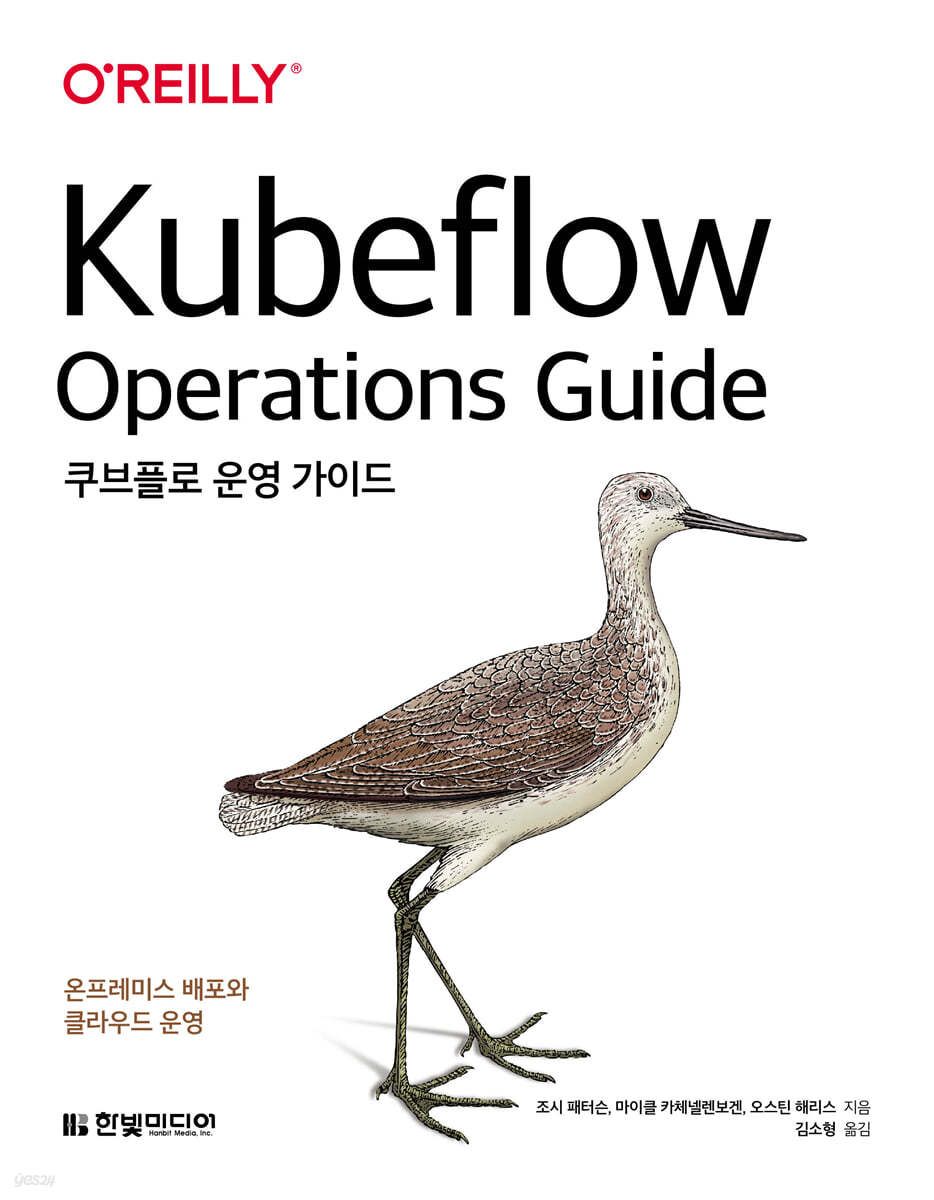
Cubeflow Operation Guide
 |
Description
Book Introduction
A Practical Guide to Planning and Executing a Successful Kubeflow Project
In machine learning applications, ‘building a model’ is just a small step.
The entire process includes developing, orchestrating, deploying, and operating portable and scalable machine learning workloads.
This book guides you through operational planning and execution of Kubernetes projects, making your Kubernetes workflows portable and scalable.
We hope you can easily operate your machine learning applications with the Kubeflow platform, which supports workflows from on-premises to major cloud providers GCP, AWS, and Azure.
In machine learning applications, ‘building a model’ is just a small step.
The entire process includes developing, orchestrating, deploying, and operating portable and scalable machine learning workloads.
This book guides you through operational planning and execution of Kubernetes projects, making your Kubernetes workflows portable and scalable.
We hope you can easily operate your machine learning applications with the Kubeflow platform, which supports workflows from on-premises to major cloud providers GCP, AWS, and Azure.
- You can preview some of the book's contents.
Preview
index
CHAPTER 1: Introduction to Cubeflow
_1.1 Machine Learning in Kubernetes
_1.2 Common Kubeflow Use Cases
_1.3 Components of Kubeflow
_1.4 In conclusion
CHAPTER 2: Kubflow Architecture and Best Practices
_2.1 Overview of Kubeflow Architecture
_2.2 Kubeflow Multi-Tenancy Architecture
_2.3 Jupyter Notebook Architecture
_2.4 Pipeline Architecture
_2.5 Kubeflow Best Practices
_2.6 In conclusion
CHAPTER 3: CUBE FLOW INSTALLATION PLAN
_3.1 Security Plan
_3.2 User
_3.3 Workload
_3.4 GPU Plan
_3.5 Infrastructure Planning
_3.6 Container Management
_3.7 Serverless Container Operation with Knative
_3.8 Size and Growth
_3.9 In conclusion
CHAPTER 4 Installing Kubeflow on-premises
_4.1 Kubeflow Commands
_4.2 Basic Installation Process
_4.3 Accessing and Interacting with Kubeflow
_4.4 Installing Kubeflow
_4.5 In conclusion
CHAPTER 5: Running Google Cloud Kubeflow
_5.1 Google Cloud Platform Overview
_5.2 Installing the Google Cloud SDK
_5.3 Installing Kubeflow on Google Cloud Platform
_5.4 In conclusion
CHAPTER 6: Amazon Web Services Kubeflow Operations
_6.1 Amazon Web Services Overview
_6.2 Sign up for Amazon Web Services
_6.3 Installing the AWS Command Line Interface
_6.4 Kubeflow on Amazon Web Services
_6.5 Using Managed Kubernetes on Amazon EKS
_6.6 Understanding the Deployment Process
_6.7 In conclusion
Chapter 7: Azure Kubernetes Flow Operations
_7.1 Azure Cloud Platform Overview
_7.2 Azure Command Line Interface
_7.3 Installing Kubeflow on Azure Kubernetes
_7.4 Authorizing network access for distribution
_7.5 In conclusion
CHAPTER 8 SERVING AND INTEGRATION WITH MODELS
_8.1 Basic Concepts of Model Management
_8.2 Introduction to KFServing
_8.3 Model Management Using KFServing
_8.4 In conclusion
Appendix A Infrastructure Concepts
Appendix B: Kubernetes Overview
Appendix C: Istio Operations and Kubeflow
_1.1 Machine Learning in Kubernetes
_1.2 Common Kubeflow Use Cases
_1.3 Components of Kubeflow
_1.4 In conclusion
CHAPTER 2: Kubflow Architecture and Best Practices
_2.1 Overview of Kubeflow Architecture
_2.2 Kubeflow Multi-Tenancy Architecture
_2.3 Jupyter Notebook Architecture
_2.4 Pipeline Architecture
_2.5 Kubeflow Best Practices
_2.6 In conclusion
CHAPTER 3: CUBE FLOW INSTALLATION PLAN
_3.1 Security Plan
_3.2 User
_3.3 Workload
_3.4 GPU Plan
_3.5 Infrastructure Planning
_3.6 Container Management
_3.7 Serverless Container Operation with Knative
_3.8 Size and Growth
_3.9 In conclusion
CHAPTER 4 Installing Kubeflow on-premises
_4.1 Kubeflow Commands
_4.2 Basic Installation Process
_4.3 Accessing and Interacting with Kubeflow
_4.4 Installing Kubeflow
_4.5 In conclusion
CHAPTER 5: Running Google Cloud Kubeflow
_5.1 Google Cloud Platform Overview
_5.2 Installing the Google Cloud SDK
_5.3 Installing Kubeflow on Google Cloud Platform
_5.4 In conclusion
CHAPTER 6: Amazon Web Services Kubeflow Operations
_6.1 Amazon Web Services Overview
_6.2 Sign up for Amazon Web Services
_6.3 Installing the AWS Command Line Interface
_6.4 Kubeflow on Amazon Web Services
_6.5 Using Managed Kubernetes on Amazon EKS
_6.6 Understanding the Deployment Process
_6.7 In conclusion
Chapter 7: Azure Kubernetes Flow Operations
_7.1 Azure Cloud Platform Overview
_7.2 Azure Command Line Interface
_7.3 Installing Kubeflow on Azure Kubernetes
_7.4 Authorizing network access for distribution
_7.5 In conclusion
CHAPTER 8 SERVING AND INTEGRATION WITH MODELS
_8.1 Basic Concepts of Model Management
_8.2 Introduction to KFServing
_8.3 Model Management Using KFServing
_8.4 In conclusion
Appendix A Infrastructure Concepts
Appendix B: Kubernetes Overview
Appendix C: Istio Operations and Kubeflow
Detailed image

Publisher's Review
How to Run Machine Learning Applications Easier with Kubeflow
Kubeflow is a tool that allows you to easily and intuitively operate machine learning workflows running in a Kubernetes environment in a single environment.
All steps, including writing code, creating and allocating containers, training models, serving, progressing machine learning projects, deployment, and security, can be handled with KubeFlow.
Kubeflow allows you to build machine learning workflows on Kubernetes without having to delve into the detailed internals.
This book covers Kubeflow's core features, how to apply Kubeflow in various environments (AWS, GCP, Azure), and how to deploy it, allowing you to efficiently operate your machine learning applications.
Key Contents
- Understanding Kubeflow architecture and best practices for using the Kubeflow platform
- Understanding the Kubeflow deployment process
Installing Kubeflow on an existing on-premises Kubernetes cluster
Deploying Kubernetes on GCP, AWS, and Azure
-Developing and deploying machine learning models using KFServing
Kubeflow is a tool that allows you to easily and intuitively operate machine learning workflows running in a Kubernetes environment in a single environment.
All steps, including writing code, creating and allocating containers, training models, serving, progressing machine learning projects, deployment, and security, can be handled with KubeFlow.
Kubeflow allows you to build machine learning workflows on Kubernetes without having to delve into the detailed internals.
This book covers Kubeflow's core features, how to apply Kubeflow in various environments (AWS, GCP, Azure), and how to deploy it, allowing you to efficiently operate your machine learning applications.
Key Contents
- Understanding Kubeflow architecture and best practices for using the Kubeflow platform
- Understanding the Kubeflow deployment process
Installing Kubeflow on an existing on-premises Kubernetes cluster
Deploying Kubernetes on GCP, AWS, and Azure
-Developing and deploying machine learning models using KFServing
GOODS SPECIFICS
- Date of issue: January 31, 2022
- Page count, weight, size: 344 pages | 183*235*30mm
- ISBN13: 9791162245118
- ISBN10: 1162245115
You may also like
카테고리
korean


korean

![GQ KOREA Mark (Monthly): December [2025]](http://librairie.coreenne.fr/cdn/shop/files/8ef265dbbfbf186523ed75ba7319009d.jpg?v=1765340328&width=3840)


