

Kubernetes/Docker for building a container infrastructure environment
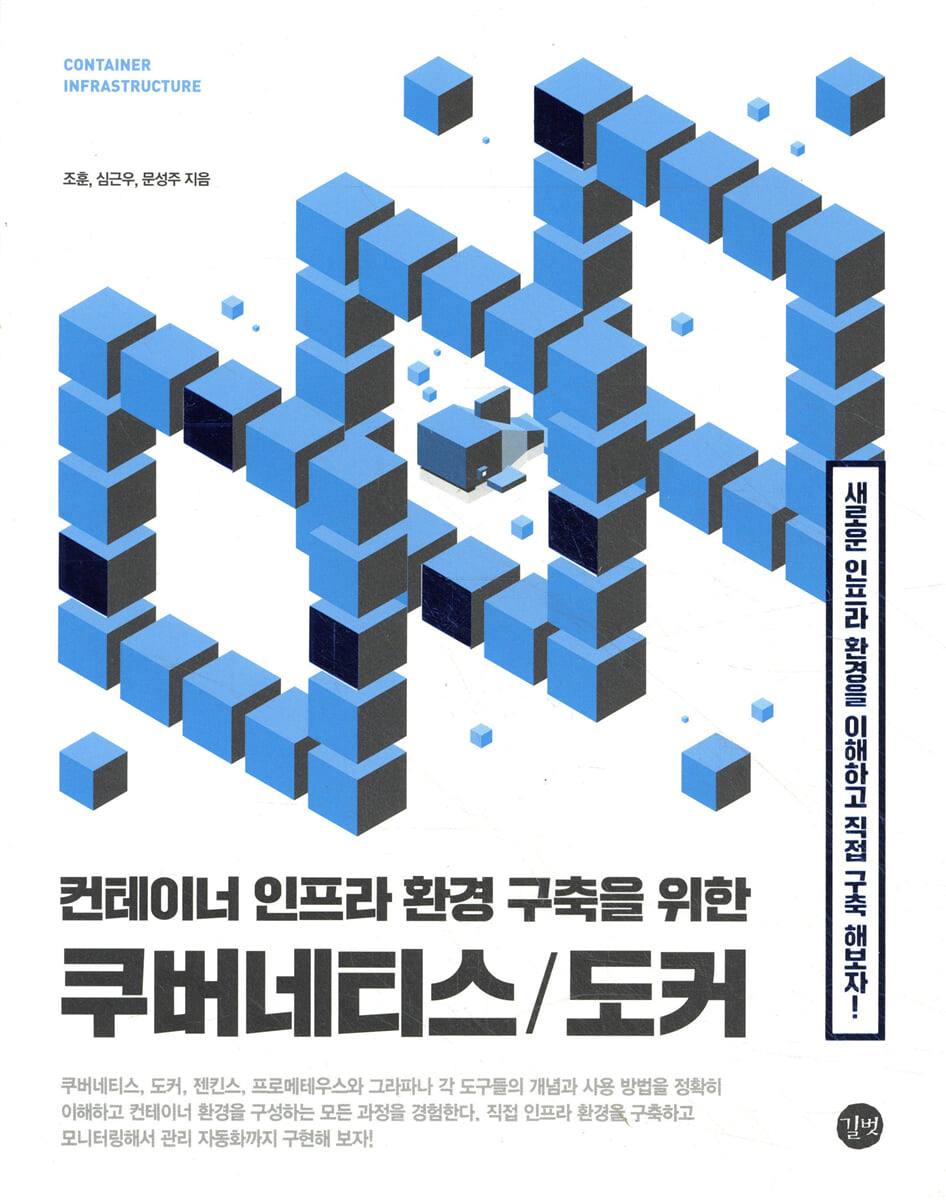 |
Description
Book Introduction
Container infrastructure environment technology that can be applied directly to practice!
Container environments have been discussed as a way to use IT resources efficiently and quickly, but their management has been difficult and complex, making them difficult to commercialize.
But with the advent of Kubernetes, complexity has been reduced and productivity has increased for the cost.
This book focuses on how to build and operate systems using Kubernetes, which is currently the standard in the container orchestration field.
From building a container infrastructure environment to integration and deployment, to monitoring for infrastructure environment operation, you will be able to build a solid foundation for building and operating systems based on Kubernetes.
Container environments have been discussed as a way to use IT resources efficiently and quickly, but their management has been difficult and complex, making them difficult to commercialize.
But with the advent of Kubernetes, complexity has been reduced and productivity has increased for the cost.
This book focuses on how to build and operate systems using Kubernetes, which is currently the standard in the container orchestration field.
From building a container infrastructure environment to integration and deployment, to monitoring for infrastructure environment operation, you will be able to build a solid foundation for building and operating systems based on Kubernetes.
- You can preview some of the book's contents.
Preview
index
Chapter 1: A New Infrastructure Environment is Coming
1.1 What is a container infrastructure environment?
1.2 Tools that support container infrastructure environments
1.3 The Beginning of a New Infrastructure Environment
Chapter 2: Configuring the Test Environment
2.1 Tools to automatically configure the test environment
2.2 Setting up a test environment with Vagrant
2.3 Connecting to a virtual machine using a terminal program
Chapter 3: Kubernetes, a standard architecture for handling containers
3.1 Understanding Kubernetes
3.2 Learning Kubernetes Basics
3.3 Service responsible for Kubernetes connectivity
3.4 Useful Kubernetes Objects to Know
Chapter 4: Docker, the Container Helper that Makes Up Kubernetes
4.1 Why You Should Know Docker
4.2 Handling Containers with Docker
4.3 Creating a Container Image in Four Ways
4.4 Using Containers Created Directly in Kubernetes
Chapter 5: Continuous Integration and Deployment Automation, Jenkins
5.1 CI/CD in a Container Infrastructure Environment
5.2 A Look at Simplifying Tools for Jenkins Installation
5.3 Installing and Configuring Jenkins
5.4 Implementing CI/CD with Jenkins
5.5 GitOps implemented through Jenkins plugin
Chapter 6: Monitoring for Stable Operations: Prometheus and Grafana
6.1 Monitoring the Container Infrastructure Environment
6.2 Collecting and Integrating Monitoring Data with Prometheus
6.3 Extracting Metric Data with PromQL
6.4 Visualizing Monitoring Data with Grafana
6.5 Creating a More Robust Monitoring Environment
Appendix A Making kubectl Easier to Use
Appendix B Configuring the Coover Dashboard
Appendix C: Automating Kubernetes Configuration with Kubespray
Appendix D: A Deeper Look at Containers
1.1 What is a container infrastructure environment?
1.2 Tools that support container infrastructure environments
1.3 The Beginning of a New Infrastructure Environment
Chapter 2: Configuring the Test Environment
2.1 Tools to automatically configure the test environment
2.2 Setting up a test environment with Vagrant
2.3 Connecting to a virtual machine using a terminal program
Chapter 3: Kubernetes, a standard architecture for handling containers
3.1 Understanding Kubernetes
3.2 Learning Kubernetes Basics
3.3 Service responsible for Kubernetes connectivity
3.4 Useful Kubernetes Objects to Know
Chapter 4: Docker, the Container Helper that Makes Up Kubernetes
4.1 Why You Should Know Docker
4.2 Handling Containers with Docker
4.3 Creating a Container Image in Four Ways
4.4 Using Containers Created Directly in Kubernetes
Chapter 5: Continuous Integration and Deployment Automation, Jenkins
5.1 CI/CD in a Container Infrastructure Environment
5.2 A Look at Simplifying Tools for Jenkins Installation
5.3 Installing and Configuring Jenkins
5.4 Implementing CI/CD with Jenkins
5.5 GitOps implemented through Jenkins plugin
Chapter 6: Monitoring for Stable Operations: Prometheus and Grafana
6.1 Monitoring the Container Infrastructure Environment
6.2 Collecting and Integrating Monitoring Data with Prometheus
6.3 Extracting Metric Data with PromQL
6.4 Visualizing Monitoring Data with Grafana
6.5 Creating a More Robust Monitoring Environment
Appendix A Making kubectl Easier to Use
Appendix B Configuring the Coover Dashboard
Appendix C: Automating Kubernetes Configuration with Kubespray
Appendix D: A Deeper Look at Containers
Detailed image

Publisher's Review
Building a container infrastructure environment using Kubernetes and Docker!
We organically connect and explain tools that support container infrastructure environments.
Kubernetes, Docker, Jenkins, and Prometheus/Grafana are representative tools required to build a container infrastructure environment, and have already become standardized in the market.
This book covers the overall process of reliably managing and operating containers, configuring CI/CD, and monitoring the system using the five tools mentioned above.
Let's understand the new infrastructure environment by configuring the container infrastructure environment.
Learn by coding with your own hands
If you simply learn the internal structure and commands of Kubernetes, it will be difficult to make it your own.
The fastest way to improve your skills is to learn concepts by directly following the source code and building an infrastructure.
So, we organized it in a hands-on manner in the order of 'code-code explanation' and included plenty of illustrations to make it easy to understand the concepts.
Through this book, we will solidify the fundamentals required to build and operate systems based on Kubernetes.
IT infrastructure technology know-how delivered by current experts
Current IT infrastructure experts provide step-by-step instructions on how to operate and manage diverse and complex IT infrastructure environments based on their own experience.
Let's thoroughly study the tips and notes inserted here and there and apply them to our work.
We organically connect and explain tools that support container infrastructure environments.
Kubernetes, Docker, Jenkins, and Prometheus/Grafana are representative tools required to build a container infrastructure environment, and have already become standardized in the market.
This book covers the overall process of reliably managing and operating containers, configuring CI/CD, and monitoring the system using the five tools mentioned above.
Let's understand the new infrastructure environment by configuring the container infrastructure environment.
Learn by coding with your own hands
If you simply learn the internal structure and commands of Kubernetes, it will be difficult to make it your own.
The fastest way to improve your skills is to learn concepts by directly following the source code and building an infrastructure.
So, we organized it in a hands-on manner in the order of 'code-code explanation' and included plenty of illustrations to make it easy to understand the concepts.
Through this book, we will solidify the fundamentals required to build and operate systems based on Kubernetes.
IT infrastructure technology know-how delivered by current experts
Current IT infrastructure experts provide step-by-step instructions on how to operate and manage diverse and complex IT infrastructure environments based on their own experience.
Let's thoroughly study the tips and notes inserted here and there and apply them to our work.
GOODS SPECIFICS
- Date of issue: June 7, 2021
- Page count, weight, size: 580 pages | 183*235*35mm
- ISBN13: 9791165215743
- ISBN10: 1165215748
You may also like
카테고리
korean


korean

![GQ KOREA Mark (Monthly): December [2025]](http://librairie.coreenne.fr/cdn/shop/files/8ef265dbbfbf186523ed75ba7319009d.jpg?v=1765340328&width=3840)


