

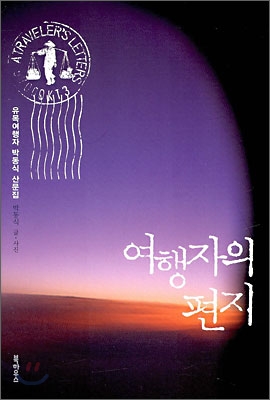
A Traveler's Letter
 |
Description
Book Introduction
"If you dream of traveling, go now.
"Just stop hesitating, that's enough"
Forty-one warm and heartwarming stories told through letters by a nomadic traveler.
A collection of travel essays by travel writer Park Dong-sik, who talks about life, not travel.
This is a story about the relationships the author, known as a 'nomadic traveler', made while traveling through places with a 'human touch' such as Indonesia, Vietnam, Laos, and Cambodia.
Based on his own unique humanism, the author delicately and wistfully describes the relationships he has with strangers he meets in various places, sometimes with heartbreaking emotion.
The book is largely divided into five themes, and the forty-one stories grouped under the five keywords of 'encounter', 'longing', 'hope', 'life', and 'happiness' contain the joys and sorrows of life experienced by travelers.
"Just stop hesitating, that's enough"
Forty-one warm and heartwarming stories told through letters by a nomadic traveler.
A collection of travel essays by travel writer Park Dong-sik, who talks about life, not travel.
This is a story about the relationships the author, known as a 'nomadic traveler', made while traveling through places with a 'human touch' such as Indonesia, Vietnam, Laos, and Cambodia.
Based on his own unique humanism, the author delicately and wistfully describes the relationships he has with strangers he meets in various places, sometimes with heartbreaking emotion.
The book is largely divided into five themes, and the forty-one stories grouped under the five keywords of 'encounter', 'longing', 'hope', 'life', and 'happiness' contain the joys and sorrows of life experienced by travelers.
- You can preview some of the book's contents.
Preview
index
One, a letter of meeting
Stars and things that don't stop
Just forget me!
Like a wildflower
Around the World in a Thousand Days
Christmas, a day in the life of everyday life
A long and distant relationship
Please don't make me sad again
We are not friends!
May our 10 years be dyed red
Two, a letter of longing
To you who forgot me
Morning walk
lunch box
Hope is waiting
The Crooked Youth
My Girlfriend's Story
City of the Lowly
Three, Letter of Hope
Friends are more important when you fail
Solid dream
A little bit cowardly
On a sunny day, mother and son go to the river.
Look at you, you who say you're tired now
A collage of drawings on the ground
The Lost City of Shangri-La
sad fish
Fourth, Letter of Life
Breakup song
Past life
I don't know
Thoughts on death
If it burns
Who said they don't cry?
Souls that became butterflies
Ask the water that flows eastward.
The tree that must die to live
Five, Letter of Happiness
lose sleep
Rainy day walk
Let's live by the river
For dinner
Travel thoughts
tubing
A world where honesty is okay
Be willing to give up what you treasure
Stars and things that don't stop
Just forget me!
Like a wildflower
Around the World in a Thousand Days
Christmas, a day in the life of everyday life
A long and distant relationship
Please don't make me sad again
We are not friends!
May our 10 years be dyed red
Two, a letter of longing
To you who forgot me
Morning walk
lunch box
Hope is waiting
The Crooked Youth
My Girlfriend's Story
City of the Lowly
Three, Letter of Hope
Friends are more important when you fail
Solid dream
A little bit cowardly
On a sunny day, mother and son go to the river.
Look at you, you who say you're tired now
A collage of drawings on the ground
The Lost City of Shangri-La
sad fish
Fourth, Letter of Life
Breakup song
Past life
I don't know
Thoughts on death
If it burns
Who said they don't cry?
Souls that became butterflies
Ask the water that flows eastward.
The tree that must die to live
Five, Letter of Happiness
lose sleep
Rainy day walk
Let's live by the river
For dinner
Travel thoughts
tubing
A world where honesty is okay
Be willing to give up what you treasure
Publisher's Review
The joys and sorrows of travel and life
The forty-one stories, grouped under the five keywords of 'encounter', 'longing', 'hope', 'life', and 'happiness', contain the joys and sorrows of life experienced by travelers.
I get angry at the shallow sales tactics of the locals who only see travelers as money, and at the old monk who discriminates even against donation amounts, but I find joy in haggling over plump rat meat in the Laotian market and in the French grandmother who hands me a box of condoms while organizing my luggage.
What particularly resonates with the author's heart are the scenes of children's laughter and death.
Working in a hostel in Indonesia, the author earns money by looking at the mismatched slippers of children who go to school, looking at their severely wounded fingers, and even looking at children following the truck he is riding on a bicycle. With a heavy heart, he earnestly hopes that they 'may always be healthy like wildflowers.'
Meanwhile, he is forced to contemplate the meaning of leaving and staying after seeing a friend who was unable to be with him at his deathbed, the grave of a Japanese person he encountered in Indonesia, and a public cremation ceremony in Nepal.
The road of travel, the road of reflection
The author's daily life is still a harsh one, living in Seoul, where he can only tremble in fear of the taxi fare.
But he doesn't try to get more.
On my travels, I happen to see a fish eating the mouths of its own kind, and I think that it would be better to become a beggar selling flowers on the street, even if it means sleeping, than to live a coarse life where I can't be with anyone.
The sympathy he feels for a naked man he meets at a train station in Bodh Gaya, India, tests the author's attitude as a poor but single nomadic traveler.
The author, who felt it was a waste to give away clothes he brought from Seoul even though he wanted to buy cheap clothes, reflects on the meaning of giving away things that he could have or not after taking everything he had.
In this way, the author's travels shine with simple reflections on life rather than the novel scenery of unfamiliar places.
Still, go on the road
Travel is usually expressed in two ways.
To 'go' on a trip or 'leave' on a trip.
The former is about the city we will meet in the future, and the latter is about the city we will leave behind. In other words, it is the difference between 'meeting' and 'parting'.
For the author, a veteran traveler, travel is no longer about going but about leaving, that is, it is not about meeting but about parting.
That is why the author defines travel as something that is both happy and anxious.
Even if you are afraid of parting, that feeling is also a traveler's privilege, so there won't be much time to hesitate, so let's set out on our journey now, the nomad traveler urges readers, leaving a warm aftertaste.
The forty-one stories, grouped under the five keywords of 'encounter', 'longing', 'hope', 'life', and 'happiness', contain the joys and sorrows of life experienced by travelers.
I get angry at the shallow sales tactics of the locals who only see travelers as money, and at the old monk who discriminates even against donation amounts, but I find joy in haggling over plump rat meat in the Laotian market and in the French grandmother who hands me a box of condoms while organizing my luggage.
What particularly resonates with the author's heart are the scenes of children's laughter and death.
Working in a hostel in Indonesia, the author earns money by looking at the mismatched slippers of children who go to school, looking at their severely wounded fingers, and even looking at children following the truck he is riding on a bicycle. With a heavy heart, he earnestly hopes that they 'may always be healthy like wildflowers.'
Meanwhile, he is forced to contemplate the meaning of leaving and staying after seeing a friend who was unable to be with him at his deathbed, the grave of a Japanese person he encountered in Indonesia, and a public cremation ceremony in Nepal.
The road of travel, the road of reflection
The author's daily life is still a harsh one, living in Seoul, where he can only tremble in fear of the taxi fare.
But he doesn't try to get more.
On my travels, I happen to see a fish eating the mouths of its own kind, and I think that it would be better to become a beggar selling flowers on the street, even if it means sleeping, than to live a coarse life where I can't be with anyone.
The sympathy he feels for a naked man he meets at a train station in Bodh Gaya, India, tests the author's attitude as a poor but single nomadic traveler.
The author, who felt it was a waste to give away clothes he brought from Seoul even though he wanted to buy cheap clothes, reflects on the meaning of giving away things that he could have or not after taking everything he had.
In this way, the author's travels shine with simple reflections on life rather than the novel scenery of unfamiliar places.
Still, go on the road
Travel is usually expressed in two ways.
To 'go' on a trip or 'leave' on a trip.
The former is about the city we will meet in the future, and the latter is about the city we will leave behind. In other words, it is the difference between 'meeting' and 'parting'.
For the author, a veteran traveler, travel is no longer about going but about leaving, that is, it is not about meeting but about parting.
That is why the author defines travel as something that is both happy and anxious.
Even if you are afraid of parting, that feeling is also a traveler's privilege, so there won't be much time to hesitate, so let's set out on our journey now, the nomad traveler urges readers, leaving a warm aftertaste.
GOODS SPECIFICS
- Date of issue: January 14, 2009
- Page count, weight, size: 327 pages | 421g | 125*185*30mm
- ISBN13: 9788956053127
- ISBN10: 895605312X
You may also like
카테고리
korean


korean

![GQ KOREA Mark (Monthly): December [2025]](http://librairie.coreenne.fr/cdn/shop/files/8ef265dbbfbf186523ed75ba7319009d.jpg?v=1765340328&width=3840)


